This site is supported by our readers. We may earn a commission, at no cost to you, if you purchase through links.
Wrong measurements destroy garment projects. Patterns don’t align. Seams pucker. Hems sit crooked. Your measuring tape controls every cut you make, every seam you sew, every fitting adjustment that transforms flat fabric into wearable art.
Yet most sewers grab whatever tape came in their starter kit without considering accuracy, durability, or feature differences. Soft tapes work brilliantly for body curves but stretch over time. Retractable versions offer portability but sacrifice flexibility. Dual-scale options eliminate conversion math but crowd markings.
Understanding which measuring tapes for sewing match your specific projects—from quilting precision to garment construction—determines whether you’re building skills on reliable foundations or fighting your tools at every step.
Table Of Contents
Key Takeaways
- Your measuring tape controls every aspect of sewing accuracy—from pattern alignment to seam placement—making it the foundation tool that determines whether projects succeed or fail before you make the first cut.
- Soft, flexible tapes excel at body measurements and curves, while retractable versions offer portability, but each type trades specific advantages (flexibility vs. convenience, durability vs. compactness) that match different project needs.
- Measurement precision demands tapes with markings accurate to ±1mm per meter, dual scales to eliminate conversion errors, and non-stretch materials like fiberglass that maintain reliability through repeated use.
- Proper storage in cool, dry conditions and regular calibration checks every six months prevent the stretching, fading, and creasing that gradually destroy accuracy and force you to question every measurement.
Types of Measuring Tapes for Sewing
Not all measuring tapes are created equal, and choosing the right one can make or break your sewing project.
A flexible tape measure is one of the essential hand sewing tools that every seamstress should keep within arm’s reach.
The type you pick depends on what you’re measuring—whether it’s fabric yardage, body curves, or tight corners that need precision. Here are the main types you’ll encounter and what makes each one worth having in your toolkit.
Soft and Flexible Tape Measures

Soft and flexible tape measures give you the curve accuracy fabric work demands. Made from cloth or bendable plastic, these sewing measuring tapes wrap around body contours without fighting back.
You’ll find them in 60 to 150 centimeter lengths, marked in both metric and imperial units. Their flexible design means they’re lightweight, comfortable to hold, and built for the fabric compatibility your projects need.
For more guidance on tape measure types and features, reference thorough sewing guides.
Retractable Measuring Tapes

Retractable tape measures snap compact after use, keeping your sewing kit tangle-free. Their tape mechanism retracts smoothly—you control retraction speed with a measurement lock button that holds your reading steady.
Most feature ergonomic design with reinforced end hooks gripping fabric securely. These measurement tools for sewing run 1.5 to 3 meters, showing both metric and imperial scales on durable tape materials like coated plastic.
To guarantee your tool’s longevity and usability, it’s vital to think about high-quality tape measure features before making a purchase.
Double-Sided and Dual-Scale Tapes
Double-sided tapes flip your workflow—one side shows metric markings while the other displays imperial, so you won’t fumble between systems. This dual function lets you compare patterns instantly without losing your place.
Most flexible design tapes run 1.5 to 2 meters, giving you scale accuracy for body contours and fabric drapes alike. Your measurement ease improves when dual-scale measuring tapes eliminate guesswork.
Adhesive and Specialty Measuring Tapes
Beyond standard options, adhesive back tapes bring specialty function to your workspace. These adhesive measuring tapes use low-tack adhesive strength to anchor fabric during layout without damage.
You’ll find them essential for quilting and home projects where flexible measurements meet hands-free precision. Measuring accuracy improves when tape materials hold your work steady, though they’re not built for body use—retractable tape mechanisms that job.
Key Features to Look For
Not all measuring tapes are created equal. The right one can make your sewing faster and more accurate, while a flimsy tape will frustrate you from the first project.
Here’s what separates the keepers from the ones that end up tangled in your junk drawer.
Measurement Accuracy and Unit Markings
Accuracy separates guesswork from precision. Quality tape measures deliver markings within ±1 mm per meter, ensuring your accurate measurements hold up through pattern work.
Look for contrasting colors that boost scale readability—centimeters versus inches—and precision markings down to 1/16 inch or millimeters. Dual scales eliminate unit conversions mid-project, while clear calibration points help catch measurement errors before you cut.
Flexible measurements demand reliable numbers.
Material Quality and Durability
Your tape’s lifespan hinges on material strength. Polyester and fiberglass blends resist tearing through countless projects, while vinyl material delivers flexible durability.
Look for heat-sealed edges that prevent fraying and coatings with fabric resistance against moisture and stains. Quality measuring tapes show under 0.5 percent stretch, maintaining wear resistance and adhesive strength through hundreds of uses.
Durability tests prove construction quality.
Flexibility for Curved Surfaces
Curve measurement separates adequate tapes from outstanding sewing tools. Your fabric drapes and body contours demand measurement tools that track every curve without lifting or distorting.
Flexible materials deliver surface accuracy through:
- Cloth substrates wrap bust darts and armscye seams without kinking
- Fiberglass reinforcement prevents stretching on curved profiles
- Radial alignment maintains tape conformity along crown curves
- Rubberized coatings grip slick surfaces during tracing
- Retractable housings pre-curved for smooth contact
Portability and Storage Options
You won’t measure anything if your tape stays buried in a drawer. Compact storage solutions keep your measuring tape within reach—pocket-sized retractable designs collapse to 2.5 inches, while portable cases and tape pouches protect longer tapes without creasing.
Travel organizers with clips, wall mounts, or zippered compartments transform your sewing tools into grab-and-go measurement tools.
| Storage Type | Best Feature | Ideal For |
|---|---|---|
| Retractable Cases | Collapses to 2.5 inches | Quick pocket access |
| Tape Pouches | Dust-proof protection | Drawer organization |
| Wall Mounts | Pegboard display | Workshop efficiency |
Color and Visibility
You’ll squint less if your tape jumps off the fabric. Bright tapes in neon yellow or orange deliver color contrast that fights eye strain, while black ink legibility on white backgrounds keeps numerals sharp during fast cuts.
Matte finishes eliminate glare under task lighting, and visibility options like dual-color scales separate inches from centimeters—essential sewing tools and equipment for precision weaving and garment work.
Top 8 Measuring Tapes for Sewing
You’ve narrowed down the features you need—now it’s time to meet the tools that deliver.
These eight measuring tapes stand out for their accuracy, durability, and versatility across sewing projects.
Each one brings something different to your toolkit, so you can choose what fits your workflow best.
1. GDMINLO Soft Tape Measure
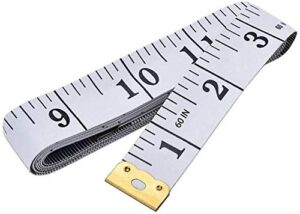
You’ll find the GDMINLO Soft Tape Measure built with a flexible core that bends gently around curves without kinking. At 60 inches long, it displays bold black markings on white—inches on one side, centimeters on the reverse.
Metal end tabs prevent fraying and give you a stable starting point. Weighing under an ounce, it slips into your pocket or sewing kit effortlessly.
The high-contrast print stays readable in dim light, and the dual-scale design eliminates the need to switch tools mid-project.
| Best For | Sewers, tailors, and crafters who need accurate body or fabric measurements and want a lightweight, dual-scale tape that handles curves easily. |
|---|---|
| Length | 60 inches / 150 cm |
| Scale Type | Double scale |
| Material | Vinyl |
| Units | Inches and centimeters |
| Primary Use | Sewing and tailoring |
| Portability | Compact and portable |
| Additional Features |
|
- Flexible vinyl construction bends smoothly around body contours and curved surfaces without creasing
- Dual measurement scales (inches and centimeters) printed in high-contrast black on white for quick reading
- Metal end tabs prevent fraying and provide durability for repeated use
- Requires manual folding and storage since it’s not retractable
- May lose shape or accuracy when stretched over very long measurements
- Quality control issues reported by some users who received dirty or used-looking products
2. GDMINLO Retractable Tape Measure
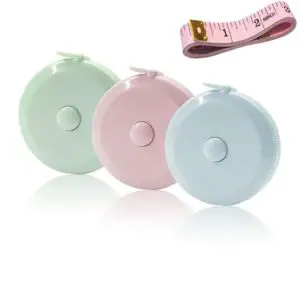
Push a button and the GDMINLO Retractable Tape Measure reels its 60-inch fiberglass blade back into a 2×2-inch plastic case. The non-stretch material holds measurements steady, while dual scales—inches and centimeters—run clear enough to read under any workshop light.
Metal tabs cap each end to stop fraying. Weighing barely two grams, it drops into your apron pocket without sagging. The button clicks smoothly, though a slight play in the lock means you’ll hold tension on tight tolerances.
| Best For | Sewers, tailors, and crafters who need a portable measuring tool for fabric work and body measurements where flexibility matters more than workshop-grade precision. |
|---|---|
| Length | 60 inches / 150 cm |
| Scale Type | Dual scales |
| Material | Metal and plastic |
| Units | Inches and centimeters |
| Primary Use | Sewing and tailoring |
| Portability | Portable and lightweight |
| Additional Features |
|
- Button-activated retraction packs 60 inches of fiberglass into a 2×2-inch case that weighs almost nothing
- Dual-scale markings in inches and centimeters stay legible in any light
- Non-stretch fiberglass holds measurements on curved surfaces without sagging
- Slight play in the locking mechanism can throw off tight tolerances
- Plastic end tab feels cheap and may not hold up to heavy use
- Retractable mechanism occasionally jams or fails according to some users
3. iBayam Soft Measuring Tape Set
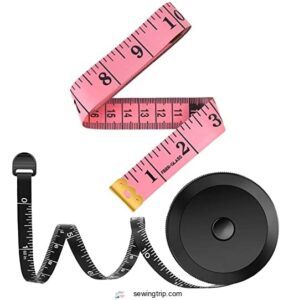
Two tapes arrive in the iBayam set—one soft pink ruler and one retractable black model, both stretching to 60 inches. Each displays inches on one edge and centimeters on the other, printed large enough to scan from arm’s length.
The pink tape folds flat, while the black version snaps back with a button press. At 20 grams total, they slip into a tin or drawer without bulk.
Fiberglass core resists stretching across waistlines and hems, keeping your numbers honest through dozens of fittings.
| Best For | Sewers, tailors, and anyone tracking body measurements who wants a backup tape that won’t quit mid-project. |
|---|---|
| Length | 60 inches / 150 cm |
| Scale Type | Double-sided |
| Material | Vinyl (pink), Plastic (black) |
| Units | Inches and centimeters |
| Primary Use | Sewing and tailoring |
| Portability | Portable and small |
| Additional Features |
|
- Two tapes for the price of one—soft pink for curves, retractable black for quick checks
- Dual-sided markings in inches and centimeters save you from squinting or converting
- Fiberglass core keeps measurements accurate even after repeated use
- The retractable mechanism can break if you drop it on hard floors
- Build quality feels basic—fine for the price, but don’t expect heirloom durability
- You might find similar sets cheaper elsewhere, which dents the value a bit
4. iBayam Double Sided Measuring Tape
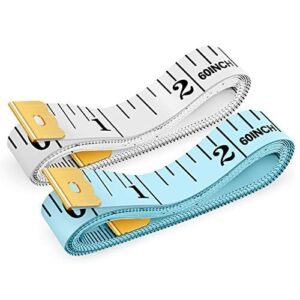
Pick up the iBayam double sided tape and flip it—inches on one face, centimeters on the opposite. No twisting mid-measurement when you’re checking a bodice curve or comparing pattern specs.
The 60-inch fiberglass blade stays flexible around hips and armholes without kinking, and bold markings down to 1/16 inch let you nail seam allowances under dim task lighting. At pocket weight, it folds tight for your notions pouch yet unfurls flat to trace clean lines.
| Best For | Sewers, tailors, and crafters who need a lightweight, flexible tape for body measurements, pattern work, and curved surfaces. |
|---|---|
| Length | 60 inches / 150 cm |
| Scale Type | Double-sided |
| Material | Vinyl |
| Units | Inches and centimeters |
| Primary Use | Sewing and tailoring |
| Portability | Portable and durable |
| Additional Features |
|
- Double-sided design with inches and centimeters eliminates flipping and saves time during measurements
- Soft, flexible vinyl material bends smoothly around curves and body contours without kinking
- Clear, bold markings make it easy to read measurements in low light or while working quickly
- Metal tip can become misaligned over time, requiring manual adjustment for accurate readings
- 60-inch maximum length won’t work for larger furniture, room dimensions, or full-body measurements
- Lightweight vinyl construction isn’t durable enough for heavy-duty workshop or industrial applications
5. iBayam Soft Measuring Tape Ruler
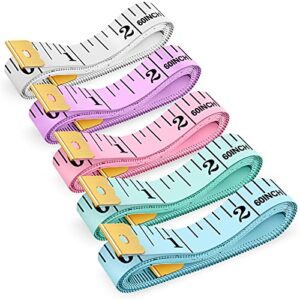
Reach for the iBayam soft ruler when you’re draping jersey or measuring a toddler for a birthday dress. This 60-inch PVC tape wraps snugly around necks and waists without pinching, and dual scales—imperial fractions plus centimeter marks—sit side by side so you can swap units mid-fitting.
Five colors (blue, green, white, pink, purple) help you code projects or spot the tape in a cluttered sewing basket. Lightweight enough to tuck in your pocket, it lies flat against pattern tissue and resists fading under workshop lights.
| Best For | Sewers, crafters, and anyone tracking body measurements who needs a flexible tape that wraps smoothly around curves and fits in a pocket. |
|---|---|
| Length | 60 inches / 150 cm |
| Scale Type | Double-scale |
| Material | Vinyl |
| Units | Inches and centimeters |
| Primary Use | Sewing and tailoring |
| Portability | Portable and durable |
| Additional Features |
|
- Dual-scale markings let you switch between inches and centimeters without grabbing a second tool
- Five-pack in different colors makes it easy to dedicate one tape per project or find it quickly in your supplies
- Soft, flexible vinyl bends around arms, hips, and fabric without creasing or digging into skin
- Vinyl construction may wear out faster than cloth or fiberglass tapes with heavy use
- Some buyers report inconsistent quality or receiving products that don’t match the listing
- Not sturdy enough for construction, woodworking, or other professional measuring tasks
6. Unitedprime Flexible Tape Measure
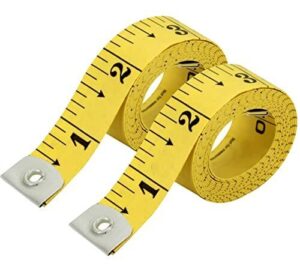
Slip the Unitedprime blue-and-yellow twin pack into your tote—you’ll have a backup when one disappears under quilt batting. Each 60-inch fiberglass tape delivers both metric and imperial scales in high-contrast numerals that won’t blur after fifty washes.
Metal end tabs prevent fraying, and the nylon coating resists stretches that throw off shoulder-to-hem measurements. Fabric-feel surfaces grip curved seams without slipping, while the pocket-friendly size tucks neatly beside your shears. Two tapes mean one for draping, one for flat pattern work.
| Best For | Sewers, tailors, and crafters who need an affordable backup tape for everyday projects like garment fitting, quilting, and body measurements. |
|---|---|
| Length | 60 inches / 150 cm |
| Scale Type | Dual-scale |
| Material | Flexible fiberglass |
| Units | Inches and centimeters |
| Primary Use | Sewing and tailoring |
| Portability | Soft and durable |
| Additional Features |
|
- High-contrast dual-scale markings (inches and centimeters) stay readable even after repeated use and washing
- Metal end tabs prevent fraying and extend the tape’s lifespan compared to unfinished edges
- Twin pack gives you a spare when one goes missing, plus lets you keep one flat and one draped during pattern work
- 60-inch maximum length won’t cover floor-length gowns or large upholstery projects
- Fiberglass construction may not hold up to the wear and tear of professional tailoring shops
- Not precise enough for technical applications like architectural drafting or engineering measurements
7. Soft Flexible Body Measuring Tape
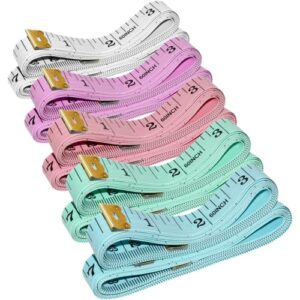
A PVC-coated fiberglass core runs the full 150 cm, wrapping snugly around bust, waist, and hip curves without pinching skin. Black markings on high-contrast backing stay legible under dim sewing-room bulbs, and millimeter subdivisions lock in precise dart placements.
The reinforced end hook anchors firmly at zero, so repeated measurements won’t drift. Wipe lint off with a damp cloth, then store it flat—creases skew readings. Non-stretch construction keeps numbers honest through hundreds of fittings, whether you’re drafting a bodice or tracking alterations.
| Best For | Sewers, tailors, and anyone tracking body measurements for fitness or online clothing orders who needs a flexible tape that hugs curves accurately. |
|---|---|
| Length | 60 inches / 150 cm |
| Scale Type | Double-scale |
| Material | Vinyl |
| Units | Inches and centimeters |
| Primary Use | Sewing and tailoring |
| Portability | Compact and lightweight |
| Additional Features |
|
- Non-stretch fiberglass core delivers consistent measurements even after hundreds of uses
- High-contrast markings with millimeter subdivisions stay readable in low light and make precise alterations easier
- Soft, flexible vinyl wraps comfortably around curved surfaces without pinching skin
- Vinyl coating can wear down or crack with rough handling over time
- 60-inch maximum length won’t cover larger furniture or room measurements
- Creasing from improper storage can throw off accuracy until the tape is flattened again
8. Louhua Flexible Measuring Tape
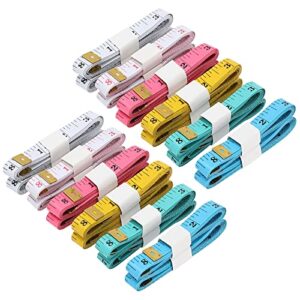
This 24-pack gives you six colors—red, blue, yellow, green, pink, and purple—so you can grab a fresh tape for each project or stash one in every sewing station.
Vinyl cloth with metal tabs resists fraying, and the 60-inch double scale (150 cm) covers bust-to-hem measurements without splicing. Clear marks simplify pattern drafting, though accuracy varies across individual tapes.
Store them flat to dodge permanent creases, and wipe off lint after fittings. They’re budget-friendly for classrooms, craft groups, or tracking weight changes between garment adjustments.
| Best For | Sewers, crafters, and educators who need multiple tape measures for classrooms, sewing groups, or tracking body measurements across different projects. |
|---|---|
| Length | 60 inches / 150 cm |
| Scale Type | Double scale |
| Material | Vinyl cloth with metal |
| Units | Inches and centimeters |
| Primary Use | Sewing and crafts |
| Portability | Easy to carry |
| Additional Features |
|
- 24-pack with six colors lets you keep a tape in every workspace or assign them to different students
- Vinyl cloth with metal tabs holds up better than plain fabric and prevents end fraying
- 60-inch double scale (both inches and centimeters) handles full-body measurements without piecing together readings
- Measurement accuracy isn’t consistent across all tapes in the pack
- Durability falls short of professional-grade options—some users report damage or fragility
- Prone to permanent creases if not stored flat, which can throw off readings
Essential Uses in Sewing and Crafting

Your measuring tape isn’t just another tool in your kit—it’s the foundation of every project you tackle. Whether you’re fitting a dress, cutting quilt squares, or hanging curtains, accurate measurements make the difference between professional results and frustrating do-overs.
Your measuring tape is the foundation of every sewing project—accurate measurements separate professional results from frustrating do-overs
Let’s look at the key ways you’ll put your tape to work.
Measuring Fabrics and Patterns
Accurate fabric measurement sets the foundation for successful projects. You’ll use your measuring tape for yardage calculation and fabric estimation before cutting.
Pattern layout demands precision—align grain lines parallel to the selvage for proper drape. Double-check measurements at each step.
Measurement accuracy in textile measurement prevents costly mistakes and wasted material, giving you control over every sewing decision.
Body Measurements for Garment Fitting
Mastering body measurements transforms guesswork into precision tailoring. Your measuring tape captures the data that makes garments fit like they’re custom-made for you.
Essential measurement techniques include:
- Bust or chest circumference—wrap the tape around the fullest part, keeping it level across the back for proper garment sizing.
- Natural waist—locate the narrowest torso point, usually 1–2 inches above your navel, for fit analysis.
- Hip circumference—measure around the widest part of your buttocks with the tape parallel to the floor.
Record body proportions accurately to guide dart placement and achieve professional tailoring methods in sewing.
Quilting and Patchwork Precision
Precision cutting and seam allowance consistency separate amateur quilts from showpieces. Your measuring tape ensures block accuracy within 1/8 inch—critical when you’re assembling dozens of pieces into a unified quilt top.
Use quilting tape alongside precision measuring tools to verify each cut before sewing. Quarter-inch seams become second nature when you trust your measurement tools, transforming sewing and quilting into confident craftsmanship rather than crossed fingers.
Home Décor and DIY Projects
Beyond garment creation, your measuring tape drives Home Renovation success and DIY Crafts precision. Measuring Tapes guide Furniture Making cuts, Space Planning layouts, and Wall Decor placement—ensuring curtains hang perfectly and tablecloths fit without guesswork.
Whether you’re tackling Home Decor Projects or Crafting and DIY ventures, accurate Sewing Tools and Equipment transform ambitious ideas into polished results you’ll display with pride.
Caring for Your Sewing Measuring Tape

Your measuring tape won’t stay accurate forever if you toss it in a drawer and forget about it. A little care goes a long way in keeping your measurements spot-on and your tape in working condition.
Here’s what you need to know to protect your investment and avoid those frustrating moments when your numbers don’t add up.
Proper Storage Techniques
Storage solutions determine your measuring tape’s shelf life. Keep your sewing tools in cool, dry shelves away from direct sunlight—aim for 60-75°F with 40-50% humidity using a dehumidifier if needed.
Smart tape organization includes:
- Soft fabric pouches shield tapes from dust and abrasion
- Pegboard hooks prevent kinking on retractable tape measures
- Silica gel packets inside containers control moisture
Label each measuring tape with length and material for quick access.
Cleaning and Maintenance Tips
You’ll want to wipe your measuring tapes regularly with a damp cloth to clear chalk and ink residue. For tape sanitizing, use fabric-safe cleaning products that won’t fade the markings.
Here’s your quick maintenance schedule:
| Task | Frequency |
|---|---|
| Wipe blade clean | After each use |
| Check metric/imperial marks | Every 6 months |
| Test measurement calibration | Every 6 months |
| Trim frayed edges | As needed |
Dry thoroughly before storing to prevent corrosion on metal components.
Avoiding Common Damage
Tape protection starts with smart handling. Keep your sewing measuring tape away from hard drops, sharp edges, and direct sunlight—all classic culprits of damage prevention failures.
Guard against these common handling errors:
- Never coil tightly around objects that create permanent creases
- Skip storing loose in bags where retractable mechanisms jam
- Avoid stretching beyond natural length during body measurements
- Don’t expose sewing accessories to moisture or heat sources
Ensuring Long-Term Accuracy
Precision sewing demands calibration methods every six months—verify your retractable tape measure against a master ruler to catch deviations beyond 0.2 cm per meter. Accuracy verification protects your work from cumulative errors.
| Measurement Standards | Error Reduction Step | Tape Maintenance Action |
|---|---|---|
| Zero-point alignment | Check baseline weekly | Store flat, avoid creases |
| Millimeter rounding convention | Document all variances | Replace stretched tapes |
| 1-meter reference bar test | Cross-verify with caliper | Clean markings monthly |
| Calibration log tracking | Flag 1 mm+ shifts | Use protective cases |
This measuring tape discipline turns sewing and measuring into a reliable craft.
Frequently Asked Questions (FAQs)
What kind of measuring tape do tailors use?
Tailors rely on soft cloth or fiberglass tapes that bend smoothly around curves without kinking.
These flexible measuring tapes usually span 60 to 120 inches, featuring dual scales for quick imperial-metric conversion during fittings.
Are sewing tape and measuring tape the same?
They’re close cousins in the measurement basics family, but not identical twins.
Sewing measuring tapes are flexible tapes designed for curves and body contours, while standard tape measures often feature rigid cases for construction work.
Are fabric measuring tapes accurate?
Quality fabric measuring tapes deliver reliable accuracy when properly maintained.
Tape calibration and accuracy testing guarantee markings align with standards, minimizing measurement errors.
Reading precision depends on tension, material stretch, and clear visibility—critical for sewing success.
Can I use measuring tapes for knitting projects?
Yes, you can use measuring tapes for knitting projects. They’re perfect for gauge swatches, stitch counting, and checking garment lengths.
Retractable models prevent tangling with yarn while double-sided scales simplify conversions.
How do I measure curved seams accurately?
Curve measurement demands flexible tapes snug against fabric edges.
Align the zero mark at the curve’s start, read at the finish, and measure tight arcs multiple times—averaging results sharpens your precision techniques for perfect seam allowance.
Whats the difference between tailors tape and carpenters tape?
Tailors tape uses soft fiberglass or cloth for body measurements and curved seams.
Carpenters tape has rigid metal blades for straight construction layouts. Flexibility matters—tailoring needs drape, carpentry demands durability and measurement accuracy.
Are digital measuring tapes better for sewing?
Digital accuracy speeds up sewing efficiency for pattern work, but traditional tapes win for body curves.
Battery dependence limits digital tape durability, while fabric tapes deliver sewing precision on contours without power interruptions.
How often should I replace my measuring tape?
Replace your measuring tape when markings fade, the blade kinks, or measurements vary by more than 1/16 inch.
Heavy daily use shortens lifespan to 12–18 months; proper storage extends accuracy beyond two years.
Conclusion
Picture your next project: fabric drapes perfectly, seams align without gaps, hems hang level. That vision starts with one choice—selecting the right measuring tapes for sewing.
You’ve seen the types, features, and care strategies that prevent stretched markings and warped readings. Now you hold the blueprint. Invest in quality tools that match your projects, store them properly, and watch your accuracy transform every stitch.
Your tape determines whether you’re guessing or commanding precision.