This site is supported by our readers. We may earn a commission, at no cost to you, if you purchase through links.
Silk traders in medieval Italy paid fortunes for fabric that seemed to trap light inside its threads—a shimmer no dye or finishing technique could replicate. That effect wasn’t magic. It came from a specific weaving structure where long yarn floats lie nearly parallel across the surface, bouncing light back in a single direction rather than scattering it.
Satin weave produces that signature gloss, and once you understand how the structure works, you can identify it instantly—by eye, by touch, even by how a fabric moves across your hand. This satin weave identification guide breaks down exactly what to look for.
Table Of Contents
Key Takeaways
- Satin isn’t a fabric—it’s a weave structure where long yarn floats lie parallel across the surface, bouncing light in one direction to create that signature gloss.
- You can identify satin instantly by flipping it over: the face is glossy and smooth, while the back is noticeably dull—a contrast no other common weave produces.
- Shine alone doesn’t confirm satin, since taffeta and sateen can fool your eyes; the real test is that cool, glassy slip under your fingertips combined with directional light reflection.
- Different satin types—charmeuse, duchess, crepe-back, silk, polyester—each serve distinct purposes, so matching the right type to your project matters as much as recognizing the weave itself.
What is Satin Weave?
Satin isn’t a fabric — it’s a weave, and that distinction changes everything about how you identify and work with it.
That weave is also why getting wrinkles out of a satin dress takes more care than with regular fabrics — the structure is delicate.
Understanding its structure, how it compares to other weave types, and where it came from gives you a solid foundation for recognizing it anywhere.
Here’s what you need to know.
Definition and Weaving Structure
Satin isn’t actually a fabric — it’s a weaving technique, and that distinction changes everything about how you identify, select, and care for it. In satin weave, long runs of warp yarn float over weft threads, which is what gives satin fabric its signature glossy surface.
This specific arrangement of weaving techniques controls fabric density and thread count, directly shaping the fabric characteristics that define all satin types.
Satin Vs. Other Weave Types
Once you know that satin is all about how the yarn floats, it’s easier to see why it looks and feels so different from plain or twill weaves. A quick weave comparison tells the story clearly:
- Plain weave interlocks every thread, creating a matte, sturdy fabric texture with no sheen
- Twill weave runs diagonal weft patterns, producing visible ridges and moderate softness
- Satin weave lets long yarn floats dominate the surface, maximizing light reflection and smoothness
- Satin imitations in polyester mimic the look but yarn quality determines whether the drape and feel truly hold up
That structural difference is the foundation of all fabric identification for satin fabric properties.
History and Origins of Satin Weave
That glossy finish you’re learning to identify didn’t appear overnight—it has a 2,000-year paper trail rooted in Chinese Origins and Ancient Weaving traditions.
| Era | Location | Development |
|---|---|---|
| 2,000+ years ago | China | Satin Weave invented using Silk Production |
| Medieval Trade period | Quanzhou (Zaitun) | Satin Fabric exported westward |
| 12th–14th century | Italy, Europe | Local Satin Weave production begins |
| 18th–19th century | Industrial nations | Textile Evolution introduces cotton satin |
| 20th century | Global | Polyester transforms History of Satin |
Understanding this History and Evolution of Satin sharpens your Satin Fabric Identification instincts immediately.
For more insight into the origins and uses of satin, explore reputable fabric resources.
Key Characteristics of Satin Weave
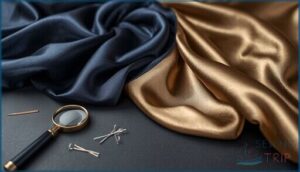
Once you know what satin weave actually looks like up close, identifying it becomes second nature.
That same recognition helps when you’re ready to explore unique sewing techniques for working with delicate fabrics like satin without ruining the sheen.
There are a few defining traits that set it apart from every other fabric, and they’re easier to spot than you might think.
Here’s what to look for.
Glossy Surface and Dull Back
One of satin’s most telling features is hiding in plain sight — flip the fabric over, and you’re looking at an entirely different surface. That contrast is no accident. The satin weave creates a glossy appearance on top while leaving a dull backing underneath. Here’s what that means for identification:
- The smooth texture and fabric luster on the face come from long yarn floats catching light.
- Gloss retention depends on keeping that glossy shine undisturbed — snags break it fast.
- Sheen durability varies: silk satin’s surface finish outlasts most synthetics over time.
Yarn Float Pattern
The yarn float is the hidden architecture behind every shimmer you see in satin. In the satin weave, the floating yarn technique lets warp threads run over multiple weft threads before interlacing — that’s float length at work.
Weave density and yarn tension control how tightly those floats sit, while thread count and fabric thickness determine the final sheen. The weaving process basically turns each yarn into a tiny light reflector.
Texture, Drape, and Weight
Satin weave delivers a texture that’s almost impossible to mistake — cool, smooth, and slightly slippery against your skin. Fabric density determines how that smooth texture translates into drape quality, with lighter charmeuse (around 80–100 gsm) falling like water, while duchess satin’s weight and drape create structured silhouettes.
Satin thickness and weight factors shape the fabric’s glossy appearance and overall fabric characteristics, so knowing both helps you choose wisely.
How to Identify Satin Weave Fabrics
Knowing what to look for makes all the difference when you’re trying to identify satin weave. The good news is that satin gives itself away through a few reliable, easy-to-spot clues. Here’s what to check.
Visual Inspection Techniques
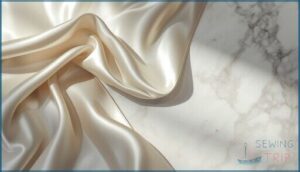
Before you touch a single thread, your eyes can tell you almost everything you need to know about a satin weave. Use these visual cues to guide your fabric examination:
- Look for a glossy appearance on one side and a dull back on the other.
- Check the weave pattern for long yarn floats running across the surface.
- Observe light reflection — satin fabric catches light evenly, creating a smooth, mirror-like sheen.
- Scan for a consistent smooth texture with no visible interlacing bumps.
These fabric characteristics make satin weave unmistakable at a glance.
Tactile Cues and Feel

Once your eyes confirm the telltale sheen, your fingertips become the real test — and satin rarely disappoints. That smooth texture almost glides under your fingers.
Run your hand across the surface and you’ll notice the smoothness levels are unlike most fabrics. Genuine luxury fabric drapes naturally over your hand, and its soft feel stays cool to the touch — sensory feedback that synthetic blends often can’t fully replicate.
Light Reflection and Sheen
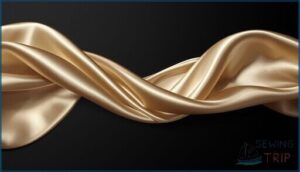
Hold a piece of satin up to the light, and you’ll understand immediately why this fabric has dressed royalty for centuries. Its reflective properties come directly from the satin weave structure, where long yarn floats create a shiny surface that controls light like a mirror.
Satin’s long yarn floats mirror light so precisely, they’ve made it fabric royalty for centuries
Notice these luster effects in action:
- The glossy finish pools light in one direction
- A smooth texture eliminates light scattering entirely
- Rotating the fabric shifts the lustrous finish dramatically
That glossy appearance doesn’t lie.
Recognizing Common Misidentifications

Fabric confusion is more common than you’d think. Many people mistake taffeta, sateen, or finished plain-weave polyester for true satin weave simply because something shines.
Don’t fall for satin myths — shine alone doesn’t confirm structure.
| Fabric | Shine Analysis | Texture Clues |
|---|---|---|
| True Satin Weave | Mirror-like, directional | Glassy, snag-prone |
| Sateen | Soft, muted sheen | Cotton-feel, durable |
| Taffeta | Crisp, uniform | Stiff, papery hand |
To better understand these differences, it’s helpful to review the comparison of basic fabric weaves.
Types of Satin Weave Fabrics
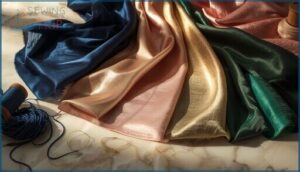
Not all satin is created equal, and knowing the difference can change how you shop, sew, or style. The type of satin weave fabric you’re working with affects everything from how it drapes to how long it lasts.
Here are the main types you’ll want to know.
Silk Satin
When you’re looking at the finest satin available, silk is where the story begins. Silk satin combines centuries of textile heritage with silk production techniques that create an unparalleled glossy appearance and smooth texture. It’s the standard every other satin fabric gets measured against.
- Naturally lustrous satin weave with deep color absorption
- Lightweight yet strong, offering impressive fabric durability
- Cool and breathable against skin
- Satin finishing elevates it into true luxury fabrics territory
Polyester Satin
Silk satin may set the benchmark, but polyester satin brings that same glossy look within reach for everyday budgets. Thanks to modern satin finishing techniques, polyester satin delivers a smooth texture and glossy appearance that’s genuinely hard to distinguish from silk at first glance. It manages synthetic dyeing and textile printing exceptionally well, making it a go-to for bold, vibrant designs.
| Feature | Polyester Satin | Silk Satin |
|---|---|---|
| Cost | Budget-friendly | Premium |
| Fabric Stretch | Minimal | Very low |
| Glossy Appearance | High | Highest |
| Satin Weave Quality | Consistent | Variable |
| Polyester Blends | Common | Rare |
Charmeuse, Duchess, and Crepe-Back Satin
Beyond silk and polyester, three satin varieties — charmeuse, duchess, and crepe-back — each carry a distinct personality that makes them hard to swap out for one another.
Charmeuse satin is featherlight and fluid, draping like water over the body. Duchess satin sits heavier, with a structured weave pattern built for bridal gowns. Crepe-back satin gives you two textures in one fabric — a smart blend option when versatility matters.
Antique and Slipper Satin
Antique and slipper satin round out the types of satin worth knowing in any satin fabric guide.
- Antique satin uses slubbed weft yarns, giving it a vintage textiles look with subtle texture on the back
- Slipper satin is tightly woven polyester, built for structure and durability
- Both satin weave types serve distinct roles — antique for decor, slipper for accessories and footwear
Practical Tips for Satin Weave Selection

Picking the right satin isn’t just about what looks good — it’s about choosing what actually works for your specific need. The wrong type can fray, fade, or fall flat before you ever get the result you’re after.
Here’s what to keep in mind before you buy.
Choosing by Application (Fashion, Decor, Upholstery)
Not every satin is built for the same stage, and choosing the wrong type for your project is like wearing a ballgown to a baseball game.
For clothing and fashion, lightweight charmeuse follows current fashion trends beautifully.
Home decor styles call for structured duchess satin on curtains or bedding.
When selecting upholstery materials, heavier luxury fabrics like antique satin hold up best — textile selection really does make all the difference.
Assessing Quality and Authenticity
Quality control starts with your hands and eyes. During satin inspection, run your fingers across the surface — premium satin weave feels uniformly smooth, never plasticky. Check the glossy appearance under light for streaks or dull patches. Authenticity checks matter too: “100% silk” at bargain prices is a red flag.
Key material verification steps:
- Check fiber content labels for percentage breakdowns
- Assess weight and drape — quality satin feels substantial
- Inspect smooth texture for ridges or thin spots
- Test glossy appearance under natural and artificial light
- Verify fabric testing claims match realistic pricing
Care Considerations for Satin Weave
Satin rewards those who treat it right — and punishes those who don’t. Proper satin fabric care starts with understanding what the weave can and can’t handle. Because satin weaving techniques create long, exposed yarn floats, the surface snags easily and absorbs damage fast. Your care routine is fundamentally fabric preservation in practice.
| Care Task | Recommended Method | What to Avoid |
|---|---|---|
| Satin Cleaning | Hand wash, cool water, mild detergent | Hot water, harsh detergents, bleach |
| Gentle Ironing | Cool iron with pressing cloth | Direct heat, steam without cloth |
| Spot Removal | Dab gently with spot remover | Rubbing or wringing the fabric |
| Fabric Storage | Cloth garment bag, cool dry place | Plastic bags, direct sunlight |
| Fabric Care and Maintenance | Air dry flat or hang carefully | Machine drying, direct sunlight exposure |
Treat satin fabric like the precision textile it is — methodical care keeps its signature sheen intact.
Frequently Asked Questions (FAQs)
How to identify satin weave?
Run your hand across the surface — satin weave’s smooth texture and glossy appearance give it away instantly.
Look for a shiny face, dull back, and that signature light-reflecting sheen unique to satin weaving techniques.
How to identify fabric weave?
To identify a fabric weave, examine the thread count, observe the weave patterns under light, and run your fingers across the surface.
Plain weave feels uniform, twill weave shows diagonal lines, and satin weave feels distinctly smooth.
What are the different types of satin weave?
There are several types of satin weave, each with unique properties. Silk satin, polyester satin, charmeuse, duchess, crepe-back, antique, and slipper satin differ in weave density, fabric blending, and satin finishing techniques.
Can satin weave be blended with other weaves?
Yes, weave blending is possible. Textile hybrid constructions combine satin fusion with plain or twill sections, creating unique fabric types and characteristics. These blend techniques give designers more control over drape, texture, and finish.
Is satin weave suitable for all skin types?
For most people, satin weave works beautifully against the skin. Its smooth texture and soft feel make it friendly even for sensitive skin.
If you have a fabric allergy, silk satin may irritate, so polyester satin with gentle care often works better.
How does satin weave affect garment longevity?
The satin weave’s long yarn floats boost fabric durability and wrinkle resistance, but they also snag easily.
Proper satin maintenance directly extends garment lifespan, making fabric care a key longevity factor.
What tools help sew satin weave fabric?
Oddly enough, the right tools make all the difference. Sharp Scissors, Fabric Cutters, and Sewing Machines with fine needles protect satin’s smooth surface, while Seam Rollers and Interfacing Tools keep the satin weave clean and controlled.
Does satin weave vary by regional textile traditions?
Absolutely — cultural influences and regional materials have shaped satin’s evolution across centuries. From China’s silk-based textile heritage to Europe’s duchess weave traditions, global variations in fabric weaving techniques reflect each region’s unique textile manufacturing history.
Conclusion
Most people walk past a bolt of satin fabric a thousand times before they truly see it. The long yarn floats, the directional sheen, the cool slip against your fingers—these aren’t subtle details, they’re a structural language the fabric has always been speaking.
Once you’ve worked through this satin weave identification guide, you won’t make that mistake again. Now you know how to listen, and that changes everything you’ll ever pick up and examine.