This site is supported by our readers. We may earn a commission, at no cost to you, if you purchase through links.
Every embroiderer hits that sinking moment when you realize your stitches are off by three threads, or worse—you’ve been working in the wrong color for the past hour. That’s when your seam ripper transforms from a simple tool into your project’s salvation.
But not all seam rippers are created equal, especially when you’re working with delicate embroidery threads and fine fabrics that won’t forgive a clumsy blade. The difference between a basic drugstore ripper and a precision embroidery tool can mean the difference between salvaging your work and starting over.
Whether you’re removing a single misplaced stitch or undoing an entire section, the right seam ripper gives you the control to fix mistakes without leaving damage behind.
Table Of Contents
Key Takeaways
- A quality seam ripper gives you precision control to remove embroidery stitches cleanly without damaging delicate fabrics, transforming mistakes from project-enders into quick fixes you can handle in minutes instead of hours.
- Match your blade sharpness and ripper type to your fabric—razor-thin edges for silk and satin, sturdier bevels for denim, and ergonomic handles for extended sessions—because the right tool prevents hand fatigue and fabric destruction during complex corrections.
- Master the insertion technique by sliding the tip at a shallow angle beneath thread loops parallel to stitch lines, never piercing fabric, then use short controlled strokes to remove stitches safely without tearing or fraying.
- Maintain your seam ripper’s effectiveness by cleaning blades after each session to prevent lint buildup, storing tools in protective cases, and replacing blades every 6-12 months when they dull or start snagging fabric.
Why Seam Rippers Are Essential for Embroidery
You can’t master embroidery without accepting one truth: mistakes happen, and you need the right tool to fix them fast. A quality seam ripper gives you the precision to remove stitches cleanly without shredding your fabric or wasting hours picking at thread.
Learning how to hold and control a seam ripper properly makes the difference between quick corrections and frustrating fabric damage.
Mastering embroidery means accepting mistakes happen and owning the right tool to fix them fast without shredding fabric
Here’s why this small tool deserves a permanent spot in your embroidery kit.
Correcting Mistakes Without Damaging Fabric
A sharp seam ripper gives you total control over error correction without sacrificing your fabric. Angle your blade parallel to the fibers and lift threads gently—this prevents damage during stitch removal.
Work from the wrong side so you can see the thread pathway clearly. After you’ve removed the mistake, press carefully with a cloth to reset the fibers and keep your embroidery repairs invisible.
It’s also helpful to review methods to cover up sewing mistakes for efficiently handling imperfections in your embroidery projects.
Removing Unwanted Stitches Precisely
Precision cutting becomes your superpower when you need to extract only certain stitches while protecting surrounding work. A microserrated blade grips individual threads for controlled stitch removal—no guesswork involved.
Your ergonomic seam ripper lets you isolate problem areas during embroidery repair, managing thread layers without disturbing adjacent patterns. This targeted approach to fabric protection means you’ll rework less and preserve more of your original design.
Working With Delicate Embroidery Materials
Silk chiffon tears when you apply more than 0.5 newtons of force, so your seam ripper needs a feather touch on delicate embroidery materials. Fine point blades around 2.0 mm reduce fiber abrasion, while proper angle control—45 to 60 degrees on tulle—prevents snagging during stitch removal.
You’ll protect satin’s gloss and prevent thread melting with careful material handling and the right embroidery tools.
Saving Time on Complex Projects
When your embroidery project hits a snag—wrong thread color, misaligned design, or botched stitch density—you don’t have time to start over. That’s where smart workflow automation meets embroidery techniques: a sharp seam ripper turns a two-hour thread management nightmare into a fifteen-minute fix through efficient stitch removal and repair.
Time-saving tactics for complex embroidery:
- Use task optimization to isolate problem areas before full teardown
- Apply controlled pressure for quick thread management without fabric damage
- Work in short removal cycles with frequent quality checks
- Keep your seam ripper within reach to address mistakes immediately
Types of Seam Rippers for Embroidery Work
Not all seam rippers are created equal, and choosing the right one can transform your embroidery experience from frustrating to freeing. You’ll find options designed for different skill levels, comfort needs, and project types.
Let’s break down the main categories so you can pick the tool that gives you complete control over your work.
Standard Seam Rippers for Basic Tasks
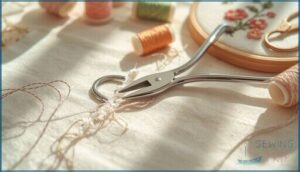
You don’t need bells and whistles when you’re just starting out with embroidery or tackling light stitch removal. Standard seam rippers give you the core tool: a small curved hook with a central blade for fabric protection during stitch removal.
These basic embroidery tools work beautifully on cotton and polyester blends, letting you master fundamental embroidery techniques without overthinking your sewing essentials. For more on essential tools for sewing, explore options that fit your specific needs and project types.
Ergonomic Seam Rippers for Extended Use
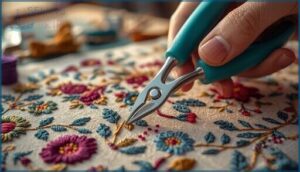
Long embroidery sessions demand tools that won’t punish your hands. Ergonomic seam rippers feature contoured grips with soft rubber grips that reduce fatigue while you rip through stubborn stitches.
The blade sharpness stays consistent through heavy use, and balanced weight distribution means your wrist won’t ache after hours of precision work.
User safety improves when grip comfort keeps your hand steady and controlled.
Double-Ended Seam Rippers for Versatility
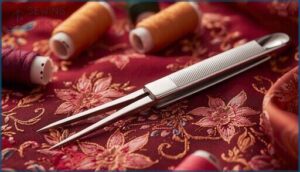
A DoubleEnded Seam Ripper gives you two tools in one grip—flip it for instant stitch removal on one end, then use the stiletto tip for guiding threads through tight spots. Tool Versatility means you’ll tackle delicate Fabric Compatibility challenges without switching between Sewing Tools.
The Ergonomic Design keeps your hand steady while Blade Sharpness on both ends manages precise Embroidery work effortlessly.
Adjustable Seam Rippers for Different Stitch Depths
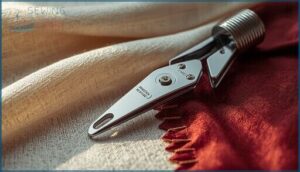
When your thread layers vary from delicate surface work to thick satin stitches, an Adjustable Seam Ripper with Blade Adjustment puts you in total command. The threaded collar locks your Precision Cutting depth anywhere from 0.5 mm to 2.5 mm, so you remove stitches without punishing the base fabric.
- Stitch Depth Control prevents accidental punctures on layered embroidery
- Ergonomic Grips keep your grip steady during depth changes
- Fabric Protection features shield delicate fibers at shallow settings
Specialized Rippers for Embroidery Techniques
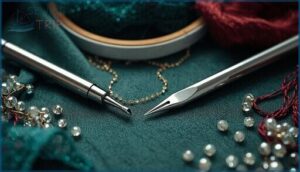
When dense fills meet intricate beadwork, you need specialized embroidery tools that go beyond basic ripping. A Micro Ripper with a 5 mm blade gives you pinpoint Precision Cutting for individual stitches, while Curved Tips lift looped threads from motifs without distorting fabric.
For Bead Removal, shallow blades glide over glass embellishments during Embroidery Repairs. Magnetic tips simplify Embroidery Thread Management by holding threads as you work complex Embroidery Techniques.
Top 7 Seam Rippers for Embroidery
You’ve learned the different types of seam rippers, so now it’s time to find the right tool for your projects. The market offers plenty of options, from basic designs to specialized models that make embroidery work easier.
Here are seven seam rippers that combine sharp blades, comfortable handling, and reliable performance for removing stitches without damaging your fabric.
1. Seam Rippers for Sewing
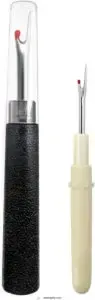
You’ll encounter stitching mistakes—it’s part of mastering your craft. The Aipker 2PCS Seam Rippers give you two sizes (3.5 and 5 inches) to tackle any embroidery challenge.
Hardened steel blades slice through unwanted seams, while the red ball tip protects delicate fabrics from snags. The non-slip grip keeps you in control, and the clear extendable handle cap ensures you won’t lose pieces mid-project.
At 0.353 ounces, these tools won’t fatigue your hand during long correction sessions. Sharp points demand respect, but that’s your advantage.
| Best For | Sewers and embroiderers who need reliable tools to fix mistakes, open buttonholes, and adjust intricate designs without damaging fabric. |
|---|---|
| Material | Plastic & Metal |
| Safety Cap | Clear plastic cap |
| Handle Design | Non-slip comfort grip |
| Blade Type | Hardened steel |
| Primary Use | Seam removal |
| Color | Black/White |
| Additional Features |
|
- Two different sizes handle everything from delicate embroidery to thicker seams
- Hardened steel blades stay sharp through repeated use, while the red ball tip prevents accidental fabric damage
- Lightweight design (0.353 oz) and non-slip grip let you work comfortably for extended periods
- Sharp points require careful storage and handling, especially around children
- May struggle with very thick or heavy-duty fabrics
- You’ll need good lighting to avoid accidentally nicking fabric during detailed work
2. Clover Ergonomic Seam Ripper Tool
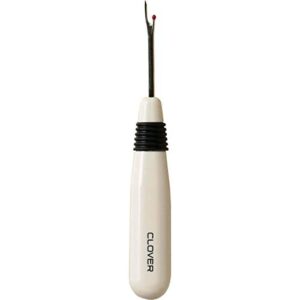
Extended embroidery sessions shouldn’t punish your hands. The Clover Ergonomic Seam Ripper features a contoured handle that molds to your grip, letting you work longer without cramping.
At five inches and under half an ounce, it’s nimble enough for tight spaces yet substantial enough for control. The hardened steel blade slips under small stitches cleanly, while the ball tip prevents fabric gouges.
That vinyl safety cap protects the blade—though some users report it tears with heavy use, so handle with care.
| Best For | Sewers and crafters who need a comfortable, precise tool for removing stitches during long projects without straining their hands. |
|---|---|
| Material | Metal & Plastic |
| Safety Cap | Vinyl safety cap |
| Handle Design | Ergonomic handle |
| Blade Type | Sharp blade |
| Primary Use | Seam ripping |
| Color | White |
| Additional Features |
|
- Ergonomic handle reduces hand fatigue during extended use
- Sharp blade with ball tip protects fabric while removing seams effectively
- Lightweight and compact design makes it easy to maneuver in tight spots
- Vinyl safety cap may tear or rip with regular use
- Higher price point compared to basic seam rippers
- Smaller size than some users expect, and lacks a storage cap
3. Seam Ripper Sewing Kit Tools
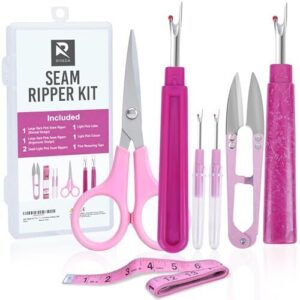
If you’d rather have options than commitment, the Riveda Seam Ripper Kit delivers seven tools in one compact case. You’ll get two large and two small rippers, plus a thread cutter, scissors, and a foldable measuring tape marked in inches and centimeters.
The metal tips cut reliably, and ergonomic parts you hold keep your grip steady. At under four ounces and five-point-seven inches, it’s travel-ready. Some users note the scissors feel flimsy and snipper blades arrive greasy, but for the price, you’re equipped for most embroidery fixes.
| Best For | Sewers and crafters who want a budget-friendly toolkit with multiple seam rippers and measuring options in one portable case. |
|---|---|
| Material | Metal & Plastic |
| Safety Cap | Protective covers included |
| Handle Design | Ergonomic handles |
| Blade Type | Sharp metal tips |
| Primary Use | Seam removal |
| Color | Pink |
| Additional Features |
|
- Seven tools including multiple ripper sizes, thread cutter, scissors, and measuring tape for different tasks
- Compact, lightweight case makes it easy to travel with your sewing tools
- Sharp metal tips and ergonomic handles provide reliable cutting and comfortable grip
- Scissors feel flimsy and may not hold up to heavy use over time
- Snipper blades can arrive with excess grease that needs cleaning before use
- Overall quality may not match more expensive, name-brand alternatives
4. Beadnova Seam Ripper Tool
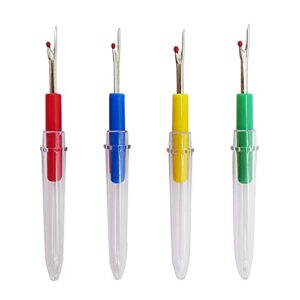
When one pack won’t cut it, Beadnova gives you five seam rippers with different blade shapes and handle styles. Each blade is tempered to resist chipping, and protective caps guard your fingers between projects.
The curved edges follow thread paths cleanly, while pointed tips slide into tight stitches without snagging. Color-coded grips help you grab the right tool fast.
At this price point, you’re stocking your workspace with backups that handle cotton, linen, and polyester blends without drama.
| Best For | Sewers and crafters who want budget-friendly backup tools in multiple sizes for different project types. |
|---|---|
| Material | Metal & Plastic |
| Safety Cap | Protective cover |
| Handle Design | Plastic handle |
| Blade Type | High-grade metal |
| Primary Use | Stitch removal |
| Color | Assorted (4 colors) |
| Additional Features |
|
- Four color-coded rippers in one pack means you always have a spare
- Protective covers keep blades sharp and your fingers safe in storage
- Red ball point prevents accidental fabric tears while removing stitches
- Cutting head feels too small for some users’ comfort
- Thin, short handle can be awkward to grip firmly during detailed work
- Blades may not be as sharp as pricier alternatives on the market
5. Dritz Seam Fix Seam Ripper
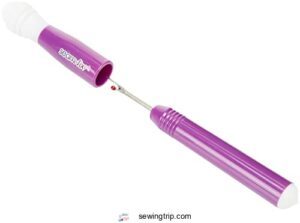
Dritz Seam Fix doubles down with a sharp blade on one end and a rubberized thread eraser on the other. You cut through unwanted stitches, then flip the tool to grab loose threads without pinching fibers.
The molded handle fits your palm comfortably during cleanup work, and the rounded safety ball stops fabric snags before they start.
The protective cap keeps the blade covered between sessions, though some users report it slips off easily and gets lost in your notions box.
| Best For | Sewers who want a two-in-one tool that cuts stitches and removes loose threads in one pass, especially helpful for cleanup work on embroidery and appliqué projects. |
|---|---|
| Material | Metal & Plastic |
| Safety Cap | Cap included |
| Handle Design | Ergonomic handle |
| Blade Type | Sharp metal |
| Primary Use | Thread cutting |
| Color | Purple/Green |
| Additional Features |
|
- Sharp blade cuts through stitches cleanly while the rubber tip grabs and removes threads without damaging fabric
- Ergonomic handle design makes it comfortable to use for extended periods, even for people with arthritis
- Safety ball prevents accidental snags and protects your fabric during detailed work
- Cap doesn’t stay securely attached and can easily get lost in your sewing kit
- Rubber tip doesn’t always grip threads effectively for all users
- You might receive a different color than what’s shown in product photos
6. Singer Folding Seam Ripper Tool

Singer’s folding design tucks the sharp point into a teal handle when you’re done ripping seams. The flip-and-rip mechanism protects your fabric from accidental snags while you carry it around your workspace, and the soft comfort grip keeps your hand steady during detailed thread removal on buttonholes and small embroidery areas.
At 22.68 grams, it manages light to medium weight fabrics beautifully, though you’ll want something heavier-duty for thick canvas or denim. The safety fold works for left- and right-handed stitchers alike.
| Best For | Sewers who need a portable, ambidextrous seam ripper for light to medium fabrics and want the safety of a folding design. |
|---|---|
| Material | Metal |
| Safety Cap | Flip ‘n Rip fold |
| Handle Design | Ergonomic comfort grip |
| Blade Type | Metal |
| Primary Use | Stitch removal |
| Color | Teal |
| Additional Features |
|
- Flip ‘n Rip safety fold protects the sharp point during storage and prevents fabric snags
- Ergonomic comfort grip reduces hand strain during detailed work like buttonholes and embroidery
- Works equally well for left- and right-handed users
- Not suitable for heavy-duty materials like thick canvas or denim
- Sharp point requires careful handling despite safety features
- Lightweight design (22.68g) may feel too delicate for some users
7. Dodoga Colorful Seam Ripper Tool
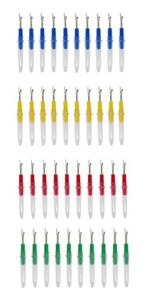
Vibrant colors mean you’ll spot this ripper instantly in your sewing box—no more digging through drawers mid-project. The forked blade slices through delicate embroidery threads cleanly without fraying fabric fibers, while the pointed tip slides under tight seams with precision.
At 3.5 inches with the protective cap on, it’s compact enough for detailed work on small motifs. The ergonomic grip won’t slip during extended sessions, and the hardened steel blade stays sharp through countless rips.
Perfect for beginners tackling their first samplers.
| Best For | Home sewers and crafters who need reliable tools for removing stitches, opening seams, and tackling detail work on embroidery or quilting projects. |
|---|---|
| Material | Metal & Plastic |
| Safety Cap | Clear plastic cap |
| Handle Design | Ergonomic design |
| Blade Type | Extra-sharp concave |
| Primary Use | Seam ripping |
| Color | Assorted (4 colors) |
| Additional Features |
|
- Sharp, curved blade cuts through threads cleanly without damaging fabric
- Bright colors make it easy to find in your workspace
- Comes in a 40-piece pack at great value, so you can keep extras in different project areas
- Small 3.5-inch size might feel cramped for people with larger hands
- Blade may dull faster if you use it heavily on thick materials
- Not ideal for extremely delicate fabrics where precision is critical
How to Choose The Right Seam Ripper
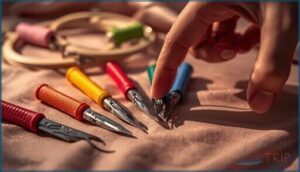
Picking the right seam ripper isn’t just about grabbing whatever’s on sale—it’s about matching the tool to your fabric, your hands, and the kind of work you’re doing. The wrong ripper can snag delicate threads or cramp your grip halfway through a big project.
Here’s what to look for so you can rip with confidence and precision.
Matching Blade Sharpness to Fabric Type
Your seam ripper’s blade sharpness determines whether you’ll glide through embroidery or shred delicate fabric edges. Match a razor-thin 10-to-12-degree edge to silk and satin for clean seam removal without snagging thread.
Heavy fabric durability demands sturdier 22-to-25-degree bevels that won’t dull on denim.
Knitted fabric snags less with 18-to-22-degree edges that respect those loops you’re weaving through.
Evaluating Handle Comfort and Grip
Your palm tells the truth after hour three of ripping stitches—cheap grips cramp fingers while ergonomic design keeps you in control. Look for these comfort features when choosing your seam ripper:
- Contoured ergonomic grips that distribute pressure across your palm instead of pinching fingertips
- Soft rubber or textured grip patterns that prevent slipping on delicate embroidery work
- Handle materials like cushioned foam that absorb vibrations during extended crafting sessions
- Safety guards protecting your hand without sacrificing the precision you need
A 20-to-25-millimeter diameter fits most hands comfortably, turning those marathon embroidery corrections into smooth, fatigue-free sessions.
Considering Project Detail and Intricacy Level
Complex embroidery demands different firepower than basic backstitches. Match your seam ripper blade to your stitch complexity—intricate satin stitches need sharp, narrow tips for precise detail removal, while dense cross-stitches require sturdier blades that won’t bind in thick thread.
Higher fabric density and thread count mean you’ll need finer control for embroidery repairs. Your project depth dictates your tool.
Comparing Durability and Build Quality
A cheap tool breaks when you need it most. Quality seam rippers use stainless steel blades that hold edge retention through 100-plus repair cycles, while impact-resistant grips resist cracking under pressure.
Look for metal ferrules securing blade assemblies—they prevent wobbling that kills blade sharpness.
Ergonomic seam ripper designs with textured grips outlast slippery competitors, giving you tool longevity that justifies higher upfront investment.
Proper Techniques for Using Seam Rippers
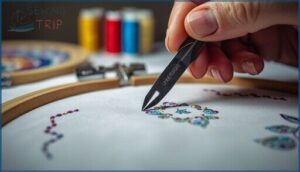
Having the right seam ripper won’t mean much if you don’t know how to wield it properly. The difference between clean stitch removal and a frayed mess comes down to technique, not just the tool in your hand.
Here’s how to master the four fundamental steps that’ll keep your fabric intact and your embroidery projects salvageable.
Inserting The Tip Under Stitches Correctly
You’ll master stitch removal by positioning your seam ripper’s tip at a shallow angle beneath the thread loop—never pierce the fabric itself. Slide the tip parallel to the stitch line for clean fabric protection and precise tip alignment.
This controlled approach prevents fraying during embroidery repairs, giving you confidence in every stitch correction. Sharp blade sharpening matters, but gentle insertion protects your work best.
Sliding The Blade Through Thread Safely
Once your tip’s in place, glide the blade along the thread path with light, controlled pressure—never hack across multiple stitches. Short strokes work best for embroidery repairs, letting you handle delicate thread removal without tearing.
This blade control gives you clean stitch removal while protecting the fabric underneath. If you hear fabric ripping, stop immediately and reposition for safer seam ripping.
Removing Thread Debris After Ripping
After pulling out stitches, brush away loose threads with a stiff tool or tap the fabric over a tray for debris cleanup basics.
For stubborn bits, adhesive removal methods work wonders—press low-tack painter’s tape across the area to lift fuzz.
Precision debris tools like tweezers let you pluck individual ends from dense embroidery, giving you complete thread removal control without damaging surrounding stitches.
Inspecting Fabric for Damage or Residue
Once you’ve cleared the threads, run a visual defect check to spot fabric damage before continuing your embroidery work.
Look for these warning signs:
- Holes or slits with frayed edges around openings
- Runs creating ladder-like effects across the weave
- Color residue from sizing agents that feels sticky
- Fiber slippage showing loose ends at removal points
- Weave faults like broken threads disrupting the pattern
Catching these early saves your project from bigger headaches later.
Seam Ripper Maintenance and Safety Tips
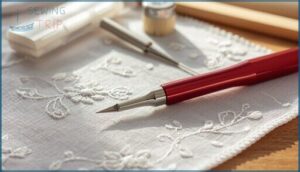
Taking care of your seam ripper isn’t just about making it last longer—it’s about keeping yourself safe and your projects clean. A well-maintained tool performs better and won’t let you down when you’re working through delicate embroidery stitches.
Here’s how to keep your seam ripper in top shape while protecting both your fabric and your fingers.
Cleaning Blades to Remove Lint and Fibers
A clean blade cuts rebellion into every stitch—don’t let lint dull your power. After each embroidery repair session, tap your seam ripper gently, then sweep away loose fibers with a soft brush. You’ll cut lint buildup by 40 percent and keep your ergonomic seam ripper sharp. Dry completely before storing to prevent rust.
| Blade Maintenance Step | Fiber Cleaning Benefit |
|---|---|
| Brush after each project | Reduces lint by 40% |
| Use compressed air bursts | Removes trapped fluff |
| Apply light oil sparingly | Dislodges stubborn fibers |
| Dry blades thoroughly | Prevents rust formation |
Storing Tools in Protective Cases
Your seam ripper deserves a fortress, not a junk drawer. Protect your embroidery lifeline with purpose-built storage solutions that match your rebel spirit.
- Impact-resistant plastic or metal cases shield blades from workshop chaos and accidental drops
- Custom foam inserts lock tools in place, preventing dulling during transport between crafting sessions
- Moisture-sealing features guard against humidity that corrodes precision edges you’ve carefully maintained
- Clear compartments organize thread management accessories alongside your seam ripper for instant access
Using Safety Guards to Prevent Cuts
With every sharp edge comes responsibility—blade protection transforms your seam ripper from hazard to hero. Rigid guards made from impact-resistant plastics shield your fingers from accidental contact, while clear shields maintain visibility during precision work. These safety features aren’t optional extras; they’re your first line of defense in accident reduction.
| Safety Feature | Protection Benefit |
|---|---|
| Guard materials (rigid plastic/metal) | Resist cracking under workshop impact |
| Auto-engage locks | Prevent unauthorized blade exposure |
| Adjustable coverage | Align with different blade widths |
| Tamper-resistant fasteners | Deter dangerous tool modification |
Needlework safety precautions start with keeping guards locked during every embroidery session—no shortcuts, no exceptions.
Applying Controlled Pressure During Use
Mastering pressure techniques separates confident stitchers from fabric wreckers. Align your wrist with the blade, applying gradual force rather than jabbing—light touch for silk, firmer grip for denim. Keep blade angles shallow to prevent slashing, and maintain fabric tension by anchoring material with your free hand.
An ergonomic handle gives you the control methods needed for safe stitch removal without hand fatigue.
Frequently Asked Questions (FAQs)
What can you use instead of a seam ripper?
Before your go-to tool vanishes, know your backup plan. Sharp embroidery scissors, thread snips, or tweezers work as scissor alternatives and blade substitutes.
Needle tools and pin removers also handle needlework tools repairs when seam rippers disappear.
Can you use an exacto knife as a seam ripper?
You can technically use an exacto knife for stitch removal, but it’s risky. The ultra-sharp blade easily slashes delicate fabric and embroidery threads, making a dedicated seam ripper the safer, smarter choice.
How to make your own seam ripper?
Want to break free from store-bought limits? Craft your own seam ripper by securing a micro blade to a comfortable handle, then test your DIY tool on scrap fabric before tackling real projects.
Can seam rippers work on machine embroidery stitches?
Yes, seam rippers handle machine embroidery beautifully when you use gentle, sweeping motions. The pointed tip breaks lock stitches cleanly, while the ball end prevents fabric snags during dense stitch removal and embroidery repairs.
How often should seam ripper blades be replaced?
Like a chef’s knife losing its edge, your blade dulls with use. Replace it every 6–12 months with regular stitching, or sooner if dense embroidery causes snagging—those replacement schedules protect your fabric.
Are electric seam rippers better for embroidery projects?
Electric rippers offer embroidery speed advantages for large-scale stitch removal, but precision control suffers on delicate work.
Manual seam rippers remain preferable for embroidery repairs requiring fabric safety and fine detail accuracy.
What thread types are hardest to remove precisely?
Metallic embroidery threads fracture during thread removal, while dense rayon blends cause fabric damage through aggressive fraying.
Smooth silk and fine polyester create embroidery challenges with stitch complexity, demanding careful thread management during embroidery repairs.
Can seam rippers damage embroidery stabilizer or backing?
When you rush or use dull blades, you risk tearing tear-away stabilizer or lifting adhesive backings.
Sharp tools, controlled pressure, and working along stitch lines protect backing integrity during embroidery repairs.
Conclusion
Your embroidery doesn’t have to be perfect the first time—that’s the whole point of keeping quality seam rippers for embroidery within arm’s reach. The right tool turns frustrating mistakes into minor detours, giving you the precision to remove stitches without scarring your fabric or fraying your patience.
Choose a ripper that fits comfortably in your hand, maintains its sharpness, and matches your project’s delicate demands. Then stitch boldly, knowing you can always undo what doesn’t work.