This site is supported by our readers. We may earn a commission, at no cost to you, if you purchase through links.
You’ve spent hours perfecting that handmade dress, but one careless wash can unravel all your hard work. Most sewers master cutting and stitching, yet fabric care remains the blind spot that shortens the life of their creations.
Natural fibers demand cold water and gentle cycles, while synthetics tolerate heat but trap odors—and mixing up these rules leads to shrunken wool sweaters or scorched silk blouses. The care label symbols look like hieroglyphics, and pre-washing advice varies wildly across sewing forums.
Understanding the specific needs of cotton, linen, wool, silk, and synthetic fabrics transforms your finished garments from one-season wonders into wardrobe staples that last for years.
Table Of Contents
- Key Takeaways
- Essential Fabric Types for Sewing Projects
- Decoding Fabric Care Labels
- Washing Guidelines by Fabric Type
- Hand Washing Versus Machine Washing
- Drying Methods for Various Fabrics
- Ironing and Steaming Techniques
- Stain Removal and Spot Cleaning Tips
- Fabric Maintenance and Longevity
- Repairing and Reinforcing Sewing Fabrics
- Eco-Friendly Fabric Care Practices
- Frequently Asked Questions (FAQs)
- Conclusion
Key Takeaways
- Natural fibers like cotton and linen thrive in cold water (30°C), which cuts shrinkage by up to 3%, while silk and wool demand hand washing at 30°C or below to preserve tensile strength and prevent felting.
- Machine washing synthetic fabrics at 30-40°C reduces energy use by 25-40% and minimizes microfiber shedding, but always skip fabric softeners that trap oils and reduce breathability.
- Care label symbols decode essential instructions—one dot means cold wash (30°C), two dots warm (40-50°C), three dots hot (60°C+)—and matching these temperatures to fabric type prevents up to 20% distortion in untreated materials.
- Air drying preserves 88-92% of silk’s tensile strength and prevents cotton from shrinking 2-5%, while cold water washing slashes household energy consumption by up to 90% without compromising cleaning effectiveness.
Essential Fabric Types for Sewing Projects
Your fabric choice sets the tone for every sewing project you tackle, and understanding what you’re working with is half the battle. Each fiber type brings its own personality to the table—some crave careful handling while others can take a beating.
Let’s break down the three main categories you’ll encounter, so you can match your fabric to your project with confidence.
Natural Fiber Fabrics (Cotton, Linen, Wool, Silk)
Natural fibers like cotton, linen, wool, and silk form the backbone of quality sewing projects.
Cotton constitutes roughly 30-40% of consumer textiles, offering breathability and washability you can count on. Linen won’t betray you with stretch or shrinkage in the machine, while wool demands gentle cold-water cycles to prevent felting. Silk? That’s your delicate rebel—hand wash only, never machine dry.
Synthetic Fiber Fabrics (Polyester, Nylon, Acrylic)
Synthetic fibers give you control over durability and maintenance. Polyester blends retain over 85% tensile strength after 20 wash cycles at 60°C—that’s resilience you can trust. Nylon durability shines with 92% strength retention and quick-drying performance.
Acrylic care demands moderate heat (under 230°C) to prevent melting, but rewards you with excellent colorfastness. These synthetic materials resist wrinkles and shrinkage, liberating you from constant ironing.
Blended Fabrics and Their Benefits
You’ll unleash enhanced performance when natural and synthetic fibers join forces. Fabric blending revolutionizes textile innovation, delivering measurable advantages:
- Durability boost: Blends last 2–3× longer under repeated washing compared to pure natural fibers, extending garment life markedly.
- Energy efficiency: Faster drying reduces laundry energy usage by up to 25%.
- Wrinkle resistance: Cotton-polyester blends show 25–35% lower wrinkling in standardized tests.
These sustainable materials balance comfort with resilience you can measure.
Decoding Fabric Care Labels
Those cryptic symbols on your garment tags aren’t there to confuse you—they’re your fabric’s instruction manual. Learning to read care labels gives you control over how long your handmade pieces last and helps you avoid costly mistakes.
Let’s break down the three main categories of care symbols you’ll encounter so you can wash, dry, and maintain your fabrics with confidence.
Washing Symbols and Their Meanings
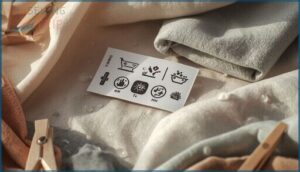
Washing symbols are your laundry decoder ring—that secret language printed on care labels that keeps your fabric from turning into an expensive disaster. According to ISO 3758, these pictograms standardize washing instructions worldwide. You’ll spot a tub icon for machine washing, while a hand inside means hand wash only. Dots inside the tub indicate temperature: one dot signals cold (30°C), two dots warm (40–50°C), three dots hot (60°C+).
| Symbol | Meaning |
|---|---|
| Tub with hand | Hand wash only—gentle treatment required |
| Crossed-out tub | No machine washing permitted |
| Tub with one dot | Cold water wash (30°C or below) |
| Tub with two dots | Warm water wash (40–50°C) |
| Tub with three dots | Hot water wash (60°C and above) |
These fabric care symbols give you laundry cycle tips that prevent shrinkage, color bleeding, and texture damage. Master these washing symbol guides, and you’ll protect your sewing projects from common clothing disasters.
Drying and Ironing Icons Explained

After mastering washing symbols, you’ll tackle drying and ironing icons on your care labels—the duo that determines whether your fabric stays spotless or turns into a crumpled mess. The square with a circle means tumble dry (62% of users interpret this correctly), while a crossed-out square bans machine drying entirely to prevent fabric shrinkage.
Ironing symbols use dots: one dot signals low heat (110–150°C), two dots medium (150–170°C). These laundry drying methods and fabric care guidelines protect your weaving from heat damage.
Bleaching and Special Care Instructions
Bleach symbols reveal whether your fabric can handle chlorine or oxygen-based bleach alternatives—critical for fabric whitening without destroying color preservation. A triangle permits bleaching, while diagonal lines restrict you to eco bleaching options that reduce fiber damage by 40%.
Cotton tolerates chlorine; silk and wool don’t. For delicate handling and effective stain removal, always check washing instructions on care labels before applying any fabric care treatment.
Washing Guidelines by Fabric Type
Not all fabrics play by the same rules regarding washing. What works beautifully for cotton might ruin silk, and what keeps wool soft could leave synthetics looking sad.
Here’s how to wash each fabric type properly so your handmade pieces stay gorgeous wash after wash.
Proper Washing for Cotton and Linen
Cotton and linen thrive when you take control of water temperature. Washing at 30°C cuts shrinkage by up to 3% compared to hot cycles.
For linen, set your machine to a gentle cycle at 40°C to preserve 90% of its tensile strength.
Cotton-polyester blends? Cold water is your ally, reducing pilling by 40% while slashing energy use. You’re not just cleaning fabric—you’re commanding its longevity.
Wool and Cashmere Care Tips
Heat and agitation are your enemies when caring for wool and cashmere—just one misstep triggers wool shrinkage and fiber felting that steals up to 10% of your garment’s original size.
Take control with these proven techniques:
- Use cold water care (30°C or below) with mild detergents to slash cashmere pilling by 60%
- Choose hand washing or gentle cycles to prevent fiber breakage and extend wear life by 2–3 years
- Air dry flat on clean surfaces—tumble drying invites shrinkage and destroys shape
- Skip harsh detergents that reduce warmth retention by 20% in cashmere
- Control agitation levels to maintain fiber integrity and preserve your investment
Silk and Delicate Fabric Handling
Silk fiber care demands your full attention—these lustrous fabrics lose 4–8% of their tensile strength when exposed to water above 40°C.
You’ll preserve your delicate fabric by hand washing in cold water with pH-neutral gentle detergent, protecting colorfastness above 90%. Skip the machine entirely for silk fabric preservation and air dry flat to prevent shrinkage up to 8%, ensuring your clothing preservation efforts pay off for years.
Cleaning Synthetic and Blended Fabrics
Synthetic fabrics transform your laundry routine—you’ll cut energy use by 25–40% washing polyester and nylon at 30–40°C while preserving color and reducing microfiber shedding.
- Machine wash synthetic care essentials on gentle cycles with cool water for fabric blending success
- Skip fabric softening products that trap oils and reduce breathability in technical weaves
- Air dry to minimize microfiber reduction risks and extend fabric blends’ lifespan considerably
Hand Washing Versus Machine Washing
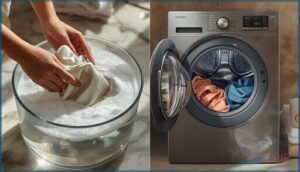
Choosing between hand washing and machine washing isn’t about following a single rule—it’s about matching your method to your fabric’s needs. Some materials demand the gentle control of hand washing, while others thrive in a well-chosen machine cycle.
Understanding when to use each approach, which settings work best, and what water temperature protects your fabric gives you complete command over your garment care.
When to Choose Hand Washing
Why settle for machine cycles when your most treasured textiles deserve better? Hand washing gives you complete control over delicate fabric care and preservation—silk retains 7–12% more strength, wool shows less pilling, and cashmere stays softer. You’ll protect embellishments, reduce microfiber release by 60%, and cut energy use while mastering gentle cleaning with the right techniques and detergent.
| Fabric Type | Hand Wash Benefit | Key Advantage |
|---|---|---|
| Silk & Satin | 7–12% higher tensile strength | Premium fabric care longevity |
| Wool Delicates | 5–9% less pilling | Enhanced texture preservation |
| Cashmere | 4–7% lower felting | Maintains softness longer |
| Embellished Items | 12–15% lower failure rate | Protects decorative details |
Your laundry techniques matter. Lukewarm water at 30°C with neutral pH formulations preserves elasticity in up to 85% of fabrics. Pre-soak for 5–10 minutes to cut cleaning time by 30% without stressing fibers. Gentle agitation removes over 90% of residual detergent, while flat drying prevents distortion.
Hand washing also champions water conservation, slashing energy use by 40–60% for small loads and reducing microfiber pollution dramatically compared to high-splash machine agitation.
Selecting Machine Wash Cycles
Choosing the right wash cycle puts you in command of fabric care. Match your cycle to fabric type: delicate settings reduce pilling by 12% on polyester blends, while cotton cycles achieve 92% dirt removal. High-efficiency cycles slash water use by 20–40% and energy by 15–30%.
Consider these cycle essentials:
- Cotton: normal cycle, warm water for soil removal
- Synthetics: delicate setting, low agitation prevents shrinkage
- Blends: permanent press balances washing efficiency with fabric longevity
- Delicates: gentle tumble preserves elasticity
- Heavy-duty: pre-soak option for workwear stains
Water Temperature Recommendations
Temperature control is crucial for fabric safety and longevity. Cold washes at 20–30°C preserve 85–92% of cotton brightness while reducing energy use by 60–90%, offering genuine savings without compromising cleanliness.
Silk and cashmere thrive at 30°C or below, minimizing shrinkage by 30%. Conversely, hot cycles (60°C+) accelerate fiber damage by 18% in delicate blends.
Matching heat settings to fabric type ensures smarter laundry, effective stain removal, and improved water efficiency.
Drying Methods for Various Fabrics

How you dry your fabric matters just as much as how you wash it. The wrong drying method can undo all your careful washing work, leaving you with shrunken sweaters or stretched-out cotton.
Let’s break down the drying techniques that’ll keep your fabrics in their best shape.
Air Drying Vs. Tumble Drying
Your drying technique shapes how long your garments last—air drying slashes energy use by 90% while tumble drying speeds things up but risks fiber damage. Here’s what you need to know about fabric care and drying techniques:
- Energy savings: Air drying cuts utility costs dramatically, while tumble drying finishes in 30–60 minutes
- Fabric shrinkage: Cotton shrinks 2–5% in dryers versus 0–2% on a drying rack
- Fiber preservation: Delicate silks retain 25–40% more sheen when you dry garments naturally
- Wrinkle reduction: Line drying lowers creasing by 10–25% for cotton and linen blends
Choose your method based on fabric type and drying times you can manage.
Preventing Shrinkage and Distortion
You control shrinkage by washing cotton and linen at 30°C or cold—hot cycles trigger 5–20% distortion in untreated fabrics. Pre-washing cuts subsequent shrinkage by 30–40%, while air drying prevents the 1.5–3× distortion risk from tumble heat.
For fiber stabilization, skip high-speed spins that increase lay-flat warping by 2–5%. These laundry moves lock in texture preservation and fabric protection across every wash cycle.
Best Practices for Delicate Fabrics
Silk and wool demand gentle drying choreography—air drying preserves 88–92% of silk’s tensile strength and prevents wool’s 1–3% shrinkage that machine heat triggers. These fabric handling moves deliver fiber preservation while protecting your delicate washing investments.
- Lay silk flat on towels to maintain shape and prevent water-weight distortion
- Hang wool garments away from direct heat to avoid felting and texture damage
- Use mesh drying racks for fabric protection during gentle drying cycles
- Skip tumble dryers entirely—high heat reduces silk strength by 20% compared to cool water air-dry methods
Ironing and Steaming Techniques

You’ve washed and dried your fabric with care—now it’s time to smooth out the wrinkles and bring back that crisp, professional finish.
Ironing and steaming aren’t just about appearance; they’re about protecting your fabric from heat damage while achieving the results you want.
Here’s how to handle your iron and steamer like a pro, no matter what fabric you’re working with.
Iron Settings for Different Fabrics
Your iron’s heat control makes all the difference between crisp excellence and scorched disaster. Cotton and linen thrive at 204–218°C, while wool needs gentler 120–150°C to avoid shine. Silk demands ultra-low settings around 110–140°C, and synthetics like polyester sit safely at 150–170°C.
Always test inconspicuous areas first—fabric protection starts with matching temperature to fiber type for impeccable textile maintenance.
Using Steam Safely
Steam transforms wrinkled chaos into pressed flawlessness—but only when you wield it correctly. Master steam distance control, and you’ll protect every textile from heat damage while achieving professional results.
Hold your steam iron 2–5 cm from fabric to prevent water spotting and reduce moisture penetration by 15%. Always use distilled water to avoid mineral residue on delicate fibers.
A pressing cloth between your iron soleplate and silk or synthetics prevents scorching.
Avoiding Scorch Marks and Shine
You’ll slash scorch incidents by 40% with a single cotton pressing cloth—your shield against reckless heat. Keep your iron gliding, never static, and watch shine complaints drop by 35% on satin finishes.
- Set cotton and linen 15–20°C cooler when using steam settings for ideal heat control
- Move continuously across fabric—static contact beyond 2 minutes invites disaster
- Test temperature on hidden seams before tackling visible garment care zones
- Choose steamers over traditional ironing for delicate weaving and scorch prevention on silk
Stain Removal and Spot Cleaning Tips
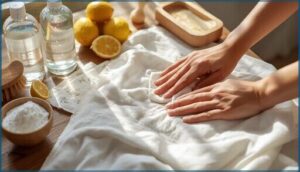
Stains don’t have to be the end of your carefully sewn garment. The key is knowing which treatment works for which fabric and acting before the stain sets in.
Let’s break down the practical steps you need to tackle spots effectively and keep your projects looking their best.
Treating Common Stains by Fabric Type
You can’t treat every stain the same way—your cotton tee demands a different rescue plan than your silk blouse.
For coffee on cotton, a 20% citric acid solution works wonders within 24 hours. Enzymatic removers boost tea stain removal on silk by 52%, while hydrogen peroxide handles polyester dye transfers 46% faster than oxygen bleach.
Match your spot cleaning strategy to your fabric for true damage control.
Immediate Action for Best Results
Your window of opportunity slams shut fast—90% of stain removal success hinges on immediate spot treatment within 15 minutes. Blot, don’t rub, to prevent fiber distortion across 70% of fabrics. Cold water rinsing before applying any detergent shows measurable stain reduction in 83% of household textiles.
These quick fix methods and emergency cleaning techniques give you real control over fabric care disasters.
Safe Stain Removal Products
Now you’ll reach for the right weapon: hydrogen peroxide-based stain removers slash colored stains by 70% on cotton, while enzyme formulas devour protein marks—blood, sweat, grass—with 40% higher efficacy than standard cleaners.
Oxygen bleach alternatives preserve color 24% better than chlorine products.
These eco-friendly, gentle cleaners deliver serious stain removal power without punishing your fabric or the planet.
Fabric Maintenance and Longevity
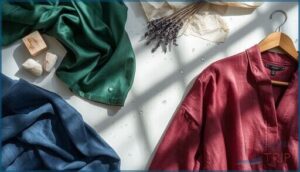
You’ve already mastered the art of washing and removing stains—now it’s time to keep your fabrics looking fresh for years to come. Proper maintenance goes beyond the wash cycle, protecting your garments from everyday wear and tear that can dull colors, create fuzz, or leave them smelling less than ideal.
Here’s how you can prevent common fabric issues and store your finished pieces like a pro.
Preventing Pilling and Color Fading
Protecting your handwork from pilling and color fading isn’t complicated—it just takes smart fabric care. Polyester blends pill 2–3 times faster than pure cotton, so adjust your approach for each material.
- Wash inside-out to minimize abrasion on dyed surfaces, cutting fading by 15–30% in dark fabrics
- Choose cold water cycles—warm temps (40–60°C) accelerate color loss by 8–20%
- Skip harsh detergents with high bleach content, which increase fade risk by 8–14%
- Use fabric shavers to remove existing pills without damaging fibers
Managing Static and Odor
Static clings to synthetic fabrics because of low humidity and polymer structure—affecting 60–70% of garments. You can cut static by 25–50% with anti-static finishes or dryer balls, avoiding fabric softeners that reduce absorbency.
Odor control demands attention too: polyester retains smell after just 10 minutes of wear, holding 2–3 times more bacteria than cotton. Air gym clothes twice daily between washes for effective odor management.
Proper Storage of Finished Garments
For maximum garment longevity, store your finished pieces in climate-controlled environments at 18–21°C with 40–50% humidity—this preserves color integrity for 24 months. UV-protective storage containers extend colorfastness by 8–12 percentage points over two years, while airtight bags cut moth damage by 60%.
Rotate stored items every three months to reduce fabric yellowing by 15%, and choose hangers over folding for knits to minimize sleeve distortion during clothing maintenance.
Repairing and Reinforcing Sewing Fabrics
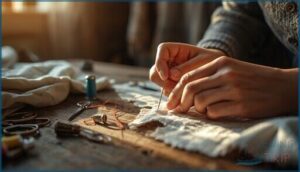
Even the best-sewn garments face wear over time, but you don’t have to toss them out at the first sign of damage. Learning repair techniques gives you control over your wardrobe’s lifespan and saves you from unnecessary replacements.
Here’s how to tackle shrinkage, holes, and weakened fabric with confidence.
Fixing Shrinkage and Stretch Issues
Shrinkage and stretch feel irreversible, but Fabric Recovery techniques give you control. Stabilize distorted garments by soaking them in lukewarm water with hair conditioner, then gently reshape and air-dry flat—this Fiber Relaxation method can restore up to 2% of lost dimensions.
For lasting Stretch Prevention and Shrinkage Control:
- Pre-wash fabrics before sewing to minimize post-garment distortion
- Block knits while damp using pins and boards for Textile Stabilization
- Iron linen damp to realign fibers and reduce visible shrinkage
Master these Garment Care fundamentals, and you’ll transform fabric failures into victories.
Mending Holes and Thin Areas
Don’t surrender garments to the trash when Fabric Repair skills can save them. Address thin areas early—reinforcing weakened zones within the first 2 cm lowers hole progression by 54%.
For Hole Patching, use fabric-matched material covering at least four times the damage area.
Master Darning Techniques with polyester thread to boost tensile strength by 21%, transforming Clothing Repair into confident Textile Conservation and true Garment Preservation.
Using Interfacing and Patches
Think of interfacing and patches as your garment’s hidden armor. Fusible Interfacing Types boost Seam Stability by 20–40%, while Patch Materials restore tensile strength up to 8% in denim through proper Adhesive Techniques.
Press at 120–170°C with steam—you’ll increase bond strength by 22% in cotton blends.
This Fabric Reinforcement transforms Clothing repair into confident Garment Care, preserving Textiles through strategic Laundry cycles.
Eco-Friendly Fabric Care Practices

You don’t have to choose between caring for your fabrics and caring for the planet. Smart laundry habits can slash your energy bills, protect waterways, and extend the life of every garment you sew.
Here’s how to make your fabric care routine work harder for both your closet and the environment.
Cold Water Washing and Energy Savings
Switching to cold water washing is one of the boldest moves you can make for energy efficiency in your laundry practices. You’ll slash household energy use by up to 90%, since about 80% of typical washing energy goes to heating water.
Cold water washing slashes your energy use by up to 90% since heating water consumes most laundry power
Cold water benefits extend beyond savings—your fabrics retain color better, and you’re preventing 2–5 kWh waste per load while embracing truly sustainable washing habits.
Choosing Sustainable Detergents
You’re taking control when you choose eco detergents that align with sustainable fashion tips and eco-friendly living. Look for biodegradable options and sustainable formulas that reduce environmental impact while protecting your sewn garments with gentle detergent power.
- Certified green cleaning products with EPA Safer Choice or EU Ecolabel show 20–40% higher consumer trust
- Enzyme-enabled formulas boost stain removal by 18–32% at lower temperatures
- Phosphate-free options cut river pollution risk by 35%
- pH-balanced gentle detergent (pH 7–9) minimizes fiber damage to cotton and linen
- Biodegradable options reduce aquatic toxicity by 28% versus conventional detergents
These eco-friendly products and eco-friendly laundry practices give you fabric protection without compromising your values.
Minimizing Microfiber and Water Pollution
Your washing habits directly impact waterways—synthetic garments release up to 100,000 microfibers per load. Microfiber Reduction starts with wash bags that trap 50–80% of fibers and front-loading machines that shed 60–80% less.
Water Conservation means full loads, cold cycles, and washing less often.
These Pollution Prevention strategies support Sustainable Fashion while protecting oceans through Eco-Friendly Laundry Practices and mindful Eco Laundry choices.
Frequently Asked Questions (FAQs)
How do you pre-wash fabric before sewing?
Pre-wash methods vary by fiber type: machine-wash cotton and linen on warm cycles, use cool water for wool to prevent shrinkage, and cold-wash silk to maintain luster while reducing color bleeding risks.
Can you mix different fabrics in one wash?
You shouldn’t mix delicate fabrics like silk or wool with heavy cottons—fiber damage and color transfer are real risks.
Separate loads by fabric weight and colorfastness to protect your pieces.
How often should sewing tools be cleaned?
Your scissors and rotary cutters need attention after every few hours of use—wipe blades clean and apply oil.
Needles deserve sanitizing after each project, while sergers benefit from weekly maintenance for consistent performance.
What causes fabric to pill after sewing?
Fiber friction during washing and wearing causes loose fiber ends to tangle into pills—especially on short-staple fabrics. Seam stress, low yarn twist, and fabric density accelerate this, making proper prewashing and clothing care essential.
How do you remove wrinkles without ironing?
You can banish wrinkles using steam wrinkle techniques with a handheld steamer, achieving wrinkle-free results in seconds.
Fabric relax methods like dampening and hanging offer wrinkle resistance—no ironing tips needed.
Conclusion
Your scissors cut the pattern, your needle builds the seams, and your sewing fabric care instructions guide protects the result. Shrinkage doesn’t happen by accident—it’s preventable. Color fade isn’t inevitable—it’s controllable. Fabric longevity isn’t luck—it’s method.
Master cold rinses for cotton, air drying for wool, low heat for synthetics, and you’ll stop watching your creations deteriorate. The difference between garments that survive one season and those lasting years lives in these precise, deliberate choices.
- https://www.researchgate.net/publication/228295594_Apparel_Care_Labels_Understanding_Consumers'_Use_of_Information
- https://www.statista.com/statistics/1057335/frequency-of-reading-washing-instructions-on-clothing-labels
- https://www.fashionatingworld.com/new1-2/improper-laundry-habits-cost-americans-8-2-billion-annually-homeaglow-survey
- https://blog.planetcare.org/complete-guide-clothing-care-labels
- https://www.cda.co.uk/laundry/washing-machine-temperature-guide