This site is supported by our readers. We may earn a commission, at no cost to you, if you purchase through links.
Your sewing machine already has everything you need to create intricate, hand-drawn designs on fabric—you just need to access its free motion capabilities.
Free motion embroidery transforms your machine into a creative tool, where you control the needle’s path, moving fabric in any direction to create custom patterns, flowing lines, and artistic textures that standard stitching can’t achieve.
The technique requires dropping your feed dogs, attaching the right foot, and learning to coordinate your hand movements with the needle’s rhythm. With proper setup—including the right needles, stabilizers, and thread tension adjustments—you’ll move beyond pre-programmed designs and stitch your own unique artwork directly onto quilts, garments, and home décor projects.
Table Of Contents
- Key Takeaways
- Essential Sewing Machine Setup for Free Motion Embroidery
- Choosing Needles and Threads for Free Motion
- Preparing Fabric and Stabilizers
- Free Motion Embroidery Techniques and Tips
- Top 10 Tools and Accessories for Free Motion Embroidery
- 1. Tiseker Metal Quilting Presser Foot
- 2. Metal Open Toe Quilting Foot
- 3. Metal Free Motion Quilting Foot
- 4. Schmetz Embroidery Sewing Machine Needles
- 5. Schmetz Topstitch Sewing Needle
- 6. Euro Notions Quilt Machine Needles
- 7. Schmetz Universal Sewing Machine Needles
- 8. Brothread Polyester Embroidery Thread Kit
- 9. Complete Guide to Stabilising Fabric
- 10. Plastic Embroidery Hoop Set
- Frequently Asked Questions (FAQs)
- Conclusion
Key Takeaways
- Your domestic sewing machine already has everything needed for free motion embroidery—just drop the feed dogs, attach a free motion foot, and start guiding fabric manually to create custom designs that no pre-programmed pattern can match.
- Success hinges on three setup essentials: proper needle-thread pairing (75/11 to 90/14 needles with matching polyester or rayon thread), the right stabilizer for your fabric weight, and drum-tight hoop tension that prevents puckering mid-stitch.
- Free motion embroidery transforms your machine into a drawing tool where you control the needle’s path completely, coordinating hand movement with consistent pedal speed to build muscle memory through practice on simple shapes before tackling complex designs.
- The technique demands synchronized rhythm between your hands and foot pedal—slow, steady movement prevents skipped stitches and bunching, while quality tools like metal presser feet, sharp needles, and proper lighting make the difference between frustration and flowing artwork.
Essential Sewing Machine Setup for Free Motion Embroidery
Your sewing machine doesn’t need special features to handle free motion embroidery, but a few adjustments make all the difference. The right setup transforms your machine from a standard stitcher into a tool for creative freedom.
Choosing a reliable sewing machine designed for quilting ensures you’ll have the durability and control needed for intricate embroidery work.
Let’s walk through the key changes you’ll need to make before you start stitching.
Domestic Sewing Machine Requirements
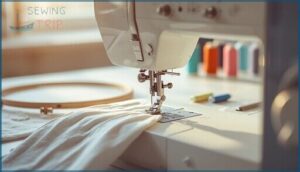
You don’t need a fancy industrial beast to break into free motion embroidery—your domestic sewing machine probably has what it takes. Look for these basics:
- Machine Power: At least 50 to 70 watts keeps motor speed steady through detailed work
- Thread Tension: Adjustable controls on top and bobbin balance stitches across different fabrics
- Feed Dog: A drop lever or switch gives you total control over fabric movement
Check your sewing space and throat clearance, too.
For more on the variety of types of domestic sewing machines, see this in-depth guide.
Free Motion Foot Attachment
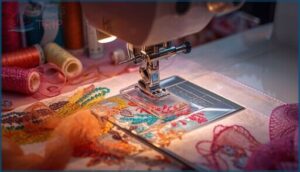
Once you’ve confirmed your machine can handle the work, swap out your standard presser foot for a free motion foot.
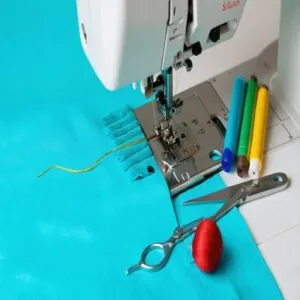
This transparent attachment snaps or screws onto your machine shank—check whether you have low or high shank types before ordering. The open-toe design gives you a clear view of every stitch, while the flat sole glides smoothly over fabric without catching or dragging.
Lowering Feed Dogs for Free Motion
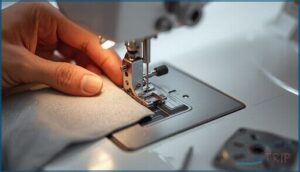
With your Free Motion Foot in place, it’s time to drop those feed dogs. Most machines offer a dedicated lever or switch to lower them, creating a smooth surface where fabric glides freely beneath the needle.
If your model doesn’t have that setting, snap on a Darning Plate to cover the teeth—this prevents Fabric Drag and lets you guide material in any direction without the machine fighting your hands.
Lowering the feed dogs provides improved control over fabric movement, which is especially useful for free motion embroidery.
Embroidery Hoop Importance
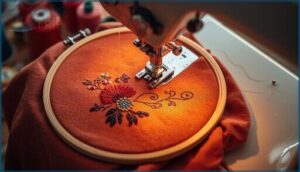
Once your feed dogs are down, slip your fabric into an Embroidery Hoop to lock it flat and taut.
Hoop Material—wood, plastic, or metal—affects grip and stability, while proper Sizing Designs to your ring prevents slack.
Tension Control keeps threads from bunching, preventing puckering mid-stitch.
This simple tool transforms Free Motion Machine Embroidery from wobbly chaos into precise art you can steer with confidence.
Choosing Needles and Threads for Free Motion
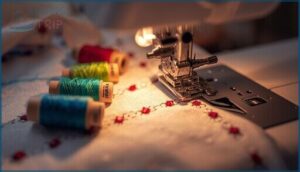
Your needle and thread choices can make or break your free motion embroidery project. The wrong combination leads to skipped stitches, thread breaks, and frustration, while the right pairing creates smooth, consistent lines.
Let’s look at the specific needles, threads, and coordination techniques that’ll set you up for success.
Machine Embroidery Needle Sizes
Your needle size makes or breaks your free motion machine embroidery. Most embroidery techniques and tips start here: needle size charts show 75/11 for fine work, 80/12 for standard machine embroidery thread, and 90/14 for heavier fabric selection.
Thread compatibility depends on getting this right—match your sewing machine setup to your material, and you’ll skip the frustration of broken threads and puckered designs.
Needle Brands and Types
Schmetz leads the pack for needle materials and specialty tips, offering titanium-coated options that handle metallic embroidery thread without breaking a sweat. You’ll find sharp needles in the 70/10 to 90/14 range for precise thread painting, while Organ and Bohin deliver serious needle durability.
Match topstitch needles to heavier threads—your thread compatibility and fabric selection depend on it.
Thread Types and Qualities
Polyester embroidery thread won’t shrink or fade, making your thread choices bulletproof for long-term projects.
Cotton thread gives you a matte finish with softer fiber content, perfect for vintage-inspired thread painting.
Rayon delivers silky sheen for bold color fastness, while thread blends combine strength with visual impact.
Match thread weight to your fabric selection—lighter yarns for delicate work, heavier weights for textured designs.
Coordinating Needle Speed and Fabric Movement
Think of free motion machine embroidery like driving—your speed control and fabric guidance must work together for smooth results. Coordinate needle timing with steady movement techniques to prevent skipped stitches and control stitch density.
Lower your feed dogs, then practice matching fabric travel to your machine’s rhythm. Start slow, building muscle memory before accelerating.
Consistent sewing machine maintenance keeps your timing precise.
Preparing Fabric and Stabilizers
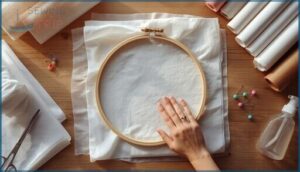
Your fabric is the canvas, and how you prepare it determines whether your free motion embroidery soars or sinks. Getting the right stabilizer paired with the right fabric isn’t just helpful—it’s everything.
Let’s break down what works, what doesn’t, and how to set yourself up for clean, pucker-free stitching every time.
Selecting Suitable Fabric Types
Your fabric choice makes or breaks your free-motion embroidery adventure. Thread and fabric selection depends on fabric weight—light fabrics (100-150 GSM) suit delicate work, while heavy fabrics (250+ GSM) need slower speeds.
Consider fiber blends, dye compatibility, and fabric stretch for textile art creation. Cotton manages moderate tension beautifully, while polyester blends resist wrinkling.
Match your fabric markers to your chosen surface for clean, professional results.
Stabilizer Options and Uses
Stabilizers are your invisible foundation—they prevent fabric from shifting, puckering, or stretching during free motion machine embroidery. Choosing the right embroidery backing transforms frustrating thread tension issues into smooth, professional results.
Five stabilizer types every embroiderer needs:
- Water soluble stabilisers—dissolve completely, leaving zero residue on delicate textiles
- Tear away stabilisers—peel off quickly after stitching dense designs
- Cut away stabilisers—stay permanently beneath knits for lasting fabric support
- Sticky backing stabilisers—grip slippery materials inside your embroidery hoop
- Heat soluble stabilisers—vanish with steam for invisible hoop management
Interfacing and Hoop Attachment
Once you’ve selected the right stabilizer types, the next skill to master is locking fabric into your embroidery hoop with confidence. Hoop alignment determines whether your free motion embroidery techniques produce crisp designs or skewed disasters.
Three attachment methods that guarantee fabric tension success:
| Method | Best For | Key Advantage |
|---|---|---|
| Quick release clamps | Rapid hoop swapping | Maintains grip without loosening |
| Magnetic hoop guides | Precise fabric placement | Centers edge before first stitch |
| Adjustable tension screws | Variable thickness materials | Controls slippage during stitching |
Secure your stabilizers using spray-on temporary adhesives—they hold interfacing steady without shifting mid-project.
Clean hoop surfaces after each session, inspect clamps for cracks, and store hoops upright to prevent warping that ruins future hoop maintenance.
Preventing Puckering and Fabric Gathering
Perfect hoop alignment won’t rescue your work if tension problems strike. Pucker prevention starts with thread balance—match your needle and bobbin weights to avoid one yanking harder than the other.
Lower those feed dogs, then stabilise lightweight fabrics before your first pass. When fabric stretch causes gathering, slow your stitching speed and let the material glide naturally.
Tension adjustment fixes most free motion machine embroidery disasters before they become permanent.
Free Motion Embroidery Techniques and Tips
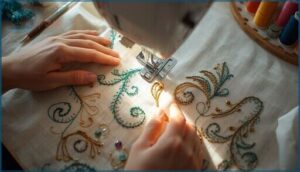
Once you’ve got your machine set up and your fabric prepped, it’s time to break free from the rulebook and let your hands guide the stitches.
Mastering free motion embroidery comes down to practice, patience, and a few key techniques that build your confidence stitch by stitch.
Here’s what you need to know to move from hesitant beginner to fearless fabric artist.
Straight Stitch and Zigzag Techniques
Your sewing machine becomes a paintbrush once you master two foundation stitches. Straight stitch free motion embroidery delivers crisp outlines and text, while zigzag stitch fills spaces with vibrant texture.
Stitch length control and thread tension directly impact your results—tight tension causes puckering, loose creates loops. Match embroidery speed with needle alignment and fabric stretch for smooth lines without skipped stitches.
Practicing Simple Shapes and Designs
Your hands build muscle memory through repetition, so start with basic shapes like circles, hearts, and loops. These exercises teach shape control and design symmetry while training fabric movement instincts.
Draw each pattern five times in a practice hoop, keeping thread sketching fluid and relaxed. Stitch consistency improves when you treat free motion stitching like drawing—confident, not careful.
Maintaining Consistent Speed and Stitch Length
Successful free motion machine embroidery hinges on synchronized speed management and fabric handling—your foot pedal controls machine embroidery thread delivery while your hands guide the hoop. Think of it like conducting an orchestra: steady pace regulation creates uniform stitch length, while erratic movements produce chaos.
Free motion embroidery is like conducting an orchestra—synchronized speed and steady fabric movement create uniform stitches, while erratic handling produces chaos
- Keep your stitching speed slow and deliberate to master stitch control before attempting complex designs
- Move fabric smoothly at a pace matching your needle speed to prevent bunching or skipped stitches
- Practice tension adjustment on scrap fabric until upper and lower threads lock perfectly between layers
- Maintain rhythm by mentally counting or humming to synchronize hand movement with your machine’s tempo
Removing Stabilizers and Finishing Touches
After your free motion machine embroidery masterpiece takes shape, stabilizer removal demands patience and precision. Tear-away stabilisers peel from the back, while wash-away types dissolve in lukewarm water—both protect your delicate stitching.
Trim machine embroidery thread tails close to the surface, then press lightly with low heat over a cloth. These finishing techniques transform raw work into polished art worthy of display.
Top 10 Tools and Accessories for Free Motion Embroidery
Having the right tools transforms free motion embroidery from frustrating to freeing. You don’t need a massive collection to get started, but certain accessories make a real difference in how smoothly your fabric glides and how clean your stitches look.
Here are ten essential tools that’ll help you master this technique and create designs you’re proud of.
1. Tiseker Metal Quilting Presser Foot
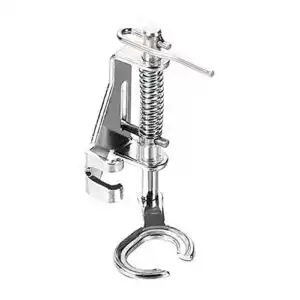
This metal presser foot from TISEKER transforms your domestic machine into a free-motion powerhouse. The 12mm wide hoop opening glides smoothly across dense quilt sandwiches, leather, and thick cotton without snagging. Its spring-loaded design prevents those frustrating skipped stitches while you move fabric freely beneath the needle.
Compatible with most low-shank snap-on machines, including Brother, Singer, and Janome models, it snaps on without special mounting plates. The slim profile won’t obstruct your view when maneuvering tight corners, and the durable metal construction withstands high-speed stitching sessions without flexing.
| Best For | Quilters and sewists who want to tackle free-motion quilting, darning, or embroidery on thick fabrics like leather and dense quilt layers without investing in a specialized machine. |
|---|---|
| Material | Metal |
| Brand | TISEKER |
| Weight | 0.317 ounces |
| Primary Use | Free motion embroidery |
| Compatibility | Low-shank machines |
| Color | White |
| Additional Features |
|
- Spring-loaded design keeps fabric contact smooth and prevents skipped stitches during free-motion work
- Wide 12mm opening handles bulky materials like leather and layered quilts without jamming
- Snaps onto most low-shank machines (Brother, Singer, Janome) without extra adapters
- Doesn’t fit securely on some Singer models and may require shimming or adjustment
- Top pin can break or fall out after heavy use, especially on dense fabrics
- No instructions included—you’ll need to watch YouTube tutorials to figure out setup and technique
2. Metal Open Toe Quilting Foot
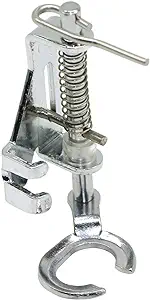
Think of this foot as your window into precision stitching. The open toe design gives you a crystal-clear view of the needle area, so you can follow complex patterns without guessing where your next stitch lands.
Its flat metallic bottom grips fabric firmly while preventing snags during movement, especially across multiple layers. You’ll align corner points and sharp angles with confidence, thanks to that wide toe opening.
The durable metal construction resists bending under pressure, maintaining steady fabric contact throughout long quilting sessions.
| Best For | Quilters and embroiderers who need clear visibility for detailed free-motion work and want to tackle thick materials like leather without skipped stitches. |
|---|---|
| Material | Metal |
| Brand | Generic |
| Weight | 0.317 ounces |
| Primary Use | Free motion quilting |
| Compatibility | Low-shank machines |
| Color | Silver |
| Additional Features |
|
- Open-toe design provides excellent visibility for precise stitch placement on complex patterns
- Spring-loaded mechanism helps prevent skipped stitches, especially on thick fabrics
- Compatible with most low-shank sewing machines from major brands like Brother, Singer, and Janome
- Build quality can be inconsistent, with some users reporting flimsy construction
- The spring pin may break off easily, making the foot unusable
- Top bar can come loose during use and be difficult to reattach
3. Metal Free Motion Quilting Foot
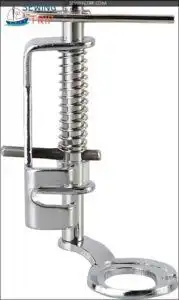
When you lower those feed dogs, you need a foot that moves with you, not against you. This metal free motion quilting foot features a spring-action mechanism that lifts and lowers as you stitch, preventing fabric from lifting or threads from snapping mid-design.
The open front allows you to steer freely through stippling, meandering, and thread painting without losing sight of your path. Its durable metal construction won’t bend during tight turns, giving you control over intricate patterns across quilts and embroidered textiles.
| Best For | Quilters and embroiderers who want precise control during free-motion stitching, especially when working on detailed patterns or designs that require clear visibility and fabric stability. |
|---|---|
| Material | Metal |
| Brand | Stormshopping |
| Weight | 0.352 ounces |
| Primary Use | Free motion quilting |
| Compatibility | Low-shank machines |
| Color | Silver |
| Additional Features |
|
- Spring action prevents fabric lifting and thread breakage during complex stitching
- Open front design gives you a clear view of your work for accurate stippling and pattern following
- Compatible with most low-shank snap-on machines including Brother, Babylock, Janome, and Singer models
- May leave a gap between foot and fabric when working with thin materials
- Top bar can break if you’re not careful during use
- Requires practice to coordinate tension settings, pedal speed, and hand movements smoothly
4. Schmetz Embroidery Sewing Machine Needles
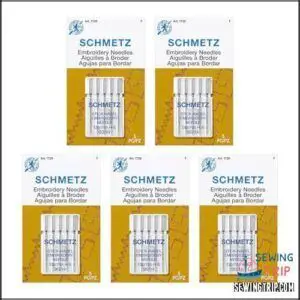
Standard needles shred delicate embroidery threads faster than you can say “thread painting.” Schmetz embroidery needles solve this with an enlarged eye and widened groove that let rayon, polyester, and metallic threads glide through without friction or snapping.
The 90/14 size is suitable for dense decorative stitching on medium-weight fabrics, while the medium ball point prevents snagging on knits and wovens.
You’ll get smooth, consistent stitches across intricate free-motion designs—no skipped stitches, no shredding, just clean lines that bring your vision to life.
| Best For | Sewers and embroiderers working with rayon, polyester, or metallic threads who need reliable stitches on decorative projects without thread breakage. |
|---|---|
| Material | Metal |
| Brand | SCHMETZ |
| Weight | 0.634 ounces |
| Primary Use | Embroidery stitching |
| Compatibility | All home machines |
| Color | Not specified |
| Additional Features |
|
- Enlarged eye and widened groove prevent friction and thread shredding on delicate specialty threads
- Medium ball point works across different fabrics from knits to wovens without snagging
- Delivers consistent, skip-free stitches for intricate embroidery and decorative work
- Only available in one size (90/14), limiting versatility for different thread weights
- Packaging can be difficult to open according to some users
- Occasional quality control issues like burrs in the needle eye, though rare
5. Schmetz Topstitch Sewing Needle
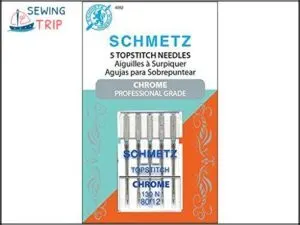
When thick decorative threads or multiple strands refuse to cooperate, Schmetz topstitch needles step in with an extra-long 2mm eye and widened groove. This design cuts friction on metallic and textured threads, preventing breakage mid-stitch.
The slightly rounded point glides over wovens and knits without snags, making it perfect for bold embellishment work on denim or leather.
Each pack includes five needles compatible with most domestic machines, so you can experiment with heavy thread combinations without worrying about skipped stitches or tension headaches.
| Best For | Sewers working with thick decorative threads, metallic finishes, or multiple strands who need clean topstitching on quilts, denim, or leather projects. |
|---|---|
| Material | Metal |
| Brand | Euro-Notions |
| Weight | Not specified |
| Primary Use | Topstitch/decorative stitching |
| Compatibility | Domestic machines |
| Color | Not specified |
| Additional Features |
|
- Extra-large 2mm eye and deep groove handle thick or textured threads without breaking
- Rounded point prevents snagging on both woven and knit fabrics
- Compatible with most domestic sewing machines for versatile decorative work
- Not designed for heavy-duty industrial machines
- Limited to domestic sewing applications
- No specific compatibility list for different machine models
6. Euro Notions Quilt Machine Needles
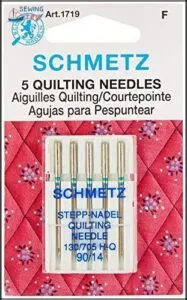
Euro Notions quilt needles bring muscle to multi-layer projects with reinforced blades that won’t bend under pressure. The medium ball point slips through tightly woven quilt sandwiches without snagging, while the rounded scarf keeps fabric feeding smoothly across thick batting.
Each five-pack includes size 90/14 needles that fit most domestic machines using the 130/705 H system, so you can tackle free motion quilting without skipped stitches. They stay sharp through several bobbin changes, handling dense layers and blended fabrics without breaking a sweat.
| Best For | Quilters and sewers working on multi-layer projects who need reliable needles that can handle dense batting and frequent piecing without skipping stitches. |
|---|---|
| Material | Metal |
| Brand | Euro-Notions |
| Weight | 0.2 ounces |
| Primary Use | Quilting |
| Compatibility | Domestic machines |
| Color | Color-coded |
| Additional Features |
|
- Reinforced construction stays sharp through multiple projects and won’t bend when piercing thick quilt sandwiches
- Medium ball point glides through tightly woven fabrics without snagging or causing pulls
- Compatible with most domestic machines using the standard 130/705 H system for easy replacement
- Single size option (90/14) limits versatility across different fabric weights and project types
- Some users report packaging and color variations that raise questions about product authenticity
- Not designed for very heavy or industrial-weight fabrics that require specialty needles
7. Schmetz Universal Sewing Machine Needles
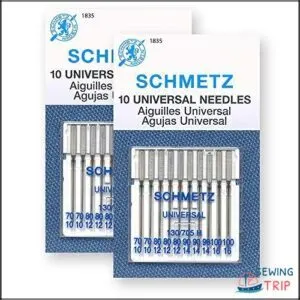
Schmetz Universal needles give you the freedom to switch between woven and knit fabrics without swapping needles mid-project. Their slightly rounded point manages cotton, linen, and polyester blends with equal confidence, making them perfect for practice sessions when you’re exploring different fabric bases for your free motion designs.
The assortment pack includes 20 needles in sizes 70/10 through 100/16, so you can match needle thickness to fabric weight. Lighter cottons work beautifully with a 70/10, while heavier materials welcome a 90/14 without hesitation.
| Best For | Sewers who work with multiple fabric types and want a versatile needle set that handles both wovens and knits without constant switching. |
|---|---|
| Material | Metal |
| Brand | SCHMETZ |
| Weight | 0.634 ounces |
| Primary Use | General sewing |
| Compatibility | All household brands |
| Color | Not specified |
| Additional Features |
|
- Comes with 20 needles in four different sizes (70/10 through 100/16), so you can match the right needle to your fabric weight
- Works across different fabric types—wovens and knits—thanks to the slightly rounded point
- Compatible with all major household sewing machine brands, including Brother and Baby Lock
- Needles may dull faster than expected according to some users
- Not ideal for heavy-duty or specialized sewing tasks
- Performance can be inconsistent depending on your specific machine and fabric combination
8. Brothread Polyester Embroidery Thread Kit
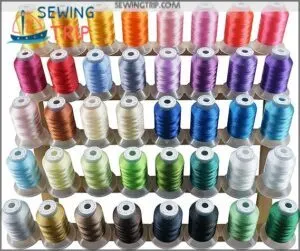
Consistent color and smooth flow transform your free motion work from practice runs into finished art. The Brothread kit delivers 64 spools of 40-weight polyester thread, each holding 1000 meters of high-sheen color. You’ll find vibrant brights and soft pastels throughout the range, with a color chart mapping every shade for quick reference.
The thread resists fraying during long embroidery sessions, feeds cleanly through standard needles, and holds up to regular laundering without fading—ideal for both practice samplers and pieces you’ll actually use.
| Best For | Embroiderers who need a reliable, budget-friendly thread collection with vibrant colors for everything from practice projects to finished pieces. |
|---|---|
| Material | Polyester |
| Brand | New brothread |
| Weight | 1.9 pounds |
| Primary Use | Machine embroidery |
| Compatibility | Multiple machine brands |
| Color | 40 colors |
| Additional Features |
|
- 40 spools with 500 meters each give you plenty of thread across a wide color range
- Strong polyester resists breaking and fraying during machine embroidery
- Works with most major embroidery machine brands like Brother, Janome, and Singer
- No storage rack included, so you’ll need to organize 40 spools yourself
- Can’t buy individual replacement spools if you run out of a specific color
- May need some tension adjustments depending on your machine and fabric
9. Complete Guide to Stabilising Fabric
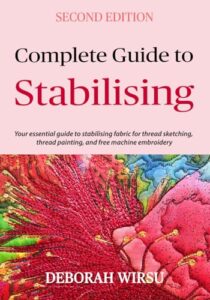
Puckering, bunching, and thread pull can wreck hours of careful stitching. That’s where this 69-page reference guide steps in.
You’ll learn which stabilizers work best for your fabric weight, how to prevent distortion before it happens, and techniques for securing projects inside the hoop.
The updated second edition includes case studies and a stabilizer chart that takes the guesswork out of prep work, so you can focus on the creative side instead of troubleshooting tension nightmares.
| Best For | Textile artists and free machine embroidery enthusiasts who want to prevent puckering and distortion in their thread sketching or thread painting projects. |
|---|---|
| Material | Paper |
| Brand | Self-published |
| Weight | Not specified |
| Primary Use | Educational guide |
| Compatibility | Textile artists |
| Color | Not specified |
| Additional Features |
|
- Stabilizer reference chart removes the guesswork when matching stabilizers to different fabric weights
- Case studies show real-world applications so you can see techniques in action
- At $17.99 for 69 pages, it’s an affordable resource that covers prep work comprehensively
- Doesn’t cover computer-programmed embroidery, monograms, or commercial work
- Assumes you already know the basics of thread sketching and free machine embroidery
- Advanced textile artists might find the content too introductory for their skill level
10. Plastic Embroidery Hoop Set
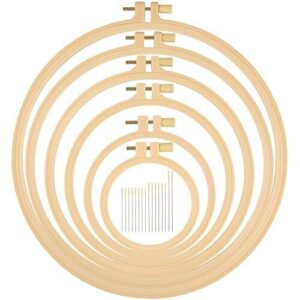
Six hoops ranging from 3.6 to 10.7 inches give you the freedom to tackle small motifs or sprawling designs without wrestling oversized frames under your machine arm. At just 0.34 kilograms, these lightweight rings reduce hand strain during long sessions, and 16 included needles mean you’re ready to stitch straight out of the box.
The adjustable screw lets you fine-tune tension so thin cotton or light denim stays drum-tight, while grooved plastic rings grip fabric more reliably than spring hoops that let slippery weaves slide mid-stitch.
| Best For | Beginners and DIY enthusiasts who need multiple hoop sizes for cross-stitch, embroidery, and fabric repair projects. |
|---|---|
| Material | Plastic |
| Brand | Phinus |
| Weight | 0.34 kilograms |
| Primary Use | Embroidery hoops |
| Compatibility | DIY projects |
| Color | Wood |
| Additional Features |
|
- Six different sizes (3.6″ to 10.7″) let you switch between small details and large designs without buying separate hoops
- Lightweight plastic construction (0.34 kg) reduces hand fatigue during long stitching sessions
- Comes with 16 needles so you can start projects immediately without extra purchases
- Plastic notch can be too aggressive and may snag or damage delicate fabrics like silk or organza
- Fabric tends to slip even when fully tightened due to the smooth plastic surface
- Some hoops arrive with sharp raised bits that need filing down before use
Frequently Asked Questions (FAQs)
Can any sewing machine do free motion embroidery?
Good news: most home machines handle free motion work just fine. You’ll need a darning foot and the ability to lower your feed dogs—that’s it. No fancy embroidery model required.
What is the difference between free motion embroidery and embroidery machine?
Free motion flows from your fingertips as you guide fabric freely beneath the needle, creating unique designs. Embroidery machines follow programmed patterns automatically, stitching pre-digitized designs with computer-controlled precision.
How to troubleshoot skipping stitches during embroidery?
Start by checking your needle—replace it if dull or damaged. Then verify thread quality, adjust upper tension slightly, and confirm your stabilizer holds the fabric properly to eliminate skips.
Whats the ideal lighting setup for embroidery work?
Can you really see thread color accurately under any light? Position a daylight LED lamp twelve to eighteen inches from your hoop, aiming for 500 lux with minimal shadows for true-color precision.
How to handle layered fabrics in embroidery projects?
Layered fabrics demand lightweight stabilizers and precise hooping to prevent puckering. Use sharper needles for multiple layers, test tension on scraps first, and trim bulk between layers after stitching finishes.
Are there tips for ergonomic sewing posture?
Your best stitching happens when you’re comfortable. Sit with feet flat, shoulders relaxed, and elbows near your sides. Keep your wrists straight, take breaks every thirty minutes, and position bright lighting to prevent leaning forward.
How do I transfer designs onto fabric?
Transfer your design using tracing paper, carbon transfer paper, or water-soluble pens. For precision, try light boxes or iron-on transfers. Always test on fabric scraps first to confirm visible, accurate guidelines.
Can I use metallic thread for embroidery?
Yes, you can use metallic thread for embroidery. Choose a sharp needle (size 70/10 or 80/12), reduce tension slightly, and slow your stitching speed to prevent breakage and fraying.
What tension settings work best for embroidery?
Start with upper tension around 4 to 5 on a 0-9 scale, then adjust based on your fabric and thread. Lightweight materials need lower tension, while heavier fabrics tolerate tighter settings.
How do I prevent thread breakage issues?
Check your needle first—replace dull ones immediately.
Re-thread completely, ensuring smooth flow through guides. Use quality thread matched to needle size, and keep tension balanced.
Regular machine cleaning prevents lint buildup.
Conclusion
Master the motion, make the magic happen. Sewing machine free motion embroidery puts your creative vision directly into fabric, no pre-programmed limits holding you back. You’ve got the setup steps, the right tools, and the techniques to stitch flowing designs that look hand-drawn.
Now it’s about building muscle memory through practice, trusting your rhythm, and letting your hands guide the work. Your machine doesn’t control the pattern anymore—you do.
- https://www.bernina.com/foot-24
- https://www.google.com/search?q=embroidery+foot&sxsrf=ACYBGNSFdvrEx4mkT76KK26yFd0btAO4Xw:1582040719288&source=lnms&tbm=isch&sa=X&ved=2ahUKEwjXq9_4uNvnAhV0u3EKHXE_BzkQ_AUoAnoECAwQBA&biw=1334&bih=818
- https://www.janome.co.uk/retailer-search
- https://embroidery-hoops-binding-and-other-tips/
- https://www.quiltingboard.com/machine-embroidery-f28/free-motion-embroidery-size-hoop-t307586.html