This site is supported by our readers. We may earn a commission, at no cost to you, if you purchase through links.
Finding sewing patterns that actually fit your curves used to mean settling for outdated styles or spending hours on alterations that still didn’t quite work. The plus size sewing landscape has transformed dramatically in recent years, with specialized designers and retailers now offering patterns drafted specifically for full busts, rounded hips, and real bodies—not just scaled-up versions of straight-size designs.
You’ll discover options that include cup sizing, adjustable elements, and measurement charts that extend to 60-inch busts and beyond, giving you the control to create garments that flatter your figure exactly as you envision. Whether you’re drawn to indie designers who engage directly with their sewing communities or established retailers with extensive catalogs, the right sewing patterns for plus size bodies combine inclusive sizing with practical fitting guidance that sets you up for success from the first cut.
Table Of Contents
Key Takeaways
- Quality sewing patterns now include cup sizing from A to H, adjustable elements, and measurement charts extending to 60-inch busts, eliminating the need for extensive alterations that often plague scaled-up straight-size designs.
- Independent designers like Cashmerette Patterns, Muna and Broad, and Helen’s Closet offer patterns specifically drafted for curves with built-in fit guidance, while free downloadable options from pattern repositories and sewing communities provide budget-friendly alternatives with extended size ranges.
- Pattern adjustments like princess seams, bust modifications, and curve grading transform standard patterns into flattering garments, with fabric selection—particularly medium-weight knits and fluid wovens with good drape—playing a crucial role in comfort and fit success.
- PDF patterns offer instant access and storage flexibility at lower costs, while printed patterns arrive ready to trace but require physical storage, with both formats requiring accurate body measurements and strategic alterations for optimal curve-flattering results.
Best Plus Size Sewing Pattern Sources
Finding the right plus size sewing patterns starts with knowing where to look, and you’ve got more options than you might think. From well-established online retailers to independent designers who truly understand curves, the landscape has expanded beautifully in recent years.
You’ll discover everything from vintage-inspired silhouettes to modern minimalist cuts, especially when you explore creative sewing pattern design ideas that spark your next project.
Let’s explore the best sources that’ll help you build a pattern collection worthy of your unique style and measurements.
Top Online Retailers for Plus Size Patterns
Shopping for plus size sewing patterns doesn’t have to feel like searching for a needle in a haystack. Top online retailers now offer inclusive clothing styles with extended size ranges, detailed fit guidance, and multiple pattern formats to match your preferences.
- Muna and Broad provides PDF plus size patterns sized to US 30W with drafting specifically shaped for full busts and curves
- Cashmerette Patterns specializes in patterns up to US 38 with built-in cup size options for precise fitting
- Seamwork curates plus size fashion patterns with specific bust and hip measurement guidance
For even more inspiration, you can explore a wide range of size inclusive pattern options designed to suit different body types and personal styles.
Independent Pattern Designers Specializing in Plus Sizes
Beyond mainstream retailers, indie designers are reshaping pattern inclusivity with outstanding size ranges and custom fit options. These digital patterns stretch to multiple hip and bust measurements, often pairing extended sizing with cup size choices that truly honor full figures.
Independent designers like Helen’s Closet and Rad Patterns engage directly with plus size women through sewing communities, offering fit guidance and alterations support that make sewing for plus sizes feel uplifting rather than overwhelming.
For a thorough overview of independent plus-size pattern companies, you can discover options suited to a wide range of measurements and styles.
Where to Find Free Downloadable Plus Size Patterns
When you’re ready to stretch your budget, free plus size sewing patterns open up your creative freedom without emptying your wallet. You’ll find downloadable sewing patterns across pattern repositories, aggregator sites curating designer freebies, and social media finds where creators share PDFs with hip measurements extending to 58 inches. These free resources include tops, dresses, skirts, and pants that you can print at home, giving you control over your wardrobe from the first stitch.
Three smart places to discover free sewing patterns for plus sizes:
- Pattern repositories and designer websites – Independent designers publish free plus size PDFs with measurement charts, trimming guides, and tutorials that make sewing for curves feel achievable rather than intimidating.
- Aggregator sites organizing curated lists – These platforms sort downloadable patterns by difficulty level and size range, with user comments highlighting fit considerations and recommended alterations for full figures.
- Social media roundups and hashtag searches – Sewing communities post direct download links for free plus size patterns, often with temporary releases and seasonal collections that accommodate larger busts and hips.
Sewing Communities and Forums for Pattern Recommendations
Online sewing communities give you pattern reviews with photos showing real fits on curves, plus member spotlights that highlight successful makes. Reddit r/sewing, Pattern Review forums, and The Fold Line connect you with sewists who share pattern recommendations, alterations, and forum etiquette that keeps discussions constructive.
These sewing resources offer weekly threads where you’ll find inclusive sewing community support, detailed tutorials, and honest feedback on patterns that actually flatter plus size figures.
Popular Plus Size Pattern Styles
Finding the right sewing pattern isn’t just about size—it’s about discovering styles that celebrate your shape and make you feel amazing.
If you’re working with curves, check out this guide on altering sewing patterns for curves to get a fit that’s truly tailored to you.
When you’re working with curves, certain pattern designs naturally flatter your silhouette while giving you room to express your personal style. Let’s explore the most popular pattern categories that plus size sewists reach for again and again.
Flattering Dress Patterns for Curves
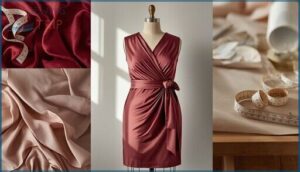
You’ll find curve-flattering dress silhouettes through free dress sewing patterns designed with plus size sewing in mind. A-line and wrap dresses create balanced body proportions by skimming your waist and flaring over hips, while empire waist styles elongate your torso beautifully.
Smart fabric choices like ponte or crepe provide drape without cling, and sewing techniques using princess seams accentuate your natural curves without adding bulk.
Trendy Tops and Blouses in Plus Sizes
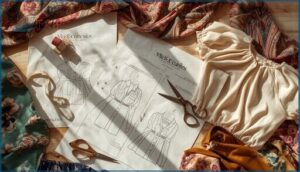
You’ll discover exciting plus size trends in blouse styles that highlight your best features through smart sewing techniques and fabric choices. Puff sleeve patterns balance proportions beautifully, while bustier-inspired designs define your waist with confidence.
- Statement collars and ruffled necklines transform basic tops into standout pieces
- Stretch knits with four-way movement create curve-flattering fits without gapping
- Tiered peplum styles pair perfectly with high-waist bottoms for balanced silhouettes
- Button-front patterns with hidden plackets guarantee smooth drape across curves
These sewing patterns empower your garment construction skills.
Pants, Shorts, and Skirts Designed for Fit
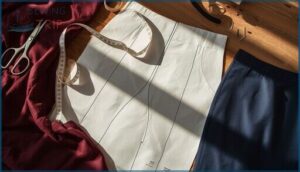
Plus size sewing patterns for pants and skirts prioritize fit focus through waist adjustments that range from 2 to 4 inches, giving you real control over your garment’s shaping.
You’ll find curve flattering designs with hip shaping through princess seams and curved darts, while seating comfort comes from gussets and back yokes that prevent sagging and create a smooth, confident silhouette.
Jumpsuits, Rompers, and Alternative Options
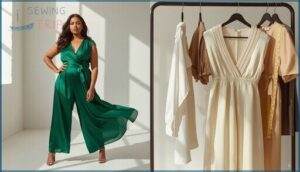
You’ll discover one piece options that free you from coordinating separates while celebrating your curves.
Jumpsuits and rompers offer sleek silhouettes with strategic shaping:
- Jumpsuits use princess seams and defined waists in satin or crepe for evening elegance
- Romper styles feature smocked backs and adjustable straps in cotton blends for casual comfort
- Convertible designs switch from halter to strapless for adaptable coverage
- Utility coveralls prioritize roomy fits with functional pockets for everyday wear
Key Features of Quality Plus Size Patterns
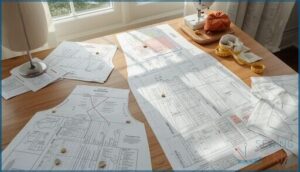
Not all plus size patterns are created equal, and knowing what separates the good from the great can save you hours of frustration at your sewing machine.
Quality patterns include specific features that make them easier to work with and more likely to fit your body beautifully right out of the envelope. Here’s what you should look for when choosing patterns that will actually work for your curves.
Inclusive Size Ranges and Measurement Charts
Quality patterns put size inclusivity front and center, offering ranges from 0 to 32 with bust measurements up to 60 inches and hips to 65 inches.
You’ll find detailed measurement charts listing bust, waist, hip, and even back waist length in both inches and centimeters, ensuring measurement accuracy for custom fit. Many brands include body proportion guidance and ease recommendations to help you nail that perfect plus size sewing project.
Adjustable and Customizable Pattern Elements
The best patterns let you become the designer through dart manipulation, grading flexibility, and panel customization. You can shift bust and waist darts to align with your unique curves, grade smoothly between sizes 14 to 36, and add or remove side panels to perfect your silhouette.
Length adjustments, from hem allowances to independent bodice and skirt tweaks, give you total control over custom fit without expert pattern making skills.
Patterns With Cup Size and Fit Options
Beyond basic grading, cup size variants reveal sewing patterns that truly understand full busts. High bust sizing lets you pick your pattern size by shoulder fit, then swap in cup pieces from A to H, dramatically reducing FBA work and guesswork.
This size inclusivity transforms pattern making from frustrating to liberating, delivering:
- Separate bodice pieces labeled by cup letter for accurate volume
- Princess seams pre-shaped to your bust without gaping necklines
- Minimal dart manipulation compared to standard single-size patterns
- Clear measurement charts matching high bust to full bust across sizes
- Smoother drape and professional fit straight from the envelope
PDF Vs. Printed Plus Size Sewing Patterns
Once you’ve nailed fit options, choosing between PDF and printed formats shapes your sewing workflow. Digital files offer immediate access to free plus size sewing patterns and adaptable designs you can print at home, though printing costs and file management require attention.
Printed patterns arrive ready to trace, skipping the assembly step but limiting pattern storage flexibility compared to organized digital folders.
| Feature | PDF Patterns | Printed Patterns |
|---|---|---|
| Access Speed | Instant download and printing | Ships in 3-7 days usually |
| Storage Needs | Digital folders and backups | Physical shelf or bin space |
| Initial Cost | Lower with free options available | Higher due to shipping and materials |
| Setup Time | Requires taping and alignment | Unfold and trace immediately |
| Size Flexibility | Print multiple sizes as needed | All sizes on one tissue sheet |
Tips for Fitting and Altering Plus Size Patterns
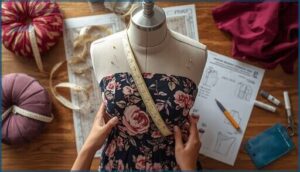
Getting the perfect fit from a plus size pattern isn’t just about choosing the right size—it’s about understanding your body and knowing how to make small tweaks that create clothes you’ll actually want to wear.
The good news is that you don’t need specialized skills to make patterns work for your curves. Here’s what you need to know to take control of fitting and alterations.
Taking Accurate Body Measurements
Your sewing patterns deserve accurate measurements to reveal true size inclusivity and celebrate body proportions.
Use a soft, flexible measurement tool, holding it snug but not tight around your curves. Record your full bust, true waist, and hip circumference with the tape parallel to the floor.
These fitting techniques and size calculations transform patterns into confidence-boosting garments that honor your unique shape.
Common Pattern Adjustments for Curves
Once you’ve got your numbers down, you can fine-tune your patterns with a few curve-flattering moves that make all the difference. These pattern modifications honor your shape and guarantee comfortable plus size sewing.
- Curve Smoothing – Replace harsh angles with gentle lines using a French curve or tailor’s pencil for smooth transitions
- Bust Adjustments – Add or remove width at the chest, then redraw necklines to prevent gaping
- Waist Modifications – Shift shaping higher or lower based on your torso length
- Hip Shaping – Blend side seams gradually from bust to hip, keeping seam allowances consistent throughout
Techniques for Bust, Waist, and Hip Alterations
Mastering alteration techniques unlocks truly flattering fit. Start with bust adjustments by grading across cup sizes while keeping shoulder seams stable, then shift to waist modifications using darts or gradual scaling that aligns with your natural waistline.
For hip fitting, spread side seams downward and add curved shaping to honor your contours. Curve grading and pattern modifications work together, giving you control over every inch.
Using Princess Seams and Shaping Methods
Princess seam drafting transforms your plus size sewing by replacing bulky darts with smooth, contour shaping that follows your curves from shoulder to hip. Panel construction creates a naturally curve flattering silhouette through strategic bust fitting and waist definition.
- Trace curved seam lines from armhole to waist for fluid shaping
- Shape center and side panels around your bust peak
- Add seam allowances after perfecting your panel curves
- Pin and baste sections before final stitching
- Press seams flat to refine your garment’s silhouette
Fabric Selection for Plus Size Sewing
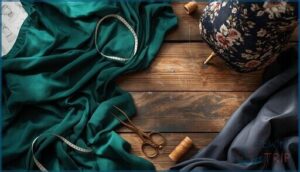
Choosing the right fabric can make or break your plus size sewing project, transforming a pattern from average to absolutely stunning.
The fabric you select affects how the garment drapes over your curves, how comfortable it feels throughout the day, and whether it flatters your unique shape. Let’s explore smart fabric choices that will take your sewing from good to gorgeous, starting with materials that prioritize both comfort and style.
Best Fabrics for Comfort and Drape
Think of fabric foundation as the foundation that makes or breaks your garment’s comfort and drape. Soft knits from cotton jersey to modal blends offer breathable materials with silky hand feel, while fluid woven options like rayon challis and Tencel lyocell deliver smooth drape that flatters curves beautifully.
Your fabric selection impacts everything, so choose textures that balance coverage with breathability for all-day comfort.
Choosing Stretch Vs. Woven Materials
Stretch fabrics versus wovens is one of those game-changing decisions that impacts everything from garment structure to how your finished piece moves with your body. When you’re selecting materials for plus size sewing patterns, consider these key differences:
- Fabric recovery determines whether knits bounce back or wovens hold their crisp shape after wearing
- Ease considerations vary since stretch patterns need less built-in room than woven designs
- Seam finishes require zigzag stitches for stretch but stay-stitching stabilizes woven curves
- Sizing and fit adjustments differ because stretch molds to curves while wovens need precise darts
- Comfort levels shift as breathable knits flex with movement and structured wovens provide polished drape
Your fabric selection shapes how confidently you’ll wear your creation, so test swatches before committing to yardage.
Matching Fabric to Specific Pattern Styles
Your textile choices should mirror the garment construction demands of each design. Pattern matching becomes critical with bold prints, while draping silhouettes need fluid materials that improve movement.
Here’s how fabric selection aligns with popular plus size sewing patterns:
| Pattern Style | Recommended Fabric | Why It Works |
|---|---|---|
| Fitted Dresses | Medium-weight knits | Hugs curves without clinging |
| Flowy Tops | Rayon or cotton lawn | Creates flattering drape and breathability |
| Structured Pants | Stable woven twill | Holds shape through wear and washing |
| Wrap Dresses | Jersey with recovery | Molds to body while maintaining form |
| A-Line Skirts | Cotton sateen | Provides body without stiffness |
Match your sewing techniques to fabric behavior for professional results.
Fabric Buying Tips for Plus Size Projects
Smart fabric sourcing sets the foundation for successful plus size sewing projects that honor your curves and your budget. When selecting plus size textiles, you’ll want materials that balance comfort, drape, and durability without breaking the bank.
- Choose stretch fabrics with at least 20% recovery for fitted garments that move with you
- Buy extra yardage (add 0.5-1 yard) for pattern matching and larger pattern pieces
- Invest in sustainable materials like bamboo knit or organic cotton for skin-friendly, curve-friendly fabrics that last
Frequently Asked Questions (FAQs)
How do I grade between different pattern sizes?
Ever wonder how to bridge the gap between sizes?
Pattern grading uses grade rules to proportionally scale key points like bust, waist, and hip, maintaining fit while converting between sizes with precise measurement tolerance.
What are muslins and why make them first?
A muslin is your practice garment made from inexpensive fabric to test fit and drape before cutting your final material, helping you catch fitting issues early and perfect pattern modifications with confidence.
Can I combine patterns for a custom design?
You can absolutely mix sewing patterns for custom clothing creation—it’s called pattern mashups.
Combine a fitted bodice from one with sleeves from another, then adjust seam lines for custom fits that celebrate your unique shape.
How much fabric should I buy for plus sizes?
Measure twice, cut once—this timeless wisdom saves fabric and frustration.
Plus size measurements require extra yardage for comfort and fit adjustments, usually adding one to three yards beyond standard pattern recommendations for proper shaping.
What sewing machine features help with heavier fabrics?
Look for motor strength above 600 stitches per minute, heavy duty frames for stability, walking feet to grip layers, needle compatibility with size 90-110, and presser foot lift clearance for bulkier fabrics.
Conclusion
Think of your sewing machine as a compass, guiding you toward clothes that celebrate rather than confine your shape. With the right sewing patterns for plus size bodies and a willingness to adjust for your unique measurements, you’re not just following instructions—you’re claiming creative control over your wardrobe.
Each seam you stitch reinforces a simple truth: fit isn’t about forcing your body into someone else’s standard, it’s about tailoring the standard to you.