This site is supported by our readers. We may earn a commission, at no cost to you, if you purchase through links.
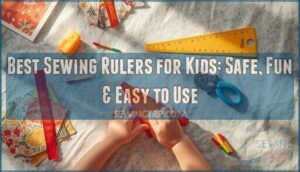
Picture a seven-year-old squinting at a standard 18-inch ruler, fingers sliding off the slick edge, trying to mark a straight line on fabric that keeps shifting. Frustrating for her. Exhausting for you.
Standard rulers weren’t built for small hands—and in sewing, a bad tool doesn’t just slow kids down, it convinces them they’re bad at sewing.
The right sewing rulers for kids change that story completely. Lightweight, grippy, and color-coded for easy reading, they turn measuring from a chore into a confidence builder.
The difference between a child who quits and one who begs to sew again often comes down to what’s in their hands.
Table Of Contents
Key Takeaways
- Child-sized rulers with grippy surfaces, rounded edges, and color-coded markings aren’t just safer — they actually help kids build real measuring confidence faster.
- The right first ruler kit for a beginner is simple: a straight ruler, a soft tape measure, and a small seam gauge covers almost every starter project.
- Turning ruler practice into games — like scavenger hunts or measuring relays — helps skills stick way better than drills or worksheets ever will.
- Sewing rulers aren’t one-trick tools; kids can use them for paper crafts, vinyl projects, and STEM activities, making them a genuinely worthwhile investment.
Why Kids Need Special Sewing Rulers
Not every ruler sitting in the kitchen drawer is the right fit for little hands just learning to sew. Kids need tools that are safe, easy to read, and actually built with them in mind.
The same goes for machines—something like a simple sewing machine designed for learning, with a built-in finger guard and two-speed settings, gives kids real control without the risk.
Here’s what makes a sewing ruler a great match for young sewists.
Importance of Child-Friendly Tools
The right tools make all the difference — especially for little learners. Sewing kits for kids built with ergonomic design help small hands grip and guide without frustration.
Lightweight measuring tools and sewing accessories sized for children support real skill development from day one. When your child holds a ruler that actually fits, confidence building happens naturally. That’s how a hobby becomes a passion.
When a child holds a ruler that actually fits, confidence builds naturally, and a hobby becomes a passion
Safety Features for Young Sewists
Safety isn’t an afterthought — it’s built right into the best sewing rulers for kids. Here’s what to look for in sewing supplies for children:
- Blunt Edge Design — rounded corners won’t scratch or poke small hands
- Raised Grip Barriers — keep fingers a safe half-inch from rotary blades
- Non Slip Pads — gripper dots hold plastic rulers steady on fabric
- Finger Protectors — suction‑cup grippers attach in seconds
- Bright Color Markings — bold lines reduce mistakes instantly
Using age‑appropriate needles helps guarantee safe sewing for children.
Encouraging Proper Measuring Techniques
Once kids feel safe with their tools, good habits follow naturally. Teach them to anchor the ruler with flat fingers — that’s finger placement that actually works. Encourage a consistent baseline that starts at zero every time.
Light pressure control keeps the ruler from shifting mid‑mark. Quick alignment checks before cutting catch big mistakes early.
Bonus tip: try measurement journaling to track progress. Kids love seeing how far they’ve come.
Explore nonstandard measurement activities to make learning fun.
Top Sewing Rulers for Kids Reviewed
Finding the right ruler makes a bigger difference than you’d think.
Whether you’re cutting bias tape or squaring a bodice, knowing which sewing rulers work best for garment making can save you a lot of frustration down the line.
Some options are built with kids specifically in mind — the right size, the right material, the right markings.
Here are a few worth putting on your radar.
1. Tietoc T Shirt Vinyl Alignment Ruler Set
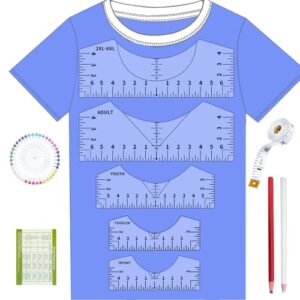
The Tietoc T-Shirt Vinyl Alignment Ruler Set is basically a little helper that does the measuring for you. It comes with five PVC rulers sized for everything from tiny infant tees to adult hoodies — so whether your kid is decorating their own shirt or making one for a sibling, you’re covered.
The clear material lets you see through to the fabric, and the printed center lines take the guesswork out of placing designs. It even includes a soft measuring tape and 40 pins.
- Five sizes in one set means you’re covered for adult, youth, and kids’ shirts without switching tools
- See-through PVC with printed center lines makes design placement fast and accurate
- Comes ready to go with a soft tape measure and 40 pins included
- At just 5.3 oz and tiny listed dimensions, the rulers may feel lightweight or less sturdy than expected
- Brown color may make it harder to see markings on certain dark fabrics
- No carrying case or storage pouch mentioned, so keeping the set organized could be a hassle
2. Tietoc PVC T Shirt Ruler Set
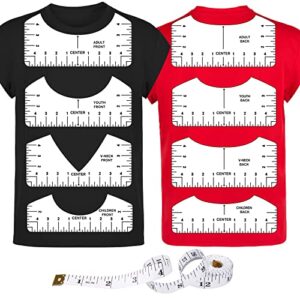
nine-piece ruler set is a solid step up for kids who are ready to get serious about shirt design. It comes with four PVC rulers in different widths — from 2.5 inches up to 5 inches — so you can fit everything from a toddler tee to a youth shirt. The transparent material lets kids see exactly where their design lands.
Toss in a 59-inch soft measuring tape, and you’ve got a complete kit for heat press, Cricut, or embroidery projects.
- Comes with four ruler sizes, so it works for everything from toddler tees to youth shirts
- Transparent PVC makes it easy to see exactly where your design is landing
- The 59-inch measuring tape rounds out the kit — no need to grab anything extra
- Very large or very small shirts might fall outside what the rulers can handle
- The fixed set of rulers means you’re working with what’s there — no flexibility if you need an odd size
- Primarily geared toward shirts, so it’s not much help for other garment types
Comparison of Popular Kids’ Sewing Rulers
Picking between these two really comes down to what your kid needs most right now.
- Price Comparison: The acrylic set costs less upfront — great for beginners
- Brand Reputation: Both brands earn strong User Feedback from parents and kids and students alike
- Accessibility Options: 6 Inch Rulers in Assorted Colors suit small hands perfectly
- Eco-Friendly Materials: PVC sets offer durability for ongoing sewing accessories for children and kids’ projects
Key Features to Look for in Kids’ Rulers
Not all rulers are created equal — especially when little hands are involved. Picking the right one makes a real difference in how confident and comfortable your child feels while sewing.
Here are the key features worth paying attention to before you buy.
Material Durability and Flexibility
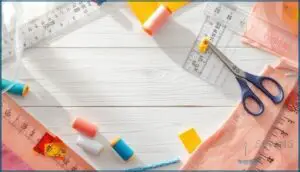
Not all sewing ruler materials are created equal — and for young sewists, that difference really matters.
PVC Shatterproof rulers bend without snapping when accidentally dropped or fumbled.
Acrylic Sturdy options stay perfectly flat for precise cuts.
Flexible Plastic rulers handle curved hems beautifully.
Unlike wooden rulers or metal rulers, these sewing ruler materials include Anti-Slip Coatings and Markings Longevity, keeping measurements readable through every sewing and quilting project.
Size and Grip for Small Hands
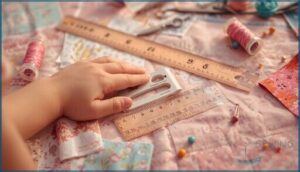
Size really does matter for sewing rulers for kids and students just starting out. 6–10 inch range let small hands stay in control without overstretching.
Ergonomic width, lightweight materials, and a thumb rest design so little fingers grip safely. Magnet-assisted grip options are a bonus — no white‑knuckling required!
These measuring tools make sewing and quilting supplies feel approachable from day one.
Color-Coding and Easy-to-Read Markings
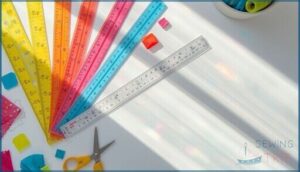
Color makes everything click faster — especially for kids learning fractions. Look for sewing rulers with Sequential Color Sequences that assign one color per fraction size, so measuring rulers feel less like math homework.
High Contrast Grids with bold black lines and Neon Fraction Highlights help young eyes read measurements instantly. Pattern Matched Badges, Bright Neon Guides, and color-keyed quilting rulers turn pattern drafting into something kids actually enjoy.
Best Sewing Projects Using Kids’ Rulers
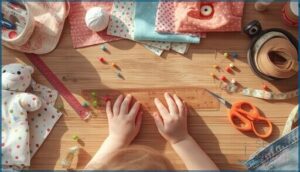
The best way to learn how to use a sewing ruler is to actually put it to work on a real project. Some projects are perfect for building ruler skills while also making something fun and useful.
Here are a few great ones to get your kids started.
Beginner-Friendly Project Ideas
The best beginner-friendly sewing projects pair naturally with sewing rulers. A simple Tote Bag or Apron Starter teaches kids to measure straight cuts confidently. A Scrunchie Kit introduces elastic while keeping shapes small and manageable.
Bean Bag Game squares are perfect for ruler practice, and Patchwork Square projects show kids how consistent measuring creates patterns that actually line up. These sewing projects make rulers feel essential, not intimidating.
Measuring and Marking Techniques for Kids
Once your project is cut and ready, knowing how to mark it matters just as much as picking the right fabric.
- Straight Edge Measuring keeps cuts clean — align your ruler flat and read every 1/8‑inch mark carefully.
- Crease Marking with a hera tool leaves temporary lines without ink.
- Safe Marker Use means water‑erasable pens on light fabrics, tailor’s chalk on dark ones.
- Hem Folding with a sewing gauge gives you perfectly even edges every time.
Patterns That Teach Ruler Skills
Marking fabric is just the start — the real magic happens when your pattern actually teaches measuring.
Some patterns are basically ruler lessons in disguise. Grid-Based Patterns, Strip Borders, and Seam Allowance Exercises all build accuracy naturally.
| Pattern Type | Ruler Skill Practiced | Suggested Project |
|---|---|---|
| Grid-Based Patterns | Accurate measurements on squares | Patchwork Doll Quilt |
| Strip Borders | Step Sequencing along fixed widths | Pillowcase Border |
| Shape Templates | Pattern drafting with tailor rulers | Simple Tote Bag |
| Seam Allowance Exercises | Reading sewing measurement tools | Beginner Apron |
Tips for Teaching Kids to Use Sewing Rulers

Teaching kids to use sewing rulers doesn’t have to feel like a classroom lesson. With the right approach, it becomes something they actually look forward to.
Here are a few simple ways to make ruler skills stick.
Fun Measuring Games and Activities
Turning ruler practice into play is the fastest way to get kids and students genuinely excited about sewing measurement tools. Try these crowd-pleasers:
- Ruler Scavenger Hunt – find fabric scraps measuring exactly 6 inches
- Fabric Matching Race – pair swatches using quilting rulers and fabric marking guides
- Measuring Relay – pass measuring instruments to cut perfect 10‑inch strips
- Pattern Treasure Hunt – follow clues tied to Sewing Bingo challenges
Games stick. Worksheets don’t.
Teaching Safe Ruler Handling
Once the games wrap up, safety steps in—and it’s simpler than you’d think.
Teach kids and students proper Hand Positioning first: fingers flat, never near the blade’s path.
Good Cutter Coordination means one steady direction, always.
Keep Workspace Organization tight—clear scraps, use a non-slip mat.
Supervision Strategies and Injury Prevention go hand in hand.
Quilting rulers, tailor rulers, and fabric marking tools stay locked until an adult says go.
Integrating Ruler Use Into Sewing Lessons
Weaving ruler skills into every lesson makes progress feel natural. Try building these activities into your weekly sewing time:
- Measurement Games — measure fabric scraps daily to sharpen number sense
- Seam Accuracy Drills — practice 1/4-inch seams using tailor rulers and square rulers
- Pattern Scaling Activities — use rectangular and triangular rulers to resize simple shapes
- Collaborative Ruler‑Based Challenges — kids compare cuts together using shared sewing tools
Frequently Asked Questions (FAQs)
Are stripology rulers worth it?
stripology rulers are worth it.
Users cut strips up to 75% faster, and the long‑term value is clear.
For strip‑heavy quilts, the durability vs price trade‑off strongly favors investing in the original Creative Grids version.
What’s the best quilting ruler for beginners?
Straight to the “point” — 6×24 inch acrylic ruler is your best starter ruler size. Its non‑slip surface, clear quilting ruler measurement markings, and budget‑friendly options make it the go‑to for beginners.
What age is appropriate for kids sewing rulers?
Most kids are ready around age 6, when Motor Skill Milestones and Age-Based Grip Size align for safe ruler use.
Full Safety Supervision Levels apply until age 8, when Developmental Measuring Ability becomes more reliable.
How do you clean and maintain fabric rulers?
Wipe fabric rulers with a damp cloth and mild dish soap. Use rubbing alcohol for ink residue.
Store them flat, away from sunlight, and keep sanitizing wipes nearby for quick cleanups between projects.
Can sewing rulers be used for other crafts?
Sewing rulers shine way beyond fabric.
Use them for paper cutting, vinyl trimming, sticker alignment, wood marking, and STEM measuring.
They’re genuinely multifunctional crafting tools that make every project cleaner and more precise.
Where can you buy affordable kids sewing rulers?
You can find great Online Marketplace Deals on Amazon and Walmart, plus Discount Store Finds at craft aisles.
Watch for Seasonal Sale Alerts and Bulk Bundle Options on Etsy for budget-friendly picks.
How many rulers does a beginner kid need?
Three is the magic number. A straight ruler, a tape measure, and a small seam gauge form your Core Tool Set — simple sewing tools for beginners that cover nearly every starter sewing project for kids.
Conclusion
That same seven-year-old, once squinting and frustrated, is now smoothing fabric with steady hands and measuring with quiet confidence.
The right sewing rulers for kids don’t just make projects easier—they shape how children see themselves as creators. When tools fit their hands and match their pace, something clicks.
They stop doubting and start making. Give them rulers built for them, and watch a hesitant beginner transform into a kid who can’t wait to sew something new.
- https://www.kearing.com/graph-rulers/
- https://www.twinkl.com/resource/measurement-using-a-ruler-instructions-and-activities-ages-5-6-t-par-1730404080
- https://www.buckleguy.com/bg-safety-rulers/
- https://craftindustryalliance.org/6-safety-tips-for-kids-sewing/
- https://www.gathered.how/sewing-and-quilting/sewing/sewing-kits-for-kids