This site is supported by our readers. We may earn a commission, at no cost to you, if you purchase through links.
That scratchy sweater you donated after one wash? The blame likely sits in its fiber content—something most people never check.
Fabric composition tells you exactly what a textile is made of, down to the percentage of each fiber woven or knitted into it. Those numbers on the care label aren’t filler; they’re a blueprint for how a fabric breathes, stretches, holds its shape, and ages over time.
Understanding fabric composition basics changes how you shop, sew, and care for everything in your wardrobe—because once you can read a label, you stop guessing and start choosing with confidence.
Table Of Contents
- Key Takeaways
- What is Fabric Composition?
- How to Read Fabric Composition Labels
- Natural Fibers: Properties and Best Uses
- Synthetic Fibers: Properties and Best Uses
- Blended Fabrics: Combining Fibers for Better Performance
- How Fabric Composition Affects Care and Maintenance
- Frequently Asked Questions (FAQs)
- Conclusion
Key Takeaways
- The fiber percentages on your clothing label aren’t just filler — they tell you exactly how a fabric will feel, stretch, breathe, and hold up over time.
- Natural fibers like cotton, wool, silk, and linen each bring unique strengths, but blending them with synthetics fills in the gaps and gives you better everyday performance.
- Every fiber type has its own care needs, so washing or ironing the wrong way — even once — can shrink, warp, or ruin a garment for good.
- Once you can read a fabric label, you stop guessing at the store and start making choices you won’t regret after the first wash.
What is Fabric Composition?
Fabric composition is simply what a fabric is made of — the fibers and their types, and how much of each is present. It shapes everything from how soft a shirt feels to how long a pair of jeans lasts.
Think of it as your fabric’s ingredient list — fiber content in textiles tells you exactly what you’re wearing and why it behaves the way it does.
Here’s what you need to understand about fabric composition to make smarter choices.
Definition and Key Concepts
Fabric composition is basically your fabric’s DNA — it tells you exactly what fibers make it up and in what amounts. A label reading “80% cotton, 20% polyester” isn’t just trivia; it’s a practical guide to how that material will feel, move, and last.
Fabric composition is your fabric’s DNA — a simple label tells you exactly how it will feel, move, and last
Understanding fabric through fiber analysis — whether natural fibers, synthetic fibers, or blended fibers — gives you real control over your textile basics choices. For more details about the distinctions among natural and synthetic fibres, consult detailed guides used in the textile industry.
Why Fiber Content Percentages Matter
Those percentages on the label aren’t just filler — they shape everything from fabric durability to how you wash it. Thanks to textile regulation, U.S. labels must list fiber content by weight, so you can trust what you’re reading.
Whether it’s natural fibers, synthetic fibers, or blended fibers, fiber blending ratios directly affect comfort, lifespan, and even eco friendly impact through microplastic shedding. It’s important to be aware of industry responsibility and transparency when considering fabric choices.
How Composition Affects Fabric Behavior
Those percentages directly shape how your fabric moves, breathes, and holds up over time. Fabric Drape depends on Fiber Strength and flexibility — silk flows where linen stands stiff.
Breathability Factors shift with every blend ratio. Textile Elasticity, Moisture Management, and how Fabric Types wear all trace back to your Fabric Composition.
Natural Fibers and Synthetic Fibers each bring different Fabric Properties to the table.
How to Read Fabric Composition Labels
That little tag sewn into your clothing holds more information than most people realize.
Once you know what to look for, reading it takes only a few seconds. Here’s what each part of a fabric label is actually telling you.
Decoding Fiber Content Listings
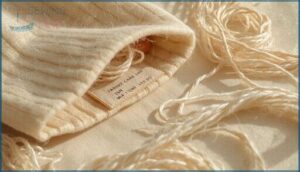
That little tag sewn into your garment is more than a nuisance — it’s a roadmap. Fabric labels list fibers in descending order by weight, so whatever appears first dominates the fabric composition.
That first fiber also plays a big role in weight and drape, so it’s worth understanding how fabric weight shapes the way a textile moves and wears.
Content declarations must total 100%, and fiber thresholds require any fiber above 5% to be named. Understanding these fabric disclosure and label compliance rules helps you shop smarter, whether you’re choosing natural fibers or synthetic fibers.
Common Label Symbols and Care Codes
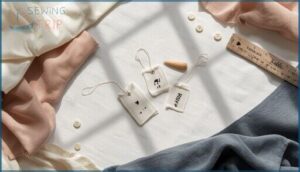
Those little symbols on care labels are basically a shorthand language for fabric safety. Once you learn to decode them, laundry codes stop feeling mysterious.
A washtub with a number means wash at that temperature. Dots signal heat levels. An iron with one dot means low heat — ideal for delicate fabrics.
Master these cleaning instructions, and you’ll protect any fabric type with confidence.
What Blended Fiber Labels Mean
A blended fiber label is your cheat sheet for understanding exactly what you’re working with. It lists fiber percentages in descending order — so “60% cotton, 40% polyester” means cotton dominates the fabric composition.
- Fiber percentages always total 100%
- Label accuracy allows a 3–5% tolerance
- Natural fibers listed first mean softer feel
- Synthetic fibers boost durability in the blend
- Fabric selection gets easier once you trust the label
Natural Fibers: Properties and Best Uses
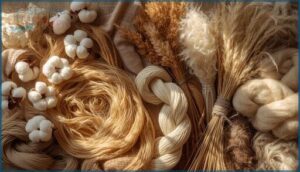
Natural fibers are the oldest materials in textile history, and they’re still hard to beat for comfort and wearability. Each one has its own personality — the way it feels, breathes, and holds up over time.
Here’s a closer look at the four you’ll encounter most often.
Cotton – Softness and Breathability
Cotton is one of those natural fibers that just works for almost everything. Its fiber structure — hollow, twisted strands made of cellulose — gives it impressive softness ratings right off the loom.
That same structure drives breathability and moisture management, absorbing perspiration without feeling soggy. Whether your fabric composition includes a tight cotton weave or an open knit, breathability tests consistently put cotton at the top.
Wool – Warmth and Durability
Wool is practically a built-in thermostat. Its fiber structure traps air pockets that handle thermal regulation in both cold and warm conditions — that’s wool insulation working exactly as nature intended.
For fabric composition focused on durability, wool’s fiber strength is noteworthy; it bends over 20,000 times without breaking. It also controls moisture without feeling damp, making it a natural fibers standout for breathability and long-term durability testing results.
Silk – Drape and Luxury
Silk is where fabric composition becomes an experience. Its triangular fiber structure — a defining feature of this natural fiber — bends light softly and drapes like liquid over the body. Silk weaving techniques like charmeuse or chiffon shape how that drape behaves in your finished piece.
What makes silk worth understanding in luxury textiles:
- Fluid drape analysis shows it falls in long, soft folds
- Fiber structure creates a gentle, pearly luster — not harsh shine
- Silk fabrication absorbs moisture well, keeping garments comfortable
- Natural fibers rarely match silk’s balance of elegance and breathability
Linen – Lightweight and Moisture-Wicking
Linen might be the hardest-working natural fibers in your lineup. Made from flax fiber through a process called linen production, it absorbs up to 20% of its weight in moisture before you even feel damp.
That makes it one of the best breathable fabrics for warm weather. Its fabric composition enables strong moisture-wicking and moisture management, and as sustainable textiles go, flax grows with minimal resources.
Synthetic Fibers: Properties and Best Uses
Synthetic fibers changed the fabric world by making durable, easy-care materials available at prices almost anyone can afford.
They’re not trying to replace natural fibers — they bring their own strengths to the table. Here’s a closer look at the four most common ones you’ll encounter.
Polyester – Affordability and Wrinkle Resistance
Polyester is one of those synthetic fibers that just makes practical sense. Its production costs run 30–50% less than cotton, so your fabric budget stretches further.
The molecular structure gives it natural wrinkle resistance — pack it, wear it, wash it, and it bounces back. For fabric blending, a 65/35 polyester-cotton mix hits the sweet spot between cost efficiency and everyday comfort.
Nylon – Strength and Stretch
If polyester is your budget-friendly workhorse, nylon fiber is built for endurance. Its tensile strength — reaching up to 90 MPa — means it resists tearing under real stress.
Stretch recovery keeps activewear snapping back after movement. Add impressive abrasion resistance and solid durability, and nylon earns its place in fabric composition for gear, hosiery, and outerwear alike.
Spandex – Elasticity and Performance
Where nylon tackles the tough stuff, spandex brings movement to the equation. This synthetic fiber stretches 400 to 800 percent and still snaps back — that’s elastic recovery doing its job.
In performance textiles, even 5 to 10 percent spandex in your fabric composition gives everyday pieces comfort stretch. For moisture management, pair it with polyester and you’ve got performance fabrics that actually work.
Acrylic – Wool Alternative for Budget Sewing
If spandex is all about movement, acrylic is about making your budget stretch just as far. As synthetic fibers go, acrylic fibers are one of the smartest tools for fabric substitution in knitwear design.
They mimic wool’s warmth and soft hand feel without the price tag. For budget sewing, that’s a real win — machine washable, wrinkle-resistant, and widely available year-round.
Blended Fabrics: Combining Fibers for Better Performance
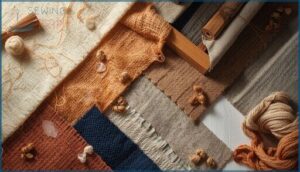
Sometimes one fiber blend just doesn’t cut it on its own — that’s exactly why fabric blends exist.
By combining two or more fibers, you get a material that plays to each fiber’s strengths while hiding its weaknesses.
Here’s what you need to know about blends before your next sewing project.
Common Fiber Blend Combinations
Think of fabric blending as mixing ingredients in a recipe — each fiber brings something the others lack. Fabric types and properties shift depending on what’s combined.
Cotton-polyester is a go-to textile hybrid for tees and bedding, balancing softness with durability. Viscose-elastane blends suit fitted dresses. Wool-acrylic fiber mixing keeps you warm at a lower cost.
Natural fibers and synthetic fibers each play a role.
How Blends Improve Durability and Comfort
Blending fibers is where textile innovation really earns its keep. Each combination addresses a real-world problem — moisture management, shape retention, or skin comfort.
Here’s what fabric blending actually delivers:
- Fiber Strength — Cotton-polyester blends last 12–24 months longer than lightweight 100% cotton.
- Durability — Synthetic fiber technology resists pilling, tearing, and abrasion at stress points.
- Comfort Enhancement — Natural fibers paired with spandex move with your body without bagging.
- Moisture Management — Tri-blends wick sweat faster, keeping you drier during activity.
- Fabric Care — Blended fabric types and properties mean fewer wrinkles and easier washing.
Choosing Blends for Specific Sewing Projects
Matching blend ratios to your project type is really the heart of smart fabric selection. For everyday shirts, a 60/40 cotton-polyester blend keeps things breathable and wrinkle-resistant — minimal fuss in material selection.
Jeans call for cotton-spandex denim, where 1–3% spandex aids comfort without sacrificing structure. Good project planning means knowing which fabric types suit the job before you ever thread your machine.
How Fabric Composition Affects Care and Maintenance
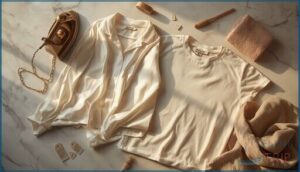
How you care for a fabric starts with knowing what it’s made of.
A silk blouse and a polyester tee might look similar on a hanger, but treat them the same way and you’ll quickly learn the difference.
Here’s what you need to know about washing, ironing, and storing based on fiber type.
Washing Guidelines by Fiber Type
Every fiber type has its own comfort zone in terms of water temperature and drying methods. Cotton fares well with warm water, but hot water invites fabric shrinkage and color fading fast.
Wool needs cold water and a gentle touch. Silk demands hand washing with cool water. Synthetics like polyester tolerate warm cycles, while spandex prefers cold. Always follow the care instructions on the label.
Ironing and Heat Sensitivity by Composition
Heat is where fabric care gets personal. Cotton withstands high iron settings — up to three dots — with steam and firm pressure.
Wool and polyester blends need medium heat; silk and spandex stay safe only at low settings. For blends, always follow the strictest fiber’s care instructions.
An iron symbol with a cross means skip ironing entirely — steaming techniques work better there.
Storing Fabrics to Preserve Fiber Quality
How you store fabric matters just as much as how you wash it. Keep textiles in a steady environment — around 65 to 75°F with moderate humidity — to prevent mold and brittleness.
Follow fabric labels and care instructions before storing: always store clean. Use acid-free tissue for fabric folding, cedar for pest prevention, and breathable covers for moisture control. Good textile handling starts here.
Frequently Asked Questions (FAQs)
How does fabric composition impact environmental sustainability?
The fibers you choose carry a real environmental cost. Natural and synthetic fibers differ sharply in biodegradable textiles potential, microplastic pollution, and how well they support sustainable production, eco friendly materials, and fiber recycling in sustainable fashion.
Can fabric composition affect skin allergies or sensitivities?
Yes, fabric composition can directly affect your skin. Synthetic fibers trap heat and moisture, triggering textile dermatitis, while breathable fabrics like cotton tend to be gentler on sensitive skin.
How does fiber type influence fabric colorfastness over time?
Polyester holds dye deeply within its tight structure, giving it strong color retention.
Cotton and linen fade faster because moisture and light break down dye bonds more quickly, reducing long-term colorfastness.
What role does fabric weight play in garment construction?
Fabric weight quietly shapes everything in garment construction. It controls garment drape, guides seam construction choices, and determines textile durability.
Higher fabric density suits structured pieces; lighter weights favor fluid, flowing silhouettes.
How does climate affect choosing the right fabric composition?
Climate considerations shape every fabric choice you make. In humid heat, linen and cotton excel at moisture management and fabric breathability.
Cold climates demand wool’s temperature regulation. Choosing the right fabric starts with knowing your weather.
Conclusion
A fabric label is a small window into a much bigger story—one that tells you exactly what you’re bringing into your life and your wardrobe. Understanding fabric composition basics hands you the ability to shop smarter, sew with intention, and care for every piece you own.
You won’t need to guess why something shrinks, pills, or loses shape. You’ll already know. That knowledge, woven into every purchase, turns a simple label into your most reliable guide.
- https://sourceoffabric.com/ways-to-attach-stretch-lace/
- https://www.rei.com/learn/expert-advice/fabric-care-symbols.html
- https://images.restorationhardware.com/content/catalog/tearsheets/us/Fabric_Care_Instructions_en-US.pdf
- https://www.myfabrics.co.uk/dressmaking-fabrics
- https://fbargainsgalore.co.uk/fabric-101-guide-to-textiles-materials/