This site is supported by our readers. We may earn a commission, at no cost to you, if you purchase through links.

A seam that looks perfect on top can hide a disaster underneath. Flip the fabric over and you’ll find loops, puckers, or thread pulled tight enough to distort the weave—classic signs of uneven bobbin thread tension.
Most sewists blame the needle thread first, adjusting the top tension dial until frustration wins. The real culprit usually lives below: lint packed under the bobbin spring, an off‑center case, or thread wound unevenly onto the bobbin itself. Small mechanical details, but they derail an entire project.
Once you know where to look and what to fix, balanced tension stops being a mystery.
Table Of Contents
Key Takeaways
- The real cause of uneven bobbin tension is almost always below the fabric — lint under the bobbin spring, a misaligned case, or an unevenly wound bobbin — not the top thread dial most sewists reach for first.
- Re-threading the machine with the presser foot raised, cleaning lint from the bobbin area every 8–10 hours, and making only quarter-turn screw adjustments are the three fixes that solve most tension problems without a repair shop visit.
- Thread weight, needle size, and even thread brand directly affect bobbin tension — heavier threads need looser settings, and mixing cotton top thread with polyester bobbin thread requires a slight tension tweak to keep stitches flat.
- Sewing a test sandwich on scrap fabric before every project — using the same fabric, batting, and thread as your actual work — catches tension problems before they damage your real material.
What Causes Uneven Bobbin Thread Tension?
Uneven bobbin tension rarely comes from one single thing — it’s usually a combination of small problems that add up fast. Knowing where to look is half the battle.
Once you’ve spotted the culprits, keeping sewing machine thread tension consistent comes down to regular checks and a few simple habits.
Here are the most common culprits worth checking first.
Common Bobbin Tension Problems
Bobbin tension problems usually trace back to a handful of culprits.
Thread lint buildup under the bobbin spring wear area is the sneakiest one — it shifts tension without warning.
Winding speed variance leaves uneven thread layers that cause tight and loose spots mid‑seam.
Poor case compatibility issues and skipped tension gauge calibration compound the mess.
Regular sewing machine maintenance catches these before they wreck your work. Ensuring proper tension keeps stitches helps maintain balanced stitching.
Thread Path and Bobbin Case Issues
Even a perfectly wound bobbin fails if the thread path is wrong. Here’s where things go sideways:
- Tension Disc Lint blocks the discs from closing properly, leaving thread untensioned.
- Bobbin Orientation Errors — wrong winding direction causes loops underneath.
- Case Alignment Arrow mismatched means skipped stitches every time.
- Spring Debris Effects mimic loose tension settings.
- Handwheel Direction Impact — turning it backward introduces dangerous slack.
Proper bobbin tension is covered in the bobbin tension guide.
Impact of Thread and Needle Choices
Thread weight and needle size matter just as much as your bobbin setup.
size 70/10 needle with 40wt cotton works fine, but swap in 60wt polyester and you’ll see nubs forming underneath.
Heavier threads need tighter bobbin tension; lighter ones need less.
Brand tension varies too — Aurifil runs balanced at lower settings than Coats & Clark.
Getting your tension dialed in also pairs well with having the right needle—a worn or wrong-size needle can cause the same frustrating breakage, so it’s worth brushing up on hand sewing needle types and their best uses before troubleshooting further.
Specialty threads like metallics need their own approach entirely.
How to Identify Uneven Bobbin Tension
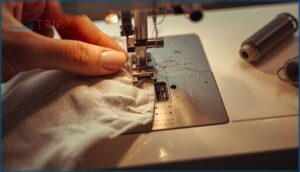
Bobbin tension problems don’t always announce themselves loudly — sometimes it’s a subtle pull, a loop you almost miss, or fabric that just doesn’t lie flat.
But once you know what to look for, the signs are hard to ignore.
Here’s what to watch for as you check your work.
Visual Signs on Stitching
Your machine is telling you something — you just need to know how to read it.
Loose loops on the top surface, tight pulls dragging the top thread below the fabric, bird nests tangling under the needle plate — these are all classic visual inspection clues.
Watch for stitch length variation, thread visibility spots peeking through dark fabric, and uneven stitches signaling bobbin tension trouble.
Stitch Quality and Fabric Effects
Poor bobbin tension doesn’t just look bad — it damages your work. Fabric puckering impact shows up as wrinkles 2–3 mm wide on seams, while seam strength variation can weaken joins by up to 50%.
Poor bobbin tension doesn’t just look bad — it can weaken seams by up to 50%
Tight tension triggers thread breakage frequency and elastic recovery loss on knits.
Stitch quality suffers visibly, and color penetration issues dull embroidery.
Tension adjustment fixes all of it.
Using Test Sandwiches for Diagnosis
Building a test sandwich is your fastest path to honest answers.
Match your sandwich material selection to the actual project — same fabric weight, same batting thickness, same thread color matching your quilt.
Keep needle size consistency throughout.
Sew straight lines, then loops and zigzags for stitch pattern variations.
Flip it over.
What you see tells you exactly where your bobbin tension or thread tension needs adjustment.
Step-by-Step Fixes for Uneven Bobbin Tension
Good news — most bobbin tension problems are fixable without a trip to the repair shop.
You just need to work through the right steps in the right order. Here’s what to do.
Re-threading The Machine Properly
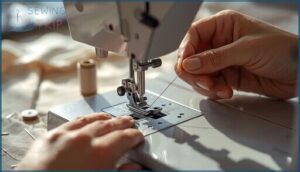
Re-threading fixes more tension problems than any dial adjustment ever will.
Start with Presser Foot Lifting — discs stay closed without it, burying your upper thread outside the tension unit. Follow the Upper Thread Path exactly, hitting every guide and the take‑up lever. Confirm Spool Orientation Check, then do Bobbin Direction Alignment. Finish with a Test Seam Verification to confirm balanced stitches.
Cleaning The Bobbin Area
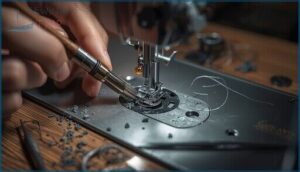
Lint is a silent tension killer.
Start with needle plate removal — unscrew it, expose the feed dogs, and brush everything out using proper lint brush techniques. Sweep toward the front, never deeper inside.
Feed dogs cleaning pulls stubborn threads tweezers can’t reach.
Don’t skip hook race maintenance — one drop of oil keeps rotation smooth.
For vacuum usage safety, use a mini attachment only.
Adjusting Bobbin Case Tension Screws

Before touching that tiny screw, mark its starting position with a permanent marker dot — that’s your safety net for sewing machine maintenance.
Use quarter-turn adjustments only, testing on scrap fabric after each one. A TOWA gauge helps with gauge calibration; ideal bobbin tension reads 180–220 grams.
Remember, thread weight effects are real — heavy threads need looser settings, fine threads need tighter ones.
Replacing or Reseating The Bobbin
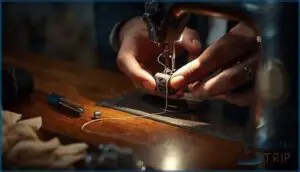
Sometimes the fix is simpler than you think — pull that bobbin out and start fresh. A proper Bobbin Orientation Check matters: top-loaders unwind counterclockwise, front-loaders clockwise.
Confirm the Case Seating Alignment snaps firmly into place. Leave a 4-inch Thread Tail Length before sewing. Run a quick Lint Removal Procedure, then do a Quick Test Stitch on scrap fabric to verify your Bobbin Tension is dialed in.
Tools and Accessories for Perfect Tension
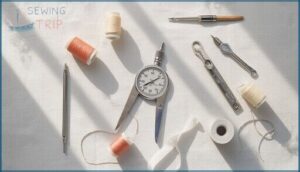
Having the right tools makes tension work a whole lot easier.
A few key accessories can help you dial in consistency and take the guesswork out of adjustments.
Here’s what’s worth having in your sewing kit.
Using Bobbin Tension Gauges
A TOWA gauge takes the guesswork out of bobbin tension. Insert your bobbin case, pull the thread with steady pressure, and the digital readout gives you a real number — target 190 to 220 mN for longarm machines.
Use screw adjustment techniques in quarter‑turn increments, checking gauge calibration after each change. Reading tension units accurately means fewer ruined test runs and more consistent stitches.
Choosing Compatible Bobbins and Threads
Numbers don’t lie — but they only help if your bobbin and thread are the right match.
Bobbin Size Matching starts with your machine’s specs: Class 15 and L-style bobbins share the same diameter but differ in width, so swapping them throws off Bobbin Tension immediately.
Thread Material Pairing matters just as much. Cotton top thread with polyester bobbin thread? Loosen bobbin tension slightly.
Thread Weight Coordination, keep bobbin thread one to three sizes lighter than your top thread. That balance keeps Thread Tension even and your stitches flat.
Auto-Adjusting Tension Features in Modern Machines
Once bobbin and thread are matched, let the machine do the heavy lifting.
Mid-range and high-end computerized machines from Brother, Janome, and Singer use responsive tension sensors and adaptive stitch algorithms to run real-time tension calibration automatically.
Preset fabric mapping loads the right tension the moment you select your fabric type.
User-override controls let you fine-tune bobbin tension when unusual threads demand it.
Preventing Future Bobbin Tension Problems

Fixing tension problems is satisfying — but keeping them from coming back is where real skill lives.
A few consistent habits can save you hours of frustration down the road. Here’s what to build into your routine.
Regular Maintenance and Cleaning
Think of your machine like a car — skip the oil changes, and it’ll break down at the worst moment.
A lint brush routine every 8–10 sewing hours keeps tension discs, feed dogs, and the bobbin case inspection all clear.
Regular feed dog sweeping, hook race lubrication, and tension disc inspection aren’t optional — they’re what keeps your bobbin tension locked in.
Proper Bobbin Winding Techniques
Winding your bobbin correctly is half the battle against uneven thread tension. Every sloppy wind creates problems; you’ll spend twice as long fixing later.
Follow these five techniques:
- Disc Flossing – Floss thread firmly between tension discs before winding
- Tail Anchoring – Hold the tail upright and wrap 4–5 turns first
- Finger Guiding – Guide thread side-to-side for even bobbin winding layers
- Winding Speed – Start slow, settle at medium speed for consistent tension adjustment
- Fill Level – Stop at 80–90% full; overfilling causes jams
Nail these and your sewing machine maintenance starts paying dividends immediately.
Routine Tension Checks Before Sewing
Before you sew a single stitch, run three quick checks — they’ll save you hours of unpicking later.
| Check | What to Look For |
|---|---|
| Bobbin Drop Test | Case drops ~1 inch per jolt |
| Thread Path Check | No snags, clean guides |
Use Test Sandwich Prep to catch Pre-Sew Triggers early. Uneven stitches and Needle Thread Match problems show up fast on scrap fabric — Visual inspection beats guessing every time.
Frequently Asked Questions (FAQs)
Why is my bobbin threading uneven?
Uneven bobbin thread tension usually comes down to four culprits: improper threading, wrong bobbin direction, missing tension slot, improper seating, or a winding disc skip during bobbin prep.
Each one quietly wrecks your stitch quality.
Can humidity affect bobbin thread tension over time?
Yes. Humidity causes thread swelling, case warping, and seasonal drift — all of which quietly throw off bobbin thread tension over time,
leading to uneven stitches that demand regular tension adjustment and machine maintenance.
Does sewing speed impact bobbin tension consistency?
Absolutely.
Friction Effects at high speeds tighten bobbin tension unpredictably. Hook Timing shifts, Thread Inertia creates loose loops, and Winding Speed affects thread release.
Machine Response varies — consistent, moderate speed keeps tension adjustment stable.
How does fabric thickness change bobbin thread behavior?
Fabric thickness directly controls bobbin tension scaling. Thick layer lock compresses thread, while thin fabric slip lets it rise.
Each stitch depth shift demands a matching tension adjustment to protect stitch quality across every layer count impact.
Are vintage machines harder to maintain bobbin tension?
Vintage machines are harder to tension-balance.
Worn tension springs, hardened lubricants, worn case surfaces, and scarce vintage parts make precise gram adjustments tricky.
Regular machine maintenance helps, but expect more hands-on work than modern machines demand.
Can thread dye or finish cause tension irregularities?
Thread dye and finish absolutely cause tension irregularities.
Dye weight impact adds friction, while finish lubrication effects alter how smoothly thread feeds — small differences that quietly throw your bobbin tension off balance.
Conclusion
Think of your sewing machine like a finely tuned instrument—even one loose string throws off the whole performance. Uneven bobbin thread tension works the same way: one small imbalance quietly ruins every stitch above it.
But now you know exactly where to look, what to adjust, and how to keep it from coming back. Clean the bobbin area, check your winding, and test before every project. Balanced tension isn’t luck—it’s a habit you build.
- https://www.maggieframes.com/blogs/embroidery-blogs/fix-bobbin-tension-too-loose-ultimate-troubleshooting-guide
- https://ylithreads.com/blogs/thread-education/adjust-bobbin-tension-guide
- https://sewcutepatterns.com/blog/bobbins-gone-bad-common-problems-and-how-to-fix-them
- https://www.stitchclinic.com/how-to-fix-bobbin-tension/
- https://www.gpisupplies.com/blogs/embroidery-machine-repair-articles/proper-bobbin-case-maintenance