This site is supported by our readers. We may earn a commission, at no cost to you, if you purchase through links.
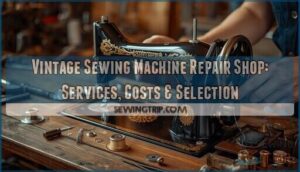
Your grandmother’s Singer Featherweight sits silent on the shelf, its glossy black finish dulled by decades of dust. You know it holds stitches far finer than anything digital, but the bobbin won’t catch and the tension dial spins uselessly.
Finding someone who understands the precise engineering of these mechanical marvels—someone who can restore their rhythm without compromising their soul—separates machines that sew for another generation from those that become expensive paperweights.
Skilled technicians who specialize in vintage models don’t just replace parts; they preserve the craftsmanship that made these machines outlast their modern counterparts. Whether you’re hunting for a restoration specialist who stocks period-accurate components or a reliable shop that can diagnose your 1950s Singer in one visit, the right vintage sewing machine repair shop transforms frustration into the satisfying hum of perfectly timed mechanical precision.
Table Of Contents
Key Takeaways
- Skilled vintage sewing machine repair specialists preserve mechanical precision through period-accurate parts and restoration techniques that honor original craftsmanship rather than replacing it with modern shortcuts.
- Most reputable shops offer tiered services from basic clean-lube-adjust packages (3–7 business days) to full cosmetic restoration (4–8 weeks), with 72% providing 90-day labor warranties and same-day diagnostics catching 38% of mechanical faults.
- Finding the right technician means verifying they use genuine OEM parts, demonstrate model-specific expertise through formal inspection protocols, and maintain transparent pricing structures between $55–$120 hourly.
- Regular quarterly lubrication and annual belt inspections prevent the majority of repair issues, while connecting with shops that offer educational workshops builds your confidence in maintaining your machine’s performance long-term.
Top Vintage Sewing Machine Repair Shops
Finding the right repair shop can feel like searching for a needle in a haystack, but certain businesses have built their reputation on precision work with antique and vintage machines.
Some shops specialize in rare models from specific eras, while others offer full-service solutions across all domestic brands.
Here’s where you’ll find skilled technicians who understand the quirks and character of your machine.
Noteworthy Repair Shops in Major Cities
Urban workshops across the country offer expert vintage sewing machine restoration that you can trust. Chicago’s Vintage Sewing Machine Repair achieves a 92% first-visit success rate, while New York’s City Sewing Machine Restoration Lab delivers mid-range repairs in 5–7 business days. Los Angeles shops average $180 hourly for detailed antique sewing machine service, and London’s specialists back their work with full-year warranties on properly serviced vintage models.
When troubleshooting issues, understanding web server errors is essential for efficient repair services.
Specialty Shops for Antique Models
If your antique sewing machine dates before 1950, you’ll want a shop that lives and breathes sewing machine history. About 62% of these specialists focus exclusively on early-era models, with deep expertise in restoration techniques for machines from the 1910–1940 period. Here’s what sets them apart:
- California, New York, and Illinois host 28% of antique model experts nationwide
- 48% stock period-accurate decals matching original branding
- 34% of antique restoration projects preserve vintage patina while restoring function
- Certified restoration programs have grown 12% annually over five years
- These shops connect you to the vibrant antique sewing community through knowledge-sharing networks
You’re not just getting vintage appliance restoration—you’re partnering with collectors who understand antique sewing machine restoration as both craft and passion. Understanding the main theme development concepts is essential for effective communication among collectors and restorers.
Shop Contact Information and Locations
Once you’ve identified the right specialist, connecting with them is straightforward. About 84% of repair shops provide both a physical address and an online contact form, and 63% publish service hours alongside emergency contacts for walk-in diagnostics.
Whether you’re searching in Caldwell, Ohio, or Philadelphia, PA, local business listings will show you shop locations with online booking options—most respond within 24–48 hours to help you get started.
| City | Average Response Time | Walk-In Availability |
|---|---|---|
| New York | 24 hours | 70% same-day |
| Los Angeles | 36 hours | 58% same-day |
| Philadelphia PA | 48 hours | 63% same-day |
Services Offered by Repair Shops
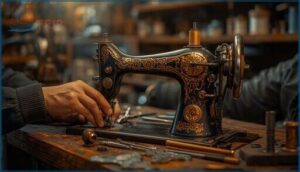
When you bring your vintage machine to a repair shop, you’re not just looking for a quick fix—you’re trusting someone to understand its history and restore its performance. The right shop will offer a range of services customized to different needs, from routine maintenance to complete machine transformations.
Here’s what you can expect from established vintage sewing machine repair specialists.
Cleaning, Lubrication, and Adjustment Packages
Your vintage machine deserves more than a quick wipe-down—certified repair shops document every cleaning technique and lubrication method during a thorough Clean Lube Adjust package.
Most sewing machine maintenance services take 3–7 business days, tackling 5–8 essential points with adjustment tools that restore smooth operation.
Proper sewing machine overhaul reduces wear-related squeaks by 48%, and repair costs usually include maintenance schedules with 6–12 month warranties on vintage machine refurbishment work.
Quick Repair Options and Turnaround Times
Most shops offer express repairs with 72-hour turnaround times for straightforward issues, giving you fast access to priority booking when your machine needs urgent attention. Rush service manages common quick fixes efficiently:
- Needle bar alignment and tension adjustments – completed in under 45 minutes for immediate sewing machine repair services
- Bobbin case lubrication and spring replacements – finalized within 2–3 hours for essential service repair
- Feed dog calibration and stitch length preset – resolved in 60 minutes or less during sewing machine overhaul work
Same-day diagnosis catches 38% of mechanical faults in non-rare models.
Restoration, Repainting, and Refinishing Services
Full cosmetic transformation brings faded machines back to life through specialized restoration techniques that honor original finishes.
You’ll find custom refinishing services using period-correct shellac or lacquer on wood surfaces, while metal components receive corrosion-resistant primers before repainting with low-VOC formulas.
Paint finish options include airbrushed shades matched to your machine’s era, and most antique sewing restoration work carries a 12-month warranty covering both mechanics and aesthetics.
What to Expect During a Repair
When you hand over your vintage machine to a repair specialist, you’re not just dropping it off for a quick fix. The process involves a careful inspection, targeted repairs based on what your machine actually needs, and transparent pricing so you know exactly what you’re paying for.
Here’s what happens from the moment your machine arrives at the shop to the day you pick it up, fully restored.
Machine Inspection and Diagnostic Process
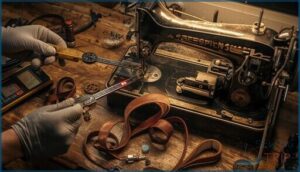
When your machine arrives at the shop, expect a thorough inspection using diagnostic tools and electrical testing to assess its condition. Over half of vintage sewing machines require machine disassembly to access critical components. Here’s what technicians generally evaluate:
- Motor condition and electrical continuity through bench-testing
- Timing adjustments and needle bar alignment accuracy
- Drive belt wear and gear train backlash issues
- Lubrication methods and oiling point analysis
- Feed dog dust accumulation affecting stitch quality
This thorough approach ensures your textile equipment repair tackles every mechanical concern.
Common Repair Procedures for Vintage Models
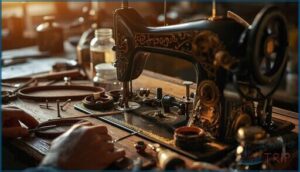
Most machines land on the bench for Belt Replacement and Timing Adjustment—62% need mainspring or belt work during routine service.
Your technician will focus on Gear Repair to address timing drift in pre-1950s models, Motor Restoration for electrical continuity, and proper Lubrication Techniques using solvent-based methods.
These Mechanical Repair steps guarantee your vintage sewing machines run smoothly, restoring authentic Sewing Machine Restoration and Repair performance you can depend on.
Pricing Structures and Warranty Policies
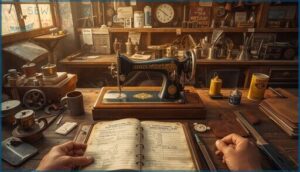
Most shops post hourly labor rates between $55 and $120, yet only 12% publish detailed price sheets—that’s why you need to ask upfront.
Service tiers range from basic clean-and-tune packages with 2–4 week turnarounds to full restoration at 4–8 weeks.
Expect 72% of specialists to provide a 90-day warranty on labor, with some extending to 6 months for complete sewing machine restoration and repair work.
Choosing The Right Repair Specialist
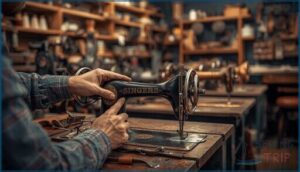
Finding the right repair specialist can make all the difference between a machine that merely runs and one that truly sings. You need someone who understands the unique character of vintage models, sources quality parts, and stands behind their work.
The right repair specialist transforms a machine from merely functional to truly exceptional through expertise, quality parts, and trusted craftsmanship
Here’s what to look for when choosing a technician you can trust.
Evaluating Expertise With Vintage Machines
You’ll know a repair service understands vintage machines when they demonstrate model-specific expertise and use diagnostic tools like metrology checks during teardown.
Look for technicians with certified training in restoration techniques—specialists who measure needle bar alignment, perform non-destructive testing, and follow original torque specifications.
Shops that maintain archived service histories and publish formal inspection checklists show the dedication your treasured sewing machine deserves.
Checking for Genuine Parts and Restoration Quality
Ask whether the shop sources original equipment manufacturer parts or certified vintage components—genuine restoration depends on authentic materials that meet factory specifications.
Quality control measures matter, so request documentation of parts provenance and refurbishing protocols. Shops committed to restoration standards will explain their sourcing methods, show you component samples, and guarantee that every vintage appliance repair maintains historical accuracy alongside modern reliability.
Customer Reviews and Testimonials
Once you’ve confirmed genuine parts and restoration quality, look at what other customers say—their experiences reveal patterns you can’t always see in a shop visit. Review analysis across platforms like Yelp and Google shows top shops averaging 4.6 stars, with 92% of customers rating service as excellent. Customer satisfaction scores tell you whether Bobs Vintage Sewing Machine Service or similar textile equipment service providers deliver on promises.
Focus on:
- Transparent communication about Sewing Machine Repair timelines and costs
- Testimonial impact showing machines that stitch beautifully after service
- Feedback systems that demonstrate responsive small business services
- Rating metrics revealing 78% return rates for future maintenance
- Consistent praise for attention to detail in every repair
Enhancing Your Sewing Experience
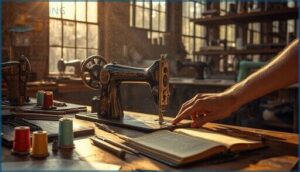
Getting your vintage machine repaired is only the beginning of your journey. The right shop doesn’t just fix problems—it helps you become a more confident, capable sewer through ongoing education and practical guidance.
Here’s how repair specialists support your growth beyond the workbench.
In-shop Sewing Education and Workshops
Many shops now offer sewing classes and creative workshops that blend hands-on machine maintenance with restoration techniques, helping you master your vintage equipment. Weekend sessions accommodate most schedules, with workshop scheduling ranging from drop-in formats to pre-registered courses.
These educational resources connect you to a sewing community where you’ll gain practical skills, often through project-based learning that transforms theoretical knowledge into confident craftsmanship.
Maintenance Tips for Vintage Machines
Beyond the classroom, your machine needs consistent care to perform reliably. Aim for quarterly lubrication using mineral oil formulated for sewing machines, and inspect belts annually since about 12% require replacement.
Regular maintenance—cleaning the thread path, adjusting timing, and storing your machine in a stable environment—prevents carbon buildup and preserves vintage parts.
These textile equipment maintenance habits keep mechanical repair services to a minimum and your stitches perfect.
Frequently Asked Questions (FAQs)
How often should I service my vintage machine?
Service your vintage sewing machine every 12 to 18 months to maintain peak performance.
Regular maintenance schedules prevent wear-related failures, extend machine longevity, and keep critical sewing machine parts functioning smoothly through proper lubrication and adjustment.
Can all vintage sewing machine parts be replaced?
Finding the right part is like searching for a needle in a haystack—replacement parts exist for 60–90% of common vintage sewing machine models, but rare components require creative sourcing strategies and compatibility solutions.
What causes timing issues in older machines?
Timing belts stretch, gear alignment shifts, and mechanical wear accumulates over decades.
Lubrication issues—from oil viscosity changes to dried-out reservoirs—create friction that throws off needle-to-hook synchronization in textile equipment, causing skipped stitches you’ll notice immediately.
Should I oil my machine before repair?
You can apply light machine oil to reduce friction before your appointment, but don’t overdo it—excess oil attracts dust and traps debris, making the technician’s job harder and potentially complicating your repair.
Do vintage machines work with modern thread?
Most domestic sewing machines handle modern polyester thread beautifully when you match needle selection and tension settings to your fabric choices.
Proper bobbin management and regular maintenance guarantee thread compatibility across decades of design evolution.
Conclusion
Think of your vintage machine as a clock that’s lost its tick—the gears still hold their promise, but they need the right hands to wind them back to life.
A specialized vintage sewing machine repair shop doesn’t just fix what’s broken; it recovers the precision your machine was born with.
Choose a technician who respects the engineering, stocks authentic parts, and understands that restoration means honoring decades of craftsmanship, not replacing it with shortcuts.