This site is supported by our readers. We may earn a commission, at no cost to you, if you purchase through links.
Every sewist has been there—you’re staring at a crooked seam, a botched hem, or stitches that wandered off course like they had somewhere better to be. That’s when you reach for your seam ripper, the tiny tool that gives you the power to undo mistakes without starting from scratch.
This sharp, fork-shaped instrument slips under threads and cuts them cleanly, letting you remove stitches, open buttonholes, and fix errors with surgical precision. Mastering what a seam ripper is used for means you’re never trapped by a sewing mistake again—you’ve got the definitive do-over tool right in your hand.
From delicate fabric repairs to heavy-duty seam removal, this little powerhouse transforms frustrating failures into second chances.
Table Of Contents
Key Takeaways
- A seam ripper is a small, sharp tool with a forked blade that cuts and removes stitches with precision, letting you fix mistakes, open buttonholes, and alter garments without damaging fabric when you use it carefully.
- The main types include forked head rippers for everyday use, curved blade models for dense seams and serger stitches, and specialized electric or lighted versions for heavy-duty projects—each designed for specific sewing challenges.
- Safe technique means working slowly on delicate fabrics, keeping the protective ball against your material, cutting every third stitch instead of ripping continuously, and always storing your ripper capped to protect both the blade and your fingers.
- Top-rated options like the Missouri Star Heavy Duty and Clover Ergonomic models prove that investing in a quality seam ripper with sharp blades and comfortable handles transforms frustrating fixes into quick, controlled corrections.
What is a Seam Ripper Used For?
A seam ripper is your secret weapon for taking control of your sewing projects—whether you’re fixing mistakes, making alterations, or undoing stitches that just aren’t working. This small but mighty tool gives you the freedom to rework any seam without damaging your fabric.
Once you’ve removed the unwanted stitches, you can adjust your types of presser feet to handle the resewn seam with the right tension and control.
Let’s break down exactly what makes a seam ripper essential, how it’s designed, and why every sewist needs one in their toolkit.
Definition and Purpose in Sewing
A seam ripper is your sharp-edged liberator—a small handheld tool with a central blade and two tapered prongs that cuts and removes stitches with surgical precision. You’ll use it for seam removal, stitch correction, and fabric repair, slipping one prong under wayward thread and slicing clean through.
It pairs perfectly with the emergency sewing kits you keep stashed for trail repairs and quick fixes on the go.
A seam ripper is your sharp-edged liberator—a small tool that cuts and removes stitches with surgical precision
It’s essential for garment alteration and sewing accuracy, letting you undo mistakes and salvage fabric without causing extensive damage when you work carefully.
Key Features and Design Elements
That cutting power lives in a deceptively simple design—a pointed metal tip, a curved blade nestled in a U-shaped fork, and a protective red ball that keeps you from accidentally stabbing through your fabric. Modern seam rippers often feature innovations such as a large ergonomic handle to provide greater comfort and control during use.
Here’s what makes them work:
- Sharp blades slice through thread cleanly without fraying
- Forked tips cradle stitches for precise targeting
- Handle materials like rubber or plastic give you grip authority
- Cutting surfaces stay sharp for years with proper care
Why Seam Rippers Are Essential Tools
Precision matters when you’re fixing mistakes or altering garments. With seam rippers, you’ll tackle multiple stitch types—from basic seams to decorative topstitching—without damaging surrounding fabric.
These sewing tools deliver fabric protection while boosting sewing efficiency dramatically. You’re not just undoing errors; you’re mastering precision crafting and fabric manipulation. That time-saving power transforms frustrating setbacks into quick wins, giving you complete control over every seam ripping challenge.
Common Types of Seam Rippers
Not all seam rippers are created equal. You’ll find different shapes and styles designed for specific tasks, from everyday seam removal to precision work on delicate fabrics.
If you’re looking to create a worn-in look on denim, you can also use a seam ripper to make distressed rips in your jeans for that perfectly controlled, edgy style.
Let’s break down the main types you’ll encounter so you can choose the right one for your projects.
Forked Head Seam Rippers
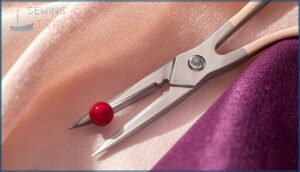
You’ll recognize the forked head seam ripper instantly—it’s your go-to weapon for thread removal. This classic sewing tool features a U-shaped blade design with one longer prong to slip under stitches and a protective red ball to shield your fabric. Here’s why it dominates:
- The sharp blade nestled in the fork’s curve cuts threads cleanly during seam ripping
- Ergonomic grips reduce hand fatigue when you’re tackling stubborn seams
- That safety ball provides fabric protection, letting you rip fast without fear
There are several available, each suited for different sewing needs.
Curved Blade Seam Rippers
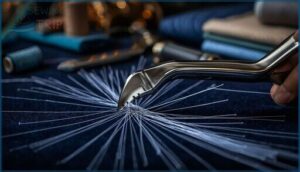
Want scalpel-like precision for your thread removal? The curved blade seam ripper trades the traditional fork for an exposed, arc-shaped edge that slices through serger stitches and dense seams like butter.
This surgical-style sewing tool gives you exceptional blade sharpness and curved edge control for precision cutting on heavy fabrics. The ergonomic thumb-hold design protects your fabric while you conquer those stubborn seams with confidence.
U-Shaped and C-Shaped Variations
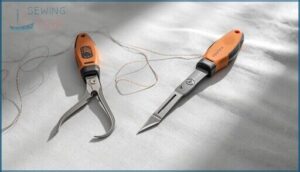
U-shaped and C-shaped seam rippers let you match your blade geometry to your fabric protection needs. The classic U-shaped fork places its cutting edge in that perfect curve between the sharp point and safety ball—your go-to for controlled seam removal. C-shaped variants slice like surgical scalpels through dense stitching where forked tips can’t reach.
- U-shaped tools balance thread cutting power with built-in fabric guards
- C-shaped blades deliver scalpel-precision for tough serger seams
- Ergonomic grips on both types prevent hand cramping during marathon seam ripping sessions
Specialized Seam Rippers and Extras
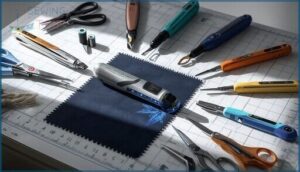
Beyond basic forked head seam ripper and curved blade seam ripper models, you’ll find game-changing sewing tools that transform seam ripping into precision work. Electric rippers power through quilts in seconds, while lighted tools shed light on dark stitches you’d otherwise miss. Multi-function designs pack stilettos and pressers into one grip, and accessory sets pair ergonomic grips with tweezers for complete thread control.
If you’re diving into embroidery projects, understanding key machine features helps you choose tools that complement precision seam removal and fabric handling.
| Innovation | Power Move | Your Win |
|---|---|---|
| Electric Rippers | Battery-driven blades slice dense stitching | Cut marathon unpicking time in half |
| Lighted Tools | LED beams target every hidden thread | No more squinting at midnight hems |
| Multi Function | 4-in-1 blade, stiletto, presser combos | One tool commands your entire workflow |
| Ergonomic Grips | Contoured grips fight hand fatigue | Rip for hours without the cramp |
Main Uses and Techniques for Seam Rippers
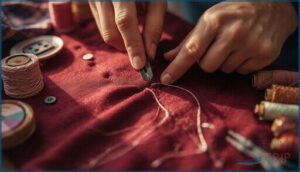
Now that you know which seam ripper fits your hand, let’s talk about what you’ll actually do with it. A seam ripper isn’t just for fixing mistakes—it’s your secret weapon for everything from opening buttonholes to working with fabrics that intimidate most sewists.
Here’s how to master the techniques that’ll give you total control over every project.
Removing Seams and Stitches
This is your moment to take control of your sewing mistakes. Seam removal starts by sliding the seam ripper’s pointed tip under individual stitches—cut every third or fifth stitch along the seam, then pull the remaining thread from the opposite side in one satisfying sweep.
For fabric protection during stitch cutting, keep that rounded ball tip against your fabric while you work, preventing accidental slashes that’ll make you want to quit.
Opening Buttonholes Safely
Buttonholes demand respect—one wild cut past the bar tack ruins everything. Here’s your battle plan for controlled opening without the heartbreak:
- Pin the ends: Drop straight pins just inside each bar tack as your safety stops
- Start center: Insert your seam ripper’s sharp point in the middle, not the ends
- Cut toward pins: Make short strokes from center outward in both directions
- One layer first: Cut the top fabric layer, then flip and repeat
- Test fit early: Check your button before cutting further—you can always enlarge later
Trimming Threads and Fabric Edges
Thread removal goes way beyond seam ripping—it’s your secret weapon for professional-looking seam finishing. Snip those loose tails at seam ends with your ripper’s sharp point instead of yanking them (which distorts fabric). Run the tip along finished seams for precision cutting that catches stray threads scissors miss.
| Task | Technique | Why It Works |
|---|---|---|
| Thread Removal | Sharp point targets individual tails | Prevents seam distortion from pulling |
| Edge Trimming | Light blade strokes along raw edges | Reduces fraying before overlocking |
| Fabric Refining | Trim serger chains close to stitching | Eliminates bulk in enclosed seams. |
Clean edges mean flatter seams and zero shadowing through lightweight fabrics—that’s the difference between homemade and handcrafted.
Precision Work on Delicate Fabrics
Sheer silk or chiffon demands a completely different game plan. Work from the bobbin side with your ripper’s pointed tip, lifting every third stitch instead of gliding—continuous ripping snags twisted fibers and creates runs.
Keep the fabric flat and supported so tension doesn’t stretch bias edges. Sharp, fine-tipped blades give you the precision stitch removal control needed for fabric protection without distortion.
Safety Tips and Seam Ripper Maintenance
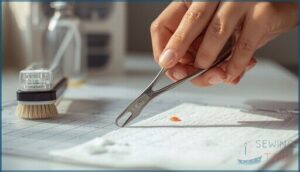
A seam ripper might look harmless, but that sharp blade demands respect and proper care. If you want yours to last years instead of months, you’ll need to know how to handle, clean, and store it correctly.
Let’s cover the essential safety practices and maintenance habits that’ll keep your tool sharp and your fingers intact.
Proper Handling and Safe Storage
A seam ripper’s blade might be small, but it demands the same respect you’d give any sharp tool in your sewing room. Keep it capped when you’re not using it—accident prevention starts with this one habit.
Store your seam ripper in a dedicated spot, like a magnetic strip or tool case, away from kids and pets. Good handling techniques mean you’ll master this sewing tool safely.
Preventing Fabric Damage
Beyond smart storage, protecting your fabric during seam removal is where real seam ripper mastery shines. Position that rounded red ball against your main fabric—keep the sharp point in the seam allowance where it belongs.
Work slowly on delicate materials, holding fabric taut to distribute tension evenly. Your gentle handling prevents snags, while proper thread management means clean cuts without accidental holes.
Cleaning and Blade Replacement
Keep your blade sharp and ready by wiping it clean with a soft cloth after each use—lint buildup kills precision fast. If you’re tackling heavy fabric or noticing resistance when cutting stitches, it’s time for blade replacement.
Adhesive tape lifts stubborn thread bits without scratching. For rust prevention in humid spaces, store your seam ripper in a closed container and consider a light oil wipe on metal parts.
Extending The Lifespan of Your Tool
Treat your seam ripper right, and it’ll outlive most of the gadgets cluttering your sewing drawer. Proper storage and regular cleaning keep your sewing tool sharp for years.
Master these fabric care and maintenance moves:
- Cap the blade after each seam ripping session—prevents nicks and protects fingers
- Inspect the handle monthly for cracks that compromise your grip
- Sharpen dull blades with fine-grit sandpaper or replace entirely
Tool inspection catches problems before they ruin your next project.
Top Seam Rippers for Sewing Projects
Now that you know how to use and care for your seam ripper, let’s talk about which ones actually deliver. Not all seam rippers are created equal—some feel flimsy in your hand, while others become tools you’ll reach for every single day.
Here are seven proven options that’ll help you rip seams like a pro and tackle any sewing challenge with confidence.
1. Missouri Star Heavy Duty Seam Ripper
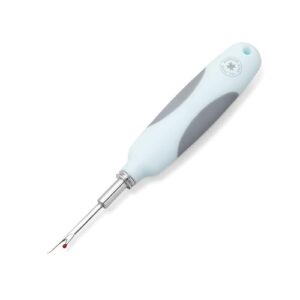
If you’re tackling thick quilts or heavy denim, the Missouri Star delivers the muscle you need. This 5.5-inch powerhouse features a chrome-plated steel blade that cuts through reinforced seams and layered hems without breaking a sweat.
The ergonomic handle feels solid in your hand—perfect for extended seam ripping sessions—while the protective mini-ball prevents fabric snags. At just over an ounce, it’s light enough for precision work but built tough enough for serious sewing efficiency. The included blade cover keeps everything safe when you’re not demolishing stitches.
| Best For | Quilters and sewists who regularly work with thick fabrics, multiple layers, or heavy-duty seams and want a comfortable tool that won’t quit halfway through a project. |
|---|---|
| Blade Material | Chrome plated steel |
| Handle Type | Soft grip ergonomic |
| Protective Cover | Yes |
| Length | 5.5 inches |
| Weight | 1.13 oz |
| Primary Use | Seam ripping |
| Additional Features |
|
- Chrome-plated steel blade cuts through reinforced stitching and dense hems with ease, making it ideal for jeans, quilts, and upholstery projects
- Ergonomic soft-grip handle reduces hand fatigue during long seam-ripping sessions, especially helpful if you have arthritis or grip issues
- Protective blade cover and lightweight design (just 1.13 oz) make it easy to toss in your project bag without worrying about accidental pokes
- Some users reported receiving units with quality control issues like dull blades or dirt on arrival
- May not hold up to extremely heavy-duty use—a few customers mentioned their previous seam rippers broke under intense pressure
- Performance can be inconsistent, with some users finding their older seam rippers worked better than this “heavy duty” model
2. Clover Ergonomic Seam Ripper
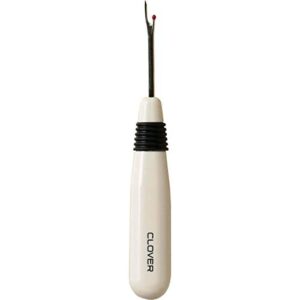
Arthritis won’t sideline your sewing when you grip this 4.5-inch wonder. The Clover Ergonomic Seam Ripper features a thick oval handle that sits securely in your palm—no cramping, no slipping—while you tackle stubborn seams.
That sharp forked blade slices through hems, buttons, and basting threads with precision, while the protective ball glides along fabric to prevent accidental cuts. You’ll appreciate the ergonomic design during marathon seam removal sessions, and the vinyl cap keeps the blade sharpness intact between projects.
This Japanese-made sewing tool delivers serious fabric protection without compromising seam ripping power.
| Best For | Sewers and quilters with arthritis or hand fatigue who need a comfortable grip for extended seam-ripping sessions. |
|---|---|
| Blade Material | Steel |
| Handle Type | Ergonomic vinyl |
| Protective Cover | Yes – vinyl cap |
| Length | 5 inches |
| Weight | 0.32 oz |
| Primary Use | Seam ripping |
| Additional Features |
|
- Thick oval handle reduces hand cramping and stays secure in your palm, even during long projects
- Sharp forked blade cuts through seams, buttons, and zippers cleanly without needing extra force
- Protective ball on the blade prevents accidental fabric damage when running along long seams
- Priced higher than basic seam rippers (around $6.50–$7.22)
- Hard plastic handle lacks cushioning, which some users might prefer over the smooth surface
- Vinyl cap design receives mixed reviews for how well it stays on during storage
3. Dritz Small Blade Seam Ripper
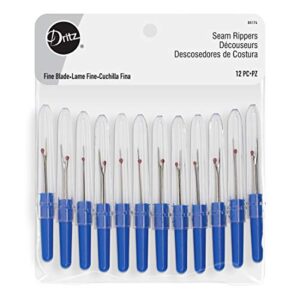
Tight corners and delicate fabrics demand finesse—that’s where the Dritz Small Blade Seam Ripper (model BLK174) shines. This compact powerhouse measures 5.67 inches and weighs just 1.6 ounces, giving you precision cutting control for intricate seam ripping work.
You’ll love the sharp point that slides under stubborn stitches in embroidery or lightweight material without fabric damage. The ergonomic grip keeps your hand steady during thread removal, while the protective cover maintains blade sharpness between projects. At twelve rippers per pack, you can stock your sewing toolkits without blade maintenance worries.
| Best For | Sewers, crafters, and DIY enthusiasts who need precise stitch removal in tight spaces or on delicate fabrics. |
|---|---|
| Blade Material | Steel |
| Handle Type | Ergonomic |
| Protective Cover | Yes |
| Length | 5.67 inches |
| Weight | 1.6 oz |
| Primary Use | Stitch removal |
| Additional Features |
|
- Sharp point easily slides under stubborn stitches without damaging fabric
- Lightweight and ergonomic design makes it comfortable to use for extended periods
- Pack of 12 provides excellent value and ensures you always have a sharp ripper on hand
- Small size may be difficult for people with larger hands to grip comfortably
- Blade can become dull over time with frequent use and may need replacement
- Not suitable for heavy-duty materials or thick seams
4. Clover Seam Ripper Tool
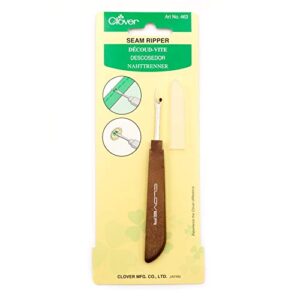
When you need a trustworthy tool that resolves everyday sewing mistakes without fuss, the Clover Seam Ripper (model 463) delivers exactly what you’d expect from a quality sewing tool. The brown handle fits comfortably in your grip, while the sharp point addresses seams, threads, and buttonholes with fabric protection built right in.
At just $6.99 and 0.176 ounces, this lightweight champion excels on leather and fine goods alike. Sure, the cap slips off easily, but proper maintenance means you’ll keep this tool sharp and ready for years of sewing efficiency.
| Best For | Sewers who need a reliable, everyday tool for ripping seams, cutting threads, and handling buttonholes on everything from delicate fabrics to leather. |
|---|---|
| Blade Material | Steel |
| Handle Type | Standard brown |
| Protective Cover | Yes |
| Length | 7.25 inches |
| Weight | 0.176 oz |
| Primary Use | Seam ripping |
| Additional Features |
|
- Sharp point cuts through threads and seams cleanly without damaging fabric
- Comfortable brown handle makes it easy to grip and control during use
- Affordable at $6.99 and works well on both fine goods and tougher materials like leather
- Small cap doesn’t stay secured on the handle and can easily get lost
- Not precise enough for paper piecing or projects with very tiny stitch lengths
- Sharp point requires careful handling to avoid accidental pokes or fabric damage
5. Dritz Curved Seam Ripper Tool
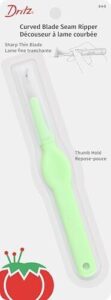
The Dritz Curved Blade Seam Ripper (model 640) cuts through mistakes like a hot knife through butter—literally. That curved blade slides under stitches with surgical precision, making seam removal faster and fabric protection easier on everything from silk to denim.
The extra-sharp edge tackles surged seams and buttonholes without breaking a sweat, while the blue soft-grip handle with thumb hold gives you total control during those marathon seam ripping sessions. At $9.99, you’re investing in a tool that respects both your fabric and your sanity.
| Best For | Sewers and crafters who need precision when removing seams, buttonholes, or stitches from delicate to medium-weight fabrics without damaging the material. |
|---|---|
| Blade Material | Steel |
| Handle Type | Large soft grip |
| Protective Cover | Yes |
| Length | Not specified |
| Weight | Not specified |
| Primary Use | Seam removal |
| Additional Features |
|
- Curved blade design allows you to slip under stitches easily while protecting the fabric from accidental cuts or snags.
- Extra-sharp blade cuts through threads, surged seams, and buttonholes quickly, saving time on seam removal tasks.
- Ergonomic soft-grip handle with thumb hold provides comfortable control during extended use, reducing hand fatigue.
- May struggle with very thick or heavy-duty fabrics like canvas or upholstery materials where more robust tools are needed.
- Blade can become dull over time with frequent use and may require replacement or sharpening to maintain performance.
- Small protective cover might not be secure enough to prevent accidents if stored loosely around children or pets.
6. Singer Seam Ripper and Tape Measure
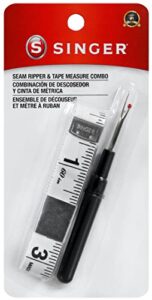
The Singer Grip N Rip bundles two sewing essentials into one killer package—perfect for building your rebel toolkit. You’re getting a 4-inch seam ripper with a black ergonomic design for confident seam removal, plus a flexible 60-inch tape measure marked in both inches and centimeters.
No cap on the ripper means storing it needs extra care, but these sewing tools and equipment basics handle everything from fabric repair and maintenance to seam ripping buttonholes. Smart blade replacement keeps this duo battle-ready for years of alterations.
| Best For | Sewers and tailors who want two essential tools in one affordable package for measuring fabric and removing stitches during alterations or repairs. |
|---|---|
| Blade Material | Steel |
| Handle Type | Plastic |
| Protective Cover | No |
| Length | 4 inches |
| Weight | Not specified |
| Primary Use | Seam ripping |
| Additional Features |
|
- Includes both a seam ripper and 60-inch flexible tape measure that displays inches and centimeters side by side
- Ergonomic black plastic handle on the seam ripper makes it comfortable to hold during detailed work
- Versatile tape measure works for both flat fabrics and measuring round objects like sleeves or hems
- Seam ripper lacks a protective cap, making it potentially unsafe to store in a sewing kit
- Metal tip on the tape measure is canted rather than straight, which may affect accuracy
- Some users report inconsistent quality that doesn’t always meet expectations
7. Clover Straight Tailors Awl Tool
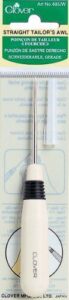
The Clover Straight Tailors Awl Tool flips the script on traditional seam rippers—you’re wielding a precision weapon for fabric piercing instead of stitch removal. This straight pointed steel shaft excels at punching tiny alignment holes for tailoring and marking exact spots for embroidery stitches.
Your crafting essentials toolkit needs this 0.32-ounce powerhouse (model 81291) for pulling perfect corners and guiding fabric through feed dogs. The protective case keeps that sharp point battle-ready, while the plastic handle gives you total control during weaving and needle lace work.
| Best For | Sewers, quilters, and embroiderers who need precise fabric piercing for alignment holes, corner work, and guiding fabric through machines. |
|---|---|
| Blade Material | Steel |
| Handle Type | Plastic |
| Protective Cover | Yes – case |
| Length | 7.5 inches |
| Weight | 0.32 oz |
| Primary Use | Piercing holes |
| Additional Features |
|
- Lightweight and easy to control at just 0.32 ounces with a comfortable plastic handle
- Comes with a protective case to safely store the sharp steel point when not in use
- Versatile for multiple tasks including embroidery, needle lace work, and pulling perfect fabric corners
- Sharp point requires careful handling to avoid injury
- Not designed for thick or heavy-duty fabrics
- Limited to specific sewing and craft applications with no additional attachments
Frequently Asked Questions (FAQs)
Why do you need a seam ripper?
You need a seam ripper because sewing errors happen—and this tool fixes them fast. It allows safe seam removal, protects fabric from damage, and saves time when correcting mistakes or altering garments.
Can you sharpen a dull seam ripper blade?
Yes, you can sharpen a dull blade using a fine grit file or sharpening stone. Maintain the original angle carefully.
However, most manufacturers recommend replacing blades instead—it’s safer and protects your fabric.
What fabrics are most difficult to use seam rippers on?
Delicate fabric care becomes tricky with chiffon, satin, and stretch knits—they snag, pucker, or ladder easily.
Velvet seam removal demands patience since the pile obscures stitches, while loose weave techniques require extra caution to avoid fraying.
How do you remove embroidery without damaging fabric?
Work from the embroidery’s back with your seam ripper, slicing individual stitches carefully. Lift each thread loop gently to protect fabric integrity.
For dense weaving, switch to sharp scissors for precise thread cutting without pulling.
Are electric seam rippers worth the investment?
They promise freedom from tedious unpicking—yet most electric rippers drain batteries fast and cost more in maintenance than manual tools.
For occasional sewers, skip the investment. Heavy-duty quilters might justify efficiency gains.
Whats the difference between seam rippers and thread snips?
Thread snips make quick, clean cuts for trimming threads after stitching.
Seam rippers pull apart existing stitches without harming fabric—hooked blades snag threads while that rounded tip protects your material from accidental nicks.
Conclusion
Think of your seam ripper as a superpower in disguise—a tiny tool that turns disasters into do-overs. Now you know exactly what a seam ripper is used for: liberating you from crooked seams, botched buttonholes, and wandering stitches.
You’re not stuck with mistakes anymore. You’ve got the right type, the safe techniques, and the confidence to rip, fix, and conquer. Every project is fixable. Every error is just practice. You’re in complete control now.
- https://madamsew.com/blogs/sewing-blog/use-your-seam-ripper-like-a-pro
- https://www.ageberry.com/how-to-use-seam-ripper/
- https://www.wawak.com/cutting-measuring/cutting/seam-rippers/ergonomic-seam-ripper-4-38/
- https://123stitch.com/item/Dritz-Ergonomic-Large-Seam-Ripper/DRITZ-5111
- https://quiltingwemple.com/seam-ripper/