This site is supported by our readers. We may earn a commission, at no cost to you, if you purchase through links.
Your serger runs through thread at an astonishing rate—up to four spools working simultaneously at speeds that would shred regular thread in seconds. That’s why serger thread isn’t just thinner; it’s engineered differently from the ground up. The specialized twist rate and low elongation properties let it glide through high-speed loopers without snapping, while its reduced bulk keeps seam edges clean and professional.
You’ll use serger thread for everything from preventing knit fabrics from fraying to creating stretchy seams that move with activewear. Understanding which type works best for your project—whether polyester for durability, wooly nylon for give, or cotton for natural fibers—transforms how your finished garments look and perform.
Table Of Contents
What is Serger Thread Used For
Serger thread isn’t just a spool you grab off the shelf—it’s engineered specifically for the demands of serger machines. This specialized thread manages high-speed stitching across multiple layers while creating those clean, professional edges you’re after.
If you’re new to serging, check out what a serger is used for to see how the right thread choice impacts every seam you finish.
Let’s break down what makes serger thread different, how it compares to regular thread, and the specific role it plays in your serging projects.
Using serger-specific thread instead of regular thread helps prevent tension issues and ensures your overlock stitches stay durable over time.
Definition and Unique Properties
Serger thread is engineered for overlock stitching with exceptional thread strength and quality that regular sewing thread can’t match. You’ll notice it features a specialized twist rate and low elongation properties that maintain consistent stitch formation at high speeds.
The 4-thread overlock stitch works especially well with this thread because it balances durability and stretch for knit garments.
Whether you’re choosing polyester serger thread or cotton serger thread, colorfastness and fiber types matter—these threads resist abrasion while minimizing bulk at seam edges for professional results.
Understanding tension settings and needle compatibility explained in this serger thread guide helps you avoid puckering and thread breaks during high-speed stitching.
How Serger Thread Differs From Regular Thread
Unlike regular sewing thread that’s optimized for straight stitching on household machines, serger thread features finer fiber strength and higher elongation properties to handle high-speed, multi-needle systems.
You’ll find the thread material—whether polyester serger thread or cotton serger thread—offers enhanced abrasion resistance at rolled edges. This thread quality tolerates looser tension settings and simultaneous feeding actions that would break regular sewing thread.
Role in Serging and Fabric Finishing
When your serger forms overlock stitches, the thread creates seam integrity by joining fabric edges while encasing them in a clean border. You’re not just connecting pieces—you’re building fabric stability that prevents fraying and maintains stretch on knits.
Proper thread tension matters here because it affects how those decorative edges look and whether your seams stay flexible or pucker when stressed.
Common Uses of Serger Thread
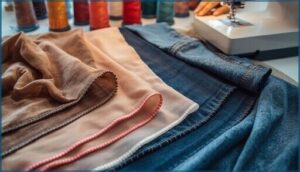
Now that you understand what serger thread is and how it differs from regular thread, let’s look at the specific ways you’ll actually use it in your projects.
Serger thread performs several key tasks that regular sewing thread just can’t accomplish as effectively. From construction to finishing touches, these four applications will show you exactly when to reach for your serger.
Seam Construction and Edge Finishing
When you master seam reinforcement and edge binding with a serger, you’re choosing finishing methods that transform your projects. Serger thread creates overlocked seams through overlock techniques that lock fabric edges together while trimming excess material in one smooth pass.
This fabric stabilization prevents bulky seam allowances, and proper thread selection ensures your serging techniques deliver stretch-friendly, professional results on everything from t-shirts to activewear.
Preventing Fabric Fraying
Raw edges don’t stand a chance when you apply the right serging techniques with quality serger thread. Your overlock stitches encase fabric edges in a protective seal that blocks unraveling at cut grains and seam allowances, delivering exceptional seam security through proper thread tensioning and fabric and thread compatibility.
Here’s how effective edge finishing prevents fraying:
- Polyester and nylon threads create tighter edge sealing than cotton on most fabrics
- Three-thread overlock finishes distribute stress evenly along fabric edge finishing zones
- Properly tensioned stitches resist thread unravel at woven fabric cut edges
- Narrow serger stitches minimize raw edge exposure for maximum fray prevention
- Fabric stabilization through serging outperforms zigzag finishes for fabric finishing and care
Decorative Edging and Embellishments
You can transform plain garments into eye-catching pieces with decorative serging techniques that go beyond basic edge finishing. Narrow decorative stitches like rolled hems and picot edges work beautifully on lightweight fabrics, while metallic and novelty decorative serger thread adds texture and shine to hems, cuffs, and seams.
Thread blending with contrasting colors emphasizes your stitch patterns, creating embellishment techniques that rival traditional fabric embroidery without the bulk or hand-sewing time.
Working With Stretch and Knit Fabrics
When stretch is non-negotiable, you’ll need high-finish polyester or nylon blend serger thread that moves with your knit fabrics instead of fighting them. Balanced tension settings and woolly nylon threads prevent snapping seams and skipped stitches.
Always run fabric stretch tests on scraps first, adjusting your differential feed and stitch length until the overlock flows smoothly without puckering or distortion.
Types of Serger Thread Explained
Not all serger thread is created equal, and choosing the right type can make or break your project. Each thread material brings its own strengths to the table, from durability to stretch to decorative flair.
Let’s walk through the main types you’ll encounter so you can match the right thread to your fabric and goals.
Polyester Serger Thread
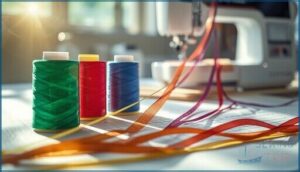
Polyester Serger Thread stands out as the workhorse of overlock sewing. Its Poly Core Thread construction combines high Tensile Testing results with outstanding Fiber Composition, ensuring your seams won’t fail under stress. Here’s why you’ll reach for Polyester Cone Thread repeatedly:
- Thread Strength manages stretchy fabrics without breaking during high-speed serging
- Color Fastness keeps your projects vibrant through countless wash cycles
- Durability Factors make Serger Thread Selection straightforward for most projects
Cotton Serger Thread
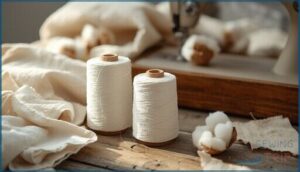
Cotton Serger Thread brings natural Fabric Breathability to your projects, making it ideal when you’re working with linen or quilting cotton. This Cotton Cone Thread offers a softer hand than synthetics, though you’ll notice lower Thread Durability under stress.
Cotton Blends balance strength with comfort, while pure cotton excels in Thread Weight consistency.
Your Serger Thread Selection for natural fibers starts here, enhancing both Sewing Techniques and Serging Techniques and Tips with authentic texture.
Wooly Nylon and Stretch Threads
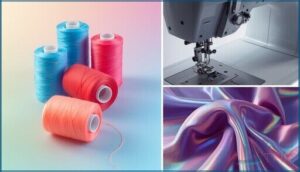
When you’re working with activewear or swimwear, Wooly Nylon Serger Thread becomes your go-to choice for Fabric Recovery that moves with your garment. This Elastic Thread excels in Stretch Sewing because its fluffy filament structure creates smooth, flexible seams on Knit Fabric without adding stiffness.
- High stretch recovery prevents seam breakage during wear
- Bulky core fills stitches beautifully while maintaining softness
- Requires careful Serger Tension adjustment to avoid tunneling
- Outstanding Thread Quality and Durability through repeated washing
Master these Serging Techniques and Tips, and you’ll achieve professional results in Serging stretchy materials with Woolly Nylon.
Decorative and Specialty Serger Threads
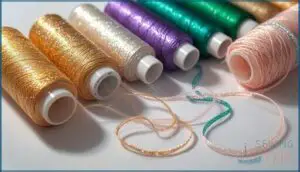
Beyond functional stitching, specialty threads open creative possibilities that transform ordinary seams into design elements. Metallic Threads and Sparkle Yarns add shimmer to edges, while Iridescent Effects and Color Shifting options react to light for vivid visual interest. Fiber Blends combining Wooly Nylon with decorative wraps deliver both stretch and style.
When you’re ready for Decorative Serging and Embroidery, these Specialty Threads—including Metallic Thread and Embroidery Thread—require compatible needles and adjusted tension to prevent breakage while achieving stunning results.
Choosing The Right Serger Thread
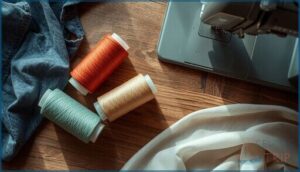
Picking the right serger thread isn’t about grabbing whatever’s on sale—it’s about matching the thread to your fabric, your project, and your machine. The wrong choice can lead to puckered seams, broken stitches, or finishes that just don’t hold up.
Choosing the right serger thread means matching it to your fabric, project, and machine for strong, flawless seams
Let’s walk through the key factors you need to keep in mind so your serger work looks professional every time.
Matching Thread to Fabric Type
Think of fabric matching as the foundation for perfect seams. You’ll want serger thread that mirrors your fabric’s fiber content to preserve seam integrity and stretch properties.
When working with knits, polyester or nylon blends deliver the recovery you need. For wovens prone to fraying, high-twist threads secure fibers without breaking.
Lighter fabrics demand finer tex weights to prevent bulk at your seam allowances.
Durability and Strength Considerations
Once you’ve matched your fabric, serger thread quality and tensile strength directly impact seam stability and thread longevity. Polyester thread offers 70–85% strength retention after fifty wash cycles, while nylon thread provides enhanced stretch for fabric interaction with knits.
Your breakage rates drop below 2% when you:
- Choose multi-filament construction for higher tensile strength
- Match denier weight to needle size
- Select core-spun designs for abrasion resistance
Color Selection and Blending
Thread color impacts your seam visibility more than you might expect. Color theory guides fabric type pairings, but color fastness matters equally for sewing project planning. You’ll want to match thread tone to fabric swatching results—mid-tone shades hide minor variations, while contrast emphasizes decorative edges. Test your tonal blending under different lighting before committing to large projects.
| Color Strategy | Application |
|---|---|
| Exact match | Invisible seams on solid fabrics |
| Mid-tone blend | Multi-color prints and patterns |
| Contrast accent | Decorative overlock finishes |
| Neutral gray | Multi-fabric construction projects |
| Lighter shade | Subtle bevel effects on edges |
Thread Compatibility With Sergers
Your serger machine demands thread with tight, even twist and uniform thickness to glide through multiple guides without shredding. Polyester offers strength and heat resistance, while cotton-wrapped options reduce lint on natural fibers.
Verify your manufacturer’s specifications for maximum thread diameter supported by tension discs and loopers—not every specialty thread works with every serger model or stitch type.
Tips for Using Serger Thread Effectively
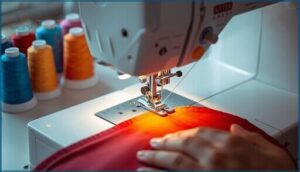
Getting the most from your serger thread isn’t just about choosing the right type—it’s about knowing how to use it properly. Small adjustments to your machine settings and a few smart handling techniques can prevent frustration and improve your results dramatically.
Let’s look at the practical steps you can take to avoid common problems and get professional-quality stitches every time.
Adjusting Tension and Stitch Settings
Getting your tension control just right can transform your serging results from frustrating to impeccable. Start by testing three-thread overlock settings on scrap fabric before touching your actual project. Here’s how to fine-tune your machine for sewing precision:
- Test stitch length adjustments on delicate knits using longer stitches to reduce fiber stress
- Increase upper looper tension gradually to tighten surface stitches and improve thread quality and durability
- Set differential feed between 0.0–0.5 when working with stretch fabrics to prevent edge ruffling
- Recheck your needle thread path after each tension change to avoid skipped stitches
- Balance thread tensioning across all spools for consistent, professional serging techniques for beginners
Proper sewing machine maintenance includes regular tension checks, ensuring your serger thread flows smoothly through every project.
Preventing Thread Breakage and Tangling
Consistency is key for breakage prevention and tangling solutions. Choose high-quality serger thread with even twist to handle multi-thread tension without snapping.
Keep your serger maintenance current by cleaning tension disks and guides regularly—lint buildup causes uneven feeding. Before starting, inspect spools for kinks or frays.
Match your thread quality and durability to your fabric, and always test thread tension on scraps first.
Using Thread Nets and Proper Needles
Proper needle selection and net installation work together to stabilize thread flow and prevent tension issues. Place thread nets over each spool to stop slippery threads from snagging during high-speed serging.
Match your needle type to your fabric weight—this pairing improves thread quality and characteristics while reducing skipped stitches.
Regular serger maintenance keeps your choosing serger thread decisions paying off with consistent, professional results.
Top Serger Thread Brands and Products
Choosing the right brand can make all the difference in your serging results. Quality thread brands deliver consistent performance, minimal lint buildup, and reliable strength across thousands of stitches.
Here are the top serger thread brands and specialty products you’ll want to have in your sewing room.
1. American Efird Maxi Lock Thread
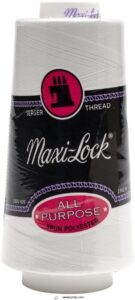
You’ll notice American Efird Maxi Lock thread on nearly every experienced sewist’s shelf for good reason. This 100% polyester serger thread delivers even strength through high-speed machines without the fuzz buildup that frustrates beginners.
The 3000-yard cones offer outstanding value—you won’t run out mid-project. MaxiLock’s core-spun construction resists fraying at seam edges, which means your hems and stretch fabric finishes hold up wash after wash.
The thread quality makes adjusting tension straightforward, giving you consistent serger performance whether you’re finishing knits or tackling decorative edging.
| Best For | Sewists who need reliable, affordable thread for high-speed serging and overlock finishing on knits, stretch fabrics, and everyday garment construction. |
|---|---|
| Material | 100% Polyester |
| Thread Length | 3000 yards |
| Color Options | White |
| Brand | American & Efird |
| Weight | 3 pounds |
| Primary Use | Serger/High-speed sewing |
| Additional Features |
|
- 3000-yard cones deliver excellent value and reduce mid-project thread changes
- Core-spun polyester construction resists fraying and holds up through repeated washing
- Runs smoothly through sergers with minimal lint buildup and consistent tension
- Some users report thread breakage issues depending on machine compatibility
- Unwrapping thread from the cone can be awkward and time-consuming
- May produce fuzz and dust in certain sewing machines despite low-lint claims
2. Coats Surelock Overlock Thread
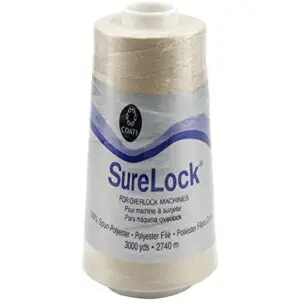
Coats Surelock Overlock Thread manages multi-needle sergers with superior thread quality designed for clean edge finishing. This poly core thread resists shredding during high-speed runs, which reduces needle heat and keeps your serger maintenance schedule simple.
You’ll appreciate how SureLock minimizes linting—that means fewer cleaning sessions and better tension stability across your overlock projects.
The thread durability holds up through repeated washing, making it reliable for garment construction where seams take real wear. Coats products like this one give you consistent looping without the frustration of constant adjustments or breakage.
| Best For | Sewers who run high-speed sergers frequently and need a reliable thread that won’t shred or lint up their machines during garment construction and edge finishing. |
|---|---|
| Material | 100% Spun Polyester |
| Thread Length | 3000 yards |
| Color Options | Buff |
| Brand | Coats Corrente |
| Weight | 3.2 ounces |
| Primary Use | High-speed sewing |
| Additional Features |
|
- Resists shredding and minimizes linting during high-speed sewing, which means less downtime for cleaning and maintenance
- Maintains consistent tension and looping across multi-needle serger setups without constant adjustments
- Holds up well through repeated washing, making it dependable for garments that see regular wear
- Only available in limited colors like Buff, so you might need to stock multiple brands for color variety
- Manufactured in China, which could be a consideration depending on your sourcing preferences
- May be overkill for occasional or low-speed sewing projects where a basic thread would work fine
3. Coats Clark General Purpose Thread Collection
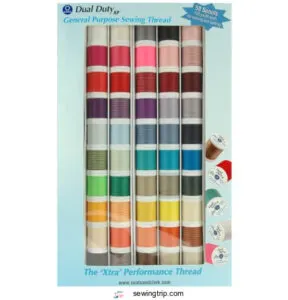
When you need reliable thread quality without breaking your budget, the Coats Clark General Purpose Thread Collection delivers fifty spools spanning multiple color options for everyday serging. This polyester-wrapped poly core thread manages standard tension settings across most serger models, giving you smooth stitching on wovens and knits alike.
The reusable storage box simplifies spool management—no more hunting through drawers for the right shade.
You’ll find the thread performs consistently for seam construction, though you might want dedicated spools for heavy decorative work.
| Best For | Sewers and crafters who need a versatile thread assortment for general garment construction, everyday repairs, and standard serging projects across different fabric types. |
|---|---|
| Material | 100% Polyester |
| Thread Length | 114.3 meters |
| Color Options | 50 colors |
| Brand | Coats & Clark |
| Weight | 1.6 pounds |
| Primary Use | General-purpose sewing |
| Additional Features |
|
- Fifty spools in multiple colors give you solid variety for matching fabrics and projects without buying individual spools every time
- Polyester-wrapped construction delivers consistent tension and smooth feeding through most machines, from vintage models to newer sergers
- Reusable storage box with velcroed lid keeps your spools organized and easy to access instead of scattered in drawers
- Color selection includes nine variegated threads that might not be practical if you mainly need solid shades for everyday sewing
- Thread spools run smaller than some users expect at 114.3 meters each, so heavy sewers may burn through the collection quickly
- Not ideal for heavy-duty fabrics like thick leather or canvas without testing first, since it’s designed for lightweight to medium-weight materials
4. Gutermann Fusible Sewing Thread
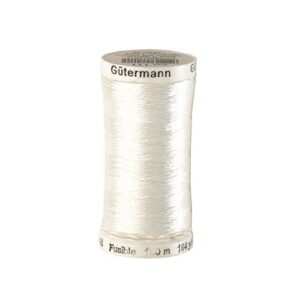
Gutermann Fusible Sewing Thread brings a unique twist to your serger setup. It’s a specialty thread with a heat-activated coating that creates temporary fabric bonding before you finish edges.
When you iron this 50% polyester, 50% nylon blend at the right heat settings, it stabilizes woven fabrics and prevents thread creep during serging. You’ll find it particularly useful as one of the more specialized sewing stabilizers for delicate knits, where thread adhesion helps minimize stretching.
Just test your fabric bonding on scraps first, since fusible thread tips always emphasize checking iron compatibility to avoid scorching.
| Best For | Sewers and quilters who need temporary fabric stabilization before serging delicate knits or reinforcing woven edges to prevent fraying and thread creep. |
|---|---|
| Material | 50% Polyester, 50% Nylon |
| Thread Length | 150 meters |
| Color Options | White |
| Brand | Generic |
| Weight | 0.5 pounds |
| Primary Use | Fusible basting |
| Additional Features |
|
- Heat-activated fusible coating creates a temporary bond that holds fabric layers in place, making it easier to match plaids, baste bindings, and stabilize edges before final stitching
- Works well with sergers and maintains elasticity on lightweight to medium-weight knits without losing stretch or causing significant distortion
- Versatile 50% polyester, 50% nylon blend that comes in a generous 150m spool and can be used in regular sewing machines, bobbins, or sergers
- Only provides temporary stabilization that may degrade after washing or drying, requiring reapplication for repeated laundering or heavy use
- Requires careful heat calibration and testing on scrap fabric first, as some users report issues with the thread not fusing properly or causing scorching
- Not suitable for all fabric types or heavy upholstery projects, and may need serger tension adjustments to get optimal results
5. Sulky Invisible Thread
Sulky Invisible Thread gives you nearly invisible seams when you’re working with woven fabrics. This 100% polyester monofilament threads through your serger’s needles and loopers smoothly, producing minimal lint.
You’ll get best results on tightly woven cotton, linen, and silk blends where thread tension adjustments prevent puckering. Test on scraps first, since the clear filament can tangle during hand-sewing and may shine under bright light.
It’s not your go-to for high-stretch knits, but it excels when fabric compatibility and sewing visibility matter most.
| Best For | Sewers and quilters who need invisible seams on woven fabrics like cotton, linen, and silk blends, especially when working with multiple colors or decorative appliques. |
|---|---|
| Material | 100% Polyester |
| Thread Length | 440 yards |
| Color Options | Clear |
| Brand | Sulky |
| Weight | Not specified |
| Primary Use | Invisible quilting |
| Additional Features |
|
- Nearly invisible finish on tightly woven fabrics, perfect for projects where you want the thread to disappear completely
- Works smoothly through both serger loopers and regular sewing machine needles with minimal lint buildup
- Versatile for quilting, applique, beading, and attaching patches or emblems across different fabric colors
- Can tangle easily during hand-sewing and has a tendency to break when tying knots due to limited tensile strength
- Becomes visible and shiny under bright, direct lighting, which may defeat the invisible purpose
- Not suitable for high-stretch fabrics or knits where you need elasticity and stronger seam durability
6. Simthread Glow Embroidery Thread
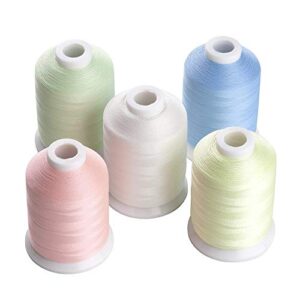
Simthread Glow Embroidery Thread brings luminescent effects to your sewing projects through phosphor materials that charge under light and glow in darkness. This 30-weight polyester thread works for decorative serging and embroidery, though you’ll need a topstitch needle with a larger eye to prevent breakage.
The five-color set delivers 1,000 yards per spool for Halloween costumes and novelty items. Test your glow thread on scraps first—some colors glow stronger than others, and thread durability depends on proper tension adjustments and gentle washing to preserve the luminescence.
| Best For | Crafters who want to add eye-catching glow-in-the-dark details to Halloween costumes, party decorations, or novelty embroidery projects. |
|---|---|
| Material | Polyester |
| Thread Length | 1000 yards |
| Color Options | 5 colors |
| Brand | Simthread |
| Weight | 60 grams |
| Primary Use | Glow-in-dark embroidery |
| Additional Features |
|
- Five essential colors with 1,000 yards per spool give you plenty of thread for multiple projects
- Eco-friendly polyester material that’s safe for skin and holds up through regular washing
- Creates unique luminescent effects that charge under normal light and glow in darkness
- Requires a topstitch needle with a larger eye to prevent tangling and thread breakage
- Glow intensity varies by color, with some shades like blue glowing less strongly than others
- Quality control issues reported, including frayed ends and occasional stains on spools
7. New Brothread UV Color Changing Thread Kit
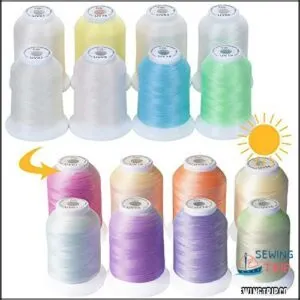
New Brothread’s UV Color Changing Thread Kit transforms your serging projects with polyester fibers that shift color under sunlight or blacklight. This 30-weight specialty thread delivers 500 meters per spool across eight UV reactive materials, perfect for embroidery projects on outdoor gear and kids’ clothing.
You’ll get the best color change effects with strong UV light—test on scraps first since dense stitching may weaken the transformation.
These serger thread hacks work beautifully on lightweight fabrics, though you should skip bleach and keep your iron below medium heat to preserve those magical sewing thread properties.
| Best For | Crafters who want to add interactive, color-changing details to outdoor apparel, kids’ clothes, and accessories that will be exposed to sunlight or UV light. |
|---|---|
| Material | 100% Polyester |
| Thread Length | 500 meters |
| Color Options | 8 colors |
| Brand | New brothread |
| Weight | 0.19 kilograms |
| Primary Use | UV color-changing embroidery |
| Additional Features |
|
- Changes color under UV light or sunlight, creating fun and unique visual effects for creative sewing projects
- Strong 30WT polyester thread works well for machine embroidery, quilting, and serging on lightweight to medium fabrics
- Comes with 8 different color options and 500 meters per spool, giving you plenty of material for multiple projects
- Requires strong UV light for the best color-changing effect, so results may vary depending on light conditions
- Not suitable for dense stitching or heavily layered projects where the color change might be less visible
- Care instructions are restrictive—no bleaching, limited ironing temperature, and cautious washing to preserve the UV-reactive properties
8. Brothread Thread Spool Nets
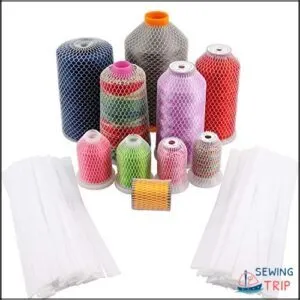
You’ll keep your serger thread organized and protected with Brothread Thread Spool Nets—rayon mesh sleeves that prevent unwinding during storage and use.
Each 9.8-inch net stretches to fit various spool sizes, allowing proper tension control while keeping dust away from your specialty threads. Cut them down for smaller spools or use full-length for standard cones.
These storage solutions work perfectly for embroidery and sewing thread, though you should skip them on 5000m spools where they’ll add too much resistance during serging.
| Best For | Sewers and embroiderers who need an affordable way to keep multiple thread spools tangle-free and dust-protected during storage. |
|---|---|
| Material | Rayon |
| Thread Length | 9.8 inches per piece |
| Color Options | Multicolor |
| Brand | New brothread |
| Weight | 0.16 kilograms |
| Primary Use | Thread organization |
| Additional Features |
|
- Stretchy rayon material fits different spool sizes and can be cut to length for smaller spools
- Keeps threads organized and prevents unwinding while still allowing proper tension when pulling thread
- Protects spools from dust and helps avoid tangled messes in your storage area
- Adds too much tension on large 5000m spools during actual stitching
- Requires cutting to size for smaller spools rather than coming pre-sized
- Can cause tension problems during use unless you remember to peel the net down first
Storing and Maintaining Serger Thread

Taking care of your serger thread properly makes a real difference in how long it lasts and how well it performs. You don’t need fancy equipment or complicated routines—just a few smart habits.
Let’s cover the basics of storage, maintenance, and inspection that’ll keep your thread in top shape.
Proper Storage Solutions
Your serger thread deserves a proper home to maintain its quality. Use airtight storage containers to shield spools from moisture and dust, then arrange them upright on a steady shelf to prevent unwinding.
Keep your thread organization in a cool, dry space with 40–60% humidity control to avoid mildew.
Don’t forget thread labels—they’ll help you quickly grab the right shade without unnecessary handling.
Preventing Thread Deterioration
Ever wondered why your thread seems brittle or faded before you even sew? Thread Storage Tips matter. Protect your serger thread by:
- Using UV Protection—store away from sunlight
- Practicing Humidity Control—aim for 40–60%
- Prioritizing Temperature Regulation—avoid heat sources
- Ensuring Dust Prevention—closed containers work best
- Avoiding damp basements—preserves Sewing Thread and Specialty Threads for impeccable Fabric Edge Finishing and Treatment
Inspecting and Caring for Serger Thread
Before every project, check your thread for fraying or pulled fibers—catching damage early prevents frustrating breakage mid-seam. Replace any worn thread immediately to maintain Fiber Quality and reliable Serging performance.
After cleaning, verify tension and alignment on all threads to guarantee balanced stitches.
This simple Thread Inspection routine, combined with proper Thread Storage and Care, protects your Sewing Thread investment and keeps your Serger Maintenance on track.
Extending Thread Longevity and Performance
Your thread investment pays off when you protect it properly. High-quality Fiber Specific Threads withstand High Speed Serging only if you maintain proper Thread Storage and Care:
- Dial in Thread Tension Settings to reduce needle-point stress and prevent early fraying in your Sewing Thread
- Test Colorfastness Testing on fabric scraps before committing to your project
- Store upright in Thread Storage Solutions away from heat to preserve twist integrity in Thread and Yarn Materials
Frequently Asked Questions (FAQs)
Can serger thread be used in regular sewing machines?
Think of fitting a lightweight racing tire on a family sedan—it might work, but you’re pushing limits.
You can use serger thread in regular sewing machines, though tension settings and breakage risks often appear with lighter-weight threads.
How much serger thread is needed per project?
Most fabric sewing projects consume two to four spools of serger thread. Your serger machine requires proper spool management and yardage calculation for thread optimization.
Consider project estimation—knits need less than heavy fabric, while decorative serging increases thread consumption markedly.
Does serger thread weight affect stitch quality?
Yes, thread weight directly influences stitch tension and fabric compatibility. Lighter weights lay flatter on delicates, while heavier threads add body but may cause thread breakage prevention issues if needle size isn’t adjusted properly.
Can you mix different serger thread brands together?
Most professionals recommend sticking with the same brand and type across all four cones for balanced tension control and uniform stitches.
Mixing brands risks unpredictable tension shifts, especially with polyester thread or wooly nylon serger thread on delicate fabrics.
What causes serger thread to break during stitching?
You’ve probably watched in frustration as your serger suddenly stops mid-seam, thread snapped clean through. High upper thread tension, incorrect threading order, dull needles, burrs on loopers, and poor-quality thread are the main culprits behind serger thread breakage during stitching.
Understanding proper thread looper techniques is vital to prevent such issues and guarantee smooth serger operation.
Conclusion
The next time you load your serger, you’ll notice how that thin, specialized thread transforms raw fabric edges into professional finishes. Understanding what serger thread is used for—from securing stretchy seams to preventing fraying—puts you in control of every project’s durability and appearance.
Your fabric choices now guide your thread selection with confidence. Match polyester to synthetics, wooly nylon to knits, and cotton to natural fibers. That knowledge turns good sewing into outstanding craftsmanship.
- https://allstitch.com/blogs/embroidery-blogs/serger-thread-exploring-types-and-uses
- https://www.mh-chine.com/blog/products/white-serger-thread
- https://www.wawak.com/thread/thread-by-use/serging
- https://www.seasonedhomemaker.com/all-about-thread-weight
- https://meissnersewing.com/blogs/inspiration/everything-about-sergers