This site is supported by our readers. We may earn a commission, at no cost to you, if you purchase through links.
The wrong thread can undo months of careful work. A quilt that survives decades of washing and use isn’t just about fabric choice or precise cutting—thread holds every seam, every stitch, and every quilted line together under real stress.
Most quilters learn this the hard way, watching a favorite project pucker, fray, or bleed color after a single wash cycle. Thread weight, fiber content, dye quality, and lint production all shape how your finished quilt looks, feels, and lasts. Knowing which thread matches your technique and fabric makes the difference between a quilt you’ll pass down and one you’ll quietly retire.
Table Of Contents
- Key Takeaways
- Key Factors in Choosing Quilting Thread
- Best Thread Types for Quilting Projects
- Matching Thread to Quilting Techniques
- Top 10 Threads for Quilting Projects
- 1. Aurifil Mako 50wt Cotton Thread
- 2. Superior Threads So Fine 50 Weight Polyester Thread
- 3. Glide Trilobal Polyester Linen Thread
- 4. Superior Threads King Tut Quilting Thread Desert Wind
- 5. Isacord Embroidery Thread Set
- 6. Connecting Threads Cotton Thread Caramel
- 7. Gutermann Cotton Thread Set Assorted Colors
- 8. Mettler Silk Finish Cotton Thread
- 9. Superior Threads Masterpiece Egyptian Cotton Thread
- 10. New Brothread Polyester Embroidery Thread Kit
- How Thread Weight Affects Quilting Results
- Tips for Storing and Maintaining Quilting Thread
- Frequently Asked Questions (FAQs)
- Conclusion
Key Takeaways
- Thread weight is the single biggest factor in how your stitches look — 50wt disappears into seams, 40wt makes quilting lines pop, and 80wt works best for delicate, whisper-fine detail.
- Your fiber choice shapes longevity: cotton breathes and ages with your fabric, polyester resists color fading and heavy washing, and silk rewards fine detail work with near-invisible stitches.
- Lint production directly affects your machine’s health, so low-lint threads like Aurifil 50wt keep tension discs and hook mechanisms running clean with less downtime for maintenance.
- Matching your thread to your technique — not just your fabric color — is what separates a quilt that lasts decades from one that puckers, frays, or fades after a few wash cycles.
Key Factors in Choosing Quilting Thread
Picking the right thread isn’t just a technical decision — it shapes how your quilt holds up, looks, and feels for years to come. A few key factors will guide you toward the best choice for your project and your machine.
Getting thread selection right pairs perfectly with other foundational skills, like those covered in these baby quilt sewing tips for beginners that walk you through building a lasting, beautiful quilt from the start.
Here’s what you need to pay attention to before you spool up and start stitching.
Thread Material and Fiber Content
Every fiber choice you make shapes how your quilt holds up over time.
Egyptian cotton and mercerized cotton — like Aurifil 50 Weight Cotton Thread — breathe naturally and age alongside your fabric.
Trilobal polyester and Isacord Polyester Thread bring serious durability with a subtle sheen.
YLI Silk Thread, spun from silk protein, manages fine detail beautifully.
nylon elasticity makes it a smart pick for high‑stress seams.
Thread Weight and Ply
Thread weight is where precision really pays off. A 50wt thread disappears into piecing seams — minimal bulk, clean intersections. A 40wt thread announces itself with bolder stitch definition. An 80wt thread is whisper‑fine for delicate work.
Thread weight is precision: 50wt vanishes into seams, 40wt boldly defines, 80wt whispers through delicate work
- Weight Seam Visibility shifts dramatically between 40wt and 50wt.
- Ply Strength Impact matters most under dense quilting stress.
- Ply Needle Compatibility — 50wt pairs perfectly with an 80/12 needle.
Refer to the thread weight system guide for detailed compatibility charts.
Colorfastness and Dye Quality
Color holds a quilt together visually — so dye quality matters more than most beginners expect.
Cotton threads often use reactive dyeing, while polyester threads rely on disperse dye stability, making them naturally more colorfast.
Aurifil uses Indanthren vat dyes on most colors, scoring high on lightfastness grading.
Look for OEKO TEX certification and bleach resistance testing to be sure your colors last.
A thorough sewing thread colorfastness test helps make sure dyes won’t bleed onto fabric.
| Thread Type | Dye Method | Colorfastness Level |
|---|---|---|
| Cotton Thread | Reactive Dyeing | Moderate–High |
| Polyester Thread | Disperse Dye | Very High |
| Aurifil Cotton | Indanthren Vat | Excellent |
Lint Production and Machine Maintenance
Beyond color, the thread you pick directly affects how often you’re stopping to clean your machine.
Bobbin lint buildup is the real culprit behind tension problems — packed fibers throw off hook mechanism care and block tension disc cleaning routines.
Low-lint options like Aurifil 50wt cotton keep fabric lint management simple, letting you focus on machine quilting instead of sewing machine maintenance.
Texture, Sheen, and Finish
Finish shapes how your quilting reads — visually and physically.
- Matte vs Glossy — Aurifil 50‑Weight Cotton Thread’s low surface luster blends into traditional patchwork; high‑sheen polyester makes motifs pop.
- Sheen Impact — Trilobal finishes catch light; matte cotton shows texture through shadow.
- Texture Perception — YLI Silk Thread settles into fabric like an embossed line.
- Finish Consistency — Premium Threads So Fine delivers uniform surface luster stitch after stitch.
Best Thread Types for Quilting Projects
Not all threads are created equal, and the type you choose can make or break your finished quilt.
Each material brings its own strengths to the table, whether you’re piecing tiny blocks by hand or running a longarm at full speed.
Here’s a look at the main thread types worth knowing.
Cotton Threads for Traditional Quilting
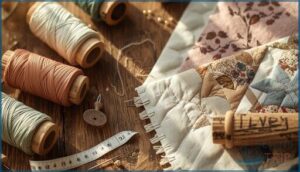
Nothing feels more at home on a cotton quilt than cotton thread.
Long‑staple fibers from Egyptian Cotton Quality sources — like Aurifil 50 Weight Cotton Thread and King Tut Cotton Thread — create smooth, strong stitches with minimal weak spots.
Their Matte Finish Benefits are real: tension flaws simply disappear into the fabric.
| Thread | Weight | Best Use |
|---|---|---|
| Aurifil 50 Weight Cotton Thread | 50wt | Piecing & hand quilting |
| King Tut Cotton Thread | 40wt | Longarm & machine quilting |
| Gutermann Cotton Thread | 50wt | Everyday domestic quilting |
| Mettler Cotton Thread | 50wt | Traditional Color Palettes & heirloom work |
Cotton also makes Hand‑Quilting Knotting easier — it grips naturally and doesn’t slip.
Polyester Threads for Durability
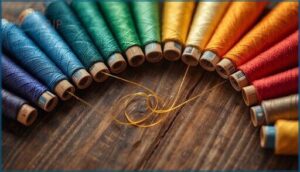
Polyester thread is a workhorse — and for good reason. Its Stretch Resistance and Heat Stability keep stitches intact through heavy use and repeated washing. Glide Polyester Thread and Isacord Polyester Thread both offer UV Fade Resistance and strong Colorfastness, so your colors stay true over time.
Machine Speed Compatibility makes them ideal for longarm work, and low Lint Production keeps your machine running clean. Sheen Longevity adds a lasting visual polish.
Silk Threads for Fine Detailing
Silk thread is the secret weapon for heirloom work. It’s fine, strong, and naturally lustrous — making lustre matching to delicate fabrics almost smooth.
YLI Silk Thread is a standout choice for delicate appliqué and stitch precision work. Use a fine needle size, dial in your thread tension carefully, and silk rewards you with nearly invisible, refined stitching that elevates any quilting project.
Blend and Nylon Thread Options
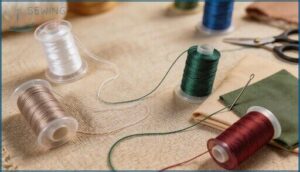
Blends and nylon threads fill the gaps that cotton and polyester can’t always cover on their own. Nylon elasticity makes it ideal for heavily stressed seams, and its nylon abrasion resistance outlasts most fibers.
Blend sheen control gives you a middle ground between matte cotton and glossy Glide Polyester Thread.
Nylon thread tension runs slightly tighter, so adjust accordingly for clean results.
Matching Thread to Quilting Techniques
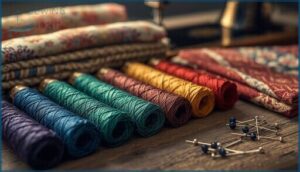
Not every thread works for every technique — and that gap matters more than most quilters expect. The right match keeps your stitches even, your machine happy, and your finished quilt looking exactly how you imagined it.
Here’s how to pair your thread to the technique you’re using.
Thread for Piecing Quilt Blocks
For piecing quilt blocks, cotton thread is your best friend. Its heat tolerance manages pressing without distortion, and a light fuzz level helps stitches grip fabric layers securely.
Stick with 50 wt for flatter seams and better seam accuracy at that critical quarter‑inch. Pair it with a 75/11 needle for clean needle compatibility, and you’ll love that natural matte finish.
Machine Quilting Thread Choices
Once your blocks are sewn, machine quilting calls for a different kind of thread altogether. Quilting thread selection here comes down to speed and consistency.
- 50wt polyester thread like So Fine runs lint-free at high speeds
- Cotton thread in 50wt works beautifully for domestic machines
- Thread tension settings need adjusting when switching thread weights
- Larger thread spool sizes reduce mid‑project changes on longarms
Hand Quilting Thread Recommendations
Hand quilting asks more of your thread than any machine ever will. You’re pulling it through three layers, stitch by stitch. That’s why thread conditioning matters — a light coat of beeswax on non-waxed cotton reduces fraying fast.
Aurifil 50 Weight Cotton Thread and Gutermann Cotton Thread both glide beautifully with size 9 or 10 betweens needles. King Tut Cotton Thread adds stitch visibility with rich, colorfast tones perfect for color coordination on heirloom work.
Appliqué and Decorative Stitching Threads
Appliqué work rewards thread selection more than almost any other technique. For invisible appliqué stitches, try Wonderfil Invisifil 100 wt polyester — it practically disappears along turned edges.
Monofilament nylon blends like YLI work beautifully in smoke or clear finishes. Want shiny rayon accents or variegated color gradients? King Tut 40 wt delivers both.
Always test bobbin thread pairing on scrap first.
Top 10 Threads for Quilting Projects
After all that talk about techniques and thread types, it’s time to get specific.
These 10 threads have earned their place in quilters’ workboxes for real, everyday reasons — performance, reliability, and results you can actually see. Here’s what made the cut.
1. Aurifil Mako 50wt Cotton Thread
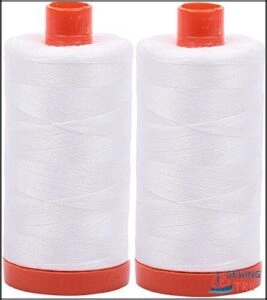
Aurifil Mako 50wt is the thread I reach for when precision matters most.
It’s spun from 100% long-staple Egyptian cotton — mercerized for a subtle sheen and dyed evenly across all 270 colors.
At 50 weight and 2-ply, it stays flat in seams and disappears into dense quilting designs without bulk.
Each large spool gives you 1,422 yards, so you won’t run out mid-project.
It’s ideal for needle-turn appliqué, machine quilting, and English paper piecing.
| Best For | Quilters and sewists who want a clean, reliable thread that works across hand and machine projects without gumming up their machine. |
|---|---|
| Material | 100% Cotton |
| Primary Use | Quilting & Piecing |
| Lint Level | Low Lint |
| Spool Count | 2 Spools |
| Thread Length | 2844 Yards |
| Machine Compatible | Yes |
| Additional Features |
|
- Produces very little lint, so your machine stays cleaner between projects
- Each spool packs 1,422 yards — plenty to finish a project without mid-way restocking
- Versatile enough for hand appliqué, machine quilting, piecing, and embroidery
- Pricier than most everyday thread brands on the market
- This bundle only comes in Natural White, so color options are limited
- You’ll likely need to order online since it’s hard to find in local stores
2. Superior Threads So Fine 50 Weight Polyester Thread
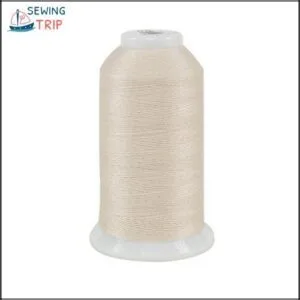
Superior Threads So Fine is my go-to when I need a polyester that doesn’t look or feel like one. It’s a 3-ply, 50-weight thread built from 144 micro-strands total — 48 per ply — which gives it that extra-smooth surface that glides through tension without drag. The matte finish keeps stitches subtle, almost cotton-like.
At 3,280 yards per cone, it manages long quilting sessions without a spool change. It’s especially reliable for longarm quilting, bobbin work, and piecing flat, clean seams.
| Best For | Quilters and sewists who want a fine, smooth polyester thread that mimics the look of cotton — great for longarm quilting, piecing, and bobbin work. |
|---|---|
| Material | 100% Polyester |
| Primary Use | Quilting & Sewing |
| Lint Level | Lint-Free |
| Spool Count | 1 Spool |
| Thread Length | 3280 Yards |
| Machine Compatible | Yes |
| Additional Features |
|
- Incredibly smooth with a matte finish, so stitches sit flat and look almost cotton-like
- 3,280 yards per cone means you’re not constantly swapping spools mid-project
- Reduces fuzzing and thread breakage, making it reliable for long quilting sessions
- Only comes in Pearl for this listing, so color options are limited
- Not the best pick if your project needs a thicker or heavier thread weight
- Packaging issues have been reported, with some orders arriving damp or damaged
3. Glide Trilobal Polyester Linen Thread
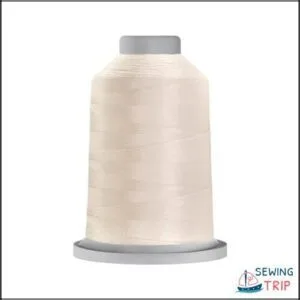
Glide Trilobal Polyester Linen Thread earns its spot on this list through sheer performance. Its trilobal cross-section — three-sided rather than round — bounces light off each filament, giving you a subtle, polished sheen without looking metallic.
At 40-weight (Tex 27), it’s slightly heavier than a standard 50wt, so your quilting lines show up crisp and defined. Each 1,000-meter spool stays lint-free and holds consistent tension from start to finish, making it a dependable choice for longarm and free-motion quilting.
| Best For | Quilters and sewists who need a reliable, lint-free thread that glides smoothly through longarm and embroidery machines without constant tension adjustments. |
|---|---|
| Material | 100% Polyester |
| Primary Use | Quilting & Sewing |
| Lint Level | Lint-Free |
| Spool Count | 1 Spool |
| Thread Length | 1100 Yards |
| Machine Compatible | Yes |
| Additional Features |
|
- Trilobal technology keeps tension steady from the first stitch to the last, so you’re not stopping to fix skipped stitches or thread breaks
- That linen color has a beautiful, subtle luster — not shiny like metallic, just a clean, polished finish that makes your quilting lines pop
- At 1,000 meters per spool, you get solid coverage for big projects without swapping out thread every hour
- A few customers have gotten defective spools, so quality control isn’t 100% consistent
- Picky machines may not play nice with it — worth testing on yours before committing to a big project
- It’s a 40-weight thread, so if you need something finer for delicate work, this might feel a touch heavy
4. Superior Threads King Tut Quilting Thread Desert Wind
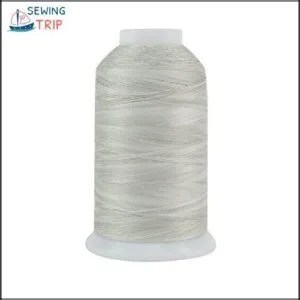
King Tut Desert Wind is one of those threads that earns a permanent spot in your sewing room. Made from certified Egyptian extra-long staple cotton, this 40-weight, 3-ply thread produces extremely low lint — up to 70% less than standard cotton threads. That means fewer machine cleanings and smoother sessions.
The variegated Desert Wind colorway cycles through warm tans, rusts, and golds, adding natural depth to every stitch. It works with both home machines and longarms with ease, recommended with a 90/14 needle.
| Best For | Quilters and crafters who want a strong, low-lint cotton thread that adds natural color depth to their projects without a lot of machine maintenance. |
|---|---|
| Material | 100% Cotton |
| Primary Use | Quilting & Crochet |
| Lint Level | Extremely Low Lint |
| Spool Count | 1 Spool |
| Thread Length | 2000 Yards |
| Machine Compatible | Yes |
| Additional Features |
|
- Made from 100% Egyptian extra-long staple cotton — it’s strong, smooth, and won’t fray on you mid-project.
- The variegated Desert Wind colorway adds warmth and dimension naturally, so your quilting looks more dynamic with zero extra effort.
- Extremely low lint means you’re cleaning your machine less and sewing more.
- The color can run lighter than it looks online — "Desert Wind" might surprise you if you’re expecting richer tones.
- It’s priced on the higher end, which might give budget-conscious crafters some pause.
- Avoid leaving it in direct sunlight — prolonged exposure can break the thread down over time.
5. Isacord Embroidery Thread Set
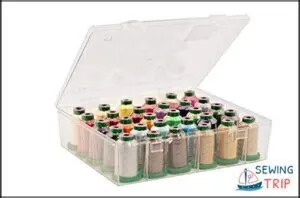
This 30-spool set from Isacord delivers serious value for machine quilters. Each spool holds 1,000 meters of 40-weight trilobal polyester — nearly twice as strong as rayon — with a smooth, slightly glossy finish that makes every stitch pop.
The continuous filament construction means minimal lint, so your machine stays cleaner longer. It manages high-speed quilting without puckering or breakage, and the colorfast formula survives bleach and repeated washing.
Just note that packaging quality has been inconsistent for some buyers.
| Best For | Machine quilters and embroidery enthusiasts who want a reliable, colorful thread set that plays nice with high-speed machines and washes well. |
|---|---|
| Material | Polyester Blend |
| Primary Use | Embroidery |
| Lint Level | Minimal Lint |
| Spool Count | 30 Spools |
| Thread Length | Unspecified per spool |
| Machine Compatible | Yes |
| Additional Features |
|
- 30 spools of strong, colorfast polyester thread that holds up through bleach and repeated washes
- Smooth, continuous filament construction means less lint and fewer machine cleanings
- Wide color variety packed in a gift box — ready to use or give
- Some buyers received damaged boxes with broken spindles or cracked cases
- Quality control is inconsistent — at least one customer got only 26 spools instead of 30
- The storage case isn’t built to last, so don’t count on it for long-term organization
6. Connecting Threads Cotton Thread Caramel
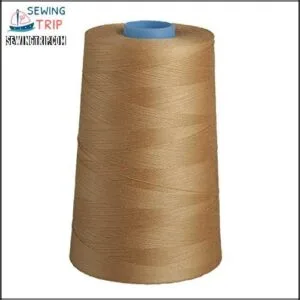
If you burn through thread on big projects, this cone delivers. Connecting Threads’ Caramel cotton gives you 5,000 yards of 50-weight, 3-ply extra-long staple cotton — mercerized for less fuzz and better dye absorption. That warm, neutral brown blends beautifully with earth-tone fabrics, and the satin finish adds just enough sheen without going glossy.
It manages machine quilting and piecing reliably at any skill level. The tradeoff? It can fuzz slightly more than premium brands, but the value is hard to beat.
| Best For | Quilters and sewers at any skill level who go through a lot of thread and want solid quality without paying premium prices. |
|---|---|
| Material | 100% Cotton |
| Primary Use | Quilting & Sewing |
| Lint Level | Some Fuzzing |
| Spool Count | 1 Spool |
| Thread Length | 5000 Yards |
| Machine Compatible | Yes |
| Additional Features |
|
- 5,000 yards on a single cone — great value if you sew or quilt regularly
- Extra-long staple cotton with a satin finish means smoother stitches and a nice subtle sheen
- Works well for both machine quilting and piecing across all skill levels
- Can fuzz a bit more than higher-end thread brands
- Delivery handling has been an issue for some buyers
- Individual results may vary, so it might not perform identically across all machines or projects
7. Gutermann Cotton Thread Set Assorted Colors
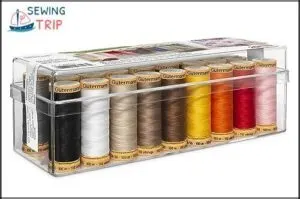
Sometimes the smartest move is buying a whole toolkit at once.
Gütermann’s 26‑spool cotton set gives you an assortment of coordinated colors — neutrals, basics, and accents — all wound on 100m spools of 50‑weight, 3‑ply mercerized Egyptian cotton.
That 50‑count means clean seams and smooth quilting lines.
The included plastic storage box with spindles keeps everything organized and portable.
It’s beginner‑friendly but reliable enough for experienced quilters handling piecing, appliqué, and free motion work in one organized package.
| Best For | Sewers of all skill levels who want a ready-to-go color collection for quilting, garment alterations, and everyday sewing projects. |
|---|---|
| Material | 100% Cotton |
| Primary Use | Quilting & Sewing |
| Lint Level | Minimal Lint |
| Spool Count | 26 Spools |
| Thread Length | 100m per spool |
| Machine Compatible | Yes |
| Additional Features |
|
- 26 spools of premium Egyptian cotton thread in a solid range of colors — you’ll almost always have what you need on hand.
- The included storage box with spindles keeps everything tidy and easy to grab-and-go for sewing groups or classes.
- Smooth, fine thread that plays nicely with machines — fewer tangles, cleaner seams.
- The lid isn’t the most secure, so it can pop open if the box tips over.
- A few buyers received polyester thread instead of cotton — worth double-checking your order when it arrives.
- Some plastic spindles arrived broken, which is a bit frustrating for a storage-focused set.
8. Mettler Silk Finish Cotton Thread
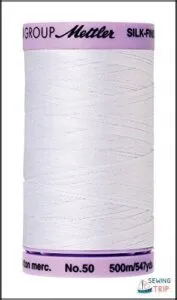
If Gütermann gives you range, Mettler Silk Finish Cotton gives you refinement. Made from 100% long‑staple Egyptian cotton and mercerized for added strength and a soft, silky sheen, this thread punches above its weight.
The 50‑weight version comes in around 214 colors on 500‑meter spools — plenty for piecing and machine quilting. It manages pressing well, resists fading after washing, and pairs cleanly with size 80–90 needles. For heirloom work especially, it’s hard to beat.
| Best For | Quilters and sewists who want a premium, refined thread for heirloom projects and detailed machine work. |
|---|---|
| Material | 100% Cotton |
| Primary Use | Quilting & Sewing |
| Lint Level | Low Lint |
| Spool Count | 1 Spool |
| Thread Length | 547 Yards |
| Machine Compatible | Yes |
| Additional Features |
|
- Mercerized cotton gives it a smooth, silky finish that looks beautiful on finished work
- Resists tangling and breaking, so you spend less time re-threading and more time sewing
- Holds up well after washing and pressing — great for projects meant to last
- Pricier than everyday thread brands, which adds up if you go through a lot
- Color selection is limited compared to competitors like Gütermann
- The silky sheen isn’t for everyone — some sewists prefer a more matte, traditional cotton look
9. Superior Threads Masterpiece Egyptian Cotton Thread
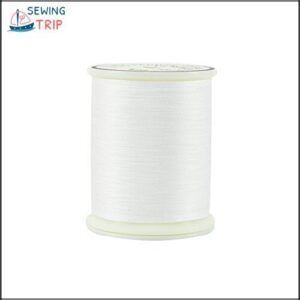
Where Mettler offers refinement, Masterpiece brings precision to a whole new level.
Premium Threads built this one from 100% Egyptian-grown extra-long staple cotton — fibers stretching over 1.375 inches — spun into a 50-weight, 3-ply thread that’s remarkably smooth and nearly lint-free.
That matters when you’re deep into a complex pieced top and your machine needs to stay clean.
With 600 yards per spool, around 79 color options, and easy tension balancing in both top and bobbin, it’s a workhorse for serious quilters.
| Best For | Serious quilters and sewists who want a clean, smooth, low-lint thread that won’t slow down their machine mid-project. |
|---|---|
| Material | 100% Cotton |
| Primary Use | Quilting & Sewing |
| Lint Level | Extremely Low Lint |
| Spool Count | 1 Spool |
| Thread Length | 600 Yards |
| Machine Compatible | Yes |
| Additional Features |
|
- Made from 100% Egyptian extra-long staple cotton, so it’s strong, smooth, and built to last through complex projects
- Extremely low lint means less time cleaning your machine and more time actually quilting
- Works great in both the top and bobbin, which makes tension balancing a whole lot easier
- 600 yards might run short on bigger projects, so you may need to grab multiple spools
- It’s pricier than a lot of threads on the market, which adds up fast if you quilt regularly
- Color options are limited, so it won’t work for every project or personal preference
10. New Brothread Polyester Embroidery Thread Kit
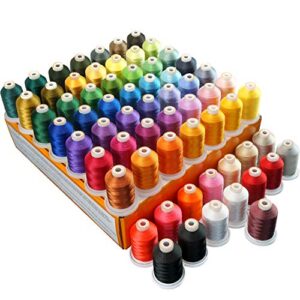
If Masterpiece’s calling card, the New Brothread Polyester Embroidery Thread Kit is all about variety and value. You get 64 spools — 61 colors plus extra white, black, and red — each holding 1,000 meters of 40-weight, 100% polyester thread. That’s a lot of quilting before you ever need to reorder.
The smooth filament runs cleanly through Brother, Janome, Bernina, and Singer machines with minimal lint, and the colorfast dyes hold up beautifully through repeated washing.
| Best For | Quilters, embroiderers, and sewists at any skill level who want a solid color variety without buying thread piecemeal. |
|---|---|
| Material | 100% Polyester |
| Primary Use | Quilting & Embroidery |
| Lint Level | Low Lint |
| Spool Count | 64 Spools |
| Thread Length | 1100 Yards |
| Machine Compatible | Yes |
| Additional Features |
|
- 64 spools covering 61 colors means you’re rarely hunting for the right shade
- 1,000 meters per spool cuts down on mid-project restocking
- Works with most major machine brands, so compatibility isn’t something you have to stress about
- Can’t buy individual colors, so you’re stuck with duplicates you may never use
- Larger spools might need a thread stand depending on your machine setup
- Some users ran into snagging and winding issues, which can interrupt your workflow
How Thread Weight Affects Quilting Results
Thread weight is one of those things that quietly shapes every stitch you make, yet it’s easy to overlook when you’re caught up choosing colors and patterns.
Getting it right means the difference between quilting that looks polished and stitching that competes with your fabric instead of complementing it.
Here’s what you need to know about the most common weights, when to reach for something heavier, and how to match your thread to the right needle.
Common Thread Weights and Their Uses
Thread weight shapes everything about your finished quilt. Ultra‑fine 80wt thread disappears beautifully into lightweight background fills, while 50‑weight cotton thread and polyester thread hit the sweet spot for medium weight piecing — strong enough to hold, fine enough to stay flat.
Weight‑needle pairing matters too: finer threads need smaller needles. Weight‑color coordination also helps stitches blend naturally across varied fabrics without fighting for attention.
Heavyweight Threads for Impact
When you want thread visibility and real stitch dimension, heavyweight options change everything.
A 30-weight polyester thread creates bold stitches that sit proud of the fabric surface, adding quilt texture you can actually feel.
Isacord Polyester Thread and Premium Threads both offer excellent heavyweight options in this range.
Even stepping down from 80wt thread to 28–30 weight noticeably transforms your quilting lines from whisper to statement.
Pairing Thread Weight With Needle Size
Needle size charts exist for a reason — ignore them and you’ll fight friction, breakage, and tension problems the whole way through. A 50 wt thread pairs naturally with an 80/12 needle for clean stitch visibility and smooth thread-needle compatibility.
Step up to 30–40 wt, and you need a 90/14 or 100/16 to handle the load. Matching quilting thread types and weights to the right needle is your simplest speed optimization.
Tips for Storing and Maintaining Quilting Thread
Even the best thread won’t perform well if it’s stored carelessly or used in a poorly maintained machine.
A few simple habits can make a real difference in how your stitches look and how long your thread lasts.
Here’s what every quilter should know to keep their thread — and their machine — in top shape.
Proper Thread Storage Techniques
Good thread storage is half the battle. Temperature Control matters more than most quilters realize — keep spools below 26°C and maintain Humidity Management between 40–60% using silica gel packs. UV Protection prevents dye fading and fiber breakdown, so skip the windowsill.
- Store by Spool Orientation — vertical for cross-wound, horizontal for parallel-wound
- Use opaque bins for UV Protection and Dust Prevention
- Label by Thread Weight and fiber type for easy retrieval
Cleaning and Reducing Lint in Machines
Lint is the quiet enemy of a smooth-running machine.
After every 8–10 hours of quilting, use a bobbin case brush to clear out compacted fibers, and run a hook area vacuum attachment around the rotary hook. A lambs-wool tool lifts fine lint from tension discs without pushing it deeper. Don’t skip feed dog cleaning—trapped scraps cause skipped stitches fast.
Always replace your dust cover when finished.
Adjusting Thread Tension for Quality Stitches
Thread tension is the silent variable that makes or breaks stitch quality.
Start with the test sandwich method — same fabric, batting, and backing as your real project.
For top tension basics, aim for the 4–5 range on most machines.
Fine thread adjustments differ from heavier weights, and needle size impact is real: a size 80/12 suits 50wt beautifully.
Reserve bobbin tension tweaks for last.
Ensuring Thread Longevity and Performance
Your quilting thread is only as good as how you care for it.
Store spools in a cool, dark spot — UV protection matters because sunlight breaks down fibers faster than you’d expect.
Humidity control keeps cotton from drying out or molding.
Match fiber strength and thread weight to your project, maintain consistent thread tension, and prioritize colorfastness when choosing colors.
Good quilting thread care and storage pays off in every stitch.
Frequently Asked Questions (FAQs)
Which quilting thread is best?
No single answer fits every project.
Aurifil 50wt Cotton Thread and Excellent Threads So Fine lead most Quilting Thread Reviews — but your fabric, technique, and machine compatibility decide the real winner.
Which thread is best for embroidery?
For embroidery, your best picks depend on the method.
Polyester thread wins for machine embroidery with excellent colorfastness, while cotton thread suits hand embroidery beautifully.
Match thread weight to your fabric compatibility and stitch types for perfect results.
What thread is best for sewing?
Sew many options, so little time!
For most projects, a 50wt cotton thread wins on fabric compatibility and stitch visibility, while polyester delivers seam durability and thread elasticity wherever needle compatibility and thread selection truly matter.
What is the best thread for micro quilting?
100-weight polyester thread is your best pick.
Excellent Threads MicroQuilter delivers near-invisible stitch visibility, excellent heat resistance, and minimal lint.
Pair it with a 70/10 needle and loosen your tension adjustment slightly.
Is there a difference between sewing thread and quilting thread?
Yes, there’s a real difference.
Quilting thread uses tighter fiber composition, specific coating differences, and higher colorfastness impact than standard sewing threads — all engineered for layered fabric stress, not garment seams.
How do I fix thread breakage mid-project?
Check your needle eye first — a burr shreds fibers fast. Then inspect the bobbin case, re-thread the full path, ease tension down, and slow your stitching speed to around 500 SPM.
Can I mix thread brands in one quilt?
Mixing brands is perfectly fine — just keep fiber compatibility and weight consistency in mind. Test scraps first, make small tension adjustments, and you’re set.
What thread colors work best for beginners?
Start with a neutral palette. Dove gray, cream basics, and white contrast tones blend into almost any quilt.
For variety, a variegated intro thread manages scrappy projects effortlessly without overthinking colorfastness or thread selection.
How does thread affect quilting resale value?
Thread quality acts like a silent price tag on your quilt. Strong stitches, colorfastness, and clean stitch visibility signal craftsmanship — and buyers notice. Good thread selection directly protects resale value.
When should I replace old thread in storage?
Replace old thread when it fails the snap test, shows color fading signs, or leaves excess lint in your machine.
Poor storage condition affects speed up fiber breakdown, so always check shelf life indicators before starting a new project.
Conclusion
Thread is the quiet backbone of every quilt you’ll ever make. Choosing what thread is best for quilting projects aren’t guesswork—it’s a skill built on understanding weight, fiber, and technique. The right match keeps seams strong through years of washing, preserves color through decades of use, and lets your quilting shine exactly as you intended.
Trust the details. A quilt made with care from corner to corner, including every spool you choose, tells that story for generations.
- https://lindehobby.com/quilting-thread-guide-best-thread-types-how-to-hide-knots-2168/
- https://quiltingthread.com/blogs/quilting-thread-guide/polyester-vs-cotton-thread-a-quilters-guide
- https://beccaplymalecreative.com/blogs/news/choosing-the-right-threads
- https://passion4quilting.com/blog/the-thread-that-makes-all-the-difference-why-cotton-reigns-supreme-in-quilting/
- https://www.patchworkposse.com/will-polyester-thread-shrink-and-can-i-use-it-when-quilting/