This site is supported by our readers. We may earn a commission, at no cost to you, if you purchase through links.
Stretch fabric fights back. The moment you hoop a knit without proper stabilization, you’re watching distortion happen in slow motion—puckered stitches, warped seams, designs that look nothing like your preview.
Most embroiderers blame their design or their machine. The real culprit is almost always the stabilizer choice.
Stretchy fabrics move in multiple directions simultaneously, which means a stabilizer that works on woven cotton will actively fail on jersey or athletic mesh. Knowing which stabilizer works best for stretchy fabric—matched to your stitch count, fabric weight, and end use—separates clean, professional results from ones you’d rather hide.
Table Of Contents
Key Takeaways
- Cut-away stabilizer is the top choice for stretchy fabrics — it stays permanent, survives repeated washing, and keeps stitches from distorting on knits, jerseys, and athletic wear.
- Match stabilizer weight to your fabric’s stretch level and stitch density: lightweight knits need 3–5 gsm, while dense stretch designs can demand 40–80 gsm with dual layers.
- Water-soluble stabilizers are the go-to for delicate fabrics like baby clothes and towels — they dissolve completely in cold water, leaving no stiffness or residue behind.
- Tear-away stabilizers actively fail on stretch fabrics — their uneven fiber resistance causes puckering, bias distortion, and snags that no amount of post-wash care will fix.
Best Stabilizers for Stretchy Fabric: Top 6 Picks
Not every stabilizer manages stretch the same way — and the wrong pick can ruin a project fast. These six options cover the most common stretch scenarios, from lightweight knits to dense embroidery on jersey.
If you’re still getting puckers or distortion, brushing up on how to handle stretchy fabrics can help you troubleshoot before you even reach for a stabilizer.
Here’s what actually works.
1. Brothread Medium Cut Away Embroidery Stabilizer
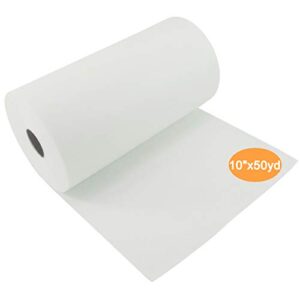
The Brothread Medium Cut Away Stabilizer is a solid workhorse for knit and stretch embroidery work.
At 2.5 oz, it hits the sweet spot — enough support to prevent fabric creep without stiffening your project.
It’s 100% polyester, acid- and lead-free, so it’s safe against skin.
The 10" x 50-yard roll cuts cleanly to fit any hoop size.
For jerseys, fleece, or light knits with moderate stitch density, this is the backing you reach for first.
| Best For | Embroiderers working with knits, fleece, or stretch fabrics who need reliable, medium-weight support for moderate stitch density projects. |
|---|---|
| Stabilizer Type | Cut-Away |
| Material | 100% Polyester |
| Embroidery Compatibility | Machine & Hand |
| Fabric Suitability | Knits, Fleece, Denim |
| Roll Width | 10 inches |
| Acid & Lead Free | Yes |
| Additional Features |
|
- Solid 2.5 oz weight keeps stretchy fabrics stable without making them stiff
- The 50-yard roll cuts easily to any hoop size, so nothing goes to waste
- 100% polyester, acid- and lead-free — safe for skin-contact items like jerseys
- Dense designs may need multiple layers, which adds time and material cost
- Cut-away means some trimming work after each project — not the quickest cleanup
- The medium weight won’t suit everyone — too light for heavy designs, too heavy for delicate fabrics
2. Brothread No Show Mesh Embroidery Stabilizer
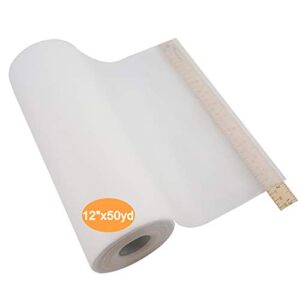
When your fabric is light-colored or fine-gauge, bulk is the enemy. That’s where the Brothread No Show Mesh steps in.
At roughly 1.8 oz, it’s lighter than the medium cut-away — but don’t let that fool you. The 100% embossed nylon construction locks stitches in place from every direction. It stays soft against skin, won’t show through polo shirts or infant wear, and holds up wash after wash.
For delicate knits, it’s the backing that disappears — but never fails.
| Best For | Embroiderers working with light-colored, stretchy, or delicate fabrics like polo shirts, infant wear, silk, and satin who need a clean finish without bulk or show-through. |
|---|---|
| Stabilizer Type | Cut-Away (No-Show Mesh) |
| Material | 100% Nylon |
| Embroidery Compatibility | Machine & Hand |
| Fabric Suitability | Knits, Silk, Satin |
| Roll Width | 12 inches |
| Acid & Lead Free | Yes |
| Additional Features |
|
- Super lightweight at 1.8 oz — won’t stiffen or add bulk to fine fabrics
- Sheer and soft against skin, so it can stay on the garment without irritating the wearer
- Multi-directional embossing keeps stitches stable from every angle, wash after wash
- Not enough support on its own for dense or heavy-stitch designs — you’ll need to layer a tear-away underneath
- The 12-inch fixed width means extra cutting for smaller projects
- Some buyers have received rolls damaged in shipping, so packaging could be better
3. Brothread Water Soluble Embroidery Stabilizer
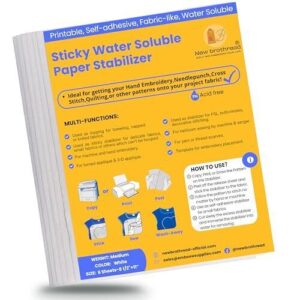
Sometimes you need backing that leaves no trace. That’s exactly what the Brothread Water Soluble Embroidery Stabilizer does.
It’s printable, self-adhesive, and dissolves completely in cold water — no residue, no stiffness. At medium weight, it accommodates hand and machine embroidery without adding bulk.
It’s especially useful on towels, baby clothing, and delicate knits where permanent backing isn’t an option.
Draw or print your pattern directly on it, stitch, rinse, and you’re done. Clean results, nothing left behind.
| Best For | Embroiderers working with delicate or napped fabrics like baby clothes, towels, and knits who want a clean finish with no permanent backing. |
|---|---|
| Stabilizer Type | Wash-Away (Self-Adhesive) |
| Material | Natural, Non-Toxic |
| Embroidery Compatibility | Machine & Hand |
| Fabric Suitability | Delicate & Small Fabrics |
| Roll Width | 8.5 inches |
| Acid & Lead Free | Yes |
| Additional Features |
|
- Prints and draws on easily, so transferring patterns is quick and straightforward
- Dissolves completely in cold water — no stiffness or residue left behind
- Self-adhesive backing keeps it in place and helps avoid hoop marks on sensitive fabrics
- The adhesive can be slow to activate, so you may need to wait a bit before it grabs
- Washing it out takes some effort and isn’t always a quick rinse
- Printed designs can come out a little faded, which might make fine details harder to follow
4. HBI Cut Away Embroidery Stabilizer
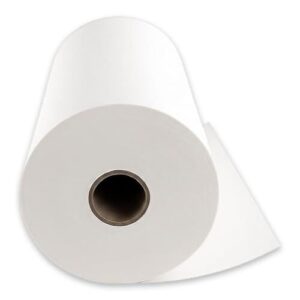
When a design runs 40,000 stitches or more, you need backing that won’t quit. The HBI Cut Away Embroidery Stabilizer is built for exactly that.
For dense, high-stitch designs like this, pairing the right stabilizer with embroidery-friendly fabric choices makes all the difference in getting a clean, lasting result.
At 2.5 oz per square yard, it holds firm through dense fills on jersey, fleece, and athletic knits without puckering or distortion.
It stays under the design permanently — trim the edges, wash it, wear it. The material softens after laundering, so finished garments stay comfortable.
A 12-inch by 50-yard roll gives you flexibility to cut any hoop size you need.
| Best For | Embroiderers working with dense designs on stretch or heavy fabrics like jerseys, fleece, and athletic knits who need a stabilizer that holds up long-term. |
|---|---|
| Stabilizer Type | Cut-Away |
| Material | Polyester Blend |
| Embroidery Compatibility | Machine & Hand |
| Fabric Suitability | Knits, Fleece, Denim |
| Roll Width | 12 inches |
| Acid & Lead Free | Yes |
| Additional Features |
|
- Stays put permanently under your stitches — no tearing, no shifting, even after washing
- Handles high-stitch-count designs (40k) without puckering or distortion
- The 12×50-yard roll gives you plenty of material to cut custom sizes for any hoop
- Feels stiff and paper-like right out of the roll — takes a wash cycle to soften up
- Too heavy for delicate or fine fabrics where a lighter stabilizer would work better
- Beginners used to tear-away backing may find the cut-away style a bit of an adjustment
5. Brothread Clear Water Soluble Embroidery Film
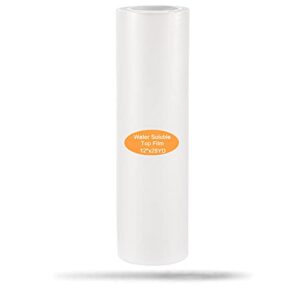
Ever wonder how to keep stitches crisp on towels or fleece without permanent bulk? This clear water-soluble film does the job.
Lay it on top before hooping—its 25-micron thickness forms a smooth barrier, so thread won’t sink into plush loops. You get clean, defined embroidery, then simply rinse it away in cold or warm water.
No residue, no skin irritation. It’s cut-to-size, non-toxic, and perfect for sweatshirts, blankets, or anything that touches skin.
Ideal for both machine and hand work.
| Best For | Home crafters and small-business embroiderers who regularly work with plush or textured fabrics like towels, fleece, and sweatshirts. |
|---|---|
| Stabilizer Type | Wash-Away (Topping) |
| Material | Natural Polymer |
| Embroidery Compatibility | Machine & Hand |
| Fabric Suitability | Towels, Velvet, Fleece |
| Roll Width | 12 inches |
| Acid & Lead Free | Yes |
| Additional Features |
|
- Keeps stitches sitting on top of fluffy fabric instead of sinking in, so your designs actually look sharp
- Rinses away completely in cold or warm water with zero residue — no picking, no scraping
- Non-toxic and skin-friendly, so it’s safe for anything worn close to the body
- The film’s transparency makes it tricky to position patterns on dark or busy fabrics
- Texture can vary roll to roll — some batches feel slippery or overly plasticky under the needle
- If you don’t soak it long enough, it won’t fully dissolve, which can leave a filmy patch behind
6. HBI Water Soluble Embroidery Stabilizer
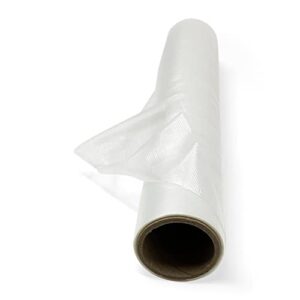
HBI’s water-soluble stabilizer is built for stretch fabrics that can’t keep permanent backing. It’s a fiber-based nonwoven — not a crinkly film — so it holds cleanly and holds steady through moderate stitch counts.
When you’re done, warm water dissolves it completely. No scraping, no stiffness, no residue left in the knit. Use it under lightweight jerseys or satin blends where drape matters. For denser designs, double-layer it.
Made in the USA, available in a 12" x 15-yard roll.
| Best For | Embroiderers working with stretch fabrics like jerseys, knits, and satin blends who need a clean, no-residue stabilizer that washes away completely. |
|---|---|
| Stabilizer Type | Wash-Away (Topping) |
| Material | Water-Soluble Film |
| Embroidery Compatibility | Machine & Hand |
| Fabric Suitability | Towels, Fleece, Velvet |
| Roll Width | 12 inches |
| Acid & Lead Free | Yes |
| Additional Features |
|
- Dissolves fully in warm water, leaving no stiffness or residue behind
- Works for both machine and hand embroidery across a range of textured fabrics
- Made in the USA and available in a generous 12" x 15-yard roll
- Thin material tends to roll up and can be tricky to hoop
- May need to be doubled up for denser or more complex designs
- Some users find it pricey compared to similar options
Types of Stabilizers for Stretchy Fabrics
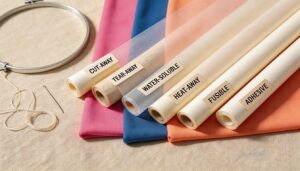
Not all stabilizers are built the same, and the type you pick can make or break your project on stretchy fabric. Each one manages stretch, stitch density, and washability differently.
Here’s what you need to know before you hoop anything.
Cut-Away Stabilizers: Permanent Support for Knits
Cut-away stabilizer is the go-to choice for knit fabrics — and for good reason. Unlike options you remove after stitching, it stays permanently bonded beneath your design.
That permanent layer provides Edge Support Reinforcement and Stitch Anchoring Mechanics simultaneously, keeping stitches locked through repeated washing cycles.
Match stabilizer weight to your stitch density for the right Weight‑Drape Balance without stiffening your stretch fabric.
They offer permanent support for embroidery.
Tear-Away Stabilizers: Why They Fall Short on Stretch
Tear-away stabilizer looks convenient — until it meets stretch fabric. The fiber structure resists elongation unevenly, causing Bias Distortion along horizontal pull directions.
Dense stitching triggers Puckering Issues that won’t relax after washing. Removal Damage is real too: tearing pulls fine knit loops, leaving snags.
Fiber Migration and Moisture Interaction can further alter your fabric’s performance finish.
Avoid tear-away on stretch. Full stop.
Water-Soluble Stabilizers for Delicate Stretch Fabrics
Water-soluble stabilizers are your best friend on delicate stretch fabrics. They dissolve completely — no residue, no stiffness left behind.
Most clear film types use a Quick Dissolve Formulation that rinses out below 40°C, making Residue-Free Cleanup simple.
They improve Stitch Definition without permanently altering your fabric’s drape. Skin-friendly and made from Eco-Friendly Materials, they’re ideal when a water-soluble water soluble stabilizer is the only sensible choice.
No-Show Mesh for Lightweight and Fine-Gauge Knits
No-show mesh is the quiet workhorse for lightweight fabrics and fine-gauge knits. At just 1.5 oz, it delivers real stitch definition without stiffening the fabric stretch.
Mesh transparency means near-zero shadowing on pale knit fabrics — color matching in white or beige keeps it invisible.
It facilitates airflow comfort in wearables, remains reusable when clean, and accommodates fabric stretch without creep.
Fusible and Adhesive Stabilizers for Slippery Knits
Slippery knits need a grip — that’s exactly where fusible and adhesive stabilizers earn their place. A fusible stabilizer bonds directly to the fabric through temperature controlled bonding, creating stretch knit reinforcement that holds through repeated washing.
medium-weight options around 2.0–2.5 oz prevent puckering without killing drape.
Adhesive stabilizer versions skip spray glue entirely, cutting mess while delivering multi-layer adhesive control and reliable adhesive residue prevention on knit fabrics.
How to Choose The Right Stabilizer for Stretch
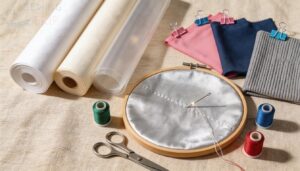
Picking the right stabilizer isn’t guesswork — it comes down to a few key factors that work together.
Your fabric’s stretch level, your design’s stitch density, and how the finished piece will be worn or washed all point you toward the right choice.
Here’s what to think about before you commit.
Matching Stabilizer Weight to Fabric Stretch Level
Matching stabilizer weight to fabric stretch isn’t guesswork — it’s a Weight Stretch Matrix decision. Lightweight knits need just 3–5 gsm. Medium stretch fabrics want 12–20 gsm. High-performance stretch fabric demands 30–60 gsm. Follow these Fabric Weight Guidelines before hooping:
- Lightweight knit: cutaway stabilizer at 3–5 gsm
- Cotton-spandex blend: 15–25 gsm cutaway stabilizer
- Performance stretch fabric: 30–60 gsm
- Dense stretch knits: dual-layer, 40–80 gsm total
Always run a Sample Test Protocol first.
Aligning Stabilizer Strength With Stitch Density
Once you’ve nailed stabilizer weight, stitch density becomes your next variable. Light designs — 6 to 8 SPI — pair well with a lighter cutaway stabilizer. Push past 20 SPI on stretch fabric, and you need Density-Based Layering with firmer support.
| Stitch Density | Stabilizer Firmness Levels |
|---|---|
| 6–8 SPI | Lightweight cutaway |
| 9–12 SPI | Medium cutaway |
| 13–16 SPI | Medium-heavy cutaway |
| 17–20 SPI | Double-layer cutaway |
| 20+ SPI | Heavy cutaway + topper |
Run a Performance Testing Protocol on scrap first. Your Support Ratio Calculation is simple: higher density demands firmer backing.
Skin-Friendly Backing Options for Wearable Garments
Stitch density sorted — now think about the person wearing the garment.
Backing sits against skin all day. Cotton Soft Backing feels natural and won’t irritate sensitive skin. Bamboo Moisture Wicking options pull sweat away during wear. Silicone Friction Barrier reduces rubbing on collar edges. Thermal Fleece Cushion adds padding without bulk.
For high-contact zones, Gel Infused Pressure backing distributes stress evenly — real breathability and comfort in embroidered garments.
When to Layer Two Stabilizers for Dense Designs
Once your design hits 10,000 stitches, single-layer support won’t cut it. That’s your Stitch Count Threshold — the point where Layered Stabilizer Strategies for Dense Designs become essential.
Place a cut-away stabilizer for stretchy garments as your base, then add a water-soluble topper. Combined Backing Force needs to hit roughly 35 newtons.
Keep Hoop Registration Tolerance within 1mm, align grain with fabric stretch, and you’ll be preventing puckering on Stretch Fabrics effectively.
Hooping Stretchy Fabric With a Stabilizer
Hooping stretchy fabric is where most embroidery projects go wrong. Get this step right, and everything else falls into place. Here’s what you need to know before you hoop.
Hooping is where most embroidery projects go wrong — get it right, and everything else follows
Aligning Stabilizer Grain Against The Fabric Stretch Direction
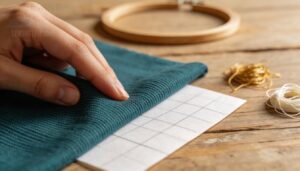
Grain alignment is the silent variable most embroiderers overlook. Run your hand across the fabric — that’s your stretch direction.
Now orient your cutaway stabilizer so its grain runs perpendicular to that pull. Most stabilizers include grain marker identification lines; use them.
Cross grain alignment fights directional tension management at the source. Misalign it, and even a quality tearaway stabilizer can’t save you from puckering.
Using Sticky Stabilizer to Float Delicate Knits
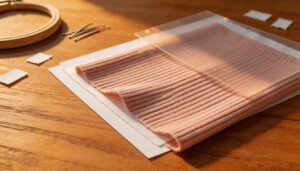
Sticky cutaway stabilizer is your best move for delicate fabrics that can’t handle hoop pressure. The Float Technique suspends the knit above the backing instead of pressing it flat — that’s Knit Tension Relief in action.
Add a Light Topper Layer for Stitch Visibility Control on textured surfaces.
Skinfriendly stabilizers with removable adhesive peel cleanly. For Post-Embroidery Care, rinse gently to restore stretch.
Keeping Fabric Taut Without Distorting The Stretch
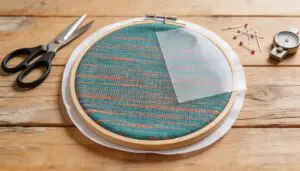
Tautness isn’t about yanking the fabric tight — it’s about controlled balance. Tension Calibration means snug, not stressed. Use Fabric Pre‑Stretch before hooping to reduce mid‑stitch relaxation on stretch fabric.
- cutaway stabilizer holds without letting the knit creep.
- Adjustable Hoop Adjustment keeps grip even as you reposition.
- Moisture‑Controlled Toppers prevent surface drag during stitching.
- Stitch Path Management reduces fabric distortion and puckering.
Basting Stitches and Edge Techniques for Knit Control
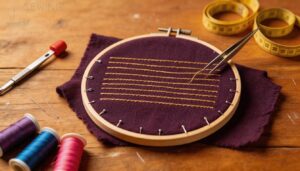
Basting stitches are your safety net before permanent stitching begins. Use a 3–4 mm Basting Thread Length with contrasting thread for easy visibility.
Edge Stitching Methods like overcasting keep knit edges flat and aligned. For Knit Seam Alignment, follow fabric grain direction closely.
Temporary Edge Support prevents drift during hooping. After stitching, use Stitch Removal Tools — tweezers work best — to pull threads cleanly without snagging.
Preventing Puckering and Distortion on Stretch Fabrics
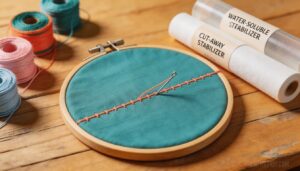
Puckering and distortion are the two things that can ruin an otherwise solid embroidery job on stretch fabric. A few targeted techniques make the difference between a clean finish and a wavy mess.
Here’s what actually works.
Trimming Cut-Away Stabilizer for a Clean Finish
Trim your cutaway stabilizer to about ¼ inch from the embroidery edge — no closer. Scissor precision matters here; use dedicated embroidery scissors with short blades for clean cuts on stretchy fabrics.
Margin consistency keeps visible edges from showing through light knits. Run a light burr removal pass with an emery board after trimming. Smart tool selection and careful stitch preservation protect your finished design completely.
Balancing Thread Tension to Avoid Stitch Sinking
Good trimming gets you halfway there — but thread tension closes the deal.
Upper Thread Tension pulls stitches tight against the fabric. Too much, and stitches sink into stretch fabric, creating fabric distortion fast. Lower Thread Tension must balance it out.
Watch these variables:
- Stitch Density Impact: dense zones need slightly looser top tension
- Needle Size Interaction: larger needles ease thread path on thick knits
- Tension Testing Methods: run a 4×4 swatch sample first
Using Water-Soluble Toppers on Textured Stretch Fabrics
Thread tension regulates stitch depth — but on textured stretch fabric, a water soluble embroidery stabilizer on top controls the surface. That’s where water soluble topping earns its place.
Lay clear film over fleece or terry before stitching. This surface smoothing layer locks fine detail enhancement in place.
After stitching, moisture activation dissolves it completely. Residue-free removal. No stiffness. Clean finish on every stretch fabric.
Frequently Asked Questions (FAQs)
What kind of stabilizer for stretchy fabric?
Cut-away holds. Water-soluble dissolves. No-show mesh disappears. For fabric stretch, cut-away stabilizer for stretchy garments wins every time — permanent, washable, and clean.
What stabilizer is best for knits?
For knits, a cut-away stabilizer is your best bet. It stays put after washing and keeps stitches from distorting.
No-show mesh works great when knit fabric compatibility with lightweight backing matters.
Can stabilizers be reused on multiple stretch projects?
Yes, but it depends on the type. Cutaway stabilizer holds up best for reuse on stretch fabrics. Tearaway and washaway stabilizer options are mostly single-use.
Always follow basic reuse guidelines: inspect for residue buildup, test scraps first.
How do stabilizers affect garment stretch after embroidery?
The right stabilizer reinforces your design — but it also changes how your garment moves. Cut-away backing stays permanent, reducing elasticity retention long‑term.
Water-soluble types dissolve cleanly, preserving post-wash stretch and natural drape.
Which stabilizers work best for athletic performance wear?
For athletic wear, use a cutaway stabilizer for stretchy garments. It preserves fabric stretch resistance, offers lightweight compression support, and acts as skin-friendly embroidery backing through repeated washes.
Does stabilizer color matter on light-colored knits?
Think of stabilizer color as an invisible dye risk. On light knits, tinted edge visibility is real.
Clear film advantage wins here — like the Brothread clear water soluble embroidery film — no residue after wash, and no color bleed risk.
How should stabilizers be stored to maintain effectiveness?
Store stabilizers in airtight packaging between 15–25°C. Keep humidity below 60%, use desiccants, and shield from light.
Label everything and rotate stock first-in-first-out.
Washaway and water‑soluble types degrade fastest without proper temperature control.
Conclusion
Think of choosing the right stabilizer for stretchy fabric, like tuning a guitar string. When in harmony, your embroidery sings with clean lines and a professional finish. But a mismatch, and distortion strikes.
You’ve got the tools now: top picks, expert guidance on types, and application tips. The key is matching the stabilizer to fabric, stitch count, and end use. With practice, you’ll find which stabilizer works best for stretchy fabric, yielding excellent results every time, confidently.