This site is supported by our readers. We may earn a commission, at no cost to you, if you purchase through links.
The hoop you choose matters more than most embroiderers realize. A loose grip ruins tension, uneven tension ruins stitches, and bad stitches ruin hours of careful work—all because of a decision many people make without much thought.
Wooden and plastic hoops each handle fabric differently, and that difference shows up in your finished piece. Wood grips naturally through friction, giving you steady tension on delicate fabrics. Plastic uses molded ridges to hold tighter, which suits heavier materials.
Knowing which one fits your project, your fabric, and your working style saves you frustration before you thread a single needle.
Table Of Contents
- Key Takeaways
- Wooden Vs Plastic Embroidery Hoops Overview
- Fabric Tension and Stitching Quality
- Durability and Longevity Comparison
- Comfort and Ease of Use
- Cost and Value for Money
- Display and Project Aesthetics
- Specialized Features and Innovations
- Choosing The Right Hoop for Your Needs
- Frequently Asked Questions (FAQs)
- Conclusion
Key Takeaways
- Wood grips delicate fabrics through natural friction, while plastic’s molded ridges hold heavier materials firm—so matching your hoop to your fabric is the real secret to clean stitches.
- A wooden hoop can last a decade or more with simple care, but plastic wears out faster than most stitchers expect, making wood the smarter long-term investment despite the higher upfront cost.
- Your hoop choice shapes more than just tension—it shapes how your finished piece looks on the wall, with wood lending warmth and grain to displayed work that plastic simply can’t match.
- Neither material wins outright: beginners do well starting with forgiving plastic hoops, while experienced stitchers often keep both on hand and choose based on the project’s fabric and display needs.
Wooden Vs Plastic Embroidery Hoops Overview
Choosing between wooden and plastic embroidery hoops comes down to more than just looks — each material works differently depending on what you’re making. Before you buy, it helps to know what sets them apart and where each one shines.
For a deeper look at how each hoop type holds up in real projects, embroidery tips and tricks for beginners and beyond covers the practical side of keeping your work snag-free.
Here’s a quick breakdown of the key differences and common uses for both.
Key Differences in Materials
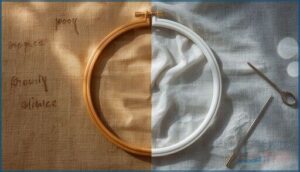
Wood and plastic aren’t just different materials — they’re different experiences.
Wooden hoops, usually made from dense beechwood, offer a warm Surface Grip and natural feel. Plastic hoops, molded from rigid ABS, resist warping better in humid conditions.
For a detailed explanation of how hoop materials impact your stitches and project outcome, see this guide on types of embroidery hoops.
Here’s a quick hoop material comparison across key Material Composition factors:
| Property | Wooden Hoops | Plastic Hoops |
|---|---|---|
| Warping Resistance | Low | High |
| Eco-Footprint | Biodegradable | Petroleum-based |
| Surface Grip | Natural friction | Molded ridges |
Common Uses for Each Type
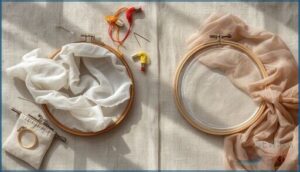
Each material has a home in a specific type of project.
Wooden hoops shine for everyday crafting, display framing, and specialty fabrics like fine linen.
Plastic hoops handle travel projects well — they’re light, cheap to replace, and easy to toss in a bag.
| Use Case | Wooden Hoops | Plastic Hoops |
|---|---|---|
| Everyday Crafting | Best choice | Good option |
| Travel Projects | Not ideal | Top pick |
| Display Framing | Natural finish | Color variety |
| Specialty Fabrics | Fine linen | Silk, voile |
For a more modern alternative, some stitchers opt for faux wood flexi hoops that offer both the look of wood and the convenience of plastic.
Fabric Tension and Stitching Quality
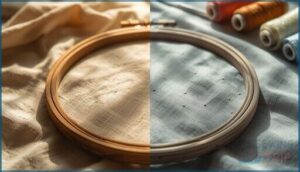
Tension is everything in embroidery — get it wrong and your stitches will pucker, pull, or look uneven no matter how careful you’re. The hoop material you choose plays a bigger role in this than most people expect.
In embroidery, tension is everything — and your hoop material controls more of it than you think
Here’s how wood and plastic each handle fabric grip and what that means for your finished work.
Maintaining Tension With Wood Hoops
Tension is everything in embroidery — and wooden hoop tension depends on a few simple habits. Tighten the tension screw in small steps while pulling the fabric evenly around the hoop.
For better fabric grip methods, try hoop binding tips like wrapping the inner ring with cotton twill tape. These tension control techniques keep wood embroidery hoops drum-tight and your stitches clean.
Fabric Grip in Plastic Hoops
Plastic hoops take a different approach to holding fabric in place. Many use textured surfaces on the inner ring, so hoop friction does the heavy lifting instead of just screw tension alone.
That grip can make a real difference depending on your fabric choice, so it’s worth checking out home decor fabric types and their properties before you commit to a hoop style.
This cuts down on fabric slippage, especially with thin cotton or linen. Some models add rubber grip coatings for extra hold.
The result? Reliable fabric tension without constant re-tightening.
Impact on Stitch Appearance
Your hoop choice quietly shapes every stitch you make. Firm thread tension in a wooden hoop keeps stitch definition crisp — backstitches stay sharp, satin fills lie smooth, and stitch clarity holds across the whole design.
A plastic hoop that flexes slightly can blur fine details and invite fabric puckering. Hoop marks are also lighter with wood, making cleanup easier after stitching.
Durability and Longevity Comparison
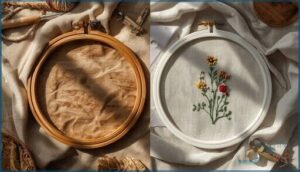
How long your hoop lasts depends on more than just luck — it comes down to material, care, and how often you stitch. Both wood and plastic hold up differently over time, and knowing what to expect from each can save you money and frustration.
Here’s what you need to know about lifespan, wear, and upkeep for both types.
Lifespan of Wooden Hoops
A quality wood hoop can outlast years of weekly stitching — sometimes a decade or more. Wooden Hoop Durability comes down to three main factors: Wood Grain Quality, care habits, and where you store it. Environmental Effects like humidity and heat are the biggest threats to long-term use.
| Longevity Factor | Good Conditions | Poor Conditions |
|---|---|---|
| Beechwood hoop | 10–20 years | 3–5 years |
| Bamboo hoop | 3–5 years | 1–2 years |
| Hardware quality | Stays firm for years | Strips or rusts early |
Simple Hoop Maintenance Tips — light oiling, dry storage, loosening the screw after sessions — make a real difference in Embroidery Hoop Durability over time.
Wear and Tear on Plastic Hoops
Wear catches up with plastic hoops faster than most stitchers expect. Hoop Warping, Surface Scratches, and Tension Loss aren’t random — they follow a pattern tied to how plastic behaves over time.
| Wear Type | What Happens |
|---|---|
| Warping | Rings bend oval, especially in heat |
| Surface Scratches | Inner ring snags delicate thread |
| Screw Stripping | Fabric slips mid-project |
| Material Fatigue | Cracks form near the closure |
Plastic degradation accelerates when you overtighten or store hoops in sunlight. Understanding these material properties helps you get more durability from your plastic embroidery hoops before replacing them.
Maintenance Requirements
Keeping your hoops in good shape doesn’t take much — but skipping care and maintenance adds up fast. Wood needs dusting, light oiling once or twice a year, and proper Storage Tips like keeping it away from heat. Plastic just needs soap and water. Both need regular Tension Checks and Hardware Care. This Embroidery Hoop Maintenance and Care comparison shows what each material demands:
| Task | Wooden Hoop | Plastic Hoop |
|---|---|---|
| Hoop Cleaning | Damp cloth, dry immediately | Mild soap and water |
| Fabric Protection | Wrap inner ring with cotton tape | Test colored plastic on scrap first |
| Storage Tips | Away from heat and sunlight | Away from direct heat sources |
| Hardware Care | Oil screw threads occasionally | Replace stripped knobs promptly |
| Tension Checks | Tighten screw nut regularly | Check for warping near closure |
Comfort and Ease of Use
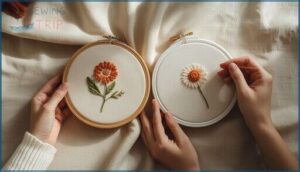
Comfort matters more than most people expect when you’re mid-project and your hand starts to ache. The hoop you choose shapes how the whole experience feels, from first stitch to last.
Here’s what to keep in mind for comfort and ease of use.
Weight and Handling Differences
Plastic hoops run 30 to 50 percent lighter than wooden ones — and that weight comparison matters more than you’d think. Less weight means less hand fatigue during long sessions, especially if you’re stitching freehand.
Wooden hoops feel solid but can tire your grip over time. Plastic wins on portability and ergonomic design, while wooden hoops offer better hoop balance and natural grip styles.
Adjustability and User Experience
Wooden hoops give you real tension control — a metal screw mechanism lets you fine-tune fabric grip in tiny turns, perfect for slippery materials. Plastic hoops snap into place faster but offer less precision.
- Screw mechanisms on wood allow mid-project adjustments without removing the hoop
- Ergonomic design on plastic models includes smoother rims for easier grip styles
- Ease of handling improves when the tension mechanism matches your stitching pace
Suitability for Beginners and Experts
Your skill level matters when choosing embroidery hoops. Beginners do well with plastic hoops — the grip is forgiving, tension management is simple, and the user experience stays low-stress.
As your stitch control grows, wooden hoops reward that precision. Professionals often keep both on hand, matching fabric choice to the project. The right hoop meets you exactly where you’re.
Cost and Value for Money
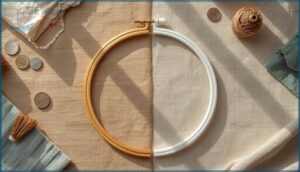
Price is often what tips the decision when you’re choosing between wood and plastic hoops. The good news is that both options are pretty budget-friendly, but they differ in what you get for your money over time.
Here’s a closer look at what to expect across both types.
Price Range for Wooden Hoops
Prices for wooden hoops span a wide range, so your budget can stretch pretty far. Small bamboo hoops start near $1 each, while mid-sized beechwood options usually run $4 to $8.
Here’s a quick breakdown of wooden hoop costs by type:
- Small bamboo hoops: $1–$3 each
- Mid-sized standard hoops: $3–$7 each
- Premium beechwood hoops: $6–$10 each
- Specialty oval hoops: $8–$15 each
- Bulk sets of 50+: under $1 per hoop
Price Range for Plastic Hoops
Compared to wood, plastic hoops cost less across the board. A basic 4-inch option runs about $1 to $3, and mid-sized hoops around 8 inches usually fall between $3 and $6. Budget options work fine for practice or simple projects.
Need premium features like non-slip grips? Expect to spend $20 to $30 for larger sizes, but the added control is worth it.
Long-Term Investment Considerations
Budget plastic hoops seem like a deal — until you’ve replaced them three times in five years. That’s where cumulative spending quietly adds up. Wood embroidery hoops, especially beechwood, offer better tension consistency and durability with manageable maintenance requirements. Plastic embroidery hoops win on upfront cost-effectiveness, but factor in replacement cycles and eco-impact before deciding.
- Wood lasts years with simple care routines
- Plastic cracks under frequent tightening pressure
- Beechwood holds firm tension project after project
- Premium systems reduce long-term waste and spending
Display and Project Aesthetics
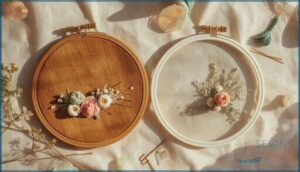
The hoop you choose doesn’t just hold your fabric — it becomes part of the finished piece. Wood and plastic each bring a different look to the table, and that matters more than most people expect.
Here’s what to keep in mind when aesthetics are part of your decision.
Visual Appeal of Wood Vs Plastic
The frame around your work tells a story before anyone looks at the stitching. Wooden hoops bring natural wood grain, warm tones, and a rustic vibe that suits a vintage-inspired piece beautifully. Plastic hoops offer bold color variations and modern frame styles that pop on a plain wall. Your aesthetic preferences shape everything.
| Feature | Wooden Hoops | Plastic Hoops |
|---|---|---|
| Color Tone | Natural honey or amber | Bright, solid colors |
| Surface Look | Visible wood grain texture | Smooth, glossy finish |
| Display Options | Rustic, traditional option | Modern, playful accent |
Best Hoop Type for Framing and Display
For wall hanging, wooden hoops win on presence. Their depth and natural grain make embroidery frames feel like finished art, not craft projects.
Plastic hoops sit flatter against the wall, which works for gallery-style displays.
Hoop frame styles shape how your artistic presentation reads from across the room, so match your display options to the mood you want.
Matching Hoop Style to Embroidery Projects
Matching hoop style to your project isn’t guesswork — it’s a skill. Consider these embroidery project considerations before you start:
- Fabric Weight — heavy canvas needs wooden hoops for firm hold
- Stitch Density — dense fills demand wood’s tight grip
- Project Size — larger designs call for bigger hoop size
- Embroidery Techniques — dimensional work suits wood; casual outlines suit plastic
- Hoop Material — match it to project suitability, not habit
Specialized Features and Innovations
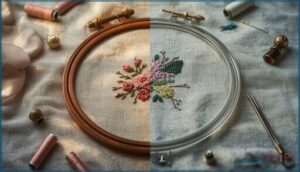
Both wooden and plastic hoops have come a long way from their basic two-ring design. Today, you’ll find options built with smarter features that make stitching easier and more enjoyable.
Here’s a closer look at the innovations worth knowing about.
Non-Slip and Textured Designs
Slipping fabric is one of the most frustrating things in embroidery. That’s where non-slip designs make a real difference. Plastic hoops often use Inner Ring Textures, molded ridges that bite into the cloth and hold fabric tension without over-tightening the screw. Rubberized Linings add another layer of grip, hugging slippery fabrics evenly. Some Raised Lip Hoops snap over the inner ring, physically locking everything in place.
| Feature | Wooden Hoops | Plastic Hoops |
|---|---|---|
| Inner Ring Textures | Rarely included | Common in most designs |
| Rubberized Linings | Added via binding wraps | Built-in or silicone lined |
| Raised Lip Design | Not typical | Available in select models |
| Grip on Smooth Fabric | Moderate with binding | Strong with molded ridges |
| Tension Mechanism | Screw and friction | Ridges, lips, and coatings |
Magnetic and Flexi Hoop Options
Beyond wood and plastic, two hoop innovations are worth knowing. Magnetic hoops use embedded magnets for automatic Magnetic Tension — no screw-tightening, no puckering. They’re great for thick hoop types like denim or quilts.
Flexi embroidery hoops snap drum-tight over delicate fabrics, protecting stitch quality without creasing. Both options push embroidery tool features forward, making Embroidery Ease less of a goal and more of a given.
Accessories and Upgrades
The right accessories can transform any embroidery hoop into a complete workstation. Whether you’re working with wood or plastic, small upgrades make a real difference in your crafting supplies setup and overall embroidery tool selection.
- Hoop Stands free both hands, while swivel clamps let you check the back quickly
- Lighting Kits and Magnifier Lenses reduce eye strain on fine detail work
- Grip Enhancers and Storage Bags protect your needlecraft equipment between sessions
Choosing The Right Hoop for Your Needs
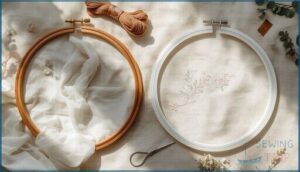
Picking the right hoop comes down to a few simple things that are easy to overlook. Your project type, fabric, and personal style all point you toward the best choice.
Here’s what to think about before you decide.
Project Type and Fabric Considerations
Your project type shapes every material pairing decision you’ll make. Heavier fabric choices like denim or canvas call for sturdy wood, which resists bending under pressure. For detailed cross-stitch on aida, plastic hoops grip the fabric well and keep tension steady.
More complex stitch complexity and layered embroidery techniques demand firm, consistent tension — and that’s where wooden hoops earn their reputation.
Hoop Size Selection Tips
Size matters more than you might think. A good Hoop Size Guide starts with matching the embroidery hoop diameter to your Embroidery Scale — aim for 1 to 2 inches beyond the design on all sides for comfortable Tension Control.
Keep a small set like 4, 6, and 8-inch hoops ready. That Fabric Margin also ensures Stitch Visibility stays clear without crowding your work.
Personal Preferences and Recommendations
Once you’ve nailed your hoop size, your material choice really comes down to who you are as a stitcher. Stitcher Profiles from Embroidery Communities and Preference Surveys show no single winner — just smart matches.
User Testimonials and Hoop Reviews consistently say: try both.
- Budget-first? Plastic wins on affordability.
- Display-focused? Wood earns the compliment.
- Travel often? Plastic manages bumps better.
- Eco-minded? Beech or bamboo is your call.
Frequently Asked Questions (FAQs)
What is the best material for an embroidery hoop?
The best hoop material depends on your fabric choice and stitch control needs. Wood embroidery hoops offer firm tension, while plastic embroidery hoops are lightweight and low-maintenance. Match your embroidery tools to your project.
Do plastic embroidery hoops work?
Yes, plastic embroidery hoops work — and they work well. They hold fabric tight, stay lightweight, and won’t warp. For everyday stitching, they’re a reliable, affordable tool you can count on.
What is the best wood for an embroidery hoop?
Beechwood is your best bet. It resists warping, holds even tension, and its smooth wood grain won’t snag thread.
For hoop durability and embroidery aesthetics, a polished beech wood embroidery hoop is hard to beat.
What are the best hoops to use for cross stitch?
For cross stitch, beech or birch wooden hoops and ridged plastic hoops both deliver solid fabric tension and stitch quality.
Your best embroidery hoop depends on your fabric type and personal comfort.
Can embroidery hoops be used for machine embroidery?
Standard embroidery hoops aren’t built for machine embroidery. Machine compatibility requires dedicated machine frames with proper brackets.
Using a regular hoop risks needle strikes, misaligned designs, and voided warranties — real embroidery risks worth avoiding.
Are wooden hoops safe for delicate or sheer fabrics?
Wooden hoops can be safe for sheer fabric embroidery when properly prepared. Lightly sand rough spots, wrap the inner ring with cotton twill tape, and avoid overtightening to protect delicate fabric tension and prevent hoop marks.
How do hoops affect thread color and visibility?
Your hoop choice quietly shapes color perception and thread visibility. Hoop edge glare, fabric tension, and color shift all play a role — affecting how your thread truly looks while stitching.
Which hoop type works best in humid climates?
In humid climates, plastic wins. It resists swelling, warping, and mold — key durability factors for embroidery performance.
Wood needs sealing and extra hoop maintenance, while plastic manages climate considerations with almost no effort.
Can you reuse hoops across many different projects?
Think of a good hoop like a reliable tool — it works best when you care for it.
Yes, you can reuse embroidery hoops across many projects, as long as tension holds and surfaces stay smooth.
Conclusion
The right hoop doesn’t just hold your fabric—it holds your work together. When you weigh wooden vs plastic embroidery hoops, which is better comes down to what your project actually needs.
Wood gives delicate fabrics a steady, gentle grip. Plastic locks heavier materials firmly in place. Neither wins outright; the smartest choice simply matches your material, your style, and your goals. Pick the one that fits, and your stitches will show the difference.
- https://www.hooptalent.com/blogs/news/plastic-embroidery-hoops-ultimate-guide-to-selection-use-cases-sustainability
- https://stitchedmodern.com/blogs/news/an-essential-guide-to-embroidery-hoops
- https://www.maggieframes.com/blogs/embroidery-blogs/plastic-embroidery-hoops-types-uses-and-buying-tips
- https://www.modernhoopla.co/products/beechwood-embroidery-hoops
- https://www.hopeandhart.com/blog/what-is-the-best-embroidery-hoop-to-use