This site is supported by our readers. We may earn a commission, at no cost to you, if you purchase through links.
The Made for Mermaids Fae Cardigan Duster landed on my sewing table during one of those frustrating wardrobe moments—you know, when you’ve got nothing that feels right but can’t find exactly what you’re looking for in stores. This pattern promised the perfect layering piece with enough design options to keep things interesting, and I was ready to put it to the test.
After sewing through multiple versions and experimenting with different fabrics and style combinations, I’ve got thoughts on what works, what doesn’t, and whether this pattern deserves a spot in your digital library. From the dreamy duster length to those unexpectedly adaptable lantern sleeves, here’s what you need to know before you hit that download button.
Table Of Contents
Key Takeaways
- The Fae Cardigan pattern gives you serious bang for your buck with multiple necklines, sleeve styles (fitted to lantern), three lengths (tunic, cardi, duster), and color-blocking options all in one PDF—it’s basically a choose-your-own-adventure for knit sewing that lets you create totally different looks every time.
- You’ll need 2-3 yards of four-way stretch knit fabric with at least 20% stretch (think liquid jersey or lightweight sweater knits), and while a serger speeds things up, you can totally nail this on a regular sewing machine with zigzag stitches and a walking foot.
- The sizing runs generous with a slouchy, relaxed fit, so if you’re between sizes go smaller—and the whole thing comes together in about 30 minutes once you get rolling, making it perfect for sewists who want quick, wearable results without hours of struggle.
- The pattern’s biggest challenge is preventing neckband stretch-out (use fusible knit interfacing and stay-stitching), but the versatility makes it worth the effort since you can dress it up for work with the duster length or keep it casual with the tunic version over leggings.
Fae Cardigan Duster Pattern Overview
The Fae Cardigan & Duster from Made for Mermaids is one of those patterns that gives you serious bang for your buck. You’re getting tons of options packed into a single pattern, which means you can make something totally different every time you sew it up.
Let’s break down what you’re actually getting when you grab this PDF.
Pattern Features and Options
The Fae Cardigan pattern breaks all the rules in the best way. You get multiple neckline options—from simple facings to decorative neckbands—plus sleeve variations that range from short caps to long cuffs. Color blocking on the bodice lets you get creative, and hem finishes work beautifully whether you’re team serger or sewing machine. If you’re planning to use silk or other delicate fabrics, check out this guide to working with silk fabrics for tips on handling, cutting, and sewing slippery materials.
It’s basically a choose-your-own-adventure for knit fabric sewing. When evaluating the pattern’s complexity, consider the importance of methodological rigor in ensuring a well-structured design.
Included Lengths and Sleeves
You can pick from tunic, cardi, or duster lengths with this cardigan pattern—each one changes how the fabric drapes and layers over your clothes.
Sleeve options include fitted, 3/4, lantern, and color-blocked lantern styles, so you’re never stuck with just one look.
The Fae Cardigan lets you match your fit preferences and layering needs without buying multiple knit cardigan patterns.
Neckband Variations
You’ll find two neckband styles in this cardigan pattern: a straight band and a shawl collar. The shawl option gives you that cozy drape effect along the front opening, while the straight band keeps things clean and simple.
Both work beautifully with knit fabric, though the shawl collar adds a bit more drama. If you want contrast bands or folded finishes, you can easily hack the pattern with different fabric choices. If you need to adjust the fit through the bust or waist, check out these pattern alterations for making clothes bigger before you cut your fabric.
PDF Format and Printing Choices
The Fae Cardigan pattern arrives as a downloadable PDF that you can print at home on regular 8.5×11 paper or send to a print shop for A0 sizing. Make sure your printer settings are at 100% scale—no “fit to page” adjustments—so your pattern pieces stay accurate. Check the test square included in the file to confirm your measurements match up before cutting fabric. If you want to explore unique garment construction methods beyond standard seaming, the Fae Cardigan makes a great beginner-friendly project to experiment with.
You’ll get clear page numbers and assembly guides, making it beginner-friendly even if this is your first time taping pattern sheets together. Plus, you’ll find creative sewing pattern design inspiration to help you personalize your projects as your confidence grows.
Fabric, Notions, and Preparation
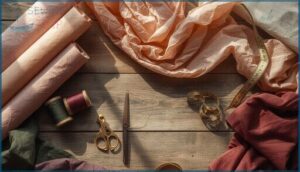
Before you cut a single thread, let’s talk about what you actually need to bring this cardigan to life. The fabric you choose and how you prep it can make or break your finished piece, so don’t skip this part! Think of it like building a foundation—once you’ve got your fabric sorted and ready, you’ll move on to techniques like mastering darts and pleats when sewing a dress to create that tailored, body-skimming fit.
Here’s what you need to gather and how to set yourself up for sewing success.
Recommended Fabrics and Yardage
You’ll need 2 to 3 yards of four-way stretch knit fabric for your Fae Cardigan—think liquid jersey or lightweight sweater knits between 200 and 300 g/m². Fabric Selection matters for drape and comfort, so aim for at least 20% stretch.
Size XS needs about 2.0 meters, while XL requires 2.9 meters. These Yardage Estimates help you nail those DIY Fashion Projects without running short.
Essential Notions and Tools
You’ll want a basic Sewing Kit with sharp scissors, pins, and a seam ripper. Fabric Cutters like a rotary blade and mat make quick work of pattern pieces, while Measuring Tools keep everything accurate and stress-free.
Grab ballpoint Knit Needles for your Sewing Machine—they’ll glide through stretchy fabric without snagging. A Serger isn’t essential, but it speeds up seams and gives pro-level edges.
Tips for Cutting and Prepping Knit Fabric
Smooth your fabric flat before marking—wrinkles throw off cutting accuracy and invite knit distortion. Align pattern pieces with the fabric grain (usually crosswise) so your garment construction holds its shape.
Prewash a sample swatch to check for fabric shrinkage, then adjust your seam allowance if needed. Steam press gently to release creases, but don’t stretch the knitwear. These sewing techniques save major headaches later.
Construction Process and Sewing Tips
Now that you’ve got your fabric cut and ready, it’s time to actually sew this thing together. The Fae comes together surprisingly fast—like, you can finish it in about 30 minutes once you get rolling.
Let’s walk through the construction process, your machine options, and a few clever hacks to make your cardigan uniquely yours.
Step-by-Step Sewing Instructions
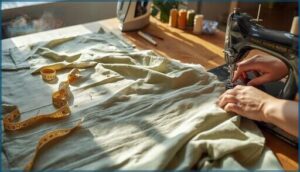
Starting your sewing project feels like opening a door to something new—you’re creating freedom you can wear! Begin by transferring all pattern markings to your fabric using tailor’s chalk, then tackle shoulder seams before moving to side seams in one smooth line from underarm to hem.
Start by marking your fabric and sewing shoulder seams first, then side seams from underarm to hem
- Seam finishing transforms raw edges into professional-looking details that last
- Stitch length matters more than you think—it’s the difference between stretchy comfort and broken threads
- Sewing order saves you from unpicking mistakes (trust the garment construction tips in your pattern!)
Follow the sewing techniques outlined in your sewing patterns for women, attaching sleeves to armscye seams before side seams for stability. Edge binding and fabric preparation set the foundation, while pressing as you go ensures your sewing tutorials actually translate into wearable art.
Using a Serger Vs. Sewing Machine
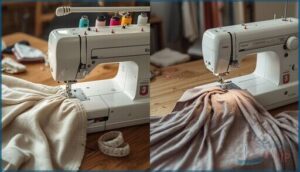
Choosing between a serger and sewing machine for your Fae Cardigan sewing project comes down to edge finishing goals and fabric compatibility. Sergers deliver professional seam quality with faster speeds and built-in edge finishing, though serger maintenance and thread consumption run higher.
Your sewing machine works beautifully with stretch stitches and a walking foot—these sewing tips prove you don’t need specialized equipment to create something extraordinary.
Sleeve and Pocket Assembly
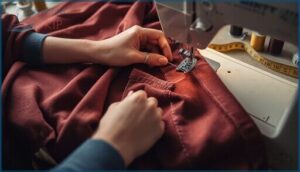
Sleeve cap construction on your Fae Cardigan requires matching notches before you pin—this prevents puckering and keeps your dolman cardigan hanging just right.
Attach sleeves with 3/8 to 5/8 inch seam allowances, then tackle pocket bag assembly by reinforcing openings with stay stitching.
These finishing techniques transform cardigan sewing patterns into polished pieces you’ll actually wear, not hide in your closet.
Color Blocking Techniques and Hacks
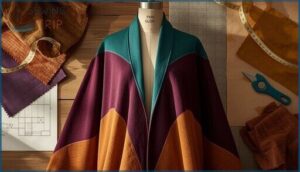
Want to break free from basic patterns? Pattern manipulation lets you slice the Fae Cardigan front pieces to create bold color-blocked sections—just add 1/4 inch seam allowances to your cuts.
Color theory guides your fabric selection: pair high-contrast tones for drama or complementary shades for balance.
Narrow serger seams keep edge quality crisp at transitions, while topstitching reinforces your design lines.
The sewing community loves this DIY fashion hack for transforming cardigan sewing patterns into wearable art.
Fit, Sizing, and Style Variations
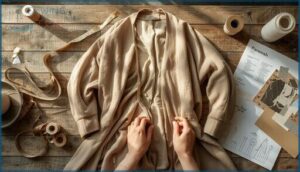
One of the best parts about the Fae pattern is how customizable it’s, but that also means you’ll need to make some decisions about fit and style before you cut your fabric. The sizing usually runs a bit generous with that slouchy, relaxed fit, so if you’re between sizes, I’d recommend going smaller.
Let’s talk about how to nail the fit, pick your favorite options, and style this cardigan for whatever vibe you’re going for.
Fit and Sizing Guidance
Nailing your size starts with accurate body measurements and understanding ease allowance. For the Fae Cardigan, you’ll want 2–4 inches of wearing ease for that perfect slouchy fit.
Compare your high bust or full bust to the pattern’s size chart, then pick based on your chest. If you’re between sizes, go larger—knit stretch is forgiving, and you can always take in seams later for a more fitted look.
Customizing Lengths and Sleeves
Once you’ve picked your size, play with the pattern lengths and sleeve styles to make this cardigan yours. The Fae offers tunic, cardi, and duster options—each totally transforms the vibe.
Customizing your fit:
- Sleeve adjustments: Swap fitted sleeves for lantern sleeve drama, or shorten to 3/4 length for lighter styling
- Length proportions: Pair shorter cardigans with cap sleeves; duster lengths shine with full-length arms
- Hem finishes: Recalculate allowances after length changes to keep edges even and polished
Balance is everything when tweaking proportions.
Choosing Between Neckbands
After dialing in your sleeve style, the neckband shifts the whole mood. The Fae pattern gives you straight or shawl options—both work, but they wear differently.
| Neckband Style | Best For |
|---|---|
| Straight with binding | Lightweight jerseys, minimal bulk |
| Shawl collar | Cozy drape, structured knits |
| Ribbed knit finish | Shape retention, stretchy recovery |
Wider bands can tighten around your neck, so test the stretch before committing. Rolled edges keep things fast and flattering on thinner fabrics.
Styling Ideas for Different Occasions
Your Fae cardigan can shift from casual chic to evening elegance in one wardrobe.
For workwear essentials, pair the duster length with fitted trousers and ankle boots. Creative expression thrives with color-blocked sleeves over midi skirts.
Travel style loves the tunic version layered on leggings—it packs flat and moves with you.
This DIY fashion sewing project suits every occasion you throw at it.
Frequently Asked Questions (FAQs)
What size should I make if I want a more fitted look?
If you want a snugger cardigan fit, go one full size down from your usual pattern size.
Compare your bust and waist measurements to the finished garment specs, then pick whichever has less ease.
How much ease is included in the pattern sizing?
The pattern provides positive ease in the bust, waist, and hip for a relaxed drape.
Check the finished measurements against your body to determine size selection based on your desired fit adjustments and fabric stretch.
Do I need a serger or can I sew this on a regular sewing machine?
You can totally use a regular sewing machine! A zigzag stitch manages lightweight knits beautifully.
Sergers give you those professional finished edges and prevent fabric roll, but they’re not mandatory for gorgeous results.
What is the finished garment measurement for each size?
Like a well-fitted blueprint, each size’s bust measurement, sleeve ease, and hem circumference are detailed in the pattern’s chart, ensuring your finished garment length and size proportions align perfectly with your body measurements.
How do I finish the raw edges neatly?
You’ve got a few solid options for edge finishing on knit garments. Try a serger for quick, clean seams, or use folded hems with knit binding and stretch stabilizers to keep everything flexible and polished.
Can I use woven fabric instead of knit?
Woven fabric options won’t work well here—knits offer stretch and drape effects that wovens lack.
Without that give, your Fae cardigan loses its signature slouchy fit and comfort.
Stick with four-way stretch knits for best results!
Whats the best way to press knit seams?
Press from the wrong side with low heat and a pressing cloth. Use a lifting motion instead of sliding to avoid stretching.
Let seams cool flat to set properly without distortion.
How do I prevent neckband from stretching out?
Think of neckband stability like reinforcing a drawbridge—use fusible knit interfacing along the edge, stay-stitch before attaching, and choose stable fabrics with good recovery to prevent stretch-out during wear.
Are there maternity modifications for this pattern?
The pattern doesn’t include official maternity modifications, but knit stretch adapts beautifully to pregnancy fit. Many sewists size up or add adaptive sewing tweaks—check customer forums for maternity hacks and community-shared garment sewing ideas!
Conclusion
This pattern review of the Fae cardigan duster from Made for Mermaids isn’t just another PDF in your collection—it’s a gateway to wardrobe freedom.
Whether you’re chasing that casual boho vibe or need a polished layer that actually fits, the Fae delivers versatility without the drama.
Sure, you’ll wrestle with neckband stretch and maybe curse your rotary cutter once or twice, but the payoff? A handmade piece that moves with you, not against you.