This site is supported by our readers. We may earn a commission, at no cost to you, if you purchase through links.
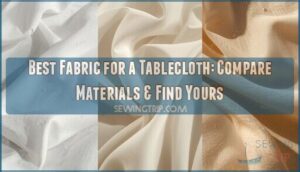
You can ruin a $200 tablecloth in a single dinner party if you choose the wrong fabric. The fabric itself determines whether your tablecloth becomes a cherished heirloom or an expensive mistake. Most people focus on color and pattern, then discover their beautiful linen creases beyond recognition or their silk shows every water spot.
Cotton breathes beautifully but stains easily, polyester repels spills but can look cheap, and linen ages gracefully if you’re willing to iron it every single time. Your table shape, washing habits, and the types of meals you serve all play a role in which material will actually work for your lifestyle, not just look good in the store.
Table Of Contents
Key Takeaways
- Your tablecloth’s fabric determines its real-world performance more than color or pattern—cotton stains easily despite breathability, polyester repels spills but can look cheap, and linen ages beautifully if you’re willing to iron it every time.
- Polyester delivers the strongest return on investment at $3.72 per unit with 150-200 commercial washes, while linen costs $12-$40 per yard but lasts 20-30 years, making your choice between immediate affordability and long-term durability.
- Match your fabric to actual use rather than aesthetics—polyester dominates kids’ parties and outdoor gatherings with 90%+ stain resistance, cotton works for everyday dining with moderate maintenance, and linen or satin elevate formal events with natural elegance.
- Proper care extends any fabric’s lifespan significantly: treat stains within 30 minutes for 65% better success rates, wash cotton at 54°C but polyester at 30-40°C, and store tablecloths in breathable containers with humidity below 55% to prevent mold and fiber breakdown.
Key Factors in Choosing Tablecloth Fabrics
The right tablecloth fabric isn’t just about looks—it needs to match how you actually use your table. You’ll want to think about a few practical factors before you commit to any material.
Let’s walk through what really matters when you’re choosing fabric for your dining space.
Durability and Longevity
Durability separates a fabric you’ll love from one you’ll replace too soon. Linen and polyester lead in tablecloth fabric durability, with linen lasting 20-30 years through regular household wear and polyester excelling in commercial environments due to greater wear resistance. Cotton generally withstands around 200 wash cycles before showing fatigue.
Linen lasts decades while polyester dominates commercial use, but cotton fades after just 200 washes
Linen, known for its strength, is one of the strongest natural fibres.
Maintenance impact matters greatly—harsh washing shortens any fabric’s lifespan, while proper care extends it considerably.
Stain Resistance and Maintenance
Stain resistance becomes the deciding factor once you’ve settled on durability. Polyester performance stands out—lab tests show over 90% resistance to water-based spills, and its synthetic fibers repel liquids far better than cotton. Blend absorbency offers middle ground: poly-cotton tablecloths resist stains better than pure cotton while staying softer than polyester.
Natural fibers like cotton offer a softer texture, though they may require more maintenance. Coated finishes with fluoropolymer treatments make spills bead up, though recent studies found PFAS compounds in most stain-resistant tablecloths tested.
Washing frequency matters—spot-treat immediately, then launder every week or two for everyday use.
Aesthetics and Texture
Beyond performance, your tablecloth makes a visual statement. Color association matters—68% of diners link white or cream to formal settings, while warm tones create energy.
Tactile perception shapes experience: linen’s coarse weave feels refined; cotton offers soft comfort. Weave effects determine drape and luster—satin catches light elegantly, while plain weaves emphasize texture.
Pattern layering adds depth when you pair prints with solids, balancing complexity across material characteristics.
Suitability for Different Occasions
Your occasion shapes your tablecloth material guide. Here’s your fabric by occasion breakdown:
- Everyday dining: Cotton holds 38.1% of residential use for its absorbency
- Formal dining: Linen suits high-end weddings with natural texture
- Outdoor gatherings: Vinyl repels water and UV damage
- Kids’ parties: Polyester resists stains during high-spill events
- Catering events: Spandex stretches wrinkle-free for banquets
Matching fabric theme to function ensures your table performs beautifully.
Cost and Value
Your wallet tells the real story when comparing tablecloth fabric cost. Polyester delivers the strongest fabric ROI at $3.72 wholesale per unit, withstanding 150-200 commercial washes versus cotton’s 80-100 cycles. That translates to long-term savings through reduced replacement frequency.
Linen requires material investment of $12-$40 per yard but lasts 20-30 years, while cotton-polyester blends balance affordability with practicality for everyday use.
Comparing Popular Tablecloth Materials
Each tablecloth fabric brings its own mix of texture, performance, and visual appeal to your table. Some materials shine at formal dinners, while others handle everyday spills without breaking a sweat.
Let’s compare the most popular options so you can match the right fabric to your specific needs.
Cotton: Versatile and Easy-Care
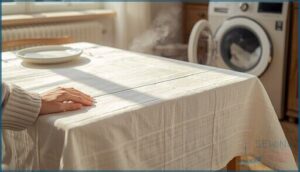
Cotton tablecloths hold 30% of the market for good reason—you’ll find them working just as well for Tuesday dinners as weekend gatherings. This fabric weight generally ranges from 100-170 GSM, offering:
- Plain weave construction that maintains 86% tensile strength after 100 industrial washes
- Natural breathability that feels comfortable under your hands
- Moderate shrinkage requiring low-heat drying
- Machine washability for quick turnaround between uses
- Flexible performance across formal and casual settings
Just remember cotton needs prompt attention to spills.
Linen: Elegant and Durable
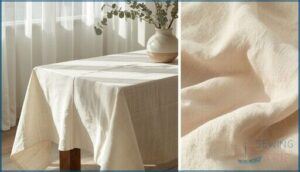
Linen tablecloths bring elegant texture that actually gets softer with age—unlike cotton, which gradually wears down. The fibers measure 60–80 cm long versus cotton’s 20–40 mm, giving you 25% higher tensile strength when the fabric takes stress.
You’ll work with midweight linen at 170–340 GSM that strengthens through repeated washing. Hypoallergenic properties reduce irritation, though linen costs more than synthetic options.
Polyester: Stain-Resistant and Low-Maintenance

You’ll find polyester tablecloths hold up against repeated spills and commercial laundering, with wrinkle-resistant finishes that eliminate most ironing. The fabric dries quickly—supporting faster turnaround between events—and retains color vibrancy that cotton can’t match.
This stain resistance and cost effectiveness explain why polyester drives 4.8% annual growth, making it practical for high-traffic venues and everyday durability.
Satin: Smooth and Shiny
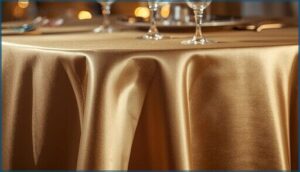
Satin’s lustrous texture reflects light to create an upscale event ambiance that cotton and linen can’t replicate. You’ll appreciate how satin polyester construction achieves wrinkle-resistant surfaces with colorfast technology that prevents fading after frequent washing.
The double-stitched edges bolster seam durability for multiple uses, while machine washable design facilitates convenient long-term maintenance—making satin sheen practical for elegant special occasions without sacrificing ease of care.
Organza: Sheer and Decorative
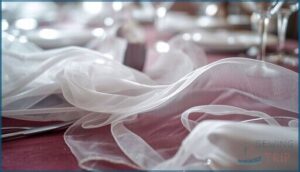
You’ll find organza’s sheer elegance transforms ordinary table settings into formal decor through decorative overlays that showcase your existing tablecloth underneath.
This lightweight fabric weighs just 26 GSM with a 60-inch width, making it ideal for special occasions when you want distinctive organza textures without overwhelming your table.
The translucent weave creates visual depth while maintaining tablecloth fabric aesthetics that feel ethereal yet intentional.
Silk: Luxurious and Sophisticated
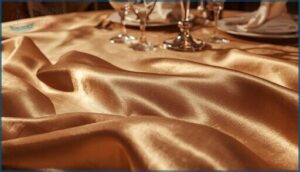
If you’re stepping up from sheer overlays, silk offers that next level of luxury you’ve been seeking. This elegant fabric brings soft texture and natural sheen to formal dining and special occasions, though silk sourcing and dyeing processes historically limited it to privileged settings.
You’ll notice various weave types and silk blends available today, yet care complexity remains higher than most tablecloth materials you’ll encounter.
Burlap and Vinyl: Specialty Uses

While silk draws the eye at formal affairs, burlap and vinyl serve opposite ends of the practical spectrum. Burlap textures weighing 8-9 oz per square yard are perfect for rustic weddings and outdoor gatherings, where natural jute fibers create that farmhouse aesthetic.
Vinyl offers 100% waterproof outdoor protection with beading spills, making cost comparison simple—it’s your go-to for messy events requiring vinyl durability over elegance.
Best Fabrics for Different Table Settings
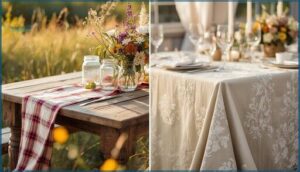
Choosing the right tablecloth isn’t one-size-fits-all—it depends on where and how you’ll use it. A fabric that works beautifully for Sunday brunch might be completely wrong for a backyard barbecue or a wedding reception.
Let’s look at which materials perform best for specific occasions, so you can match your tablecloth to the moment.
Everyday Dining: Practical and Durable Options
You need tablecloths that can handle daily wear without constant fussing. Cotton and polyester stand out for everyday dining because they balance durability with practicality.
Cotton offers natural breathability and easy maintenance, while polyester provides greater stain resistance and cost effectiveness.
Both fabrics tolerate frequent washing without losing their structure, making them smart choices when you’re feeding a family day after day.
Formal Events: Elegant and Luxurious Choices
When you’re hosting a wedding reception or black-tie dinner, linen preference runs high because its textured weave brings natural elegance to formal events. Satin luxury elevates head tables with smooth sheen, while polyester durability keeps large banquets running smoothly through repeated use. Overlay fabrics like organza add dimension without hiding your base cloth.
Event alignment matters—choose silk for intimate gatherings, linen for refined celebrations.
Outdoor Gatherings: Weather-Resistant Fabrics
When planning outdoor gatherings, weather resistance becomes your top priority because rain, wind, and UV exposure can ruin delicate fabrics. Polyester and acrylic lead in durability, with market adoption climbing as homeowners invest more in patio dining.
- Water repellency exceeding 90% keeps spills beading on the surface
- UV resistance prevents fading through seasons of sunlight
- Mold resistance in acrylic stops mildew in humid climates
- Wind durability in 600-denier polyester anchors tables during breezes
Kids’ Parties and Casual Use: Easy-Clean Materials
When sticky fingers meet frosting, stain resistance matters most. Polyester dominates kids’ parties because it shrugs off spills and tosses into the wash without fading. Vinyl wipes clean with a damp cloth in seconds, perfect for cost effectiveness when durability counts. Cotton offers casual aesthetics but needs quick treatment.
For easy cleaning and tablecloth fabric that survives chaos, synthetic weaves outperform naturals every time.
Maintenance and Care for Tablecloth Fabrics

Your tablecloth’s lifespan depends on how well you care for it, and different fabrics need different approaches. Following the right washing, staining, and storage methods can mean the difference between a cloth that lasts decades and one that looks worn after a few uses.
Here’s what you need to know to keep each fabric type looking its best.
Washing and Drying Guidelines
Each tablecloth fabric demands its own washing approach to maintain its beauty and longevity. Water temperature matters more than you might think—cotton tolerates up to 54°C, while polyester prefers cooler 30-40°C washing to prevent damage.
Here’s your maintenance roadmap:
- Wash cotton monthly at warm temperatures, loading your machine to 80% capacity
- Pre-wash linen once at 40-60°C to stabilize fabric shrinkage before regular use
- Tumble dry polyester on cool settings and air-dry linen damp to minimize wrinkles
Washing frequency depends on use—formal tablecloths need cleaning after every event, while everyday linens can go 2-3 weeks between cycles.
Stain Removal Tips
Stain removal starts with speed—treating spills within 30 minutes improves success rates by 65% across most fabrics. Blotting, not rubbing, prevents discoloration by 45% on cotton and linen.
For quick cleanup, enzyme removers eliminate 90% of protein stains, while oxygen bleach addresses 88% of wine marks on polyester.
Always test your chosen product on a hidden fabric first to protect your tablecloth’s integrity.
Ironing and Wrinkle Resistance
Polyester delivers high wrinkle resistance with recovery angles near 180–220 degrees, while cotton creases easily at 120–140 degrees. You’ll iron cotton at 200°C to smooth deep wrinkles, but polyester needs only 110–150°C—reducing pressing effort by half.
Laundering effects matter: removing polyester promptly from low-heat cycles keeps fabric smooth, whereas linen demands medium-high heat and still develops storage creases quickly.
Proper Storage Techniques
Storage conditions shape fabric longevity as much as washing technique. Keep your tablecloths in spaces with humidity control below 55% and stable temperatures between 55–75°F to prevent mold and fiber breakdown. Pre-storage prep includes complete drying and light ironing.
- Container types: Breathable fabric bags or acid-free boxes prevent moisture retention and yellowing
- Folding methods: Roll heavier linens or insert acid-free tissue between folds to avoid permanent creases
- Pest prevention: Cedar blocks deter moths without chemical residues
- Tablecloth maintenance tips: Label containers by fabric type for efficient retrieval
Top 3 Tablecloths for Every Table Shape
Now that you know how to care for your tablecloth, you’re probably wondering which specific options work best for your table. The right choice depends on your table’s shape and how you plan to use it.
Here are three standout tablecloths that combine the fabric qualities we’ve discussed with practical sizing for different table configurations.
1. White Tablecloths for Rectangle Tables
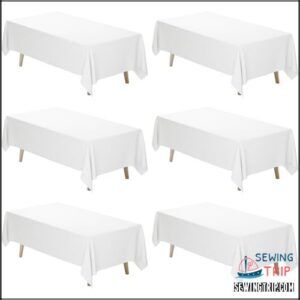
You’ll need the right fit and finish for your rectangle table, and white polyester brings both to the party. Uninterrupted design up to 156 inches means no distracting join lines, while 220 GSM fabric offers excellent opacity—key for hiding imperfect surfaces.
Calculate your drop length by adding twice your desired overhang to the table dimensions; formal events usually call for 8–12 inches.
The real win? Polyester durability paired with simple stain removal using cold water and a touch of bleach when needed, delivering unbeatable cost analysis for reusable linen compared to disposable cotton alternatives.
Best For: Event planners, venues, and anyone hosting formal gatherings who need durable, easy-care tablecloths that look professional without constant ironing.
- Heavy 220 GSM polyester stays opaque enough to hide scratched or mismatched tables while resisting stains and fading through dozens of washes.
- Seamless construction up to 156 inches eliminates visible seams on long banquet tables, giving you a clean backdrop for centerpieces and place settings.
- Machine washable with bleach-safe fabric makes cleanup simple and cost-effective compared to renting or replacing disposable covers after every event.
- Some buyers report the fabric feels thinner than expected, especially if you’re used to heavier cotton or linen tablecloths.
- Sizing can be tricky—mixed reviews show people sometimes order too small, so double-check your table dimensions and desired drop length before buying.
- Polyester wrinkles during shipping and washing, so you’ll likely need to iron or steam before each use despite the “wrinkle-resistant” label.
2. Water Resistant Round Tablecloth 60 Inch
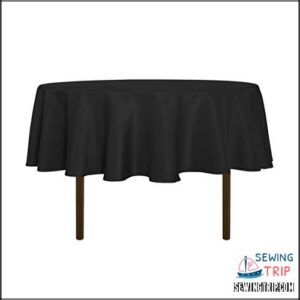
Round tables present a trickier sizing challenge, but you’ll find 60-inch polyester tablecloths hit the sweet spot for 48-inch surfaces with a graceful six-inch drop.
Water resistance here isn’t just marketing—spillproof coating transforms cleanup from frantic blotting to simple wiping, while the fabric withstands 50-plus machine wash cycles without fading.
Outdoor versatility shines through: hemmed edges resist wind damage, and that same durable construction protects against scratches whether you’re hosting patio dinners or backyard parties.
Best For: Anyone hosting indoor or outdoor events who needs a practical tablecloth that handles spills easily and looks good through dozens of washes.
- Spillproof coating lets you wipe up messes instead of scrubbing stains, and the fabric stays vibrant through 50 wash cycles
- Hemmed edges hold up against wind and wear, making it reliable for both backyard barbecues and indoor dinner parties
- Fits standard 48-inch round tables perfectly with a 6-inch drop that looks polished without dragging on the ground
- Usually arrives wrinkled and needs ironing before it looks presentable
- Water-resistant doesn’t mean waterproof—you’ll still need to wipe up spills quickly to protect your table
- Thin polyester material works fine for regular use but won’t stand up to heavy-duty commercial settings
3. Faux Linen Tablecloth Beige 52×70
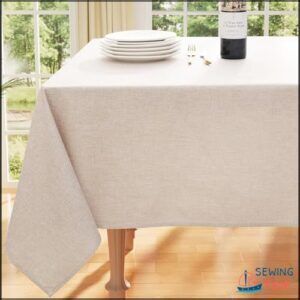
Smaller rectangular tables deserve their own spotlight—your 52×70 beige option suits medium surfaces perfectly, blending polyester durability with linen’s refined texture.
That slubby weave mimics natural fabric so convincingly you’ll forget it’s synthetic, while wrinkle resistance saves you from constant ironing hassles.
Machine washing with cold water keeps it fresh, though you’ll want to air dry and skip the bleach to maintain that stain resistance.
The neutral tone works everywhere: rustic farmhouse dinners, formal gatherings, or outdoor picnics where spills won’t ruin your day.
Best For: Anyone who wants a low-maintenance tablecloth that looks like linen but handles spills and wrinkles better—perfect for busy families, outdoor entertaining, or event hosts who need something durable and elegant without the fuss.
- Machine washable and wrinkle-resistant, so you skip the ironing board and still get that crisp, polished look
- Stain and spill-resistant polyester means wine or sauce won’t ruin your day—just wipe and wash
- Neutral beige with a textured weave fits any style, from casual backyard BBQs to formal dinner parties
- Some reviewers say the fabric feels more plastic-like than expected, lacking the authentic softness of real linen
- Thickness is hit-or-miss—a few users found it too thin for their liking
- Color variations (like sage or blue) might use different materials, so consistency isn’t guaranteed across the line
Frequently Asked Questions (FAQs)
What is the best material to make a tablecloth?
Cotton leads the tablecloth material market with roughly 30% share in 2025, balancing durability and cost. However, your best fabric depends on intended use—polyester resists stains better, while linen offers premium elegance.
Is cotton or linen better for tablecloths?
Both have strengths. Linen offers greater durability—fibers up to 30% stronger than cotton—plus easier stain release and decades-long lifespan.
Cotton provides immediate softness, affordability, and flexible styling for everyday dining needs.
What is the best kind of tablecloth?
The best tablecloth depends on your usage frequency, budget considerations, and personal preferences.
Cotton dominates the market at 1% for everyday versatility, while linen offers premium elegance, and polyester delivers easy maintenance.
What is the best material for waterproof tablecloths?
For waterproof tablecloths, PVC coating delivers the best performance—it resists water penetration above 10,000 mm and wipes clean instantly.
Oilcloth offers a softer drape with vinyl-like protection, while coated polyester combines washability with reliable water resistance.
How do I measure for the right tablecloth size?
Like master tailors of old, you’ll measure your table’s length and width, then add twice your desired tablecloth drop—usually eight to twelve inches per side—accounting for table height and seating clearance around your chosen tablecloth fabric.
Whats the best way to store tablecloths?
Pre-storage cleaning removes stains before fabric damage sets in.
Store your linens in breathable cotton bags, not plastic, in cool, dry conditions.
Roll delicate tablecloths around tubes to prevent permanent wrinkles and creases.
Can I use fabric softener on my tablecloths?
You shouldn’t use fabric softener on most tablecloths. It reduces absorbency, attracts stains over time, and can dull linen’s crisp texture.
For cotton and polyester, check care labels—some tolerate it sparingly.
How often should I replace my tablecloths?
Think of it as a “use it or lose it” situation—everyday tablecloths need replacing every 2–3 years, while fancy linens last about 5 years.
Usage frequency, stain impact, and storage conditions directly affect fabric lifespan and durability.
Are there hypoallergenic options for tablecloth fabrics?
Natural fiber benefits shine for allergies: cotton and linen resist chemical sensitivities through minimal processing.
Certification importance matters—OEKO-TEX verifies safe dyes.
Washing practices and avoiding synthetic fibers reduce irritation for sensitive skin.
Can tablecloths be used on glass tables?
Glass protection isn’t an either-or choice—tablecloths work beautifully on glass tables, offering practical benefits like reducing smudges while softening reflections.
The right tablecloth fabric transforms hard surfaces into inviting, safer dining spaces.
Conclusion
Think of your tablecloth as the foundation of a house—if the material can’t support daily life, everything else crumbles.
You’ve now seen how cotton balances affordability with function, how linen rewards patience with beauty, and how polyester delivers practicality without pretense.
The best fabric for a tablecloth isn’t the most expensive or the trendiest. It’s the one that matches your actual habits, survives your real meals, and still looks intentional after a dozen washes.
- https://www.urquidlinen.com/products/scuba-wrinkle-free-table-linen-gun-metal-108
- https://www.wilkinslinen.com/restaurants/restaurant-table-linens-fabric-comparison/
- https://ehomemart.com/blogs/news/how-to-wash-polyester-tablecloths-effectively
- https://premiertablelinens.com/blogs/news/polyester-premier-vs-poly-cotton-twill-tablecloths-which-is-better
- https://fergusonsirishlinen.com/blogs/blog/how-to-take-care-of-your-linen-tablecloth