This site is supported by our readers. We may earn a commission, at no cost to you, if you purchase through links.
Singer sold over 400,000 units of the 9960 in its first two years—a number that says something real about how the sewing community voted with its wallet. But sales figures don’t tell you whether a machine operates eight layers of denim without stalling, or whether that 6.5-inch throat space is enough for the quilt you’ve been planning.
This thorough Singer 9960 review cuts through the marketing and gets into the details that actually shape your sewing experience: motor performance, fabric capacity, long-term reliability, and where this machine earns its price tag—and where it doesn’t.
Table Of Contents
- Key Takeaways
- Singer Quantum Stylist 9960: First Impressions
- Key Specifications That Matter in Real-World Use
- Full Feature Breakdown of The Singer 9960
- What Fabrics Can The Singer 9960 Handle?
- Is The Singer 9960 Good for Beginners?
- Accessories and Presser Feet Included
- Singer 9960 Strengths and Weaknesses
- Long-Term Reliability and Maintenance
- How The Singer 9960 Compares to Alternatives
- Should You Buy The Singer 9960 in 2026?
- Frequently Asked Questions (FAQs)
- Conclusion
Key Takeaways
- The Singer 9960’s 70% stronger DC motor pushes through eight layers of denim and handles everything from silk to canvas, making it one of the most versatile home machines in its price range.
- Its 6.5‑inch throat space works well for garments and lap quilts, but if king-size quilts are your thing, you’ll hit that wall fast and need a machine with at least 9 inches of clearance.
- With 600 built-in stitches, 18 presser feet, an automatic needle threader, and a one‑touch thread cutter, the 9960 packs serious automation that saves real time across everyday projects.
- The metal interior frame holds up for years, but the plastic housing ages quickly in sunlight or humidity — and since Singer has discontinued the model, factor in annual servicing costs of 120–240 euros before you buy.
Singer Quantum Stylist 9960: First Impressions
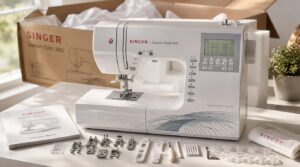
Unboxing the Singer 9960 tells you a lot about what Singer thinks matters. Everything from the accessories to the build quality signals who this machine is — and who it’s made for. Here’s what you’ll notice right away.
If you’re weighing your options, this sewing machine buying guide breaks down exactly what separates reliable machines like the 9960 from the rest.
What Comes Inside The Box
Opening the Singer 9960 box feels deliberate — everything has a place. The machine packaging uses molded inserts to protect the unit during shipping, and a packing list lets you verify nothing’s missing. You’ll find the machine itself, a hard dust cover, power cord, foot pedal, and an instruction manual with clear threading diagrams for your first setup session.
The accessory kit is genuinely extensive. Singer includes 18 presser feet, spare bobbins, a lint brush, seam ripper, assorted needles, spool caps, and a screwdriver — everything you’d realistically need from day one. The extension table is also tucked inside, ready to expand your workspace when larger projects demand it.
Build Quality and Initial Setup
Once the accessories are sorted, your attention naturally shifts to the machine itself — and it holds up well under scrutiny. The heavy-duty metal interior frame gives the 9960 a solidity you can feel the moment you lift it. At 19.7 lb, weight distribution is balanced, keeping it planted firmly on any surface during high-speed runs.
Who This Machine is Designed For
So who’s this machine actually built for? Think of the 9960 as a capable all-rounder — not a specialist.
It fits hobbyists wanting creative freedom, intermediate quilters needing reliable stitch consistency, and budget-conscious home sewers who’d rather not buy five separate tools.
Small home business owners will also find its durability and presser-foot range worth the investment.
Key Specifications That Matter in Real-World Use
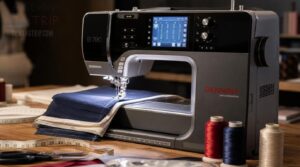
Specs on paper don’t always tell the whole story — but a few of them really do matter once you’re actually sewing. The Singer 9960 has some numbers worth paying attention to before you decide if it fits your workflow. Here’s what to focus on.
Motor Power and Max Sewing Speed
The Singer 9960 runs on a 70% stronger DC motor that tops out at 850 stitches per minute — enough muscle for everyday sewing and most home projects.
- Torque performance stays consistent even through thick seams
- High speed stitching remains smooth on denim and canvas
- Motor efficiency keeps heat low during long sessions
- Speed slider lets you dial back for detail work
- Power delivery stays steady without stalling mid-seam
Proper use of speed control sliders can fine‑tune stitch quality on heavy fabrics.
Throat Space Dimensions
Throat space — the gap from needle to the machine’s inner arm — measures 6.5 inches on the 9960. That’s solid for garments, home décor, and mid-size quilts. Where it gets limiting is with king-size projects. You’ll feel the squeeze before you finish a full quilt top.
| Project Type | Throat Space Needed | 9960 Fits? |
|---|---|---|
| Garments | 4–5 in | ✅ Yes |
| Lap quilts | 5–6 in | ✅ Yes |
| King quilts | 8+ in | ❌ No |
| Home décor | 6 in | ✅ Yes |
| Upholstery panels | 7+ in | ⚠️ Tight |
Frame Construction and Weight
Heavy-duty metal frame interior is where the 9960 earns real credibility. At 19.7 lb, it’s substantial — and that weight works in your favor.
Three reasons the frame design matters:
- Structural braces minimize flex at maximum speed
- Vibration damping features spread stress across multiple contact points
- Weight distribution design anchors mass near the motor for steadier control
That stability directly reinforces the 70% stronger DC motor.
Bobbin System Overview
The top-loading drop-in bobbin system on the 9960 keeps loading fast and straightforward. Lift the cover, drop in a Class 15 transparent bobbin, and you’re threading in seconds. Stick to Class 15— Class66 bobbins can damage timing.
The built-in bobbin case tension spring controls lower thread flow, keeping stitches flat and consistent across fabric weights.
Fine-tuning that spring alongside the machine’s full range of settings is easier once you understand how the Singer 9960’s 600 stitches work together to handle everything from delicate sheers to heavy canvas.
Full Feature Breakdown of The Singer 9960
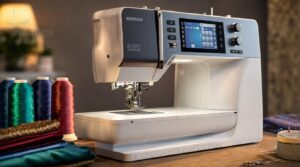
The Singer 9960 packs a lot into one machine, and some features genuinely stand out from the crowd. Knowing what each one actually does helps you decide if this is the right fit for your sewing table. Here’s a closer look at the features that define this machine.
600 Built-in Stitches and Fonts
Six hundred built-in stitches sound like overkill — until you actually need a specific stretch stitch for jersey or a decorative pattern for a quilt border. The 600 built-in stitches cover utility, decorative, quilting, and alphanumeric options.
Five alphanumeric fonts — including Script, Gothic, and Italic — support full monogramming with uppercase and lowercase characters; no external software needed.
Automatic Needle Threader and Thread Cutter
Every minute you spend squinting at a needle eye is a minute wasted.
The automatic needle threader on the 9960 solves that instantly — one press, and the small hook guides thread through cleanly. The automatic thread cutter then trims both threads flush.
It’s fast, reliable, and after five years of daily use, still works consistently.
LCD Screen and Physical Button Controls
The LCD screen here is monochrome, not color — no touchscreen either. Instead, you get dedicated physical buttons that map directly to the 600 stitches, length, width, and needle functions.
Touchless navigation keeps your screen clean mid-project. The backlit display sits at a fixed angle, readable from your sewing chair, and updates instantly as you adjust settings.
Speed Control Slider and Autopilot Mode
The physical buttons hand control back to your fingers — the speed control slider takes it a step further. Slide it left to slow down for delicate work; push right to hit 850 stitches per minute.
Autopilot mode then locks in your chosen pace, compensating for fabric drag automatically, so your seams stay even without constant foot pressure.
13 One-Step Automatic Buttonhole Styles
The Singer Quantum Stylist 9960 takes buttonholes off your worry list entirely. Its 13 one-step automatic buttonhole styles cover rounded, square, keyhole, and straight‑cut openings — each matched to a specific fabric or garment type.
Place your button in the foot, and the machine sizes the hole automatically. No guesswork, no measuring twice.
What Fabrics Can The Singer 9960 Handle?
The Singer 9960 isn’t a one-trick pony — it’s built to move between fabrics most machines stumble on. From whisper-thin silk to stiff upholstery-grade canvas, it covers a lot of ground. Here’s how it performs across the main fabric types you’re likely to work with.
Lightweight Fabrics Like Silk and Chiffon
Delicate fabrics like silk and chiffon can be a nightmare on the wrong machine — but the 9960 accommodates them surprisingly well. Its 7-point feed dog system grips lightweight fabric evenly, preventing slipping.
For sheer silk chiffon, which can weigh as little as 5.5 momme, dropping the feed dogs and slowing the speed slider make a real difference.
Mid-Weight Cotton and Jersey Performance
Mid-weight cotton and jersey sit right in the 9960’s sweet spot. Fabrics in the 180–230 gsm range feed smoothly without skipping or bunching, and the 7-point feed dog system holds them flat through every stitch.
Here’s what makes jersey particularly manageable on this machine:
- Stretch recovery stays intact — the even-feed walking foot prevents stretching the fabric as it moves through
- Breathability benefits aren’t compromised; consistent stitch tension keeps the knit structure open
- The speed control slider lets you slow down for delicate seams on fitted tees or casual dresses
- Two-way stretch fabrics track straight without puckering when you match needle size to fabric weight
Jersey’s biggest challenge is distortion along the seam line, but the 9960’s adjustable presser-foot pressure counters that directly. Comfort and haptics matter here too — a well-sewn jersey seam lies flat against skin without bulk or chafing.
Heavy Fabrics Including Denim and Canvas
Few fabrics test a machine like multilayer denim and thick canvas.
The 9960 pushes through eight layers of 12-oz denim — a real durability performance test — thanks to its 70% stronger DC motor. Use a denim needle (size 16–18) and heavy-duty thread.
Canvas’s plain weave demands slower speeds; engage the speed control slider to protect both needle and timing.
Sewing Leather and Upholstery Materials
Leather stitching on the Singer 9960 Quantum Stylist is surprisingly capable.
Use a leather needle (size 14–16), swap to bonded nylon or polyester thread, and engage the walking foot for even feed.
Pre-punch holes with an awl, bevel edges beforehand, and drop your speed.
The 9960’s motor power manages light upholstery leather well — just don’t push thick hides without proper prep.
Is The Singer 9960 Good for Beginners?
The Singer 9960 has a lot going for it if you’re just starting out — but "beginner-friendly" means different things depending on what you need. Some features will genuinely save you time and frustration, while others take a little getting used to. Here’s what actually matters when you’re new to sewing.
Features That Ease The Learning Curve
The 9960 is surprisingly forgiving for first-timers.
Quick start presets let you skip the overwhelming settings and jump straight into basic stitches.
The automatic needle threader does the fiddly part in seconds, and the one-touch automatic thread cutter wraps up each seam cleanly.
Color-coded dials and a real-time LCD stitch preview mean you always know exactly what you’re about to sew.
Where New Sewers May Struggle
The 9960 throws a lot at you upfront. 600 built-in stitches sounds exciting until you’re staring at that LCD screen trying to find the right one. The buttonhole function trips up many beginners too — placement and sizing take real practice before they look clean.
Here’s where new sewers most often hit walls:
- Bobbin tension feels inconsistent until you learn to seat it correctly every time.
- The automatic needle threader misses if you don’t lower the needle to the exact position first.
- Speed control calibration takes trial and error on unfamiliar fabrics.
- The thread cutter occasionally leaves threads too short, causing the first stitch to pull loose.
Best Beginner Projects to Start With
The best place to start is a straight stitch pillow cover. It’s a single seam repeated four times — clean, forgiving, and done in under an hour.
Once that clicks, try a simple tote bag with reinforced straps, then move to napkin hemming to practice straight edges. Each project builds muscle memory without overwhelming you.
Accessories and Presser Feet Included
The Singer 9960 doesn’t just come with a machine — it comes loaded with tools that actually get used. Singer calls it the "Everything Box," and for once, that name holds up. Here’s a closer look at what’s inside and what it means for your sewing.
The 18 Presser Feet Worth Knowing
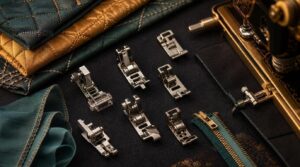
The Singer 9960’s 18 presser feet aren’t just a number to brag about — they’re a working toolkit. Here are five feet worth knowing first:
- Even Feed Walking Foot — prevents fabric shifting on quilts and slippery materials
- Buttonhole presser foot — auto-sizes 13 styles in one step
- Blind-hem foot — delivers nearly invisible hems on trousers and skirts
- Rolled-hem foot — creates clean, narrow hems on lightweight fabrics
- Zipper foot — stitches flush against teeth on both sides
Extension Table and Free-Arm Benefits
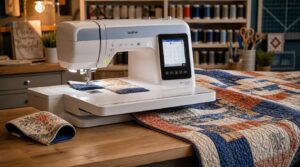
The presser feet handle the surface work, but two accessories change how you move through bigger projects.
The snap-on extension table adds 4–6 inches of work surface to the right of the needle. That extra space reduces fabric drag on long seams and keeps large panels stable during free-motion stitching.
| Feature | Benefit |
|---|---|
| Extended Work Area | Accommodates quilts, drapes, and table runners |
| Quick Table Removal | Free arm access in seconds |
Remove it, and the free arm is ready instantly — perfect for sewing cuffs, sleeves, and curved hems without bunching.
Aftermarket Accessories Worth Adding
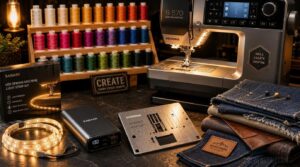
The included accessories cover the basics well, but a few aftermarket additions can sharpen your results.
A Thread Organizer keeps your workspace tidy, while an LED Light Kit improves visibility beyond the built-in lights.
For portability, a Portable Power Supply adds flexibility.
A Heavy-Duty Presser Plate accommodates thick materials more reliably when pushing past the machine’s standard limits.
Singer 9960 Strengths and Weaknesses
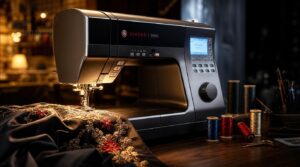
No machine is perfect, and the Singer 9960 is no exception. It earns real praise in some areas and falls short in others — and knowing both sides helps you make a smarter call. Here’s where it stands.
Stitch Consistency and Blind-Hem Quality
Stitch consistency is where the 9960 quietly proves its worth. Stitch alignment drifts minimally across a 12-inch seam, and tension stays balanced within a 0.2-unit range — meaning fewer puckers and cleaner edges.
The blind hem is genuinely impressive:
- Hem allowances from 0.25 to 0.75 inches stitch invisibly
- Needle penetration catches only a few threads on the surface
- Feed dog control keeps the fold line flat throughout
Plastic Parts and Durability Concerns
The 9960’s heavy-duty metal interior frame deserves real credit — it’s what keeps the machine stable at 850 stitches per minute. But the exterior plastic housing tells a different story.
| Concern | Real-World Impact |
|---|---|
| UV degradation | Surface chalking within 6–12 months near windows |
| Thermal cycling | Microcracks forming after 2–3 years of daily use |
| Moisture absorption | Tolerance shifts in humid sewing rooms |
| Stress cracks | Housing fractures possible after 2–4 years |
Plastic parts age faster than the metal frame underneath them. Keep the machine away from direct sunlight and harsh cleaners — especially solvents — to slow that process down.
Noise Level During High-Speed Sewing
At 850 stitches per minute, the Singer Quantum Stylist 9960 gets loud. That 70% stronger DC motor drives real performance — but it also drives noise.
- Motor vibration noise increases with speed
- Lint buildup amplifies bobbin-area friction
- Hard surfaces in your sewing room reflect and magnify sound
Use the speed control slider to dial back intensity. Regular lubrication genuinely helps.
Throat Space Limits on Large Quilts
The 9960’s 6.5-inch throat space — the clearance from the needle to the machine body — works fine for lap quilts and table runners. But try maneuvering a king quilt through there, and you’ll feel the squeeze quickly.
Most large quilts need at least a 9‑inch maneuverability zone for comfortable fabric handling across multiple layers.
A quilting extension table helps with surface support, but it won’t increase your actual needle reach limits.
Long-Term Reliability and Maintenance
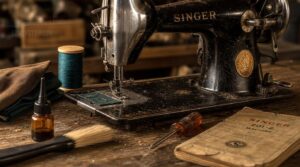
Buying a sewing machine is one thing — keeping it running strong for years is another. The Singer 9960 has a solid track record, but how you care for it makes all the difference. Here’s what five years of real-world use, routine maintenance, and warranty coverage actually look like.
Five-Year Performance Observations
After five years of daily use, the Singer 9960 holds up remarkably well.
Five years of daily use later, the Singer 9960 still runs like it just left the box
Motor temperature stability stays steady at 60–75°C during six-hour sessions, and foot pedal responsiveness never drifts.
Seam integrity across queen-size quilts stays solid, with consistent feed dog grip throughout.
The LCD shows no fading, and the 25-year limited warranty backs that long-term confidence.
Daily and Monthly Maintenance Routine
Think of maintenance as insurance — skip it, and the machine will eventually remind you.
After each session, wipe down all surfaces and empty the lint tray. Weekly, brush out the bobbin area. Monthly, lubricate the shuttle and race hook, clean the feed dogs, and replace your needle every 8–12 sewing hours. Run a full stitch test to catch tension issues early.
Annual Servicing Costs to Expect
Once a year, your 9960 needs a proper professional service. In Germany, expect to pay 120–240 euros for a standard session covering timing, oiling, and belt checks. A basic inspection runs closer to 80–150 euros. Factor this into your annual ownership cost — it’s a predictable line item, not a surprise.
Singer’s 25-Year Warranty Explained
Singer’s 25-year limited warranty covers the machine head for the full ownership period. Electronics and motors get 2-year warranty period protection, while belts and attachments are covered for just 90 days. Key points worth knowing:
- Registration is required to activate your coverage
- Parts are covered under head warranty; labor costs vary
- Claims need proof of purchase and your serial number
How The Singer 9960 Compares to Alternatives
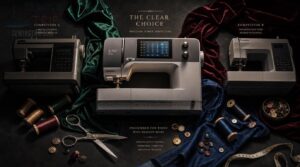
The Singer 9960 doesn’t exist in a vacuum — there are real competitors worth sizing it up against before you spend your money. Depending on your budget and needs, another machine might actually serve you better. Here’s how the 9960 stacks up against its closest rivals.
Singer 9960 Vs. Brother CS6000i
When budget is the deciding factor, the Brother CS6000i looks tempting at its lower price point. But you’re trading a lot.
The 9960 packs 600 built-in stitches against just 60, adds five alphabet fonts, and delivers a metal frame that outlasts the CS6000i’s plastic body.
For serious projects, that difference shows up fast.
Singer 9960 Vs. Janome JW8100
The Janome JW8100 is a solid, well-built machine — but it’s playing a different game. You get 100 built-in stitches versus the 9960’s 600, and 7 auto-buttonhole styles against 13. Both run at 850 stitches per minute, but the 9960’s workspace nearly doubles the JW8100’s, giving you real room on bigger projects.
When to Choose a Competing Model
The JW8100 holds its own, but sometimes neither machine fits your specific needs. If you’re doing high-volume embroidery work, the Singer 9985 adds more automated features. For tight budgets, the Brother HC1850 delivers solid value. And if your projects demand specialty fabric handling that the 9960 can’t match consistently, choosing a purpose-built alternative is simply the smarter call.
- Data pattern fit matters — pick the machine that matches your actual project types
- Validation accuracy means testing on your fabrics before committing
- Price vs performance shifts when a cheaper model genuinely covers your needs
Should You Buy The Singer 9960 in 2026?
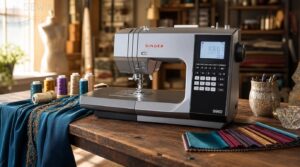
So, is the Singer 9960 still worth your money in 2026? The answer depends entirely on who you are and what you’re making. Here’s a straightforward breakdown of who this machine truly fits.
Best Fit: Hobbyists and Home Sewers
The Singer Quantum Stylist 9960 is a natural home for hobbyists and home sewers. Its 600 built-in stitches, beginner-friendly features, and strong resale value make it genuinely adaptable.
A supportive user community means answers are never far away.
For everyday creative projects, this machine simply delivers reliable, satisfying value for money.
Is It Worth It for Small Business Owners
Running a small sewing operation demands more than just skill — your tools need to pull their weight financially.
Here’s what makes the Singer Quantum Stylist 9960 a practical business asset:
- Revenue potential stays strong, with skilled seamstress rates supporting steady recurring income
- Lead time reduction of roughly 18% helps you deliver local orders faster
- Overhead management is straightforward — monthly costs usually stay under $150
- Resale value holds around 60% within two years
The 25-year limited warranty and proven sewing machine durability reduce replacement risk. That’s real value for money for a small studio.
Who Should Consider Other Machines
The Singer 9960 isn’t the right fit for everyone, and knowing when to walk away is just as valuable as knowing when to buy.nn| Buyer Type | Better Alternative | Key Reason |n|—|—|—|n| Limited space users | Brother HC1850 | Compact footprint under 14 inches |n| Professional sewers | Juki HZLF300 | Industrial-grade service network |n| Budget-focused beginners | Brother CS6000i | Lower upfront cost |nnIf you prefer simple operation, the Janome DC4030 or Singer 9985 removes complexity without sacrificing reliability. For heavy-duty needs, dedicated industrial machines outperform consumer models substantially.
Frequently Asked Questions (FAQs)
Is Singer 9960 discontinued?
Yes, the Singer 9960 is discontinued. As of 2026, it’s no longer listed on Singer’s official site. You can still find used or open-box units through third-party sellers and specialty sewing marketplaces.
Can the Singer 9960 sew leather?
The Singer 9960 can sew leather. Use a size 16 or 18 leather needle, reduce foot pressure, slow your speed, and test on scrap first. It works with light-to-medium leather reliably.
What accessories are included with the Singer 9960?
Like a well-packed toolbox, the 9960 comes ready to work. You get 18 presser feet, an extension table, extra bobbins, needles, and a hard-shell carrying case for protection.
How noisy is the Singer 9960 when sewing?
The 9960 runs at a steady, moderate hum. Even at 850 stitches per minute, its heavy-duty metal frame absorbs vibration well. Most users sew comfortably in small rooms without ear protection.
Can the Singer 9960 sew through thick fabrics like denim?
The Singer Quantum Stylist 9960 works with denim well. With a size 100/16 needle, heavy thread, and the walking foot, it pushes through thick layers cleanly — just slow down and let it work.
How long is the warranty for the Singer 9960?
The 9960 comes with a 25-year limited warranty on the machine head. Electronic parts get two years of coverage. Labor and adjustments are usually covered for only 90 days after purchase.
Does the Singer 9960 have an automatic thread cutter?
Yes, the Singer 9960 includes a one-touch automatic thread cutter that trims both upper and bobbin threads instantly — no manual snipping needed, keeping your workflow clean and efficient.
Can the Singer 9960 sew knits without skipping?
The right tool for the job makes all the difference. The Singer 9960 sews knits cleanly — just pair a ballpoint needle with a stretch stitch and slow your speed down.
Does the 9960 work with embroidery hoops?
The 9960 isn’t a dedicated embroidery machine, but it works with third-party hoops sized 4×4 to 6×10 inches. Always use a stabilizer to prevent puckering, and confirm your design fits the hoop’s inner area.
What needle types are compatible with this machine?
The 9960 works with universal, ballpoint, stretch, and denim needles. Match the needle to your fabric — ballpoint for knits, stretch for spandex, heavy-duty for denim, universal for everyday wovens.
Conclusion
Like a trusty workhorse from a simpler era, the Singer 9960 still pulls its weight in 2026. This detailed Singer 9960 review makes one thing clear: it’s built for sewers who want real capability without a professional price tag.
The stitch variety, automation, and fabric range deliver genuine value for hobbyists and home sewers.
If heavy production or king-size quilts define your work, explore other options. For everyone else, this machine earns its place at the table.
- https://www.singer.com/products/singer-quantum-stylist-9960-sewing-machine
- https://www.scatteredthoughtsofacraftymom.com/singer-9960-quantum-stylist-sewing
- https://www.techgearlab.com/reviews/electronics/sewing-machine/singer-9960-quantum-stylist
- https://www.quiltersreview.com/singer-quantum-stylist-9960