This site is supported by our readers. We may earn a commission, at no cost to you, if you purchase through links.
You don’t need a sewing machine or tailoring expertise to fix pants that drag on the floor. Iron-on tape, fabric glue, and a few clever techniques let you adjust hems in minutes, giving you control over fit without threading a single needle.
Professional alterations cost $15 to $30 per pair and require dropping off your pants for days, but no-sew methods work right in your home with supplies that cost less than one tailor visit.
These approaches handle everything from emergency fixes before an important meeting to permanent hems on jeans, dress pants, and even delicate fabrics. You’ll master multiple techniques that match different situations, from quick temporary solutions using safety pins to durable bonds that survive repeated washing.
Table Of Contents
Key Takeaways
- Iron-on hemming tape and fabric glue create permanent, wash-resistant hems that cost under $10 per project and require no sewing skills—just a household iron and basic fabric prep.
- No-sew methods work across all fabric types by matching adhesive strength to material weight, with heavy-duty tape for denim and permanent fabric glue for delicate fabrics that outlasts most stitching.
- Proper technique demands measuring twice, washing pants first to trigger shrinkage, and allowing 24-72 hours curing time before wearing to ensure bond durability through repeated laundering.
- Quick temporary fixes using safety pins or fold-and-iron techniques provide instant solutions for travel or emergencies, while permanent methods deliver professional results that hold through 10-20+ wash cycles.
Why Hem Pants Without Sewing?
You don’t need a needle and thread to fix pants that drag on the floor or bunch up at your ankles. No-sew hemming gives you control over your wardrobe without the hassle of traditional tailoring, and it works whether you’re at home or stuck in a hotel room before a big meeting.
You can hem jeans without the original hem using fabric tape or iron-on adhesive that holds up through multiple washes.
Here’s why this approach might be exactly what you need.
Convenience for Quick Fixes
Sometimes you need a quick hem right now—not next week. That’s where no-sew hemming techniques shine. Portable hemming supplies enable fast alterations during travel or emergency fixes at work, cutting same-day hassle without hunting for a sewing machine.
For a more polished finish when you do have time, automatic sewing tips and tricks can help you tackle hems with speed and precision.
Quick repairs extend your garment’s life when you’re short on time, and these no-sew hemming methods stay reversible if you want professional tailoring later.
If you decide to upgrade your repair toolkit, a portable sewing machine for dorms makes quick fixes even easier without taking up much space.
No Sewing Skills Needed
You don’t need tailoring experience to master these techniques. Iron-on hem tape works with a basic household iron and heat-press motion—no specialized sewing ability required. Fabric adhesives provide semi-permanent holds through simple application, while safety pins offer instant no-sew solutions.
These no-sew methods prove that quick fixes and professional-looking results don’t demand a sewing machine or expert skills.
Suitable for Travel or On-the-Go
Portable hemming solutions free you from tailor shops mid-trip. Compact tools like iron-on hem tape and adhesive strips resist luggage movement and temperature shifts, delivering quick fixes when you’re weaving them seamlessly into your packing routine.
No sewing machine means adjustable hems adapt to varying clothing lengths on the go. These no-sew hemming methods tolerate air-drying and limited space, letting you master hemming your own pants anywhere.
Cost-Effective Solution
Beyond convenience, no-sew hemming techniques slash your alteration budget. DIY pant alteration with fabric tape hemming or adhesive usually costs under $10 per project—frugal fashion that beats $20+ tailor visits.
If you’re ready to level up from no-sew fixes, learning foundational dress construction techniques will give you the skills to tackle hems, seams, and alterations with professional results.
These affordable fixes deliver cost savings through reusable supplies, and no sewing machine means zero equipment investment. Budget-friendly no-sew hemming enables you to master DIY alternatives that preserve your wardrobe without draining your wallet.
Essential Tools and Preparation Steps

Before you break out the hemming tape or reach for the iron, you need to set yourself up for success. A clean workspace and the right prep work make the difference between a hem that holds and one that unravels after the first wash.
Let’s walk through the essential steps that’ll give you professional-looking results without touching a needle.
Measuring and Marking The New Hemline
Before you grab your hemming tape, you need to nail the hemline accuracy—measure twice, cut once isn’t just a saying. Use a measuring tape to record the exact hem depth on both legs, comparing marks while the pants lie flat.
If you’re working with curtains or similar fabrics, the same precision applies—check out how to hem curtains without sewing for proven iron-on techniques that hold up through repeated washing.
Fabric marking with removable chalk ensures precision in pant alteration. This foundational step in hemming your own pants prevents costly mistakes and sets you up for perfect folding techniques ahead.
Washing and Ironing Pants First
Fabric preparation starts with a wash—run your pants through a full cycle to trigger shrinkage control before you commit to a hemline. Dry them flat or hang-dry to avoid distortion, and test colorfastness while you’re at it.
Then grab your ironing board and use proper ironing techniques for fabric smoothing, creating the clean surface you need for iron-on hem or fabric glue. This fabric care step prevents regret when hemming your own pants.
Trimming Excess Fabric Safely
Once your pants are pressed, mark your desired finished length plus a 1-inch hem allowance, then cut confidently with sharp fabric shears along that line. This trimming technique for no-sew hemming prevents fraying better than dull blades.
For extra edge finishing and fray prevention on woven fabrics, pinking shears work wonders—their zigzag cuts interrupt yarn slippage and support clean garment alteration without overcasting.
To achieve a professional finish, consider using proper hemming techniques.
Top No-Sew Hemming Methods for Pants

You don’t need a needle and thread to get the perfect hem on your pants. There are several no-sew methods that work just as well, whether you’re making a permanent fix or need something quick for tonight.
Here are the four most reliable techniques that’ll give you a clean, professional-looking hem without any stitching.
Using Iron-on Hemming Tape
Iron-on hem tape is your secret weapon for no-sew hemming that holds up. This fusible adhesive melts under heat, bonding fabric layers together with surprising adhesive strength.
Choose medium or super-weight tape based on fabric compatibility—denim and canvas need heavier options. Set your iron to medium, no-steam heat settings, press each section for 8-20 seconds, and you’ve created a hem durability that withstands washing without a single stitch.
For a strong bond, consider using fusible hem tape for your projects.
Applying Fabric Glue or Adhesive
When you want bond strength that outlasts most stitching, permanent fabric glue delivers. Products like Gorilla Fabric Glue or E6000 create bonds so strong the fabric tears first during stress tests on denim.
Permanent fabric glue creates bonds so strong the fabric tears before the adhesive fails
Fabric prep matters—clean, dry surfaces hold best. Apply thin, even layers along your hem allowance, press firmly, and respect curing times: 24 hours minimum, ideally 3 days before washing.
This nosew hemming technique beats temporary fixes every time.
Fold and Iron Technique
When deadlines scream and your sewing kit sits idle, the fold and iron technique is your rebellion against complicated hemming. Wash and press your pants flat, then fold the hem to your target length—pins at the seams keep alignment honest.
Press at 135–150°C for cotton, using a cloth barrier to prevent shine. This nosew hemming method forms a visible crease that holds through one wearing before needing touch-ups, giving you folded hem stability without threads or tape.
Temporary Fixes With Safety Pins or Clips
Safety pins beat iron work when you’re fifteen minutes from walking out the door. Space general-purpose size-3 pins two inches apart inside the fold, keeping clasps hidden and pointed ends fully closed—that’s your armor against both fabric damage and accidental scratches. For delicate weaves or repeated adjustments, transparent pant clips offer reusable NoSew Hemming Methods without puncture marks.
- Pin placement at seams prevents sagging during movement
- Clip types switch hem adjustments between flat and high-heel heights
- Safety precautions demand secure closures before any clothing repair
- nosew hem tape outlasts temporary DIY pant alteration when permanence calls
Step-by-Step Guide to Hemming Pants Without Sewing
You’ve got the tools and the method picked out—now it’s time to actually get your pants hemmed. The process isn’t complicated, but following the right sequence makes all the difference between a hem that holds and one that peels off in the wash.
Let’s walk through each step so you can nail this on your first try.
Choosing The Best No-Sew Method
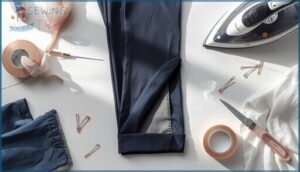
Your fabric type, hem permanence needs, and how often you’ll wash the pants should guide which no-sew method you choose. Iron-on hem tape works best for cotton and blends, while fabric glue hem suits delicate materials.
Compare your hemming options below to match your fabric selection with the right adhesive types and hemming techniques.
| Method | Best For |
|---|---|
| Iron-on tape | Cotton, polyester blends |
| Fabric glue | Silk, delicate fabrics |
| Fold & iron | Temporary adjustments |
| Safety pins | Quick, removable fixes |
| Double-sided tape | Travel emergencies |
Applying The Adhesive or Tape Properly
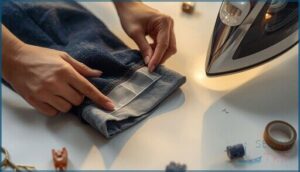
Once you’ve picked your method, clean application makes the difference between a hem that holds and one that peels apart in the wash. Proper fabric preparation ensures your bonding methods stick, so wipe away lint and dust before you start.
For perfect tape application and iron-on hem results:
- Position hemming web evenly inside the fold—no gaps
- Apply firm, steady pressure across fabric adhesive zones
- Keep your iron moving to prevent scorching
- Double-check alignment before heat activates the bond
Pressing and Setting The Hem

Heat transforms tacky adhesive into a locked bond, but only if you press with the right temperature and timing. Set your iron according to fabric type, then apply firm downward pressure for 10-15 seconds per section—no sliding. Let the hem cool completely before moving the pants, allowing the hemming web and fabric adhesive to cure fully.
| Fabric Type | Iron Setting |
|---|---|
| Cotton/Linen | High heat |
| Polyester/Blends | Medium heat |
| Delicate fabrics | Low heat with pressing cloth |
Checking for a Clean, Secure Finish
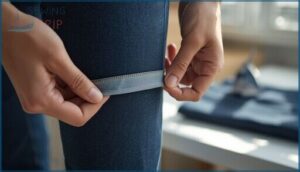
A straight, parallel edge confirms solid hem alignment. Run your fingers along the full fold to check for uniform thickness and snugness.
Gently tug the bond at stress points; secure iron-on hem tape and fabric glue hem won’t separate or crackle.
Allow 24-48 hours of curing time before washing so your hemming web achieves finish durability, edge cleanliness, and lasting bond security.
Tips, Troubleshooting, and Care for No-Sew Hems

You’ve hemmed your pants without a single stitch, but the real trick is making sure that hem holds up through daily wear and washing.
A few smart moves can stop fraying in its tracks, keep your adhesive strong, and help you troubleshoot when things don’t go as planned.
Here’s what you need to know to maintain a clean, durable finish that lasts.
Preventing Fraying and Unraveling
Raw edges can turn even the cleanest no-sew hem into a frayed mess if you don’t lock them down first. Apply fray checkers or fabric sealers along the cut edge before you fold and tape.
If you’re using fabric tape hemming or iron-on hem strips, a quick brush of clear nail polish works wonders for edge binding and hem reinforcement on stubborn fabrics.
Ensuring Long-Lasting Results
Adhesive longevity and bond strength depend on one thing: letting your fabric glue or iron-on hem cure completely before you wear or wash those pants. Most permanent fabric glues need 24 to 72 hours to lock in, while some hemming strips and textile bonding products demand a full week for maximum laundry resistance.
Patience now means hem stability and fabric durability later—your no-sew hemming techniques will actually last.
Caring for No-Sew Hems During Washing
Machine wash your no-sew hemming techniques in cold water on a gentle wash cycle selection—warm cycles break down your hem adhesive faster. Turn pants inside out and toss them in a laundry bag to shield the fabric glue hem or iron-on hem from friction.
For drying methods that protect your garment repair work, skip high heat and air-dry instead, preserving your textile repair methods and extending fabric protection.
Fixing Common No-Sew Hem Issues
When your iron-on hem starts peeling or your fabric glue hem loses its grip, don’t panic—most no-sew hemming techniques can be salvaged with quick Bond Reinforcement moves.
- Hem Tape Failure: Re-press loose sections with higher heat and firm pressure, holding for 15–20 seconds to reactivate the adhesive.
- Puckered Hems: Gently stretch and re-iron rippled areas while the fabric is still warm to smooth distortions.
- Adhesive Residue: Dab rubbing alcohol on sticky spots, then blot clean with a pressing cloth for effective Fray Prevention.
Frequently Asked Questions (FAQs)
Can You hem fabric without sewing?
Yes, you can hem fabric without sewing using no-sew techniques like fabric bonding with iron-on hem tape or fabric glue hem adhesives, which provide secure, durable results on most materials with proper fabric preparation.
How to hem pants without sewing?
You can transform pant length using no sew adhesives like iron-on tapes, fabric glues, or hemming strips.
These nosew hemming techniques create a folded hem through heat activation or bonding, no needle required.
How do you Hem pants?
Picture yourself standing in a hotel room an hour before a big meeting, staring at pants pooling around your shoes. You fold the excess fabric up to your desired length, press it with an iron to create a crisp crease, then secure the folded hem using iron-on hemming tape or fabric glue—no-sew hemming techniques that transform pants instantly through proper fabric preparation, adhesive applications, and ironing methods, giving you control over hemming your own pants anywhere.
How to hem pants without hemming tape?
You don’t need tape—fabric glue creates permanent, washable hems when cured 24 hours before laundering.
Safety pins offer quick temporary fixes, while a sharp fold-and-iron technique holds lightweight fabrics briefly without any adhesives.
Can I Hem a fabric that is not pressed?
Hemming unpressed fabric is like building on quicksand—technically possible, but doomed to shift.
Wrinkles sabotage hem adhesion, causing iron-on tape and fabric glue to bond unevenly.
Proper fabric smoothing ensures durability and professional results.
Can you hem pants without sewing?
You can absolutely hem your own pants using iron-on hem tape, fabric glue, or even temporary pins—no needle required.
These no-sew clothing modification methods deliver permanent results when you follow proper adhesive application techniques.
How do you hem pants when you can’t sew?
You can master hemming your own pants using iron-on methods, fabric bonding with no-sew adhesives, or hemming strips.
These no-sew clothing modification techniques deliver professional results through fabric glue hem or iron-on hem applications.
Is hemming tape permanent?
Iron-on hem tape creates a permanent bonding through heat-activated adhesive that penetrates fabric fibers, making it difficult to remove without residue.
However, it’s less durable than sewn hems under heavy washing and wear.
How to fix pants that are too long?
You can fix pants that are too long by folding the excess fabric inside, securing it with iron-on hemming tape, fabric glue, or safety pins—easy pant alteration techniques that require no sewing skills.
How long does no-sew hemming typically last?
No-sew hemming lifespan depends on adhesive strength and fabric resistance. Iron-on hem tape usually lasts 10-20 washes with proper care, while fabric glue hem durability varies.
Hem durability improves when you avoid high heat and aggressive washing.
Conclusion
Think of hemming as calibration, not carpentry—you’re adjusting fit to match your stride, not building from scratch. Iron-on tape and fabric glue deliver results that hold through dozens of wash cycles, giving you permanent solutions without the learning curve of traditional tailoring.
Now you can hem pants without sewing whenever a pair drags too long, transforming ill-fitting purchases into perfectly proportioned garments. Your wardrobe conforms to you, not the other way around.
- https://sexinstuttgart.com/
- https://www.bing.com/videos/search?q=how+to+use+double+sided+garment+tape&cvid=afc9f7c095df4599ad86b6de4c13d798&gs_lcrp=EgRlZGdlKgYIABBFGDkyBggAEEUYOTIGCAEQABhAMgYIAhAAGEAyBggDEAAYQDIGCAQQABhAMgYIBRAAGEAyBggGEAAYQDIGCAcQABhAMgYICBAAGEAyBggJEAAYQNIBCTEwNjgyajBqOagCCLACAQ&PC=HCTS&ru=%2fsearch%3fq%3dhow%2bto%2buse%2bdouble%2bsided%2bgarment%2btape%26cvid%3dafc9f7c095df4599ad86b6de4c13d798%26gs_lcrp%3dEgRlZGdlKgYIABBFGDkyBggAEEUYOTIGCAEQABhAMgYIAhAAGEAyBggDEAAYQDIGCAQQABhAMgYIBRAAGEAyBggGEAAYQDIGCAcQABhAMgYICBAAGEAyBggJEAAYQNIBCTEwNjgyajBqOagCCLACAQ%26FORM%3dANAB01%26PC%3dHCTS&view=detail&mmscn=vwrc&mid=49611139887877584C3649611139887877584C36&FORM=WRVORC
- https://www.pinterest.com/VT_Mom/_created/
- https://sewcanshe.com/how-to-hem-pants/
- https://www.thesewingretreat.co.uk/post/the-ultimate-guide-to-seam-and-hem-allowances-for-drafting-your-own-sewing-patterns