This site is supported by our readers. We may earn a commission, at no cost to you, if you purchase through links.
That sinking feeling when super glue meets your favorite jeans is universal—one wrong squeeze, and you’re staring at a hardening patch of industrial-strength adhesive. Cyanoacrylate doesn’t care about your plans or your denim, bonding to fabric fibers in seconds with a grip that can outlast the jeans themselves.
The worst part? Your instinct to scrub, pick, or wash immediately can spread the stain or damage the fabric beyond repair.
But super glue’s aggressive bonding mechanism also creates its weakness—the right solvent can break those molecular chains without destroying your denim. You’ll need patience, the correct removal agent for your fabric type, and a methodical approach that treats the glue stain as a chemistry problem, not a scrubbing challenge.
Table Of Contents
Key Takeaways
- Let the super glue dry completely for 15-30 minutes before attempting removal, since scrubbing wet adhesive spreads the stain and damages denim fibers beyond repair.
- Acetone breaks down cyanoacrylate bonds most effectively, but you must test it on a hidden seam first and work from the stain’s outer edge inward to prevent color loss or fabric damage.
- Never apply heat or use a dryer on glue-stained jeans until the adhesive is completely removed, because heat permanently sets the stain into the fabric and can scorch cotton fibers.
- Gentler alternatives like rubbing alcohol, white vinegar, or commercial removers work well on sensitive denim or synthetic blends that can’t tolerate acetone’s harsh chemical effects.
How to Safely Remove Super Glue From Jeans
Getting super glue off your jeans doesn’t have to mean ruining your favorite pair. The key is taking the right approach from the moment you notice the stain, because rushing in with the wrong method can actually make things worse.
One smart move is choosing a fabric glue designed for denim that can actually dissolve super glue without damaging the fibers.
Before you reach for any solvents or tools, you’ll need to complete three essential steps that set you up for successful removal.
Assessing The Glue Stain
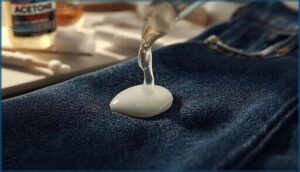
Before you tackle removing super glue from clothes, you need to identify the glue type and check the curing stage—is it wet, tacky, or rock-hard? Examine the stain size, thickness, and any fabric damage like discoloration or charring, especially on cotton jeans where cyanoacrylate can generate intense heat.
This initial assessment guides your adhesive removal strategy for safe clothing stain removal.
Start by testing your chosen method on a hidden seam or hem, then follow proven techniques for removing iron marks from clothes to avoid damaging the fabric.
Letting The Glue Dry Properly
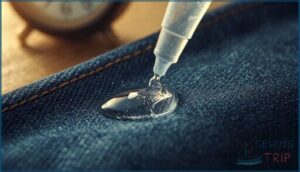
After you’ve assessed the stain, resist the urge to pick at it—let the super glue dry completely before removing super glue from clothes. The glue hardening process takes 15 to 30 minutes for surface drying, but drying time factors like humidity and temperature influence curing conditions. Waiting prevents spreading and reduces fabric damage.
Once the super glue has fully set, you can explore how to attach Velcro to fabric using fabric glue as a no-sew alternative for future repairs.
Safety precautions include keeping the glued area off your skin, since cyanoacrylate can generate heat during adhesive removal on cotton denim. For more details about cyanoacrylate’s properties and uses, see this helpful guide on medical and industrial applications.
Scraping Off Excess Glue
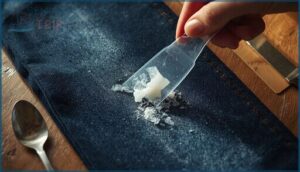
Once the glue’s dry, grab a plastic scraper, spoon, or old credit card—these Glue Removal Tools won’t shred your denim. Place jeans on a flat surface for stability.
Work slowly and gently to lift the glue without damaging the weave, especially if you’re dealing with delicate denim or specialty stitching.
Use gentle Scraping Techniques, skimming from the stain’s edge toward the center. Mechanical Removal works best when glue’s brittle, so don’t rush the Glue Drying Methods. Protect the weaving—never dig in.
For extra safety, consider using techniques from this guide on maintaining fabric integrity after adhesive removal.
Using Acetone to Remove Super Glue
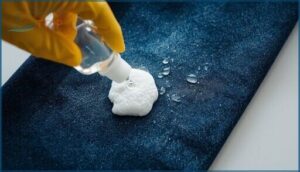
Acetone is your strongest weapon against super glue on jeans, breaking down the adhesive bond faster than any other household solution. You’ll need to apply it carefully to avoid damaging your denim or spreading the stain further.
Here’s exactly how to use acetone safely and what precautions you should take during the process.
Step-by-Step Acetone Application
When you’re ready to dissolve that stubborn super glue, acetone becomes your secret weapon—but precision matters. First, test a hidden spot like an inner seam with a cotton swab dipped in 100% acetone, checking for color loss or fiber damage before treating the visible stain.
For stubborn paint splatters on denim, fabric paint removal techniques work similarly—treat quickly with the right solvent before the stain sets permanently.
Follow these removal techniques for spot treatment success:
- Dab—don’t pour—acetone directly onto the dried glue using a cotton ball
- Work from the stain’s outer edge inward to prevent spreading dissolved adhesive
- Apply small amounts repeatedly, allowing 3-15 minutes for glue dissolving to occur
- Gently scrape softened residue with a spoon edge between applications
- Repeat cycles until no tacky spots remain
Acetone safety and fabric testing protect your denim throughout this adhesive removal method.
Safety Tips for Acetone Use
Before acetone touches your jeans, you need ventilation control and proper chemical handling to avoid serious harm. Work outdoors or near an open window to guarantee fume prevention, keeping vapor levels well below 250 ppm for safe breathing. Eye protection like safety glasses shields against splashes, while nitrile gloves provide essential skin safety during chemical solvent safety tasks.
| Safety Measure | Equipment Needed | Why It Matters |
|---|---|---|
| Ventilation | Open windows, fans | Prevents acetone vapor buildup |
| Eye Protection | Safety glasses, goggles | Blocks chemical splashes |
| Skin Safety | Nitrile gloves | Avoids defatting and irritation |
These household cleaning tips protect you while removing super glue from fabric effectively.
Alternative Methods for Stubborn Glue Stains
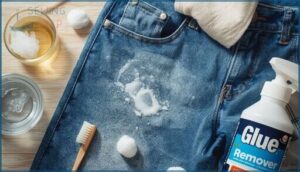
If acetone doesn’t fully remove the super glue or if you’re working with sensitive denim, you have other options that can tackle stubborn stains without harsh chemicals.
These alternative methods use gentler solvents and specialized products that won’t compromise your jeans’ color or fabric integrity.
Here’s how you can break free from that sticky situation using household items and professional-grade removers.
Rubbing Alcohol Technique
If you’re worried about harsh chemicals on your favorite denim, rubbing alcohol offers a gentler path forward. This solvent effects super glue by softening the bond without the aggression of acetone, making it ideal for fabric safety.
For proper alcohol application, saturate a cotton ball with 70-91 percent isopropyl solution, then dab the stain and let it sit for several minutes to aid glue dissolution before lifting with a soft cloth—your go-to among adhesive removal methods for laundry and fabric care when removing super glue from fabric, with these removal tips protecting both color and texture.
Using White Vinegar
When harsh solvents feel too risky, white vinegar steps in as your kitchen-cupboard hero for glue removal and stain pretreatment.
The acetic acid in a vinegar solution softens super glue bonds gently, protecting fabric safety during laundry and fabric care.
Soak the denim spot for 15-30 minutes, then lift the residue with a blunt tool—this stain removal method excels at removing adhesives from fabric without chemical aggression.
Commercial Glue Removers
When household remedies fall short, commercial glue removers engineered for fabric compatibility give you precise adhesive removal power. Nitromethane-based debonders and citrus terpene formulas excel at removing adhesives from fabric, dissolving super glue in minutes while respecting denim’s color integrity.
Test removal techniques on hidden seams first—solvent safety depends on product efficacy and your fabric’s dye stability, so choose a glue dissolver designed specifically as a clothing-safe stain remover.
Avoiding Heat and Ironing
Heat damage transforms a fixable glue spot into a permanent mark—never iron denim before fully removing adhesive stains. Cyanoacrylate reacts with cotton, generating intense warmth that can scorch fibers, while thermal effects drive glue deeper into the weave, complicating fabric restoration.
Never iron denim with super glue stains—heat permanently sets the adhesive and can scorch cotton fibers beyond repair
Protect your jeans with these ironing risks in mind:
- Skip the dryer until stains vanish completely
- Air dry treated areas at room temperature
- Avoid steam, which accelerates glue bonding
- Test removal success before applying any heat
- Choose safe removal methods over quick fixes
Caring for Jeans After Glue Removal
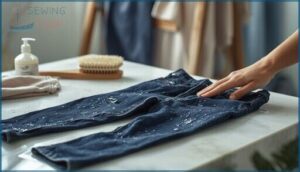
You’ve tackled the glue, but your work isn’t done yet. How you treat your jeans after removal determines whether the stain disappears for good or becomes a permanent reminder.
Follow these post-treatment steps to protect your denim and prevent any lingering residue from setting in.
Washing The Treated Area
Once you’ve dissolved the super glue, you need to rinse the area properly to prevent fabric damage. Start with a cold water rinse from the outside inward, then blot gently with a clean white cloth to lift moisture. Apply mild detergent, let it sit for 5 minutes, and rinse until no soap residue remains before running your jeans through the washing machine on a gentle cycle.
| Step | Action | Purpose |
|---|---|---|
| 1 | Cold water rinse from edges to center | Prevents stain spreading |
| 2 | Gentle fabric blotting with white cloth | Absorbs moisture without damage |
| 3 | Apply mild detergent, wait 5 minutes | Breaks down adhesive residue |
| 4 | Rinse until soap residue disappears | Ensures complete stain removal before laundry |
Avoiding Set-in Stains
You’ve come this far—don’t let heat or a hot dryer undo all your hard work by locking in any remaining glue residue. Check your jeans carefully in bright light before drying, because heat permanently sets stains into denim fibers.
If you spot any adhesive remnants, repeat the stain removal process immediately—quick action prevents damage and saves your favorite jeans from permanent adhesive marks.
Air Drying Vs. Machine Drying
After stain removal, air drying beats machine drying hands down for protecting your jeans. Tumble dryers cause about twice the fabric shrinkage and accelerate color fading by baking dye from denim fibers, while high heat damages elasticity maintenance in stretch fabrics.
Skip the dryer to preserve fiber integrity and keep your jeans fitting right—hang them by the waistband in a well-ventilated spot instead.
Tips for Preventing Damage to Denim

Getting super glue off your jeans doesn’t have to mean ruining them in the process. The key is choosing methods that match your denim’s specific needs, protecting what makes your jeans look and feel great.
Here’s how to play it safe and keep your favorite pair intact.
Choosing The Right Removal Method for Fabric Type
Your jeans’ fiber identification determines which glue solvents and removal techniques you can safely use without risking material safety issues. Traditional 100% cotton denim tolerates acetone well for adhesive removal, while stretch jeans with spandex or elastane require gentler approaches.
- Check fabric labels for acetate, modacrylic, or triacetate—these materials dissolve when exposed to acetone-based super glue removers
- Test any stain removal solvent on hidden seams first to verify color fastness and prevent visible damage
- Choose rubbing alcohol or commercial removers for synthetic-blend denim to preserve elasticity and fabric integrity
Protecting Fabric Color and Texture
Even after you’ve picked the right removal method, heavy-handed scrubbing or overusing harsh solvents can strip your denim’s original color and leave the fabric stiff or discolored. You’ll protect your jeans by dabbing—never rubbing—acetone onto the stain, limiting exposure to 2–3 minutes maximum. Always rinse treated areas immediately with cold water to prevent color fading and texture damage.
| Protection Strategy | Why It Matters |
|---|---|
| Blot, don’t rub | Preserves fabric weave and prevents color loss |
| Limit solvent contact time | Stops chemical breakdown of denim fibers |
| Rinse with cold water | Neutralizes acetone before it weakens material |
| Air dry treated areas | Heat can set remaining residue permanently |
When to Seek Professional Cleaning
Sometimes a glue mishap crosses the line from DIY fix to potential disaster, and that’s when professional cleaners become your fabric’s best ally.
You’ll need expert cleaning if the super glue stain covers more than 3 square inches, your jeans are designer denim worth protecting, or home stain removal attempts leave fabric damage.
Dry cleaners have specialized solvents and delicate care techniques that won’t compromise your favorite pair.
Frequently Asked Questions (FAQs)
Can vinegar remove super glue from clothes?
White vinegar can soften super glue through mild acid treatment, but it won’t dissolve cured cyanoacrylate as effectively as acetone.
Test vinegar on hidden denim first, then dab gently—this glue dissolvers approach protects fabric safety during clothing repair.
How to remove super glue from jeans without acetone?
You can dissolve super glue with rubbing alcohol, white vinegar solution, or dish soap mixed with water. After freezing the spot with ice, gently scrape using a dull plastic card.
Can rubbing alcohol remove super glue from clothes?
Yes, rubbing alcohol can remove super glue from clothes by weakening cyanoacrylate bonds and dissolving adhesive residue. This gentler solvent works best on fresh, thin glue deposits, though repeated applications may be needed for stubborn stains.
Is there any way to prevent super glue from sticking to jeans?
You can’t truly prevent super glue from bonding to denim, but wearing protective clothing like an apron, covering work surfaces, and applying fabric protection sprays before projects reduces adhesive contact and stain risks.
How do you prevent super glue from staining clothes?
An ounce of prevention is worth a pound of cure. To prevent super glue stains, wear protective gear like plastic aprons and nitrile gloves, work over nonporous surfaces, keep bottles at arm’s length, and maintain good workspace lighting.
Can super glue permanently damage denim fabric?
Super glue can cause permanent damage to denim through chemical reactions and thermal damage.
Heavy applications trigger fabric bonding, which stiffens fibers, causes fiber embrittlement, and alters denim durability in affected areas.
Does freezing jeans help remove super glue?
Freezing jeans makes super glue brittle, letting you crack and peel away the hardened adhesive more easily. Cold temperatures stiffen the bond without damaging denim, making this freeze therapy a fabric-safe starting point for removal.
Will baking soda paste remove dried glue?
Baking soda paste won’t dissolve dried super glue on jeans. The chemical interactions between baking soda and adhesive removal actually accelerate curing, making the bond harder.
Fabric safety precautions recommend acetone instead for effective denim cleaning.
How long does acetone take to work?
When you dab acetone onto super glue, you’ll notice softening within one to five minutes, depending on the glue’s thickness and how quickly the solvent penetrates the denim fabric’s fibers.
Can you prevent super glue from bonding?
You can’t stop cyanoacrylate adhesive from bonding once it contacts fabric, but you can minimize damage with surface preparation and fast drying methods.
Act quickly, use bonding inhibitors like powder, and avoid spreading the glue during DIY adhesive removal.
Conclusion
A client once salvaged vintage Levi’s after a craft disaster by testing acetone on the inner seam first, preventing irreversible color loss. Your jeans aren’t doomed when super glue strikes—you just need the right solvent, patience, and a test-first mindset.
Whether you choose acetone, rubbing alcohol, or vinegar, understanding how to get super glue off jeans means respecting denim’s limits while attacking the adhesive’s chemistry. Treat the stain methodically, and your favorite pair survives intact.
- https://www.persil.com/uk/laundry/laundry-tips/stains/how-to-remove-super-glue-from-clothes.html
- https://www.karensgreencleaning.com/blog/will-acetone-stain-clothes
- https://www.lepage.ca/en/know-how/clean-up-product-removal/how-to-get-super-glue-off-clothes-its-no-big-deal.html
- https://www.columbiapikelaundry.com/post/super-glue-remover-for-clothes
- https://aronalpha.net/blog/all-about-cyanoacrylate-prototype-testing-methods/