This site is supported by our readers. We may earn a commission, at no cost to you, if you purchase through links.
The difference between a quilt that puckers and one that lies flat often comes down to a single spool. Thread weight—measured inversely, so a 50-weight thread is actually finer than 30-weight—determines how much your stitches show, how your fabric behaves under the needle, and whether your tension settings cooperate or rebel. Choose wrong, and you’ll fight your machine through every seam; choose right, and the entire project flows.
Cotton breathes with traditional fabrics, polyester grips for durability, and specialty threads add shimmer or glow when you want your stitching to steal the show. Understanding these fundamentals transforms thread from an afterthought into your most strategic tool.
Table Of Contents
Key Takeaways
- Thread weight runs backward—lower numbers like 30wt create heavier, more visible stitches while higher numbers like 50wt blend invisibly into seams, so you’ll adjust needle size and tension accordingly.
- Cotton thread breathes naturally with cotton fabrics for traditional quilting, polyester delivers superior durability and colorfastness for heavy-use projects, and blends offer balanced performance across varied materials.
- Match your thread weight to your specific quilting goal: grab 50wt for piecing that disappears, choose 40wt for balanced machine quilting visibility, and reach for 28-30wt when you want bold decorative stitches that command attention.
- Processing techniques like mercerization add lasting luster and strength, gassing burns away lint-causing fuzz for smoother stitching, and glazed finishes reduce friction through multiple fabric layers—each treatment directly impacts how your thread performs under the needle.
Thread Weight Matters
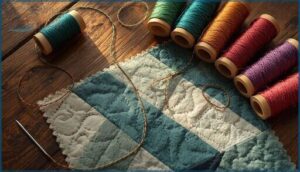
Thread weight is one of those quilting fundamentals that seems confusing at first—but once you understand it, everything clicks. The numbering system works backward from what you’d expect, and that affects how your stitches look and perform.
Let’s break down what thread weight means and which weights work best for your quilting projects.
For hands-on guidance on how thread weight affects your stitch quality and overall design, check out these machine quilting tutorials online.
Smaller Weight Numbers Indicate Heavier Thread
Here’s the counterintuitive truth about thread weight: lower the number, heavier the thread. A 30wt thread sits thicker on fabric than 50wt, creating more stitch texture and quilting visibility.
Thread weight runs backward: lower numbers mean heavier thread that creates bolder, more visible stitches on your quilt
This backwards thread weight guide matters for thread tension settings—heavier threads need larger needle eyes to prevent thread fraying, while finer weights reduce fabric distortion.
Understanding thread weights helps you match diameter to your project’s needs without guesswork.
Thread Weight Affects Sewing and Quilting Performance
Thread weight affects every stitch you make, from thread tension to quilt durability. Switching thread weight changes how your machine performs—30wt needs looser tension than 50wt, or you’ll see loops and puckering across your quilt top. Understanding thread weights prevents these frustrations before they start.
Here’s what changes when you adjust thread weight:
- Machine performance: Heavier threads require larger needles (size 90/14 or bigger) and slower sewing speed to prevent shredding, while lighter weights run smoothly at higher speeds without breaking.
- Finished appearance: Thread weight comparison shows that 30-40wt creates bold stitch visibility for decorative quilting, while 50-60wt blends into fabric for subtle seams.
Thread weight meaning extends to fabric drape too. Heavier threads add stiffness to seams, while finer weights maintain your fabric’s natural flow. Match your thread weight guide to your project’s needs—bold quilting deserves visible stitches, piecing benefits from invisible seams. For a deeper dive into, understanding how different threads impact your results is essential.
Common Thread Weights for Quilting
Most quilters grab 50 wt thread for piecing—it disappears into seams without adding bulk. When you want visible stitch definition and quilting texture, switch to 40 wt thread for balanced strength and presence on your quilt top. Bold decorative work calls for 28wt, creating dramatic thread visibility on heavier fabrics.
Understanding thread weights improves fabric compatibility and thread durability—finer 60wt manages delicate work, while thicker weights demand larger needles and tension tweaks.
For a deeper dive into weight options and their uses, check out this helpful overview of.
Quilting Thread Types
The fiber you choose shapes how your quilt looks, feels, and holds up over time. Each thread type brings distinct qualities to your work—from the natural feel of cotton to the resilience of synthetics.
Polyester options work especially well on synthetic blends, since they resist shrinking and keep your quilt looking sharp through countless washes and years of use.
Let’s examine your main options and what makes each one worth considering.
Cotton Threads for Traditional Quilting
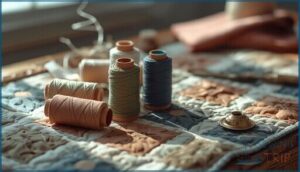
For traditional quilting, cotton thread remains your most reliable partner. The natural fibers bring cotton fiber benefits like breathability and fabric compatibility with your cotton quilt tops. When choosing cotton threads, prioritize these qualities:
- 50-weight cotton thread for balanced visibility and smooth performance
- Mercerized options for thread color stability and enhanced luster
- Long-staple fibers for exceptional strength and quilt durability tips
- Natural dye methods when seeking authentic, traditional hues
Quality cotton quilting thread ensures your heirloom pieces endure for generations.
Polyester Threads for Durability and Strength
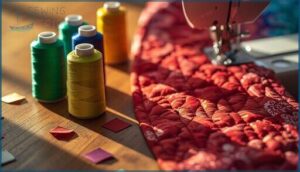
When your quilt faces years of washing, snuggling, and wear, polyester stands as your most reliable ally. This synthetic powerhouse delivers outstanding strength and durability that outlasts cotton in heavy-use projects.
You’ll appreciate its excellent colorfastness—bright hues that resist fading through countless laundry cycles—plus impressive UV resistance that protects outdoor or sunlit quilts from yellowing.
Common weights range from 30 to 50, with 40-weight offering an ideal balance for smooth machine feeding and quilting performance.
The fabric compatibility surprises many quilters: polyester’s slight elasticity prevents puckering while maintaining seam integrity across varied batting densities.
Blended Threads for Balanced Performance
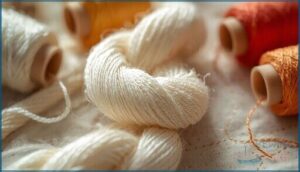
Blended threads combine cotton’s soft hand with polyester’s durability—a fiber mix that addresses real-world quilting challenges. You’ll find most blends at 60 percent cotton and 40 percent polyester, delivering enhanced seam stability without sacrificing comfort.
Thread blending improves color retention through multiple wash cycles while reducing shrinkage that distorts quilt dimensions. The synthetic component adds subtle sheen and abrasion resistance, maintaining smooth thread properties even during high-speed machine work.
Thread weight usually ranges from 40 to 50, supporting consistent quilting performance across varied fabric types. This balanced approach prevents puckering while strengthening topstitching in decorative designs.
Specialty Threads for Unique Effects
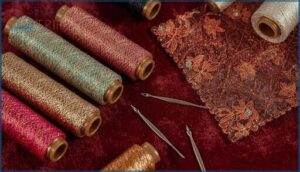
Beyond cotton and polyester basics, specialty threads reveal distinctive decorative effects that transform ordinary quilts into showpieces. Metallic threads wrap foil around a core fiber, creating shimmer in gold, silver, and jewel tones—perfect for embroidery and decorative quilting accents. Variegated colors shift gradually along the spool, producing vivid shading without thread changes. Glow threads store light and emit a soft luminescence on children’s projects. You’ll also find textured boucles that add surface loops and even conductive fibers for wearable electronics.
- Metallic threads demand slower speeds and metallic needles to prevent shredding on dense decorative stitching
- Variegated colors work best with mid-range stitch density, letting transitions unfold naturally
- Textured boucles require larger needles and looser tension for weaving through fabric layers
Thread Selection Guide
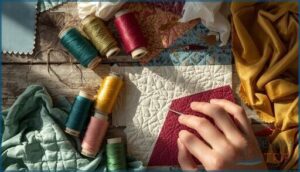
Picking the right thread isn’t guesswork—it’s about matching your materials and methods to get the results you want. Your fabric type, quilting style, and design goals all play a role in which thread will work best.
Here’s what you need to keep in mind when making your selection.
Choosing Thread Based on Fabric Type
Your fabric type drives your thread selection—it’s that straightforward. Pair cotton thread with cotton for smooth fabric compatibility and minimal puckering. When working with lightweight cotton lawn, reach for 50 or 60 weight thread to preserve drape. Heavier fabrics like denim demand 30 or 40 weight for secure seams.
Cotton blend options offer versatility, while polyester excels with knits and stretchy materials.
For silk, choose silk or premium cotton to protect the fabric’s surface.
Selecting Thread for Quilting Style and Design
Your quilting style shapes every thread color and texture decision you’ll make. For bold, modern designs, reach for polyester threads with a slight sheen—they highlight stitch visibility and emphasize geometric patterns. Traditional quilts benefit from matte cotton threads that blend seamlessly, preserving design aesthetics without competing with fabric texture.
When choosing the right thread, consider how it interacts with your vision:
- Hand quilting shines with slightly thicker threads that showcase each careful stitch
- Free-motion machine work demands smooth, low-lint options for continuous flow
- Decorative stitching calls for variegated or metallic threads that create focal points
- Matching threads to technique ensures quilt durability and professional finish
Considering Thread Weight and Thickness
Understanding the thread numbering system changes everything—it’s the inverse relationship that trips up most quilters. Remember: lower numbers mean heavier yarn thickness. A 30 wt thread creates bold stitch visibility, while 50 wt thread whispers across your quilt top. You’ll need to adjust thread tension when switching weights, or you’ll face looping and frustration.
- Fiber strength: Heavier threads require larger needles and slower speeds to prevent breakage
- Fabric compatibility: Match thread weights to your material—delicate fabrics demand finer options
- Thread thickness: Ply count plus weight determines total bulk at seams
Factors Affecting Thread Choice
When your machine settings and needle size align with the right thread weight, seam integrity improves dramatically. Consider end use first—quilts for outdoor furniture need colorfast threads that resist fading.
Project goals matter too: heirloom pieces demand dye stability and fabric compatibility that casual throws don’t require. Thread type and thread properties interact with your quilting goals, so test combinations before committing to full spools.
Thread Processing Techniques
How thread is processed after it’s spun makes a real difference in how it performs on your machine and looks in your finished quilt. Manufacturers use several techniques to improve thread characteristics—from adding shine to reducing lint.
Understanding these processing methods helps you choose threads that match your project’s needs and achieve the results you’re after.
Mercerized Threads for Increased Luster
When you choose mercerized threads, you’re investing in shine durability that lasts. This chemical treatment realigns cotton fibers under tension, transforming ordinary thread into something exceptional. The fiber enhancement process smooths each strand, creating that signature thread luster you’ll notice immediately.
Here’s what mercerized benefits bring to your quilting:
- Vivid color retention – Dyes penetrate deeper, delivering vibrant hues that resist fading through countless washes.
- Enhanced strength – Treated cotton thread shows higher tensile strength, reducing frustrating breaks during dense quilting.
- Consistent shine – Light reflects evenly across stitches, maintaining visual appeal on any fabric.
Nearly all quality thread undergoes mercerization, boosting both thread properties and performance.
Gassed Threads for Smoother Finish
Gassed threads undergo controlled flame exposure that burns off surface fuzz—a Thread Finishing technique that delivers lint reduction and smooth stitching. You’ll notice gassed cotton glides through fabric with minimal resistance, creating friction minimization during machine work.
This thread processing enhances sheen while reducing bobbin buildup. Double-gassed varieties offer even smoother thread finish, yielding professional quilting lines with fewer skipped stitches on delicate fabrics.
Glazed or Coated Threads for Polished Look
While gassed threads remove fuzz, coated threads take smoothness further with wax or resin finishes that create a slick Thread Finish. Glazed threads glide through fabric layers without snagging—your machine won’t fight you at each stitch. That polished appearance comes from light bouncing off the smooth surface, giving seams a crisp, professional look.
Here’s what you need to know about Coated Threads:
- Glaze Durability—the coating resists fraying but wears down with frequent washing
- Shine Maintenance—store spools away from heat to preserve the gloss
- Reduced friction—less needle heat means smoother feeding through dense fabrics
- Enhanced color depth—glazed finishes make thread shades pop on light fabrics
- Water resistance—polymer coatings repel moisture better than untreated thread
This thread type works beautifully when you want visible stitching that catches the eye.
Pre-washing and Conditioning Threads
Smart Fiber Preparation prevents headaches down the road. These thread processing techniques matter because they stabilize fibers before they hit your needle. Pre-washing cotton thread minimizes Thread Shrinkage and locks in Color Fastness—you won’t see dye bleeding onto light fabrics after quilting.
Thread conditioner reduces Thread Fraying and thread breakage by cutting friction, though too much creates sticky buildup. Light conditioning improves Tension Control while lowering lint production in your machine.
Wash threads gently in cool water, skip fabric softeners, and air-dry to protect coatings that keep stitching smooth.
Frequently Asked Questions (FAQs)
What’s the difference between normal thread and quilting thread?
Quilting thread offers exceptional strength and durability compared to all-purpose thread. Its fiber content and thread weight are engineered for fabric compatibility, stitch visibility, and the demanding quilting needs of layered projects.
What is the best thread to use for quilting?
For most quilting projects, 50-weight cotton thread offers the best balance of stitch visibility, fabric compatibility, and quilt durability.
Though your thread selection should ultimately match your specific quilting techniques and desired finish.
What is the difference between quilting thread and regular thread?
The main difference lies in construction—quilting thread features a glazed or waxed coating for smoother hand-sewing through multiple fabric layers, while regular thread prioritizes general machine sewing with lighter durability requirements.
Which is heavier, 40 wt or 50 wt thread?
Think thread weight works like clothing sizes? Wrong—40 wt is actually heavier than 50 wt. Smaller weight numbers mean thicker thread, so you’ll notice 40 wt creates more visible, bolder stitches than its finer counterpart.
What weight of thread to use for quilting?
For piecing, reach for 50 wt thread—it’s fine enough to reduce bulk yet strong for secure seams. Machine quilting? Choose 40-weight for better stitch quality, thread visibility, and quilt durability.
What thread count is best for quilting?
You’re likely confusing thread count with thread weight.
Fabric weave and thread density matter, but for quilting thread itself, choose 50-weight for piecing, 40-weight for machine quilting, and 28-weight for hand quilting.
What needle size works best with different threads?
Matching your needle size to thread weight is like pairing the right key to a lock—get it right, and everything flows smoothly.
Use 90/14 needles for 30-40 weight threads, and 70/10 or 80/12 needles for finer 50-60 weight threads to enhance stitch quality and fabric compatibility.
How do you store quilting thread properly?
Store your spools upright in closed, opaque containers away from direct sunlight and humidity. Keep different weights separated for quick identification.
This thread storage method prevents tangling, dust buildup, and color fading while maintaining quality.
Can you mix thread brands in projects?
Think of thread brands like different spice brands in your kitchen—they can work beautifully together.
You can mix brands in quilting projects as long as you match thread weight and fiber type for consistent tension and color consistency throughout your quilt.
What causes thread to break during quilting?
Thread breakage stems from tension issues, needle damage, or poor thread quality. Fabric friction, lint buildup, and mismatched needle-to-thread weight also stress fibers. Regular machine maintenance and proper setup prevent most breaks during quilting.
Conclusion
Picture a beginner who grabbed the first spool she saw—40-weight polyester—and spent two hours wrestling puckered seams on delicate batik. One switch to 50-weight cotton, and her machine hummed smoothly through every block.
That’s the power of understanding thread for quilting explained: the right weight, fiber, and finish don’t just prevent problems—they release precision. Your next project deserves that same transformation, one deliberate spool at a time.