This site is supported by our readers. We may earn a commission, at no cost to you, if you purchase through links.
Thread choice wrecks more quilts than bad cutting. You can piece a perfect top, press every seam flat, and then watch the whole thing pucker, shred, or pill in the wash because the thread couldn’t hold up its end of the deal.
Most quilters obsess over fabric and forget that thread is doing the actual structural work. Cotton or polyester, 40 weight or 50, two-ply or three—these aren’t just spec-sheet details. They determine how your stitches sit, how your machine behaves, and whether your quilt survives a decade of use.
Knowing which sewing threads for quilting actually deliver changes everything about how you work.
Table Of Contents
- Key Takeaways
- Top 10 Sewing Threads for Quilting
- 1. Aurifil Cotton Quilting Thread
- 2. Superior Threads Polyester Sewing Thread
- 3. Glide Trilobal Polyester Thread
- 4. Superior Threads Quilting Thread Desert Wind
- 5. Isacord Embroidery Thread Set
- 6. Connecting Threads Cotton Thread Cone
- 7. Gutermann Cotton Thread Set
- 8. Mettler Silk Finish Cotton Thread
- 9. Superior Threads Egyptian Cotton Sewing Thread
- 10. Brothread Polyester Embroidery Thread Kit
- Key Features of Quality Quilting Threads
- How to Choose Thread for Quilting Projects
- Comparing Cotton, Polyester, and Blend Threads
- Thread Applications for Different Quilting Techniques
- Proper Care and Storage of Quilting Threads
- Frequently Asked Questions (FAQs)
- Conclusion
Key Takeaways
- Thread choice shapes how your quilt holds up over years — the wrong fiber or weight can cause puckering, shredding, or seam failure no matter how perfect your piecing is.
- Matching thread weight and fiber to your fabric type is non-negotiable: cotton thread pairs naturally with cotton quilts, polyester holds strong in high-wash projects, and blends bridge the gap for mixed-fiber work.
- Weight numbers run backwards — 50wt is finer and more subtle than 40wt, so go heavier when you want visible quilting lines and lighter when you want stitches to disappear into the fabric.
- Proper storage matters as much as brand: UV exposure, humidity below 40%, and dust buildup quietly degrades thread quality and lead to mid-project breakage.
Top 10 Sewing Threads for Quilting
The right thread can make or break a quilt — not just in how it holds together, but in how it looks and feels years down the road. With so many options on the market, narrowing it down takes a little know-how.
A good starting point is understanding which fibers and weights actually suit your project, and this guide to choosing the best quilting thread breaks it down in plain, practical terms.
Here are ten threads worth keeping in your sewing room.
1. Aurifil Cotton Quilting Thread
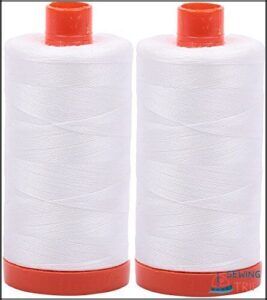
Few threads earn a permanent spot in a quilter’s kit the way Aurifil 50wt does. Made from 100% long-staple Egyptian cotton and spun in Italy, it’s the kind of thread that just behaves — smooth feeding, minimal lint, and clean stitch definition whether you’re piecing tight seams or free-motion quilting across a whole-cloth top.
Each large spool holds 1,422 yards, so you won’t be swapping spools mid-project. The 2-ply construction keeps it strong without adding bulk, which means flatter seams and less drama at your needle.
It works with 70/10 or 80/12 Microtex needles on domestic machines, and performs on long-arm setups just as well.
With 270 color options, you can match nearly any palette. This specific two-spool pack comes in natural white — a neutral that disappears into background fabrics beautifully.
| Best For | Quilters who want a reliable, low-lint thread that works smoothly for piecing, appliqué, and long-arm quilting without constant tension adjustments. |
|---|---|
| Material | 100% Egyptian Cotton |
| Thread Weight | 50wt |
| Ply Count | 2-ply |
| Yardage | 1,422 yds |
| Lint Level | Low lint |
| Machine Compatible | Domestic & longarm |
| Additional Features |
|
- Each spool gives you 1,422 yards, so you can get through big projects without stopping to reload
- Low lint means less cleanup and fewer headaches with your machine’s bobbin area
- The neutral white blends easily with light fabrics and works across a ton of different quilt styles
- At $26.80 for two spools, it’s pricier than generic thread — adds up fast if you quilt in high volume
- This pack only comes in natural white, so you’ll need separate purchases for other colors
- Two spools per pack might feel light if you’re used to buying thread in bigger bundles
2. Superior Threads Polyester Sewing Thread
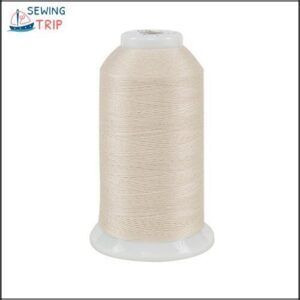
Aurifil earns its place in cotton tradition — but sometimes you need something built for the long haul. That’s where Premium Threads So Fine! steps in. This is 100% polyester, 50-weight, wound on a 3,280-yard cone — nearly two miles of thread, ensuring you won’t stop mid-quilt to rethread.
The three-ply construction delivers exceptional tensile strength without adding bulk to seams. It’s also completely lint-free, keeping your bobbin area cleaner and reducing maintenance downtime. For quilters executing dense designs on domestic or long-arm machines, this reliability is invaluable.
A matte finish ensures stitches blend subtly, letting fabrics shine without competing glare. The thread runs smoothly in both top and bobbin, simplifying color matching across quilt layers for seamless integration.
Pearl is the color shown here, though other shades are available to suit diverse projects.
| Best For | Quilters and sewists tackling large projects who want a strong, low-maintenance thread that won’t quit halfway through a big quilt or multi-piece garment. |
|---|---|
| Material | 100% Polyester |
| Thread Weight | 50wt |
| Ply Count | 3-ply |
| Yardage | 3,280 yds |
| Lint Level | Lint-free |
| Machine Compatible | Domestic & longarm |
| Additional Features |
|
- Nearly 3,300 yards per cone means you can power through big projects without stopping to rethread
- Lint-free and three-ply, so your machine stays cleaner and your stitches stay strong
- The matte finish blends into fabric naturally — no distracting sheen getting in the way
- The "Pearl" color can look more orange-red in person than it does in product photos online
- Some buyers have received damp packages with mold, so it’s worth giving yours a once-over before using
- At 50-weight, it’s on the thinner side — not the best fit for heavy-duty or thick materials
3. Glide Trilobal Polyester Thread
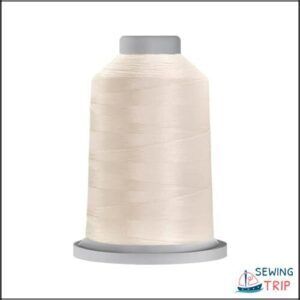
Glide is your showboat — and it earns the title. 100% trilobal polyester gives each filament a triangular cross-section that refracts light like a prism, creating a linen luster finish noticeable from the moment it feeds through your machine. This genuinely pretty effect is permanent and won’t wash out.
At 40 weight, Glide is slightly heavier than standard piecing thread, making it ideal for decorative topstitching and longarm quilting where you want the stitch line to stand out. Its robust construction ensures smooth performance during high-speed machine work.
The 1,100-yard spool supports extended projects without tension spikes or lint buildup, a critical advantage for uninterrupted stitching.
With over 200 colors available, matching your quilt’s palette becomes effortless, eliminating compromises on hue or tone.
| Best For | Quilters and embroidery enthusiasts who want a thread that looks as good as it performs, especially on longarm machines or decorative topstitching projects. |
|---|---|
| Material | 100% Trilobal Polyester |
| Thread Weight | 40wt |
| Ply Count | Not specified |
| Yardage | 1,100 yds |
| Lint Level | Low lint |
| Machine Compatible | Domestic & longarm |
| Additional Features |
|
- The trilobal construction gives it a gorgeous linen-like shimmer that makes decorative stitching pop without washing out over time.
- Runs clean and smooth at high speeds — less lint, fewer thread breaks, and fewer annoying machine stops mid-project.
- At 1,100 yards per spool, you get solid mileage before needing to swap out, which is great for bigger quilting projects.
- Only comes in white for this listing, so if you need a specific color match, you’ll have to hunt down a different spool.
- That shimmery finish isn’t for everyone — if you prefer a flat, matte look, this thread will feel too flashy.
- Some users have run into spools that were wound unevenly, which can throw off tension and cause headaches mid-stitch.
4. Superior Threads Quilting Thread Desert Wind
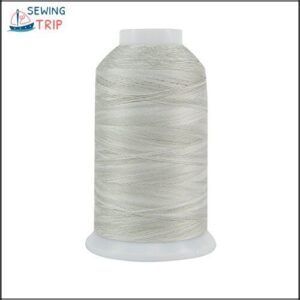
If Glide is your showboat, Desert Wind is your workhorse — and a beautiful one at that. Premium Threads’ King Tut Desert Wind is a 40 wt, 3-ply Egyptian extra-long staple cotton that means business. That 3-ply construction gives you noticeably better stitch definition than standard 2-ply cotton, and the tight twist keeps lint out of your bobbin area during long sessions. For a cotton thread, it runs remarkably clean.
The variegated Desert Wind colorway cycles through soft grey tones in roughly one-inch intervals, adding subtle depth without competing with your patchwork. It reads as movement, not noise.
You get 2,000 yards on the cone — enough for a full quilt back and then some. Pair it with a topstitch 90/14 needle and a So Fine! bobbin thread, and tension practically takes care of itself.
| Best For | Quilters and crocheters who want a premium Egyptian cotton thread with beautiful variegated color and clean, consistent stitch definition for detailed or heirloom projects. |
|---|---|
| Material | 100% Egyptian Cotton |
| Thread Weight | 40wt |
| Ply Count | 3-ply |
| Yardage | 2,000 yds |
| Lint Level | Low lint |
| Machine Compatible | Domestic & longarm |
| Additional Features |
|
- 3-ply construction gives you noticeably sharper stitch definition and a tighter twist that keeps lint buildup minimal during long sewing sessions
- 2,000 yards per spool is generous — plenty to get through a full quilt without switching mid-project
- The Desert Wind colorway adds subtle, natural-looking depth that enhances your work without overwhelming it
- At $23.76 a spool, it’s a real step up in price compared to standard cotton or polyester threads
- The variegated tones may read lighter than expected if you’re going for a true, solid dark color
- It’s sensitive to sunlight, so you’ll need to be mindful about storage to keep it from degrading over time
5. Isacord Embroidery Thread Set
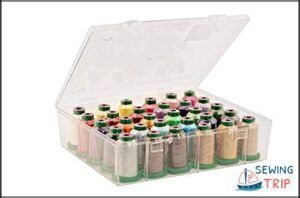
If your quilting life involves a lot of decorative stitching or embroidery appliqué, the Isacord set deserves a serious look. You get 30 spools of trilobal polyester in assorted colors — that glossy, continuous-filament construction is why Isacord has a loyal following among embroiderers. The trilobal cross-section bounces light differently than standard polyester, giving finished stitches a subtle sheen that pops on quilt blocks.
At 40 wt, it’s the right thickness for machine quilting and dense embroidery without bogging down your feed dogs. Lint is practically a non-issue, so long sessions stay cleaner. The total thread length across the set runs nearly 10,000 feet, which is genuinely useful value for a class kit or dedicated project run.
One honest caveat: the storage case ships fragile. Order with that in mind and inspect it on arrival.
| Best For | Machine embroiderers and quilters who want a solid range of colors in one kit — especially for classes or bigger projects. |
|---|---|
| Material | 100% Trilobal Polyester |
| Thread Weight | 40wt |
| Ply Count | Not specified |
| Yardage | ~10,000 ft total |
| Lint Level | Low lint |
| Machine Compatible | Domestic machines |
| Additional Features |
|
- 30 assorted-color spools give you real variety without hunting down individual threads
- Smooth, low-lint polyester feeds cleanly and cuts down on thread breakage
- Nearly 10,000 feet of total thread is genuinely good value for the price
- The storage case is fragile and often arrives cracked or broken
- Some orders show up with missing spools or damaged spindles
- The outer cardboard box doesn’t offer much protection during shipping
6. Connecting Threads Cotton Thread Cone
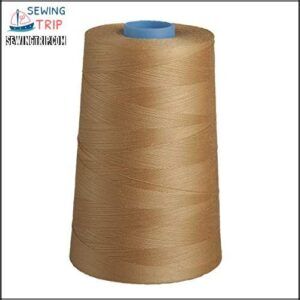
Five thousand yards on a single cone — that’s the kind of value that makes a longarm quilter’s eyes light up. The Connecting Threads Essential Cotton Thread Cone is built from 100% extra-long staple cotton in a three-ply, 50-weight construction. Shorter fibers fray faster and shed more lint, but this thread’s extra-long staple ensures minimal lint, reducing mid-project stops to clean the bobbin area.
The satin finish gives stitches a subtle sheen without looking flashy, making it versatile for both piecing and decorative work. At $20.67 per cone, it undercuts most premium brands by a wide margin while maintaining tension consistency across long seams.
Pair it with an 80/12 needle for optimal performance on domestic and longarm machines. While color options are limited, the Caramel shade is a natural go-to for warm-toned quilt tops.
| Best For | Longarm quilters and high-volume sewists who need a reliable, large-yardage thread that handles long seams without constant spool changes. |
|---|---|
| Material | 100% Extra-Long Staple Cotton |
| Thread Weight | 50wt |
| Ply Count | 3-ply |
| Yardage | 5,000 yds |
| Lint Level | Minimal lint |
| Machine Compatible | Domestic & longarm |
| Additional Features |
|
- 5,000 yards on one cone means fewer interruptions and great value at just $20.67
- Three-ply, extra-long staple cotton keeps the thread strong and smooth through long stitching runs
- The satin finish adds a nice subtle sheen, great for both everyday piecing and decorative work
- Some users report more lint than expected, which can mean extra cleanup on delicate fabrics
- Color options are pretty limited — basic solids only, so it may not work for every project
- Packaging isn’t always delivery-friendly, and a few reviewers have gotten cones that took a beating at the door
7. Gutermann Cotton Thread Set
Color variety is where the Gütermann Cotton Thread Set earns its spot. You get 26 spools of 100-meter mercerized cotton thread in an assorted palette — enough shades to handle most piecing projects without hunting down individual spools. The mercerization process strengthens each fiber and adds a subtle sheen, which helps stitches look clean and intentional rather than flat.
The plastic storage box with built-in spindles keeps everything organized and portable — genuinely handy if you haul thread to a sewing group or workshop. Thread weight runs standard at around 50 wt, so tension stays consistent on domestic machines when paired with the right needle size.
One honest heads-up: a few quilters have received polyester thread instead of cotton, so check your spools on arrival. For beginners building a starter collection on a budget, though, this set is hard to argue with.
| Best For | Beginners building a starter thread collection and active sewers who want a ready-to-go color assortment for quilting, embroidery, or garment work. |
|---|---|
| Material | 100% Mercerized Cotton |
| Thread Weight | 50wt |
| Ply Count | Not specified |
| Yardage | 100m per spool |
| Lint Level | Low lint |
| Machine Compatible | Domestic machines |
| Additional Features |
|
- 26 assorted colors cover most projects without chasing down individual spools
- Hard plastic box with spindles keeps thread organized and easy to carry to workshops or sewing groups
- Mercerized cotton feeds smoothly through machines and holds up well for both hand and machine stitching
- 100 meters per spool can run short on bigger quilts or high-thread projects
- Some buyers have received polyester instead of cotton — worth checking spools when the box arrives
- Plastic spool holders have been reported broken in some units, and occasional spools arrive damaged
8. Mettler Silk Finish Cotton Thread
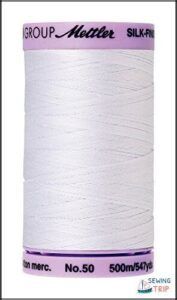
Mettler’s Silk Finish Cotton Thread is one of those quiet workhorses that earns your trust quickly. It’s 100% long-staple Egyptian cotton, mercerized to give it a refined, silk-like sheen — the kind that makes your topstitching look deliberate rather than accidental. At 50 wt, it’s right in the sweet spot for general quilting and piecing, feeding smoothly through domestic machines without the tension fights you’d get from cheaper cotton threads.
The mercerization does more than add sheen. It strengthens the fiber, reduces shrinkage, and cuts down on lint — which means fewer stops to clean your bobbin area mid-project.
Colorfastness holds up well through repeated washing too.
The catch? It currently runs in white only, and the price sits above budget options. But for heirloom-quality work, it’s worth every cent.
| Best For | Quilters, garment sewers, and heirloom crafters who want a reliable, fine-finish thread that performs cleanly on domestic and long-arm machines. |
|---|---|
| Material | 100% Egyptian Cotton |
| Thread Weight | 50wt |
| Ply Count | Not specified |
| Yardage | Not specified |
| Lint Level | Low lint |
| Machine Compatible | Domestic & longarm |
| Additional Features |
|
- Mercerized cotton gives it a subtle sheen that makes topstitching and piecing look polished and intentional
- Feeds smoothly with minimal lint buildup, so you spend less time cleaning and more time sewing
- Strong color fastness and high break resistance make it a solid choice for heirloom projects that need to last
- Only available in white, which makes it a non-starter for matching colored or patterned fabrics
- Priced higher than everyday threads, so bulk buyers may feel the pinch
- Needs a fine needle (size 80–90) to perform well — use the wrong needle and you’ll run into skipped stitches or thread damage
9. Superior Threads Egyptian Cotton Sewing Thread
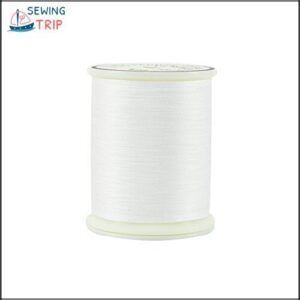
Premium Threads MasterPiece is built around extra-long staple Egyptian cotton — the kind grown in the Nile Delta, where fiber length and quality genuinely earn the premium label. That longer staple translates directly into a smoother, stronger thread with almost no lint coming off the spool.
Its 3-ply, 50-weight construction ensures balanced tension and tight seams without added bulk. It performs reliably on domestic machines or high-speed longarms, maintaining integrity in both applications.
The 600-yard spool suits full quilt projects, and the thread doubles as bobbin thread, eliminating the need for multiple spools.
The trade-off is real: this listing only comes in Blanc, and at $16.04 per spool, costs accumulate quickly. However, it delivers clean piecing and visible stitching that remains neat and durable.
| Best For | Quilters and sewists who want a reliable, low-lint cotton thread for piecing, apparel, and bobbin use without sacrificing stitch quality. |
|---|---|
| Material | 100% Egyptian Cotton |
| Thread Weight | 50wt |
| Ply Count | 3-ply |
| Yardage | 600 yds |
| Lint Level | Very low lint |
| Machine Compatible | Domestic & longarm |
| Additional Features |
|
- Extra-long staple Egyptian cotton means fewer breakages and a noticeably smoother feed through your machine
- Extremely low lint keeps your machine cleaner longer — less time maintaining, more time sewing
- Works as both top and bobbin thread, so you’re not juggling multiple spools mid-project
- Only comes in Blanc here, so if you need other colors, you’re placing separate orders
- At $16.04 for 600 yards, the cost adds up fast if you’re running through thread on big projects
- The 50-weight is a touch too heavy for fine embroidery or very delicate fabrics
10. Brothread Polyester Embroidery Thread Kit
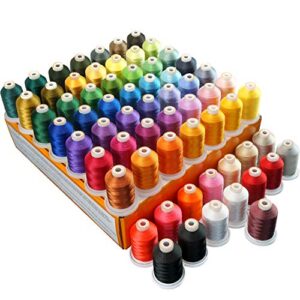
The Brothread 64-spool Polyester Thread Kit offers exceptional value for those needing a wide color range. It includes 61 distinct shades plus extra spools of white, black, and red—colors that deplete fastest. Each spool contains 1,100 yards of 40-weight polyester, delivering solid tensile strength and reliable colorfastness through repeated washing.
A standout feature is the locking spool base, which prevents thread tails from unraveling mid-project, eliminating unnecessary frustration. However, the large spool size may require a thread stand for optimal use on home machines.
The polyester sheen may not suit matte-finish quilts but excels in decorative embroidery and vibrant stitching projects. To ensure seamless results, dial your tension on a scrap fabric test first.
| Best For | Embroiderers and sewists—from hobbyists to small-run production folks—who want a broad color palette without constantly restocking high-use shades. |
|---|---|
| Material | 100% Polyester |
| Thread Weight | 40wt |
| Ply Count | Not specified |
| Yardage | 1,100 yds per spool |
| Lint Level | Low lint |
| Machine Compatible | Multi-brand compatible |
| Additional Features |
|
- 61 colors plus extra white, black, and red spools means you’re rarely caught running out of the colors you reach for most.
- The locking spool base keeps thread tails from unraveling mid-project, so you spend less time fussing and more time stitching.
- 1,000 meters per spool is a lot of thread—great for multi-color projects or repeated logo work without constant re-spooling.
- The large spool size doesn’t play well with most home machines straight out of the box—you’ll likely need a separate thread stand.
- If one color runs out, you can’t buy just that spool; you’re looking at the whole kit or another bulk pack.
- The polyester sheen can look out of place on matte-finish projects, and it’s not the best pick for cap embroidery on foam caps.
Key Features of Quality Quilting Threads
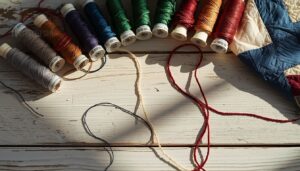
Not all thread is created equal, and that gap shows up fast once you start quilting.
The right thread comes down to a handful of features that quietly make or break your finished piece.
Here’s what to look for before you buy.
Thread Material and Fiber Content
Fiber origin shapes everything about how your thread performs. Cotton thread, derived from plant cellulose, offers low-stretch, heat-tolerant properties, making it a natural match for cotton quilting fabrics. Polyester thread, a synthetic fiber, resists fading for up to 40 hours of UV exposure and produces minimal lint.
Core-spun construction and mercerization significantly influence how blends and cotton threads feed through machines, balancing synthetic fiber traits with a softer, natural feel. These processes enhance compatibility with various fabrics while maintaining durability.
Selecting extra long staple cotton can boost tensile strength and minimize lint production, offering superior performance for quilting projects.
Thread Weight and Ply
Thread weight trips up a lot of quilters. The quick truth: higher numbers mean finer thread. A 50wt sits lighter on your quilt top than a 40wt, which appears bolder and more defined.
Ignore numeric weight myths — thread gauge standards vary by brand, so weight conversion charts help when comparing across labels.
Ply strength impact matters too: two-ply construction balances fine vs. bulk without sacrificing durability.
Always test on scrap first.
Colorfastness and Dye Quality
Once you’ve nailed thread weight, dye quality is next on the checklist. Not all color stays put after washing.
- Reactive dye benefits include covalent fiber bonding — color matching for quilting stays true after repeated laundering
- Vat dye lightfastness scores 6–8 on the blue wool scale, ideal for display quilts
- Mercerization effects boost colorfastness by one to two grades
- Rubbing fastness ratings drop to grade 2 with dye impurities impact
- Colorfastness testing confirms polyester threads hold grade 4–5 wash resistance
Lint Production and Machine Maintenance
Color staying put is one thing — but lint is where your machine fights back. Cotton threads shed more than polyester, and that fiber builds up fast. Lint buildup prevention starts with knowing your thread. Low-lint threads for machine quilting, like Aurifil or top-tier So Fine, keep your bobbin area cleaner between sessions.
Cotton threads shed fast — low-lint options like Aurifil keep your machine cleaner, longer
Skipping sewing machine maintenance leads to thread breakage, uneven stitches, and tension problems nobody wants mid-project. Follow this cleaning schedule routine:
- Brush the bobbin area after every project or 8–10 sewing hours
- Remove the needle plate regularly to clear lint from the hook race and feed dogs
- Apply oil only where your manual specifies — wrong oil application guidelines mean stained fabric
- Improve machine airflow maintenance by keeping vents and internal spaces lint-free so the motor runs cool
- Store thread properly — thread storage in a closed cabinet at 40–60% humidity prevents brittleness and excess shedding
Texture, Sheen, and Finish
Finish matters more than most quilters expect. A matte cotton texture quietly disappears into your fabric — ideal when the piecing should do the talking. Mercerized luster balances polished and subdued, while trilobal sheen effect creates a spotlight-like glow, emphasizing quilting lines. Cottonized polyester finish offers a compromise: polyester’s strength with a softer, less reflective surface.
| Fiber Type | Finish | Best Use |
|---|---|---|
| Cotton | Matte finish | Blending into traditional quilts |
| Trilobal Polyester | Glossy finish | Sheen contrast techniques, decorative work |
| Silk thread | Satin finish | Drape, appliqué, fine detail |
Smooth thread performance depends on matching your finish to your goal.
How to Choose Thread for Quilting Projects
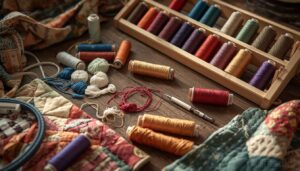
Picking the right thread isn’t just about grabbing whatever’s on the shelf — it actually shapes how your finished quilt looks, feels, and holds up over time. A few key factors will guide you toward the best choice for your specific project.
Here’s what to think through before you start stitching.
Matching Thread to Fabric Type
Your fabric calls the shots. Cotton thread is the natural match for 100% cotton quilts — it shrinks uniformly, lies flat, and harmonizes with the weave.
For flannel, 40wt cotton thread is ideal, as it navigates thick, brushed layers without strain.
Batik fabrics pair best with fine polyester or monofilament threads, which glide smoothly over their waxy finishes.
Linen demands cotton thread for a balanced, durable stitch.
Delicate silk appliqué requires pure silk thread, ensuring seamless integration with the fabric’s texture.
Selecting Thread for Quilting Style
Your quilting style is the real thread boss here. Straight lines and Geometric Contrast call for a reliable 40wt or 50wt cotton—something that holds a crisp edge without demanding attention. Free-Motion Highlights, however, are where you can play: a 30wt or variegated polyester brings those swirling designs to life.
- Use 100wt Invisafil for Subtle Texture Sync that lets your piecing shine
- Try Seasonal Color Schemes with variegated threads to shift mood across the quilt
- Prioritize Thread Tension Tuning before committing—always test on a sandwich first
- Match thread weight to pattern density for clean, intentional results
Considering Thread Weight and Thickness
Thread weight is simpler than it sounds. A lower number means thicker thread — so 40wt sits bolder on the surface, giving you Heavy Thread Boldness perfect for visible quilting lines. Go up to 50wt and you get Fine Thread Transparency, where stitches almost disappear into the fabric.
Choosing the right thread weight for quilting shapes your entire Weight-Driven Quilt Texture, so always test on a fabric sandwich first.
Thread weight and ply impact stitch quality more than most quilters expect.
Choosing Thread Colors for Design Impact
Your thread color is quietly making decisions for you. Analogous palettes create smooth, flowing transitions across blocks, while complementary contrast makes your quilting motifs genuinely pop. Triadic harmony balances bold energy without chaos.
When nothing else works, grab a neutral chameleon like smoke gray or taupe — it shapeshifts across dark, mid, and light tones alike.
Color auditioning is non-negotiable: unspool 24 inches across your quilt top before committing.
Glazed or Coated Threads for Special Effects
Glazed and coated threads transform your quilt from functional to statement-making. The finish—matte or glossy—fundamentally alters how decorative stitching interacts with light.
- Metallic shimmer fibers and glow-in-the-dark threads require a larger needle (90/14) and slower machine speed to prevent breakage.
- Silk glaze handling requires short thread lengths to avoid tangling and curling.
- Coating durability testing on a fabric swatch first saves you from tension disasters mid-quilt.
Comparing Cotton, Polyester, and Blend Threads
Not all threads are created equal, and choosing between cotton, polyester, and blends can genuinely change how your quilt holds up over time.
Each fiber has its own strengths depending on your fabric, your technique, and how often that quilt will hit the washing machine.
Here’s what you need to know before you grab a spool.
Benefits of Cotton Threads
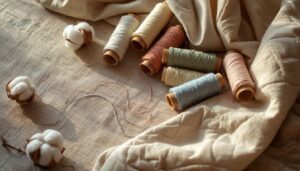
If you’ve always sewn with cotton fabrics, cotton thread just makes sense. It shares the same natural fibers, so everything shrinks together evenly — no puckered seams after washing.
You get cool breathability, real moisture wicking, and a soft natural hand feel that improves with every wash.
It’s a biodegradable fiber with low lint production, stable stitching, and solid colorfastness.
Thread durability is reliable, and your machine stays cleaner longer.
Advantages of Polyester Threads
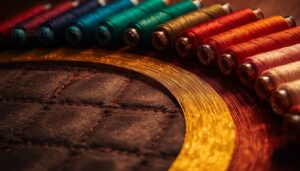
Cotton is a tough act to follow, but polyester holds its own in ways that matter. Polyester offers serious tensile strength, minimal shrinkage after washing, and UV resistance that maintains color vibrancy over time. Its low lint properties also reduce machine cleanouts during extended use.
Brands like Isacord Polyester Thread and Glide Polyester Thread exemplify these advantages, running smoothly and retaining integrity under stress. They are solid picks when elastic durability and low-lint threads for machine quilting are priorities.
When to Use Nylon or Blend Threads
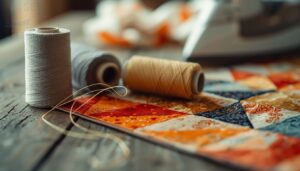
Polyester earns its keep, but sometimes you need something else entirely. Nylon monofilament excels at invisible stitching and low-visibility appliqué, blending seamlessly into busy prints. Fusible nylon withstands heat basting, melting under your iron to temporarily secure appliqué shapes before permanent stitching.
Cotton-polyester blend threads combine the best of both worlds: the strength of polyester with the feel of cotton. Each thread type shines in specific applications:
- Outdoor durability — polyester thread resists UV fading better than nylon long-term
- Flexible seams — nylon’s elasticity suits cushions and heavily-used throws
- Mixed-fiber quilts — cotton-polyester blend threads balance synthetic vs natural fibers beautifully
Fiber Compatibility With Quilting Fabrics
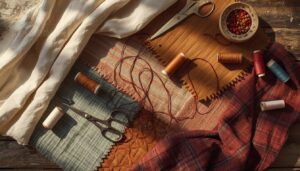
Thread choice becomes personal when considering your fabric’s specific needs. Cotton thread ages alongside natural cotton and linen fabrics, as they shrink, soften, and wear at the same rate—a Cotton‑Linen pairing that thrives on shared fiber properties. For rayon, which shifts and stretches, polyester thread provides critical stability, anchoring it firmly to prevent distortion.
Flannel demands robust seams, achieved through cotton‑wrapped polyester thread, which handles bulk without breaking. Meanwhile, mismatched thread and fabric fiber tension in mixed-fiber projects often causes unsightly puckering due to differential shrinkage rates.
Thread Applications for Different Quilting Techniques
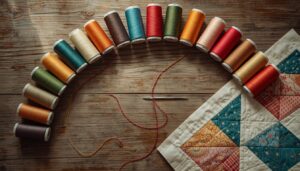
Not every quilting technique works well with the same thread, and picking the wrong one can mean broken stitches, excessive lint, or a finish that just doesn’t look right. The good news is that once you know what each method actually needs, the choice gets a lot easier.
Here’s what works best across the most common quilting techniques.
Machine Quilting Thread Recommendations
Machine quilting demands thread that can keep up — high speeds, tight tension, dense designs. Aurifil’s 50wt cotton is a go-to: low lint, excellent thread consistency, and flat seams. Superior Threads’ So Fine! manages tension calibration beautifully on most home machines.
For bold designs, Glide’s trilobal polyester delivers sheen and breakage prevention with impressive speed compatibility.
Match your needle size to your thread weight, and you’re set.
Best Threads for Hand Quilting
Hand quilting has its own rhythm — and your thread needs to match it. Gliding through three layers without shredding is non-negotiable. Here are three reliable picks:
- YLI or Gutermann glazed cotton — waxed finish, tangle-resistant, ideal for long running stitches
- Aurifil 12wt cotton — low-lint, smooth-plied, perfect for big-stitch and Sashiko-style work
- Perle big-stitch cotton (size 8) — bold, inelastic, holds stitch definition beautifully
A silicone wax treatment reduces thread breakage greatly. Store spools upright in a closed cabinet to prevent UV damage.
Ideal Threads for Longarm Quilting
Longarm machines are brutal on thread — high speed, extended runs, zero forgiveness. Every thread choice affects seam flatness, tension consistency, and how often you’re digging lint out of the hook assembly.
| Thread | Why It Works for Longarm |
|---|---|
| Aurifil 50 Weight Cotton Thread | Low lint, excellent bobbin compatibility |
| Premium Threads So Fine | Reduces needle heat, strong UV stability |
| Glide Trilobal Polyester | Reel stretch resistance, vibrant sheen |
| King Tut 40 wt Cotton | Bold definition, thread breakage prevention |
| Bottom Line 60 wt Polyester | Smooth bobbin work, seam flatness |
Choosing low-lint threads for longarm quilting keeps cleaning intervals longer. High-performance threads like So Fine handle dense sandwiches without fighting tension discs, ensuring consistent results.
Decorative and Embroidery Thread Uses
Decorative stitching is where quilting stops being functional and starts being personal. For Big Stitch projects, bold embroidery thread in 2–6 strands adds rustic texture with real visual weight. Silk thread executes Motif Outlining beautifully — nearly invisible seams, gorgeous sheen. Try these for maximum impact:
- Metallic threads — sparkle in Crazy Quilt seam accents with a 90/14 needle
- Variegated threads — shift colors gradually for Border Embellishment without re-threading
- Silk thread — ideal for heirloom appliqué and delicate Specialty Effects
- Rayon threads — silky finish for elegant decorative topstitching on display quilts
Proper Care and Storage of Quilting Threads
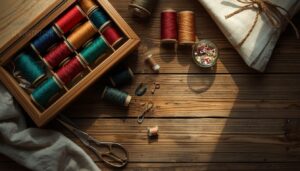
Good thread doesn’t last forever on its own — how you store it matters just as much as which brand you buy. A little care now saves you from snapped stitches and faded colors down the road.
Here’s what you need to know to keep your threads in top shape.
Storing Threads to Prevent Tangling and Fading
Thread storage isn’t glamorous, but bad habits here can ruin a perfectly good spool. Opaque Containers — lidded bins or closed cabinets — are essential because UV exposure fades thread colors quickly, especially reds and purples.
Upright Spool Organization prevents tangling and messy unwinding. Storing spools vertically maintains their integrity and simplifies access during projects.
To maintain optimal humidity, tuck a Silica‑Gel Dehumidifier packet inside each storage box. This keeps moisture levels between 40–60%, preventing mold, mildew, or brittleness.
For long-term reserves, a Climate‑Controlled Closet is ideal. Maintain temperatures around 65–75°F to preserve thread quality over years without degradation.
Maintaining Thread Cleanliness and Longevity
Clean thread is honest thread — it does exactly what you expect. Dust, oils, and lint buildup quietly cause tension problems and breakage before you even notice.
A quick pre-project inspection and light thread conditioner wipe can save your quilt.
- Snip frayed ends before threading to stop lint spreading into the bobbin
- Control heat speed to prevent fiber weakening during dense quilting
- Keep spools elevated — floor contamination ruins fibers fast
- Inspect each spool for brittleness or thread wear over time
Matching Needle Size to Thread Weight
Your needle eye clearance matters more than most quilters realize. A tight eye causes thread shredding indicators fast — fraying, skipping, snapping mid-seam.
- 50wt cotton pairs with an 80/12 needle for everyday quilting with clean thread tension
- 40wt thread needs a 90/14 to give the eye enough room without fabric thickness impact
- 30wt decorative thread calls for a 100/16 — anything smaller invites needle wear effects
Test every new combination on a scrap sandwich first.
Tips for Mixing Thread Brands and Types
Once your needle is dialed in, the next puzzle is mixing brands. It’s more forgiving than it sounds — just match fiber type and weight first. A slick polyester like Glide paired with matte Aurifil cotton needs bobbin tension tweaks to balance the stitch.
| Combo | Watch For |
|---|---|
| Cotton top + polyester bobbin | Shrinkage mismatch on hot wash |
| Slick vs matte threads | Tension imbalance; loosen top slightly |
| Blend bridge techniques | Test sandwich method before full project |
| Brand color charts | Sheen varies even in matching hues |
Frequently Asked Questions (FAQs)
What is the best type of thread to use for quilting?
The golden middle ground for most quilters is 50 wt cotton thread. It keeps stitch visibility low and minimizes thread breakage.
This thread also balances cost-effectiveness beautifully across both piecing and everyday machine quilting projects.
Is there a difference between sewing thread and quilting thread?
Yes — quilting thread is built for stitch visibility and wash durability across multiple layers, while sewing thread prioritizes blending in.
Fiber elasticity, bobbin capacity, and tension variability all shift depending on which you reach for.
Can you dye white quilting thread at home?
Absolutely — but stick to cotton thread. A soda ash soak preps the fibers, and Procion MX dyes deliver vibrant, bleed-resistant color.
Polyester thread resists home dye recipes entirely.
Always wear safety gear when handling dye chemicals.
What causes thread to break during quilting?
Thread breaks mid-quilt for several reasons: upper tension set too high, needle damage, or a misrouted thread path.
Other causes include old thread become brittle or fabric pull across dense layers stressing the fiber beyond its limit.
Are vintage threads safe for new quilts?
Vintage spools are charming, but aging fiber integrity is a real concern. Test before you trust — a sharp tug reveals everything. Weak thread means thread breakage risk in every seam.
How does humidity affect thread performance?
Dry air is your thread’s quiet enemy. Below 40% humidity, cotton grows brittle, static builds on tension discs, and seam puckering follows. Polyester stays steadier. Aim for 50–65% RH.
Can quilting thread affect fabric shrinkage after washing?
Quilting thread absolutely affects fabric shrinkage. Cotton thread shrinks 2–5% postwash, causing Thread-Induced Puckering. Polyester offers excellent wash dimensional stability.
Shrinkage mismatch between fiber types creates distortion. Always match thread to fabric to prevent issues.
How does thread tension impact final quilt appearance?
Get tension wrong and your quilt tells on you immediately. Loops surface, seams pucker, backside balance disappears.
Correct thread tension adjustment protects surface drape, sharpens design clarity, and guarantees wash longevity stitch after stitch.
Which thread types work best for baby quilts?
For baby quilts, cotton thread and polyester thread are your two best bets.
Both offer high washfastness, skin-friendly fibers, and minimal linting — keeping things safe, soft, and durable through endless wash cycles.
Conclusion
The quilt you’re planning right now will either last twenty years or start falling apart after a dozen washes—and the difference often comes down to one overlooked decision. The sewing threads for quilting you choose carry every stitch through heat, tension, and time.
Get that choice right, and your fabric does exactly what you built it to do. Thread isn’t a detail. It’s the backbone. Choose like it matters, because it does.
- https://www.thelittlemushroomcap.com/so-fine-threads-by-superior-threads/
- https://sewing.patternreview.com/SewingDiscussions/topic/101674
- https://www.fil-tec.com/Glide-Quilting
- https://www.aurifil.com/aurifil-thread-faq
- https://www.thethreadexchange.com/miva/merchant.mvc?Screen=CTGY&Category_Code=AURIFIL-COTTON