This site is supported by our readers. We may earn a commission, at no cost to you, if you purchase through links.
A sewing machine that skips stitches or snaps thread isn’t always crying out for repairs—sometimes it’s just clogged with lint. Lint builds up fast, especially in the bobbin area, and even a thin layer can strain the hook, throw off thread tension, and leave your seams looking rough.
Most sewists don’t realize how much debris hides in the tight channels and feed dogs until something goes wrong.
The good news: the right essential sewing machine cleaning tools make the whole job straightforward, safe, and surprisingly quick to do at home.
Table Of Contents
- Key Takeaways
- 10 Essential Cleaning Tools
- Small Lint Brush for Bobbin Areas
- Micro-tip Cleaning Brushes for Narrow Openings
- Fine-point Tweezers for Trapped Threads
- Flat-head Screwdriver for Plate Removal
- Phillips Screwdriver for Machine Screws
- Magnetic Screwdriver for Tiny Fasteners
- Pipe Cleaners for Interior Channels
- Cleaning Swabs and Sticks for Tight Spots
- Microfiber Cloths for Exterior Dust
- Sewing Machine Oil for Mechanical Models
- Why The Right Tools Matter
- Top 3 Cleaning Tool Picks
- Safe Tool Use During Cleaning
- Choosing Tools for Your Machine
- Frequently Asked Questions (FAQs)
- Conclusion
Key Takeaways
- Lint buildup in the bobbin area is the sneaky culprit behind skipped stitches and thread snaps — and a small lint brush plus fine-point tweezers handle most of it quickly.
- Using the wrong tools (like compressed air or stiff brushes) can push debris deeper or scratch delicate parts, so matching your tools to your machine type really does matter.
- A pre-cleaning routine — unplugging, removing thread, and consulting your manual — protects both you and your machine before a single part comes off.
- at-home cleaning extends your machine’s life and keeps stitch quality consistent, but persistent grinding or skipped stitches after cleaning are your cue to book a professional service.
10 Essential Cleaning Tools
You don’t need a fancy kit — just the right tools for the job. Each one on this list pulls its weight in a different part of your machine.
If you’re still choosing your setup, these industrial overlock machine reviews break down which models actually hold up under real shop conditions.
Here’s what to keep on hand.
Small Lint Brush for Bobbin Areas
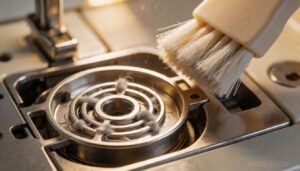
A small lint brush is your first line of defense around the bobbin area. Brush size selection matters here — too big, and you’ll miss the tight corners where lint really hides.
flexible bristles that actually lift fuzz instead of pushing it around. Short, careful strokes work best for dust removal from the sewing area without disturbing nearby parts.
Using a nylon brush tool helps remove stubborn fibers efficiently.
Micro-tip Cleaning Brushes for Narrow Openings
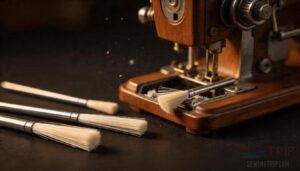
When a small lint brush just can’t reach, micro-tip sewing machine cleaning brushes step in. Their slim profiles and nylon bristle benefits — flexible yet firm — let you get into channels a handheld brush simply won’t fit.
Diameter size selection matters: sizes from 0.04 to 0.125 inches cover most tight spots. Adjustable handle angles add control, making precision cleaning techniques feel easy.
Fine-point Tweezers for Trapped Threads
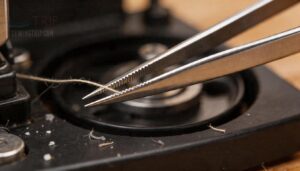
Once your micro-tip brushes clear the loose lint, tweezers handle what bristles leave behind — trapped thread tails that refuse to budge. Fine-point tweezers with an Angled Tip Advantage let you reach the bobbin area without awkward hand angles.
Their Stainless Steel Build lasts for years.
Use a gentle pinching motion for safe Thread Extraction Technique — never force it.
Flat-head Screwdriver for Plate Removal
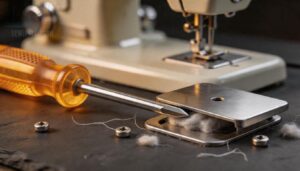
Once those stray threads are out, grab your flat head screwdriver — it’s what actually opens up the machine. You’ll need it to lift the needle plate so you can clean your sewing machine properly.
Blade Width Matching matters here: too narrow and you’ll slip; too wide and it won’t seat.
An Ergonomic Handle and solid Shaft Strength give you Precise Screw Alignment without stripping anything.
Phillips Screwdriver for Machine Screws
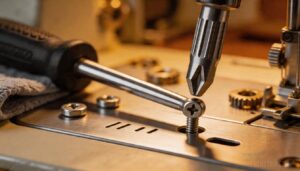
Your flat-head works with the needle plate — but machine screws? That’s where a Phillips screwdriver earns its place.
Screwhead Fit is everything here: use the wrong Phillips Size Guide, and cam-out Behavior kicks in fast, stripping the head before you know it.
A Durable Steel tip with solid Torque Management keeps things controlled.
PH1 or PH2 covers most machines beautifully.
Magnetic Screwdriver for Tiny Fasteners
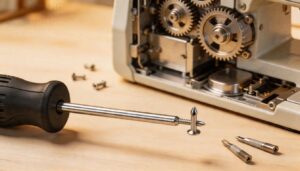
Now here’s a tool that earns its keep fast — a magnetic screwdriver manages those tiny fasteners without fumbling.
Screw Retention Control is the real win: the magnetized tip grips small screws so they don’t vanish into your machine mid-reassembly.
- Tight Space Application beats fingers every time in narrow cavities
- Precision Bit Selection (PH1 or flathead) matches your fastener perfectly
- Re-magnetizing Procedure restores grip when holding power fades
Pipe Cleaners for Interior Channels
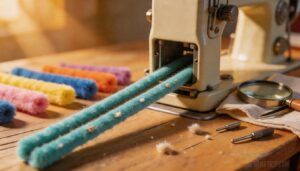
Don’t overlook the humble pipecleaner — it’s surprisingly effective for lint cleanout deep inside your machine. The Flexible Wire Core bends through curved interior channels where rigid tools simply can’t follow, while the Absorbent Fiber Wrap lifts dust and residue without scratching anything.
Channel Reach and Cleaning Performance both improve when Size And Fit match your machine’s channel width. Pure, practical dust removal from sewing area — done right.
Cleaning Swabs and Sticks for Tight Spots
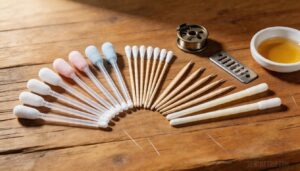
Swabs and sticks are your secret weapon for spots where even small brushes can’t go. Foam Tip Selection matters here — foam won’t scratch and ensures Material Compatibility with most cleaners.
Cotton Swab Limits are real, though — they shed fibers.
Look for Handle Ergonomics that bend easily, and Tip Shape Benefits mean pointed tips beat flat ones every time for feed‑dog slots and bobbin corners.
Microfiber Cloths for Exterior Dust
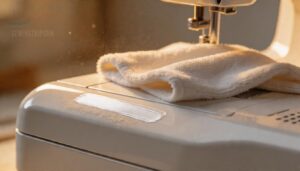
Your machine’s exterior deserves the same care as its interior. A microfiber cloth manages dust from the machine exterior better than regular fabric — its Fiber Blend Ratio of polyester and polyamide boosts Dust Capture Efficiency by trapping particles instead of spreading them.
Check your Surface Compatibility Guide before wiping painted panels.
For Cloth Care Routine, skip fabric softener — it clogs the fibers fast.
Sewing Machine Oil for Mechanical Models
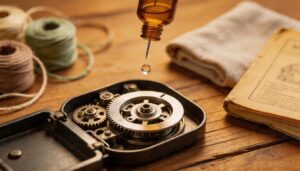
Oil is only for mechanical models — computerized machines don’t need it.
Use a clear, light oil (often ISO 32) for machine lubrication, applying just one or two drops at the hook race and bobbin area. Oil Viscosity matters: too thick slows parts down. Follow your manual’s Maintenance Frequency and Application Points.
Storage Tips: oil lightly before long breaks to prevent friction buildup.
Why The Right Tools Matter
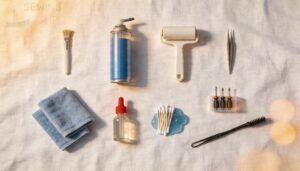
Using the wrong tools doesn’t just make cleaning harder — it can actually damage the parts you’re trying to protect.
The good news is that a few targeted tools make a real difference. Here’s why each one earns its spot in your kit.
Risks of Lint Buildup and Skipped Stitches
Lint is sneaky — it piles up quietly until your machine starts fighting back. Here’s what’s actually at stake when you skip your regular sewing machine cleaning routine:
- Bobbin Case Clogging slows thread flow and strains the hook
- Thread Friction Increase causes uneven tension and weak seams
- Feed Dog Slippage makes fabric move inconsistently
- Stitch Consistency Decline leaves gaps and puckering throughout your work
- Needle Breakage Risk spikes when debris jams the needle path
Benefits of Specialized Sewing Cleaning Tools
The right tools make a real difference. Specialized gear — like microtip sewing machine cleaning brushes, a hand‑held brush, or inexpensive sewing machine swab options — reaches spots that cotton swabs and old toothbrushes simply miss.
That means reduced lint buildup, enhanced component protection, and a faster maintenance routine overall.
Even rechargeable electric blower beats canned air for extended machine lifespan and improved stitch consistency.
How Clean Parts Improve Stitch Quality
Clean parts work together like a well-rehearsed team. Bobbin Area Clarity keeps thread tension consistency steady — no fumbling, no loops. Feed Dog Grip stays strong when lint removal and dust management happen regularly. Needle Path Freedom means fewer skipped stitches.
Use microtip sewing machine cleaning brushes and inexpensive sewing machine swab options instead of canned air for better dust removal from sewing area.
That’s stitch uniformity you’ll actually notice.
How Regular Cleaning Extends Machine Life
Your machine rewards consistency. Regular lint removal and dust management — done with the right tools — means reduced wear on moving parts and lower breakdown risk overall. Think of it like brushing your teeth: skip it long enough, and things get expensive fast.
Skip regular cleaning long enough, and your sewing machine will make you pay for it
- Early Damage Detection catches cracks and worn parts before they spiral.
- Extended Component Life keeps internal mechanisms running longer.
- Improved Stitch Consistency stays intact when buildup doesn’t interfere.
- Less friction means less strain on every single part.
Why Soft Bristles Protect Delicate Components
soft bristles might seem like a small detail, but they’re doing serious work. They flex around the hook race and bobbin housing — capturing lint without scratching. That matters for Scratch Prevention and Precision Alignment Safety near sensitive components.
A hand-held brush with gentle fibers promotes Burr-Free Surfaces and Component Longevity.
When selecting appropriate cleaning tools for sewing machines, soft bristles make Gentle Lint Capture safe and effective.
Top 3 Cleaning Tool Picks
so many tools out there, it helps to know which ones are actually worth keeping in your kit. These three stand out for their ease of use, reach, and value — whether you’re a casual sewist or someone who’s always got a project going.
Here are the top picks worth adding to your cleaning routine.
1. LINXIAO Sewing Machine Cleaning Kit
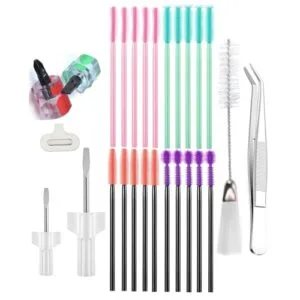
The LINXIAO kit punches above its weight for a compact 27-piece set.
You get stainless-steel tweezers that actually grip stubborn lint — not just push it around — plus a dual-head brush built for those tight spots near the bobbin and feed dogs. The included screwdriver manages plate removal without fuss.
It’s easy to store right next to your machine, and covers most routine cleaning needs.
A solid everyday kit for home sewists who want one reliable go-to.
| Best For | Home sewists and hobbyists who want a reliable, all-in-one kit for everyday sewing machine maintenance. |
|---|---|
| Primary Use | Lint & debris removal |
| Tool Count | 27 pieces |
| Portability | Lightweight kit |
| Target Area | Needle plate & feed dogs |
| Storage | Kit storage |
| Skill Level | Hobbyist & professional |
| Additional Features |
|
- Stainless-steel tweezers actually grab and pull lint instead of just moving it around
- Dual-head brush gets into tight spots like the bobbin area and feed dogs with ease
- Compact 27-piece set stores neatly right next to your machine
- Plastic screwdriver handle may not hold up well under heavy or frequent use
- Doesn’t include oil or a seam ripper, so it won’t cover all your maintenance bases
- Tool sizes might not work with every machine, especially older or non-standard models
2. Shop Vacuum Detail Cleaning Kit

Sometimes lint hides where a brush just can’t follow — and that’s where a shop vacuum detail kit earns its place. This 6-piece micro kit snaps onto any 1-1/4 inch wet/dry vac hose and gives you a crevice tool, dusting brushes, and angled wands to pull debris from tight interior channels.
At $17.35, it’s a smart add-on if you already own a small shop vac. Not a standalone fix — but paired with your brushes, it covers the spots that are easy to miss.
| Best For | Anyone who already owns a small wet/dry shop vac and wants a budget-friendly way to clean tight, hard-to-reach spots like dashboard gaps, seat crevices, and tight corners. |
|---|---|
| Primary Use | Dust & debris suction |
| Tool Count | 6 pieces |
| Portability | Attachment-based |
| Target Area | Crevices & tight corners |
| Storage | Attachment set |
| Skill Level | General user |
| Additional Features |
|
- Six attachments cover a solid range of tasks — dusting, crevice cleaning, and angled tight spots
- At $17.35, it’s a low-risk upgrade to gear you already own
- Works with multiple small shop vac brands, so it’s not a one-brand lock-in
- Only fits 1-1/4 inch hoses on 2.5-gallon or smaller vacs — won’t work with bigger machines
- No built-in filtration, so it leans entirely on your vacuum’s existing filter
- Not officially endorsed by Shop-Vac, Craftsman, or Genie, which could mean fitment surprises
3. Singer Proseries 3in1 Sewing Multi Tool

The Singer ProSeries 3-in-1 Multi Tool packs three jobs into one pocket-sized tool — needle inserter, bobbin picker, and lint brush. The rubberized handle feels solid in your hand, and it folds flat so it doesn’t rattle around your kit.
At just 1.65 oz, you’ll barely notice it’s there.
The needle inserter is genuinely handy if threading makes your eyes work overtime. It’s not a full maintenance kit, but for quick, everyday cleanup, it punches well above its size.
| Best For | Home sewers who want a simple, all-in-one tool to handle everyday threading, bobbin changes, and quick lint cleanup without digging through a full toolkit. |
|---|---|
| Primary Use | Lint & needle assist |
| Tool Count | 3-in-1 tool |
| Portability | Foldable design |
| Target Area | Bobbin & needle zones |
| Storage | Compact fold |
| Skill Level | All sewists |
| Additional Features |
|
- Combines three handy tools in one compact, foldable design that’s easy to toss in any sewing kit
- The needle inserter takes the squinting out of threading, which is a real win for anyone who sews regularly
- At under 2 oz, it’s light enough that you’ll never think twice about keeping it nearby
- Won’t cut it as a replacement for dedicated tools if you’re doing heavier or more specialized machine work
- May struggle with oversized or specialty needles and bobbins
- The small, simple build might not hold up well with heavy daily use over time
Safe Tool Use During Cleaning
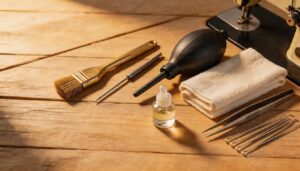
Having the right tools is only half the job — knowing how to use them safely is what keeps your machine running well. A few simple habits before you start can save you from a snapped needle, a stripped screw, or lint pushed somewhere it really shouldn’t be.
Here’s what to keep in mind before you touch a single part.
Turn Off and Unplug First
Before you grab a single tool, unplug your machine — full stop. This isn’t optional.
Electrical shock prevention starts the moment your hands get near metal parts, wiring, or the bobbin area. An unplugged machine also can’t lurch to life if the foot pedal gets bumped — accidental start avoidance at its simplest. safest, smartest first move.
Remove Thread Before Disassembly
Thread Path Clearance is your next non-negotiable step. Before anything comes apart, pull all thread out completely — top and bottom.
Loose strands snag on screws, wrap around the bobbin case, and jam tension discs during disassembly. Clearing the path also gives you Rethreading Readiness after cleaning, so you’re not sorting through old tangles.
Bobbin Area Access gets much cleaner once thread is fully gone.
Use The Owner’s Manual for Guidance
Your owner’s manual is the real expert here. It covers Manual Safety Checks, Oil Point Identification, and Tool List Verification — all in one place. Use it for Step-by-Step Diagrams before disassembly.
Your manual helps you with:
- Selecting appropriate cleaning tools for sewing machines
- Lint removal and dust management guidance
- Hand held brush and sewing machine cleaning routine specifics
- Maintenance Scheduling Guidance customized to your model
Don’t skip it.
Remove The Needle Plate and Bobbin Safely
Now that manual’s open, let’s get hands-on. Put on your Safety Glasses first — small parts can snap unexpectedly.
Set the machine on a Secure Work Surface, then remove the needle plate using your screwdrivers carefully.
That Gentle Plate Lift matters — straight up, no wiggling. Follow with Bobbin Case Inspection for lint or burrs, then do a slow Handwheel Test to confirm everything moves smoothly.
Keep Screws and Small Parts Contained
Tiny screws are notorious for disappearing the second you set them down. A magnetic tray organization system solves this instantly — those small round trays grip metal fasteners so they can’t roll off your table.
Use compartmentalized storage to sort screws by machine section, and try labeling screw containers with a whiteboard marker. Clear tape securing screws directly to removed parts also works beautifully. Snap photo documentation steps before disassembly too — your future self will thank you.
Avoid Pushing Lint Deeper Inside
Screws sorted, parts labeled — Now let’s talk about how you actually move lint out of your machine.
Always brush with short, outward strokes — gentle brush strokes that sweep debris away from internal mechanisms, not toward them. That’s the core lint extraction technique.
Avoid compressed air entirely; it drives textile debris deeper into hidden channels. Controlled air use means no air at all here.
Choosing Tools for Your Machine
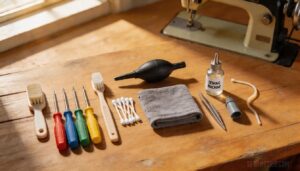
Not every cleaning tool works for every machine — and that’s actually a good thing. Once you know your machine type, building the right kit gets a lot easier.
Here’s what to think about before you grab anything off the shelf.
Matching Tools to Mechanical Machines
Mechanical machines are wide open books — removable plates, exposed feed dogs, accessible hook assemblies. That means your tool kit can actually reach what needs cleaning.
Three things your kit should nail:
- Screw Head Matching — flat-head and Phillips screwdrivers that fit exactly, no stripping
- Tool Size Compatibility — small brushes and tweezers sized for bobbin and feed dog access
- Handle Ergonomics — comfortable grip for repeated lint removal and dust management
Matching Tools to Computerized Machines
Computerized machines are a different animal — tighter tolerances, sensors, and electronics that don’t forgive rough handling.
Electronic Component Compatibility matters here, so swap stiff brushes for Gentle Bristle Selection and Non-conductive Tweezers.
Precision Screwdriver Set prevents stripped screws near control boards.
Use a Mini Vacuum Attachment for Lint removal and dust management — skip compressed air entirely, as use of compressed air for cleaning risks pushing debris deeper into sensitive assemblies.
When Oil Belongs in Your Kit
Oil doesn’t belong in every kit — it depends on your machine.
- Mechanical Oil Timing: Oil metal-on-metal parts, like the hook race and needle bar, after heavy sessions or before storage.
- Computerized Oil Exceptions: Skip it unless your manual lists user-accessible oil points.
- Storage Lubrication: A drop protects bare metal during long downtime.
- Manual Specified Points: Never oil beyond what the manual specifies.
Tools for Bobbin Case and Feed Dogs
The bobbin case and feed dogs are lint magnets — fabric lint buildup happens fast here.
A soft Silicone Brush clears feed dog slots without scratching. Add fine-point tweezers as a Thread Puller for stubborn scraps. Anti-Static Wipes help lift textile debris from tight corners. Use a Compressed Air Blower carefully — it can push debris deeper.
Selecting appropriate cleaning tools for sewing machines means matching each tool to the job.
Storage Tips for Tools and Machine Covers
Good storage habits protect your tools just as much as your machine. Keep small parts in Airtight Containers so screws and needles don’t disappear.
Tuck in Silica Gel Desiccants to handle humidity and apply Rust Prevention Oil on metal tools.
Use a Breathable Cover Material over your machine — never plastic.
Vertical Pegboard Organization keeps everything visible and within reach.
When Professional Servicing is The Better Option
Sometimes cleaning just isn’t enough. If your machine keeps skipping stitches, making strange sounds — that’s your cue for professional Noise Diagnosis.
Timing Adjustment, Part Replacement, and Complex Repairs aren’t DIY territory.
Book Warranty Service annually if you sew regularly, or every two to three years otherwise. While you’re in that annual maintenance mindset, brushing up on how sewing pattern books are organized keeps your whole workflow running smoother between service visits.
Preventive maintenance for sewing machines always beats waiting for a breakdown.
Frequently Asked Questions (FAQs)
What are the 10 cleaning tools?
Ever wonder why your machine keeps skipping stitches? Chances are, it just needs a good clean. Here are the 10 tools that actually get the job done right.
Which singer is best for heavy fabrics?
The SINGER Heavy Duty 4452 manages thick fabrics well — strong Motor Power, Adjustable Presser Foot Pressure, 32 Stitch Options, a stainless steel Bedplate Material, and 1,100 stitches per minute make it a reliable workhorse.
What are the basic tools for sewing machine maintenance?
Proper maintenance starts with precision brush types, a screwdriver set, fine-point tweezers, pipe cleaners, microfiber cloths, and sewing machine oil — your core toolkit for keeping every stitch clean and consistent.
How often should I replace my sewing machine needle?
Change your needle every 8 hours of active sewing — or after each project. Heavy fabrics speed up wear.
Skipped stitches and thread breakage are your clearest stitch quality indicators that it’s time.
What type of oil is best for sewing machines?
Light Mineral Oil or a Synthetic Oil with a Non-Detergent Formula is your best bet. Stick to Low Viscosity Oil — colorless, thin, made for precision machines.
One drop where your manual says. That’s it.
Can I use household cleaners on my machine?
Skip the household sprays. Vinegar can damage rubber seals, and strong cleaners risk your machine’s finish.
Stick to a dry microfiber cloth outside — and dry tools inside. When in doubt, check your manual.
Why is my machine making grinding noises?
Grinding noises usually mean lint buildup, a misaligned bobbin, a bent needle plate, worn bearings, damaged gears, or insufficient oil.
quick clean and oil the sewing machine often fixes it fast.
How do I know if my tension settings need adjusting?
Your stitches are the machine’s report card. Loops on top mean loose upper tension — that’s your Stitch Loop Indicator.
Run a quick Thread Pull Test and check for Fabric Distortion Signs beneath.
How often should sewing machine needles be replaced?
Replace your needle every 6–8 hours of active sewing or at the start of each new project. Skipped stitches, thread shredding, or popping sounds are your clearest warning signs — don’t wait.
What signs indicate a bobbin case needs replacing?
Think of your bobbin case like a tiny traffic cop — when it wears out, everything jams.
Thread shredding, skipped stitches, irregular tension, clicking noise, and a loose fit all say it’s time to swap it out.
Conclusion
The icing on the cake? With your essential sewing machine cleaning tools at the ready, you’ll sew like a pro in no time!
Imagine: smooth stitches, clean bobbin areas, and a machine that hums along happily.
Regular cleaning isn’t just a chore; it’s a turning point. By investing in these must-haves, you’ll save time, prevent costly repairs, and enjoy stress‑free sewing.
Your machine—and your creativity—will thank you!
- https://threadistry.com/blog/how-to-remove-lint-sewing-machine/
- https://www.ageberry.com/sewing-machine-maintenance-cleaning/
- https://weallsew.com/sewing-machine-cleaning-tip/
- https://www.cottonpatch.co.uk/haberdashery/sewing-machine-accessories/sewing-machine-service-and-cleaning-tools
- https://www.nationalquilterscircle.com/post/how-to-clean-and-maintain-your-sewing-machine-in-10-steps