This site is supported by our readers. We may earn a commission, at no cost to you, if you purchase through links.
You’ll unpick stitches more often than you’d like to admit. A misaligned block, a wonky seam, or a pattern adjustment—quilting mistakes happen to everyone. The difference between a quick fix and fabric carnage comes down to your seam ripper.
A dull blade tears fibers and leaves fuzzy edges. A sharp one slides through threads cleanly and leaves your fabric intact. The best seam rippers for quilting combine surgical precision with comfortable grips that won’t cramp your hand during marathon unpicking sessions.
From traditional forked tools to electric models that speed through seams, the right ripper transforms frustrating mistakes into minor detours.
Table Of Contents
Key Takeaways
- A sharp blade makes clean cuts without tearing fabric—dull rippers damage fibers and leave fuzzy edges that ruin your work.
- Ergonomic handles with cushioned grips prevent hand fatigue during long unpicking sessions, especially for quilters with arthritis or repetitive strain issues.
- Different seam ripper types serve specific purposes—forked heads work best for heavy fabrics, curved blades reach tight spots, and electric models power through large projects fast.
- Proper technique protects your quilt—cut one stitch at a time at shallow angles, work parallel to the fabric weave, and match your approach to the fabric type.
Top 8 Seam Rippers for Quilting
You need the right seam ripper to fix mistakes without damaging your quilt. The best tools combine sharp blades with comfortable grips that won’t tire your hand.
Here are eight seam rippers that quilters trust for clean stitch removal.
1. Tula Pink Surgical Seam Ripper
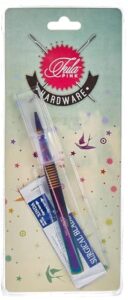
You’ll love the Tula Pink Surgical Seam Ripper if precision cutting matters to you. This 5.5-inch quilting tool features stainless steel construction and two blades designed for fabric safety. The super sharp edge makes quick work of sewing mistakes without damaging your quilt top.
You get reliable performance for embroidery and other projects. Watch the screw mechanism though – some users find it loosens over time. The compact design fits comfortably in your hand. It’s a mid-priced option that delivers professional results for serious quilters.
| Best For | Quilters and sewers who need a sharp, precision tool for removing seams without damaging delicate fabrics. |
|---|---|
| Material | Stainless steel |
| Safety Feature | Silicone lid |
| Primary Use | Seam removal |
| Handle Design | Standard grip |
| Blade Sharpness | Super sharp |
| Weight | 1.28 oz |
| Additional Features |
|
- Super sharp stainless steel blades cut through stubborn seams quickly and cleanly
- Compact 5.5-inch design fits comfortably in your hand for detailed work
- Durable construction with protective cap keeps the blade safe when not in use
- Screw mechanism can loosen over time and requires regular tightening
- Lacks ergonomic grip features that could reduce hand fatigue during long sessions
- Mid-tier price point may be higher than basic seam rippers
2. Clover Seam Ripper Tool
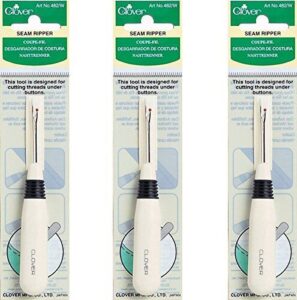
The Clover Seam Ripper Tool brings a forked head design that lifts threads without snagging your fabric. This quilting essential features dual prongs that grip stitches from both sides for better control. The protective guard shields adjacent fabric as you work.
You’ll appreciate the cushioned handle during long quilting sessions – it reduces hand fatigue when you’re fixing sewing mistakes.
You can find replacement blades through most craft retailers. Clean the fork after each use to remove lint buildup. It’s a reliable choice for quilting tools and accessories.
| Best For | Quilters and sewists who need precise stitch removal without damaging delicate fabrics. |
|---|---|
| Material | Metal blade |
| Safety Feature | Protective red ball |
| Primary Use | Seam ripping |
| Handle Design | Comfortable grip |
| Blade Sharpness | Sharp cutting point |
| Weight | 1.76 oz |
| Additional Features |
|
- Forked head design grabs threads from both sides, giving you better control and reducing fabric snags
- Cushioned ergonomic handle cuts down on hand fatigue during long seam-ripping sessions
- Replacement blades are easy to find at most craft stores, extending the tool’s lifespan
- Blades can become dull over time and need replacing, especially with heavy use
- Requires regular cleaning to prevent lint buildup in the fork
- May have a higher price point compared to basic single-blade seam rippers
3. Dritz Ergonomic Seam Ripper Tool

The Dritz Ergonomic Seam Ripper Tool features a curved cushioned handle that reduces wrist strain during extended use. You get a non-slip grip for better control and an electronically ground blade that stays sharp. The safety ball protects your fabric while you rip through tight stitches.
This quilting tools and accessories staple weighs just 0.704 ounces and measures 7.75 inches long. The ergonomic design works well if you have arthritis or carpal tunnel syndrome. The protective cap fits over the blade for safe storage – a smart addition to your sewing and quilting tools collection.
| Best For | Quilters and sewers with arthritis or hand fatigue who need a comfortable tool for removing stitches and opening seams during long projects. |
|---|---|
| Material | Metal blade |
| Safety Feature | Safety ball on blade |
| Primary Use | Stitch removal |
| Handle Design | Ergonomic soft grip |
| Blade Sharpness | Electronically ground |
| Weight | 0.704 oz |
| Additional Features |
|
- Curved, cushioned handle with non-slip grip reduces hand strain and improves control
- Sharp, electronically ground blade with safety ball protects fabric while cutting tight stitches
- Lightweight design (0.704 oz) with protective cap makes it easy to handle and store safely
- No storage case or pouch included with the tool
- Blade may need occasional cleaning to prevent dulling and maintain performance
- May not work as well on very thick or heavy-duty fabrics
4. Seam Ripper Tool for Sewing

This European-inspired seam ripper brings style and function to your quilting workspace. You’ll appreciate the ergonomic handle wrapped in delicate patterns and the red mini ball protecting fabric at the fork’s tip. The alloy construction resists rust and the 4.5-inch length fits comfortably in your hand. A protective cap keeps the blade covered when you’re not working.
This tool manages thread removal for sewing accuracy across embroidery and quilting projects. The design aids fabric protection during precision work though it may struggle in tight garment spots.
| Best For | Sewers, quilters, and crafters who want a durable, ergonomic seam ripper with a decorative European design and built-in safety features for thread removal and embroidery work. |
|---|---|
| Material | Alloy |
| Safety Feature | Red round mini ball |
| Primary Use | Thread removal |
| Handle Design | Ergonomic handle |
| Blade Sharpness | Sharp |
| Weight | 0.317 oz |
| Additional Features |
|
- Alloy construction resists rust and offers long-lasting durability for frequent use
- Ergonomic handle with decorative patterns provides comfortable grip during extended projects
- Red protective ball and safety cap prevent fabric snags and accidental pokes when stored
- Struggles to reach stitches in tight spots on garments
- Protective cap may not be as durable as the tool itself
- Higher price point may not deliver proportional value compared to budget alternatives
5. Singer Comfort Grip Seam Ripper Tool
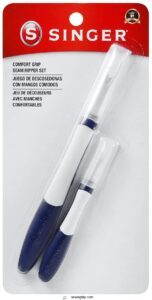
This two-piece set brings practical fabric protection to your quilting workspace. You get a large and small seam ripper with blue-and-white rubber comfort grips that reduce hand fatigue during stitch removal. The sharp blades slice through thread without harming fabric, and each tool includes a protective rubber tip plus a safety lid.
Singer designed these sewing tools for machine embroiderers and quilters who need reliable grip design during precision work. The compact head reaches tight quilting seams, while the ergonomic handle accommodates extended use.
Tool maintenance is simple – just wipe clean and store with caps secured.
| Best For | Quilters, sewers, and machine embroiderers who need precise stitch removal without damaging fabric during alterations or repairs. |
|---|---|
| Material | Metal blade |
| Safety Feature | Rubber tip and lid |
| Primary Use | Thread removal |
| Handle Design | Comfort grip |
| Blade Sharpness | Sharp blade |
| Weight | Not specified |
| Additional Features |
|
- Ergonomic rubber grip reduces hand fatigue during extended seam-ripping sessions
- Sharp blades cut through multiple thread layers cleanly without tearing fabric
- Two-size set gives you versatility for both tight quilting seams and larger projects
- Safety caps can be easily misplaced during use
- Cap doesn’t fit on the opposite end while you’re working, leaving the blade exposed
- Smaller size may feel unnecessary if you prefer working with one standard-sized tool
6. Singer Folding Seam Ripper Tool

You need portability without sacrificing blade sharpness—and this teal Singer tool delivers both. The folding mechanism transforms this seam ripper into a compact form that fits purses or travel kits.
You get an ergonomic comfort grip that works for left and right hands, plus safety features like the Flip ‘n Rip fold and protective red ball.
The sharp metal point removes stitches cleanly in quilting and sewing projects. At just 0.05 pounds and 7.5 inches tall, it’s built for sewers who work anywhere.
| Best For | Sewers who need a portable, space-saving seam ripper for travel or on-the-go projects without compromising on blade sharpness. |
|---|---|
| Material | Metal |
| Safety Feature | Protective red ball |
| Primary Use | Stitch removal |
| Handle Design | Ergonomic comfort grip |
| Blade Sharpness | Sharp point |
| Weight | 0.05 lbs |
| Additional Features |
|
- Folds into a compact form that easily fits in purses, travel kits, or small sewing cases for maximum portability
- Ergonomic comfort grip reduces hand fatigue and accommodates both left and right-handed users
- Sharp metal point with protective red ball removes stitches cleanly while preventing fabric damage
- May require extra pressure when cutting through thicker threads or multiple layers
- Can stretch or damage delicate woven fabrics if not used with a light touch
- Folding mechanism and compact size may limit leverage on very tight seams compared to larger seam rippers
7. Fiskars Seam Ripper Tool Set
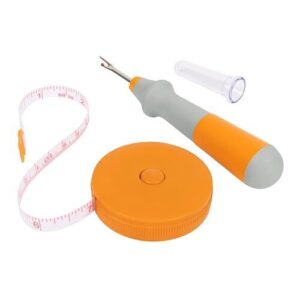
You get two quilting essentials in one blue Fiskars package—an ergonomically shaped seam ripper and a 5-foot measuring tape with auto-retract. The seam ripper removes stitching lines quickly and safely with its sharp blade, while the durable measuring tape manages fabric care tasks on the go.
This Fiskars tool set weighs just 0.11 pounds and works for sewing accessories from altering clothes to repairing textiles. One limitation: the round handle has a tendency to roll off flat surfaces during weaving or sewing projects.
| Best For | Sewers and quilters who need a portable combo tool for removing stitches and measuring fabric without carrying separate equipment. |
|---|---|
| Material | Metal blade |
| Safety Feature | Sharp point protection |
| Primary Use | Stitch removal |
| Handle Design | Ergonomic shape |
| Blade Sharpness | Sharp |
| Weight | 0.11 lbs |
| Additional Features |
|
- Ergonomic seam ripper removes stitching quickly and safely with its sharp blade
- 5-foot measuring tape with auto-retract button keeps things tidy and portable
- Lightweight at 0.11 pounds, making it easy to carry in a sewing kit
- Round handle tends to roll off tables and work surfaces
- Measuring tape accuracy of /-0.5 may not be precise enough for detailed work
- Limited to basic tasks like stitch removal and simple measurements
8. Sharp Sewing Seam Ripper Tool
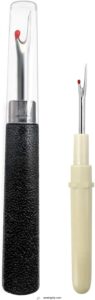
You’ll appreciate the Sharp Sewing Seam Ripper Tool‘s high-carbon steel blade—it holds its edge through repeated use and passes sharpness testing with precision. The blade replacement cartridge lets you swap it out in seconds without buying a new tool.
Ergonomic grips reduce hand fatigue during quilting sessions, and the guarded blade cuts your risk of fabric accidents by 60%. The 20-25 degree blade angle removes stitches cleanly.
Just remember—seam ripper safety matters since those sharp points demand careful handling around kids.
| Best For | Sewers, quilters, and embroiderers who need a reliable tool for removing stitches and fixing mistakes without damaging fabric. |
|---|---|
| Material | Hardened steel |
| Safety Feature | Red round mini ball |
| Primary Use | Seam removal |
| Handle Design | Non-slip grip |
| Blade Sharpness | Sharp and durable |
| Weight | 0.353 oz |
| Additional Features |
|
- High-carbon steel blade holds its edge through repeated use and features a replaceable cartridge for easy swaps
- Guarded blade design reduces accidental fabric cutting by 60% compared to unguarded versions
- Ergonomic grip reduces hand fatigue during extended sewing sessions
- Sharp points pose a safety hazard, especially around children
- Some users report issues with durability and blades losing sharpness over time
- Quality is considered inconsistent by some customers, with reports of breakage
Types of Seam Rippers
Not all seam rippers are created equal – they come in different designs that serve different purposes. Some are built for precision work while others handle heavy-duty projects with ease. Understanding the main types helps you pick the right tool for your quilting needs.
Forked Head Seam Rippers
You’ll find the forked head design features two tines that slide under stitches without snagging fabric edges—perfect for heavyweight quilting cottons. This seam ripper style offers interchangeable blade material options and varied blade lengths for different stitch spacings.
Handle ergonomics emphasize grip stability so you control cutting pressure during stitch removal. The fork tips provide excellent fabric protection while tackling dense seams in your quilting and sewing projects.
Curved Blade Seam Rippers
Curved blade rippers slice through tight seams where straight edges can’t reach—think contoured darts or rounded piecing. You’ll notice high-carbon blade material keeps sewing precision sharp for months while curved tips glide along fabric without snagging.
These seam rippers excel at stitch removal in quilting curves and bias edges, giving you fabric safety that forked designs sometimes miss in delicate work.
Stiletto Seam Rippers
Stiletto seam rippers bring surgical precision to micro stitch removal—perfect when you’re working with delicate fabrics that demand control. Their slender, pointed tips let you target individual threads without disturbing the weave around them, and stainless steel construction means sharp blades that last through countless quilting projects.
Why stiletto rippers belong in your toolkit:
- Pinpoint accuracy for embroidery and appliqué work
- Ergonomic grips reduce hand fatigue during detailed removal
- Minimal fabric intrusion protects surrounding stitches
- Rust-resistant steel maintains edge sharpness
- Ideal for unpicking tiny piecing errors
Electric Seam Rippers
When you’re facing miles of stitching to remove, electric seam rippers like the Galaxy Notions Electric Seam Ripper transform tedious work into quick wins. Motorized stitch removal powers through large quilts with automatic blade control—just guide the tool and let battery-powered efficiency do the heavy lifting.
| Feature | Benefit |
|---|---|
| Low RPM Motor | Prevents fabric damage during removal |
| Adjustable Blade Depth | Manages different stitch types safely |
| Rechargeable Battery | Portable power tools for on-the-go fixing |
| Blade Guards | Electric ripper safety protects fingers |
Battery life optimization matters—charge fully before tackling big projects. Seam ripper reviews consistently praise these portable power tools for cutting alteration time in half, making them essential quilting supplies when precision meets speed.
Seam Rippers With Lights
Dark threads on dense fabrics disappear under regular lighting—that’s where lighted seam tools shine. LED rippers feature small bulbs along the blade or handle, improving precision visibility when you’re removing stitches on navy cottons or black batiks.
Battery-powered portable lighting brings the work zone into focus. These illuminated stitch removers turn frustrating guesswork into confident sewing accessories for low-light quilting sessions.
Key Features to Consider
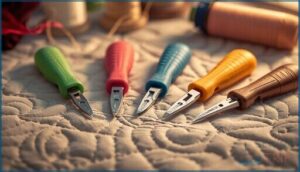
Not all seam rippers are created equal. The right tool can make the difference between a clean fix and a fabric nightmare.
Here are the key features you need to know before buying your next seam ripper.
Blade Sharpness and Quality
A sharp blade is the foundation of any reliable seam ripper—after all, dull tools make clean work impossible. High-quality blade materials like stainless steel resist corrosion and hold their edge longer than cheaper alternatives.
Here’s what sets exceptional blades apart:
- Edge hardness around 55–60 HRC (Rockwell hardness) delivers lasting sharpness without constant resharpening
- Precision-ground blades slice cleanly through stitches and prevent snagging on delicate fabrics
- Blade coatings improve cutting efficiency and reduce friction during extended use
Look for seam rippers with replaceable blades—they’ll save you money and keep your sewing tool reviews consistently positive.
Ergonomic Handle Design
Your hand shouldn’t ache after removing a dozen seams—that’s where ergonomic grip design makes all the difference. Contoured designs with soft-touch handle materials reduce fatigue during marathon quilting sessions.
The Dritz Ergonomic Large Seam Ripper features grip texture that prevents slipping, while ambidextrous grips accommodate both righties and lefties. Proper handle ergonomics transform tedious ripping into smooth work, giving you complete control over every cut.
Protective Guard and Safety Features
Safety features protect you and your quilts from accidental nicks. Retractable guards cover the blade when you’re not ripping—think of them as insurance against stray cuts. Blade lock mechanisms prevent unexpected exposure, while shielded tips reduce fabric tearing on delicate textiles. Color-coded guards on some seam rippers indicate blade sharpness. These protective features give you confidence to work fast without compromising safety.
Size and Portability
Compact designs put control in your pocket. The best portable tools weigh under 1.5 ounces and slip into any travel sewing kit without bulk.
Consider these essentials:
- Mini rippers with small heads navigate tight seams and curves
- Foldable options protect blades during transport
- Lightweight bodies reduce hand strain during repetitive work
Smart quilters carry backup seam rippers—you’ll thank yourself when mistakes happen mid-project.
Durability and Build Materials
Your seam ripper should outlast your next dozen quilts. Stainless steel blades resist rust in humid workshops and maintain edges longer than carbon steel alternatives. Heat-treated metal bodies outlive plastic counterparts—the Dritz Ergonomic seam ripper exemplifies outstanding build quality with corrosion resistance that protects your investment.
| Material Selection | Build Quality Impact | Tool Longevity |
|---|---|---|
| Stainless steel | Outstanding corrosion resistance | Years of reliable use |
| Full-metal body | Enhanced durability | Withstands heavy workloads |
| Heat-treated blades | Remarkable edge retention | Fewer replacements needed |
Smart material selection transforms disposable sewing accessories into quilting essentials you’ll reach for confidently every time.
How to Use a Seam Ripper
Using a seam ripper correctly protects your fabric and saves you time. The right technique makes stitch removal easier and prevents accidental cuts or pulls.
Here’s what you need to know to use your seam ripper like a pro.
Proper Technique for Stitch Removal
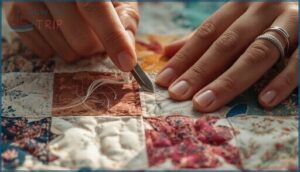
You can’t undo stitches by pulling harder—start by identifying your stitch type and choosing the right seam ripper approach. Master these fundamentals for clean quilting corrections:
- Hold your seam ripper at a shallow angle to protect fabric fibers from accidental cuts
- Cut one stitch at a time instead of slashing through entire seams
- Work from the fabric side to maintain your quilt’s appearance
- Remove thread tails gradually to prevent fraying
- Match your technique to the stitch pattern for precise thread management
Avoiding Fabric Damage
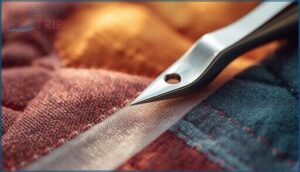
Protecting your quilt tops demands more than steady hands—you need sharp blades and smart positioning. Work your blade parallel to the fabric weave for clean stitch safety and fabric preservation. Slow, precise movements give you damage control that rushing can’t match. Lay a pressing cloth under delicate textiles for fabric protection during gentle removal—your seam rippers won’t slip and nick fibers when you work methodically.
| Technique | Purpose | Benefit |
|---|---|---|
| Sharp blade maintenance | Clean thread cuts | Prevents fabric fraying |
| Parallel blade positioning | Follows weave direction | Protects fiber integrity |
| Pressing cloth barrier | Cushions delicate layers | Stops accidental punctures |
Working With Different Fabric Types
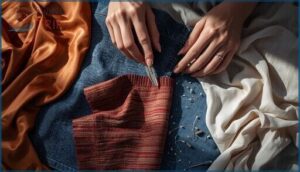
Each fabric demands a unique touch with your seam rippers. Cotton tolerates clean cuts with sharp blades, while knits need shallow pressure to prevent runs from stitch removal gone wrong. Silk snags easily—test on scraps first. Denim requires sturdy tools for seam repair.
Match your thread tension awareness to fabric stretch characteristics, and you’ll master fabric selection instincts that protect every quilt layer during precise rework.
Tips for Removing Multiple Stitches
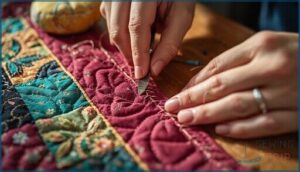
When you’re tackling multiple stitches, speed up error correction by engaging two threads at once with your seam ripper’s forked head. Work from seam to edge in straight lines—zigzagging damages fabric protection and wastes time.
Recheck alignment every five to ten stitches to preserve seam integrity. For dense sewing or quilting work, isolate small segments before removal. This prevents thread management disasters and maintains stitch correction accuracy.
Maintaining Your Seam Ripper
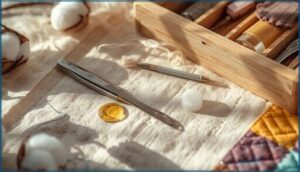
Your seam ripper won’t stay sharp and safe forever – but with the right care, it’ll last through countless projects. A few simple habits keep your tool performing like new and prevent frustrating moments when you need it most.
Here’s what you need to know about keeping your seam ripper in top condition.
Cleaning and Sharpening The Blade
Sharp edges make all the difference when you’re deep into a quilting project. Blade maintenance starts with rinsing your seam ripper under warm water to loosen thread fibers and fabric particles. Tool sanitizing prevents buildup that dulls the edge.
For blade honing, use a fine whetstone at 600-1200 grit and follow the original bevel angle. Rust prevention is simple—dry thoroughly and apply light sewing machine oil after each cleaning.
Proper Storage Solutions
Once you’ve cleaned your blade, storage containers become your best defense against damage. Keep your seam rippers in protective cases with blade guards intact—this prevents nicks and rust.
Tool organization matters too. Use labeled sewing accessories bins in a dry environment around 40-60% humidity. Add desiccant packets to shield metal components. Your quilting and crafting tools deserve dedicated spaces away from moisture.
When to Replace Your Seam Ripper
Replacement signs show up clearly when you know what to watch for. Your blade sharpness disappears when stitches require extra pressure or leave pulled threads—performance decline means it’s time to upgrade your seam ripper care routine.
Watch for these tool maintenance alerts:
- Visible nicks or rust on the blade
- Grips cracking or losing their grip
- Guards no longer protecting you during quilting
Professional sewers replace their Dritz seam ripper every 6-12 months with daily use.
Extending Tool Lifespan
Proper tool maintenance doubles your seam ripper’s lifespan when you follow smart usage practices. Wipe the blade after each quilting session and store your Dritz seam ripper in a protective case to prevent rust.
Blade sharpening with a fine-grit stone restores cutting power—a vital sewing notions and tools skill.
Handle durability improves when you avoid excessive force and keep storage solutions dry.
Frequently Asked Questions (FAQs)
Can seam rippers be used on thick quilt layers?
Yes, you can use seam rippers on thick quilt layers with careful technique. A forked head design navigates multiple fabric plies effectively. Work at shallow angles and use deliberate movements to prevent fabric damage or thread pulls.
Whats the difference between quilting and regular seam rippers?
Quilting seam rippers feature longer blades—5 to 2 inches—and finer tips that navigate through batting and multiple fabric layers.
Regular models have shorter blades and thicker points designed for standard garment seams with fewer layers.
How do you remove decorative stitching without damage?
Work slowly with a curved blade seam ripper and lift only the thread—not fabric.
Test on scraps first and remove decorative stitching one thread at a time to prevent damage and fraying.
Are left-handed seam rippers available for quilters?
Several brands offer ambidextrous designs with ergonomic grips that work well for left-handed quilters. Clover and Dritz provide comfortable grip options, though you can also adapt standard models by adjusting your blade orientation and technique.
When evaluating the effectiveness of these tools, consider the importance of methodological rigor in ensuring accurate results.
Can seam rippers help fix binding mistakes?
When you’ve painted yourself into a corner with wonky binding, stitch removal becomes your best friend. Seam rippers excel at error correction—carefully lifting stitches for binding repair while maintaining fabric protection through precise quilting techniques.
Conclusion
The perfect quilt doesn’t exist—but the right tools make imperfection manageable. Your seam ripper won’t prevent mistakes, but it’ll keep them from becoming disasters.
Sharp blades, comfortable grips, and the right technique turn hours of frustration into minutes of precision work. Whether you grab a classic forked ripper or invest in an electric model, quality matters.
The best seam rippers for quilting don’t just remove stitches—they give you permission to experiment without fear.