This site is supported by our readers. We may earn a commission, at no cost to you, if you purchase through links.
Your machine comes loaded with 20, 50, maybe 100 different stitch options—but you probably use the same two or three every time. That’s not laziness. Most sewers never learn what those cryptic symbols actually do or when to reach for them.
The straight stitch manages 80% of your work, sure, but the other stitches aren’t just decorative extras collecting dust. Each one solves a specific problem: preventing frayed edges on knits, creating invisible hems, reinforcing stress points, or adding stretch to seams that need to move.
Once you understand what each stitch actually does and which fabrics demand it, you’ll stop fighting your projects and start using your machine the way it was designed to work.
Table Of Contents
Key Takeaways
- Most sewers stick to two or three stitches, but each option on your machine solves a specific problem—preventing frayed edges, creating invisible hems, reinforcing stress points, or adding stretch to seams that need to move.
- Matching the right stitch to your fabric weight and type is non-negotiable: knits need stretch stitches like zigzag or triple stretch to prevent thread breakage, while wovens work best with standard straight stitches and proper seam allowances.
- Your machine’s performance depends on four key adjustments working together—stitch length, width, thread tension, and needle selection—and testing on scrap fabric before starting prevents most frustrating problems like puckering, skipped stitches, and thread bunching.
- Regular maintenance like weekly lint cleaning, replacing needles every 8-12 hours of sewing, and checking tension settings monthly keeps your stitch quality consistent and prevents most common issues before they derail your projects.
Key Sewing Machine Stitch Types
Your sewing machine comes loaded with more stitches than you’ll probably ever use, but a handful of them become your bread and butter. Each stitch type solves specific problems—whether you’re building seams, preventing fraying, or adding decorative flair to your work.
Let’s break down the essential stitches you need to know and when to reach for each one.
Straight Stitch
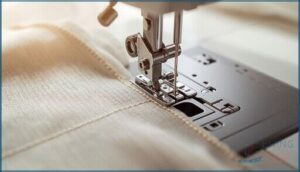
The straight stitch is your sewing machine’s bread and butter—the foundation for nearly every seam you’ll construct. Master this fundamental technique, and you’ll handle most sewing projects with confidence.
Set your stitch length between 2.0 and 3.0 millimeters for standard seams. This single-line stitch relies on proper stitch tension, correct thread choice, and attention to fabric grain and seam allowance.
Zigzag Stitch
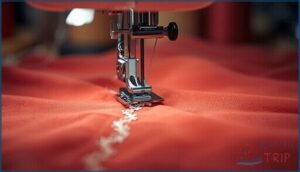
Zigzag stitch runs a non-straight path across your fabric, creating stretch tolerance that straight seams can’t match. You’ll adjust stitch width to control the angle—wider settings work great for decorative edges, while narrower widths finish raw edges without bulk.
This adaptable stitch type manages knit fabric compatibility beautifully and prevents fraying on wovens. Match your thread types and tension control to fabric weight for clean results.
Triple Stretch Stitch
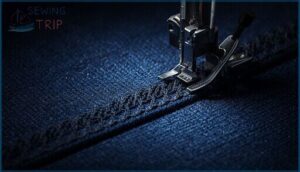
When you need seams that won’t pop under stress, the triple stretch stitch is your bread and butter. This stitch type layers three rows of interconnected stitching to distribute tension evenly across knit fabric and elastic seams.
Unlike a basic straight stitch or zigzag stitch, it creates genuine seam reinforcement for stretch fabric. Your sewing machine manages the complexity—you just adjust stitch tension and length to prevent puckering while maintaining flexibility.
Overlock and Serger Stitches
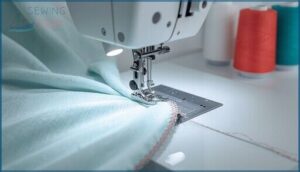
For bulletproof edge finishing, overlock techniques deliver what standard stitches can’t. Your serger machine trims fabric edges while wrapping them in a 3-thread or 4-thread configuration—overlocking that prevents fraying on knits and wovens alike.
Think of serging as your edge insurance policy. The overcast stitch moves faster than conventional sewing, enclosing raw edges with stretch stitches that flex instead of snap.
Blind Hem and Locking Stitches
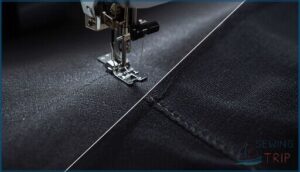
When discretion matters, a blind hem stitch catches just a whisker of fabric on the right side—usually 1–3 mm with a fine needle—creating nearly invisible hems on dress pants and skirts.
Your locking stitch, often a backstitch or secure chain configuration, anchors seams at stress points so they won’t unravel.
These techniques deliver professional-looking hemming and secure stitching that stands up to repeated wear.
Decorative Stitches
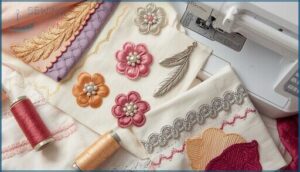
Decorative stitches transform ordinary fabric into something special. Feather stitch creates elegant borders, while satin stitch fills shapes for appliqué and embroidery. Cross stitch forms tiny X patterns, and scallop stitch adds wave-shaped edges. You’ll find herringbone edge perfect for V-shaped accents.
Test rayon or polyester thread on scrap fabric first—tension and stabilizer choice determine whether your decorative sewing techniques look polished or puckered.
Functions of Each Stitch Type
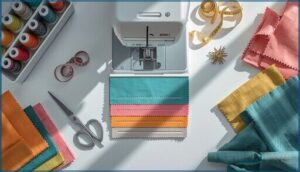
Knowing which stitch does what is the difference between a project that holds up and one that falls apart. Each stitch type has a specific job, whether you’re building strong seams, protecting raw edges, or adding decorative flair.
Let’s break down the core functions so you can match the right stitch to every task.
Seaming and Construction
When you’re building a garment from the ground up, seaming is your bread and butter. The straight stitch forms the backbone of garment assembly, joining fabric pieces along the fabric grain with precise 1/4 to 5/8 inch seam allowances. You’ll lock everything in place through these core techniques:
- Backstitch at seam endpoints for seam reinforcement
- Stretch stitches for knits that need flexibility
- Utility stitches that handle various fabric weights
- Overlock stitch for clean, professional seam finishing
- Edge binding integration during construction phases
Finishing and Edge Protection
Sealing your edges right the first time saves you countless hours down the road. Edge finishing is all about locking those raw edges against unraveling—whether you’re using an overcast stitch, blind hem stitch, or satin stitch on delicate hems. Proper fabric sealing and fray prevention with hemming techniques and seam reinforcement keep your projects looking sharp for years.
| Finish Type | Best Application |
|---|---|
| Zigzag | Wovens, general fray prevention |
| Overlock | Fast edge finishing, knits and wovens |
| Bias Binding | Clean, custom-width edges |
| Blind Hem | Invisible hems on dress pants |
| Stretch Stitches | Knit fabric hemstitches |
Stretch Fabric Solutions
When you’re tackling knit fabric or spandex blends, your sewing machine’s stretch stitches become your bread and butter. Fabric elasticity demands stitch types that move with the material—zigzag and stretch stitch prevent thread breakage while maintaining stretch recovery.
A ballpoint needle reduces skipped stitches on jersey knits. For bulletproof seams, serger machines reliably enclose raw edges while preserving that essential give.
Decorative and Embellishment Uses
Transform plain fabric into textile artistry with decorative stitching built into your machine. Satin stitch fills in monograms and shapes with dense thread coverage, while feather stitch creates eye-catching borders on quilting designs.
You’ll find embellishment techniques like scallop and cross stitches perfect for fabric embroidery on hems and cuffs. Decorative sewing techniques mimic hand embroidery without the time investment—your machine does the heavy lifting.
Specialty Applications (e.g., Buttonholes, Appliqué)
Specialty stitches tackle jobs that regular seams can’t handle. Your machine’s buttonhole techniques sequence bar tacks and dense zigzag to create clean openings, while appliqué methods secure fabric shapes with satin stitch borders.
Here’s what you’ll master:
- Buttonhole stitch variations (straight, keyhole, invisible) sized to your buttons
- Appliqué stitch options for raw-edge or turned-edge attachment
- Stretch appliqué using wide zigzag for knit fabric flexibility
- Decorative edging with scallop and shell tuck embroidery designs
Stabilizers prevent puckering under dense decorative stitches. The blind hem stitch creates nearly invisible hems on formalwear.
Choosing The Right Stitch for Fabric

Your fabric choice dictates which stitch will succeed and which will fail spectacularly. A heavy canvas laughs at lightweight stitches, while delicate silk shreds under aggressive tension.
Let’s match your fabric to the stitch that’ll handle it like a pro.
Matching Stitch to Fabric Weight
Fabric weight drives every stitch choice you make. Light sheers need narrow zigzag or specialized stitches, while medium cottons handle standard straight stitch beautifully. Heavy canvas demands longer stitch length and reinforced backstitch.
Thread compatibility and needle selection must match your fabric’s heft—finer needles for delicate work, larger ones for thick materials. Always test on scraps first, adjusting stitch tension to prevent puckering or loose seams.
Best Stitches for Knits Vs. Wovens
Knit fabric stitches need flexibility—that’s where stretch stitch options like zigzag or triple stretch shine. You’ll prevent thread breakage and seam distortion.
Woven seam techniques rely on a standard straight stitch with proper seam allowance for stability.
For knits, use ballpoint needles and shorter stitch length (2.5–3.0 mm); wovens prefer universal needles at 2.0–2.5 mm.
Fabric compatibility depends on matching sewing machine settings to fabric types.
Stitch Options for Delicate Fabrics
Delicate seams demand finesse. You’ll want a fine 60/8 or 70/10 needle paired with lightweight stitches—a narrow zigzag or tiny running stitch works wonders. Reduce presser foot pressure and lower your tension to prevent puckering.
For edge finishing, a gentle rolled hem or narrow overlock keeps things soft. Stabilization techniques, like tissue paper under your fabric, prevent slippage. Test on scraps first—your fabric handling skills will thank you.
Heavy-Duty Stitching for Thick Materials
Thick Fabric Handling calls for muscle. You need a 90/14 to 110/18 needle paired with heavy-duty threads—topstitch polyester carries the load. Bump your stitch length to 3.0–4.0 mm to avoid perforation.
A walking foot grips Dense Material Seams without shifting. Increase presser foot pressure slightly, and straight stitch becomes your workhorse. Industrial Stitching settings prevent skipped stitches and puckering every time.
Stitch Selection for Different Projects
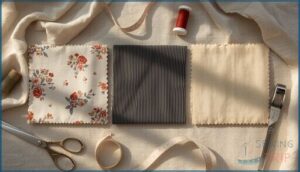
Your project shapes every stitch choice you make. A quilt needs different techniques than a stretchy T-shirt, and home decor demands its own approach entirely.
Let’s break down how to match your stitches to what you’re actually building.
Garment Construction
Your garment construction toolkit starts with smart stitch selection guide choices that match every seam to its fabric. For woven textile selection, you’ll use straight stitches with 5/8-inch allowances, while knits demand stretch stitches or narrow zigzags.
Master fabric preparation through pre-washing, then tackle garment assembly with proper sewing techniques—French seams for delicates, flat-felled for durability. Seam finishing prevents fraying and elevates your garment sewing from homemade to handcrafted excellence.
Quilting and Patchwork
Patchwork techniques rely on your sewing machine’s straight stitch—that bread and butter 2.5mm seam at 1/4-inch allowance. You’ll piece quilt block patterns with precision, then switch to longer lengths for free-motion quilting through batting options.
Fabric selection matters: 100% cotton feeds smoothly. Your quilting threads need low lint, consistent tension. Walking feet prevent shifting across layers.
Decorative stitches add embroidery flair to finished blocks.
Home Decor and Craft Projects
Home decor sewing projects demand your machine’s versatility. You’ll use satin stitches for appliqué edges on cushions, zigzag at narrow widths to prevent fraying in curtain sheers, and topstitching to reinforce drapery panels.
French seams give silk curtains clean finishes, while decorative stitches transform plain fabric into wall hangings with texture.
Heavy-duty zigzag manages canvas upholstery, and blind hems create invisible curtain edges—craft embellishments that enhance any space.
Embroidery and Decorative Details
Embroidery techniques turn your machine into a design powerhouse. You’ll rely on satin stitch for smooth lettering, backstitch for crisp outlines, and fill stitches for textured areas.
Thread selection matters—polyester and rayon deliver durability and luster, while metallic threads need careful tension adjustments.
Fabric stabilization prevents puckering during dense stitching. Control stitch density through digitized settings, and match needle type to your fabric’s weave for impeccable decorative details.
Adjusting Machine Settings for Stitches
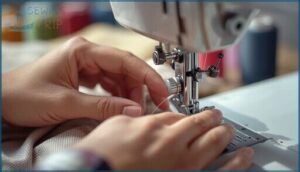
Getting the right stitch isn’t just about pushing a button—your machine needs fine-tuning to match what you’re sewing. Think of it like tuning a guitar: length, width, tension, and needle all work together to create perfect stitches.
Getting the right stitch means fine-tuning your machine like tuning a guitar—length, width, tension, and needle all work together
Let’s break down the four key adjustments that’ll transform your sewing from frustrating to impeccable.
Stitch Length and Width Adjustments
You’ll find that stitch calibration starts with length and width—they’re your bread and butter for fabric response. Straight stitch usually runs 2.0 to 3.0 mm for standard seams, while stretch stitches need wider settings for seam stability.
Test on scraps first, adjusting until you achieve proper stitch balance. Remember, thread tension interacts with these settings, so expect to fine-tune as you master sewing machine basics across different stitch types.
Thread Tension for Optimal Results
Balanced tension ensures clean stitches on both sides—top and bobbin threads meet in the middle. Your sewing machine’s tension adjustment dial usually ranges from 0 to 9, with 4 to 5 as your starting point.
Different thread types and fabric interaction demand small tweaks: increase tension if underside loops appear, decrease if top thread breaks. Test each change on scraps to maintain consistent stitch quality and proper thread flow.
Needle Selection Based on Stitch Type
Once tension’s dialed in, your needle becomes the next critical player. Wrong needle types cause skipped stitches and thread breakage, no matter how perfect your tension is.
Match needle materials and sizes to your stitch types:
- Universal needles (size 80/12-90/14) handle straight and zigzag stitches on woven fabrics
- Ballpoint needles prevent skipped stitches when you’re working stretch stitches on knits
- Sharp or microtex needles deliver precise straight stitches on tightly woven materials
- Heavy-duty needles (90/14-110/18) power through decorative topstitching on thick fabrics
- Embroidery needles protect metallic threads during satin stitch work
Fabric thickness dictates your needle size—lightweight needs 60/8 to 70/10, while heavy materials demand 90/14 or larger. Replace dull needles regularly for consistent stitch quality across all sewing techniques.
Calibrating for Fabric and Thread
Your machine needs calibration tests on scrap fabric before starting any project. Fabric uptake varies between materials—heavy canvas eats more thread than silk—so presser foot pressure adjustments prevent stitch binding. Run test swatches with your actual fabric and thread selection to check thread tension and stitch formation.
Smart fabric choice paired with proper sewing machine maintenance ensures your stitch selection performs flawlessly every time.
Troubleshooting Common Stitch Issues
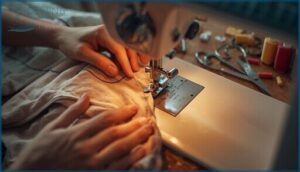
Even the best machine acts up sometimes, and stitch problems can stop your project cold. The good news is that most issues stem from a handful of fixable causes you can troubleshoot yourself.
Let’s walk through the most common stitch headaches and how to get your machine back on track.
Skipped or Uneven Stitches
Skipped stitches tell you something’s wrong before your project falls apart. A dull or bent needle—that’s usually the culprit causing fabric slippage and missed loops.
Needle damage prevents consistent penetration, while incorrect machine calibration for your fabric weight creates gaps.
Check your stitch tension next, because improper threading throws off even a straight stitch.
Quick troubleshooting and regular sewing machine maintenance keep your stretch stitches and stitch selection reliable every time.
Thread Bunching or Loops
Frustration builds fast when loops appear on your fabric—but understanding thread tension and bobbin issues gives you control. Your sewing machine creates looped stitches when components don’t work in harmony, and troubleshooting these five culprits restores perfect stitch selection:
- Loose upper thread tension pulls bobbin thread to the surface
- Improperly wound bobbins create underside loops on knits
- Wrong needle selection prevents proper stitch formation
- Tension imbalances between upper and bobbin threads
- Low-quality thread incompatible with your fabric
Regular sewing machine maintenance prevents these headaches.
Adjusting for Fabric Puckering
Puckering emerges when fabric layers move unevenly through your machine, creating waves nobody wants. Lower your presser foot pressure 1–2 numbers and increase stitch length by 0.5 mm on delicate materials—this gives fibers room to settle.
A walking foot distributes fabric evenly for seam stability, while loosening bobbin tension 0.1–0.2 balances your straight stitch. Test your stitch selection on scraps first.
Regular Maintenance for Consistent Stitches
You’ll dodge most stitch problems with regular machine cleaning. Brush lint from feed dogs and bobbin areas weekly to preserve stitch quality.
Replace needles every 8–12 hours of sewing, and check thread tension settings monthly. Oil moving parts per your maintenance schedules to prevent skipped stitches.
Annual professional servicing keeps your machine settings calibrated, ensuring your stitch selection guide delivers reliable results project after project.
Frequently Asked Questions (FAQs)
How do I create custom decorative stitch combinations?
Think of decorative stitch combinations as weaving a tapestry—you’re layering decorative stitches through fabric manipulation and texture creation.
Your Stitch Selection Guide helps master decorative sequencing for custom embellishments using strategic Decorative Sewing Techniques.
What tension settings work best for metallic thread?
Lower your top tension to 0–0 for metallic thread—factory settings are too tight. Reduce bobbin tension slightly, use a metallic needle, and test stitch balance on scrap fabric before starting your project.
When working with metallic threads, it’s vital to understand proper thread tension to achieve best results.
Can I use embroidery stitches on leather fabric?
Yes, you can embroider leather fabric with the right setup. Choose sharp leather needles, use tear-away stabilizers, and select simplified decorative stitches.
Test thread choices and stitch compatibility on scrap pieces first for best results.
How do I prevent thread breakage with specialty stitches?
Proper needle selection and thread tension prevent breakage. Match your thread to fabric compatibility, test stitch optimization on scraps, and keep your machine clean—that’s your breakage prevention toolkit for decorative and stretch stitches.
Whats the difference between coverstitch and flatlock stitches?
Coverstitch uses multiple needles and loopers to create parallel top threads with stretch stitches underneath, while flatlock seam construction produces flush, nearly invisible joins—both critical for fabric elasticity, though machine settings and thread configuration differ markedly.
Conclusion
The fastest way to slow down your sewing? Ignoring the stitch dial. Understanding sewing machine stitch types and functions transforms that cryptic selection wheel from decoration into precision tool.
You don’t need to memorize every option—just know which five stitches handle your regular fabrics and projects. Match the stitch to the material, adjust your settings deliberately, and suddenly those seams stop puckering, edges quit fraying, and your machine finally works with you instead of against you.