This site is supported by our readers. We may earn a commission, at no cost to you, if you purchase through links.
Walk into any sewing machine showroom and you’ll face a wall of options—mechanical workhorses, whisper-quiet computerized models, embroidery machines that practically sew for you.
The price tags swing wildly too, from $100 to well over $2,000, and the salesperson has opinions.
It’s a lot.
The wrong choice doesn’t just waste money; it kills momentum before you’ve sewn a single seam.
Knowing what to look for when buying a sewing machine turns that overwhelming wall into a short, manageable checklist—and keeps you from paying for features you’ll never touch.
Table Of Contents
- Key Takeaways
- Match The Machine to Your Sewing Goals
- Choose The Right Machine Type
- Check Essential Built-in Stitches
- Compare Stitch Control Features
- Test Fabric Compatibility First
- Inspect Build Quality and Power
- Review Helpful Accessories and Feet
- Consider Bobbin and Feeding Systems
- Set Budget and Service Expectations
- Top 3 Sewing Machines to Consider
- Frequently Asked Questions (FAQs)
- Conclusion
Key Takeaways
- Match the machine to your actual sewing goals — garments, quilts, or heavy fabrics each demand different features, so knowing your projects before you shop saves you from paying for things you’ll never use.
- Build quality matters as much as stitch count, since a metal interior frame and a strong motor are what keep your machine running smoothly through thick fabrics and long sessions without wearing out early.
- A few key accessories — like a walking foot, zipper foot, and buttonhole foot — dramatically expand what your machine can do, so check what’s included and what’s compatible before you commit.
- Budget beyond the price tag by factoring in warranty coverage, local dealer support, and regular servicing every 12–18 months, because the real cost of ownership goes well past the sticker price.
Match The Machine to Your Sewing Goals
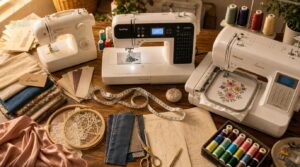
The right sewing machine isn’t a one-size-fits-all kind of purchase — it really depends on what you’re planning to make. Before you start comparing brands and features, it helps to get clear on your actual sewing goals. Here are a few key questions to ask yourself first.
Knowing your goals also helps you figure out whether you’d benefit from something like a computerized sewing machine built for easy operation, which can simplify a lot of decisions for newer sewers.
Garments, Quilts, or Décor
Your project type shapes everything. A garment maker needs fabric compatibility and solid stitch selection — think satin stitch edging for clean appliqué work and stretch stitches for knits.
Quilters rely on a quilting foot and precise quilt binding. Décor projects call for decorative stitches and beading support.
Know your craft first, then shop.
Occasional Vs Daily Sewing
How often you sew matters more than you’d think.
A once-a-week hobbyist needs something reliable but simple.
A daily sewist needs a machine rated for 2–4 hours of continuous use, with stronger motors, better heat management, and easier access for maintenance.
Pushing a light-duty machine every day is a shortcut to frustration — and repair bills.
Beginner or Advanced Use
Your skill level shapes everything about which machine makes sense for you.
Starter machines keep things simple — clear presets, automatic needle threading, and basic stitch menus that don’t overwhelm. As you grow, adjustable stitch length, computerized controls, and an automatic buttonhole feature open new doors. Buying ahead of your skills is fine; buying beyond your patience isn’t.
Hobby or Small Business
Turning your hobby into a side hustle changes the machine you need. Production volume matters now — you’re not just sewing for fun, you’re sewing to sell.
- Price your work to cover materials, time, and platform fees
- Brand your products with consistent packaging and photography
- Reinvest early profits into better attachments or a second machine
Future Sewing Plans
Think beyond where you are now.
If your plan is to grow from sewing hobby to a home business within two years, your machine needs to grow with you.
Budget for a computerized unit with embroidery in 12 to 18 months, schedule regular maintenance, and set quarterly goals for skills like garment construction and quilt precision.
Choose The Right Machine Type
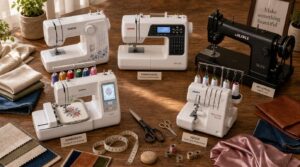
Not all sewing machines are built the same, and that difference matters more than most people expect. The type you choose shapes what you can make, how fast you grow, and whether the machine keeps up with your ambitions. Here are the five main types worth knowing before you buy.
Mechanical Sewing Machines
A mechanical sewing machine is the workhorse of the sewing world — simple, reliable, and built to last. Its metal interior frame keeps everything stable, reducing vibration even through heavy fabric layers.
The Mechanical Drive System runs on a belt‑driven motor, which means fewer parts to fail. For budget‑conscious buyers, it’s a solid starting point in any sewing machine buying guide.
Proper adjustment of metal tension discs ensures consistent stitch quality.
Electronic Sewing Machines
Electronic sewing machines sit a step above mechanical models, offering smart features without the full complexity of a computerized sewing machine. A brushless DC motor keeps stitches smooth and consistent, whether you’re working on silk or stacked denim. Built-in fabric sensors automatically adjust feed pressure, so you’re not constantly stopping to tweak settings.
Features like an automatic needle threader, automatic thread cutter, and quick-set bobbin save real time. A digital display lets you select stitches at a glance.
Computerized Sewing Machines
Computerized sewing machines are like having a co-pilot at your machine. They handle the small stuff automatically, so you can focus on the creative work.
Here’s what sets them apart:
- Touchscreen Navigation lets you browse hundreds of built-in stitches in seconds
- Stitch Memory saves your custom combinations for repeat projects
- Automatic Needle Threader eliminates the squinting and frustration entirely
A differential feed smooths out stretchy knits, while LED lighting keeps your workspace bright. The digital display shows your stitch length, width, and tension at a glance — no guessing required.
Heavy-duty Sewing Machines
If your projects push past everyday fabrics into denim, canvas, or leather, a heavy-duty sewing machine is worth every cent. These machines are built around a powerful motor rating — often exceeding 500 watts — giving you the high penetration power needed to drive through multiple thick layers without stalling.
| Feature | Why It Matters |
|---|---|
| Metal interior frame | Reduces vibration, adds durability |
| Dual feed system | Keeps thick layers feeding evenly |
| Thick fabric handling | Handles denim, leather, upholstery |
| Stable construction design | Maintains stitch consistency at speed |
Unlike a standard home machine, a heavy-duty model weighs between 12 and 20 kilograms — that extra mass isn’t accidental. It’s stable construction design doing its job, keeping your stitches even when motor power is working hardest.
Embroidery Sewing Machines
Want to take your sewing beyond the basics? Embroidery sewing machines let you stitch decorative designs, monograms, and intricate patterns directly onto fabric.
They use a hoop-and-needle system with design transfer options via USB or wireless, so you can load custom artwork instantly.
A large screen shows design previews, while automatic thread trimming keeps your workflow clean and your finishes sharp.
Check Essential Built-in Stitches
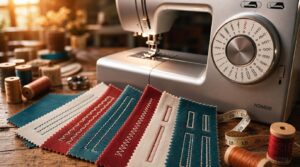
Not every stitch on a machine is one you’ll actually use, but a few are completely non-negotiable. Before you buy, it’s worth knowing exactly which ones to look for. Here are the essential built-in stitches your machine should have.
Straight Stitch
Think of the straight stitch as your sewing machine’s home base — it’s the foundation every other technique builds on. Stitch length commonly runs 2.0 to 2.5 mm for clean seams on woven fabrics. Pair it with a size 80/12 universal needle, backstitch at both ends, and you’ve got a seam that holds.
Zigzag Stitch
If the straight stitch is home base, the zigzag stitch is where things get interesting.
It moves side to side as fabric feeds forward, giving you flexibility the straight stitch simply can’t offer.
Use it to finish raw edges, sew knits, or add a decorative touch to hems — all with one built-in stitch.
Stretch Stitch
The zigzag stitch manages a lot, but when you’re working with knit fabrics, you need something that actually stretches with the seam. That’s where the stretch stitch earns its place.
It flexes as fabric moves, so seams won’t pop. Use a ballpoint needle, balanced tension, and adjustable stitch length to keep things smooth.
Blind Hem Stitch
The blind hem stitch is your secret weapon for hems that look hand-finished. It catches just a few threads on the right side, so the stitching stays hidden.
Use a blind hem foot to guide the fold accurately, match your thread color to the fabric, and press the hem flat before you start.
Clean results every time.
Buttonhole Stitch
Buttonhole stitch is what turns a raw cut into a clean, finished opening. It wraps the edge tightly, so your button glides through without fraying the fabric over time.
Most machines handle this automatically — look for one-touch automatic buttonhole as a key feature. Pair it with the right buttonhole foot, and sizing stays consistent every time.
Compare Stitch Control Features
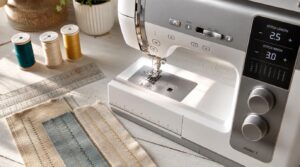
Once you’ve got the right stitches, the next step is making sure you can actually control them. A machine that lets you fine-tune length, width, and speed puts you in charge of every seam. Here’s what stitch control features to look for.
Adjustable Stitch Length
Think of stitch length as the throttle for your seams. Most machines offer a length range from about 0.5 mm up to 5.0 mm, with everyday seaming landing around 2.0 to 2.5 mm.
- Delicate fabrics need shorter lengths (1.0–2.0 mm) for clean, precise seams
- Cotton and blends work best around 2.0–3.0 mm
- Basting and gathering call for 3.5–4.5 mm
- Denim benefits from slightly longer lengths to avoid stitch crowding
- Computerized models offer preset length memory for quick fabric switches
Your stitch length selector directly controls how the feed dogs move fabric through. Get this right, and everything else falls into place.
Adjustable Stitch Width
While stitch length controls the pace of your seam, stitch width controls how far your needle swings side to side.
Most machines offer a stitch width selector ranging from 0 to 7 mm, with high‑end models reaching 9 mm. Wider settings suit zigzag and satin stitch work; narrower ones keep delicate fabrics clean.
Some machines include width memory presets so you’re never starting from scratch.
Needle Up/down Control
Here’s a feature that quietly changes how you sew: needle up/down control lets you decide exactly where your needle stops every time you pause.
- Manual Activation uses a dedicated needle up needle down button to set position instantly.
- Automatic Positioning moves the needle without extra steps when stitching pauses.
- Memory Presets save your preferred position for consistent results across projects.
The needle down function holds fabric in place during pivot control turns, keeping corners sharp. It’s a small detail with a big payoff.
Speed Control Slider
Speed is your secret weapon. A speed control slider lets you ease into every stitch instead of wrestling with a jumpy foot pedal.
Beginners love the safety speed lock, which caps your maximum pace so fabric jams stay rare. Experienced sewers appreciate speed memory settings that recall preferred rates across projects — pure consistency, zero guesswork.
One-step Buttonholes
One-step buttonholes take the guesswork out of one of sewing’s trickiest tasks. You place your button in the buttonhole foot slot, and the buttonhole sensor automatically sizes the hole to match.
No measuring, no math. The machine runs the full cycle in one continuous pass, delivering consistent hole accuracy every time — even across an entire garment.
Test Fabric Compatibility First
A machine might look great on paper, but the real test happens the moment fabric meets the feed dogs. Different materials — from slippery cotton to thick denim — behave in very different ways, and not every machine manages them all well. Here’s what to check regarding fabric compatibility.
Lightweight Cotton
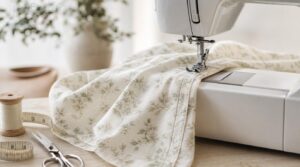
Lightweight cotton is a great place to start when testing a machine’s versatility. It weighs under 150 g/m², so it flows, drapes softly, and feeds through easily — but a poorly tensioned machine will pucker it fast.
Look for consistent smooth fabric feeding and stitch quality across plain weaves.
Bonus: it accepts adaptable prints beautifully, making it ideal for lightweight sewing projects.
Stretchy Knits
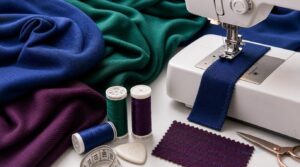
Stretchy knits are a whole different animal compared to cotton. Jersey knit stretch moves with you, but it needs a machine that can keep up.
Look for a zigzag stitch option and presser foot pressure adjustment — without those, your seams will pucker or pop.
A good spandex blend holds its shape wash after wash, so your finished pieces actually last.
Denim Layers
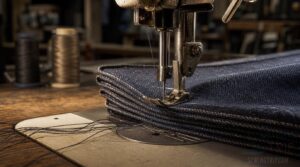
Denim is the real stress test for any machine. If it can power through multiple denim layers without skipping stitches or jamming, you’re in good shape. Look for a machine with a high-torque motor and dual feed — those two things make all the difference when fabric gets thick fast.
Upholstery Fabrics
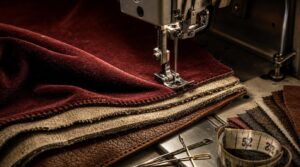
Upholstery fabrics are a whole different beast. These materials are built to last — think 15,000 to 100,000+ double rubs of abrasion resistance — and they need a machine that can actually handle their thickness.
Look for walking foot or dual feed compatibility, solid fabric handling capacity, and a motor strong enough to push through without stalling.
Smooth Fabric Feeding
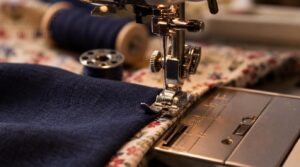
No matter what fabric you’re working with, smooth feeding is what separates a clean seam from a frustrating one. Features like differential feed and presser foot pressure control how evenly material moves under the needle.
A walking foot or dual feed system grips from both sides, while good needle plate design keeps everything tracking straight.
Inspect Build Quality and Power
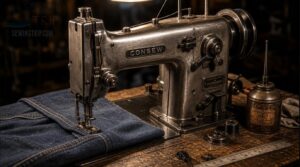
A beautiful stitch means nothing if the machine that makes it falls apart after six months. Build quality and power are what separate a machine that lasts decades from one that wobbles, strains, and quits on you mid-seam. Here’s what to look at before you buy.
A beautiful stitch means nothing if the machine making it falls apart after six months
Metal Interior Frame
Think of a metal interior frame as the backbone of your sewing machine. Frame rigidity keeps the needle drop precise, so your stitches land exactly where you want them.
Metal gear construction and solid metal gears also reduce vibration, protecting the motor over time. For heavy-duty projects, this foundation isn’t optional — it’s everything.
Stable Machine Weight
A heavier machine is your best friend when working with heavy fabrics. Weight distribution design keeps all four feet firmly planted, so the machine doesn’t creep or shake mid-seam.
- Counterweight integration balances the needle arm
- Non-slip feet grip smooth surfaces
- Base stability features prevent lateral shifting
- Rubberized layers dampen vibration
- Leveling feet correct uneven tables
Heavy and stable construction means better machine longevity.
Strong Motor Torque
A weak motor is a dealbreaker.
Strong motor torque is what powers your needle through denim stacks, thick upholstery, and heavy-duty layers without stalling. Low speed torque keeps stitches accurate even at a crawl, so detail work stays clean.
Better torque also means motor longevity — less heat, less wear, fewer breakdowns over time.
Low Vibration
A shaky machine throws off your stitches and wears you out fast. Low vibration is a sign of serious build quality — and it matters more than most buyers realize.
Here’s what keeps vibration in check:
- Isolation mounts decouple the frame from bench chatter, cutting vibration by up to 60 percent.
- A counterweight system cancels out unbalanced forces during each needle cycle.
- A rigid frame prevents flex under heavy fabrics like denim.
- Soft start technology ramps up speed gradually, avoiding abrupt impulse vibrations.
Needle balance also plays a role — a well-calibrated needle bar reduces micro-shocks with every stitch.
Quiet Operation
A loud machine isn’t just annoying — it’s exhausting.
Quiet operation comes down to smart engineering: sound dampening materials inside the machine cavity absorb high-frequency noise, while vibration control systems and sealed bearings keep that familiar rattle at bay.
Well-designed machines can drop ambient noise by up to 10 decibels — roughly conversation level.
Review Helpful Accessories and Feet
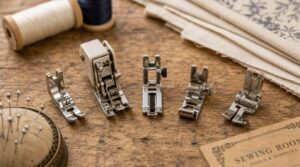
The right presser feet can honestly transform what your machine is capable of. Most machines come with a starter set, but knowing which feet actually matter helps you shop smarter. Here are the five you’ll want to look for.
Buttonhole Foot
A buttonhole foot is one of those accessories that quietly saves you hours of frustration. It snaps onto your machine and guides consistent, clean buttonholes every time.
- One-step operation completes the whole buttonhole in a single pass
- Four-step process gives you more manual control
- Stretch fabrics need interfacing or a stretch buttonhole foot
- Clean the foot’s slot regularly to prevent lint buildup
Zipper Foot
Once you’ve tackled buttonholes, zippers are next on your sewing machine buying checklist.
A zipper foot is narrow by design — that slim profile lets you stitch right next to the zipper teeth without the foot getting in the way. It’s a small tool that makes a big difference, especially on garments, pillow covers, and bags.
Blind-hem Foot
The blind-hem foot is the quiet achiever of your presser feet collection. It uses a central metal guide to align your fabric fold, so the needle only catches a tiny thread of the top layer — leaving the hem nearly invisible from the right side.
Perfect for dress hems, trousers, and curtains.
Walking Foot
If the blind-hem foot works quietly behind the scenes, the walking foot is the one doing the heavy lifting. It adds upper feed dogs that grip your top fabric layer while the machine’s lower dogs pull from beneath — both moving in sync. That’s what makes it a must-have feature for quilting, denim, and vinyl.
| Feature | Why It Matters |
|---|---|
| Layer feeding | Keeps all layers moving at the same rate |
| Quilt stability | Prevents batting and backing from shifting |
| Pressure adjustment | Adapts grip for thick or slippery fabrics |
| Foot installation | Snaps onto the presser bar with a compatible shank |
Always test on scrap layers first and set a moderate stitch length — short stitches bulk up fast.
Quarter-inch Foot
When precision is everything, the quarter-inch foot earns its place in your kit. It has a built-in guide edge that keeps your fabric exactly ¼ inch from the needle — no guessing, no drifting. For quilters focused on piecing precision, that consistency is the difference between corners that match and blocks that don’t.
Consider Bobbin and Feeding Systems
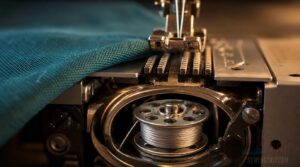
The bobbin and feeding system might not be the flashiest part of a sewing machine, but it’s where smooth stitching is won or lost. How your machine manages thread from below and moves fabric through can make a real difference, especially across different project types. Here’s what to look at before you commit.
Top Drop-in Bobbin
The top drop-in bobbin is one of those small features that makes a real difference. You simply lift the cover and drop the bobbin straight in — no fumbling, no fuss.
The transparent cover view lets you monitor thread levels at a glance. Most systems also feature a jam proof design, keeping interruptions to a minimum so you stay in your flow.
Quick-set Bobbin
The quick-set bobbin takes everything good about the top drop-in and makes it even smoother.
Instead of fiddling with a traditional front loading bobbin case, you get automatic alignment — drop it in, and it snaps into place.
A built-in bobbin window confirms placement instantly, so you’re back to sewing fast with confident, consistent bobbin thread tension.
Droppable Feed Dogs
Think of your feed dogs as tiny conveyor belts — useful most of the time, but sometimes you need to take the wheel yourself. That’s exactly what the feed dog drop lets you do.
Flip the feed dog lever, and you activate free motion quilting and freehand embroidery, moving fabric in any direction you choose.
Adjustable Presser Pressure
Not all fabrics behave the same — and your machine shouldn’t treat them like they do. That’s where adjustable pressure for the presser foot comes in. A simple pressure dial adjustment lets you control how firmly the presser foot grips the fabric, giving you real fabric feed control without fighting your machine every seam.
Crank up the heavy fabric pressure for denim or multiple quilt layers, and your feed dogs pull everything through smoothly. Drop it to a low pressure setting for silk or chiffon, and you’ll avoid those frustrating puckers. Getting this balance right is the secret to stitch quality balance across every project you tackle.
Free-arm Sewing
The free arm is one of those small features that makes a surprisingly big difference. It’s a narrow, detachable extension that lets you slide sleeves, cuffs, and trouser hems right onto the machine for clean tubular stitching — no awkward bunching or guesswork.
Here’s what the free arm helps you do:
- Sleeve hemming without distorting the fabric shape
- Sewing cuffs and necklines with smooth, even seams
- Repairing circular seams like pocket openings with control
- Improving needle visibility on tight curves
- Supporting foot pressure adjustment on delicate tubular pieces
Keep the arm area lint-free for reliable arm care maintenance.
Set Budget and Service Expectations
A sewing machine is an investment, so it’s worth thinking through the money side before you buy. Beyond the price tag, things like warranties, dealer support, and maintenance costs all factor into what you’ll actually spend over time. Here’s what to keep in mind as you set your budget.
Entry-level Price Range
Entry-level sewing machines usually fall between $100 and $300, giving you real options without breaking the bank. Budget models under $150 cover the basics — a handful of stitches, simple mechanics, nothing fancy.
Step up to the $200–$300 range, though, and the cost vs. features trade‑off starts working in your favor: more stitches, adjustable settings, and better build quality.
Warranty Coverage
Once you’ve settled on a price point, check what the warranty actually covers. A solid sewing machine warranty usually protects against defects in materials and workmanship — but coverage exclusions for wear, misuse, or power surges are common. Some plans split warranty duration between parts and labor. Here’s what to watch for:
- Warranty duration — look for at least a one-year coverage window
- Coverage exclusions — confirm what’s not covered, like accidental damage
- Claim process — know whether repairs go through a dealer or direct to the manufacturer
- Transferability rules — a transferable warranty adds resale value
- Extended warranty — worth considering if you plan to sew heavily
An extended warranty or service plan can cover repairs well beyond the factory term. Just make sure any authorized repair network is accessible near you — a warranty means little if the nearest service center is three states away.
Local Dealer Support
A good warranty only helps if someone nearby can honor it. That’s where local dealer support makes all the difference. A local sewing machine dealer offers Training Sessions, in-store repairs, and Parts Stock for popular models — often with 24–72 hour turnaround on special orders.
| What Dealers Offer | Why It Matters |
|---|---|
| Repair Services | Fast fixes without shipping |
| Demo Events | Try before you commit |
| Warranty Claims | Handled by trained techs on-site |
Maintenance Costs
Owning a machine means budgeting beyond the purchase price. Sewing machine maintenance adds up through labor expenses, spare parts, and energy consumption.
A full-service maintenance visit at a dealer repair shop usually runs around $95. Factor service contracts into your budget planning for sewing machines — they reduce surprise repair bills and keep production downtime low.
New Vs Used Machines
Both new and used machines have real trade-offs worth knowing. A new machine gives you a factory warranty, the latest features, and zero wear on components — but it loses value fast.
A used machine costs less upfront and can hold its value well if it’s been properly maintained. Just inspect the bobbin case and handwheel carefully before buying.
Top 3 Sewing Machines to Consider
Now that you know what to look for, it’s time to put that knowledge to work. These three machines check the most important boxes without making your head spin. Here are the top picks worth your attention.
1. Bernette Sewing Machine
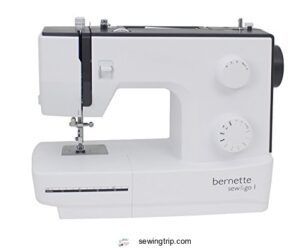
The Bernette sewing machine is a solid pick if you’re just getting started or mostly tackling light projects like curtains, placemats, or simple repairs. It’s beginner-friendly by design — manual controls, easy bobbin loading, and an LED work light make setup quick and frustration‑free.
That said, its plastic housing can feel fragile under pressure, and tension may get inconsistent on tighter weaves. Think of it as your learning machine, not your workhorse.
| Best For | Beginners and casual sewists who want a simple, low-pressure machine for light projects like curtains, placemats, and small repairs. |
|---|---|
| Skill Level | Beginner |
| Built-in Stitches | Basic stitches |
| Frame Material | Plastic housing |
| Bobbin System | Easy drop-in |
| Free Arm | Not specified |
| Drop Feed | Not specified |
| Additional Features |
|
- LED work light keeps your stitching area bright and easy to see
- Simple manual controls and easy bobbin loading mean less time setting up, more time sewing
- Compact size fits nicely on a small desk or table without taking over the space
- Plastic housing feels fragile and may not hold up well with heavy use
- Motor and ratchet noise can make operation feel rough and less smooth than expected
- Tension gets inconsistent on tighter or heavier fabrics, so it’s not great for more demanding projects
2. Juki Computerized Sewing Machine
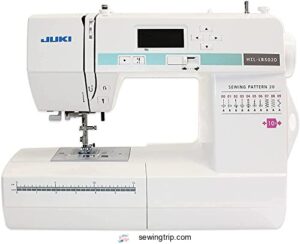
The Juki HZL-LB5020 is where things get serious. With 20 built-in stitches, an LCD screen, and a 7-point feed dog system, it processes everything from delicate lycra to thick denim without breaking a sweat. The automatic needle threader and drop-in bobbin cuts setup time dramatically—a real win for busy sewists.
It’s built on an aluminum frame, so it stays stable and quiet during long sessions. Ready to move beyond basics? This machine grows with you.
| Best For | Sewists at any level who want a reliable, feature-packed machine that handles everything from beginner projects to thick denim and quilting. |
|---|---|
| Skill Level | All Levels |
| Built-in Stitches | 20 stitches |
| Frame Material | Aluminum frame |
| Bobbin System | Drop-in bobbin |
| Free Arm | Available |
| Drop Feed | Yes |
| Additional Features |
|
- The automatic needle threader and LCD screen make setup fast and easy, even if you’re new to computerized machines.
- A 7-point feed dog system plus drop-feed mode means it handles delicate fabrics and heavy layers without fuss.
- The aluminum frame keeps things sturdy and quiet — great for long sewing sessions.
- Some buyers have reported defects and found manufacturer support frustrating, especially with repair costs.
- There’s no dedicated thread-cutter button — you have to do it manually.
- It’s made in Taiwan, not Japan, which may surprise buyers expecting traditional Juki build quality.
3. Janome Sewing Machine Model 2212
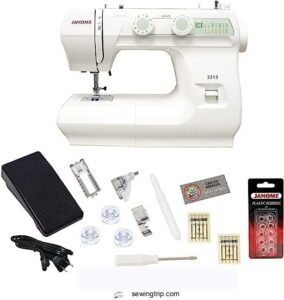
The Janome 2212 keeps things refreshingly simple. At $217, it’s built on a metal interior frame, weighs a solid 14 lb, and works with everyday fabrics without fuss. You get 12 built-in stitches, adjustable length and width, a free arm, and a four-step buttonhole foot — everything a beginner needs to hit the ground running.
No needle threader, no fancy extras. But if you want a reliable, no-nonsense machine to learn on, this one delivers exactly what matters.
| Best For | Beginners and casual sewers who want a straightforward, dependable machine without a steep learning curve. |
|---|---|
| Skill Level | Beginner/Casual |
| Built-in Stitches | 12 stitches |
| Frame Material | Metal with plastic parts |
| Bobbin System | Standard bobbin |
| Free Arm | Yes |
| Drop Feed | Yes |
| Additional Features |
|
- Solid metal frame gives it a sturdy feel that holds up over time
- 12 stitches plus a four-step buttonhole foot covers most everyday sewing needs
- Portable enough to take to class, and the bonus accessories mean you’re ready to go right out of the box
- No built-in needle threader, so setup takes a little more patience
- Only 12 basic stitches — not the machine for decorative or embroidery work
- The manual skips some setup steps, so you’ll likely need a YouTube video for first-time bobbin threading
Frequently Asked Questions (FAQs)
Can I upgrade or add accessories later?
Yes, most machines let you add feet and accessories later. Specialty options like a walking foot or zipper foot are widely available. Just check your machine’s shank type first — compatibility matters.
How noisy is the machine during operation?
Sewing machines are about as quiet as a vacuum cleaner — 60 to 90 decibels depending on speed and fabric. Metal-frame machines run noticeably quieter than plastic ones.
Does the machine come with a carrying case?
Not every machine comes with a carrying case — some include one, others don’t. Check the box contents before buying, since a good protective case saves your machine from bumps and dust.
What is the motor power and stitching speed?
Most home machines run 200–750W motors and top out at 500–1,000 stitches per minute. Need heavy fabrics? You’ll want higher torque. More power means fewer stalls and smoother results.
Are replacement parts readily available and affordable?
For most major brands, replacement parts are easy to find — needles, bobbins, and feet are widely stocked online and at local dealers. Lead times usually run 3 to 14 days, and prices stay affordable.
Can I sew leather on a home machine?
Yes, with a few tweaks, your home machine can handle leather. Use a size 90/14–110/18 leather needle, a Teflon presser foot, and set stitch length to 0–0 mm for clean, durable seams.
How do I choose the right needle size?
Needle size depends on your fabric. Light fabrics like silk need sizes 60–70, cotton uses 70–90, and denim needs 90– Match thread weight too — heavier thread needs a thicker needle.
What thread types work best for beginners?
All-purpose polyester thread is your best starting point. It’s strong, forgiving, and works on most fabrics without fuss. Pair it with a universal needle and you’re ready for almost any beginner project.
How often should a sewing machine be serviced?
Think of your machine like a car — skip the tune-ups and it’ll stall on you. Service every 12–18 months for weekly sewing, or every 24–36 months for occasional use.
Is a serger necessary alongside a sewing machine?
A serger isn’t essential, but it’s a must-have for knits. It trims and finishes seams in one pass, keeping stretchy fabrics like T-shirts and leggings neat — something a standard machine can’t fully replicate.
Conclusion
Back in the day, sewers trusted their gut and a good needle—today, you have specs, reviews, and a clear framework to guide every decision.
Knowing what to look for when buying a sewing machine means you’re not gambling on a guess; you’re investing in a tool that fits your hands, your projects, and your pace.
Pick the machine that matches where you’re headed, not just where you’re right now. That choice pays forward, stitch by stitch.
- https://sewing.com/best-beginner-sewing-machine-2026-buyers-guide
- https://www.consumerreports.org/appliances/sewing-machines/buying-guide
- https://sewjoyfulteaching.com/blogs/news/best-sewing-machines-for-beginners-2025
- https://www.lindazs.com/post/best-sewing-machine-for-beginners-2026
- https://community.seamwork.com/