This site is supported by our readers. We may earn a commission, at no cost to you, if you purchase through links.

Your machine can produce two wildly different results from the same fabric, and the difference comes down to a dial you might be ignoring. Utility stitches build the bones of every garment—straight seams that hold jeans together, zigzags that keep knit edges from unraveling, backstitches that anchor stress points so pockets don’t rip out.
Decorative stitches turn that same fabric into something worth a second look, adding scalloped hems, monogrammed initials, or floral borders that make a project feel custom.
The real magic happens when you understand which settings serve structure and which serve style, because choosing the wrong one doesn’t just waste thread—it weakens seams or buries delicate patterns under tension errors.
Table Of Contents
- Key Takeaways
- Utility Vs Decorative Stitch Settings Overview
- Common Utility Stitch Settings Explained
- Popular Decorative Stitch Settings and Uses
- Matching Stitch Settings to Fabric Types
- Thread and Needle Selection for Each Stitch Type
- Adjusting Tension and Stitch Length for Quality
- Troubleshooting Common Stitch Setting Issues
- Top Tools and Products for Stitch Perfection
- Frequently Asked Questions (FAQs)
- Conclusion
Key Takeaways
- Utility stitches prioritize structural integrity with shorter lengths (1.5–3 mm) and tighter tension for seams that withstand stress, while decorative stitches sacrifice some strength for visual impact through variable density and loosened tension that lets intricate patterns shine.
- Fabric weight dictates everything from needle size to stitch length—lightweight materials need 2.0–2.5 mm stitches with fine needles and stabilizers to prevent puckering, while heavyweight fabrics demand 3.5–4 mm lengths with size 100/16 needles and increased presser foot pressure.
- Thread selection transforms results: polyester and core-spun threads deliver durability for utility work, while rayon and metallic specialty threads create the sheen and color depth that make decorative stitches worth the extra setup time.
- Stabilizers aren’t optional for decorative work—tear-away supports medium fabrics, cut-away handles dense patterns on heavy materials, and water-soluble disappears from sheers, each preventing the distortion that ruins hours of stitching.
Utility Vs Decorative Stitch Settings Overview
Your sewing machine offers two distinct stitch families, and knowing which one to reach for separates efficient sewers from frustrated ones. Utility stitches handle the structural work your projects depend on, while decorative stitches transform plain fabric into something worth showing off.
Let’s break down what sets these two categories apart so you can dial in the right settings every time.
What Are Utility Stitches?
Utility stitches are your sewing machine’s workhorses—built for strength, durability, and function rather than flash. They handle seams, reinforce stress points, and secure hems with precision. Thread choice and needle selection matter here: polyester or cotton-wrapped poly threads paired with 90/14 to 100/16 needles deliver reliable results. Proper tension adjustments prevent skipped stitches, while matching stitch density to fabric weight ensures clean, lasting seams.
| Stitch Type | Primary Function | Typical Settings |
|---|---|---|
| Straight Stitch | Basic seaming, topstitching | 2.0–3.0 mm length |
| Zigzag Stitch | Edge finishing, stretch fabrics | 3–5 mm width, 2 mm length |
| Backstitch | Reinforcement at stress points | Short reverse sequence |
| Basting Stitch | Temporary fabric hold | 4–5 mm length |
| Overlock Stitch | Seam finishing, prevent fraying | Variable width/length |
What Are Decorative Stitches?
Decorative stitches flip the script—they’re about style, not seams. These built-in patterns—florals, geometrics, eyelets, scripts—add embellishment without hooping fabric for embroidery. Your decorative stitch catalog ranges from simple scallops to intricate motifs, each adjustable for width and length.
Stitch density controls texture visibility; fabric selection determines whether lightweight cotton showcases patterns or heavy denim flattens them. Thread choices like metallic or viscose amplify effects, while specialized needle types prevent breakage on delicate stitch patterns.
| Stitch Category | Common Examples |
|---|---|
| Floral Motifs | Roses, vines, leaf clusters |
| Geometric Patterns | Diamonds, borders, chevrons |
| Script-Style | Monograms, cursive decorative stitching techniques |
| Edge Finishing | Scallops, picot, wave embroidery stitches |
Key Differences Between Utility and Decorative Stitches
Understanding the divide means mastering different priorities. Utility stitches focus on strength—shorter lengths lock seams tight, medium tensions keep fabric layers bonded. Decorative stitches prioritize visual impact through stitch density and thread choice adjustments. Fabric weight dictates needle selection: heavier materials need tougher needles for utility work, while decorative patterns require sharp tips to preserve intricate details.
Utility stitches lock seams with strength and tension, while decorative stitches deliver visual impact through density and thread choices
| Feature | Utility Stitches | Decorative Stitches |
|---|---|---|
| Primary Purpose | Durability and seam strength | Visual texture and embellishment |
| Stitch Length | Shorter (1.5-3 mm) | Variable (0.5-5 mm) |
| Tension Adjustments | Standard to tight settings | Loosened for smooth thread flow |
Common Utility Stitch Settings Explained
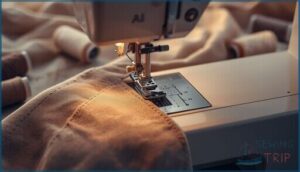
Utility stitches are the workhorses of your sewing machine, handling everything from seaming garments to finishing edges. Getting your settings right makes the difference between a project that holds up after 50 washes and one that falls apart in three.
Let’s break down the three utility stitches you’ll use most often and exactly how to set them up for reliable results.
Straight Stitch Settings and Uses
Your sewing machine’s straight stitches form the foundation of every project, running from 2.0 to 4.0 mm in stitch length. Shorter settings around 2.0–2.5 mm deliver stronger seam reinforcement in woven fabrics, while longer lengths work beautifully for basting.
Proper tension control and needle selection guarantee consistent stitch density across any fabric selection, giving you reliable results every time.
Zigzag Stitch Settings and Applications
Your machine’s zigzag stitch manages everything from seam finishing to elastic application with widths between 1.0 and 4.0 mm. Set stitch length from 0.5 to 3.0 mm depending on your fabric stability needs.
- Wider zigzag stitches create more stretch across seam lines for knit fabrics
- Shorter stitch density prevents edge creep on slippery materials
- Proper tension control balances upper and lower threads for clean edge finishing
- Walking feet improve fabric stability during irregular material handling
- Adjust tension settings to eliminate surface loops on your sewing machine
Overlock and Buttonhole Stitches
Your sewing machine’s overlock stitch trims and encases fabric edges in one pass, preventing fraying on seams and hems. Buttonhole variations create reinforced openings with dense bar tacks at each end for durability.
These utility stitches demand precise stitch selection and edge finishing techniques. Master serger maintenance and stitch reinforcement settings to achieve professional results on garments requiring secure closures and clean seam allowances.
Popular Decorative Stitch Settings and Uses
Decorative stitches transform ordinary fabric into something worth showing off. Your machine probably offers dozens of patterns, from simple scallops to complex florals, and each one requires different settings to look sharp.
Let’s break down the main types, how dense versus open patterns affect your work, and where you’ll actually use these stitches in real projects.
Types of Decorative Stitches
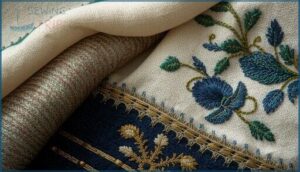
Your machine’s Decorative Stitch Catalog unlocks a world beyond basic seams. Satin stitches create smooth filled lines, while Feather Patterns and Cretan Stitch add texture to floral motifs. The Herringbone Edge delivers dimensional detail, and buttonhole variations elevate appliqué work.
These embroidery stitches transform plain fabric into artistic canvases when you match stitch patterns to your project’s needs.
Dense Vs Open Decorative Patterns
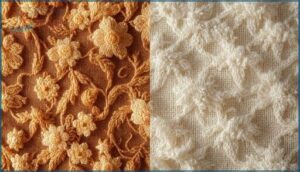
Pattern choice between dense and open decorative stitches reshapes your project’s final look. Dense patterns pack threads tightly together, boosting stitch visibility and coverage but raising fabric distortion risk on lightweight materials. Open designs let fabric breathe while reducing thread tension demands.
Stitch density directly impacts:
- Surface coverage – Dense patterns create bold, opaque effects
- Fabric stabilization methods – Tighter stitches need stronger backing
- Thread weights – Open patterns work with finer threads
- Stitch pattern creation – Spacing controls texture depth
Creative Applications for Decorative Stitches
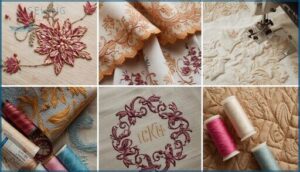
Think of decorative stitches as your signature stamp on every project. You can transform appliqué designs with scalloped edges, add quilting patterns that turn simple blocks into heirlooms, or master monogramming techniques for custom touches. Stitch texture builds through layered embroidery stitches, while controlled stitch density prevents fabric embellishment disasters. Your sewing machine becomes a creative tool when you match decorative stitching to purpose.
| Application | Stitch Type | Best Use |
|---|---|---|
| Appliqué Designs | Satin/Blanket | Edge finishing |
| Monogramming Techniques | Dense motifs | Customization |
| Quilting Patterns | Open geometric | Texture building |
Matching Stitch Settings to Fabric Types
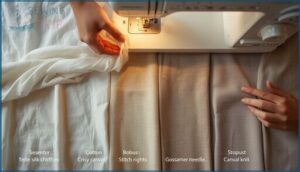
Your fabric choice isn’t just about color and pattern—it dictates which stitch settings will work and which will wreck your project. Lightweight materials demand different approaches than heavyweight canvas, and decorative stitches need extra support to avoid disaster.
Here’s how to match your machine settings to whatever fabric lands on your worktable.
Choosing Stitches for Lightweight Fabrics
Lightweight fabrics demand a delicate touch. Start with a straight stitch at 2.0–2.5 mm length to minimize perforation and maintain drape. Use fine needles (size 70/10) paired with polyester thread for smooth seams.
For decorative stitches, choose low-density patterns and test on scrap fabric first. Add a lightweight stabilizer to prevent puckering, and adjust tension control carefully to avoid distortion.
Selecting Settings for Heavyweight Materials
Thick materials flip the script. You’ll need longer stitch lengths (3.5–4 mm) to distribute tension evenly across heavyweight seams and prevent strain. Boost presser foot pressure to grip dense textiles firmly, and switch to a walking foot for consistent fabric feed.
For ideal thick seam management and stitch density control:
- Use denim or sharp needles (size 100/16) for fabric compatibility
- Select topstitching thread for strength and visibility
- Increase tension control slightly to prevent loose loops
- Test stitch density on scrap layers before committing
- Adjust needle selection based on weave density and thread weights
Using Stabilizers for Decorative Stitching
Heavy fabrics demand sturdy settings, but decorative stitches need something different: stabilizers. These backing layers prevent puckering and distortion when embroidery techniques add complexity. Your stabilizer type choice depends on fabric support needs and stitch density—tear-away works for medium fabrics, while water-soluble vanishes from sheers without a trace. Match stabilizer weight to your decorative stitch patterns for impeccable tension control.
| Stabilizer Type | Best For | Removal Method |
|---|---|---|
| Tear-Away | Medium-weight cotton, denim | Tear along perforations |
| Cut-Away | Heavy fabrics, high-density patterns | Trim excess, leave backing |
| Water-Soluble | Sheer fabrics, delicate embroidery | Dissolve in water |
| Fusible | Knits requiring stretch control | Heat-bond, stays attached |
| Spray Adhesive | Temporary fabric stabilization | Washes out over time |
Thread and Needle Selection for Each Stitch Type
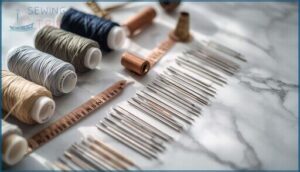
Your stitch won’t look right if you’re pairing it with the wrong thread or needle. Utility stitches demand durability and strength, while decorative patterns need threads that catch the light and needles that won’t shred delicate fibers.
Here’s how to match your supplies to your stitch type for perfect results every time.
Best Threads for Utility Stitches
Utility stitches demand threads that won’t quit when tension control and fabric compatibility matter most. Your thread selection directly impacts stitch durability and breakage prevention across every sewing machine usage scenario.
- Polyester threads deliver impressive strength and abrasion resistance for high-stress seams
- Core-spun polyester adds stretch resistance while maintaining excellent thread tension stability
- Bonded nylon maximizes durability in demanding applications requiring professional-grade thread materials
Ideal Threads for Decorative Effects
Decorative stitches shine most vividly with specialty thread materials designed for visual impact. Your color choices and stitch visibility transform ordinary fabric into statement pieces through strategic thread selection.
| Thread Type | Best For | Key Benefit |
|---|---|---|
| Rayon embroidery | Florals, monograms | Striking sheen, rich colors |
| Metallic threads | Holiday projects, accents | Eye-catching sparkle |
| Variegated | Border designs | Multi-color effects |
Polyester embroidery thread offers exceptional strength for dense patterns, while rayon delivers that soft luxury look. Match your fabric and thread compatibility carefully—metallic threads need lower tension and specialized needles to prevent fraying during embellishment techniques.
Needle Types for Smooth Stitching
Your needle choice shapes every aspect of stitch formation and fabric penetration. Universal needles balance versatility with medium-weight fabrics, while ballpoint types prevent snags on knits. For decorative work on your sewing machine, microtex needles minimize perforation marks. Match needle types to thread interaction—stretch needles reduce skipped stitches on elastic materials, and sharp needles handle dense wovens precisely.
- Universal needles work across most woven textiles with balanced stitch density
- Ballpoint needles maintain consistent needle placement without damaging knit fibers
- Microtex sharp needles create minimal visible marks on delicate fabrics
Adjusting Tension and Stitch Length for Quality
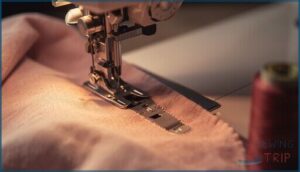
Getting your tension and stitch length dialed in is where the real magic happens—this is what separates professional results from frustrating do-overs. Your machine’s tension dial and length settings aren’t just numbers to guess at; they’re precise controls that determine whether your stitches sit flat and balanced or create puckered messes.
Let’s break down the exact adjustments you need for both utility and decorative work.
Tension Settings for Utility Stitches
You’ll start your tension settings for utility stitches around 2.0 to 3.0 on most sewing machines—that’s your baseline for straight stitches and basic seams. Lower tension prevents fabric stretch on lightweight materials, while denser fabrics tolerate slightly higher settings.
Test on scrap fabric first, adjusting the tension dial until your thread tension produces even stitches without puckering. Machine calibration varies by brand, so your manual guides precise stitch density control.
Adjusting Tension for Decorative Patterns
With decorative stitches, you’ll need to loosen your upper thread tension slightly—usually reducing it by 0.5 to 1.0 from your utility baseline—to let richer texture emerge without pulling the fabric.
Dense patterns demand careful tension control and increased presser foot pressure for consistent thread balance, while open designs may need tighter settings to prevent birds-nesting underneath.
Fabric stability matters too, so pair lightweight materials with water-soluble stabilizers.
Stitch Length and Width Recommendations
You’ll want to set straight stitches between 2.5 and 3.0 mm for balanced seam integrity on medium-weight fabrics, while decorative stitches demand shorter lengths around 1.0 to 2.0 mm to control stitch density.
Fabric thickness dictates your width—zigzag utility stitches usually use 3 to 5 mm, but thread tension and needle selection affect how those measurements translate into clean stitch variation across different materials.
Troubleshooting Common Stitch Setting Issues
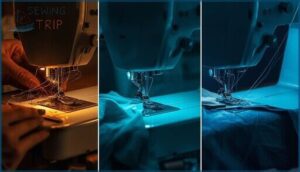
Even with the right settings, stitching problems can throw off your entire project. Thread breaks, fabric bunches, and skipped stitches are frustrating but fixable once you know what’s causing them.
Here’s how to troubleshoot the three most common stitch setting issues you’ll face.
Fixing Thread Breakage
Thread breakage often stems from mismatched needle selection and thread tension issues. Check your needle size first—it should match your thread thickness and fabric weight. Adjust thread tension gradually, testing after each change.
Inspect for burrs on the bobbin case that create fabric friction. Rethread completely with the presser foot raised to prevent breakage. This stitch optimization ensures smooth stitching without constant interruptions.
Preventing Fabric Bunching and Puckering
Fabric bunching happens when tension settings clash with fabric compatibility. Align your presser foot pressure with fabric weight—too much squeeze triggers unwanted gathers.
Use stabilizers for fabric stabilization on delicate materials, preventing stitch density from warping the weave. Adjust your stitch length shorter on slippery fabrics for better bunching control.
Test tension on scraps first, making small dial adjustments until pucker prevention becomes automatic and your stitches flow smoothly.
Solving Skipped and Uneven Stitches
Skipped stitches often result from needle alignment issues and thread tension imbalances, which disrupt stitch balance. Replace bent needles immediately, as they cannot penetrate fabric properly, leading to gaps in stitch density.
Next, check thread quality, since frayed strands feed inconsistently through tension discs. Adjust stitch length shorter on dense fabrics to improve needle and stitch management.
Top Tools and Products for Stitch Perfection
Getting your stitches right isn’t just about technique—it’s about having the right gear in your corner. The tools you choose can make the difference between frustration and impeccable results, whether you’re tackling utility seams or intricate decorative patterns.
Here are four essential products that’ll enhance your stitch game from functional to outstanding.
1. Brother Sewing And Embroidery Machine
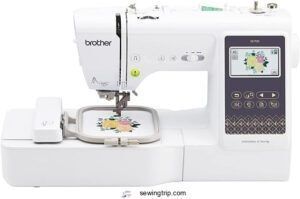
The Brother SE700 gives you real control over both utility and decorative stitches through its 3.7-inch touchscreen display that simplifies machine settings. You’ll access 103 sewing patterns plus 135 machine embroidery designs with wireless connectivity that transfers embroidery files straight from your device.
The automatic needle threader and jam-resistant bobbin management keep your sewing speed consistent at up to 710 stitches per minute. Its 4×4-inch embroidery field manages decorative stitches and detailed stitch management for projects demanding precision without constant manual adjustments.
| Best For | Crafters who want to tackle both everyday sewing projects and custom embroidery work without switching between machines. |
|---|---|
| Primary Use | Sewing and embroidery |
| Material | Metal and plastic |
| Compatibility | Standalone machine |
| Skill Level | Beginner to experienced |
| Key Benefit | Versatile projects |
| Weight | 15.6 pounds |
| Additional Features |
|
- Wireless file transfer and touchscreen editing let you move designs from your phone or computer without cables or memory cards
- Automatic needle threader and jam-resistant bobbin save time on setup so you can focus on the actual sewing
- 103 stitches plus 135 embroidery designs give you plenty of built-in options before you need to buy extra patterns
- The 4×4-inch embroidery area limits you to smaller designs, so large decorative projects won’t fit
- Tight throat space makes quilting bulky fabrics or king-size blankets frustrating
- You’ll need to budget extra for threads, specialty needles, and design software that aren’t included
2. Brothread Polyester Embroidery Thread Kit
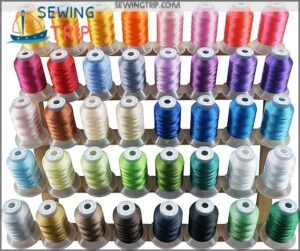
Your decorative stitches demand thread that won’t let you down mid-project. The Brothread 40-color polyester embroidery thread kit delivers 550 yards per spool with the tensile strength you need for dense patterns without constant breakage.
This color variety matches most fabric and thread compatibility requirements across Brother, Babylock, Janome, Singer, Pfaff, and Bernina embroidery machines. Each 40-weight spool maintains excellent colorfastness through commercial laundering while the slight sheen enhances decorative stitches.
You’ll find thread selection becomes straightforward with the included color chart showing compatible machine color numbers.
| Best For | Home embroiderers and hobbyists who need a reliable, colorfast thread variety for decorative stitching across multiple machine brands without frequent spool changes. |
|---|---|
| Primary Use | Embroidery thread |
| Material | Polyester |
| Compatibility | Multiple machine brands |
| Skill Level | All levels |
| Key Benefit | Color variety |
| Weight | 40 WT |
| Additional Features |
|
- 40 colors with 550 yards each give you plenty of options and length for complex projects without running out mid-design
- Strong tensile strength handles dense embroidery patterns on commercial-grade fabrics like workwear and uniforms without breaking
- Keeps its color and sheen through repeated commercial washing, making it practical for items that need frequent laundering
- Wood storage rack sold separately, so you’ll need to find your own organization solution
- Warranty claims require contacting the manufacturer directly instead of going through your retailer
- May need machine tension adjustments depending on your specific embroidery setup and project requirements
3. Water Soluble Embroidery Stabilizer
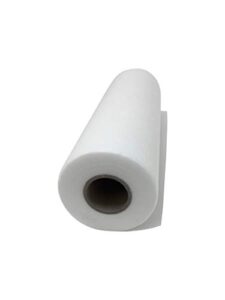
You can’t execute perfect decorative stitches on sheer fabrics without the right stabilizer. Water-soluble options, like this 1.5 oz material, dissolve completely in warm water, eliminating show-through on delicate embroidery projects. The fibrous non-woven construction provides stability during stitching without leaving residue behind.
For high-density designs, double up the layers since this stabilizer runs thin. After completing your embroidery machine work, soak the fabric until all traces disappear. This prevents puckering while maintaining proper thread tension throughout complex patterns on lightweight materials like chiffon or organza.
| Best For | Embroiderers working on delicate, sheer, or lightweight fabrics who need a stabilizer that completely disappears after stitching without leaving any trace or residue. |
|---|---|
| Primary Use | Embroidery stabilizer |
| Material | Non-woven fibrous |
| Compatibility | Hand and machine embroidery |
| Skill Level | All levels |
| Key Benefit | Complete dissolution |
| Weight | 1.5 oz |
| Additional Features |
|
- Dissolves completely in warm water, leaving zero residue on finished embroidery projects like Free Standing Lace or bookmarks
- Cost-effective 25-yard bulk roll provides plenty of material for multiple projects at a better value than smaller packages
- Easy to handle fibrous non-woven texture that works well for both hand and machine embroidery on delicate fabrics
- Thinner 1.5 oz weight means you’ll need to double up layers for high-stitch-count or dense embroidery designs
- Can leave clumpy residue or fibers if you don’t rinse the fabric thoroughly enough after completing your project
- Requires warm water and multiple soaks to dissolve completely, which adds extra time to your finishing process
4. VANICE Monogramming Presser Foot
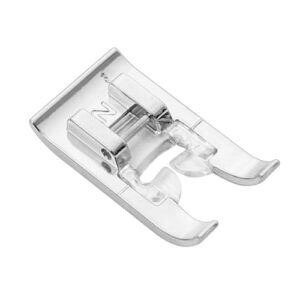
Open-toe visibility transforms monogramming from guesswork into precision work. The VANICE Monogramming Presser Foot (A51) features a transparent design that lets you track stitch guidance and monogram alignment as your sewing machine forms decorative stitches.
Foot installation takes seconds with snap-on compatibility for low shank machines, while the alloy steel channel controls thread passage for clean embroidery.
Pair it with fabric stabilization and proper tension settings to prevent puckering during machine embroidery. The narrow slot accommodates various stitch patterns, though compatibility verification matters before purchase.
| Best For | Home sewers who want to add personalized monograms and decorative lettering to garments, linens, and fabric projects with clear visibility and precise stitch control. |
|---|---|
| Primary Use | Embroidery presser foot |
| Material | Alloy steel and plastic |
| Compatibility | Low shank snap-on machines |
| Skill Level | All levels |
| Key Benefit | Clear visibility |
| Weight | 0.634 ounces |
| Additional Features |
|
- Open-toe transparent design gives you a clear view of needle placement and stitch alignment, making it easier to follow monogram patterns and decorative designs accurately.
- Quick snap-on installation works with most low shank sewing machines, so you can switch between standard sewing and monogramming without tools or complicated setup.
- Durable alloy steel and plastic construction holds up to repeated use while the narrow slot guides thread smoothly for consistent embroidery results.
- Only compatible with low shank snap-on machines, so you’ll need to verify your specific sewing machine model supports this attachment before buying.
- Requires fabric stabilizer and careful tension adjustments to prevent puckering or skipped stitches, especially on lightweight or stretchy materials.
- Designed for small-scale monogramming and lettering rather than large embroidery projects, which limits the size and complexity of designs you can create.
Frequently Asked Questions (FAQs)
Can you mix utility and decorative stitches together?
Yes, you can blend stitch patterns seamlessly. Many sewing machines support programmable sequences that layer seam reinforcement with embroidery flourishes.
Test fabric blending and texture mixing on scraps first—mixed media stitching demands tension adjustments for perfect stitch combination results.
How do you convert utility stitches into decorative?
You can transform utility stitches into decorative effects by adjusting length, width, and tension settings, then layering them with satin or running stitches for added texture and visual interest on stabilized fabric.
Which stitch type uses more thread per inch?
Decorative stitches use more thread per inch than utility stitches. Dense patterns like satin stitches can consume 10–50% more thread due to tighter stitch density, increased fabric interaction, and wider stitch length settings.
Do decorative stitches weaken seams compared to utility?
Stitch density and seam reinforcement affect strength substantially. Decorative stitches can compromise breakage resistance when used alone, creating stress concentrations.
Utility stitches distribute tension evenly, delivering enhanced fabric stability and durability under load.
Whats the best practice stitch for absolute beginners?
The straight stitch is your foundation—master it first on medium-weight cotton. Once you control consistent seams and tension, add backstitch for reinforcement, then explore simple zigzag before tackling decorative embroidery patterns.
Conclusion
Mastering utility vs decorative stitch settings transforms every project from guesswork into precision engineering. You’ve now got the roadmap: straight stitches anchor seams under stress, zigzags flex with knits, and decorative patterns enhance plain fabric into statement pieces.
The difference between a buttonhole that holds for decades and embroidery that puckers after one wash? Knowing which dial to turn, when to stabilize, and how tension shifts between structure and style. Your machine’s ready—now you’re too.
- https://babylock.com/
- https://www.abrightcorner.com/2019/03/making-stitch-catalog-my-sewing-circle.html
- https://www.babylock.com/retail-locator?mkt_tok=eyJpIjoiTUdGa1pEWmtOVEU0TnpSbCIsInQiOiJhUlFTeTBpbmF4SnMzU0xlRHlcL2tPU2ZINHRNeGpoMGxLYlZ3Tlh1ZlBKQzBaRFFValhpbjY2M3cxN3hIb2pJUlo4bG0weDNaVFwvazNqYkFLYUFMRTAzbDk5YVdoZ0NMY21iZzl6N0x2Z1wvcjNHcFFHWDhKWkhmaFBqbWFCZTFmVyJ9
- https://www.diaryofaquilter.com/make-decorative-stitches-catalog-for-your-sewing-machine/