This site is supported by our readers. We may earn a commission, at no cost to you, if you purchase through links.
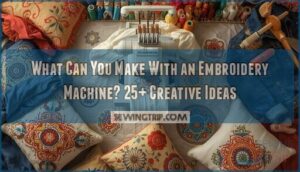
Your embroidery machine isn’t just sitting there waiting to stitch logos onto polo shirts—it’s a creative powerhouse that can turn blank fabric into anything from wearable art to functional home goods.
Modern machines blast through 1,200 stitches per minute across 40+ colors, which means you can knock out custom patches before lunch, transform thrift store finds into statement pieces by dinner, or create customized gifts that’ll make store-bought options look pathetic.
The real question isn’t what you can make—it’s what you’ll tackle first, because once you understand how thread, stabilizer, and fabric choice release different possibilities, plain materials become your playground for rebellion against mass-produced everything.
Table Of Contents
Key Takeaways
- Your embroidery machine can transform everyday clothes, accessories, and home decor into bold, personalized statement pieces using the right fabric, thread, and stabilizers.
- Mastering embroidery techniques lets you create everything from custom patches and monogrammed gifts to upcycled art and jewelry, breaking free from boring, store-bought designs.
- Creative projects like embroidered hats, shoes, bags, and even visible mending turn plain or worn items into unique, durable works that show off your style and skill.
- With thoughtful design choices and proper setup, you can tackle materials like leather, knits, and heavy fabrics—opening up limitless possibilities for rebellion against mass-produced goods.
What Can You Make With an Embroidery Machine?
Your embroidery machine isn’t just a one-trick pony—it’s a creative powerhouse that turns thread and fabric into custom treasures. With modern embroidery machines capable of handling 40+ color changes at speeds up to 1,200 stitches per minute, you can tackle everything from intricate apparel designs to home décor masterpieces.
Machine embroidery creates opportunities for countless embroidery projects: monogrammed gifts, custom patches, textile art, and even wearable statements that scream your unique style. The magic happens when you pair smart fabric choice with the right thread selection and embroidery software to digitize your wildest embroidery ideas into stitch-ready files.
Mastering machine embroidery techniques—from satin stitches to fill patterns—lets you transform plain materials into stunning embroidery designs. Whether you’re crafting for profit or pure creative joy, your machine becomes the rebel tool that breaks every boring textile rule. Pairing machine-stitched patterns with couture sewing construction methods elevates your work from basic embroidery to high-fashion embellishment.
Your embroidery machine is a rebel tool that transforms plain fabric into stunning, rule-breaking designs with every mastered stitch
Embroidered Apparel and Accessories
Your wardrobe is about to become your canvas. Embroidery machines transform everyday clothing and accessories into one-of-a-kind statement pieces that reflect your personal style.
Here’s how you can enhance everything you wear, from head to toe.
Shirts, Jackets, and Dresses
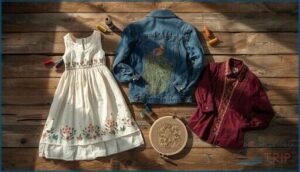
You can transform plain clothing into statement pieces that turn heads. Custom apparel decoration opens endless creative possibilities:
- Fabric Selection: Choose medical-grade cotton blends for stable weaves that won’t pucker under your embroidery machine.
- Design Placement: Map motifs away from seams and zippers for professional results.
- Thread Choices: Test polyester threads on dark fabrics to prevent dye transfer.
- Embroidery Techniques: Use backstitches on stretchy knits instead of dense fills.
Machine embroidery techniques and proper garment care guarantee your creations last. Selecting the right thread matching for sewing ensures your embroidery holds up through countless washes without fading or fraying.
Hats and Caps
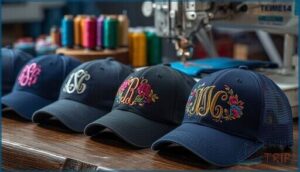
Caps take your custom embroidery game to the next level with their iconic, wearable canvas. Cap embroidery demands proper stabilizer choice to prevent crown distortion while you stitch—trust me, nobody wants a wonky visor. If you’re ready to tackle more ambitious projects, creative sewing projects using overlockers can help you build the precision skills needed for professional-looking cap embroidery.
Thread selection matters too: polyester holds up through countless washes. Your embroidery machine can nail monogram placement between 1 and 2 inches for maximum impact.
These embroidery projects showcase your hat customization skills and embroidery techniques beautifully. Ensuring the accuracy of embroidery designs requires careful consideration of methodological rigor in the creation process.
Bags, Totes, and Backpacks
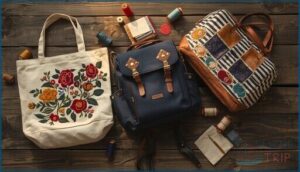
Beyond headwear, your embroidery machine transforms everyday carriers into statement pieces. Canvas, duck cloth, or heavy-duty twill make ideal fabric selections for tote bag construction—they’re stable enough to handle dense stitching without puckering. A versatile embroidery sewing machine handles these heavier fabrics beautifully while giving you room to grow your skills.
Try reinforcement bartacks at stress points for backpack embroidery that actually lasts. For more creative ways to make your handmade gear both durable and sustainable, explore these sewing project inspiration and planning tips.
Embellishment techniques shine when you layer appliqué elements onto duffel bags, creating texture that screams “one of a kind.” These machine embroidery projects let you own your style from the ground up.
Shoes and Sneakers
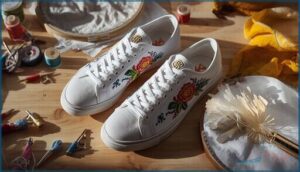
Footwear design hits different when you stitch custom motifs onto canvas, leather, or suede sneakers. Machine embroidery lets you personalize kicks with logos, monograms, or wild graphics—tear-away stabilizers keep uppers from bunching.
Sneaker customization goes beyond patches; you’re creating wearable art. Polyester thread holds up against scuffs, and sneaker restoration breathes new life into beat-up boots through strategic embellishments and embroidery techniques that make each step yours.
Scarves, Gloves, and Belts
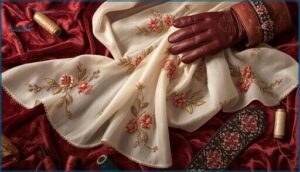
Accessories like scarves, gloves, and belts gain personality through embroidery machine stitching. Silk scarves shine with floral motifs, while stretch gloves need floating designs and tear-away stabilizers to maintain elasticity.
Thread selection matters: polyester outlasts rayon on washable belts, and water-soluble stabilizers keep delicate fabrics soft.
Edge finishing with satin stitch prevents fraying, turning everyday clothing into embroidery projects that showcase your fabric choices and embroidery techniques.
Home Decor Embroidery Projects

Your home is the perfect canvas for embroidery experiments that actually get seen and appreciated every day. From cozy textiles that beg to be touched to statement pieces that command attention from across the room, home decor projects let you flex your creative muscles on a larger scale.
Here’s where your embroidery machine can transform everyday household items into conversation starters.
Pillowcases and Cushion Covers
You can transform plain pillowcases and cushion covers into statement pieces that anchor your room’s personality. Your embroidery machine lets you stitch bold monograms, intricate botanical motifs, or edge-to-edge decorative stitching across cotton, linen, or sateen fabric types.
Nail your design placement by centering motifs within 70–85% of the fabric width, then experiment with thread colors and stitch density to match your home decor vision perfectly.
Quilts and Throws
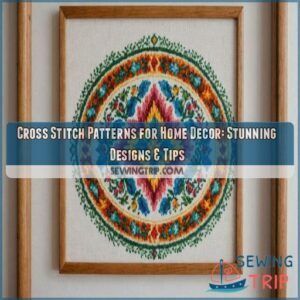
You can layer embroidered panels into quilts and throws that tell visual stories through custom motifs, seasonal themes, or heirloom-style feather patterns.
Your embroidery machine stitches decorative designs onto pre-pieced cotton or linen blocks using polyester embroidery threads for colorfastness.
Proper stabilizers prevent puckering across batting layers, while tension adjustments guarantee your quilting techniques deliver professional results on everything from lap blankets to full-size quilts that anchor your home decor.
Table Runners and Placemats
You can dress your dining room in textile confidence with runners and placemats that showcase repeating border patterns or custom monograms stitched onto cotton or linen blends. Your embroidery machine transforms everyday table settings into conversation pieces through thoughtful fabric choices and stitch techniques that resist laundering and UV fade.
Key design strategies include:
- Edge-to-edge embroidery designs requiring larger hoops or multiple sequences
- Corner mitering and decorative blanket-stitch finishes for polished edges
- Colorfast polyester threads that survive repeated wash cycles
Proper stabilizers prevent puckering, while 75/11 to 90/14 needles handle woven table linens without distortion, giving you home decor and accessories that balance personalization with durability.
Towels, Napkins, and Linens
Your embroidery machine brings hotel-worthy luxury to everyday linens, stitching monograms and motifs onto terry towels and woven napkins with tear-away stabilizers that vanish after the needle lifts.
Towel embroidery demands 2–4 inch designs centered with generous clearance, while napkin designs fit compact 2.5–3.5 inch footprints for dinner-ready elegance.
| Item Type | Design Size & Placement |
|---|---|
| Tea Towel | 2–4″ motif, centered with 1.5–2.5″ edge clearance |
| Dinner Napkin | 2.5–3.5″ square, corner or center placement |
| Bath Towel | 2–3″ monogram, lower third or hemline positioning |
Polyester threads resist fade through countless wash cycles, keeping your custom gifts vibrant, while mercerized cotton adds heirloom softness. Fabric selection matters—cotton and cotton-poly blends handle underlay stitching without distortion, giving you home decor and accessories that balance function with flair.
Stabilizer tips: match pile height to backing grip, then watch pucker disappear under proper tension and linen care routines that favor cold water and low heat.
Wall Hangings and Textile Art
Beyond linens, your machine unlocks gallery-worthy textile art that breaks the frame of conventional stitching. Wall hangings built on linen or cotton blends let you layer botanical scans, geometric motifs, and free-motion quilting into one statement piece—fabric selection and thread weight choices drive visual impact, while mounting sleeves or dowels guarantee conservation-friendly display.
Four essentials for standout wall pieces:
- Mixed-media layering – Combine yarn, fiber blends, and metallic threads for depth and embellishment techniques that catch light.
- Stabilizer strength – Match backing to prevent sagging and preserve fabric integrity through years of vertical display.
- Color theory – High-contrast palettes command attention; subtle tones build cohesive backgrounds in textile art.
- Archival mounting – Acid-free backing, sleeve enclosures, and microclimate control protect embroidery designs and patterns from fading and fiber brittleness.
Sample test swatches before final execution—tension, density, and stitch coverage reveal themselves fast, letting you adjust machine embroidery settings for impeccable fabric decoration that collectors and designers crave.
Personalized Gifts and Holiday Creations
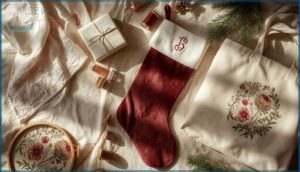
Nothing says ‘I made this just for you’ like a piece of embroidered fabric with someone’s name stitched right into it. Your embroidery machine turns ordinary items into one-of-a-kind gifts that people actually keep and treasure for years.
From celebrating new babies to marking special occasions, here are some of the most meaningful customized projects you can stitch up.
Monogrammed Towels and Robes
You can turn ordinary towels and robes into spa-worthy treasures with monograms. Choose thread color options like white or pastels that pop against terry fabric, then use the right stabilizer choices—water-soluble or tear-away—to prevent puckering through those tricky loops.
Monogram placement on the left chest or upper back adds that custom boutique feel. Your machine embroidery creates customized gifts that enhance everyday luxuries, and proper care instructions keep those stitches looking crisp wash after wash.
Baby Blankets, Bibs, and Onesies
Nothing beats stitching a newborn’s name onto soft flannel or cotton baby blankets—it’s a customized gift that parents treasure forever. Choose embroidery threads rated for infant laundry and fabric choices like breathable cotton blends. Design motifs work best when you keep them simple: think gentle animal shapes or alphabet blocks.
Baby safety means skipping detachable bits, and laundry tips? Pre-wash your baby blanks, use tear-away stabilizers, and trim loose threads after machine embroidery or sewing finishes.
Holiday Ornaments and Stockings
You can stitch magic into your holiday season with ornament designs featuring snowflakes, reindeer, or holly using satin stitch and fill techniques.
Stocking patterns become unforgettable when you add monograms or themed motifs—use tear-away stabilizers to prevent puckering on those curved surfaces.
These DIY home decor pieces and tailored gifts showcase embroidery techniques that turn simple holiday crafts into treasured sewing projects your family will unpack year after year.
Wedding and Anniversary Keepsakes
Embroidery transforms wedding favors and anniversary gifts into heirloom quilts people actually keep—think custom linens embroidered with coordinates from where you said “I do” or monogrammed boxes that feel like luxury.
Here are some elegant ideas:
- Ring pillow covers with satin-stitched monograms and wedding dates
- Tailored gifts like embroidered handkerchiefs for tears of joy
- Table runners featuring the couple’s initials in elegant script
- Memory quilts incorporating lace appliqué and metallic threads
- Keepsake pouches with customization through names and anniversary years
Pet Accessories and Bandanas
Your furry sidekick deserves a wardrobe upgrade just as much as you do—and embroidered pet gear lets you brand their bandanas, collars, and leashes with names, quirky sayings, or paw-print motifs that’ll have strangers stopping you at the dog park.
To create custom pet accessories, understanding dog collar embroidery is essential for achieving professional results.
You can whip up custom cat harnesses, cozy pet blankets stitched with rescue stories, or even animal ID tags that double as wearable art—turning sewing into a rebellion against boring store-bought stuff.
Creative and Niche Embroidery Ideas
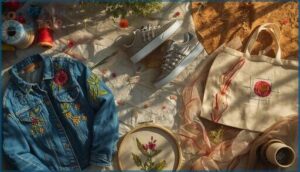
Once you’ve mastered the basics, your embroidery machine becomes a playground for offbeat projects that push past traditional boundaries.
These niche ideas let you experiment with unexpected materials, rescue worn favorites through visible mending, and create statement pieces that blur the line between craft and wearable art.
Ready to break some rules and try something completely different?
Patches and Badges
Think of patches and badges as your portable canvas for rebellion—small, bold, and impossible to ignore. Your embroidery machine can create custom emblems with merrowed edges and iron-on patches that transform jackets, backpacks, or jeans into personal statements.
- Patch design with high-contrast colorways for maximum impact
- Badge making using twill or felt bases for stability
- Sewing patches with precise hooping for logo registration
- Machine embroidery techniques for durable, washable customization
Book Covers and Journals
A journal wrapped in canvas with your initials becomes a radical act of self-expression. Fabric selection matters—heavyweight canvas or waxed cotton withstands daily wear while cut-away stabilizer types prevent warping during stitching.
In-the-hoop embroidery designs let you complete entire cover materials within your hoop, transforming journal binding into custom gifts.
Choose embroidery projects with high-contrast motifs, and you’ll create machine embroidery that demands attention.
In-the-Hoop Projects (Keychains, Coasters)
In the Hoop designs stitch complete projects—keychains, coasters, cork key fobs—without hand-sewing seams afterward. A 4×4 inch hoop capacity accommodates most keychain designs, while coaster materials like quilting cotton or felt cores add dimension.
Here’s what transforms these DIY projects:
- Water-soluble stabilizer prevents puckering on curved edges
- Stitch density settings control rigidity and durability
- Satin stitch outlines define professional-looking borders
Machine embroidery projects finish faster when you eliminate traditional construction steps entirely.
Upcycled and Visible Mending Projects
Visible mending transforms worn garments into rebellious statements—denim knees become embroidered galleries, and frayed cuffs gain satin-stitched edges. Upcycling slashes textile waste by extending garment lifespans 9–15 years, proving sustainable fashion doesn’t sacrifice creativity.
Eco-friendly DIY projects meet innovation when repurposed textiles become wearable art through strategic mending techniques and colorfast threads.
| Fabric Type | Stabilizer Choice | Best Stitch |
|---|---|---|
| Denim | Tear-away (heavy) | Decorative patches |
| Recycled cotton | Water-soluble | Running stitch reinforcement |
| Reclaimed linen | Tear-away (light) | Fine satin borders |
Jewelry and Wearable Art
Fabric Brooches and beaded accents push embroidery beyond cloth—your machine stitches lightweight statement pieces that rival metalwork.
Embroidered patches bond with metal findings and ribbon embellishments to create jewelry that defies convention: fabric necklaces, headband motifs, even belt trims.
Heat-set appliques let you transfer wearable art onto accessories without hand-stitching marathons, turning tailored gifts into conversation-starters that actually last through daily wear.
Frequently Asked Questions (FAQs)
Can embroidery machines work on leather or vinyl?
Yes, embroidery machines handle leather and vinyl beautifully when you pair them with the right stabilizers and needle selection. Thin leather and faux materials work best, though surface preparation and thread selection make all the difference.
What thread types produce the best stitch quality?
Polyester embroidery thread delivers rock-solid stitch density and colorfastness, while rayon brings lustrous shine but needs careful tension settings.
Match your fiber composition to needle types and stabilizer weight for perfect machine embroidery results.
How do you prevent fabric puckering during embroidery?
Pair the right stabilizer with proper hoop tension and adjust your thread tension settings.
Test stitch density on scrap fabric first, then fine-tune machine embroidery parameters to keep your work smooth and pucker-free.
What stabilizer should you use for stretchy fabrics?
Stretchy fabrics demand stability, yet ironically, the best stabilizers add flexibility. Cutaway stabilizers work best for knits—they won’t tear or pucker.
For delicate jerseys, try wash-away options that disappear completely after stitching.
Can you embroider directly onto knitted sweaters?
You can embroider directly onto knitted sweaters with proper stabilizers and ballpoint needles. The key is controlling fabric tension and choosing low-density designs that won’t distort stretchy knit fabric during custom apparel decoration.
Conclusion
A vintage denim jacket with moth holes became a $200 statement piece after strategic floral embroidery turned damage into design—that’s the difference between knowing what you can make with an embroidery machine and actually unleashing it.
Your machine doesn’t care whether you’re stitching corporate logos or punk-inspired patches on leather. It just moves thread exactly where you tell it.
Stop scrolling inspiration boards and load that first hoop, because untouched fabric is wasted potential.