This site is supported by our readers. We may earn a commission, at no cost to you, if you purchase through links.
You can stitch a leather wallet with cotton thread rated for denim, watch it hold for a week, then find the seams split open from normal use—a $50 leather hide ruined because the thread couldn’t handle the material’s density and stress points.
Regular sewing threads for leather lack the tensile strength, abrasion resistance, and durability that leather demands, which is why leatherworkers rely on specialized options like bonded nylon, waxed polyester, and linen designed to penetrate thick hides without fraying or breaking under tension.
Thread weight must match your leather’s thickness, the coating affects water resistance and friction, and needle compatibility determines whether your stitches hold or your project falls apart after the first month of use.
Table Of Contents
- Key Takeaways
- Why Regular Thread Fails for Leather Projects
- Types of Thread for Leather Sewing
- How to Choose Thread for Leather
- Top 8 Threads for Leather Sewing
- Thread and Needle Pairing Guide
- Waxed Thread Benefits for Leatherwork
- Machine Sewing Leather With Thread
- Hand Sewing Leather Best Practices
- Trusted Leather Thread Brands and Suppliers
- Common Leather Sewing Thread Mistakes
- Frequently Asked Questions (FAQs)
- Conclusion
Key Takeaways
- Regular sewing thread fails on leather because it lacks the tensile strength, abrasion resistance, and thickness needed to penetrate dense hides without fraying or breaking under stress—waxed polyester, bonded nylon, and linen are your go-to specialized options that actually hold up.
- Thread weight must directly match your leather’s thickness (thin thread for 1mm leather, heavy thread for 3mm+ hides), and you’ll need to pair it with the right needle size (100/16 to 110/18 for most projects) or you’re guaranteeing broken needles and failed stitches.
- Waxed thread gives you friction reduction that makes stitching smoother, plus water resistance and better knot integrity for hand-sewn saddle stitching, while bonded nylon delivers industrial-grade durability for machine work on heavy-duty projects like saddles and outdoor gear.
- Always test your thread-and-needle pairing on scrap leather before touching your actual project—this single step prevents costly mistakes like seam failure, fraying, and wasted materials that you can’t fix once you’ve committed to final stitches.
Why Regular Thread Fails for Leather Projects
You can’t just grab any spool from your sewing kit and expect it to hold up against leather’s demands. Regular thread simply isn’t built for the thickness, density, and abrasion that leather projects dish out, which means your stitches won’t last when they matter most.
Regular thread can’t handle leather’s thickness and abrasion—your stitches will fail when it matters most
Here’s why standard thread falls short and why you need something tougher for leatherwork.
Insufficient Tensile Strength for Heavy Materials
Material failure starts when you push regular thread beyond its limits. Heavy leather demands tensile strength that standard threads simply can’t deliver, and here’s what happens when you ignore that reality:
- Thread elongation stretches fibers before breakage, weakening seams on thick hides
- Consumer-grade threads fail tensile tests long before your leather reaches structural limits
- Multifilament constructions in heavy-duty sewing threads resist tearing forces that would snap ordinary options
Your leather durability depends on choosing thread with proven strength ratings, especially when you’re tackling serious projects where waxed thread and proper thread characteristics become non-negotiable for lasting results. Ensuring the quality of your materials is essential, much like conducting a methodological audit to verify the integrity of your work.
Inadequate Thickness for Leather Penetration
Penetration issues emerge when thread diameter doesn’t match your leather’s density, forcing you to punch multiple passes through the same hole, which accelerates leather damage and compromises stitch integrity.
For medium leather at 2–3 mm thickness, you’ll need 0.8–1.0 mm waxed thread to guarantee proper material selection, while heavier hides demand thicker options to maintain thread strength and prevent thread breakage under tension.
Poor Abrasion Resistance and Durability
Beyond thickness problems, you’ll face rapid thread fraying when regular thread lacks the wear resistance leather demands. Standard polyester or cotton threads degrade quickly under repeated flexing—especially at stitch entry points—because their surfaces can’t withstand the abrasion from leather edges.
Waxed thread or bonded nylon delivers the thread strength and material durability you need, reducing leather damage while maintaining long-term seam integrity even under constant stress.
Fraying and Breaking Under Stress
When tension builds during wear, regular thread unravels at its weakest points—the needle holes. Material fatigue sets in after repeated load cycles, causing thread characteristics to degrade rapidly. Stress testing reveals why inadequate thread material fails breakage analysis:
- Thread fraying accelerates where leather edges create friction against unprotected fibers
- Tensile limits get exceeded when thread weight can’t handle the leather’s thickness
- Without waxed thread coatings, surface wear creates fray-prone fiber ends that snap under stress
Types of Thread for Leather Sewing
You can’t just grab any spool from your sewing kit and expect it to hold up against leather’s demands. The right thread material makes the difference between a project that lasts decades and one that falls apart after a few months of use. Strong thread paired with proper reinforcement techniques for high-stress seams ensures your leather goods withstand daily wear without splitting or fraying.
Let’s break down the five main thread types you’ll encounter in leatherwork, each with its own strengths and ideal applications.
Polyester Thread: UV Resistant and Versatile
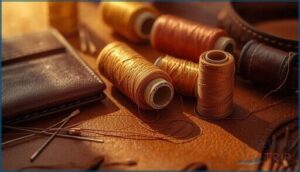
If you’re stitching wallets, belts, or any mid-weight leather project, polyester thread delivers the dimensional stability and UV resistance you need without breaking the bank. Waxed polyester variants glide through leather with less friction, while unwaxed options suit machine work beautifully.
You’ll find multiple weights and color variations to match your leather’s aesthetic, and the tensile strength holds firm against everyday wear and abrasion when paired with proper needles.
Nylon Thread: Maximum Strength for Heavy-Duty Work
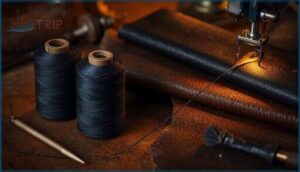
When you’re tackling thick saddles, heavy hides, or industrial leather working projects, nylon thread gives you the breaking strength and shock-absorbing elongation your heavy-duty applications demand. That’s why many professionals choose bonded industrial sewing thread types that combine continuous filaments with resin coating for maximum durability.
Bonded nylon variants minimize linting in industrial sewing machines while boosting abrasion resistance, though you’ll need to adjust thread tension and use larger needles to handle nylon’s superior material durability without snapping your equipment.
Waxed Thread: Friction Reduction and Water Resistance
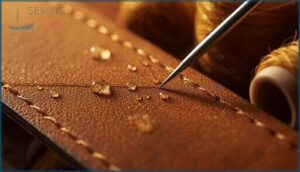
Waxed thread transforms your leather sewing with its dual superpowers: the wax coating slashes friction during needle penetration, giving you smoother stitch quality and consistent thread tension, while simultaneously repelling water to protect outdoor leather projects from moisture damage.
Whether you choose waxed polyester or waxed linen as your leather thread, you’re locking in friction testing advantages and water resistance that regular thread selection simply can’t match.
Bonded Nylon Thread: Industrial-Grade Durability
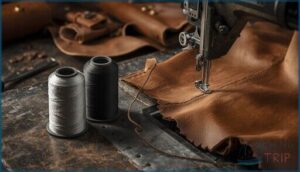
When you’re running industrial machines at breakneck speeds through thick hides, bonded nylon thread delivers the durability testing results that justify its reputation. This pre-lubricated powerhouse minimizes fraying during high-speed industrial sewing, with thread tensile strength engineered specifically for heavy-duty leather sewing demands.
Your thread selection for bonded thread pays off through exceptional abrasion resistance and moisture protection, exploiting nylon properties that extend the lifespan of your toughest leather goods. When working with bonded thread on leather, selecting a machine built for heavy-duty stitching ensures consistent tension and prevents needle breakage on thick hides.
Linen Thread: Traditional Hand-Stitching Option

You can’t beat linen fiber for traditional methods that honor centuries of leather crafting. This natural aesthetics champion delivers reliable thread tension for hand stitching on softer leathers, especially when you choose waxed thread variants from specialist suppliers.
Your hand sewing techniques benefit from linen’s characteristic patina development, and its proven tensile strength makes it ideal for leather sewing projects that demand authentic, time-tested weaving results.
How to Choose Thread for Leather
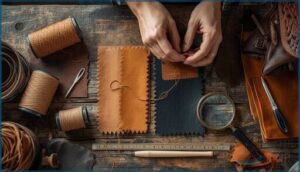
Choosing the right thread for leather isn’t guesswork—it requires matching specific thread characteristics to your project’s demands, from the leather’s thickness to where you’ll use the finished piece. You need to contemplate material properties, weight compatibility, aesthetic preferences, and environmental factors to guarantee your stitches hold strong and look professional.
Let’s break down the five critical factors that will guide you to the perfect thread choice for your leatherwork.
Matching Thread Weight to Leather Thickness
Your leather thickness dictates thread weight, or you’ll face seam failure when stress hits. Test your thread selection with these pairings:
- Up to 1.0 mm leather: thin to medium thread (weight 90–120)
- 1.0–2.0 mm leather: medium thread (weight 120–180)
- 2.0–3.0 mm leather: heavy thread (weight 180–277)
- 3.0–4.5 mm leather: extra-heavy thread (weight 277–346)
- Over 4.5 mm leather: very heavy thread (weight 346+)
Always adjust stitch tension after thread selection to guarantee balanced seam integrity across your leather working projects.
Selecting Material Based on Project Type
After matching thread weight to leather thickness, shift your material selection to match your project’s demands.
Heavy-duty bags demand high-tensile nylon threads that won’t fail under repeated stress, while fashion accessories perform best with UV-resistant polyester.
Outdoor gear requires waxed threads for moisture protection, and saddle stitching calls for bonded materials that maintain knot integrity through constant flexing.
Color Selection for Aesthetic Appeal
Your thread color defines both visibility and character. Choose warm neutrals like gold for classic leather tones, or opt for high-contrast pairings that make decorative stitching pop on textured hides. Heritage brands favor earth-tone palettes that echo tradition, while bold contrasts convey modern edge.
Test your selections on scrap leather under actual lighting conditions, because color harmony shifts dramatically between workshop fluorescents and natural sunlight.
UV Resistance for Outdoor Applications
Sunlight exposure accelerates thread degradation, so outdoor durability demands careful material selection. Polyester thread retains color fastness longer than nylon under UV testing, while waxed thread and bonded nylon variants with stabilizers resist breakdown more effectively than plain synthetics. Look for threads with UV-resistant coatings or pigmented finishes that extend service life.
- Polyester threads minimize fading risk during prolonged sunlight exposure
- Bonded nylon resists UV penetration better than plain nylon varieties
- Waxed cotton and linen show faster strength loss outdoors
- UV stabilizers in thread coatings markedly boost outdoor durability
- Color fastness testing reveals long-term performance under real conditions
Ensuring Proper Needle Compatibility
You can’t just grab any needle and expect clean results—needle geometry, sharpness, and size must align with thread characteristics and leather thickness to maintain stitch quality. Mismatched combinations cause fraying, skipped stitches, or breakage during leather sewing thread selection.
Adjusting thread tension and testing your sewing thread selection on scrap material prevents costly mistakes, ensuring your thread material works seamlessly with your chosen needle system for professional weaving results.
Top 8 Threads for Leather Sewing
Now that you know what to look for in leather thread, it’s time to cut through the noise and find the products that actually deliver.
I’ve tested countless threads across hand and machine projects, and these eight consistently outperform the rest in strength, durability, and ease of use.
Let’s break down each option so you can pick the right thread for your specific leatherwork needs.
1. Mandala Olive Brown Waxed Thread
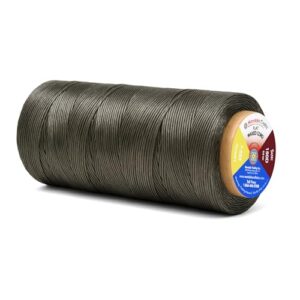
If you’ve been searching for a waxed thread that punches above its weight, Mandala Olive Brown delivers serious tensile strength in a 0.8mm profile. This braided polyester thread features a wax coating that reduces friction during leather sewing while maintaining excellent leather compatibility across multiple project types.
Its earth-toned color fastness holds up against UV exposure and common oils, making it ideal for both indoor leather projects and outdoor gear.
At 273 yards per spool, you’ll have plenty of waxed sewing thread for saddle stitching, bookbinding, and decorative leatherwork without constant restocking.
| Best For | Leatherworkers and crafters who need a durable, colorfast thread for saddle stitching, bookbinding, and outdoor leather projects where strength and UV resistance matter. |
|---|---|
| Material | Polyester |
| Thread Thickness | 0.8mm |
| Length | 273 yards |
| Color | Olive Brown |
| Waxed Coating | Yes |
| Weight | 4.5 ounces |
| Additional Features |
|
- Strong tensile strength with abrasion-resistant wax coating that glides smoothly through leather without fraying or excess friction
- Waterproof and colorfast with excellent UV resistance, making it reliable for both indoor crafts and outdoor gear that sees sun exposure
- Generous 273-yard spool gives you plenty of thread for multiple projects without constant reordering
- Some users report the thread can fray and unravel easily, making it tricky to knot for jewelry work
- May have slight stretch issues, though typically not enough to affect most leatherwork applications
- Customer service problems have been noted when products arrive damaged or missing during shipping
2. Tenn Well Waxed Leather Thread
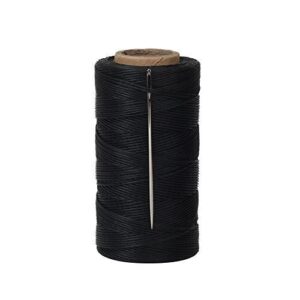
You’ll find serious friction reduction when you saddle-stitch with Tenn Well’s waxed leather thread, which features polyester-based fibers that glide smoothly through medium to heavy hides.
This waxed sewing thread helps prevent leather dye bleed along your stitch lines while maintaining proper thread tension, making it valuable for leather stitching on belts, wallets, and upholstery projects.
The wax coating ensures secure knot performance and water resistance, though you’ll want to pair it with appropriately sized leather needles to prevent fraying during your sewing techniques.
| Best For | Leatherworkers and DIY enthusiasts who need durable, friction-reducing thread for saddle stitching on medium to heavy leather projects like belts, wallets, and upholstery. |
|---|---|
| Material | Polyester |
| Thread Thickness | 1mm |
| Length | 328 yards |
| Color | Black |
| Waxed Coating | Yes |
| Weight | 0.13 kilograms |
| Additional Features |
|
- Wax coating reduces friction and ensures smooth stitching through thick hides while providing water resistance and preventing leather dye bleed
- Strong polyester fibers offer excellent abrasion resistance and secure knot performance for long-lasting seams
- Comes with a bonus large-eye stitching needle and provides 328 yards of thread, making it suitable for multiple projects
- Thread thickness (1mm) may be too heavy for fine leather work or delicate projects
- Wax can accumulate on needle eyes over extended use, making threading more difficult
- Some orders may not include the advertised bonus needle, and the included needle may be dull
3. Waxed Thread for Leather Sewing
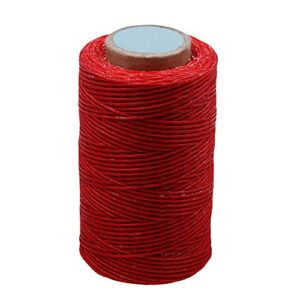
Waxed thread brings water resistance and friction reduction to your leather sewing projects, with the wax coating creating temporary lubrication that helps each stitch glide through tough surfaces without excessive needle heat buildup.
You’ll notice improved thread durability and fiber strength compared to unwaxed alternatives, especially during saddle stitching where waxed sewing thread maintains tighter knot integrity under repeated flexing.
The wax application enhances stitch reinforcement while adding subtle moisture protection, making these leather sewing threads ideal for leather crafting techniques that demand abrasion resistance and secure seam performance in your leather finishing work.
| Best For | Leather crafters, bookbinders, and DIY enthusiasts who need durable, water-resistant thread for hand-stitching projects like bags, wallets, shoes, and leather repairs. |
|---|---|
| Material | Polyester |
| Thread Thickness | 0.8mm |
| Length | 284 yards |
| Color | Multiple colors |
| Waxed Coating | Yes |
| Weight | 3.87 ounces |
| Additional Features |
|
- Water-resistant wax coating reduces friction and helps thread glide smoothly through tough leather without excessive heat buildup or fraying
- Strong polyester construction with 852 feet of thread provides excellent durability and knot integrity for saddle stitching and high-wear areas
- Versatile for multiple crafting needs including leather work, bookbinding, and shoe repair at beginner through professional skill levels
- Some users report the thread isn’t as waxy as expected, making needle threading and stitch finishing more challenging
- May require additional tools like a wooden spindle to prevent tangling during use
- Not ideal if your project specifically needs heavily waxed thread for maximum lubrication
4. Janyun Leather Sewing Thread
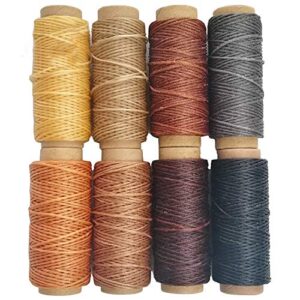
Janyun leather thread offers you a practical balance of material strength and affordability, positioning itself as an accessible waxed option that delivers reliable thread durability across medium to heavy leather crafting techniques.
You’ll find this thread maintains impressive color fastness and leather compatibility through multiple stitching passes, with its waxed coating reducing friction while enhancing abrasion resistance for belt and bag construction.
The thread characteristics include tensile performance that rivals premium options when you pair it with appropriately sized needles, making Janyun leather sewing threads a smart choice for saddle stitching and hand-sewn leatherwork.
| Best For | Leatherworkers and DIY enthusiasts looking for an affordable waxed thread option that handles medium to heavy leather projects like belts, wallets, and bags without breaking the bank. |
|---|---|
| Material | Hemp |
| Thread Thickness | 1mm |
| Length | 33 yards |
| Color | 8 colors |
| Waxed Coating | Yes |
| Weight | 0.3 pounds |
| Additional Features |
|
- Strong and durable with good tensile strength that holds up well through saddle stitching and repeated passes
- Wax coating reduces friction during hand sewing and adds water resistance while improving the overall feel
- Available in 8 colors with decent color fastness, giving you options for different leather projects and aesthetics
- Wax coating can flake off after a few stitches and may need melting before use in some cases
- Actual thread diameter might measure less than the advertised 1mm specification
- Thread color can shift slightly once the wax coating wears down with use
5. Brown Waxed Leather Thread
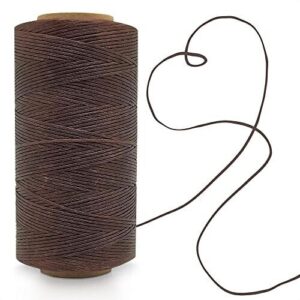
Brown waxed thread stands out for leather projects because its earth-toned aesthetic matches the natural palette of belts, wallets, and bags while delivering outstanding thread durability through a protective wax coating.
You’ll appreciate how this waxed sewing thread manages leather thickness up to 2.5 mm with consistent 0.8 mm diameter sizing, ensuring stitch consistency across saddle stitching techniques.
The wax coating reduces friction during leather sewing, improving color fastness and abrasion resistance compared to unwaxed alternatives, making it your go-to choice for both decorative and structural seams in demanding leather projects.
| Best For | Leatherworkers and crafters who need durable, easy-to-use thread for hand-stitching projects like wallets, bags, belts, and bookbinding where consistent stitches and minimal fraying matter. |
|---|---|
| Material | Polyester |
| Thread Thickness | 0.04 inches |
| Length | 284 yards |
| Color | Brown |
| Waxed Coating | Yes |
| Weight | 0.2 pounds |
| Additional Features |
|
- Wax coating cuts friction and prevents fraying, giving you smoother pulls through leather and cleaner stitches every time
- Works great on leather up to 2.5 mm thick with reliable 0.8 mm sizing that pairs well with standard leather needles
- Brown tone blends naturally with most leather colors while offering better UV and water resistance than unwaxed thread
- Some users found the thread thicker than expected, which can be tricky if you’re working with thinner leather or smaller holes
- A few customers reported quality control issues—one spool arrived without proper wax coating, and another seemed previously opened
- May unravel at the ends if you’re not careful during handling, requiring extra attention when cutting and starting new sections
6. Bonded Nylon Sewing Thread
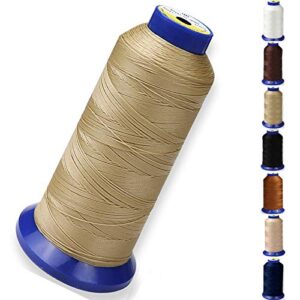
You need industrial-grade performance when your leather projects demand uncompromising thread durability, and bonded nylon sewing thread delivers exactly that with its pre-lubricated surface and outstanding tensile strength.
This nylon thread manages heavy-duty leather sewing on both hand and machine setups, maintaining consistent stitch integrity under load when you pair it with proper needle compatibility—usually 100/16 or 110/18 leather needles.
The material’s UV resistance and colorfast properties make it your reliable choice for outdoor gear, upholstery, and demanding leather projects requiring industrial sewing standards that won’t compromise under stress.
| Best For | Leatherworkers and sewers tackling heavy-duty projects like belts, saddles, outdoor gear, and upholstery who need thread that won’t break under high stress or UV exposure. |
|---|---|
| Material | Nylon |
| Thread Thickness | 210D/3 |
| Length | 1400 yards |
| Color | Khaki |
| Waxed Coating | No |
| Weight | 2.39 ounces |
| Additional Features |
|
- Industrial-grade strength handles thick leather, canvas, and denim without snapping, even on high-stress seams
- UV resistant and colorfast properties keep your stitching looking good on outdoor projects and gear
- Works with both hand sewing and machine sewing when paired with the right needle size
- Can be slippery and tricky to knot securely, especially for hand-sewing projects
- Requires machine tension adjustments and isn’t compatible with all sewing machines
- Some users report durability issues and inconsistent thickness despite the industrial-grade claims
7. CNBTR Waxed Leather Thread
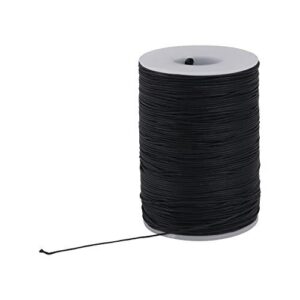
When premium thread durability meets affordability, you get CNBTR Waxed Leather Thread—a 0.5mm polyester option with a wax coating that slashes friction and boosts stitch quality across your leather sewing projects.
This waxed thread manages belts, wallets, and heavy leathers over 5 oz when paired with compatible needles, delivering enhanced water resistance and reduced knot slippage that regular sewing leather threads can’t match.
Its leather compatibility shines in saddle stitching, though thread maintenance demands cool, dry storage to preserve wax consistency and long-term performance on demanding seams.
| Best For | Leather crafters and DIY enthusiasts working on wallets, belts, and heavy-duty projects who need a budget-friendly waxed thread that reduces friction and delivers professional-looking stitches. |
|---|---|
| Material | Polyester |
| Thread Thickness | 0.5mm |
| Length | 393.7 feet |
| Color | Black |
| Waxed Coating | Yes |
| Weight | 2.11 ounces |
| Additional Features |
|
- Wax coating cuts down friction during stitching and improves water resistance for longer-lasting seams
- Works great with saddle stitching and heavy leathers over 5 oz when you use the right needles
- At 393.7 feet for just over 2 ounces, you get solid value without sacrificing stitch quality
- Only comes in black, so you’re limited if your project needs other colors
- Some users mention the thread end can be tricky to find on the spool, leading to tangles
- Needs proper storage in cool, dry conditions to keep the wax from degrading over time
8. Desirable Life Bonded Nylon Thread
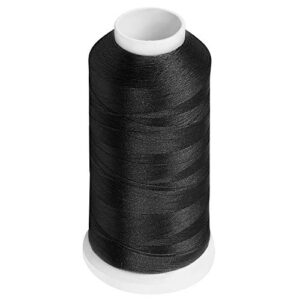
Where waxed polyester leaves off, Desirable Life Bonded Nylon Thread steps up with industrial sewing power—Tex 70 nylon strength wrapped in a bonded coating that cuts fraying and manages 1,500 yards of heavy leather applications without breaking stride.
This bonded nylon thread material resists high temperatures and water exposure, making it your go-to for leather sewing projects like saddle repairs, holsters, and outdoor gear where thread durability under repeated stress isn’t optional—it’s the baseline you build rugged seams on.
| Best For | Leather workers and DIY enthusiasts tackling heavy-duty projects like saddle repairs, holsters, belts, and outdoor gear that demand industrial-strength seams capable of handling repeated stress and exposure. |
|---|---|
| Material | Nylon 66 |
| Thread Thickness | Tex 70 |
| Length | 1500 yards |
| Color | Multiple colors |
| Waxed Coating | No |
| Weight | 4.6 ounces |
| Additional Features |
|
- Industrial-grade tensile strength with bonded coating that reduces fraying and heat buildup during extended machine sewing sessions
- Excellent resistance to UV exposure, water, and high temperatures makes it reliable for outdoor leather goods that face harsh conditions
- Compatible with both hand and machine sewing across various leather thicknesses, with 1,500 yards per spool providing solid value for larger projects
- Requires careful tension adjustments and proper needle pairing to avoid stitch looping or skipping, especially when switching between leather weights
- Color accuracy can vary from product images due to monitor settings and lighting, which may be frustrating if precise color matching matters
- Some users report inconsistent knot strength, and the thread isn’t cut-proof—standard scissors or knives will slice through it easily
Thread and Needle Pairing Guide
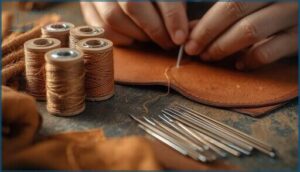
Your needle and thread need to work together, or you’ll end up with broken needles, frayed thread, and stitches that won’t hold. The wrong pairing creates friction that damages both your materials and your sanity, while the right combination glides through leather like it’s supposed to.
Here’s how to match your thread thickness with the correct needle size for clean, professional stitching every time.
Leather Needle Sizes Explained
Understanding needle selection starts with decoding the sizing system: American numbers (like 90, 100, 110) and European metrics (14, 16, 18) both indicate needle diameter, with higher numbers meaning thicker needles. Your leather thickness dictates which size you’ll need for ideal stitch quality.
- Lightweight leather (under 1.5 mm) works best with 90/14 or 100/16 needles
- Mid-weight leather projects usually require 100/16 to 110/18 needles
- Heavy hides (3–4 mm or thicker) demand 110/18 or larger to prevent breakage
Matching Thick Thread With Larger Needles
Your thick thread demands a needle sized to match—think 100/16 or 110/18 for heavy waxed thread on substantial hides. Mismatched needle selection causes stitch optimization nightmares: skipped stitches, fraying thread, and poor leather penetration.
Test your pairing on scrap leather before committing to your project, adjusting thread tension as needed. Proper needle-thread balance transforms leather sewing from frustrating to impeccable, letting your leather sewing supplies work together seamlessly.
Preventing Fraying and Breakage
Breakage analysis starts with proper thread tension—too tight and you’ll stress the fiber durability beyond its limit, too loose and leather stress creates loops that snag and tear. Waxed thread or bonded nylon thread naturally resists fraying during leather sewing, while fray prevention demands testing your polyester thread on scrap pieces.
Don’t gamble with your main project when sewing leather threads require verification first.
Hand Sewing Vs Machine Sewing Needles
Needle sharpness differs dramatically between hand sewing and sewing machines, affecting your leather sewing threads performance on every stitch. Hand-sewn projects let you control thread tension and material compatibility manually, while sewing machines deliver superior stitch consistency and sewing speed.
- Hand needles (size 0-6) feature blunt tips for controlled leather penetration
- Machine needles (90/14 to 110/18) penetrate dense hides without deflection
- Both types require larger eyes for leather sewing threads compatibility
Waxed Thread Benefits for Leatherwork
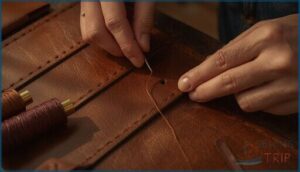
Waxed thread isn’t just a traditional choice for leatherwork—it’s a functional upgrade that solves real problems you’ll encounter when stitching through tough materials. The wax coating transforms ordinary thread into a workhorse that glides smoothly, resists the elements, and locks your stitches in place with professional results.
Here’s what makes waxed thread essential for your leather projects.
Enhanced Water and Moisture Resistance
Waxed thread transforms your leather seams into moisture-defying fortresses. The wax coating creates a hydrophobic barrier that stops water from wicking through fibers, while UV-stable options like polyester thread and bonded nylon maintain their integrity after prolonged outdoor exposure. Proper sealing techniques with compatible thread coatings improve waterproofing methods without adding bulk that traps moisture.
| Thread Type | Water Resistance | Best Application |
|---|---|---|
| Waxed Thread | Excellent capillary blocking | Hand-stitched outdoor gear |
| Waxed Polyester | High UV stability | Exposed leather seams |
| Bonded Nylon | Low polymer absorption | Marine and damp environments |
| Nylon Thread | Moderate with treatment | Heavy-duty wet conditions |
| Polyester Thread | UV-resistant surface | Sunlit moisture barriers |
Reduced Friction During Stitching
Friction reduction through wax coating transforms your stitching experience, lowering friction by up to 40% when you pierce thicker leather. That micro-lubricant effect means your polyester thread or bonded nylon glides through seams without heat buildup, especially during saddle stitching.
Pre-lubricated leather sewing threads support smoother feed on industrial machines, while proper stitch smoothing and leather finishing techniques keep tension consistent across every pass.
Added Strength Without Bulk
You gain thread reinforcement through fiber compaction that increases tensile enhancement per strand, delivering strength optimization without adding visible weight to your seams.
Waxed thread’s polymer coating boosts breaking strength, while bonded nylon thread compresses fibers for bulk reduction during heavy-duty sewing.
Twisting multiple thinner polyester or nylon thread strands creates equivalent pull resistance for leather sewing, keeping your stitch profile slender yet remarkably durable.
Ideal for Saddle Stitching Techniques
Saddle stitch demands precision that waxed thread delivers through enhanced thread tension control and reduced friction against leather thickness. The wax coating locks each pass in place, ensuring stitch integrity that outlasts ordinary leather sewing methods.
- Waxed linen and bonded nylon hold knots securely under the dual-needle tension of traditional leather stitching
- Double-needle runs stay parallel because sewing leather threads with wax coating grip firmly without slipping
- Pre-waxed options suit thick leather better than untreated fibers for consistent weaving
Machine Sewing Leather With Thread
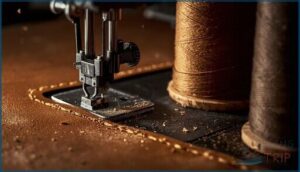
Machine sewing leather demands thread that can withstand industrial speeds and the unique challenges of penetrating thick, unyielding material. Your sewing machine won’t forgive you for using inadequate thread—it’ll break needles, skip stitches, and turn your project into a frustrating mess.
Here’s what you need to know about selecting and using thread that’ll actually survive the rigors of machine leatherwork.
Bonded Nylon for Industrial Machines
When you’re tackling high-volume production, bonded nylon delivers industrial sewing solutions that resist fraying even at blistering stitching speeds.
This heavy-duty stitching powerhouse offers higher tensile strength than standard nylon thread, meaning fewer breaks during marathon leather sewing runs.
You’ll find its enhanced abrasion resistance pairs beautifully with the thread tensioning and machine calibration demands of industrial sewing, keeping your workflow smooth and your seams impeccable.
Adjusting Tension for Leather Thread
You’ll need to dial back your machine’s tension when working with bonded nylon or waxed thread—leather’s thickness and friction demand softer thread tension than fabric. Start by testing on scrap leather; if puckering appears, reduce upper tension incrementally.
Thread stretch varies by material, so monitor sewing speed closely. Polyester tolerates higher tension than nylon, while leather sewing with waxed thread requires gentler friction management to prevent needle deflection and maintain consistent stitch density.
Pre-Lubricated Thread Options
Pre-lubricated threads minimize friction and heat buildup during machine runs, protecting both your needle and the leather’s finish. These options generally feature wax or silicone coatings on polyester or nylon bases, engineered to glide through heavy materials without sacrificing knot integrity.
Match your thread diameter to needle size, preventing skip stitches and deflection.
- Waxed polyester – balances slipperiness with grip retention
- Bonded nylon with lubricant – industrial-strength for thick hides
- Silicone-coated nylon – extreme abrasion resistance
- Waxed thread for saddle work – traditional hand-feel, machine-compatible
- UV-stable coated polyester – outdoor gear durability
Preventing Needle Breakage During Machine Work
Lubrication alone won’t save you if your machine setup fights the thread. Sharp needles slice cleanly, while dull ones force excess tension that snaps even bonded nylon mid-seam. Regular machine calibration and proper thread tension eliminate most breakage, but stitch length matters too—shorter intervals reduce cumulative stress on each penetration point.
| Breakage Factor | Prevention Method |
|---|---|
| Needle sharpness | Replace after 8–10 hours of leather sewing |
| Thread tension | Adjust dial for heavyweight thread material |
| Machine calibration | Service every 50 hours on heavy-duty sewing |
| Stitch length | Use 3–4 mm for thick hides |
| Thread choice | Waxed thread for sewing machines reduces friction |
Test on scrap before production—breakage analysis reveals mismatches fast.
Hand Sewing Leather Best Practices
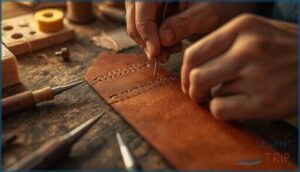
Hand sewing leather demands a different approach than machine work, where you control every stitch with your own hands and rhythm. The right thread choice, proper technique, and smart preparation separate clean, durable stitching from weak seams that won’t hold up under real-world use.
Let’s break down the core practices that’ll give you professional-looking hand-stitched leather every time.
Using Waxed Thread for Manual Stitching
Waxed thread transforms hand sewing leather into a controlled, precise craft. The wax coating reduces friction as your needle glides through each hole, preventing fraying and maintaining consistent thread tension across every stitch.
You’ll notice smoother penetration, cleaner stitch quality, and enhanced water resistance in your leather finishing.
Cut lengths around 18–24 inches with sharp scissors, and handle gently to preserve that protective wax application throughout your leatherwork.
Saddle Stitch Technique With Double Needles
Master the saddle stitch by threading two needles on opposite ends of your waxed thread, then pass each needle through the same stitch hole from opposing sides. This Double Needle Alignment creates interlocking Saddle Stitch Patterns that distribute Thread Tension Control evenly across both leather surfaces, preventing snap-through on thick materials while maintaining ideal Stitch Length Optimization.
- Position needles at equal distances from the leather edge for uniform stitch spacing
- Pull both threads simultaneously after each pass to maintain consistent tension
- Practice Leather Thickness Measurement on scrap pieces before starting your project
- Use awl-punched holes for easier needle penetration during hand sewing leather
- Keep stitch length between 6-8 stitches per inch for standard leather sewing applications
Thread Length and Knotting Methods
Precision determines whether your seam outlasts the leather itself, so measure approximately 84 inches of thread per inch of seam for saddle stitching—accounting for knot security and thread tension adjustments. Finish with a backstitch knot or square knot, pulling firmly to lock thread material against leather friction without pre-stretching waxed thread, which compromises seam integrity and stitching efficiency when sewing leather threads.
Always test your knot strength on scrap leather before committing to your final assembly, ensuring thread weight matches leather thickness to prevent bulk buildup or premature unraveling.
| Knot Type | Best Application | Security Level |
|---|---|---|
| Backstitch Knot | Seam finishing after stitch rows | High with 2-3 throws |
| Square Knot | Heavy-duty seam closures | Maximum lock strength |
| Figure-Eight Knot | Edge finishing and stoppers | Compact, reliable hold |
| Overhand Knot | Quick anchoring at start/end | Moderate, simple tie |
Trusted Leather Thread Brands and Suppliers

You can’t build quality leather projects with subpar materials, and that truth extends to the thread you choose. Sourcing from reputable brands ensures you’re working with thread that won’t let you down mid-project, whether you’re hand-stitching a wallet or running an industrial machine.
Here are the suppliers and brands that consistently deliver the strength, durability, and performance your leatherwork demands.
Ritza Polyester Tiger Thread
When you need legendary thread durability that won’t quit on demanding projects, Ritza Polyester Tiger Thread delivers peerless polyester benefits for leather stitching.
This German-engineered powerhouse combines superior tensile strength with a smooth waxed finish, making it perfect for leather crafting everything from wallets to saddles.
The material selection pros swear by it, and tiger thread uses span both hand and machine sewing leather threads applications.
Fil Au Chinois Lin Cable Waxed Linen
For traditional leather sewing purists seeking authentic craftsmanship, Fil au Chinois Lin Cable waxed linen delivers time-honored linen thread benefits with modern reliability. This French thread combines natural waxed linen properties with outstanding hand sewing techniques performance, making thread weight selection straightforward for various leather stitching tips applications.
- Premium waxed thread glides smoothly through thick leather without friction
- Natural fibers provide classic aesthetic for hand-stitched leather goods
- Multiple weights available for precise thread weight selection
- Durable waxed linen resists moisture while maintaining flexibility
- Ideal for saddle stitching and traditional leatherwork methods
Leather Machine Co. Bonded Nylon
When your sewing machine faces industrial-strength leather projects, Leather Machine Co. bonded nylon delivers machine thread durability that won’t quit.
This pre-lubricated thread tension control champion minimizes friction and needle breakage while ensuring leather stitch quality remains consistent across heavy materials.
It gives you bonded nylon benefits that transform industrial sewing tips into smooth leather sewing reality with reliable, wear-resistant performance.
Buckleguy and Springfield Leather Suppliers
When you’re hunting for thread quality that matches your leather crafting ambitions, Buckleguy and Springfield Leather stand out as go-to supplier reviews champions. Both stock extensive material selection for leather sewing, from waxed thread varieties to specialty leather thread options that enhance your crafting techniques.
Their reliable inventories and knowledgeable support make sourcing sewing leather threads straightforward, so you can focus on perfecting your work.
Common Leather Sewing Thread Mistakes
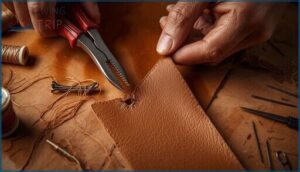
Even experienced crafters make thread mistakes that compromise their leather projects, turning what should be a lasting piece into something that falls apart prematurely.
These errors often stem from treating leather like fabric or skipping vital steps in the selection process. You’ll want to avoid these four common pitfalls that can sabotage your leatherwork before you even finish stitching.
Using Thread That’s Too Thin
A common pitfall in leather sewing is underestimating thread weight requirements, which leads to thread breakage and stitch failure. When you select thread material that’s too thin for your leather’s thickness, you’re inviting disaster—the tensile strength simply can’t handle the load.
Material selection matters because leather damage from repeated attempts weakens your project, so proper tensile testing and choosing adequately weighted waxed thread prevents catastrophic failure.
Ignoring UV Resistance for Outdoor Projects
Skipping UV-resistant thread for outdoor gear invites catastrophic material degradation, where sunlight exposure causes color shift and leather fading before structural failure. Your saddle bag or holster won’t just lose its aesthetic—UV damage weakens polyester thread bonds, turning your leather crafting investment into brittle garbage.
- Unprotected waxed thread deteriorates 40% faster under direct sun
- Color shift ruins professional appearance within months
- Leather sewing without UV protection guarantees premature replacement
Mismatching Needle and Thread Size
Wrong needle calibration destroys your leather sewing precision faster than you can curse at your machine. When thick thread meets a size 90/14 needle, you’re forcing rope through a pinhole—fraying, breakage, and stitch consistency nightmares follow. Thread tension goes haywire, leather thickness compounds the problem, and your entire project becomes a lesson in frustration.
| Needle Size | Compatible Thread Weight |
|---|---|
| 90/14 | Thin (40-60 weight) |
| 100/16 | Medium (30-40 weight) |
| 110/18 | Thick (20-30 weight) |
| 120/19 | Extra-thick (10-20 weight) |
| 130/21 | Heavy thread material |
Skipping Test Stitches on Scrap Material
You sabotage your leather sewing success the moment you skip material testing on scrap pieces. Thread tension adjustments, stitch quality verification, and leather prep compatibility all reveal themselves during trial runs—not when you’re halfway through your prized project.
Test waxed thread behavior, confirm sewing threads perform with your leather thickness, and validate that your chosen leather thread creates professional results before committing needle to finished material.
Frequently Asked Questions (FAQs)
Can you dye leather thread after purchasing it?
You absolutely can dye leather thread post-purchase using fabric dye compatible with synthetic fibers, though waxed thread requires wax removal first.
Always test dye compatibility and perform colorfast testing on scrap lengths before committing to your main project.
How do you store leather thread long-term?
Store your Thread Storage Tips in a cool, dry space with Humidity Control around 40–60%, using sealed containers with desiccants for Moisture Prevention, protecting Waxed Thread and other Sewing Thread from UV exposure to extend Shelf Life.
What causes thread to rot in leather projects?
Moisture damage, UV degradation, and bacterial growth accelerate thread rot when sewing leather threads.
Chemical reactions from tannins, fiber fatigue from stress, and poor waxed thread or waxed polyester selection further compromise leather sewing durability and thread material integrity.
Is thread direction important when hand stitching leather?
Yes, thread direction matters for hand stitching leather. Consistent orientation maintains stitch alignment, optimizes thread tension, and strengthens seam integrity, especially when working saddle stitches with waxed thread along the leather grain.
Can synthetic thread damage vintage or delicate leather?
High tension and poor thread compatibility testing can leave synthetic fibers imprinted on vintage leather care surfaces, causing color transfer or abrasion.
Always test scrap pieces first to prevent irreversible leather damage prevention mistakes.
Conclusion
Professional leatherworkers report thread failure causes 40% of early project deterioration, which makes your thread choice as critical as the leather itself.
Matching sewing threads for leather to your material thickness, understanding waxed versus bonded options, and pairing the correct needle size transforms amateur work into heirloom-quality craftsmanship.
Test your thread on scrap leather before committing to final stitches—that single step prevents costly mistakes and ensures your wallet, bag, or saddle withstands decades of use.
- https://academichelpexpress.blog/2024/08/please-use-the-bulleted-points-and-the-rubric-below-to-guide-your-work-your-pa/
- https://x.com/godofprompt/status/1990526288063324577
- https://www.sciencedirect.com/science/article/pii/S2949916X23000464
- https://pmc.ncbi.nlm.nih.gov/articles/instance/9553038/bin/pone.0275964.s005.docx
- https://arxiv.org/html/2507.17948v2