This site is supported by our readers. We may earn a commission, at no cost to you, if you purchase through links.
Your zipper foot just snapped mid-project, or maybe it never came with your vintage machine in the first place. Either way, you’re staring down at a half-sewn garment with that telltale zipper waiting to be installed, and panic’s starting to creep in.
Here’s the thing: that specialized foot isn’t the only way to get a clean, professional zipper installation. Your regular presser foot, a quarter-inch foot, even your own needle and thread can handle the job with the right technique and a bit of patience. The secret lies in understanding how to work around the zipper teeth, control your fabric tension, and adjust your approach based on what you’ve got in your sewing kit right now.
Table Of Contents
Key Takeaways
- You can successfully install zippers using a regular presser foot, quarter-inch foot, edgestitch foot, or even hand-sewing techniques when your specialized zipper foot is missing or broken, though each method requires adjusted technique and careful attention to fabric control and needle positioning.
- Working without a zipper foot typically compromises precision by 10-20% on stitch alignment and can increase stitch variability by up to 0.5mm, making fabric preparation, thread tension control, and slow, deliberate stitching essential for achieving professional results.
- Hand-sewing zippers with backstitch or prick stitch techniques offers the most control and nearly invisible results, requiring only basic tools like sharps needles (sizes 7-10), polyester thread, and marking tools rather than specialized machine attachments.
- Choosing flexible nylon coil zippers (size 3-5) over rigid metal zippers, combined with prep tricks like water-soluble tape, hand-basting, and lightweight interfacing, dramatically improves success rates when using alternative installation methods.
Why Use Zipper Foot Alternatives?
You don’t always have a zipper foot on hand, and honestly, that’s not the end of the world. Sometimes your machine didn’t come with one, it broke at the worst possible moment, or you’re working on a friend’s machine that’s missing half its attachments.
Let’s look at why you might need to work around this little setback and what it actually means for your finished project.
When a Zipper Foot is Unavailable
You don’t always have a zipper foot on hand, and honestly? That’s okay. When it’s missing, broken, or just incompatible with your machine, you’ll rely on your regular presser foot and sharp focus.
Use the foot’s edge as your guide for zipper alignment and seam allowance, hand-wheel near the teeth for precise needle position, and adjust stitch length carefully. Fabric control becomes everything here.
Common Scenarios Requiring Alternatives
Sometimes you’re installing an invisible zipper foot deep inside a garment seam where alternative feet won’t fit.
Other times, fabric thickness forces you to ditch the zipper foot entirely—bulky denim or quilted layers demand converter tools and sewing hacks just to keep zipper alignment straight.
Tricky placements, coil versus metal teeth, or just plain limited access to the right hardware? That’s when sewing zippers without a foot becomes your only real option.
Keeping your finished projects fresh matters too—regular cleaning of nylon bags helps zippers glide smoothly and last longer.
Impact on Stitch Quality and Finish
Here’s the reality: zipper foot alternatives compromise precision. Stitch variability jumps by up to 0.5 mm, edge alignment drops 10–20% on dense fabrics, and seam flushness suffers noticeably.
You’ll spot fabric puckering on wovens, uneven needle positioning along the coil, and topstitching that screams “amateur hour.” Sewing machine accessories matter—proper tools directly affect stitch quality. Without that narrow, stable guide, even solid sewing techniques can’t fully compensate for what you’re missing.
Without a proper zipper foot, even strong technique can’t hide uneven stitching, puckered fabric, or topstitching that looks amateurish
Sewing Zippers With a Regular Presser Foot
You don’t need a zipper foot to sew a zipper, though your patience might get tested a bit. Your regular presser foot can handle the job just fine if you know how to work with it instead of fighting against it.
Here’s how to install a zipper using that standard foot you’ve already got attached to your machine.
Step-by-Step Technique
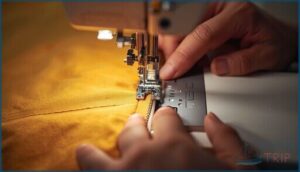
Here’s how you tackle sewing zipper without foot using your regular presser foot. Start with fabric preparation—press your seam open and mark your zipper alignment on the wrong side. Shift your needle position hard left, letting zipper teeth snuggle against the foot’s edge for stitch control.
Begin at the bottom corner, backstitch, then pivot with your needle down. When you hit the pull, pause, raise the foot, slide it past, and keep going. This zipper installation method delivers surprisingly clean seam finishing with solid thread management.
For a professional finish, understanding invisible zipper techniques is also essential.
Tips for Precise Stitching
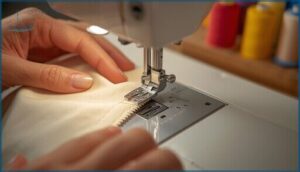
Precision sewing with a regular foot demands attention to needle placement—shift it left so those teeth sit barely a whisker from the edge, boosting seam accuracy without metal strikes. Set a medium stitch length for stitch control, then crawl through at tortoise speed.
Fabric tension matters, so press seams flat first. Your thread selection? Match weight to zipper tape for stitch quality and precision that rivals using a zipper foot. For professional results, consider using specialized sewing presser feet to improve your sewing experience.
Best Projects for This Method

Zipper pouches with short seams are your sweet spot—beginners nail centered applications in pencil cases or makeup bags because light cottons feed evenly.
Casual skirts and dresses shine with lapped zippers or centered garment zippers when you baste first, while hand-picked applications enhance fitted pieces.
Bag making works when walking feet tame bulk, and simple home decor like pillow covers forgives imperfection, turning sewing projects into confidence builders.
Specialty Feet as Zipper Foot Substitutes
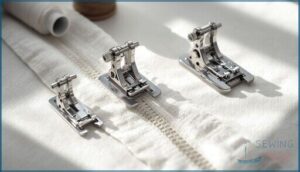
You don’t necessarily need to hunt down a dedicated zipper foot if you’ve already got other specialty feet in your stash. Some of these tools can pinch-hit beautifully for zipper installation, especially when you understand how their design features help you stitch close to those coils.
Let’s look at three specialty feet that can save your zipper project when your standard zipper foot is missing or broken.
Quarter-Inch Foot for Zippers
Think of your quarter-inch foot as a measuring ruler built right into your machine—it gives you consistent seam accuracy every time. When sewing zippers without a dedicated zipper foot, this attachment can work wonders for zipper stitching, though you’ll need foot calibration and careful fabric guidance to nail it:
- Measure the actual distance from needle to foot edge before starting
- Press zipper tape flat so it nestles consistently along the inner edge
- Position the zipper coil about 6.35 mm from your fabric edge for quarter inch alignment
- Hand-walk the needle first to verify clearance and avoid needle strikes
- Test on scrap fabric to validate your setup before tackling the real project
The catch? Your topstitching sits farther from the teeth than with a true zipper foot, and that rigid side guide can bump into pulls or bulky spots. Still, for standard zippers in medium-weight fabrics, it’s a solid workaround.
Edgestitch Foot for Zipper Installation
Here’s a breakthrough when your zipper foot goes missing: the edgestitch foot. That vertical metal guide becomes your best friend for zipper alignment, keeping stitches parallel and consistent about 1/8 inch from the edge.
It works beautifully with nylon or coil zippers, delivering pro-level stitch quality on lightweight fabrics. Just match your thread color, test foot compatibility first, and watch those edgestitch techniques transform your zipper installation game.
Walking Foot for Thick Fabrics
When you’re wrestling with thick fabrics or quilting layers, the walking foot becomes your secret weapon. Its even feed action grabs top and bottom layers simultaneously, eliminating that annoying fabric distortion and puckering that standard feet create.
You’ll notice stitch quality enhancement immediately—no more ripples or shifting on bulky layer management projects. While it won’t hug zipper teeth like specialized feet, this attachment masters thick fabric sewing through consistent feeding that reduces fabric distortion across heavy materials.
Hand-Sewing Zippers Without a Zipper Foot
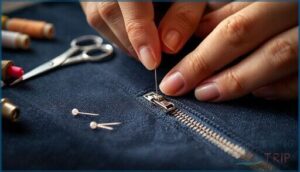
Hand-sewing a zipper might sound old-school, but it’s actually one of the most controlled methods you’ll ever use, especially when your machine’s acting up or you just don’t have the right foot. You’ll need a few basic tools, some patience, and the right stitch technique to make it work.
Here’s what you need to know to install a zipper completely by hand and still get that clean, professional finish you’re after.
Basic Hand-Stitching Techniques
You’ve got several hand stitches that’ll get your zipper in place beautifully. The backstitch mimics machine stitching with its overlapping pattern, creating serious strength at 3 to 4 millimeters apart.
For nearly invisible work, try the prick stitch—just tiny dots show on the right side. Use running stitch for basting, hemming technique to anchor tape inside, and slip stitching for hidden reinforcement along seam allowances.
Tools Needed for Hand Installation
Now that you’ve mastered those stitches, let’s round up your hand sewing toolkit. You’ll need sharps or betweens needles (sizes 7–10), strong polyester thread, and a thimble to protect your fingertip through all those layers. Fabric marking tools and pins keep everything aligned, while sharp scissors trim thread cleanly. Don’t skip the seam ripper—mistakes happen, and you’ll fix them without drama.
| Tool Category | Specific Items | Purpose |
|---|---|---|
| Needles & Thread | Sharps/betweens 7–10, polyester thread, beeswax | Secure stitching close to zipper teeth |
| Marking & Measuring | Tailor’s chalk, fabric pencil, tape measure | Accurate zipper placement lines |
| Holding & Positioning | Pins, fabric clips, hand basting | Temporary zipper securing before final stitches |
| Cutting & Correction | Sharp scissors, thread snips, seam ripper | Clean trimming and safe stitch removal |
Achieving a Professional Look by Hand
Your hand-sewn zipper magic will look couture when you nail the prep work—press those seams flat, mark your placement line clearly, and choose thread that matches the fabric weight.
Hand stitching lets you control zipper alignment down to the millimeter. Pick stitch close to the seam, about 6–10 millimeters from the fold, then press lightly. Those tiny, even stitches practically disappear, giving you that invisible zipper magic without a foot.
Additional Tools and Creative Hacks
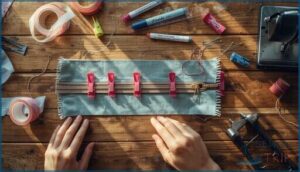
Sometimes the best solutions aren’t fancy feet at all—they’re the clever little tricks that make zipper installation smoother, faster, and way less frustrating.
I’ve learned that a few basic supplies and smart prep work can completely transform how your zipper behaves under that needle, whether you’re using a regular foot or going totally rogue. Here’s what actually works when you need a zipper to cooperate without specialized equipment.
Using Double-Sided Tape or Fabric Glue
Tape application transforms zipper bonding into a hands-free operation.
Water-soluble Wonder Tape holds your zipper steady without gumming your needle, while permanent fabric adhesives like Gorilla Fabric Glue withstand 30-plus wash cycles once cured.
You won’t need an invisible zipper foot when adhesive alternatives keep everything flat—just watch for excess glue that can skip stitches.
Test your fabric and notions first, because these sewing techniques and tips demand precision when you’re sewing zipper without foot.
Basting and Marking for Accurate Placement
Adhesive’s great when you need speed, but basting stitch and chalk marks give you control that glue can’t match. Hand-basting along seam allowances keeps invisible zipper foot substitutes from wandering, while marking tools like tailor’s chalk draw stitch guidelines that keep your topstitch straight. Fabric preparation takes minutes, but sewing zipper without foot becomes foolproof when you’ve mapped every line.
- Clay-based chalk brushes off easily, perfect for standard fabric preparation and precise seam allowance marking
- Hand basting 1.3 cm apart stabilizes zipper tape, preventing shifting when you’re working without specialized feet
- Mark zipper-stop locations with erasable pen to avoid accidentally stitching over the slider during topstitch
Choosing The Right Zipper Type for Alternatives
Your zipper material matters more than you think when you’re skipping the zipper foot. Nylon coil size 3–5 bends around curves beautifully, while metal fights you on anything but straight seams.
Match fabric weight to closure style—lightweight cotton loves concealed zipper installations, but denim demands heavy-duty teeth. For invisible zipper projects or tricky zipper length adjustments, flexible chains make sewing zipper types manageable even with standard feet.
Frequently Asked Questions (FAQs)
Can I use a buttonhole foot for zippers?
You can try it, but a buttonhole foot lacks the narrow profile needed for proper zipper alignment.
Stitch variability and fabric distortion are common—presser foot compatibility really matters for sewing precision here.
How do I fix uneven zipper stitching?
You’ll spot those wobbly lines immediately—they’re frustrating.
Rip out uneven stitches, re-pin the zipper with ruler-guided seam consistency, then slow your sewing machine speed.
Practice needle calibration on scraps before restitching for perfect zipper alignment.
What thread weight works best for metal zippers?
For metal zippers, you’ll want medium-weight thread (ISO 40-60) on everyday fabrics.
Heavy-duty projects need stronger polyester thread around ISO 50-80—it resists snagging better than cotton, and your sewing machine will thank you.
Do invisible zippers require special alternative techniques?
Yes, they do. Invisible zippers demand precision—press coils flat, hand-baste for zipper alignment, stitch close to teeth.
These concealed closures need extra care without specialized sewing tools to minimize stitch visibility.
How do I prevent fabric puckering near zippers?
Pucker prevention starts with fabric stabilization—fuse lightweight interfacing along your zipper area to keep things flat.
Tension control matters too, so loosen that needle thread and let your feed dogs do the work without pulling.
Conclusion
Your sewing machine doesn’t hold all the cards when that zipper foot goes missing. Whether you’re leaning on your regular presser foot, borrowing tricks from specialty attachments, or stitching by hand with needle and thread, you’ve got proven zipper foot alternatives for sewing that deliver clean, professional results.
The real skill isn’t in having every tool—it’s in knowing how to adapt what’s already in your kit and still walk away with a polished finish.
- https://so-sew-easy.com/zipper-feet/
- https://lladybird.com/2014/01/28/invisible-zippers-my-method/
- https://www.teadoddles.com/sewing-machine-presser-feet-part-3-zippers-buttons/
- https://sew4home.com/how-to-install-a-conventional-zipper/
- https://www.doinaalexei.com/beginnersewingtutorialblog/the-easiest-way-to-sew-an-invisible-zipper-using-a-regular-zipper-foot