This site is supported by our readers. We may earn a commission, at no cost to you, if you purchase through links.
Your fabric scissors cost you good money, and one snag against paper or a dull blade can ruin a perfectly cut piece of silk. Most sewers replace their scissors every year or two, but that’s usually because they don’t know how to keep them sharp and rust-free.
The truth is, a quality pair of fabric shears can last decades with the right care. Regular cleaning removes adhesive buildup, proper storage prevents blade misalignment, and occasional sharpening maintains that satisfying glide through layers of cotton. These simple habits protect your investment and guarantee every cut stays clean and precise, saving you from frayed edges and frustrating do-overs.
Table Of Contents
Key Takeaways
- Quality fabric scissors can last decades instead of needing yearly replacement when you clean them regularly, store them in protective cases, and sharpen them only when blades show clear signs of dulling, like frayed cuts or squeaking sounds.
- Never cut anything except fabric with your designated fabric scissors because paper, cardboard, plastic, and adhesive materials contain abrasive fillers that dull blades faster than cloth ever could.
- Daily maintenance matters more than occasional deep cleaning—wipe lint and debris from blades after each project, apply a drop of oil to the pivot monthly, and immediately dry any moisture to prevent rust from forming.
- Proper storage prevents more damage than you’d expect, so always use blade guards or protective cases rather than tossing scissors loose in drawers where metal-on-metal contact creates nicks and misalignment.
Why Fabric Scissor Maintenance Matters
Your fabric scissors aren’t just tools—they’re proper care investments that deserve proper care. Without regular maintenance, even the best shears will lose their edge, strain your hands, and start damaging the very fabrics you’re working to protect.
Just like choosing the right needle for stretchy fabrics requires understanding your material’s properties, maintaining sharp scissors means protecting the precision of every cut you make.
Let’s look at three key reasons why a little upkeep now saves you time, money, and frustration later.
If you don’t have the right attachment on hand, these creative zipper foot alternatives can help you finish the job without buying new tools.
Impact on Cutting Performance
The difference between a clean, sharp pair of fabric scissors and a neglected one isn’t subtle—it’s the difference between smooth cuts that glide through silk and a frustrating tug-of-war with every snip. To maintain peak performance, understanding the importance of using high-quality fabric cutting tools for various sewing tasks is vital.
When blade sharpness declines, you’ll notice:
- Frayed edges instead of clean lines
- Extra hand strain from pushing harder
- Fabric tears where precision cuts should be
Poor scissor maintenance directly affects cutting efficiency, throwing off blade alignment and compromising your work before you even start sewing.
Extending Scissor Lifespan
Quality fabric scissors aren’t cheap, but a little regular care can keep them cutting like new for decades instead of months. Proper scissor maintenance protects your investment by preventing issues that shorten tool longevity—rust eats through blade alignment, debris clogs the pivot, and misuse dulls the edge faster than any sharpening and repair service can fix.
| Lifespan Factors | Poor Care Result | Good Scissor Care Result |
|---|---|---|
| Scissor Material | Rust, corrosion | Protected finish |
| Blade Alignment | Loose, wobbly cuts | Precise, stable cuts |
| Handle Maintenance | Worn grips | Comfortable control |
| Storage Solutions | Nicks, damage | Protected blades |
Regular scissor sharpening and thoughtful storage solutions mean you won’t replace expensive shears every year.
Preventing Fabric Damage
Dull or dirty scissors don’t just make your hands ache—they snag delicate fabrics, pull threads, and leave ragged edges that ruin hours of careful work. Proper maintenance involves understanding the importance of fabric scissor care to extend their lifespan.
Sharp blades glide through textiles cleanly, while misaligned edges crush fibers instead of slicing them. Your cutting techniques matter, but blade alignment and consistent scissor handling protect silk, cotton, and wool from unnecessary damage during fabric cutting.
How to Clean Fabric Scissors Properly
Your fabric scissors face a constant barrage of dust and fibers that can dull blades and gum up the pivot. A quick wipe after each project keeps them cutting clean, but sometimes you’ll need a deeper approach to tackle stubborn buildup.
Here’s how to keep your shears in cutting glory, from daily maintenance to tackling rust and grime.
If your shears snag on fabric or feel dull, you might also want to check out how to make rips in your jeans for techniques that rely on precision cuts with well-maintained blades.
Daily Wiping Techniques
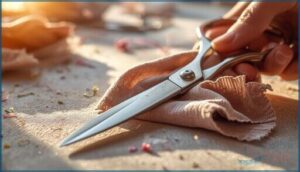
After every snip and slice, your scissors collect a little parade of lint, thread bits, and fabric dust that’ll dull those blades faster than you’d think.
If your scissors have been cutting through synthetic fabrics or old canvas, cleaning methods for nylon and similar materials can help you understand how residue builds up and why a quick wipe-down matters.
That’s where daily blade care comes in—grab a soft cloth wipe and give those blades a gentle touch cleaning after each project.
This simple regular maintenance check keeps your tool care routine strong and your cutting glory intact.
Removing Residue and Rust
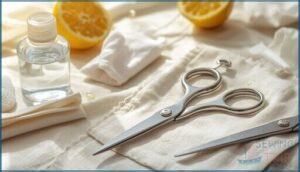
Sticky tape and stubborn glue don’t stand a chance when you reach for the right cleaner—isopropyl alcohol or citrus-based adhesive removal cuts through gunk without harming your blades.
For rust prevention and corrosion control, white vinegar works wonders on light oxidation. Just wipe the solvent along the metal, never soak the pivot, then dry immediately and apply a drop of oil for lasting blade maintenance.
Cleaning The Pivot Area Safely

The tiny crevice where your blades meet collects lint, oil, and fabric dust that can turn smooth cutting into a grinding frustration. An old toothbrush works perfectly for gentle scrubbing around pivot points—just add warm soapy water and work debris removal into your scissor maintenance routine.
Once you’ve cleared the gunk, apply one small drop of sewing machine oil for joint lubrication and smooth operation.
Best Practices for Storing Scissors
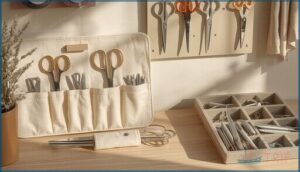
You’ve cleaned your scissors, and now they need a safe place to live. Tossing them into a drawer or project bag won’t do—that’s a fast track to dull, damaged blades.
Let’s look at smart storage options that keep your fabric scissors protected and ready for cutting glory.
Protective Cases and Sheaths
Storing your fabric scissors bare and exposed is like leaving a chef’s knife loose in a drawer—it won’t stay sharp for long. A protective case or blade guard shields your investment from nicks and dulling.
Scissor holsters, protective sleeves, and dedicated storage solutions keep blades in perfect condition between projects. For travel, a padded scissor case with sturdy case materials protects against jostling. Good storage is essential scissor care.
Avoiding Damage From Improper Storage
Tossing scissors into a crowded drawer with other tools is a fast track to dull blades and misaligned tips. Protective cases and proper scissor handling prevent costly damage.
Here’s what ruins your blades:
- Metal-on-metal contact – Other tools scratch and nick cutting edges in cluttered drawers.
- Loose storage – Scissors rolling freely causes blade misalignment and tip damage.
- No designated spot – Random placement means you’ll grab the wrong pair, using fabric shears on paper.
Smart storage solutions keep your investment in cutting glory.
Preventing Rust and Corrosion
Moisture is the silent enemy of sharp scissors, sneaking in through humid air or damp fabric to slowly eat away at your blades. Storage solutions start with location—keep your scissors in a dry spot, away from steamy bathrooms or damp basements.
| Rust Prevention Strategy | Why It Works |
|---|---|
| Store in climate-controlled space | Moisture management keeps humidity low |
| Apply scissor oil to blades | Lubrication creates a protective barrier |
| Wipe clean after each use | Cleaning removes moisture before storage |
| Use silica gel packets in cases | Corrosion control through desiccant absorption |
Regular oiling provides blade protection that repels water before rust can form.
When and How to Sharpen Scissors

Even the best fabric scissors eventually lose their edge, and knowing when to sharpen them can save your hands and your fabric.
You have a few solid options for bringing those blades back to life, from quick fixes at home to professional services. Let’s look at how to tell when it’s time, plus what sharpening methods actually work.
Recognizing Signs of Dull Blades
Your scissors will tell you when they need sharpening if you know what to listen for. Here’s what signals it’s time for blade sharpening:
- Cutting struggle – fabric pushes away instead of slicing cleanly, forcing you to squeeze harder than usual
- Frayed cuts – edges look chewed rather than crisp, a clear sign of dull edge trouble
- Scissor squeak – an annoying sound during blade inspection that sharp blades never make
When you notice these warnings, don’t wait. Proper scissor maintenance means acting quickly to restore your cutting glory.
Using Home Sharpening Tools
Home sharpening tools offer a quick fix when your blades lose their edge, though they won’t match professional results. A wet sharpening stone works well for edge restoration, but tool selection matters for proper blade alignment during scissor maintenance.
| Sharpening Tools | Sharpening Techniques | Sharpening Frequency |
|---|---|---|
| Wet sharpening stone | Glide blade at 10-degree angle | Every 6-12 months |
| Desktop sharpener | Insert blades, pull through slots | When cutting feels difficult |
| Handheld sharpener | Draw along blade edge gently | As needed for touch-ups |
| Fine-grit sandpaper | Fold and cut repeatedly | Emergency option only |
| Aluminum foil method | Cut through folded layers | Temporary solution |
Practice your sharpening techniques slowly at first—tool sharpening requires patience, not speed, for successful scissor sharpening.
Professional Sharpening Services
When your favorite fabric shears need more than a quick tune-up, a professional sharpener can restore them to their original cutting glory.
These experts use precision honing and blade restoration techniques that home sharpening tools simply can’t match. They’ll realign your blades perfectly, removing nicks through careful edge reconditioning.
Scissor refurbishment from professionals means your shears will glide through fabric like new again.
Proper Usage to Preserve Scissor Quality
The way you use your fabric scissors matters just as much as how you clean or sharpen them. Small habits—like what you cut and how you hold the blades—can keep your scissors sharp for years or ruin them in weeks.
Here’s how to protect your investment through smart, everyday use.
Designating Scissors for Fabric Only
The golden rule of fabric scissors is simple: let them touch nothing but cloth. Proper scissor allocation means dedicating your fabric shears exclusively to sewing projects. This task specification protects blade edges from dulling materials that compromise material compatibility. When you respect this boundary, your scissor maintenance becomes easier and blade protection becomes automatic.
Here’s how to keep your sewing scissors in cutting glory:
- Label each pair clearly – Mark fabric scissors with colored tape or tags so everyone knows their purpose
- Store them separately – Keep fabric shears away from general craft supplies to prevent accidental misuse
- Create a fabric-only station – Designate a specific workspace where only textile cutting happens
- Communicate the rule – Tell family members or studio mates that these scissors are off-limits for other tasks
- Invest in alternatives – Buy separate scissors for paper, thread, and other materials to remove temptation
Avoiding Cutting Damaging Materials
Now that you’ve claimed your scissors for fabric alone, knowing what not to cut is just as important. Paper and cardboard contain abrasive fillers that dull blades faster than any cloth ever could.
Skip plastics, leather, and adhesive-backed materials—they create drag, residue, and microscopic edge damage. Material selection directly impacts cutting condition, so protect those blades by steering clear of anything harder or stickier than your favorite cotton.
Handling Techniques to Prevent Misalignment
Rough handling and awkward angles can knock your blades out of alignment faster than a season’s worth of daily cutting.
Keep your ergonomic grip relaxed, and work with scissor balance rather than against it. Let proper cutting angles do the heavy lifting—no twisting or forcing through thick layers.
Gentle handling protects those pivot points, and your blades stay true through countless projects.
Additional Tips for Long-Lasting Fabric Scissors
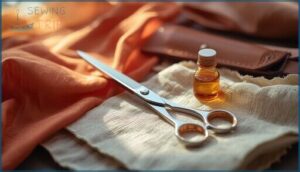
You’ve already covered the essentials, but a few extra habits can keep your fabric scissors in cutting glory for years.
These small touches don’t take much effort, yet they make a real difference in how your blades perform.
Here are three simple practices worth adding to your routine.
Regular Oiling of The Pivot
A tiny drop of oil at the pivot does wonders for friction reduction and joint care. Apply light machine oil or sewing-machine oil once a week—more often if you cut daily—then open and close the blades to spread it.
This simple pivot lubrication keeps movement smooth, slows wear, and extends the time between sharpening appointments.
Marking and Organizing Scissors
Label each pair with bright nail polish or washi tape so everyone knows your fabric shears are strictly off-limits for cardboard or craft paper.
Keep them in a designated drawer or magnetic wall strip—proper scissor storage and workspace management prevent accidental damage.
Clear scissor identification and tool organization mean you’ll always grab the right pair, and your blades stay sharp for cutting glory.
Traveling and On-the-Go Protection
Tossing your fabric scissors into a tote bag without protection is like sending fine china through the mail in a paper envelope—you’re asking for trouble. Invest in a padded travel case or protective sleeve to keep your blades safe on the go.
Protect your fabric scissors on the go with a padded case—tossing them loose into a bag invites damage and dull blades
Here’s how to protect your scissors when traveling:
- Use a hard-shell scissor case for maximum blade protection during transport.
- Wrap grips with cloth to prevent scratching inside your travel case.
- Choose portable storage with individual slots for multiple pairs.
- Invest in leather protective sleeves that slide easily into project bags.
- Store scissors closed and secure them with a snap or elastic band.
Proper tool care and storage mean your scissors arrive ready to cut, not damaged and dull.
Frequently Asked Questions (FAQs)
Can I cut thread with fabric scissors?
Yes, you can cut thread with fabric scissors—sewing shears handle fabric and thread beautifully.
Just keep them away from paper or metal, and your blades will stay sharp for years of cutting glory.
How often should I oil my scissors?
Oil your scissor pivot every few months—or whenever blades feel stiff—to keep them gliding like butter.
A tiny drop prevents rust and maintains smooth cuts, protecting your investment for years.
What causes scissors to become misaligned over time?
Dropping scissors causes blade damage and alignment issues.
Cutting thick materials creates handle stress and pivot wear, while overtightening screws leads to metal fatigue. Poor scissor care accelerates these problems, affecting your sharpening results.
Can I sharpen serrated or pinking shears?
Professional calibration works best for pinking shear maintenance and serrated edge care.
Those zigzag teeth need specialized sharpening techniques that preserve blade geometry.
A scissor sharpener designed for standard blades won’t cut it here.
Conclusion
Most sewers think sharpening is the secret to longevity, but storing your scissors carelessly undoes every careful honing session. A blade knocked against metal dulls faster than months of steady cutting.
When you commit to how to maintain fabric scissors for longevity—wiping residue daily, protecting edges in sheaths, and reserving them for fabric alone—you’re not just preserving tools. You’re guaranteeing that twenty years from now, those same shears will still glide through silk like the day you bought them.
- https://proshearus.com/blogs/news/why-is-proper-maintenance-crucial-for-sewing-scissors
- https://threadsmonthly.com/how-to-clean-fabric-scissors/
- http://threadbarecreations.blogspot.com/2024/02/quilting-101-caring-for-your-scissors.html
- https://www.heartfeltquilting.com/Sewing-101
- https://wolffindustries.com/products/scissors-lubricant