This site is supported by our readers. We may earn a commission, at no cost to you, if you purchase through links.

Your rotary cutter can slice through eight layers of cotton like butter one day, then snag and skip across fabric the next. The difference isn’t the tool—it’s how you treat it between projects.
Most quilters replace blades far more often than necessary, simply because they skip basic maintenance that takes less than five minutes. A well-maintained rotary cutter delivers clean cuts for months, saves you money on replacement blades, and reduces the risk of slips that lead to injuries.
Proper care starts with understanding what causes blades to dull prematurely and why a few drops of oil can transform a stubborn cutter into a precision instrument.
Table Of Contents
- Key Takeaways
- Essential Rotary Cutter Safety Practices
- Cleaning and Oiling Your Rotary Cutter
- Blade Maintenance and Replacement Tips
- Storing Rotary Cutters for Longevity
- Top Tools and Accessories for Rotary Cutter Care
- 1. Evridwear Cut Resistant Gloves
- 2. U.S. Art Supply Self-Healing Double-Sided Cutting Mat
- 3. Kai Rotary Cutter Tool
- 4. Mudder Rotary Cutter Blades
- 5. Geyoga Kids Cut Resistant Gloves
- 6. Metal Safety Ruler With Finger Guard
- 7. LNKA Quilting Ruler Handle Gripper
- 8. Quilters Select Suction Cup Ruler Handle
- 9. Tujuna Quilting Ruler Grip Handle
- Frequently Asked Questions (FAQs)
- Conclusion
Key Takeaways
- Regular maintenance—removing lint, applying sewing machine oil to pivot points, and storing blades covered—extends rotary cutter lifespan by months while preventing premature blade replacement and reducing injury risk.
- Safety requires disciplined technique: always cut away from your body, keep your non-cutting hand in a claw grip at least two inches from the blade, and retract the blade guard immediately after each cut.
- Self-healing cutting mats with grid markings prevent blade skipping and fabric shifting while distributing wear across the surface when rotated quarterly and stored flat away from heat.
- Replace blades when you notice increased drag, frayed cuts, or visible edge damage, but repurpose dull blades for softer materials like felt and foam before disposing in sharps containers.
Essential Rotary Cutter Safety Practices
A rotary cutter can slice through fabric like butter, but that same sharpness demands your respect and attention. One moment of distraction can lead to a serious injury that sidelines your project for weeks.
Pairing your rotary cutter with proper fabric cutting techniques helps you maintain clean edges while keeping your fingers safely away from the blade.
A rotary cutter slices fabric effortlessly, but one distracted moment can cause a serious injury that halts your project for weeks
Let’s walk through the core safety practices that’ll keep your fingers intact and your cutting confident.
Safe Handling and Proper Grip Techniques
Grip placement makes all the difference between smooth cuts and hand fatigue. Position your index finger along the top edge for stability, with your thumb opposite to create a secure pinch grip. Keep your wrist neutral and let your arm move as one unit from the shoulder. Always cut away from your body, maintaining blade control through steady, deliberate motions.
- Hold the rotary cutter with a relaxed grip to reduce strain
- Align your wrist in a neutral position for safe cutting posture
- Keep the blade on a consistent path for better hand alignment
- Use controlled strokes rather than jerky movements for precision
- Maintain proper hand protection distance from the cutting line
Using Cut-resistant Gloves for Protection
Even with a perfect grip, one slip can cost you. Cut-resistant gloves offer that second layer of hand protection you need when working with razor-sharp blades. Look for ANSI level 3 or higher materials like HPPE or Kevlar blends that deliver both finger safety and dexterity.
If you’re interested in comparing the latest options, review these to guarantee proper protection for your needs.
| Glove Feature | Why It Matters for Rotary Cutter Safety |
|---|---|
| Textured palm coatings | Improve grip control on slippery fabric or wet surfaces |
| Flexible backhand materials | Allow precise hand movements without bulk during quilting safety tasks |
| Extended cuff designs | Shield your wrist area from accidental blade guarding contact |
Choose glove materials that balance cut resistance with comfort for extended sessions.
Correct Cutting Direction and Hand Placement
Cut-resistant gloves protect your hands, but proper cutting technique keeps the blade away from them in the first place. Always push the rotary cutter away from your body—never pull toward yourself. Position your non-cutting hand in a claw grip with fingers curled inward, guiding fabric without entering the blade’s path.
Follow these five hand positioning rules for every cut:
- Start each stroke at the fabric’s back edge and push forward with steady pressure
- Keep your guiding hand’s fingertips at least two inches ahead of the blade
- Rotate the material for curves rather than twisting your wrist or the cutter
- Maintain a straight line from your shoulder through your forearm to the blade
- Retract the blade guard immediately after completing each cut
This disciplined approach to cutting direction and fabric guidance builds muscle memory that protects you during long quilting sessions. To further understand safe techniques, you can review the elements of the cutting process.
Importance of Self-healing Cutting Mats
Your cutting surface matters just as much as your blade technique. A quality self-healing cutting mat grips the rotary cutter blade as it passes through, reducing slippage and protecting your table from permanent gouges. The mat’s micro-layered surface reseals after shallow cuts, maintaining cutting accuracy even after hundreds of passes.
| Mat Feature | Safety Benefit | Maintenance Impact |
|---|---|---|
| Self-healing surface | Prevents blade skipping and fabric shifting | Extends mat durability through 2-3 years of regular quilting |
| Grid markings | Reduces measurement errors and blade exposure during alignment | Requires gentle cleaning to preserve printed guides |
| Non-slip backing | Keeps workspace stable during cutting strokes | Inspect edges monthly for peeling or warping |
| PVC construction | Absorbs impact to protect blade sharpness | Store flat away from heat sources |
| Rotatable design | Distributes wear across entire surface | Flip quarterly to expose fresh cutting zones |
To maximize your mat’s lifespan, rotate it every few months to spread wear evenly across the surface. Clean it with a damp cloth and mild soap to remove fabric fibers that dull your blade. Store it flat—never rolled or bent—to prevent warping that compromises cutting accuracy and safety features.
Cleaning and Oiling Your Rotary Cutter
Regular cleaning keeps your rotary cutter performing like new and extends blade life considerably. Lint, dust, and fabric fibers build up quickly in the mechanism, causing drag and premature wear.
Here’s how to maintain your cutter with simple cleaning and oiling steps.
Removing Lint, Dust, and Fabric Fibers

Your rotary cutter collects lint and dust surprisingly fast, especially when cutting natural fibers like cotton and linen. Regular fiber cleaning prevents buildup that degrades blade performance and compromises rotary cutter safety.
A clean blade paired with proper pattern cutting tools and tips ensures smooth, accurate cuts every time you work.
- Brush the underside of the blade with a soft nylon brush after each project
- Wipe the housing with a microfiber cloth to lift fine fabric shedding
- Use a lint roller on the cutter body for quick dust prevention between deep cleans
Proper Blade Cleaning Steps

Blade inspection reveals stubborn fibers that brushing alone won’t remove. Follow this sequence for thorough rotary cutter maintenance and blade care:
| Step | Action |
|---|---|
| Detach blade | Remove following manufacturer procedure for safe handling |
| Wipe surface | Use damp cloth with mild detergent to lift residue without pressure |
| Rinse and dry | Air dry completely on lint-free cloth before reinstallation |
Never scrub blade edges aggressively—gentle cleaning solutions preserve sharpness longer.
Applying Sewing Machine Oil for Smooth Operation

Regular lubrication keeps your rotary cutter gliding effortlessly through fabric, extending blade life and preventing frustrating skips. Apply sewing machine oil to the blade mechanism following these maintenance steps:
- Place one drop of oil at the blade pivot point where metal parts rotate together
- Add a second drop to the tension screw area to reduce friction during cutting
- Rotate the blade manually several times to distribute lubricant evenly through moving components
- Wipe away excess oil with a lint-free cloth to prevent fabric staining
This simple rotary cutter maintenance protects your investment and ensures smooth operation.
Cleaning The Cutter Handle and Mechanism

Your rotary cutter‘s handle and mechanism need attention beyond the blade alone. Wipe the handle with a damp cloth after each use to remove fabric fibers and sweat that degrade grip surfaces.
Raise the handle to expose pivot points, then brush away lint from locking areas. This handle sanitizing and mechanism lubrication routine prevents binding and extends your cutting tool’s lifespan.
Blade Maintenance and Replacement Tips
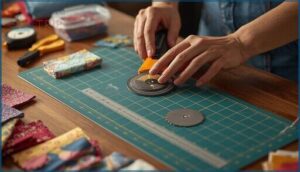
Your rotary cutter‘s blade won’t last forever, and knowing when to replace it keeps your cuts clean and safe.
Recognizing the warning signs early prevents frustration and protects both your fabric and your fingers. Here’s what you need to watch for and how to handle blade changes like a pro.
Signs of a Dull or Damaged Blade
Your fabric deserves precision, but how can you tell when your blade no longer delivers? Start with daily blade edge inspection—run your finger lightly along the edge to feel for rounded spots or nicks.
Watch for dull blade symptoms like increased drag, frayed cuts, and visible edge damage signs such as chips or rust. Sharpness testing reveals when blade replacement becomes necessary to restore cutting performance and maintain sharp blades over blunt blades through proper blade maintenance.
Safe and Effective Blade Replacement
When you’re ready to swap out a worn blade removal, safety comes first. Disconnect your rotary cutter’s lock and carefully remove the old blade using replacement tools designed for secure blade removal.
Check cutter alignment and make certain the sharp edge faces the correct cutting direction. Inspect each new blade before installation, then reassemble with precise attention to rotary cutter maintenance tips that protect both you and your fabric.
Reusing Blunt Blades for Other Materials
Don’t toss dulled rotary cutter blades just yet. Blunt blade repurposing extends their life on softer materials like felt, foam, and cardboard where material suitability makes them ideal for craft projects.
Check edge integrity after each pass to prevent tearing, and verify blade realignment before cutting to avoid kickback. This approach to rotary cutter maintenance tips keeps blade exposure minimal while maximizing your cutting tool care investment.
Safe Disposal of Used Blades
Once your rotary cutter blades are too dull even for repurposing, proper disposal containers keep you safe from blade exposure. Drop used rotary cutter blades into a sharps waste container—never regular trash.
Seal the disposal containers tightly when full, then follow local safety protocols for removal. Some blade recycling programs offer eco friendly options, turning your cutting tool care routine greener while protecting sanitation workers from injury.
Storing Rotary Cutters for Longevity

Proper storage protects your rotary cutter from damage and keeps everyone in your workspace safe from accidental cuts.
Where and how you store your tools directly affects their lifespan and your safety habits.
Let’s look at practical storage methods that prevent accidents while extending the life of your cutter.
Safe Storage Solutions to Prevent Accidents
When you finish cutting, prevent accidents by locking your rotary cutter blade and placing it in a secure storage case or blade cabinet.
Keep tools in labeled bins away from table edges—at least 36 inches from walkways. Post safety signs reminding users to retract blades, and conduct monthly storage inspections to check locks and protective caps.
These quilting safety tips protect everyone in your crafting space.
Keeping Blades Covered When Not in Use
Cover your rotary cutter blade immediately after every cut—don’t wait. Use the original blade guard or a rigid plastic cap to fully enclose the edge.
Check guards for cracks before each use and replace worn covers right away. A transparent guard lets you confirm the blade is safely covered at a glance, giving you peace of mind between projects.
Organizing Rotary Cutters in Your Workspace
Smart workspace layout starts with placing your rotary cutter on a labeled magnetic strip, blade facing down. Position tools within easy reach—the “golden zone“—so you won’t twist or strain.
Use a dedicated drawer organizer or wall-mounted pegboard to prevent rolling and keep everything visible. Group gloves, rulers, and spare blades in a nearby supplies station for quick access and safer crafting tool safety.
Maintaining a Clutter-free Cutting Area
Beyond tool organization, you need a system that keeps every inch of your cutting mat ready for precision work. A clear workspace protects both your blades and your safety.
- Work Surface Layout: Keep a 24 by 36 inch zone free of nonessential items so your cutting mat stays level and accessible.
- Lint Control: Vacuum fabric fibers weekly and use a lint roller after each project to prevent blade dulling.
- Cable Management: Route cords away from the mat using clip-on organizers to avoid snagging fabric.
- Lighting Optimization: Install bright LED lights at 5000K to reveal lint and guarantee accurate cuts without glare.
Store your rotary cutter in its sheath immediately after use. Place used blades in a sealed container and maintain one dedicated space per tool. This workspace setup transforms crafting tool safety from a chore into second nature, extending the life of every piece in your workshop organization.
Top Tools and Accessories for Rotary Cutter Care
The right accessories make rotary cutting safer and more efficient.
From protective gloves to specialized rulers, these tools protect your hands and extend your equipment’s life.
Here are nine essential products every rotary cutter user should consider adding to their workspace.
1. Evridwear Cut Resistant Gloves
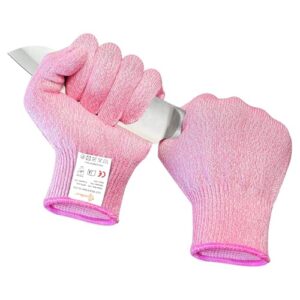
Your hands deserve the same care you give your tools. Cut resistant gloves offer level 5 ANSI protection through high-performance polyethylene fibers that shield against rotary blade slips. The lightweight knit fits like a second skin, letting you maintain precise control while slicing fabric.
Available in pink, green, and gray, these food-safe gloves work equally well for kitchen prep or workshop tasks. Machine wash cold and air dry to preserve the protective fibers. Inspect regularly for thinning or tears, and replace when visible wear appears.
| Best For | Home cooks, crafters, and DIY enthusiasts who want affordable hand protection during slicing, carving, and light cutting tasks. |
|---|---|
| Primary Material | High Performance Polyethylene |
| Primary Use | Hand protection for cutting |
| Safety Feature | Level 5 cut resistance |
| Size/Dimensions | Medium (multiple sizes available) |
| Color Options | Pink, Green, Gray |
| Weight | Not specified |
| Additional Features |
|
- Level 5 cut resistance with lightweight, breathable material that doesn’t sacrifice dexterity
- Food-safe and machine washable, making them practical for both kitchen and workshop use
- Available in multiple colors and sizes at a budget-friendly price point
- Not stab-proof, so they won’t protect against pointed tools or direct punctures
- Durability issues reported by some users, including holes, tears, and seam failures
- Inconsistent sizing and quality control, with occasional complaints about fit and defective products
2. U.S. Art Supply Self-Healing Double-Sided Cutting Mat
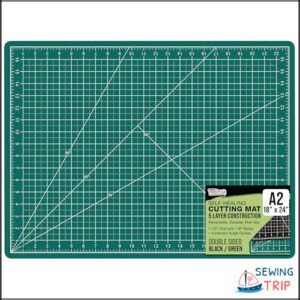
A quality cutting mat does more than protect your table—it extends blade life and ensures precision. The U.S. Art Supply mat measures 24″ x 18″ with a five-ply self-healing surface that reseals after each cut. Both green and black sides feature a ½” grid with 1/8″ subdivision marks plus diagonal guides for angled work.
Store flat away from direct sunlight to prevent warping. If curling occurs, place weights on the mat overnight. Clean with a damp cloth and mild detergent only. Never expose to heat sources.
| Best For | Quilters, crafters, and hobbyists who need a reliable, reversible cutting surface for fabric, paper, and other materials. |
|---|---|
| Primary Material | Plastic |
| Primary Use | Surface protection for cutting |
| Safety Feature | Self-healing surface |
| Size/Dimensions | 24″ x 18″ x 0.15″ |
| Color Options | Green/Black |
| Weight | 2.5 pounds |
| Additional Features |
|
- Self-healing 5-ply surface extends blade life and reseals after cuts
- Dual-sided green/black design with precision grid markings and diagonal guides for accurate measurements
- Large 24″ x 18″ workspace protects surfaces while handling various craft projects
- Can warp or curl if stored improperly or exposed to heat
- Requires flat storage away from sunlight to maintain shape
- Not ideal for heavy-duty cutting tasks that require high pressure
3. Kai Rotary Cutter Tool
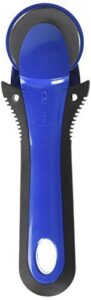
The Kai RS-45 rotary cutter combines a 45mm tungsten steel blade with an ergonomic grip that works for both hands. You’ll find automatic blade retraction built in—press the handle to expose the edge, release to hide it. This pressure-sensitive mechanism reduces accidental nicks during storage and handling.
At 3.5 ounces, the cutter won’t strain your hand during extended sessions. Rubber bumpers provide secure control on cutting mats. The tool accepts standard 45mm straight and wave blades from most manufacturers for easy replacement.
| Best For | Quilters and crafters who need a safe, ambidextrous rotary cutter that’s easy on arthritic hands. |
|---|---|
| Primary Material | Alloy Steel/Plastic |
| Primary Use | Fabric/material cutting |
| Safety Feature | Automatic blade retraction |
| Size/Dimensions | 3.3″ x 9.3″ x 1.25″ |
| Color Options | Not specified |
| Weight | 3.5 ounces |
| Additional Features |
|
- Automatic blade retraction keeps you safe when you’re not actively cutting
- Ergonomic design with rubber bumpers works comfortably for both left and right-handed users
- Lightweight at 3.5 ounces, so it won’t tire out your hand during long projects
- Initial blade quality can be inconsistent and may need immediate replacement
- Pressure-sensitive blade exposure takes some practice to get used to
- You need to maintain constant pressure to keep the blade exposed while cutting
4. Mudder Rotary Cutter Blades
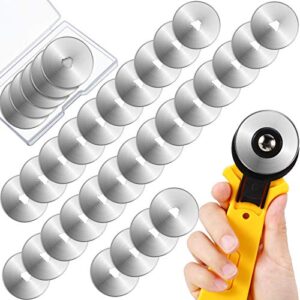
Mudder’s 45mm blades offer a cost-effective solution for frequent quilters who need sharp edges on hand. Each pack includes 36 high carbon stainless steel blades—enough to swap out when dulling starts to drag on fabric.
You’ll notice clean cuts across cotton, felt, and polyester without bunching. Store them dry in the included plastic case to prevent rust. These blades fit most standard rotary cutters, making replacement quick during long projects.
Inspect the edge before each session and replace at the first sign of nicks or inconsistent cutting performance.
| Best For | Quilters and crafters who go through rotary blades quickly and want an affordable backup supply without sacrificing clean cuts on everyday fabrics. |
|---|---|
| Primary Material | Alloy Steel |
| Primary Use | Blade replacement for cutting |
| Safety Feature | Sharp pointed edges |
| Size/Dimensions | 2.17″ x 2.17″ |
| Color Options | Not specified |
| Weight | 5.9 ounces |
| Additional Features |
|
- Includes 36 blades with a storage case, giving you plenty of replacements at a budget-friendly price
- Compatible with most standard rotary cutters, so you won’t need to buy a specific handle
- Cuts cleanly through multiple fabric layers (up to six) for faster quilting and sewing projects
- Blades may dull faster than premium options, requiring more frequent swaps
- Not strong enough for heavy-duty materials like leather or thick cardboard
- Storage box can arrive damaged during shipping, leaving blades loose
5. Geyoga Kids Cut Resistant Gloves
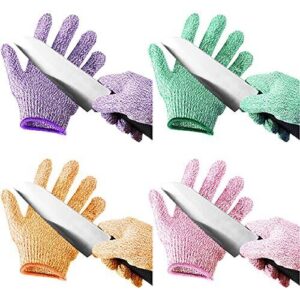
Young quilters need protection while learning to handle rotary cutters safely. Geyoga’s cut-resistant gloves come in four colors and use EN388 level 5 HPPE glass fibers to guard against slips during fabric cutting.
You’ll find them comfortable enough for extended crafting sessions—the breathable knit reduces hand fatigue without restricting movement. They’re machine washable for easy care. Size carefully, as some users report fit issues despite the 4-16 age range. Check for proper finger coverage before your child begins cutting to guarantee maximum hand protection.
| Best For | Parents looking for affordable safety gloves to protect kids’ hands during crafts, kitchen projects, or outdoor activities like whittling and carving. |
|---|---|
| Primary Material | HPPE Glass Fibers |
| Primary Use | Hand protection for cutting |
| Safety Feature | Level 5 cut resistance |
| Size/Dimensions | Small/Medium/Large |
| Color Options | Multiple colors |
| Weight | Not specified |
| Additional Features |
|
- EN388 level 5 cut resistance offers solid protection for young hands using sharp tools
- Machine washable and comfortable enough for extended wear during crafting sessions
- Comes in four colors with breathable material that doesn’t restrict movement
- Sizing can be inconsistent—some gloves run too wide or short despite the suggested age ranges
- Durability concerns reported, including one instance of a hole forming after a single knife slip
- May require careful measurement before purchase to ensure proper finger coverage and fit
6. Metal Safety Ruler With Finger Guard
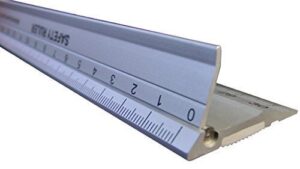
A flip-up finger guard on a metal ruler gives you an extra layer of protection when cutting straight lines with your rotary cutter. The Imperial Global 12-inch aluminum ruler features this raised edge to shield your fingertips while you measure and cut.
Its non-slip bottom keeps the ruler stable during cuts, and the lightweight design won’t tire your hand during long sessions. Clear inch and centimeter markings let you align fabric precisely.
The guard works with rotary cutters, X-acto knives, and other straight blades for paper, leather, and quilting projects.
| Best For | Crafters and DIY enthusiasts who frequently cut fabric, paper, or leather and want extra finger protection during precise straight-line cuts. |
|---|---|
| Primary Material | Aluminum |
| Primary Use | Measurement and cutting guide |
| Safety Feature | Flip-up finger guard |
| Size/Dimensions | 30 cm (12 inches) |
| Color Options | White |
| Weight | Not specified |
| Additional Features |
|
- Flip-up safety guard protects your fingers while cutting with rotary cutters or craft knives
- Non-slip bottom keeps the ruler stable so your cuts stay accurate
- Works with multiple materials like fabric, paper, leather, and quilting projects
- The safety guard axis placement limits dual-sided use for both metric and imperial measurements
- Markings are raised rather than engraved, so they might wear down over time
- Only available in 12-inch length, no smaller 6-inch version for compact cuts
7. LNKA Quilting Ruler Handle Gripper
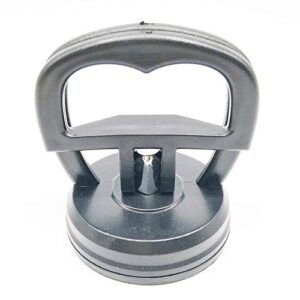
A secure grip on your quilting ruler prevents slippage during cuts and keeps your fingers farther from the blade. The LNKA Quilting Ruler Handle Gripper attaches to standard rulers in under a minute without tools.
Its rubberized ergonomic surface reduces hand fatigue during extended sessions, and the suction cup grips most smooth surfaces to hold rulers steady. The lightweight design won’t tip your ruler, while the textured grip maintains hold even with sweaty hands or cut-resistant gloves.
| Best For | Quilters who want extra safety and stability when cutting with rotary blades, especially during long projects that cause hand fatigue. |
|---|---|
| Primary Material | Rubber/ABS |
| Primary Use | Ruler grip/safety |
| Safety Feature | Suction grip stability |
| Size/Dimensions | 2.56″ x 2.28″ x 0.04″ |
| Color Options | Yellow/Black |
| Weight | 2.39 ounces |
| Additional Features |
|
- Installs in seconds with a strong suction cup that keeps rulers from sliding during cuts
- Ergonomic grip reduces hand strain and keeps fingers away from sharp rotary blades
- Lightweight and compact design works with most standard quilting rulers without adding bulk
- Suction may fail on textured or non-smooth ruler surfaces
- Not strong enough for very large or heavy rulers
- May lose grip over time and require surface cleaning to maintain hold
8. Quilters Select Suction Cup Ruler Handle
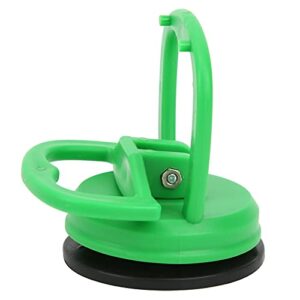
While the LNKA gripper offers solid performance, the Quilters Select Suction Cup Ruler Handle brings added stability through its heavy-duty suction design. Its flip lock mechanism lets you attach and release rulers instantly without fumbling.
The anti-slip plastic and rubber construction maintains control even during diagonal cuts, and the green color stays visible on busy work surfaces. This ergonomic handle fits comfortably in either hand, reducing wrist strain during precise alignment work. One suction cup provides secure hold on standard flat-edged quilting rulers.
| Best For | Quilters who need a comfortable, easy-grip handle that securely attaches to flat-edged rulers for better control during cutting and alignment. |
|---|---|
| Primary Material | Plastic/Rubber |
| Primary Use | Ruler grip/safety |
| Safety Feature | Anti-slip design |
| Size/Dimensions | Not specified |
| Color Options | Green |
| Weight | Not specified |
| Additional Features |
|
- Heavy-duty suction cup with flip lock mechanism makes attaching and removing rulers quick and hassle-free
- Anti-slip rubber and plastic construction keeps your grip steady even during angled or diagonal cuts
- Ergonomic design reduces hand and wrist fatigue during long quilting sessions
- Only works on flat surfaces, so it won’t stick to curved or textured rulers
- Package includes just one suction cup, which may not be enough for larger projects requiring multiple rulers
- Not designed for extremely heavy or oversized rulers that might exceed the suction cup’s weight capacity
9. Tujuna Quilting Ruler Grip Handle

The Tujuna Quilting Ruler Grip Handle distinguishes itself with dual suction cups and lock-and-release levers, setting it apart from single-cup designs. You’ll attach this white-grey plastic handle to rulers measuring 6 to 24 inches without drilling or adhesive residue.
The comfortable grip keeps your fingers clear of the blade path during long cutting sessions. At 8.4 ounces, it adds minimal weight while the suction mechanism holds firm on smooth ruler surfaces.
Clean the cups regularly to maintain proper contact, especially during extended rotary cutting projects.
| Best For | Quilters who work with multiple ruler sizes and want a secure, reusable grip that protects their fingers during rotary cutting without permanently modifying their tools. |
|---|---|
| Primary Material | Plastic |
| Primary Use | Ruler grip/safety |
| Safety Feature | Hand protection from cuts |
| Size/Dimensions | 11.8″ x 3.9″ x 0.04″ |
| Color Options | White Grey |
| Weight | 8.4 ounces |
| Additional Features |
|
- Two suction cups with lock-and-release levers provide stronger hold than single-cup alternatives
- Works on rulers from 6 to 24 inches without drilling holes or leaving adhesive marks
- Keeps hands safely away from the rotary blade while maintaining control during precise cuts
- Suction strength can weaken over time and needs regular maintenance to stay effective
- May struggle to grip smaller rulers or surfaces that aren’t completely smooth
- Suction cups can lose contact or pop off unexpectedly during use if not properly cleaned
Frequently Asked Questions (FAQs)
How do you take care of a rotary cutter?
Keep your rotary cutter clean by removing lint regularly. Apply a drop of sewing machine oil to the blade hub. Replace dull blades promptly and always engage the safety lock.
Should I oil my rotary cutter?
You should only lubricate the pivot points and drive mechanism—never the blade edge itself. Oil on the blade attracts lint and creates gummy buildup that actually harms cutting performance.
How often should I grease a rotary cutter?
Most rotary cutters need greasing every 25 to 50 hours of use for the gearbox and every 8 to 20 hours for driveline joints, depending on your workload and dust exposure.
How often should I replace my cutting mat?
Replace your mat every 6 to 12 months with regular use, or 1 to 3 years for hobby work.
Watch for deep grooves, surface roughness, or warping—these signal it’s time for a fresh one.
Can rotary cutters work on multiple fabric layers?
Yes, you can cut through multiple fabric layers with your rotary cutter. Sharp blades handle up to four layers of medium-weight cotton reliably, while heavier materials like denim require cutting fewer layers for clean edges.
What blade size is best for curves?
For tight curves, you’ll want blades around 1/8 inch—they navigate small radii beautifully. Medium turns work well with 3/16 to 1/4 inch blades that balance control with smoother cutting action.
How do I sharpen a rotary cutter blade?
Unplug your cutter and remove the blade. Use a dedicated sharpener or fine diamond file, maintaining a 15–25 degree angle. Sharpen with short, even strokes, then test on scrap fabric.
Are left-handed rotary cutters worth buying?
Left-handed rotary cutters provide better wrist alignment and control for left-hand dominant users. They reduce fatigue during extended cutting sessions and prevent awkward hand positioning that can compromise safety and precision.
Conclusion
Think of your rotary cutter as a precision instrument, not a disposable convenience. Caring for and maintaining rotary cutters transforms an everyday tool into a reliable partner that delivers consistent results for years.
Clean away buildup after each project, apply oil when resistance builds, replace blades at the first sign of skipping, and store with safety guards engaged. These simple habits protect both your investment and your hands, turning routine maintenance into a seamless part of your craft.