This site is supported by our readers. We may earn a commission, at no cost to you, if you purchase through links.
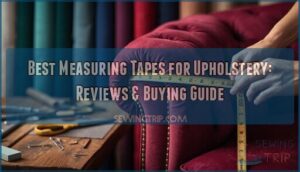
Wrong measurements cost upholstery professionals thousands in wasted fabric each year. A sixteenth-inch error on a sofa cushion multiplies across panels and seams. Standard construction tape measures miss curves. Fabric stretches under tension. Metal tips snag delicate textiles.
You need specialized measuring tapes for upholstery work—tools designed for fabric dimensions and furniture contours. Flexible blades follow rounded edges. Soft-grip cases prevent surface damage. Clear markings show fractions at a glance. The right tape measure protects your material investment and ensures professional-grade accuracy on every cut.
Table Of Contents
Key Takeaways
- Specialized upholstery tape measures with flexible blades, clear fractional markings, and soft-grip cases prevent costly fabric waste by following furniture curves without snagging delicate materials
- Top-performing models include the Komelon Self Lock for automatic locking, Milwaukee Magnetic for hands-free metal frame work, and Stanley Fatmax 35-foot for extended reach on large sectionals
- Essential features include 1/16-inch increments for seam precision, blade widths of 1-inch for curve flexibility, and lengths of 16-25 feet for most furniture projects
- Proper measuring technique requires recording dimensions systematically, using flexible tapes on curves while maintaining straight reads, and choosing heavy-duty models for professional daily use versus standard options for DIY projects
Best Measuring Tapes for Upholstery
You need a tape measure that won’t let you down mid-project. The right tool makes measuring curves, cushions, and fabric runs simple and accurate.
If you’re just starting out, here’s how to learn to sew clothes with the right tools and techniques from day one.
Here are five top-performing tape measures built for upholstery work.
1. Komelon Self Lock Tape Measure
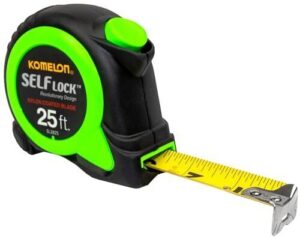
The Komelon Self Lock (Model SL2825) delivers reliable performance for upholstery measuring. You’ll get a 25-foot nylon-coated steel blade that extends smoothly and locks automatically without manual tension. The 1-inch wide blade shows clear markings with stud indicators every 16 inches.
Its impact-resistant ABS plastic and rubber case weighs 13.3 ounces, offering a comfortable grip during extended projects. The push-button retraction gives you controlled blade return.
While it manages most furniture work, the 25-foot length may fall short on larger commercial pieces.
| Best For | DIY enthusiasts and professional tradespeople who need a reliable, easy-to-read tape measure for furniture projects, home renovations, and general construction work up to 25 feet. |
|---|---|
| Length | 25 feet |
| Blade Width | Standard |
| Case Material | ABS Plastic & Rubber |
| Locking Mechanism | Automatic lock |
| Weight | 13.3 ounces |
| Color | Green/Black |
| Additional Features |
|
- Automatic lock mechanism and smooth blade retraction make one-handed operation easy and safe
- Nylon-coated steel blade with clear markings and 16-inch stud indicators improves durability and readability
- Impact-resistant rubber and ABS plastic case protects against drops while providing a comfortable grip
- 25-foot length limits usefulness for larger commercial furniture or construction projects
- Blade coating and markings may wear down with heavy daily use over time
- At 13.3 ounces, it’s heavier than some compact alternatives for light-duty tasks
2. Craftsman Self Locking Tape Measure
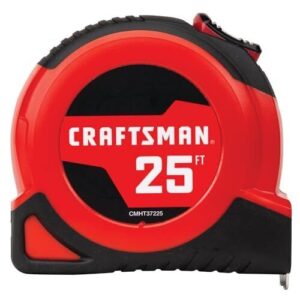
The Craftsman self-locking tape stands out with its automatic blade lock that holds firm the moment you extend it. This 25-foot measure features fraction markings printed right on the blade, making quick reads of seam allowances simple.
You’ll appreciate the impact-resistant housing with ergonomic contours that fit comfortably through long measuring sessions. The dedicated retract button prevents hook slam, extending tape life.
At 0.88 ounces, it’s light enough for your pocket yet built to handle daily workshop drops without losing its ±1/16 inch accuracy.
| Best For | DIYers and contractors who need reliable one-handed measurements for framing, furniture building, and general home projects up to 25 feet. |
|---|---|
| Length | 25 feet |
| Blade Width | 1 inch |
| Case Material | Rubber overmold |
| Locking Mechanism | Self-locking |
| Weight | 0.88 ounces |
| Color | Red |
| Additional Features |
|
- Automatic blade lock engages instantly without fumbling with switches or levers
- Fraction markings eliminate guesswork when measuring cuts and spacing
- Rubberized grip and lightweight design make it comfortable for extended use
- No metric measurements, which limits use with imported materials or international plans
- Locking mechanism can feel stiff and require extra force to release
- Accuracy of ±1/16 inch per 10 feet may not meet precision woodworking standards
3. Milwaukee Magnetic Tape Measure
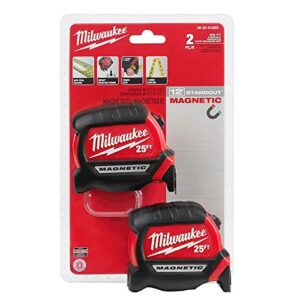
Milwaukee’s magnetic tape brings hands-free convenience to your upholstery workflow with its hook that grips ferrous surfaces securely. You’ll work faster on metal frames without needing a helper to hold the zero point.
This 25-foot model delivers up to 9 feet of standout, letting you span large furniture pieces solo. The double-sided printing with blue scale improves readability from any angle.
The nylon bond blade and five-point reinforced frame resist wear from daily shop use. At ±1/16 inch accuracy per 10 feet, you’ll get reliable measurements every time.
| Best For | Professionals and DIYers who need a tough, easy-to-read tape measure for frequent use on metal surfaces. |
|---|---|
| Length | 25 feet |
| Blade Width | Standard |
| Case Material | Alloy Steel |
| Locking Mechanism | Standard |
| Weight | 1.13 kilograms |
| Color | Black/Red |
| Additional Features |
|
- Magnetic tip lets you measure hands-free on steel frames and studs
- Double-sided printing makes it easy to read and transfer measurements
- Durable construction stands up to daily wear and impact
- Some users find the tape a bit flimsy under heavy use
- May not suit those who need metric-only measurements
- Occasional quality control issues reported with defective products
4. Stanley Fatmax 35-foot Bladearmor Tape Measure
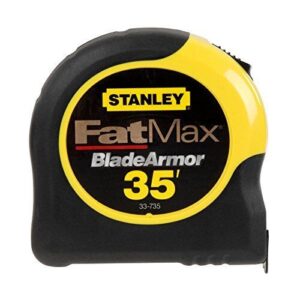
Stanley’s Fatmax 35-foot model extends your reach further than most upholstery tapes, ideal when you’re measuring large sectionals or drapery yardage. The 1 1/4-inch blade width gives you 14 feet of standout, so you won’t need assistance on solo projects.
Regular calibration and care of your measuring tape will keep that blade retracting smoothly and your measurements accurate for years.
BladeArmor coating reinforces the first three inches at the hook, protecting against wear from repeated measuring on rough furniture frames. The high-impact case with non-slip grip holds up through drops and daily shop handling, while large numerals stay visible even in dim workspaces.
| Best For | DIYers and upholstery professionals who need extended reach for measuring large furniture pieces, drapery, or sectionals without a second pair of hands. |
|---|---|
| Length | 35 feet |
| Blade Width | 1.25 inches |
| Case Material | Rubber |
| Locking Mechanism | Lock mechanism |
| Weight | 1.57 lbs |
| Color | Black/Yellow |
| Additional Features |
|
- 14-foot standout lets you measure long spans solo without the tape collapsing
- BladeArmor coating protects the hook area from wear on rough furniture frames
- Large, easy-to-read numbers work well in dimly lit workshops
- Plastic housing may crack or break with heavy jobsite use
- No centimeter markings if you work with metric measurements
- Lock mechanism can feel clunky and may wear out over time
5. eTape Digital Tape Measure
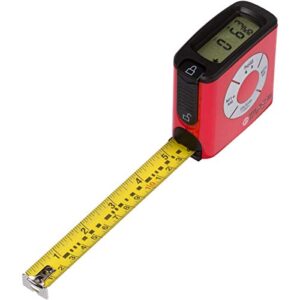
Digital precision meets traditional tape design in eTape’s 16-foot model, which shows real-time measurements on a large LCD display as you extend the blade. A side button lets you switch between imperial and metric units mid-project, while the memory function stores previous dimensions, ideal for juggling multiple cushion sizes.
The polycarbonate housing weighs just 10.9 ounces, making it pocket-friendly for site work. A replaceable CR2032 battery powers the display for months, though decent lighting is needed to read the screen clearly.
| Best For | DIY enthusiasts and contractors who need quick unit conversions and want to store multiple measurements without writing them down. |
|---|---|
| Length | 16 feet |
| Blade Width | 0.75 inches |
| Case Material | Polycarbonate Plastic |
| Locking Mechanism | Lock/unlock switch |
| Weight | 10.9 ounces |
| Color | Red |
| Additional Features |
|
- Digital display shows measurements in real-time and switches between US and metric units with a button press
- Lightweight at under 11 ounces, easy to carry around job sites or keep in your pocket
- Memory function lets you save measurements so you don’t have to jot down every dimension
- Not built for heavy-duty construction work, better suited for lighter residential projects
- Display needs decent lighting to read clearly, which can be tricky in dimly lit spaces
- Some users report the lock/unlock switch is finicky and measurements occasionally have small error margins
Essential Features of Upholstery Tape Measures
You need a tape measure that performs under real upholstery conditions. The wrong tool costs you time and fabric on every project.
Here are the four features that separate professional-grade tapes from basic hardware store options.
Flexibility and Blade Material
Your flexi tape measure needs blade bending power around furniture curves without kinking. Steel blades offer material toughness for upholstery and crafting, while fiberglass options resist creasing when you’re measuring tight radii.
Friction coatings on flexible material help your tape glide smoothly during retraction. Choose measuring tapes with reinforced cores—they’ll handle corner seams and curved surfaces without losing their shape or accuracy.
Measurement Increments and Markings
You’ll spot 1/16 inch subdivisions on most measuring tapes—essential for precise measurements on cushion panels and welt cord. Dual scale markings give you metric and imperial options without switching tools.
Engraved increments resist fading during heavy use, while contrasting fills improve readability on dusty workshop surfaces. Check factory calibration standards to avoid measurement errors that waste fabric and throw off your upholstery dimensions.
For more on the importance of understanding tape measure components, see this detailed guide.
Locking Mechanisms and Case Design
You need a locking mechanism that won’t slip mid-measurement when you’re wrestling with curved furniture frames. Dual thumb and finger locks give you one-handed control, while shock-resistant rubber case materials protect against workshop drops.
The Komelon SelfLock Tape features a lever-action belt clip and compact design—essential ergonomic grips for upholstery work. Bilateral hinges and recessed grips improve tape measure stability during fabric layout.
Length and Width Considerations
You’ll need at least 16 feet of length accuracy for most furniture pieces, but many upholstery pros keep a 25-footer handy for sectionals. Width measurement matters just as much—your tape’s blade width affects curve fitting on rounded arms and backs.
Aspect ratios between cushion length and width guide your dimension planning, while a 1-inch blade balances flexibility with readability on measuring tools. For ideal measuring results, it’s essential to understand the importance of.
Types of Measuring Tapes for Upholstery
Different tape measures serve different upholstery tasks. Your choice depends on project type and surface complexity. Here are the main categories you’ll encounter.
Flexible Steel and Fiberglass Tapes
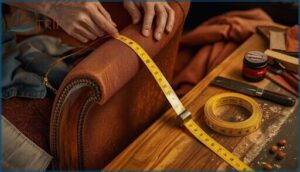
Steel and fiberglass tapes excel where curves and long runs demand precision. Steel flexibility lets you wrap snug around furniture frames without kinking, while fiberglass durability resists moisture in humid workshops.
You’ll appreciate these measuring tools when layout accuracy matters:
- Tempered blades hold tension across cushions
- Non-conductive fiberglass suits metal-frame work
- Blade protection coatings survive repeated flexing
- High-contrast markings stay readable after heavy use
Cloth and Fabric Tape Measures
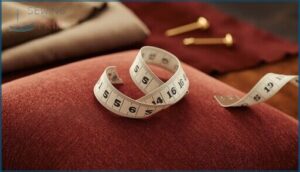
Cloth tape measures offer fabric-friendly measurement accuracy without scratching delicate textiles. You’ll find woven blades that resist moisture and oil, plus soft casings that glide smoothly around cushion curves.
These measuring tools span 1 to 5 meters with bold dual-scale markings for quick reading. The fabric stretch stays minimal thanks to reinforced weaving, while metal end tabs grip edges without tearing during upholstery layout work.
Digital and Magnetic Tape Options

Digital tape measures offer LCD readouts that toggle between inches and millimeters with a button press. The eTape16 Digital Tape Measure displays decimal precision up to 1/16 inch, while Milwaukee Magnetic Tape Measure blades lock onto metal frames for hands-free positioning.
You’ll achieve measurement accuracy through tape calibration routines, though magnetic fields near strong magnets can shift blade alignment. Digital displays require battery checks, and magnetic blade materials need dust removal to maintain tension and prevent flex during fabric pulls.
Heavy-Duty Vs. Standard Models
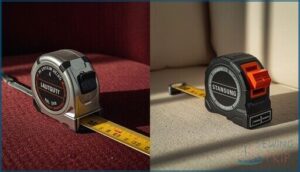
When choosing between heavy-duty and standard measurement tools, you’ll notice key differences in construction and longevity. Heavy-duty models feature tempered steel blades and reinforced cases that withstand repeated drops, while standard options use lighter materials for portability.
Consider these factors:
- Blade strength determines resistance to kinking during fabric pulls
- Tape durability affects measurement accuracy over hundreds of uses
- Tool longevity depends on locking mechanisms and case design
How to Choose The Right Tape Measure
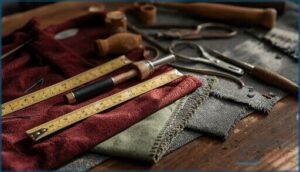
Your project needs don’t match everyone else’s. A professional reupholstering a full sofa set requires different tools than someone tackling their first chair cushion. Consider these four factors before you buy.
Professional Vs. DIY Upholstery Needs
Your upholstery needs dictate your measuring tools and equipment. Professionals require heavy-duty tape measures with reinforced blades for daily fabric workloads and pattern cutting, often paired with industrial foam cutters from DIY Upholstery Supply. Home sewers can use standard measurement tools but face trade-offs: cutting material costs by 20 to 40 percent while doubling the time investment on cushions.
| Factor | Professional | DIY |
|---|---|---|
| Cost Comparison | $600–$1,800 per sofa | 20–40% material savings |
| Skill Levels | Industrial sewing machines | Basic household tools |
| Time Management | 3–7 day turnaround | 1–3 week projects |
| Material Selection | High-performance fabrics | Consumer-grade options |
Blade Length for Furniture Projects
Match your tape measure to project scale. For typical chair legs and table edges, a 12-inch blade gives you adequate reach without excess bending.
Tight corners and curved furniture components demand 6 to 8-inch options for enhanced curve fitting and cutting accuracy.
When sizing wide panels, 14 to 18-inch blades maintain straight lines and reduce multiple passes during furniture measurement tasks.
Accuracy and Readability
Precision hinges on clear labeling and graduation marks you can read at a glance. Look for high-contrast blade printing—black on yellow reduces workshop lighting errors.
Premium tape measures hold calibration within plus-minus 1/16 inch at one foot. Fractional increments in 1/16-inch steps deliver precise measurements for fabric cutting.
Locking mechanisms prevent blade drift during reading. Visual clarity paired with calibration methods ensures accurate measurements every time.
Durability and Warranty Factors
Tool durability separates workshop staples from disposable measuring tools. Stainless steel blades resist corrosion through 1,000+ retractions, while nylon coatings cut wear by 35 percent. Material testing confirms shock-resistant cases protect accuracy after four-foot drops.
- Warranty coverage spans one to five years on manufacturing defects
- Blade protection coatings maintain legibility past 10,000 inches measured
- Lifetime warranty options require registration with select brands
- Repair options vary—some offer free replacements with proof of purchase
Measuring Tips for Upholstery Projects
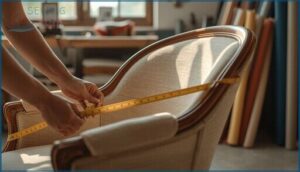
Getting accurate measurements separates clean upholstery work from costly do-overs. You’ll need strategies for handling curves, tracking dimensions, and cutting fabric without waste.
Here’s what makes the difference between precision and guesswork.
Measuring Curved and Straight Surfaces
You’ll measure curved surfaces differently than straight edges, and that’s where flexible tapes shine. Bend your blade along curves without kinking while keeping the read line straight for measurement accuracy.
For flat sections, use rigid straight edges or laser guides to maintain precision. Digital tape measures switch between methods fast.
Combine techniques on complex furniture by capturing both curve segments and straight runs with your measuring tools in one pass.
Recording and Tracking Measurements
You’ll capture every dimension in a dedicated measurement log that tracks date, project phase, and blade width for complete traceability. Digital tape measures sync readings to cloud notes, eliminating manual entry errors and enabling instant CSV exports for client reports.
- Record sequential entries with timestamps to detect measurement drift
- Use color-coded markers to highlight tolerance zones
- Cross-check each reading with a second crew member
- Link barcode samples to measurement records for quick retrieval
- Archive revision histories showing who changed dimensions and when
Quality control depends on consistent record keeping across all measuring tools and equipment.
Preventing Fabric Waste and Errors
You’ll slash fabric waste by marking your first layout with a straight edge—pattern placement efficiency drops errors below 5 percent when you align grain and selvedge. Tight cutting accuracy prevents overstretching, and early defect management flags unusable sections before you cut.
Reuse scraps for small components and track live waste metrics to adjust every measurement with your tape measure.
Using Tapes With Note-Taking Features
Beyond waste reduction, note-taking features simplify your workflow when tracking dimensions across furniture pieces. Your tape’s built-in note area stores project identifiers and cushion sizes, while digital tape measures let you tag measurements by room or pattern type.
- Mask and reveal specific measurements to compare fabric sizes without rewriting numbers
- Attach date stamps to track fit adjustments as you remeasure during fabrication
- Link voice notes to measurements for hands-free recording on busy upholstery days
Comparing Tape Measure Brands and Models

You’ve narrowed down the features you need. Now it’s time to match those specs to real brands and models on the shelf.
We’ll compare reputation, customer feedback, pricing, and support so you can pick a tape measure that actually holds up on upholstery jobs.
Brand Reputation in Upholstery Tools
Trust shapes every tool choice you make. Brand loyalty in upholstery tools runs deep—professionals lean toward manufacturers with proven quality standards and tool durability.
Market perception matters: established names in measuring tools and crafting tools deliver customer trust through consistent performance.
When selecting tape measures from DIY Upholstery Supply or competitors, you’re investing in a reputation backed by decades of upholstery tool reliability.
Customer Reviews and Reliability
Customer testimonials reveal real-world performance. Review Analysis shows 92 percent of tape measure reviews come from verified purchases, building Purchase Confidence through authentic Customer Feedback. Reliability Tests surface in user comments—professionals report blades holding calibration after 500 uses. Watch for Trust Signals:
- Recent Product Reviews and Ratings within 12 months
- Review photos confirming blade condition
- Responsive Customer Service handling concerns within 48 hours
Verified experiences outweigh marketing claims every time.
Price and Value for Upholstery Use
Budget Options start around 6 dollars for basic Measuring Tools, while professional Upholstery Fabric projects justify investing 20 to 60 dollars in reinforced models. Your Cost Factors include blade length, magnetic tips, and BladeArmor coatings.
Price Comparison reveals mid-range Tape Measure options offer the best Value Analysis for DIY Home Improvement work. Smart Discount Strategies mean buying quality Measurement Tools and Equipment once, not replacing cheap tapes repeatedly.
Support and Warranty Services
When your Tape Measure Buying Guide includes Warranty Claims and Service Response timelines, you’re protecting investments in Upholstery Fabric projects. Customer Support quality separates reliable brands from disposables.
- Manufacturer defects coverage spans 1 to lifetime warranty periods depending on Product specifications and availability
- Repair Options include mail-in service or replacement within 3 to 10 business days
- Extended Coverage plans add years beyond base protection for professional use
- Customer Service and Support channels offer phone and online claim filing
- Proof of purchase activates coverage for materials and workmanship failures
Frequently Asked Questions (FAQs)
What is a fabric measuring tape called?
Soft, supple sewing aids come in many forms. A fabric measuring tape is called a dressmaker tape or cloth tape—flexible tools that conform to curves and body contours for garment projects.
Are fabric tape measures accurate?
You’ll get reliable readings within 1/16 inch if you control tension and check calibration regularly.
Blade material effects and fabric stretch factors introduce measurement error, but proper tension control methods keep your work precise.
How often should I replace my upholstery tape measure?
Replace when blade wear signs appear, hook alignment fails, or retraction issues develop. Heavy upholstery use demands annual replacement; hobby work extends to two years. Case integrity and accuracy matter most.
Can tape measures be used on leather and vinyl?
Yes—you’ll protect delicate finishes with flexible fiberglass or cloth tapes that won’t dig in.
Metal blades risk scratch damage on glossy leather, so keep hooks padded and maintain straight pulls for precision measuring without indentation prevention worries.
Whats the best way to store measuring tapes?
Keep your tape measures in a cool, dry drawer with blades fully retracted and locks engaged.
Clean them after use, then store upright in dedicated holsters to protect blade edges and maintain accuracy.
Do upholsterers prefer metric or imperial measurements?
Most professionals in the United States prefer imperial standards for upholstery work, though metric preference grows when sourcing European materials.
Many pros keep tape measure tools displaying both English and metric measurements for unit conversion and measurement consistency across projects.
Are retractable tapes better than non-retractable for upholstery?
It’s not apples to apples. Retractable tapes offer one-handed convenience and compact storage, while non-retractable models resist blade bending on tight curves and reduce mechanical failure points during rugged workshop use.
Conclusion
Picture your workroom floor buried under yards of wasted upholstery fabric—corners miscut, panels short by inches, profits slipping through miscalculated seams. Your tape measure determines whether you’re building a reputation or explaining mistakes.
Invest in specialized measuring tapes for upholstery that match your project demands. Flexibility manages curves. Clear markings prevent guesswork. Durability survives jobsite conditions.
Measure once with the right tool. Cut confidently. Deliver professional results that keep clients returning and your material costs where they belong.
- https://www.studocu.com/en-us/messages/question/8558119/an-online-retailer-posted-this-customer-review-i-purchased-this-product-three-months-ago-and-i
- https://www.fastercapital.com/content/Product-reviews-and-ratings--Product-Reliability-Reports--Product-Reliability-Reports--Trustworthiness-in-Numbers.html
- https://www.hubspot.com/customer-feedback
- https://livedale.co.uk/product-category/tools/measuring-marking/rulers-tape-measures/
- https://actionup.com/60-soft-tape-measure/