This site is supported by our readers. We may earn a commission, at no cost to you, if you purchase through links.
Most sewers abandon practice projects because they feel boring. Big mistake. The right practice project doesn’t just build your skills—it hands you something useful at the end.
A scrunchie, a cozy sleep mask, a bread pouch that actually keeps your loaf fresh. These aren’t busywork. They’re the sweet spot where learning and making collide.
Whether you’re picking up a needle for the first time or leveling up your machine control, the best practice projects for stitching keep your hands busy and your motivation high. From free paper-based drills to intermediate builds, there’s a perfect project waiting for you.
Table Of Contents
Key Takeaways
- The best practice projects aren’t busywork—they’re the sweet spot where you actually learn a skill and walk away with something useful, like a scrunchie, a bread pouch, or a sleep mask.
- You don’t need fabric or a machine to start building real control—free paper-based drills for straight lines, corners, and curves are low-pressure ways to sharpen your technique fast.
- Projects should match where you are right now: hand-sewing basics like drawstring pouches for beginners, machine projects like napkins and placemats for the next step, and technique-specific builds like patchwork quilts or overlock practice for leveling up.
- The secret to staying motivated is finishing things you’ll actually use—every completed item proves you’re not just practicing anymore, you’re genuinely sewing.
Simple Hand-Sewing Practice Projects for Beginners
You don’t need fancy equipment or a sewing machine to start building real skills. Hand-sewing projects let you master the basics—threading a needle, tying knots, keeping stitches even—without any pressure.
Once you’ve got the hang of the basics, a solid step-by-step hand sewing guide can help you move from simple stitches to more confident, independent projects.
Here are four beginner-friendly projects that’ll get your hands moving and your confidence soaring.
Scrunchies and Hair Accessories
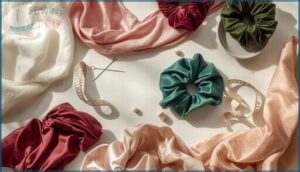
Scrunchies are your ticket to mastering basic hand-sewing without the pressure. You’ll work with simple elastic cores and outer fabric wraps—think cotton, satin, or velvet for different hair accessory trends.
Most scrunchies fit ponytails up to 1.5 inches in diameter, and you can experiment with hair tie variations from solid colors to beaded accents. These sewing projects for beginners build real confidence fast.
For more on their origins and impact on hair care, check out this overview of scrunchie history and benefits.
Drawstring Pouches for Small Items
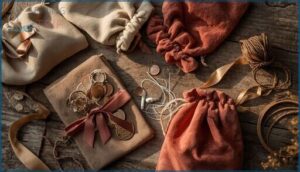
Once you’ve nailed the elastic, drawstring pouches offer real freedom—about 18 cm by 9 cm is perfect for jewelry, coins, or cables.
You’ll master fabric choices like cotton canvas or velvet while practicing running stitch and channel construction. These sewing patterns teach drawstring security through cord tension, and customization options mean you can embroider logos or add printed designs.
They’re killer handmade gifts that double as small item storage and fashion accessories. For more details on different pouch materials and design ideas, check out this helpful overview of drawstring pouch characteristics.
Stuffed Paper Hearts

If you’re ready to break away from pouches, stuffed paper hearts give you total control over paper crafting and valentine decor without fabric costs.
Layer two heart templates cut from recycled book pages, hand stitch the edges with embroidery floss—leave a gap—then pack with polyfill. Seal it shut, add glitter or beads, and you’ve got killer gift ideas that sharpen your sewing techniques while looking adorable.
Stitch, stuff, and sparkle — hand-sewn paper hearts turn simple scraps into gift-worthy keepsakes that sharpen your skills
Sleep Masks With Soft Fabrics
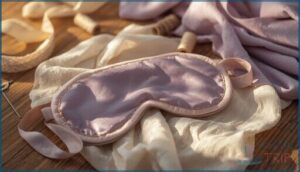
Once you nail hearts, sleep masks teach you fabric selection with serious sleep enhancement benefits. Cut a simple mask pattern from silk or bamboo viscose—both are soft materials that won’t irritate skin—then hand stitch the edges, add a strap, and boom: eye comfort meets sewing projects you’ll actually use.
These sewing tips transform beginners into fabric pros fast.
Essential Sewing Machine Practice Projects
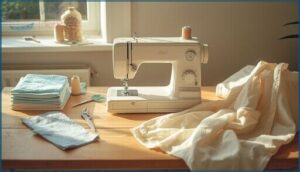
Once you’re comfortable with hand-sewing basics, it’s time to fire up that machine and take your skills to the next level.
Mastering techniques like quilting and binding with cotton fabric opens up a whole new world of projects once you hit your stride on the machine.
These projects help you master straight seams, even edges, and machine control without overwhelming you. Each one builds confidence while creating something you’ll actually use around the house.
Rolled Hem Napkins
Want to transform plain fabric into dinner party magic? Rolled hem napkins are your ticket to mastering napkin edge finishing and hemming techniques in one elegant swoop. This classic fabric crafts project teaches you precision while creating something you’ll actually use.
Here’s what makes this beginner-friendly:
- Choose your fabric – linen and cotton poplin work best, sized around 18–20 inches square
- Master the narrow hem foot – or hand-roll edges twice for a crisp, fray-proof finish
- Iron before stitching – that 2.0 mm stitch length becomes nearly invisible when edges are pressed flat
You’ll nail table setting ideas while building real sewing machine tips into muscle memory.
Fabric Placemats
Placemats let you conquer placemat sizes, fabric choices, and binding techniques in one go. Start with cotton or linen cut to 14 by 18 inches—perfect for standard table settings.
Layer your top fabric with batting, stitch around three sides, flip right-side-out, then topstitch the opening closed. You’ve just leveled up your dining decor and home sewing game.
Canvas Log Bags
Heavy-duty canvas log bags let you master straight seams while creating something truly useful for firewood storage. Cut 10 to 14 ounce canvas, double-stitch the sides, and add reinforced straps rated for 40 pounds.
This sewing project teaches you log bag materials, canvas durability, and proper bag maintenance—plus you’ll never haul wood in flimsy plastic again. Total win for DIY home decor!
Tea-Towel Bread Pouches
Tea-towel bread pouches keep crusty loaves fresh for two days while teaching you essential pouch construction and drawstring techniques. Grab a prewashed cotton or linen towel, sew simple side seams with a straight stitch, and add a drawstring channel along the top.
This breathable fabric beats plastic bags every time—plus you’ll whip up thoughtful homemade gifts that any bread lover will actually use. Perfect sewing project for beginners tackling DIY home decor!
Practice Projects to Master Specific Stitching Techniques
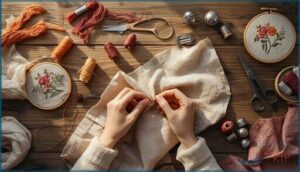
You won’t master stitching techniques by accident—you need the right projects to actually practice them. Each technique has its own quirks, and the best way to nail them is through hands-on repetition with real fabric.
Here are four targeted projects that’ll help you own the essentials, from running stitches to embroidery.
Running Stitch With Patchwork Quilts
Patchwork quilts are the perfect sewing project to nail your running stitch. Start by picking scraps in varied weights—press them flat first to reduce bulk.
Keep your stitch length between 2 and 4mm for even, clean lines. Choose thread that blends with your quilt block patterns. This hands-on quilting technique builds real stitch length control fast.
Overlock Stitch on Stretchy Fabrics
Ready to take control of stretchy knits? The overlock stitch is your go-to for clean Fabric Edge Finishing on any stretch Fabric.
Lower your Thread Tension Settings and dial in Differential Feed Control to keep edges smooth. Try different Overlock Stitch Variations—rolled or four-thread—to match your Stretch Fabric Choices.
These Sewing Projects and Sewing Techniques make great Sewing Practice, even for Sewing for Beginners.
Coverstitch for Garment Construction
Now that you’ve got stretchy fabrics under your belt, Coverstitch Machines open up a whole new world of Professional Finishes. This stitch lays down two or three parallel lines on top — clean, store-bought looking Garment Hems every time.
It’s perfect for Stretchy Fabrics because it moves with the knit. Try hemming T-shirts or leggings first. These Sewing Projects build real Garment Construction skills through simple Sewing Techniques, great for Sewing for Beginners exploring Sewing Patterns and Designs.
Basic Embroidery Stitches on Stockings
Coverstitching keeps things neat and structured — but Stocking Embroidery flips the script entirely. Here, you’re adding personality, not just finishing edges.
Start with Thread Selection: cotton floss in soft, matching tones works beautifully. Keep your Stitch Tension loose and even so the knit doesn’t pucker.
Good Fabric Preparation means a quick cold wash first. Try simple running or back stitches to create adorable Embroidery Designs — these make lovely Sewing Projects for Kids too!
Free Practice Methods Without Wasting Fabric
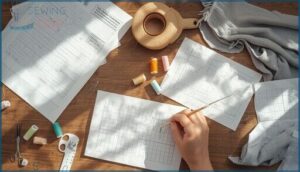
Not every practice session needs a piece of fabric attached to it.
Some of the best ways to sharpen your stitching skills cost you nothing but a little time and some printed paper.
Here are a few free methods to help you build confidence without wasting a single scrap.
Downloadable Sewing Practice Sheets
Downloadable sewing practice sheets are your secret weapon for building real control — no fabric waste, no pressure. These digital sewing tools come as printable PDFs on standard 8.5 by 11 inch paper.
You’ll find stitching exercises for every sewing skill level, from simple grids to tricky maze layouts. Sewing worksheets let you repeat drills as many times as you need. Print, practice, repeat.
Sewing on Paper for Straight Lines
Once you’ve worn out your printable practice sheets, take it a step further with paper stitching. Grab a fine 0.5 mm pencil and draw Straight Lines right on clean paper — no fabric needed.
Sharp needles and steady Thread Tension keep things smooth. It’s exceptional for building Needle Control and sharpening your Sewing Skills without wasting a scrap.
Practicing Corners and Pivoting
Mastering corners is where your sewing skills truly level up. This drill builds control over Edge Turning and Pivoting Techniques without burning through fabric. Park your needle in the Seam Allowance, then rotate — clean and steady.
- Use Sewing Practice Sheets to trace sharp 90-degree Corner Stitching squares
- Lower the needle before each pivot for stable Fabric Tension
- Reduce Seam Allowance at corners to cut down bulk
- Follow free Sewing Tutorials to reinforce these Sewing Techniques and Patterns
- Clip notches on tight turns so your Sewing Patterns lay flat
Curved Line and Circle Exercises
Curves are where real control kicks in. Grab your Sewing Practice Sheets and trace Curved Lines using a compass first. Start with oversized arcs — Arc Sewing gets smoother as you build confidence.
Shorten your stitch length on tight Rounded Edges for cleaner Curved Seams. These Circle Stitching drills and free Sewing Worksheets sharpen your Precision Techniques without wasting a single scrap. Check Sewing Tutorials to keep refining those Sewing Skills!
Intermediate Practice Projects to Build Confidence
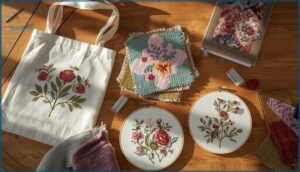
You’ve already got the basics down, so it’s time to level up. These next projects are a step beyond simple drills — they’re real, usable items you’ll actually want to keep.
Here’s what you can tackle to keep that momentum going.
Duvet Covers From Two Sheets
Two flat sheets can become a cozy duvet cover — no extra cutting needed. Smart sheet selection and proper duvet sizing make this one of the best sewing projects and ideas for building real skills.
Here’s how to nail it:
- Fabric choice matters — prewash both sheets to avoid shrinking later
- Use a ½-inch seam allowance along three edges with your sewing machine
- Finish raw edges with a zigzag or overlock stitch for solid edge finishing
- Try envelope or burrito-style closure methods to keep everything snug
- Alternate contrasting sewing patterns on each side for a reversible look
DIY Oilcloth Table Runners
Ready to take your DIY skills to the next level? Oilcloth table runners are an excellent home decor sewing project — protective, stylish, and surprisingly doable.
Pick oilcloth patterns that match your table settings, then measure, cut, and finish edges using your sewing machine. The fabric coating manages spills effortlessly. Just remember proper laminate care: wipe clean, never machine wash.
Perfect for sewing beginners building real confidence.
Hand-Sewn Book Covers
Book covers are one of those satisfying sewing project ideas where bookbinding basics meet real creativity. Skip the sewing machine here — grab waxed thread and an awl instead.
Learn coptic stitching to bind signatures using sewing stations for even spacing. Choose leather covers or softer wraps, pair them with beautiful endpaper designs, and you’ve built something truly yours. No sewing patterns or waterproof book covers needed — just hands-on sewing techniques and patterns that teach you control.
Appliqué Decorative Designs
Appliqué is where your creativity gets to take the wheel. Layer felt or cotton patches onto a base fabric, then secure them with a zigzag stitch or satin stitch on your sewing machine.
Mix fabric painting and embroidery for bold decorative stitches. Try patchwork designs on a pillow first — it’s a cozy way to master embellishment techniques without the pressure.
Frequently Asked Questions (FAQs)
What are some good sewing projects?
Think of sewing like planting a garden—each stitch grows something beautiful.
From cozy scrunchies to adorable Home Decor gifts, your Sewing Kits, Fabric Choices, and Sewing Tools open endless doors.
Grab your Sewing Machine and let’s whip up something spectacular!
What should I practice sewing on?
Start with fabric scrap and sewing practice sheets. Grab your sewing tools, check thread types, and follow stitch guides.
Practice straight lines, zig zag lines, and sewing machine operation. Mind fabric weights—lighter ones first!
How to make a project plan for sewing?
Picture your finished piece laid out before you. Nail down your Project Timeline, lock in a Sewing Budget, and sort out Fabric Estimation early.
Add Pattern Selection and Quality Control checkpoints. Grab free Sewing Practice Sheets to keep improving Sewing Skills along the way.
What sewn items sell best?
Scrunchies, Drawstring Pouches, and Tote Bag projects dominate Online Sales.
Seasonal Items and Clothing with bold Fabric Choices drive Gift Market Trends.
Your most Profitable Projects? A Reusable Snack Bag—buyers love them!
How do I choose the right thread?
Making a scrunchie? A 40wt polyester thread works beautifully with most cotton fabrics.
Match your fiber types to your fabric, pick darker shades for color matching, and adjust thread weight based on thickness.
That’s your foundation for confident sewing.
What fabric types are best for beginners?
Cotton blends top the list for Fabric Crafting beginners—they’re forgiving, easy to handle, and won’t fight you.
Explore different Fabric Weaves and Fiber Properties to find what feels right. Your Thread Choices and Interfacing Options matter too!
How do I maintain my sewing machine?
Keep your sewing journey smooth with regular machine cleaning, oil lubrication, and thread tension checks.
Don’t skip belt replacement or professional servicing every few years. These simple sewing tips and tricks, paired with the right sewing tools and equipment, are your best sewing education and resources worksheets combined!
Can I learn lockstitch for stronger seams?
Weak seams break. Strong ones hold. Yes — you can absolutely learn lockstitch.
Focus on Thread Selection, proper Fabric Prep, and Stitch Density. Backstitch at seam ends for Seam Reinforcement.
Practice consistently, and your Sewing skills will transform.
What tools do I need to start sewing?
Your starter Sewing Kit Essentials are simpler than you’d think. Grab scissors, a seam ripper, neutral Thread Colors, and a 60-inch Measuring Tools tape.
For Crafting and Sewing, even basic Fabric Choices work perfectly.
Conclusion
Think practice projects for stitching are just busy work? Please. That’s like saying a chef only learns by reading cookbooks. Your hands learn fastest when they’re actually making something real.
Every scrunchie, pouch, and placemat you finish is proof you’re not just practicing—you’re building. Start small. Stay curious. And before you know it, you won’t call it practice anymore. You’ll just call it sewing.