This site is supported by our readers. We may earn a commission, at no cost to you, if you purchase through links.

Run your hand across a crisp cotton shirt, then touch a plush velvet cushion. That immediate tactile difference you’re sensing—the cool smoothness versus warm softness—isn’t random. It’s fabric hand, the fingerprint of textile design.
Every fabric tells a story through touch, revealing its fiber content, construction methods, and finishing treatments before you even look at a care label. For textile engineers, designers, and anyone selecting materials, understanding fabric hand properties transforms guesswork into informed decision-making.
When you know what creates that buttery drape or supportive structure, you’ll match the right textile to your needs—whether you’re crafting a flowing dress, upholstering furniture, or evaluating garment quality.
Table Of Contents
- Key Takeaways
- What is Fabric Hand?
- Key Factors Affecting Fabric Hand
- How Fabric Hand is Evaluated
- Describing Fabric Hand Properties
- The Science Behind Tactile Sensations
- Fabric Hand in Apparel Design
- Fabric Hand for Home and Craft Projects
- Importance of Fabric Hand in Product Quality
- Advances in Fabric Hand Technology
- Tips for Selecting The Right Fabric Hand
- Frequently Asked Questions (FAQs)
- Conclusion
Key Takeaways
- Fabric hand—the tactile experience of how material feels when touched—is your most reliable quality-check tool, revealing fiber content, construction methods, and finishing treatments before you read a single care label.
- You evaluate fabric hand through four core sensations (softness, stiffness, smoothness, roughness) shaped by fiber composition, yarn twist, weave patterns, weight, and finishing treatments that together determine whether a textile suits your specific project needs.
- Modern technology now combines subjective touch assessments with AI-driven analysis, robotic sensing systems, and digital texture mapping to predict fabric hand properties with over 90% accuracy, transforming traditional guesswork into precise material selection.
- Matching fabric hand to your application—from flowing silk charmeuse for draped garments to crisp worsted wool for structured suits—directly determines product success, customer satisfaction, and long-term durability across apparel, home decor, and craft projects.
What is Fabric Hand?
Fabric hand is the term textile professionals use to describe how a fabric feels when you touch it. It’s one of the first things you notice when you pick up a piece of material, and it plays a major role in determining whether that fabric works for your project.
That intuition in your fingertips is actually your best quality-check tool, which is why testing fabric by feel before you buy can save you from costly mistakes down the line.
Let’s break down what fabric hand really means and why it matters.
Simple Definition of Fabric Hand
Fabric hand is the tactile experience you get when you touch, squeeze, or move a textile in your hands. It’s your direct sensory perception of the material’s texture, weight, and behavior—fundamentally the personality of a fabric that your fingers detect rather than your eyes.
- Fabric hand captures the overall impression combining multiple physical cues simultaneously
- You experience it through direct skin contact with the cloth’s surface
- This fabric feel acts as a practical shortcut for material selection decisions
- Industry professionals treat it as a multi-dimensional property reflecting several underlying traits
- The term describes how a fabric physically comes across to your sense of touch
A range of factors such as greatly influence how fabric hand is perceived.
Common Sensations (Softness, Stiffness, Smoothness, Roughness)
When you run your fingers across cloth, you’re picking up four main tactile sensations that define fabric feel.
Softness tells you how easily the material compresses under gentle pressure—think high thread count cotton versus canvas. Smoothness describes surface texture and how your skin glides across it, while stiffness measures bending resistance. Roughness captures bumps, grains, or prickly points your fingertips detect during tactile sensory experience, directly affecting material comfort and sensory analysis.
Recent advancements in fabric evaluation utilize AI-driven prediction of feel to simulate and assess these tactile properties more efficiently.
Differences Between Hand and Handle
Those tactile sensations you’ve just explored fall under what most people call “fabric hand,” but you’ll also hear the term “handle” in technical settings. While hand describes your overall sensory evaluation—the way cloth feels in your palm—handle metrics focus on objective measurements of bending, shear, and compression.
Fashion designers talk about hand; engineers measure handle properties to quantify fabric feel characteristics.
Key Factors Affecting Fabric Hand
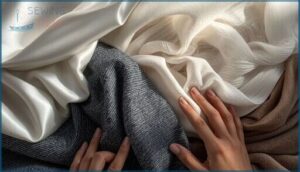
Several elements work together to create a fabric’s unique feel. Each factor—from the fibers themselves to the final treatments—shapes how the material behaves in your hands and on your skin.
Understanding these key influences gives you control over selecting the right textile for any project.
Fiber Content and Composition
The fibers you choose form the foundation of how any textile feels in your hand. Natural fibers like cotton and linen deliver breathability and softness, while synthetic materials such as polyester add durability and crispness.
Consider these composition strategies:
- Fiber blends balance comfort with performance by mixing natural and synthetic materials.
- Microfiber technology creates exceptionally smooth, luxurious hand from ultra-fine filaments.
- Regenerated fibers like modal offer buttery softness that rivals premium natural options.
Yarn Structure and Twist
How yarn is spun determines whether your fabric feels crisp or supple. Twist direction—S or Z—controls how fibers lock together, while twist levels (measured in twists per inch) dictate firmness and drape. Higher compactness effects squeeze out air, creating denser, smoother surfaces. Lower twist preserves loft and softness but risks pilling.
| Yarn Construction | Fiber Alignment | Fabric Hand Impact |
|---|---|---|
| High TPI | Tight, parallel | Crisp, firm, less drape |
| Low TPI | Loose, mobile | Soft, flowing, warm |
| Compact spun | Dense, uniform | Smooth, refined surface |
| Open end | Bulky, irregular | Fuller, slightly coarse |
Weave and Knit Patterns
How threads interlock determines whether you’ll grab something crisp or clingy. Weave patterns like plain weave create firm, stable woven fabrics with minimal drape, while satin floats give a sleek, fluid hand.
Breathability and moisture-wicking also shape how a fabric wears, which is worth understanding if you’re weighing options like viscose vs. rayon for drape and comfort.
Knit structures—jersey, rib, or purl—offer stretch and softness that woven fabrics can’t match. Fabric density, yarn interlock, and textile mechanics all shift the feel you experience when your fingers press cloth.
Fabric Weight and Thickness
A sheet of paper feels nothing like canvas, even though both are cellulose products. Fabric Weight and Thickness drive that difference—grams per square metre (GSM) tell you how dense your material is, while Thickness Measurement reveals its bulk. Together, these Fabric Properties shape drape quality and tactile authority.
- Weight Metrics: Lightweight fabrics (30–150 GSM) feel airy; medium weight (150–350 GSM) balance structure; heavyweight (350+ GSM) deliver firm hand.
- Material Effects: Polyester packs tight, yielding dense yet thin cloth; cotton lofts, creating cushioned bulk at similar weights.
- Bulk Analysis: Fabric Density affects warmth—thicker textiles trap air, boosting insulation and perceived coziness.
Finishing Treatments and Coatings
You can transform coarse gray goods into silk‑smooth cloth with the right Finishing Treatments. Chemical Finishes like silicone soften fiber surfaces, while Resin Coatings add structure and body. Mechanical Softening breaks in fabric through tumbling, and Surface Abrasion raises a velvety nap.
Each Surface Treatment alters Fabric Hand in unique ways, letting mills engineer Fabric Properties—from crisp collars to drapey linings—using proven Fabric Technology.
How Fabric Hand is Evaluated
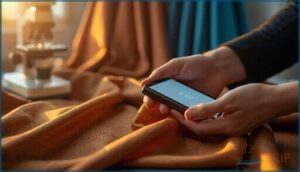
You can’t select the right fabric without knowing how to evaluate its hand. The textile industry relies on both human expertise and sophisticated technology to assess these tactile properties.
Let’s explore the two main approaches professionals use to measure and understand fabric hand.
Subjective Touch Assessments
When you run your hand across a swatch, you’re conducting the oldest form of Fabric Hand Evaluation—subjective Touch Evaluation. This Sensory Evaluation Method relies on trained experts or consumer Sensory Panels to assess Tactile Perception through direct contact. Your Tactile Experience in Textiles shapes Hand Rating decisions through three core elements:
- Controlled environment chambers that stabilize skin sensitivity and Fabric Perception
- Bipolar rating scales pairing opposites like rough–smooth for consistent Tactile Analysis
- Standardized handling protocols ensuring repeatable touch assessments across evaluators
Digital and AI-Based Analysis
Modern instruments now replace guesswork. AI Fabric Analysis converts mechanical tests—compression, bending, friction—into numerical hand values with errors below 10 percent. Computer Vision Inspection scans surfaces for pilling and weave defects, while Robotic Sensing Systems mimic fingertip strokes to classify stiffness and smoothness. Virtual Drape Simulation lets designers preview how crisp cotton versus fluid rayon will hang before cutting a single yard.
| Technology | What It Measures |
|---|---|
| Kawabata System | Tensile, shear, bending under low stress |
| Digital Texture Mapping | Surface features, micro-wrinkles, fuzz |
| Robotic Touch Sensors | Pressure patterns, friction, stick-slip |
| Machine Learning Models | Softness, flexibility, total hand score |
Describing Fabric Hand Properties
Finding the right words to describe fabric hand is like learning a new language—one that connects your fingertips to your decision-making. You’ll need precise vocabulary to communicate what you feel and match materials to your project needs.
Here’s how to articulate fabric properties with clarity and confidence.
Common Descriptive Terms
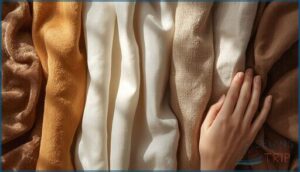
You’ll find industry professionals rely on precise language to capture tactile sensations and material feel. These standard terms help you communicate fabric hand clearly:
- Softness levels range from plush and buttery (gentle, yielding fabrics) to firm and crisp (structured materials that hold shape).
- Smoothness tests distinguish silky, slick surfaces from dry or papery textures.
- Fabric texture spans smooth weaves to nubby, slubby, or pebbled patterns.
- Tactile qualities include springy, stretchy, or crushable characteristics that affect performance.
Articulating Drape, Flow, and Texture
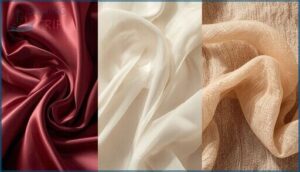
Beyond isolated terms, you describe how a fabric behaves by capturing its drape, flow dynamics, and texture together. Fabric drape shows how material hangs under its own weight, while flow reveals movement as you walk or turn.
Texture analysis examines surface interaction—whether smooth satin catches light or rough linen breaks it into shadows—shaping visual appeal alongside tactile qualities and fabric weight.
Comparing Fabrics Using Sensory Language

When comparing fabrics, you’ll communicate tactile experience most clearly through sensory contrast. Pairing opposite qualities—rough versus smooth, crisp versus fluid—helps others grasp material comparison instantly.
Call denim “firm and matte” while silk reads as “cool and sleek.” These sensory descriptions transform abstract fabric hand into shared understanding, letting you evaluate tactile qualities side by side and match texture to your project’s specific demands.
The Science Behind Tactile Sensations
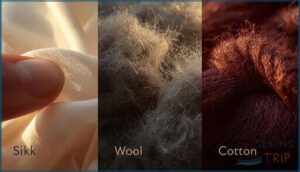
When you touch a fabric, your fingers aren’t just making contact—they’re reading a story written in fibers, structures, and molecular arrangements. Material science explains why silk feels cool and smooth while wool feels warm and textured.
Every fabric tells a story your fingertips read before your eyes ever do
Three key scientific principles shape every tactile sensation you experience with textiles.
Role of Material Science in Fabric Feel
Material science applications reveal why some fabrics feel plush while others feel crisp. Fiber mechanics determine how easily fibers bend—cotton’s low Young’s modulus creates softness, while high-modulus polyester delivers firmness.
Textile chemistry shapes sensory analysis through fiber composition, yarn structure, and material properties.
Fabric dynamics, like compression and resilience, link directly to how textiles respond when you squeeze or fold them.
Surface Structure and Microscopic Features
Microscopic features—barely visible yet profoundly influential—shape every tactile impression a fabric makes. Here’s how tiny surface details control the sensations you experience when touching textiles:
- Fiber Cross sections, whether circular cotton or trilobal polyester, determine how fibers pack together and scatter light, affecting smoothness and crispness.
- Yarn Hairiness creates fuzzy halos from protruding fibers, adding warmth and cushioning or occasional scratchiness.
- Surface Roughness describes microscopic peaks and valleys that generate friction-induced vibration, making fabrics feel coarse or sleek.
- Micro Scale porosity—the tiny gaps between yarns—controls air movement and influences how uniform or mesh-like the surface feels.
- Raised Naps from surface treatment techniques like peach finishing lift microfibrils, creating suede-like softness and matte textures.
These fabric properties work together, transforming fiber composition, yarn structure, and texture into the precise sensations your fingertips detect.
Compression, Resilience, and Flexibility
Feeling a fabric’s give-and-spring reveals three mechanical properties: Fabric Compression, Material Resilience, and Flexural Rigidity. Fabric Compression shows how much thickness you lose under pressure—softer textiles flatten more easily. Material Resilience tracks bounce-back; good Stretch Recovery prevents permanent flattening and keeps cushioning alive. Flexibility, measured as Flexural Rigidity, controls bending stiffness. Low rigidity flows smoothly; high rigidity feels boardy.
Together, Compression, Resilience, and Textile Elasticity define Fabric Hand’s mechanical personality.
Fabric Hand in Apparel Design
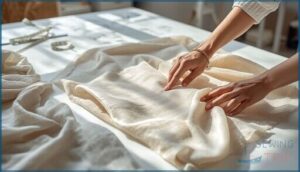
When you design clothing, fabric hand isn’t just a detail—it’s the foundation of how a garment performs and how wearers experience it. The right hand can make a piece feel luxurious and move beautifully, while the wrong choice can compromise both comfort and style.
Here’s how fabric hand shapes three critical aspects of apparel design.
Comfort and Wearability
You’ll know you’ve chosen the right fabric hand when comfort becomes invisible during wear. Thermal comfort relies on breathable structures that manage moisture, while tactile sensations like softness and smoothness reduce friction on your skin.
Pressure relief comes from fabrics with balanced resilience—they stretch with you, then recover. These wearability factors determine whether a garment enhances your day or demands constant adjustment.
Drape and Garment Aesthetics
Drape determines how fabric flows and shapes your garment silhouette. Soft silk charmeuse falls in close folds that follow body contours, creating fluid lines, while crisp poplin holds structured edges for fitted looks.
This drape movement controls textile movement—from flowing maxi skirts to sculptural coats—making fabric hand central to aesthetics in textile design.
Balanced drape lets you pair voluminous tops with slim bottoms without losing aesthetic balance.
Suitability for Different Clothing Types
Your choice of fabric hand directly determines garment performance and wearability factors across every clothing category. Soft cotton jersey suits casual T-shirts through gentle textile selection, while crisp worsted wool with firm hand creates sharp business suits.
Athletic wear demands slick synthetics for fabric comfort during movement, and brushed fleece provides warmth in hoodies.
Match fabric properties to clothing durability needs and aesthetics for successful fabric selection.
Fabric Hand for Home and Craft Projects

When you’re selecting fabric for a home or craft project, hand becomes your most practical guide. The right textile can make upholstery inviting, curtains flow beautifully, or a handmade quilt feel exactly as you envisioned.
Here’s what you need to keep in mind when matching fabric hand to your specific project requirements.
Choosing Textiles for Home Decor
You’ll notice that fabric hand shapes your upholstery choices and draping decisions more than you might expect. When picking textiles for home decor, consider how stiffness affects curtain drape, or how a sofa’s surface texture influences room acoustics and comfort.
Fabric selection depends on matching material properties to function—soft voile filters light differently than heavy blackout linen, while synthetic performance fabrics resist daily wear better than delicate cotton blends.
Fabric Workability in DIY and Crafts
Your DIY projects demand practical fabric selection beyond surface appeal. Fabric cutting ease, sewing precision, and textile stability determine whether you’ll finish that quilted tote or abandon it midway.
Tightly woven cotton offers exceptional craft durability and minimal fraying, while slippery synthetics shift under your scissors.
Understanding these fabric properties—how weight affects machine handling, how weave structure impacts stitching—transforms textile manufacturing knowledge into DIY versatility you can feel.
Durability and Maintenance Considerations
Once you’ve sewn that cushion cover or quilted wall hanging, durability and maintenance determine whether your project stays beautiful for years or feels worn after months. Abrasion resistance keeps upholstery smooth through daily use, while proper fabric care preserves the original hand you chose. Understanding textile longevity and material properties means matching durable finishes and performance to your actual usage patterns.
- Dirt and body oils slowly sandpaper upholstery fibers into rough, dull surfaces without regular cleaning
- Washing above recommended temperatures stiffens natural fibers and turns soft fabrics harsh against skin
- High dryer heat melts synthetics, warping smooth hand into plasticky stiffness you’ll feel immediately
- Tightly woven fabrics resist abrasion better, keeping seat cushions and sofa arms soft longer
- Following care labels prevents scorching, shrinking, and fiber weakening that destroys your project’s feel
Importance of Fabric Hand in Product Quality

Fabric hand isn’t just about how material feels—it’s a direct indicator of whether your product will succeed or fail in the marketplace. Manufacturers use fabric hand as a critical checkpoint to separate premium goods from inferior ones, while customers often make split-second purchase decisions based on that first touch.
Let’s examine how fabric hand shapes both quality control standards and customer loyalty.
Quality Assessment in Manufacturing
Precision in textile inspection separates acceptable rolls from rejects long before garments reach customers. In manufacturing, quality control teams run fabric hand tests—like bending rigidity and surface friction—at fixed intervals, often every 500 to 1,000 meters.
They log results against production monitoring dashboards, tracking fabric quality assessment metrics and manufacturing standards. This process helps catch hand drift early and allows for real-time adjustments to finishing parameters.
Enhancing Customer Satisfaction
Quality checks on the factory floor matter because customer satisfaction lives in the details you can touch. When shoppers run their hands over a garment, that sensory experience shapes brand perception instantly—soft, balanced fabric hand builds purchase confidence and product loyalty.
Positive customer feedback often highlights comfort first, proving that sensory evaluation of fabric properties directly influences the consumer experience and repeat purchases.
Advances in Fabric Hand Technology

The textile industry has made impressive strides in fabric hand technology over the past decade. Modern innovations now allow manufacturers to create fabrics with precisely engineered tactile properties that weren’t possible before.
Let’s explore three key areas where technology is reshaping how fabrics feel and perform.
Innovative Finishing Techniques
Modern finishing treatments are reshaping how you control fabric hand. Plasma treatment alters fiber surfaces for softer cotton without heavy chemicals, while laser etching smooths denim by removing raised fibers in targeted zones.
Silicone softening delivers luxurious drape through friction-reducing films, and air finishing fluffs delicate knits gently.
Nano coating applies ultra-thin polymer layers, creating silky fabric properties while preserving breathability and strength.
Smart Textiles and Sensory Enhancements
Smart fabrics now merge tactile interfaces with wearable tech to transform fabric hand into an interactive experience. Haptic feedback garments deliver vibrations or gentle squeezes through conductive threads, while integrated pressure sensors detect touch and movement.
These textile science breakthroughs combine sensory evaluation methods with sophisticated fabric properties, letting you experience clothing that reacts to your body’s signals and enhances tactile qualities through real-time sensory integration.
Trends in Fabric Hand Research
You’ll now find AI Fabric Analysis pushing accuracy past 99 percent as neural networks classify weave patterns from photos and forecast end-use suitability.
Digital Touch Simulation platforms merge Virtual Texture Mapping with measured bending and shear data, creating digital twins that mirror real Fabric Properties on 3D avatars.
Smart Fabric Development combines Sensory Evaluation with Fabric Hand Modeling, while Fabric Technology Advances link Textile Science insights to virtual prototyping workflows.
Tips for Selecting The Right Fabric Hand
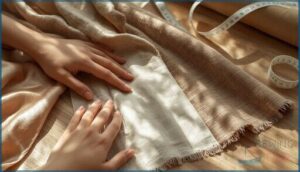
Choosing the right fabric hand isn’t guesswork—it’s a skill you can develop with the right approach. When you know what to look for and how to test it, you’ll avoid costly mistakes and create better results every time.
Here’s how to match fabric properties to your specific project requirements.
Matching Fabric Hand to Project Needs
Your project planning starts with clear goals. For garment design, match fabric properties to the silhouette: flowing dresses need soft, high-drape hands like rayon or silk, while structured jackets demand firmer materials such as denim or canvas.
In textile design, fabric selection drives both performance and aesthetics. Consider how fabric feel affects comfort, durability, and final appearance—then choose material that delivers exactly what your project requires.
Hands-on Evaluation Techniques
Start your Hand Evaluation with pinching and grasping—squeeze fabric between your thumb and index finger to sense thickness and body. Next, slide your fingertip along the surface for Texture Testing; smooth fabrics glide easily while rough ones catch.
For Fabric Draping assessment, hold one edge and watch how it falls. This Sensory Analysis reveals Tactile Qualities you can’t judge from photos alone.
Avoiding Common Fabric Selection Mistakes
Choosing the wrong fabric can sabotage even expert stitching. Skipped Fabric Testing, rushed Material Selection, or ignored Drape Evaluation leads to garments that twist, shrink, or restrict movement.
Follow these Fabric Selection Criteria:
- Match Fabric Hand to climate and breathability needs
- Test Textile Manufacturing specs for shrinkage before cutting
- Perform Weave Comparison and Texture Analysis for pattern compatibility
- Check that Fabric Properties support your project’s movement and maintenance requirements
Frequently Asked Questions (FAQs)
How do you describe the hand of a fabric?
You describe fabric hand by noting its tactile sensations — softness levels, smoothness, stiffness, and drape analysis.
Run it through your fingers, crumple it lightly, and let it hang to capture the full fabric feel and texture.
What do fabric properties mean?
Fabric properties are the measurable physical and sensory characteristics that define how a textile performs and feels. They include fiber composition, yarn structure, weight, texture, and finish — everything shaping your tactile experience with a material.
How to identify fabric by touching?
Run your fingertips lightly across the surface—smooth fabrics glide, rough ones resist. Scrunch it: cotton creases, wool springs back. That instant tactile analysis tells you more than any label ever could.
How to tell if a fabric is high quality?
You can assess fabric quality by examining fiber length, yarn twist, and fabric density. Hold it to light, test drape recovery, and feel the surface finish for smoothness, resilience, and overall hand.
How does climate affect fabric hand over time?
Climate aging degrades fabric hand through multiple pathways. Temperature effects alter fiber structure, while humidity control prevents brittleness. UV protection stops polymer breakdown, and proper storage conditions preserve original drape, breathability, and durability over years.
Can washing methods change a fabrics hand feel?
Yes, washing cycles, detergent effects, water temperature, and fabric softening dramatically alter fabric feel. Harsh laundry techniques strip natural oils, while gentle surface treatment preserves fabric properties. Fabric weight and drape respond differently across methods.
Do cultural preferences influence fabric hand expectations?
Cultural preferences shape fabric hand expectations markedly. Regional hand preferences, traditional dress hand, and tactile comfort norms guide consumer preference.
Symbolic fabric meanings and product perception vary, making sensory evaluation of textiles culturally dependent.
Can fabric hand be restored after significant wear?
Softness restoration through vinegar rinses, silicone finishing, and enzyme treatments can rejuvenate worn textiles, but fiber fatigue, structural damage, and abrasion set permanent limits—full fabric hand revival remains elusive after heavy wear despite renewal efforts.
Conclusion
Knowledge is power, but only when applied. Understanding fabric hand properties transforms you from passive consumer to informed decision-maker.
You’ll confidently select materials that deliver the tactile experience your project demands—whether engineering performance wear or crafting home textiles.
Touch reveals fiber composition, construction quality, and finishing expertise instantly. Master this sensory language, and you’ll never settle for inadequate fabric again. Your fingertips hold the key to textile mastery.
- https://alittledesignhelp.com/what-is-the-hand-of-a-fabric/
- https://www.fibre2fashion.com/industry-article/3770/fabric-objective-measurement-techniques
- https://florianeschmitt.com/fabric-hand/
- https://www.mtmapparelsolutions.com/post/the-subjective-factors-that-influence-fabric-weight
- https://www.scribd.com/presentation/326292904/Kawabata-Evaulation-System