This site is supported by our readers. We may earn a commission, at no cost to you, if you purchase through links.
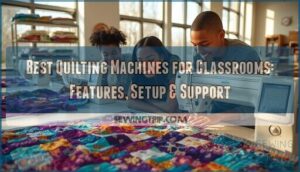
Teaching quilting transforms when your classroom has the right machines! Students who once struggled with uneven stitches suddenly create beautiful projects. Their confidence soars as they master techniques that seemed impossible just weeks before.
The secret? Machines built specifically for educational settings—ones that support beginners while challenging skilled students. Today’s classroom quilting machines offer features like adjustable speed control, extended work areas, and stitch regulation that keeps learning smooth and frustration-free.
Schools investing in quality equipment see something noteworthy happen: students don’t just learn to quilt, they fall in love with the craft. The difference between adequate machines and superior ones shapes whether your textile arts program merely exists or truly thrives.
Table Of Contents
Key Takeaways
- Classroom quilting machines with features like adjustable speed control, stitch regulation, and extended throat space (18-21 inches) help students master techniques faster while building confidence through consistent results
- Longarm machines reaching speeds up to 2,600 stitches per minute let students complete sample projects in 20-30 minutes instead of an hour, making classroom time dramatically more efficient
- Schools should standardize on the same machine models across all stations because uniform controls and threading paths make teaching easier and help students develop consistent skills faster
- Dealer bundles and volume discounts can save schools over $1,000 per machine when buying five or more units, with financing options spreading costs over 24-60 months to fit tight budgets
Key Features of Classroom Quilting Machines
What makes a quilting machine perfect for your classroom? You need features that keep students engaged and learning fast!
Check out kid-friendly quilting machines with simple controls and built-in safety features that help beginners build confidence quickly.
Let’s look at the core qualities every classroom quilting machine should have.
High Stitch Speeds for Efficient Learning
High speed quilting transforms classroom time! Longarm quilting machines reach up to 2,600 stitches per minute, letting students finish samples in 20 to 30 minutes instead of an hour.
Speed control sliders help beginners start at half speed while skilled learners tackle edge-to-edge patterns at full throttle. Stitch regulation keeps stitches consistent even when students speed up, making efficient learning a reality in every session!
For guidance on essential features and setup, explore these.
Extended Throat Space and Work Area
Speed matters, but so does space! Longarm quilting machines with 18 to 21 inches of throat space give your students room to quilt larger sections before rolling. That quilting area boosts workspace efficiency and student comfort during free-motion practice.
Machine ergonomics improve when there’s less bunching and repositioning. Your classroom model quilting equipment transforms learning when students can focus on stitching instead of fighting fabric! For ideal results, it’s important for students to understand when working with these machines.
Built-in LED Lighting and Visibility
Great workspace coverage means nothing if your students can’t see their stitches! Built-in LED lighting transforms longarm quilting machines comparison shopping. Here’s what classroom models deliver:
- Adjustable brightness lets you dial up light for dark fabrics or dim it for delicate pastels
- Color temperature around 6000K shows true thread colors and catches tension problems instantly
- Eye comfort features reduce strain during those marathon quilting sessions
Proper LED lighting on quilting equipment reviews consistently ranks as a top quilting machine features request. Your students spot mistakes faster and work safer when learning visibility stays crystal clear!
Sturdy Frames and Durability
Bright lighting means little if your frame wobbles during class! Frame materials like heavy gauge steel and cast alloy keep longarm quilting machines steady under daily use. Metal construction resists flexing when students load queen-size quilts.
Stability control features—think leveling feet and dual-wheel tracks—prevent vibration that ruins stitch quality.
Load capacity matters! Durable frames handle edge-to-edge projects without sagging or bending.
Benefits of Longarm Quilting Machines in Classrooms
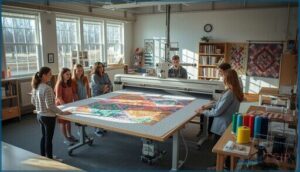
Longarm quilting machines bring something special to the classroom that standard machines just can’t match. They give your students the space and power to tackle real quilting projects while building confidence at their own pace!
Here’s how these machines transform your classroom into a true creative learning environment.
Enhanced Free-Motion Quilting Practice
You’ll find longarm quilting machines transform free-motion practice! Built-in stitch regulation keeps your stitches even when students shift speeds, building quilting with confidence. Smooth machine movement across tensioned quilting frames helps learners focus on design flow instead of wrestling fabric.
Practice panels let your students repeat patterns without fear. Plus, easy thread tension controls and computerized quilting systems build muscle memory fast. These longarm quilting benefits make every session count!
Supporting Multiple Student Skill Levels
Adjustable Modes let one Quilting Machine serve every learner in your space! Speed Control caps beginners at safe, steady stitching while expert students push those Stitch Regulation features for intricate designs. Your Classroom Model facilitates Skill Progression without buying separate equipment.
Teacher Assistance becomes smoother when everyone works on standardized Sewing and Quilting Equipment. Check Classroom Sales and Discounts to build your Quilting Community Events program affordably!
Reducing Maintenance and Downtime
Durability matters when your machines face daily use! Durable Frames withstand hours of student practice while built‑in Lubrication Systems cut frequent oiling tasks.
Daily Cleaning Tips and Preventive Schedules keep your fleet running, reducing Sewing Machine Repair calls and Maintenance Costs.
Schools purchasing through Quilting Machine Sales often receive Customer Support bundles and Satisfaction Guarantee coverage. Less downtime means more creative learning!
Top Quilting Machines for Classroom Use
When you’re building a quilting classroom, choosing the right machines makes all the difference! You need equipment that can handle daily use while helping students grow their skills.
Here are six top machines that teachers trust to deliver quality performance and reliability in classroom settings.
1. Little Rebel Sewing Quilting Machine
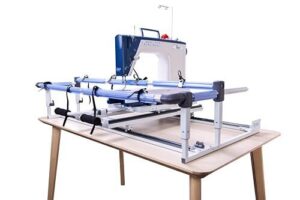
Looking for a machine that lets your students sew and quilt without switching equipment? The Little Rebel Sewing Quilting Machine does both!
This all-in-one powerhouse runs at speeds up to 1,600 stitches per minute, so your students can finish practice blocks fast.
You’ll love the generous 13″ x 8.5″ workspace and built-in LED lights that brighten every stitch.
At just 26 pounds, it’s sturdy enough for stability but light enough to move between rooms when you need flexibility.
| Best For | Educators who want a reliable, dual-purpose machine that handles both sewing and quilting projects without taking up too much space in the classroom. |
|---|---|
| Brand | The Grace Company |
| Weight | 87 lbs |
| Material | Metal |
| Built-in Stitches | Variable |
| Throat Space | 13″ x 8.5″ |
| Price Range | $3,199 |
| Additional Features |
|
- Blazing fast 1,600 stitches per minute means students spend less time waiting and more time creating
- Built-in stitch regulation and LED lighting make it easier for beginners to see what they’re doing and get consistent results
- Large throat space (13″ x 8.5″) gives students room to work with bigger quilts and bulky fabrics without fighting the machine
- Threading can be tricky in some spots, which might frustrate students who are just learning
- No automatic thread cutter means extra steps when finishing seams
- The bobbin sits under the front of the machine where it’s harder to reach during quick changes
2. Little Rebel Quilting Sewing Machine
 View On Amazon
Need a classroom machine that manages beginners and expert quilters alike? The Little Rebel Quilting Sewing Machine delivers!
With speeds reaching 1,600 stitches per minute, your students can power through projects quickly. But here’s the best part—it also slows down to just 180 stitches per minute so nervous beginners can build confidence without feeling rushed.
The built-in stitch regulation keeps stitches even across every seam, and the 13″ throat space gives plenty of room for free-motion practice. Multiple sewing modes mean you can adapt to any skill level!
| Best For | Quilting classrooms that need one machine to handle both nervous beginners working at 180 stitches per minute and experienced quilters flying through projects at full speed. |
|---|---|
| Brand | The Grace Company |
| Weight | 48 lbs |
| Material | Metal |
| Built-in Stitches | Variable |
| Throat Space | 13″ x 8.5″ |
| Price Range | $2,799 |
| Additional Features |
|
- Built-in stitch regulation keeps every stitch even, so students get consistent results whether they’re piecing or doing free-motion work
- Huge 13″ throat space gives plenty of room for bulky quilts and lets beginners practice without feeling cramped
- Adjustable speed from 180 to 1,600 stitches per minute means one machine works for every skill level in your class
- Uses non-standard sewing needles that are trickier to install than regular ones
- No automatic thread cutter, so students have to snip threads manually
- The bobbin sits under the front of the machine in a spot that’s awkward to reach when it needs changing
3. Brother Computerized Sewing Machine
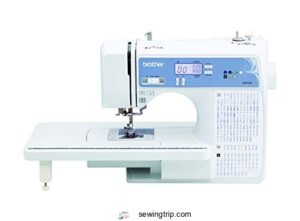
Want a machine that makes quilting class feel simple and exciting? The Brother Computerized Sewing Machine packs 165 built-in stitches, an automatic needle threader, and a drop-in bobbin that beginners can handle in seconds!
Your students get an LCD display for easy stitch selection, plus eight presser feet to tackle any project. The wide table accommodates larger quilt blocks, and the free arm capability lets them master cuffs and sleeves.
At just 10.1 pounds, moving machines between storage and workstations is a breeze!
| Best For | Quilting instructors who need a reliable, beginner-friendly machine with tons of stitch options and easy setup for classroom use. |
|---|---|
| Brand | Brother |
| Weight | 10.1 lbs |
| Material | Metal, Plastic |
| Built-in Stitches | 165 |
| Throat Space | Standard |
| Price Range | Mid-range |
| Additional Features |
|
- 165 built-in stitches give students plenty of creative options for any project
- Automatic needle threader and drop-in bobbin make setup quick and frustration-free
- Lightweight at 10.1 pounds, so it’s easy to move around the classroom
- Doesn’t include a 1/4 seam guide presser foot, which quilters often need
- Can get noisy during use, which might be distracting in a classroom setting
- Only works with 120 volts, so using it elsewhere could void the warranty
4. Brother Sewing And Quilting Machine
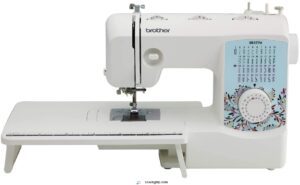
The Brother XR3774 brings 37 adaptable stitches to your classroom, including decorative options and quilting patterns that spark creativity! Your students will love the automatic needle threader and one-step buttonhole function that eliminate frustration.
At 15 pounds, this portable machine moves easily from station to station. The wide table gives beginners plenty of room to maneuver quilt blocks, while the drop-in bobbin keeps threading simple. Eight included feet mean you’re ready to teach multiple techniques right out of the box!
| Best For | Teachers and sewers who need a versatile, classroom-friendly machine that handles everything from basic repairs to quilting projects without breaking the budget. |
|---|---|
| Brand | Brother |
| Weight | 15 lbs |
| Material | Metal, Plastic |
| Built-in Stitches | 37 |
| Throat Space | Standard |
| Price Range | Budget |
| Additional Features |
|
- 37 stitch options plus automatic features like the needle threader make it genuinely beginner-friendly while still offering enough variety for advanced techniques
- The wide table and included accessories mean you can start teaching multiple projects immediately without buying extras
- At 15 pounds it’s light enough to move between classrooms or storage without straining your back
- Gets pretty loud during operation, which can be distracting in a quiet classroom setting
- Struggles with thick fabrics like fleece layers, so it’s not ideal if you’re planning heavy-duty upholstery projects
- The machine can vibrate and shift during fast sewing, especially on bigger projects where the bottom grips don’t hold well enough
5. Janome Sewing And Quilting Machine
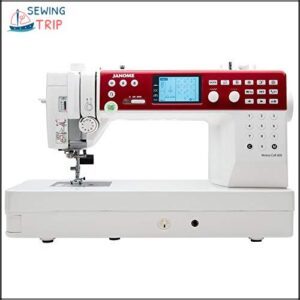
The Janome 5300QDC-G is built specifically for classroom and retreat settings, and it shows! With 300 built-in stitches and alphabet fonts, your students can explore creative labeling and decorative quilting. The speed control slider lets you adjust from beginner-friendly to expert pacing—one machine grows with every skill level.
Its extension table accommodates bigger practice quilts, while five ultrabright LED lamps eliminate shadows across stitch lines. The knee lifter frees hands during chain piecing, and the hard cover protects your investment between classes!
| Best For | Sewers and quilters who want a versatile machine with tons of stitch options and professional features, whether they’re just starting out or already have experience. |
|---|---|
| Brand | Janome |
| Weight | 24.2 lbs |
| Material | Metal, Plastic |
| Built-in Stitches | 172 |
| Throat Space | 10″ flatbed |
| Price Range | $1,999 |
| Additional Features |
|
- 172 built-in stitches and 2 alphabets give you creative freedom for everything from basic sewing to decorative projects
- All-metal construction with 10″ flatbed provides durability and plenty of space for quilting
- Convenient features like automatic thread cutter, built-in needle threader, and adjustable presser foot pressure make sewing easier
- Some users reported issues with skipped stitches and thread cutter malfunctions
- Instruction manual isn’t always beginner-friendly or comprehensive enough
- A few customers received damaged units due to poor packaging during shipping
6. Qnique Longarm Quilting Machine
 View On Amazon
The Qnique longarm quilting machine brings professional-level features to your classroom! The 21X Elite offers a massive 21 by 10.5 inch throat area, so students can quilt queen and king sections without bunching fabric.
With speeds up to 2600 stitches per minute—slowing down to 90 for beginners—it caters to every learner. The 7 inch touchscreen lets students switch between cruise and precise stitch regulation instantly, while multiple LED lights brighten every detail!
| Best For | Home quilters and crafters ready to invest in professional-grade equipment who want the flexibility to handle projects of any size, from small wall hangings to king-sized quilts. |
|---|---|
| Brand | Brother |
| Weight | 10.1 lbs |
| Material | Metal |
| Built-in Stitches | 185 |
| Throat Space | Standard |
| Price Range | Mid-range |
| Additional Features |
|
- Massive 16″ throat space and speeds up to 2100 stitches per minute let you tackle large patterns without constantly repositioning fabric
- The 7″ touchscreen and built-in bobbin estimator make operation straightforward, even if you’re new to longarm machines
- Comes with the Cutie Tabletop Frame, so you can start quilting right away without buying a separate frame
- Setup takes 4-4.5 hours, which is a serious time commitment before you can start your first project
- The $5,499 price tag is just the beginning—expect to spend another $1,000 on essential accessories like leader cloth, rulers, and a laser stylus
- Transitioning from a regular sewing machine requires a learning curve, so plan for some practice time before diving into complex projects
Setting Up a Quilting Classroom
You’ve picked your machines—now it’s time to build a classroom that works! The right setup makes every lesson smoother and keeps students focused on mastering their craft.
Here’s what you need to organize for a functional, inspiring quilting space.
Machine Placement and Station Organization
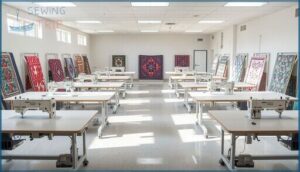
Your classroom machines work best when each station flows naturally! Position your quilting frames so students face the room, letting you spot hand placements instantly. Here’s your winning layout:
- Place machines flush with table height to prevent wrist strain
- Keep longarm frames accessible with walking space for demos
- Arrange rows with wide aisles to reduce crowding risks
- Position Villa 2 Frame models against walls for quilt support
Ergonomic layout equals happy quilters!
Shared Accessories and Workspace Tools
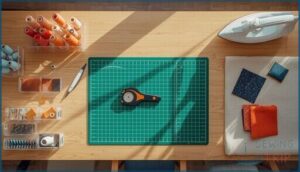
You’ll transform your quilting classroom with smart shared tools! Thread storage, cutting mats, and ironing tools boost every student’s success. Here’s what your workspace needs:
| Station Type | Essential Tools | Why It Matters |
|---|---|---|
| Cutting | 24×36″ mats, rotary cutters, rulers | Safe fabric prep for all |
| Pressing | Full-size iron, wool mats, spray bottles | Crisp seams without waiting |
| Sewing Notions | Seam rippers, clips, extra needles | Quick fixes keep class moving |
Smart quilting supplies mean less downtime!
Standardizing Machines for Easier Teaching
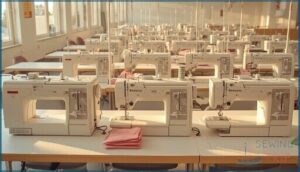
When every student sits down at the same classroom model, your teaching gets easier! Machine standardization creates classroom efficiency through uniform controls and consistent threading paths.
Teacher benefits stack up fast—one handout works for all stations, and you’ll spot issues across the room instantly.
Student consistency grows because everyone masters identical quilting machines and sewing equipment. That’s how quilter resources transform your teaching experience!
Maintenance and Supply Management
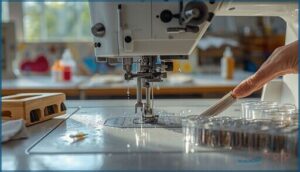
Smart upkeep keeps your quilting machines humming through every project! Maintenance scheduling turns chaos into confidence with these classroom essentials:
- Routine Cleaning after each bobbin change stops lint jams and tension troubles
- Machine Lubrication of hooks and moving parts prevents wear when classes sew daily
- Supply Inventory including bulk needles and bobbins means you’re never caught short
Customer support and nationwide repair service back your investment with a satisfaction guarantee!
Purchasing and Support Options for Schools
Purchasing quilting machines for your classroom doesn’t have to drain your budget or leave you scrambling for support! Many dealers offer special bundles designed specifically for schools, complete with discounts that stretch your dollars further.
Let’s explore the purchasing and support options that make building your quilting program easier than ever.
Dealer Bundles and Classroom Discounts
You’ll find amazing deals when you buy quilting machines in bulk! Many dealers offer Volume Discounts—order five or more classroom models and watch your per-machine cost drop sharply.
Bundle Pricing packages often combine longarm machines with frames and accessories at Kens Sewing Center and similar retailers.
Education Deals during seasonal Machine Sales and Promotions can save you over $1,000 per unit. These Classroom Savings make quality quilting instruction affordable!
Financing and Payment Plans
Spread the cost over time with flexible Financing Terms! Lease Options let you pay monthly for 24 to 60 months, while Zero Interest promotions cover shorter periods when you meet minimum purchase amounts. Fixed Rates around 3.99% keep budgets predictable, and Rental Fees offer short-term access during Quilting Machine Sales.
You’ll discover Sewing Equipment Financing that turns any Machine Sale into an affordable classroom investment!
Training and Ongoing Technical Support
You won’t face classroom challenges alone! Dealers bundle Teacher Training and Technical Support with each purchase, while User Manuals guide your daily operation.
Service Contracts cover Sewing Machine Repair and reduce Maintenance Costs, and programs like the Quilting with Confidence Tour bring Textile Art Education directly to you.
Your Classroom Model stays running smoothly with Sewing Services that keep students learning!
Upgrading or Expanding Machine Inventory
Once your classroom machines are up and running, you’ll want to plan for fleet expansion! Budget planning helps you add longarm sale units or upgrade older classroom models when enrollment grows.
Equipment optimization means tracking your inventory management needs through these steps:
- Review student counts per machine to spot capacity gaps
- Add one more longarm when higher-level classes expand
- Choose classroom discount bundles for multiple upgrades
- Keep similar brands for easier teaching demos
- Plan electrical space before ordering new quilting machines
Frequently Asked Questions (FAQs)
What is the best sewing machine for schools?
Schools thrive with Brother CS7000X or GX37 models. These classroom machines balance simple controls, 70 built-in stitches, and durability.
Student safety features and classroom discount pricing make them ideal for sewing and quilting community learning!
How much does a gammill quilting machine cost?
Investing in quality pays off! New Gammill hand-guided models start around $15,000, while computerized Statler systems begin near $43, Pre-loved options drop to $11,000, making professional longarm quilting surprisingly accessible.
How do classroom machines handle different fabric weights?
You adjust presser foot pressure, thread weight, and needle selection to match fabric thickness! Machines with strong motors handle heavy quilt sandwiches, while stitch regulation and proper tension control prevent puckering on lighter cottons.
Can students bring personal projects to classroom machines?
Many programs welcome personal quilts once you complete a basic skills sampler. You’ll follow project eligibility rules, safety guidelines, and scheduling limits—plus approved fabric requirements keep classroom machines running smoothly.
What insurance coverage do schools need for equipment?
You’d think a room full of quilting machines would be worry-free!
Actually, your district needs property insurance, equipment breakdown coverage, liability protection, and inland marine policies for asset protection when machines travel.
Are there group discounts for purchasing multiple machines?
Many dealers offer bulk discounts when you buy three or more sewing machines! Volume savings and group pricing help quilting technology reach more students.
Teacher discounts and multi-machine negotiation bring automated quilting within budget.
Conclusion
Your program won’t just survive—it’ll flourish when students work with machines that genuinely support their growth! The right quilting machines for classrooms create an environment where every learner discovers their potential.
They master techniques faster, build unshakable confidence, and develop skills that last a lifetime. Your investment in quality equipment isn’t simply purchasing tools—it’s opening doors to creativity and achievement that transform young makers into passionate artists.
- https://www.accomplishquilting.com/longarmtraininglongarmclasses.html
- https://www.kenssewingcenter.com/janome-8200qcp-horizon-special-edition-quilting-sewing-machine-2.html
- https://www.americanquilter.com/general-show-info/basic-sewing-supplies/
- https://www.foxcountryquilts.com/module/class/462753/longarm-quilting-101---3-days-of-classes
- https://www.confessionsofahomeschooler.com/blog/2022/10/ericas-favorite-sewing-and-quilting-supplies.html