This site is supported by our readers. We may earn a commission, at no cost to you, if you purchase through links.
You’re halfway through a hem, fabric gliding smoothly, when the machine grinds to a halt. Flipping open the bobbin case reveals a familiar nightmare: thread wadded into a tangled mess that looks like steel wool.
This frustrating scenario derails thousands of sewing projects daily, costing you time, wasted thread, and sometimes even needle damage. Most sewers blame their machine, but bobbin thread tangling stems from five preventable causes—incorrect bobbin insertion, uneven winding, tension imbalances, accumulated lint, and threading errors.
Master these fundamental techniques, and you’ll eliminate the rat’s nest lurking beneath your fabric, turning frustrating stops into uninterrupted stitching sessions that produce professional results every time.
Table Of Contents
Key Takeaways
- Bobbin thread tangling stems from five preventable causes: incorrect bobbin insertion, uneven or overfilled winding, tension imbalances between upper and bobbin threads, lint accumulation in the bobbin case, and threading errors like missing the take-up lever.
- Proper bobbin winding requires threading through the tension disc, winding at moderate speed to create smooth flat layers, and stopping at 80% capacity to prevent thread scraping and jamming during sewing.
- Maintaining tension balance demands matching thread weight to needle size (40-50 weight thread with 80/12 needle), adjusting upper tension when loops appear on either fabric side, and ensuring the presser foot stays up during threading so tension discs can grip properly.
- Regular maintenance prevents 80% of mid-stitch jams: clean the bobbin area and hook race every few projects with a soft brush, apply one drop of clear sewing machine oil to the hook race every 8-10 hours, and replace needles every 6-10 sewing hours to maintain proper hook timing.
Causes of Bobbin Thread Tangling
Bobbin thread tangling doesn’t just happen out of nowhere—there’s always a specific reason behind that frustrating bird’s nest under your fabric.
If you’re seeing loops or nests forming underneath, it’s usually a sign that your top thread tension is too tight and needs adjustment.
The good news is that once you identify the culprit, you can fix it and prevent it from happening again. Let’s break down the four main causes so you know exactly what to look for.
Incorrect Bobbin Placement and Direction
Bobbin alignment is non-negotiable. Most domestic machines require counterclockwise bobbin rotation in top-loading systems, clockwise in front-loading cases—reversing this direction lets thread bypass the tension spring, flooding the bobbin area with slack that forms bird’s nests beneath your fabric.
Incorrect bobbin rotation bypasses the tension spring, flooding the bobbin area with slack that creates bird’s nests under your fabric
Check the arrow on your bobbin case cover, then seat the bobbin firmly until it clicks, ensuring the thread routes correctly under the tension plate for controlled, balanced sewing mechanics.
For more tips on preventing problems, see these guidelines about correct bobbin insertion steps.
Poor Bobbin Winding Practices
Even clean placement won’t help if your bobbin winding is sloppy. Uneven winding creates lumps that jerk thread delivery, while bobbin overfilling makes layers scrape the bobbin case and jam mid-seam.
Skipping the bobbin winding tension disc or cranking winding speed to maximum produces soft, unreliable thread packs that tangle when tension adjustment can’t compensate.
Wind slowly, stop at eighty percent full, and always thread through your machine’s bobbin material tensioner before filling. For additional prevention, be sure to understand the impact of incorrect thread feeding methods on thread tension and tangling.
Threading and Tension Mistakes
Threading errors cause more tangling than any other single mistake. Missing the take-up lever during incorrect threading leaves upper thread slack that collapses into bird’s nests under your fabric.
Threading with the presser foot down prevents tension discs from gripping, guaranteeing bobbins thread chaos within three stitches. Tension imbalance between upper and bobbin thread creates loops underneath, while skipping even one guide produces erratic feed that triggers sudden knots around your bobbins case.
Lint, Debris, and Mechanical Wear
Lint accumulation from cotton threads builds fastest during heavy projects, while fleece generates twice the debris of synthetics. Thread fragmentation wedges between tension discs, reducing grip by 20 percent and disrupting thread tension adjustment.
Debris removal from your bobbin case and hook race prevents 80 percent of mid-stitch jams. Mechanical degradation creates worn edges allowing play that ruins bobbin thread control, making bobbin case cleaning and bobbin maintenance non-negotiable for solving bobbin thread tangling permanently.
If your machine still struggles after cleaning, check whether excessive upper thread tension is pulling the bobbin thread out of balance.
How to Properly Wind and Insert a Bobbin
A poorly wound or incorrectly inserted bobbin technique is one of the fastest ways to end up with thread snarls and frustrating jams.
The good news is that mastering proper bobbin technique only takes a few deliberate steps, and once you’ve got the process down, you’ll prevent most tangling issues before they start. Let’s walk through the essentials—from winding your bobbin evenly to making sure it’s oriented and seated correctly in your machine.
Steps for Even Bobbin Winding
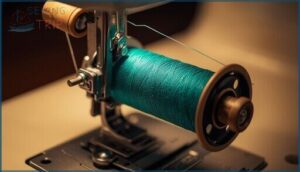
Your first few wraps set the tone for the entire bobbin thread. Start by threading through your spool pin, engaging the winding tension disc completely, then pass the thread through the bobbin hole from inside to top. Hold that tail firmly as you begin winding at moderate speed—no full throttle.
Watch the thread path setup carefully, letting it build smooth, flat layers that travel evenly from flange to flange. Stop when you’re 1–2 mm below the rim.
Ensuring Correct Bobbin Orientation
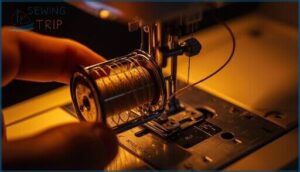
Orientation controls how your bobbin thread flows against the tension spring—flip it and tension collapses. Top loading systems usually unwind counterclockwise, while front loading bobbin cases demand clockwise feed for proper hook alignment.
Check your machine’s molded diagram near the needle plate:
- Hold top load bobbins like a lowercase “p” with thread hanging left
- Front load cases need thread entering nearest the tension slot
- Pull the tail—bobbin should rotate matching manufacturer arrows
- Drop the case by its thread; steady resistance confirms correct placement
- Lift bobbin thread through one handwheel rotation before seaming
Wrong orientation means loose nests under fabric, skipped stitches, and unbalanced lockstitches. Master this step and tension balance follows naturally.
Checking for Damaged or Incorrect Bobbins

A damaged bobbin silently sabotages your entire tension system. Inspect for cracks, chips, or scratches—rough edges snag thread and cause sudden nests. Warped bobbins wobble, feeding unevenly and creating birdnesting under fabric. Wrong sizing matters too: undersized bobbins backspin during stops, while oversized ones rub case walls.
| Inspection Point | Warning Sign | Result |
|---|---|---|
| Surface condition | Cracks, scratches, rust | Thread snags and breaks |
| Shape integrity | Warping, bending | Wobble creates uneven feed |
| Size match | Wrong class (15, 66, L, M) | Backspinning, tension issues |
| Material type | Plastic vs. metal mismatch | Inconsistent bobbin behavior |
| Movement test | Rocking, clicking sounds | Thread nesting, skipped stitches |
Test fit by pressing edges—correct bobbins sit flat without rocking. Pull thread gently; smooth unwinding confirms proper sizing. Machines calibrated for plastic bobbins reject metal ones with noisy stitching and overloaded hooks. Drop any bobbin that hits hard floors; hairline cracks develop invisibly. Keep fresh stock and replace suspect bobbins immediately instead of chasing phantom tension problems.
Adjusting Tension to Prevent Thread Tangling

Tension problems cause more bobbins tangles than almost anything else in your machine. When your upper thread and bobbin thread aren’t balanced, you’ll see loops, nests, or puckered fabric that tells you something’s off.
Let’s walk through how to adjust tension correctly and pair your thread with the right needle size.
Balancing Upper and Bobbin Thread Tension
Tension balance determines whether your stitches lock in the center of the fabric or pull to one side.
Start by adjusting your upper thread tension dial—increase it one number if bobbins thread shows on top, lower it if the upper thread pulls underneath.
Test each tension adjustment on scrap fabric using contrasting thread weights to clearly see stitch quality and fabric factors at play.
Using The Right Thread and Needle Combination
Thread weight matching starts at the needle size. Use a size 80/12 needle with common 40 to 50 weight thread for balanced fabric compatibility and smooth thread tension.
Thicker threads need larger needle eye design to prevent friction—a 30 weight thread requires at least 90/14. Proper needle selection based on thread fiber types and quality protects your bobbin thread from shredding, which stops tangles before they form through better thread management.
Essential Maintenance for Tangle-Free Sewing
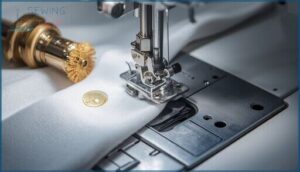
Your machine won’t stay tangle-free on luck alone. Even perfect threading and tension adjustments can’t overcome a machine that’s drowning in lint, running dry on oil, or struggling with a dull needle.
Here’s the maintenance routine that keeps your bobbin area running clean and smooth.
Cleaning The Bobbin Area and Tension Discs
Your machine won’t run clean on wishful thinking. Bobbin area cleaning and tension disc maintenance demand a systematic approach to remove lint, improve the thread path, and maintain proper sewing machine hygiene.
- Access the bobbin case carefully—unplug your machine, remove the needle and presser foot, then lift out the bobbin case while noting its orientation in the hook race.
- Use a soft sewing-machine brush for lint removal techniques—sweep the hook race, feed dogs, and bobbin case gently, rotating the handwheel to expose hidden debris without pushing lint deeper inside.
- Clean tension disks with fabric strips—raise the presser foot so discs open, then slide a narrow fleece or cotton strip between them to wipe away trapped fibers and residue that disrupt bobbin thread tension adjustment.
Clean every few projects or after sewing lint-heavy fabrics like fleece to prevent bird’s nests and thread tension problems.
Lubricating Moving Parts
Proper machine lubrication reduces friction and noise that can disrupt bobbin thread behavior. Apply one small drop of clear hook race oil to the hook race every eight to ten sewing hours—never use WD-40 or 3-in-1, which gum up moving parts and trigger thread tension adjustment problems.
Run the machine briefly without thread after oil application to spread it evenly, preventing pooling near the bobbin area.
Regular Needle Replacement
A dull or bent needle triggers most sudden bobbin tangles because worn tips miss the hook timing, letting thread pool underneath.
Replace your needle every six to ten sewing hours—more often with denim or after hitting a pin. Match needle size to thread weight and fabric type, push the shank fully up into the bar, and tighten firmly to maintain correct calibration and prevent thread breakage.
Advanced Tips to Avoid Bobbin Thread Issues
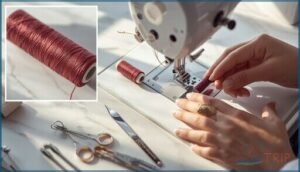
You’ve covered the basics, but a few sophisticated techniques can take your bobbin performance from adequate to impeccable.
These strategies address the subtle factors that separate occasional tangles from consistent, trouble-free sewing. Master these four practices and you’ll handle even the trickiest thread situations with confidence.
Managing Thread Tails at Startup
Your first few stitches set the tone for every seam, and simple startup tension techniques prevent most thread tangle prevention nightmares. Leave 3 to 4 inches of bobbin thread tail outside the case, hold both thread tails back for the first three stitches, and position your take‑up lever at its highest point before you begin. Effective thread management and bobbin thread control start before your foot touches the pedal.
- Gently pinch both top and bobbin thread tails toward the back while making the first stitches to prevent “bird nests” under the fabric
- Always turn your handwheel until the take‑up lever reaches the top position, ensuring needle thread management removes all slack from the upper thread path
- Use a scrap leader to stabilize thread tail length and secure tails before sewing on your actual project
- Keep bobbin winding smooth and even to eliminate unexpected tangles caused by crossed or bulging layers that feed erratically
- Sew at a moderate speed during startup so your machine’s hook can catch the bobbin thread cleanly without jerking tails into knots
Once those first few stitches lock properly, you’ve conquered the most vulnerable moment in thread tension control.
Choosing High-Quality Threads
Thread quality control starts on the spool. Z-twist polyester in 50 weight offers the most reliable bobbin thread performance because its surface finish reduces friction and its fiber types resist shredding.
Long-staple cotton sheds less lint than bargain brands, so your tension discs stay cleaner and tangling drops. Match thread weight to fabric weight, and store spools away from direct sunlight to prevent brittleness.
Maintaining Consistent Sewing Speed
Frequently, your sewing results depend on how well you manage Speed Control with the Foot Pedal. Match Fabric Movement to machine pace—don’t rush or stall.
Rhythm Training helps you avoid sudden surges that upset Tension Control. Use Machine Settings like speed limiters for steadiness.
Consistent Thread Management prevents bobbin thread nests, so prioritize Sewing Machine Maintenance for smooth, tangle-free operation.
Troubleshooting Persistent Tangling Problems
When Sewing Machine Troubleshooting reveals hidden causes, start with Thread Path Analysis and Tension Disc Cleaning to eliminate overlooked Threading Errors.
- Perform Bobbin Case Inspection for scratches or burrs
- Test different thread brands to rule out quality issues
- Check Hook Timing Adjustment on embroidery machines
- Schedule professional Sewing Machine Calibration for persistent problems
Proper Thread Management and Bobbin Thread control restore smooth stitching.
Frequently Asked Questions (FAQs)
Why does my thread keep getting stuck in the bobbin?
Your bobbin thread jams when it isn’t seated properly, wound unevenly, or when tension discs stay open.
Threading errors and lint buildup in the bobbin case also cause repeated tangles during stitching.
How to stop bobbin thread from bunching up?
First, rethread your machine completely and lower the presser foot so tension settings engage properly.
Check that your bobbin case is seated flat, the bobbin winds evenly, and you’re holding both thread tails during startup.
Can humidity affect bobbin thread performance?
Yes, humidity dramatically shifts bobbin thread performance. Cotton absorbs moisture and swells, tightening tension, while dry air causes static cling and brittleness in synthetics, disrupting smooth feeding and balance.
Do different fabrics require different bobbin tensions?
Like matching gears to terrain, different fabrics demand adjusted bobbin tension. Fabric thickness, thread weight, stretch factors, and fabric density each shift tension balance—bobbin thread, bobbin case settings, and thread quality must adapt to fabric conditions for proper tension settings.
Should I use pre-wound or self-wound bobbins?
Choose based on your project. Pre-wound bobbins deliver high-quality thread and winding speed but cost more.
While self-wound options save money yet require careful bobbin thread management to prevent thread tangling in your bobbin case.
How often should I replace my bobbin case?
Bobbin case wear sneaks up like rust on hinges. Replace yours when you feel burrs, see scratches, or notice wobble inside the hook—usually after years of occasional use or sooner with daily stitching and poor maintenance schedules.
Can thread age cause bobbin tangling issues?
Absolutely. Thread degradation from age weakens fibers, causing frequent breakage and lint accumulation in your bobbin area.
Poor storage conditions accelerate deterioration, leading to tension instability, thread bunching, and those frustrating tangles underneath your fabric.
Conclusion
Think of your sewing machine as a finely-tuned orchestra—when one instrument falters, the entire performance suffers. That tangled bobbin thread represents discord you’ve now learned to silence.
Apply proper winding techniques, maintain balanced tension, and keep the bobbin area spotless. These fundamentals transform chaos into harmony.
You’ve mastered how to prevent thread tangling in bobbin, eliminating frustrating interruptions and reclaiming the smooth, professional stitching every project deserves. Your machine will reward consistency with faultless performance.
- https://www.ifixit.com/Answers/View/452395/Thread+gets+tangled+inside+sewing+machine
- https://www.superiorthreads.com/education/eliminating-bird-nests
- https://www.sewingpartsonline.com/blogs/education/fix-single-unit-tension-assembly
- https://www.magnetichoop.com/blogs/news/how-to-fix-tangled-bobbin-thread-step-by-step-solutions-for-smooth-sewing
- https://www.hooptalent.com/blogs/news/why-is-my-bobbin-thread-looping-underneath-expert-solutions-prevention-guide