This site is supported by our readers. We may earn a commission, at no cost to you, if you purchase through links.
Most sewers pick fabric by color or price—and then spend hours fighting a seam that frays like a frayed nerve or a dart that refuses to hold its shape. The culprit is almost always the weave. Beneath every textile’s surface lies an interlacing architecture of warp and weft threads; that structure governs everything from how sharply a pleat holds to which needle size you reach for.
A plain weave breathes differently than a satin float, and a twill’s diagonal rib manages stress in ways a balanced checkerboard can’t. Learning to recognize fabric weave type turns guesswork into informed decision-making—and transforms your material choices from hopeful to deliberate.
Table Of Contents
Key Takeaways
- Weave structure — not color or price — determines how a fabric drapes, frays, shrinks, and holds its shape under a needle.
- You can identify any weave by sight and touch: plain weave shows a balanced grid, twill announces itself with diagonal ribs, and satin glows with long, slippery floats.
- Thread count, magnification, and backlighting are your core diagnostic tools — count warp and weft threads separately across multiple spots for reliable density analysis.
- Matching weave to project requirements is the real skill: plain weaves breathe best for summer garments, twills resist abrasion for workwear, and satin belongs on formal pieces where drape outweighs durability.
What is Fabric Weave Type?
Fabric weave type refers to the interlacing pattern of warp and weft threads that determines how a fabric looks, feels, and performs. It’s one of the first things a textile engineer checks — because the weave structure shapes everything from durability to drape.
If you want to dig deeper, this breakdown of types of fabric weave structures makes it easy to see how each pattern affects real-world fabric behavior.
Here’s what you need to know about the core concepts before identifying weaves on your own.
Definition of Fabric Weave
Fabric weave is the foundation of every textile you’ll work with — it’s the method by which warp and weft threads interlace to create a stable, functional surface.
That yarn interlacing pattern, called a weave repeat, directly shapes fabric density, hand feel, and structural balance.
Understanding weave structure means you can read any fabric’s properties at a glance, from thread count to drape.
Importance in Sewing and Projects
Once you understand fabric structure, everything else in a project clicks into place. Knowing your types of fabric weaves lets you predict shrinkage, choose fitting sewing techniques, and assess project suitability before you cut a single thread.
Fabric properties and characteristics shaped by weaving techniques directly affect:
- How darts and pleats hold their shape
- Whether seams fray under stress
- How garments drape and breathe
- Which needle size and stitch length to use
- How accurately patterns hang on grain
For an in-depth overview of the different types of fabric weaves, understanding their distinct qualities can greatly improve your sewing decisions.
Common Weave Structures
Three weave patterns form the foundation of nearly all textiles you’ll encounter: plain weave, twill weave, and satin weave. Each relies on different fabric weaving techniques that directly control fabric density, fabric stability, and drape.
Your thread count and yarn types determine how tight or open that structure becomes—and understanding these types of fabric weaves shapes every decision downstream. The differences between these fundamental fabric weave structures explained can help you better identify and work with various materials.
Essential Tools to Identify Weave Types
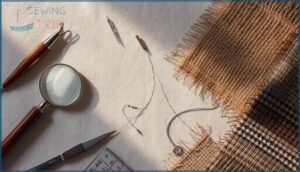
Before you can identify a weave, you need the right tools in your hands. Nothing fancy — just a few practical items that let you see what’s really going on at the thread level.
A good starting point is knowing how to keep your threads in order — managing sewing thread tangles before you even begin saves a lot of frustration.
Here’s what you’ll want to have ready.
Using Magnification and Light
Your sharpest ally in fabric inspection is a good linen tester — a 5x to 10x magnifier that frames a precise square of cloth and holds focus steady without constant adjustment. Pair it with strong direct light, and suddenly the weave structure reveals itself clearly.
- Magnifier selection matters: a foldable pick glass keeps focal distance fixed for consistent weave analysis
- Light reflection exposes satin: long floats shine under direct lamp illumination, separating them from duller textile weave types
- Backlighting clarifies dense fabrics: a phone flashlight behind dark cloth glows through gaps, mapping the interlacing grid
- LED-integrated magnifiers eliminate harsh shadows, making weaving techniques like twill diagonals and plain weave checkers immediately distinguishable
Counting Warp and Weft Threads
Thread count methods are your compass here — once you know warp runs lengthwise and weft crosses it, weave density analysis becomes straightforward. Mark one inch, count ends, then picks separately.
| Measurement | What to Count |
|---|---|
| Ends per inch | Warp threads across width |
| Picks per inch | Weft threads along length |
| Combined total | Full thread count |
| Construction format | e.g., 128×68 per inch |
Accurate fabric thread measurement means repeating counts across several spots and averaging them, since yarn counting techniques reveal local density shifts that a single reading won’t catch.
Examining Fabric Texture and Surface
Your fingertips are surprisingly reliable instruments. Running your hand across the fabric surface reveals fabric smoothness, surface roughness, and weave structure in seconds. Plain weave cotton feels moderately rough due to frequent interlacings, while satin’s long floats create an almost slippery texture.
This tactile texture analysis, combined with visual inspection of weave patterns and yarn quality, gives you a fuller read of fabric properties than thread counts alone.
Step-by-Step Guide to Recognizing Weaves
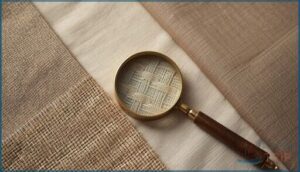
Now that you’ve got your tools ready, it’s time to put them to work. Recognizing a weave comes down to knowing exactly what to look for — and once you know, you can’t unsee it.
Here’s how to read each major weave type with confidence.
Identifying Plain Weave Patterns
Plain weave is weaving at its most honest — every weft thread passes alternately over and under each warp thread, creating a uniform yarn intersection with no hidden complexity.
For fabric texture identification and weave pattern analysis, hold your sample to light: you’ll see an even checkerboard grid. Equal warp and weft visibility confirms balanced plain weave types and straightforward fabric construction.
Spotting Twill Weave Diagonals
Twill fabric doesn’t hide — its diagonal patterns practically announce themselves. Run your finger across denim and you’ll feel those angled ribs immediately; that’s twill weave doing its job.
Look for these tell-tale signs:
- Diagonal lines running at weave angles between 30–75 degrees
- Slightly ridged fabric texture along the diagonal
- Consistent, uninterrupted thread count repeats across the textile weave
Distinguishing Satin Weave Surfaces
Satin fabric practically glows — that’s your first clue. Unlike other textile weave types, satin weave relies on long yarn floats that skip over at least four threads, minimizing interlacing points and maximizing light reflection.
Run your fingers across the surface smoothness; it’ll feel almost slippery. The face of this fabric weave stays consistently lustrous, while the back turns noticeably dull — a dead giveaway of this weave structure.
Recognizing Advanced Weaves (Pile, Jacquard, Etc.)
Complex weaves demand a more hands-on approach. Pile Weave reveals raised loops or cut tufts when you run your palm across its surface. Jacquard Patterns show a mirrored design on the reverse side.
Dobby Weave features small geometric reliefs, while Double Cloth peels apart at the edges. Leno Weave displays a distinctive open mesh, and Crêpe Texture puckers noticeably under your fingers.
Key Characteristics of Each Weave Type
Once you can spot a weave by sight, the next step is understanding what that weave actually does.
Each type carries its own set of traits that shape how a fabric looks, feels, and holds up over time. Here’s a closer look at the key characteristics you need to know.
Visual and Textural Clues
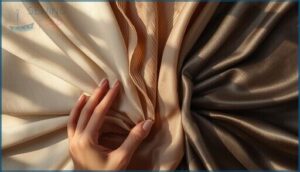
Each weave structure tells its story through surface direction, shine, and touch. Plain weave shows a balanced grid with a matte finish; twill’s diagonal ribs catch light differently than flat ground.
Texture analysis reveals fabric properties quickly — satin’s long floats feel almost slippery, while yarn thickness variations in woven fabrics expose weave patterns instantly. Trust your eyes and fingertips equally.
Durability, Drape, and Breathability Differences
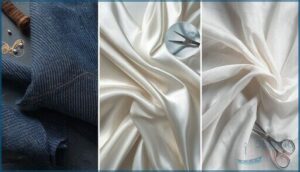
Beyond surface feel, weave structure drives fabric strength, drape quality, and breathability in measurable ways. Twill’s weave density gives it enhanced yarn durability and abrasion resistance — denim routinely exceeds 20,000 Martindale cycles. Satin offers the best drape but snags easily. For breathability tests, plain weaves win, often allowing airflow above 150 L/m²/s.
Twill resists abrasion, satin drapes beautifully, but plain weave breathes best
These fabric properties matter before you cut a single seam.
Typical Uses for Each Weave
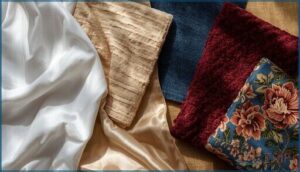
Once you understand fabric properties and weave structure, matching material uses to your project becomes instinctive. Every weave structure has a natural home.
- Plain weave: shirts, bed sheets, canvas bags — where durability meets easy care
- Twill weave: denim jeans, gabardine blazers, upholstery — built for high-friction garment construction
- Satin weave: bridal gowns, event décor, lingerie — where drape and light reflection matter
- Pile weave: towels, velvet upholstery — texture-forward textile choices
- Jacquard: decorative woven fabric types demanding precise pattern control
Tips for Selecting Fabrics by Weave
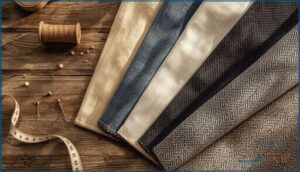
Knowing your weave types is only half the battle — the real skill is matching the right fabric to the job at hand. Whether you’re sewing a structured jacket or picking curtain fabric, the weave you choose shapes how the final piece looks, feels, and holds up over time.
Here are the key things to keep in mind when selecting fabric by weave.
Matching Weave to Project Requirements
Every project tells you what it needs — you just have to listen. Matching your fabric selection to project requirements starts with honest weave analysis during project planning.
| Project Type | Best Weave Structure | Why It Works |
|---|---|---|
| Work aprons/bags | Twill or ripstop | Resists abrasion and tearing |
| Summer garments | Plain weave (cotton/linen) | Breathable fabric properties |
| Formal wear | Satin weave | Lustrous, drapeable woven fabric types |
| Upholstery | Jacquard or canvas | Dense textile weave types resist sagging |
| Kids’ uniforms | Stable plain or twill | Manages frequent washing without distortion |
Smart material choices and textile matching simply mean letting function drive the decision.
Choosing Weaves for Apparel Vs. Home Decor
Apparel design and upholstery and home furnishing don’t just differ in style — they demand entirely different textile properties. For apparel production, you’ll want flexible, breathable fabric weave structures like plain or twill that move with the body.
Decor materials, meanwhile, must meet 15,000–30,000 double-rub abrasion standards. This weave comparison shapes your fabric selection from the start of textile manufacturing.
Weave Considerations for Sewing Beginners
Starting with the right fabric weave can make or break your early projects. For beginners, fabric stability matters more than aesthetics.
Weave selection shapes everything.
- Plain weave offers balanced warp yarns and weft yarns that resist distortion — ideal for building seam accuracy.
- Twill weave adds fabric durability for structured garments once you’re comfortable.
- Avoid slippery satin until you’ve conquered basic sewing challenges.
Frequently Asked Questions (FAQs)
How to identify fabric weave?
Hold a swatch to light and look for floating threads or diagonal lines. Count warp and weft intersections to confirm the weave pattern — plain, twill, or satin reveals itself fast.
How do I figure out what kind of fabric I have?
Start with fabric analysis basics: feel the surface, check both sides, and look for weave patterns.
Thread counting and fiber identification help with fabric classification, distinguishing plain weave, twill weave, or satin weave structures quickly.
How to identify woven fabric?
The devil is in the details.” To identify woven fabrics, examine the yarn structure under magnification — you’ll see a clear crisscross of warp and weft threads, the signature of woven fabric construction.
Can weave type affect fabric shrinkage after washing?
Yes — weave type directly affects fabric shrinkage. Plain weave shrinks least due to tight interlacement, twill weave shrinks more, and satin weave shrinks most because fewer intersections allow yarns to draw in during washing.
How does weave structure influence fabric printing results?
Weave structure directly shapes print sharpness, ink absorption, color depth, and print durability.
Plain weaves offer stability; satin delivers brilliance; twill risks fabric distortion.
Your chosen fabric weave defines every printed result.
Which weaves work best for stretchy garment patterns?
For stretchy garment patterns, stretch twill and cotton sateen deliver the best garment fit. Their fabric elasticity, driven by elastane in weft yarns, ensures strong weave recovery — keeping slim trousers and fitted skirts comfortable all day.
Does weave type impact how fabric handles heat?
Think of weave structure as your fabric’s thermal blueprint. Open plain weaves boost fabric breathability and heat transfer, while tight twills trap air for thermal insulation. Longer yarn floats in satin boost radiant protection markedly.
How do blended fibers change weave identification methods?
Fiber blending complicates weave identification because mixed yarn properties blur visual and tactile clues.
Rely on microscopic analysis and careful visual inspection to separate fiber content from weave structure before drawing conclusions.
Conclusion
What separates a confident sewer from a frustrated one? The ability to recognize fabric weave type before the first cut is made.
That diagonal rib, that floating satin thread, that tight plain grid—each tells you exactly how the fabric will behave under tension, needle, and wear.
You don’t need guesswork anymore; you have a framework. Read the weave, trust what it tells you, and let that knowledge drive every material decision forward.
- https://textilelearner.net/sateen-weave-features-classification-uses/
- https://fashion2apparel.com/principles-of-fashion-design-every-designer-should-know/
- https://www.textileschool.com/
- https://www.britannica.com/technology/satin
- https://www.iwantfabric.com/blog/post/a-guide-to-fabric-weaves-types-uses-and-more