This site is supported by our readers. We may earn a commission, at no cost to you, if you purchase through links.
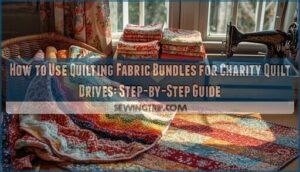
Quilters donated over 1.8 million quilts to families in need last year—and the finished fastest almost always had one thing in common. They started with fabric bundles instead of hunting down individual prints.
A charm pack or jelly roll eliminates the color-matching guesswork that slows most quilters down, which means more finished quilts reach more people who need them. For charity drives especially, that efficiency isn’t a shortcut—it’s the whole strategy. Quilting fabric bundles for charity quilt drives work so well because they’re designed to play nicely together from the start, letting you skip the planning phase and get straight to the sewing.
Table Of Contents
Key Takeaways
- Fabric bundles like charm packs and jelly rolls cut 2–4 hours of prep per quilt and cost 15–25% less than buying prints separately, making them the smartest starting point for any charity drive.
- Always choose 100% cotton with OEKO‑TEX or GOTS certification, prewash everything, and stick to gender‑neutral, high‑contrast prints so your quilt is safe, durable, and welcome anywhere.
- Trusted organizations like Project Linus (500+ U.S. chapters), Quilts of Valor (427,000+ veteran quilts), and Quilts Beyond Borders (34,000 quilts to 30 countries) are ready to receive your donations—just confirm their specific packaging and yardage requirements first.
- Sorting fabrics by color and size, labeling bundles with fiber content and care instructions, and using strip‑cutting techniques can reduce fabric waste by up to 20–30%, stretching every donation further.
What Are Quilting Fabric Bundles?
If you’ve ever stood in a fabric shop staring at all those neatly bundled cuts, you already know the appeal. Fabric bundles take the guesswork out of coordinating colors and getting enough material to actually finish a quilt.
If you’re planning your first quilt, knowing how many jelly rolls you’ll need before you shop saves a lot of second-guessing at the cutting table.
Here’s a look at the main types you’ll come across.
Types of Fabric Bundles for Quilting
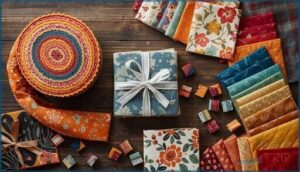
Several precut bundles make charity quilting faster and more accessible. Each type fulfills a different purpose:
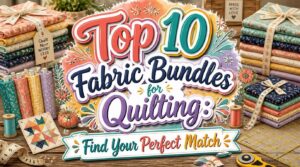
- Charm Pack Uses – 42 squares of 5" cotton, ideal for simple one-patch layouts
- Layer Cake Patterns – 42 larger 10" squares, perfect for bold blocks
- Jelly Roll Strips – 40 strips of 2.5" x 42", great for speedy rail fence designs
- Mini Charm Details & Jolly Bar Blocks – smaller cuts for intricate or rectangle-based quilts
Using pre‑cut fabric bundles save time is essential for charity projects.
Fat Quarters, Precuts, and Yardage Explained
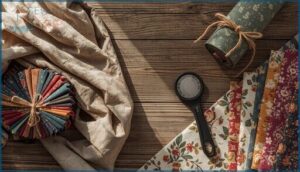
Beyond precuts, fat quarters, and yardage round out your quilting supplies and materials toolkit.
A fat quarter — 18 by 22 inches — gives you variety without buying full yardage, making color coordination easier across charity quilting projects.
Yardage works best for backings and borders. Mixing all three balances cost efficiency with flexibility, so your quilt kits come together without waste or guesswork.
Benefits of Using Bundles for Charity Quilts
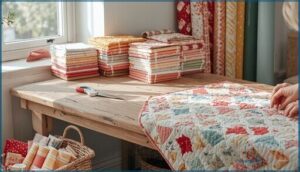
That mix of fat quarters and yardage sets you up perfectly for bundles — and bundles are where charity quilting really clicks into place.
Using quilt bundles for charity quilts pays off in three big ways:
- Time Savings — Precuts eliminate 2–4 hours of cutting per quilt.
- Cost Efficiency — Bundles run 15–25% cheaper than buying prints separately.
- Waste Reduction — Groups report 20–30% less fabric waste.
Color coordination comes built‑in, and volunteer accessibility jumps — even beginners can start sewing for charity immediately. Many charities such as Project Linus UK welcome quilt donations.
Choosing Fabrics for Charity Quilt Drives
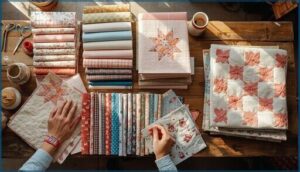
Not every fabric is the right fit for a charity quilt — and that’s worth thinking about before you start cutting.
Some fabrics pair much better with simpler constructions, so browsing beginner-friendly quilt patterns first can help you match your materials to a design that actually works.
The recipient’s comfort, safety, and practical needs should guide your choices from the start.
Here’s what to keep in mind when selecting fabrics for your donation quilt.
Recommended Fabric Types and Quality
Did you know fabric bundles with pure cotton and balanced thread count standards are the backbone of charity quilts?
For durable, easy‑care results, stick with plain weave and 140–160 GSM weights.
Sustainable quilting practices start here—using eco‑friendly materials prevents waste and ensures your fabric stash meets donation guidelines.
Prewashing reduces shrinkage, so your quilt stays true through many washes.
Child-safe, Hypoallergenic, and Washable Materials
Every quilt you donate — whether for Quilts for Kids or NICU quilts — touches a child’s skin directly. That’s why fabric safety matters so much.
Every quilt donated to a child carries a responsibility — fabric safety is not optional
Look for OEKO‑TEX Certification or GOTS Organic Cotton labels, which confirm harmful chemicals are absent. Bamboo fabric benefits include natural hypoallergenic properties and easy machine washing.
Follow prewashing protocols and prioritize cotton batting safety to keep your handmade donations for kids genuinely gentle.
Selecting Colors and Patterns for Recipients
When you’re picking fabric from your stash for charity quilting projects, lean into age‑appropriate palettes and gender‑neutral motifs.
Quilt patterns for charity shine brightest with contrast balance and seasonal themes.
Keep cultural sensitivity in mind. Here’s what recipients love:
- Bright, playful colors
- Unisex prints
- Clear value contrast
- Nature or animal themes
- Inclusive, cheerful designs
Where to Source Fabric Bundles for Charity
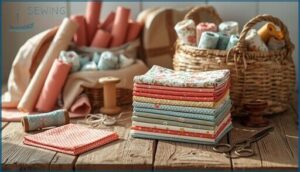
Finding fabric for charity quilts doesn’t have to strain your budget or your patience.
You’ve got more options than you might think, from clicking "add to cart" online to simply asking your local quilt guild what they’ve sitting in storage.
Here are the best ways to source fabric bundles for your next charity drive.
Purchasing From Fabric Stores and Online Retailers
Online retailers make fabric sourcing for charity quilting projects genuinely easy. Fat Quarter Shop offers 990-plus bundles, with free shipping on US orders over $80 — a simple bulk discount worth planning around.
Missouri Star and Shabby Fabrics are equally reliable for coordinated sets. Watch for loyalty programs and clearance sections to stretch your fabric stash further, keeping quilt donations affordable and consistent.
Donating or Collecting Unused Fabric
Your own fabric stash might be hiding a quiet goldmine. Unused yardage, clean fat quarters, or leftover cuts from past charity quilting projects can go straight to community quilting initiatives instead of a landfill.
Run fabric quality checks first — no odors, stains, or damage. Seasonal donation drives run by local guilds welcome sorted textile donations year-round, making volunteer engagement strategies and community outreach feel genuinely easy.
Partnering With Local Quilting Shops and Guilds
Did you know Shop Guild Collaboration can activate Mutual Discount Programs and Volunteer Skill Exchange for your charity quilting? Local quilt shops often host Shared Event Planning, provide supplies, and promote Community Quilting Initiatives.
Joint Promotion Strategies boost Quilt Charity visibility, while Charity Organization Partnerships and Volunteer Engagement Strategies help you connect, save on fabric, and multiply your impact through Quilting for Social Good.
Organizing and Preparing Bundles for Donation
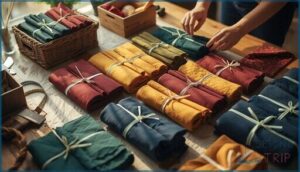
Once your fabric is gathered, a little prep work goes a long way before it ever reaches a quilter’s hands. Good organization means volunteers spend less time sorting and more time sewing.
Here’s how to get your bundles ready to use from the moment they arrive.
Sorting and Packaging Fabric for Easy Use
Well-sorted fabric is a gift in itself. Start with color coding — warm tones in one pile, cool tones in another.
Then apply size segmentation: large chunks over 10 inches, medium pieces down to 5, and strings separate from crumbs. Use clear, stackable protective containers so volunteers can grab what they need fast. Efficient stacking keeps your fabric stash organized and donation-ready.
Labeling and Including Fabric Details
Once your fabric stash is sorted, tagging content matters. Use Fiber Content Labels for fabric selection—100% cotton is best for quilt donations. Donor Info Labels help charities track fabric donation guidelines. Add Care Instruction Tags for washing tips. Bundle Quantity Stickers show exact counts.
These details make Quilt Donations smoother for volunteers and make sure recipients get safe, easy-to-use materials.
Tips for Maximizing Fabric Yield and Reducing Waste
Good labeling sets you up for success — now make every inch count.
Start with strip cutting: slice fabric into 2.5-inch strips first, then sub‑cut from there, reducing edge waste by up to 20 percent.
Smart layout planning and scrap sorting keep remnants useful, not trashed.
Selvage reuse and zero waste patterns take sustainable quilting further, honoring both your fabric donation guidelines and the recipients waiting on the other end.
Donating Fabric Bundles to Charity Quilt Drives
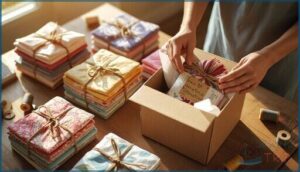
Once your bundles are sorted and ready, it’s time to connect them with the right charity.
There are a few ways to make sure your fabric finds its way to quilters who need it most.
Here’s what you should know before sending off your donation.
Finding Reputable Charity Quilt Organizations
Not all charity organizations are created equal, so doing a little homework pays off. Look for verified nonprofit groups with strong charity ratings and clear impact metrics — like Project Linus, which earned a 97% score on Charity Navigator. Great starting points include:
- Project Linus — 500+ local chapter networks across the U.S.
- Quilts of Valor — 427,000+ quilts donated to veterans
- Binky Patrol — verified 501(c)(3) focused on children in crisis
- Quilts Beyond Borders — distributed nearly 34,000 quilts to 30 countries
Donation Guidelines and Requirements
You’ve found a nonprofit—now, double-check their donation rules. Most ask for Odor‑Free Materials, recent fabrics (no older than 15 years), and Minimum Yardage (at least 2 yards for backing). Accepted Fiber Types are usually 100% cotton or flannel.
Seal bundles airtight and label them clearly. Packaging Standards helps your Charity Quilts reach recipients safely and keeps Volunteer Quilting running smoothly.
| Fabric Age Limits | Odor‑Free Materials | Minimum Yardage |
|---|
- https://thecolorfulfabriholic.blogspot.com/p/free-charity-quilt-patterns.html
- https://undergroundcrafter.com/2022/06/15/ultimate-guide-to-sewing-for-charity-for-beginners/
- https://scrapfabriclove.com/sewing-for-charity/
- https://www.diaryofaquilter.com/do-good-light-the-world/
- https://alicecaroline.com/product-category/liberty-fabric/bundles/quilt-sos-packs/