This site is supported by our readers. We may earn a commission, at no cost to you, if you purchase through links.
One sewing book can turn a class period into smooth progress. Another can leave students stuck on step three with fabric scraps everywhere. In a classroom, that difference matters fast.
You need diagrams, projects that fit the clock, and patterns that make sense when twenty hands shoot up at once.
The best sewing pattern books for classroom use do more than teach stitches. They help you pace lessons, stretch budgets, and keep beginners moving without losing your experienced students.
A few stand out for drafting, a few shine for quick projects, and a couple deserve space on your cutting table.
Table Of Contents
Key Takeaways
- The best classroom sewing books do more than teach stitches because they use clear visuals, simple steps, and student-friendly patterns to keep a whole class moving.
- Each recommended book fits a different teaching goal, with some best for beginner drafting, some for quick low-waste projects, and others for advanced fit or stretch-fabric work.
- When choosing a book for class, you should focus on project length, pattern clarity, skill progression, and material costs, so lessons stay manageable and affordable.
- The strongest classroom resources are the ones that match your students’ age, fit your class time, support your curriculum, and can be reused easily across multiple lessons.
5 Sewing Pattern Books for Classrooms
The right sewing book can make class time smoother and a lot more fun.
Using one of these best sewing books for kids helps lessons follow clear, confidence-building steps instead of random projects.
In the next section, you’ll see classroom-friendly picks that each support a different teaching goal. Use this list to spot the books that best fit your students, your schedule, and your lesson plans.
1. Pattern Making Primer Sewing Guide
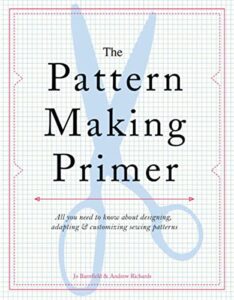
Because many students need a gentle start, Pattern Making Primer Sewing Guide works well in class.
You get clear help with body measurements, grain lines, seam allowances, and basic slopers for bodices and skirts.
The diagrams and photos make each step easier to teach at a glance.
I especially like its practice path, which moves from simple drafting to fit adjustments and muslin checks.
It suits beginners best, though more experienced students may want deeper work in draping and design.
| Best For | Beginners, students, and hobby sewists who want a clear, visual introduction to pattern making, basic fit adjustments, and simple garment drafting. |
|---|---|
| Instructions | Step-by-step drafting |
| Visual Aids | Diagrams and photos |
| Pattern Content | Garment drafting guidance |
| Skill Level | Beginner to experienced |
| Garment Focus | Multiple garment types |
| Learning Use | Reference and self-study |
| Additional Features |
|
- Clear step-by-step instruction on measurements, drafting, slopers, and fit adjustments makes it easy to follow.
- Diagrams, photos, and examples help visual learners and make it useful in classrooms or self-study.
- Covers several garment types and works well as a handy reference for basic pattern work and alterations.
- Best suited to fundamentals, so advanced sewists may want more depth in draping and complex design work.
- Limited focus on adapting commercial patterns, which some readers may find disappointing.
- Sold used in good condition, so the copy may show some minor wear.
2. BurdaStyle Sewing Handbook Patterns Projects
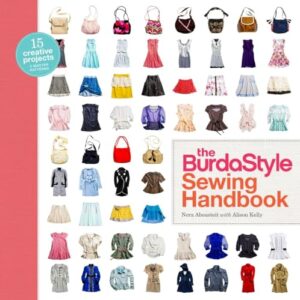
Once your students feel steady with basic drafting, BurdaStyle Sewing Handbook Patterns Projects gives them a great next step.
It covers sizes US 2 to US 22, so you’re not leaving anyone out. The illustrated diagrams show seam allowances and finishing techniques clearly, which makes group teaching so much smoother.
Projects include tops, skirts, dresses, and outerwear — plenty of variety for a full semester. Quick-start options even let beginners finish a wearable piece within a week!
| Best For | Beginner sewists, teens, and early intermediate makers who want a solid, all-in-one guide to garment sewing, pattern customization, and building confidence with a few core wardrobe pieces. |
|---|---|
| Instructions | Step-by-step sewing |
| Visual Aids | Illustrations and photos |
| Pattern Content | 5 patterns included |
| Skill Level | Beginner to intermediate |
| Garment Focus | Clothing and bag |
| Learning Use | Teen teaching guide |
| Additional Features |
|
- Includes 5 adaptable garment patterns and 15 step-by-step projects, making it easy to learn through hands-on sewing.
- Covers key beginner topics like sewing machine basics, fabric selection, pattern reading, studio setup, and fit.
- Offers useful inspiration through design variations, clear visuals, and real-world examples from the sewing community.
- Pattern sizing only goes up to US size 14, so it may not work well for everyone without extra adjustments.
- Seam allowances are not included on the patterns, which adds an extra step for every project.
- The tracing-based, European-style pattern format can feel slow or unfamiliar, especially for newer U.S. sewists.
3. One Yard Sewing Projects Book
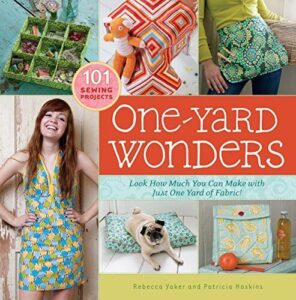
After garment projects, One Yard Sewing Projects Book feels like a smart reset for busy classrooms. You get 101 projects, each planned for one yard or less, so prep stays simple and waste stays low.
The spiral-bound hardback lies flat on the table, which helps during demos.
Full-size silk-paper patterns and clear stitch guides support beginners, while bags, baby items, organizers, and pet accessories keep mixed groups interested. It’s especially handy when you need quick wins in class each week.
| Best For | Busy classrooms, beginner-to-intermediate sewing groups, and crafters who want quick, practical projects that use one yard of fabric or less. |
|---|---|
| Instructions | Step-by-step projects |
| Visual Aids | Illustrations and guides |
| Pattern Content | Full-size paper patterns |
| Skill Level | Beginner to intermediate |
| Garment Focus | Clothing and accessories |
| Learning Use | Skill-building projects |
| Additional Features |
|
- Includes 101 one-yard projects, which makes lesson prep simple and helps reduce fabric waste.
- The spiral-bound hardback stays open on the table, making it easier to use during demos and class time.
- Comes with full-size silk-paper patterns and beginner-friendly stitch guides, so it works well for teaching core sewing skills.
- Some directions may feel unclear or confusing, so teachers or students might need to look up extra help.
- Certain garment sizes may need more than one yard, which can limit how strictly the book fits the one-yard promise.
- The silk-paper patterns are delicate, so they may need careful handling in a classroom setting.
4. Practical Pattern Making Guide
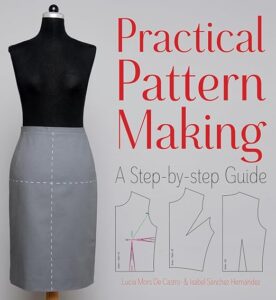
If you’re ready to move from quick projects into true pattern skills, Practical Pattern Making Guide is a strong classroom step up. It walks you through body measurements, darts, pleats, grainlines, and basic blocks with photos, diagrams, worksheets, and 40 scaled templates.
To practice those core techniques without getting overwhelmed, pair it with beginner-friendly home decor sewing projects for fast, confidence-building results.
That makes it useful for teaching fit, drafting, and pattern checks in a clear order.
Beginners may need extra support with some flat-drafting sketches, but for fashion classes, it works like a sturdy studio reference on hand daily.
| Best For | Fashion students, independent designers, and serious hobbyist sewers who want a structured reference for learning drafting, fit, and custom garment design beyond beginner-level projects. |
|---|---|
| Instructions | Step-by-step tutorials |
| Visual Aids | Photos and diagrams |
| Pattern Content | 40 scaled templates |
| Skill Level | Intermediate friendly |
| Garment Focus | Skirts to dresses |
| Learning Use | Fashion student reference |
| Additional Features |
|
- Step-by-step lessons cover core pattern-making skills like measurements, darts, pleats, grainlines, and basic drafting in a practical order.
- Includes helpful learning tools such as 13 body-measurement photos, blank worksheets, and 40 scaled templates for practice and reference.
- Works well as an ongoing studio guide for fitting, pattern adjustments, and exploring more advanced design ideas.
- Some flat-drafting sketches may feel confusing for true beginners and may require outside support or prior basics.
- A few of the included styles lean couture or experimental, so they may not suit everyday sewing goals.
- It does not include a complete bodice sloper, which may make it feel less complete for some users.
5. Pattern Magic Stretch Fabrics Book
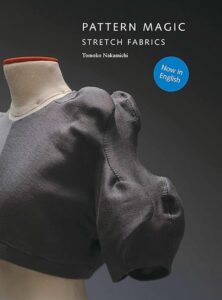
A creative pick for higher-level classes, Pattern Magic Stretch Fabrics Book pushes you past basic sewing and into bold design play. You get clear diagrams, photos, and half-scale patterns that show drape, twists, gathers, and other sculptural effects in stretch fabrics.
It works best when your class already knows basic pattern making, since the ideas are more couture than beginner.
Still, if you want lessons on knit behavior, fabric recovery, and inventive shaping, this book opens exciting doors for teachers.
| Best For | Fashion design students, dressmakers, and professionals who already know basic pattern making and want to explore advanced, sculptural work with stretch fabrics. |
|---|---|
| Instructions | Step-by-step cutting |
| Visual Aids | Drawings and photographs |
| Pattern Content | Half-scale patterns |
| Skill Level | Advanced friendly |
| Garment Focus | Stretch garments |
| Learning Use | Advanced design reference |
| Additional Features |
|
- Clear diagrams, photos, and step-by-step projects make complex stretch-fabric techniques easier to follow.
- Covers useful core skills like slopers, measurements, scaling, and creative 3-D shaping methods.
- Includes half-scale blocks and ready-to-use patterns that can spark original couture, costume, or runway ideas.
- Not beginner-friendly, since it assumes a solid understanding of basic pattern making.
- The patterns are shown at half scale, so extra work is needed to turn them into full-size garments.
- The used copy may show wear, and the book’s highly experimental designs may need adapting for everyday wear.
Classroom Features to Compare
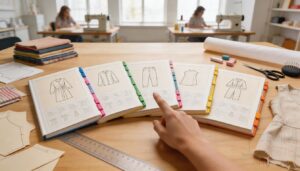
When you pick a sewing pattern book for class, the teaching details matter just as much as the projects.
Some books are easier to prep, easier to teach, and easier for students to follow. Here are the classroom features to look at before you choose one.
Beginner-friendly Instructions and Visual Diagrams
Good diagrams are like a calm teacher beside you.
Clear diagrams guide you with the steady calm of a patient teacher
The best Beginner Sewing Books use Diagram Consistency, Step-by-Step Icons, Color Coding, and Legend Guidance so each piece is easy to trace and teach in class. With Plain Language, step-by-step sewing instructions, beginner sewing guidebooks and tutorials, and Sewing Pattern Collections, Books Teach Children How to Sew without guesswork or stress.
Skill Progression for Mixed-level Students
Because every class has varied skill levels, you need Differentiated Scaffolding, Flexible Grouping, and Peer Mentoring.
Beginner Sewing Books and Books Teach Children How to Sew work best when Sewing Lesson Planning builds Progressive Complexity.
Add Tiered Assessment to Sewing Curriculum Development so Sewing Projects for Teachers and Students match each learner’s pace, checkpoints, and confidence without leaving anyone behind.
Project Length for Class Periods
- Use Time Block Planning for 45-minute periods.
- Build Segmented Lesson Flow with 4–6 Paced Project Steps.
- Save 5–10 minutes for Buffer Time Management and cleanup.
- Pick Beginner-friendly sewing patterns for classroom use and Student-friendly sewing patterns for one-period wins.
- Strong Sewing lesson planning helps Period Allocation, Curriculum integration, and Sewing projects for teachers and students.
Materials Lists and Budget Control
Budgets matter most when each School Sewing Pattern includes a Standardized Materials List, Cost Per Student, and Budget Tracking Worksheets. Use Bulk Fabric Discounts, Waste Reduction Strategies, Free Sewing Patterns, a verified educator discount, educational discounts, and a bundle discount strategy to stretch supplies for class.
| Need | Save | Feel |
|---|---|---|
| Fabric | Scraps | Calm |
| Notions | Bundles | Ready |
| Foam | Reuse | Confident |
| Tools | Track | Relieved |
Pattern Clarity for Group Teaching
Clear patterns keep a busy class moving like traffic lights that actually work from bell to bell for everyone each day.
- Seam Allowance Indicators and Cutting Layout Clarity reduce confusion.
- Color-Coded Symbols support Notation Consistency in group demos.
- Teacher Reference Charts strengthen your sewing curriculum.
- student-friendly sewing patterns simplify pattern adjustment.
- Strong teacher resources make sewing books easier to teach.
Reusable Lessons and Repeatable Projects
Neat patterns help, but repeatable teaching saves your energy all year long.
| Feature | Payoff |
|---|---|
| Modular Lesson Design | sewing lesson planning |
| Digital Pattern Library | Assessment Rubric Consistency |
Template Standardization, Variation Integration, Beginner Friendly Picks, and DIY sewing projects keep your sewing curriculum flexible, while Fashion Sewing Books About Fitting Patterns support mixed levels, three project options, and shared templates for quick reuse.
Best Books by Teaching Goal
Not every sewing book fits every class, so it helps to start with your teaching goal. Some books work better for first lessons, while others make more sense for drafting, fit, or fast projects.
Here’s a simple look at which books match the kind of sewing skills you want to teach.
Books for Beginner Sewing Classes
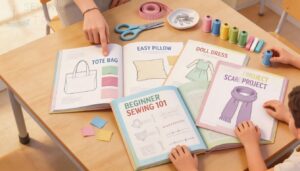
Because beginners need quick wins, choose books that keep learning simple, visual, and cheerful from the start.
- Beginner Friendly Picks support Time Efficiency and Material Management.
- Use Beginner Sewing Projects for Kids for Creative Exploration.
- Add Safety Guidelines.
- Build Feedback Strategies that sewing teachers reuse in sewing lesson planning.
- Skip Fashion Sewing Books About Fitting Patterns first.
Books for Pattern Drafting Lessons
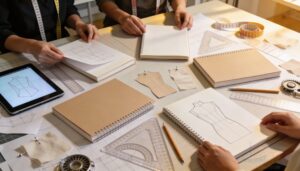
Once students feel steady, bring in sewing books that teach Notation Systems, Drafting Tools, and Measurement Techniques.
| Focus | Why it helps |
|---|---|
| Pattern Scaling | builds confidence |
| Digital Integration | feels current |
| sewing pattern collections | sparks ideas |
| teacher-curated sewing book recommendations | support sewing curriculum development |
They also strengthen sewing lesson planning and classroom marketing for fit checks, grain lines, and reusable classroom worksheets.
Books for Quick Classroom Projects

After drafting practice, reach for sewing books packed with quick sewing projects. The best sewing pattern collections use Rapid Project Templates, Time-Saving Techniques, and Compact Pattern Layouts, so you can finish in one class.
Add Student Collaboration Ideas, Assessment Integration Strategies, teacher-curated sewing book recommendations, and Beginner-friendly sewing patterns for classroom use.
They keep prep light and momentum high daily.
Books for Garment Fit Instruction

While fit can feel tricky, the right sewing books make it teachable. Try:
- Fit for Real People
- Pants For Real People Pants Book on Fitting and Sewing
- Dart Manipulation
- Ease Calculation, Sleeve Cap Adjustments, Muslin Fit Testing
- Size Grading Strategies plus pattern adjustment and garment tailoring advice from fashion fitting and pattern development books
You’ll build confident fitting lessons fast.
Books for Stretch Fabric Units

Because knits can feel slippery, choose sewing books that teach Stretch Fabric Theory, Knit Fabric Handling, Seam Allowance Strategies, Stretch Measurement Techniques, and Fabric Recovery Testing. Look for curated sewing book recommendations with Beginner-friendly sewing patterns for classroom use, DIY Sewing Patterns for School Supplies, and fabric selection tips.
These units build confident, classroom-ready stretch sewing skills fast today.
Books for Creative Skill-building Activities
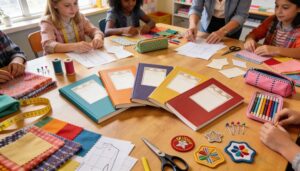
Great sewing books spark stitching confidence. They build creativity through:
- Interdisciplinary Projects and Creative Storytelling.
- Sustainable Materials with DIY Sewing Patterns for School Supplies.
- Skill Badges, Beginner Friendly Picks, and Sewing Tutorials for Beginners.
- Sewing lesson planning support that grows a Teacher Community.
Choose titles with visuals, tasks, and goals so every class can create proudly together.
Buying Tips for Teachers
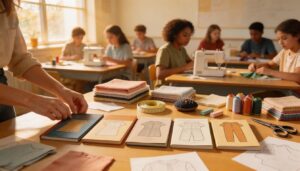
Before you buy, it helps to think about how the book will work in your real classroom. The best choice isn’t always the fanciest one, but the one your students can actually use and enjoy.
These quick tips will help you spot a book that fits your time, budget, and teaching goals.
Match The Book to Student Age
Choosing by age keeps sewing joyful, not frustrating. Look for Cognitive load alignment, Reading level suitability, Safety considerations, and a clear Developmental skill match.
| Age | Best fit |
|---|---|
| Young | Beginner-friendly sewing patterns for classroom use |
| Tweens | Student-friendly sewing patterns |
| Teens | Sewing Tutorials and Pattern Collections |
| All | sewing tutorials for beginners, Free Sewing Patterns |
That simple match helps every student feel capable.
Choose Projects Suited to Class Time
Short class block? Start with low Seam Count, short Prep Time, and a clear Sewing Duration. Check Step Count and overall Lesson Fit first.
Beginner-friendly sewing patterns for classroom use, Beginner-friendly Picks, and Free Sewing Patterns often work best. Use Sewing Tutorials and Pattern Collections for fast Sewing Project Ideas for Teachers that finish in one period or two classes.
Prioritize Easy Prep and Setup
Want calmer class starts? Look for books with Pre-cut Fabric Swatches, Labeled Tool Totes, Quick Start Guides, Video Setup Tutorials, and Safety Reminder Posters.
These save time and help students jump in fast.
Beginner Friendly Picks and Free Sewing Patterns also shine in any pattern roundup, especially Sewing Patterns for Back-to-School Projects and Sewing tutorials and tips for back-to-school season today.
Check Fabric and Tool Requirements
Once setup feels smooth, check Fabric Compatibility, Tool Safety, Interfacing Guidance, Notion Sizing, and Prewash Recommendations before you buy.
The best books spell out cottons, knits, zippers, and fusibles clearly.
That helps BeginnerFriendly Picks, Free Sewing Patterns, Free Sewing Patterns for Back to School Projects, Sewing Tutorials and Guides, and Sewing Supplies and Materials for Plush Projects run without last-minute classroom snags.
Balance Price With Classroom Usability
After you check tools and fabric, look at Cost per Student, not just sticker price.
Durability vs Price matters when books, educational sewing kits, and Beginner-friendly sewing patterns for classroom use will be reused all year.
Free Sewing Patterns, Bulk Purchase Savings, a school discount, or verified educator discount can lower Teacher Cost Impact and stretch Material Longevity farther too.
Pick Books That Support Curriculum Goals
Price matters, but your best pick should teach with purpose:
- Curriculum Alignment and Standards Mapping
- Learning Objectives with Assessment Integration
- Cross-Disciplinary Links for math and art
- Free Sewing Patterns, Free Sewing Patterns for BacktoSchool Projects, educational sewing kits
- Sewing lesson planning and classroom marketing, plus Teacher Gift Ideas
That way, projects build skills step by step and fit class time.
Frequently Asked Questions (FAQs)
What is the book for children’s sewing patterns?
Turns out the theory is right: The Winky Cherry System of Teaching Young Children to Sew Books and Sewing Kits stands out, pairing age-appropriate designs, safety considerations, colorful illustrations, and interactive activities for young sewists.
What can I sew for my classroom?
Sew desk organizers, reading pillows, classroom curtains, storage bins, and teacher gifts.
Use beginner-friendly patterns for classroom use and sewing patterns for teachers. Organizing Classroom Materials with Handmade Pouches or DIY School Supplies and Accessories.
How do I store patterns between classes?
For Sewing patterns for teachers, use Color-coded folders, Archival sleeves, Digital scanning, and a Check-in system.
Add School Desk Storage, Organizing Classroom Materials with Handmade Pouches, Fabric Basket and Storage Solutions, and classroom storage.
Conduct a Seasonal audit to maintain organization.
Can students share sewing machines safely?
Shared, yes; unsupervised, never: sewing teachers set Supervision Protocols, Protective Eyewear, Finger Guard Use, Cord Management, and Machine Maintenance, so sewing students stay safe during Sewing for kids, Beginner sewing patterns, and Free Sewing Patterns.
What classroom rules help prevent sewing accidents?
Use Tool storage policy, clear floor pathways, machine unplugging rule, pin handling protocol, hand washing requirement, handy scissor keeper, first aid pouch for school.
Sewing teachers protect sewing students during sewing for kids each day.
How should finished projects be graded fairly?
Fair project grading requires rubric transparency, weighted scoring, peer review, feedback consistency, and safety compliance.
Additionally, focus on free sewing patterns, sewing lesson planning, classroom marketing, handmade classroom decor, handmade school supplies, gift ideas, and student organization.
Are digital pattern books better for classrooms?
Bright Budget Bonus: Yes—digital works because of Instant Access, Interactive Annotation, Device Compatibility, Licensing Flexibility, and Environmental Benefits.
The platform features an online school sewing pattern marketplace and an educator discount program for sewing patterns.
Additional perks include Free Sewing Patterns, a Teacher account, and verified educator status.
Conclusion
Stitch together a winning classroom experience with the right sewing pattern books! You’ve now got the inside scoop on the top 5 resources to help your students thrive.
When searching for sewing pattern books for classroom use, remember to prioritize clarity, flexibility, and student engagement.
By choosing books that fit your teaching style and goals, you’ll set your students up for success and create a love of sewing that lasts.
Happy teaching!