This site is supported by our readers. We may earn a commission, at no cost to you, if you purchase through links.
A pillow can look polished or homemade based on one small detail, the closure. Swap in a lumpy back overlap or a bulky standard zipper, and the whole finish loses that clean custom-fitted look.
An invisible zipper pillow cover fixes that fast. You get smooth edges, easy insert removal, and a seam that stays quiet instead of stealing attention.
The trick is using the right supplies from the start, then sewing in the right order. A good zipper, stable thread, clear marking lines, and a few smart finishing steps can turn simple fabric into a cover that looks crisp, neat, and made to last.
Table Of Contents
Key Takeaways
- Using invisible zipper with the right tools and materials gives your pillow cover a clean, professional finish that hides the closure completely.
- Choose a zipper about two inches shorter than your pillow edge, and match your thread and marking tools to your fabric for best results.
- Press, trim, and finish raw edges before sewing to prevent fraying and create crisp seams that hold up over time.
- An invisible zipper foot on your sewing machine helps you sew close to the zipper coil, making the zipper disappear into the seam.
Top 5 Products for Invisible Zipper Pillow Covers
Before you sew a single stitch, having the right supplies makes all the difference. These five products are what you’ll want on hand before you start.
If you’re curious about invisible zippers, this step-by-step guide to sewing an invisible zipper will help you feel confident before you begin.
Let’s get into what they are and why they’re worth it.
1. Coats Clark White Invisible Zipper

The Coats Clark White Invisible Zipper is a solid starting point for any pillow cover project. At 20 inches long, it accommodates standard pillow openings without needing to piece zippers together.
The 100% polyester coil flexes smoothly through woven and lightweight fabrics, and it resists corrosion over time.
Only the pull tab shows once installed — everything else disappears into the seam.
One heads-up: it only comes in white, so plan your fabric choice accordingly.
| Best For | Sewers and crafters who want a clean, hidden closure on pillows, dresses, or light garments and prefer to skip the craft store run. |
|---|---|
| Brand | Coats Corrente |
| Material | 100% polyester |
| Color | White |
| Quantity | 1 zipper |
| Primary Use | Concealed closures |
| Key Limitation | Needs careful installation |
| Additional Features |
|
- Nearly disappears into the seam — only the pull tab is visible once it’s in
- Polyester coil moves smoothly and won’t rust or corrode over time
- At 20 inches, it’s long enough for most standard pillow and dress openings
- Only comes in white, so it’s a tricky match for darker or bold-colored fabrics
- The coil can curl along the teeth if not aligned carefully during installation
- Not built for heavy-duty use — stick to light-to-medium weight fabrics
2. Clover Wonder Clips Sewing Clips
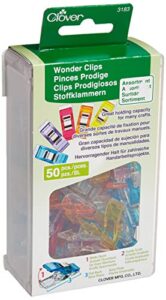
Pins work fine — until they don’t. On slippery fabrics or delicate materials like vinyl or synthetic leather, they leave holes and frustration behind. That’s where Clover Wonder Clips earn their spot in your sewing kit.
Each clip grips up to 10mm of layered fabric without distorting it. The flat back keeps everything flush against your machine’s presser foot, and the built-in ¼ and ½ inch markings let you skip the ruler entirely. A 50-pack runs about $24.51 on Amazon.
| Best For | Quilters, bag makers, and crafters who work with vinyl, leather, or slippery fabrics where pins cause damage or leave holes. |
|---|---|
| Brand | Clover |
| Material | Metal and plastic |
| Color | Assorted colors |
| Quantity | 50 clips |
| Primary Use | Holding fabric layers |
| Key Limitation | Higher cost per clip |
| Additional Features |
|
- The flat back with built-in ¼ and ½ inch markings makes precise seam placement a breeze — no ruler needed
- Grips multiple fabric layers securely without distorting or damaging delicate materials
- Color-coded clips make it easy to flag tricky spots like curves and mitered corners
- At $24.51 for 50 clips, they cost more than generic alternatives
- 50 clips can run out fast on larger quilting or binding projects
- The regular size may feel bulky for small, detailed work where a mini clip would fit better
3. Dritz Dual Color Fabric Marking Pen
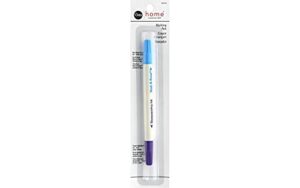
Once your fabric is clipped and ready, the next challenge is marking it accurately. That’s where the Dritz Dual Color Fabric Marking Pen earns its place.
For even more versatility, the Dritz Heat Erase Marking Pen Set offers five vibrant colors to ensure your markings stand out on any fabric shade.
One end holds blue water-soluble ink — wipe it away with a damp cloth. The other end has purple air-soluble ink that fades on its own within 24 to 72 hours.
No scrubbing, no guessing. Just clean, temporary lines that disappear before your pillow cover is even finished. Test it on your fabric first, especially with red or pink tones.
| Best For | Quilters and crafters who need quick, clean pattern markings on fabric without worrying about permanent stains or tedious cleanup. |
|---|---|
| Brand | Dritz |
| Material | Plastic pen body |
| Color | Blue body with blue/purple ink |
| Quantity | 1 pen |
| Primary Use | Temporary fabric marking |
| Key Limitation | Can dry out quickly |
| Additional Features |
|
- Two inks in one pen — blue wipes off with water, purple just fades on its own, so you pick whatever fits the job.
- Leaves zero residue, so your finished stitches stay crisp and clean.
- Works on cotton, batting, and most common fabrics for both hand and machine embroidery.
- Ink can run out fast — some users found it dried up after just a few uses.
- Purple ink fades quickly in open air, so you need to work at a decent pace before your marks disappear.
- Some pens arrive already partially dried, so it’s worth testing it before you start a big project.
4. Aurifil White Cotton Thread
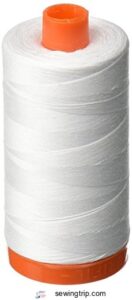
Thread matters more than most people think. The wrong choice leaves visible stitches that catch the eye for all the wrong reasons.
Aurifil’s 50-weight white cotton thread keeps your seams nearly invisible on light fabrics. It’s made from long-staple mercerized Egyptian cotton, so it feeds smoothly with almost no lint. One 1,422-yard spool carries you through multiple pillow covers without re-spooling. It stays colorfast through repeated washing, which is exactly what you want from a pillow cover you’ll actually use.
| Best For | Quilters, embroiderers, and sewists who want a clean, low-lint thread that blends seamlessly into light fabrics and holds up through regular washing. |
|---|---|
| Brand | Aurifil |
| Material | 100% mercerized cotton |
| Color | White |
| Quantity | 1 spool |
| Primary Use | Machine sewing and quilting |
| Key Limitation | May need spool stand |
| Additional Features |
|
- Feeds smoothly with minimal lint, so your machine stays cleaner between projects
- 1,422 yards per spool means you can power through several projects without stopping to re-spool
- Stays colorfast after repeated washing, so your seams look just as good after laundering
- The large spool won’t fit every machine — you may need a separate spindle to use it
- Less forgiving than poly blends at high speeds, with some users reporting occasional breakage
- It’s pricier than blended threads, which can add up if you’re buying multiple colors or weights
5. IZO Square Sham Pillow Insert
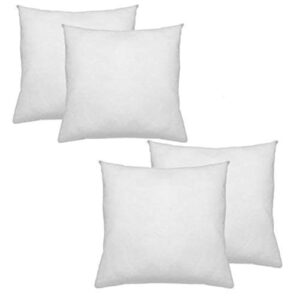
Filling your pillow cover takes more than just stuffing—it needs the right insert.
The IZO square sham pillow insert comes in a pack of four, each 18 by 18 inches, with soft polyester fiberfill and a durable non-woven shell.
You get hypoallergenic comfort and a shape that stays firm yet fluffy, ideal for decorative shams.
For corners that look crisp and covers that never sag, this insert makes the difference.
Fluff it after shipping and enjoy a full, professional finish every time.
| Best For | Anyone looking to fill decorative pillow shams with a hypoallergenic, easy-to-fluff insert that keeps its shape. |
|---|---|
| Brand | Generic US-made |
| Material | Polyester fiberfill |
| Color | White |
| Quantity | 4 inserts |
| Primary Use | Filling throw pillows |
| Key Limitation | Corners may look sparse |
| Additional Features |
|
- Hypoallergenic and non-toxic, great for allergy-sensitive homes.
- Firm yet soft fill that supports pillows without feeling stiff.
- Ships compact and expands quickly for easy setup.
- Corners may need extra fluffing to look fully rounded.
- Loft can flatten over time and may require refreshing.
- Care instructions are unclear, making machine washing a bit risky.
How to Sew an Invisible Zipper Pillow Cover
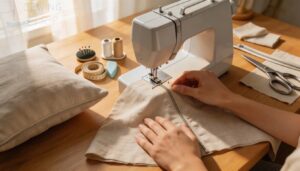
Sewing an invisible zipper pillow cover is easier than you might think. You just need the right materials and a few simple steps.
Here’s what you’ll need to get started.
Choosing The Right Fabric for Your Pillow Cover
Looking for the perfect fabric of choice? Think about how fiber durability, breathability, and texture feel shape your pillow’s look and longevity.
Cotton and linen offer cool, airy comfort. Velvet hides zipper lines and adds plush texture. Patterned fabric needs careful cutting for color fastness and design alignment.
Consider seasonal suitability—linen for summer, velvet for winter.
- Cotton: durable, breathable, easy care
- Linen: textured, cool, casual
- Velvet: plush, hides seams
- Patterned fabric: aligns design, shows stains
How Long Should an Invisible Zipper Be?
Ever wonder how to pick the right invisible zipper length for your pillow cover? Start with Pillow Size Matching and use a measuring tape.
Factor in Seam Allowance Impact, Fabric Weight Consideration, and Edge Finish Compatibility.
Zipper Length Testing is key—adjust the zipper length so it opens fully but doesn’t bunch at corners.
Smart sewing tips prevent snags and keep seams tidy.
Cutting and Preparing Fabric Pieces
fabric as the foundation—if you cut it wrong, the whole pillow sags. grain parallel to pillow edges for stability.
Use a measuring tape and fabric marker for seam allowance marking. Prewash fabric to avoid shrinkage.
Lay out patterns for symmetry, then cut curves with a rotary cutter for precision. pattern layout ensures crisp, professional results every time.
Pressing and Finishing Raw Edges Before Sewing
Want crisp seams and zero fraying? Start by pressing the edges with a cotton pressing cloth to protect delicate fibers.
For edge stabilization techniques, apply interfacing or spray starch before seam finishing. Choose hem binding options like bias tape or a serger edge finish.
Trim excess fabric along the seam allowance, then iron flat. Bias tape application seals raw edges for lasting durability.
Attaching an Invisible Zipper to Fabric
Getting a smooth finish starts with the right zipper attachment. You’ll need to know which tools and methods work best for a hidden closure. Here’s what you should look for when attaching an invisible zipper to fabric.
What is an Invisible Zipper Foot on a Sewing Machine?
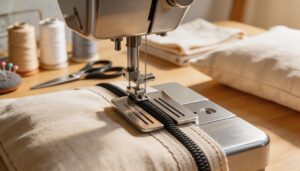
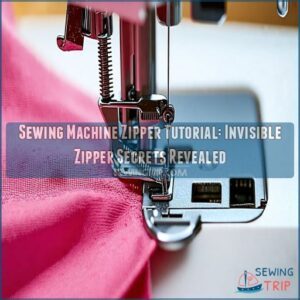
Imagine sewing a pillow cover where the zipper vanishes into the seam—an invisible zipper foot makes this possible.
An invisible zipper foot lets a pillow zipper disappear neatly into the seam
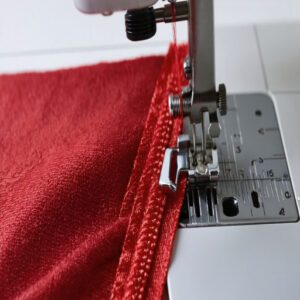
Its design features two grooves that cradle the zipper coil, guiding stitches right next to the teeth.
Compatible with most sewing machines, it keeps your stitching precise.
For maintenance care, clean lint from grooves and check for smooth operation to avoid troubleshooting issues.
The heavy duty invisible zipper foot(https://singeroutlet.co.uk/products/invisible-zipper-foot) is priced at £8.99, VAT included.
How to Hide a Zipper on a Pillow
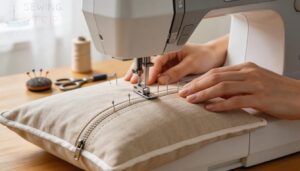
true Seam Concealment, match your zipper tape to your fabric, control fabric tension as you pin, and place the hidden pull toward the pillow header.
Use your invisible zipper foot on the sewing machine to keep stitches tight to the coil.
Trim corners with care—this Corner Trim Method prevents bulk and helps your invisible zipper vanish right into the pillow cover.
Sewing The Zipper to The First and Second Fabric Panels
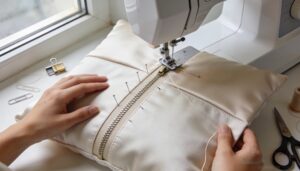
Once your zipper is hidden, start sewing the first panel. Use Panel Alignment Tips and keep Zipper Tape Tension steady.
Pinning Techniques help the zipper stay centered, so the invisible zipper foot hugs the coil.
Stitch Length Choice matters—use a longer stitch for slippery fabric, then switch to a shorter one. Seam Allowance Adjustment keeps everything neat.
- Align zipper teeth to fabric edge
- Pin zipper tape securely
- Sew with invisible zipper foot
- Adjust stitch length for fabric
Backstitching for a Durable Zipper Seam
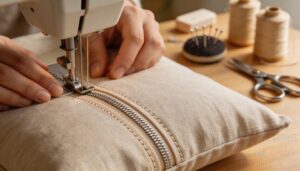
Now that your panels are stitched, focus on backstitching for durable seam construction.
Start and finish each zipper seam with a short backstitch, placing it just inside the zipper tape edge. Use a 2.4–3.0 mm stitch length, balanced tension, and a universal needle for best results.
This table helps you match setup choices to pillow cover needs:
| Stitch Length | Needle Selection | Backstitch Placement |
|---|---|---|
| 2.4–3.0 mm | Universal 90/14 | Inside tape edge |
| Short at ends | Denim for thick | Secure zipper ends |
| Balanced | Test on scrap | Prevent gaps |
| Adjust as needed | Clean needle plate | Reinforce seam |
Finishing and Assembling Your Pillow Cover
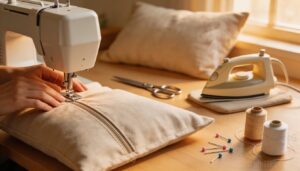
Now that your zipper is in place, it’s time to finish the pillow cover. You’ll need to sew the last seams, trim the corners, and press everything for a crisp look.
Here’s how to pull it all together step by step.
Sewing The Remaining Three Sides Together
Want a pillow cover that looks sharp and lasts? Start by sewing the remaining three sides together with Seam Allowance Consistency—keep your straight stitch alignment steady, and use your sewing machine’s invisible zipper foot for precision.
Backstitch at each corner for strength. Use Thread Tension Control and Seam Finishing Options to prevent puckers, ensuring all edges stay flat and professional.
Trimming Corners and Turning The Cover Right Side Out
Once your seams are stitched, trimming and turning the pillow cover right side out makes all the difference.
Use Diagonal Corner Trim and Seam Allowance Grading for Bulk Reduction Tips. Rely on Point Turner Usage for sharp points. For example:
- Clip corners, leaving 1/8 inch.
- Grade seam allowances along curves.
- Turn right side out, press corners for a crisp finish.
Pressing Seams for a Professional, Crisp Finish
Even after turning your cover right side out, don’t skip pressing the edges. Set your iron to the right Heat Settings and use a Pressing Cloth for delicate fabrics.
For curved seams, reach for a Tailors Ham. Steam Control matters—press from seam allowance toward the seam line. Seam Alignment is key.
Let fabric cool fully on your ironing board for a truly professional finish.
Frequently Asked Questions (FAQs)
How do you make an invisible zipper pillow cover?
Start by aligning your fabric grain, marking seam allowance tips, and pressing finishing edge details.
Use an invisible zipper foot for precise sewing techniques, adjusting thread tension. Test zipper pull design for smooth closure.
This DIY pillow cover tutorial for beginners ensures a perfect pillow cover finish.
How do you hide a zipper on a pillow?
To hide a zipper on a pillow, align the fabric grain, use the bias binding technique, and position the zipper pull for concealment.
Seam line flattening and low heat ironing help, along with stress point reinforcement at zipper ends.
How long should an invisible zipper be?
Picture a zipper that’s too short—ends exposed, cover gaping. Too long? Bulges and sags.
For proper Pillow Size Matching, select a zipper 2 inches shorter than the pillow edge, factoring in Seam Allowance Impact and Bulge Prevention.
What is an invisible zipper on a sewing machine?
An invisible zipper foot on a sewing machine uses a special invisible zipper foot. This tool aligns the zipper tape, controls stitch length, and keeps thread tension steady.
Choose a fine needle for smooth seams and flawless zipper placement.
Can invisible zippers be used on outdoor pillows?
You can use an invisible zipper on outdoor pillows if you choose high‑quality fabric and zipper with water‑resistant coatings, UV‑stabilized zippers, stainless steel sliders, and reinforce stress points.
Seam sealing techniques and weatherproof testing guarantee durability.
How do you fix a stuck invisible zipper?
To fix a stuck zipper, start by thread removal with tweezers or a pin. Try lubrication techniques like soap. Teeth realignment and slider adjustment help.
For fabric snag clearing, gently ease tension. Pin or clip the zipper ends.
Are invisible zippers safe for machine washing?
Think of a closed gate guarding a garden—an invisible zipper, fully closed, is safe for machine washing.
For zipper durability, use a mesh bag, delicate cycle, cool water, and follow post-wash care for pillow cover maintenance.
What pillow sizes work best with invisible zippers?
Standard square sizes, like 16 square pillow or 18 by 18 inch pillow insert, work best.
Oblong pillow fit, body pillow length, and oversized pillow considerations all benefit from careful seam allowance impact for a hidden invisible zipper pillow cover.
How do you add decorative piping with invisible zippers?
Let’s pipe up your pillow game—adding decorative piping with invisible zippers means sewing the piping first along the pillow edge, ensuring perfect Piping Alignment Tips, then using Zipper Foot Adjustments and Cord Diameter Selection for a smooth, crisp finish.
Conclusion
Like a master painter adding the final brushstrokes, you’ve transformed simple fabric into a stunning invisible zipper pillow cover. With these top products and steps, you’ve gained the skills to create professional-looking results.
Your invisible zipper pillow cover is now a proof of your creativity and attention to detail. Enjoy your beautiful handmade decor, and don’t hesitate to experiment with new designs and fabrics to make your space truly unique with an invisible zipper pillow cover.
- https://suzyquilts.com/4-easy-steps-to-sew-an-invisible-zipper-into-a-pillow/
- https://bethannwilliams.com/2018/08/29/how-to-sew-a-decorative-pillow-cover-with-an-invisible-zipper/
- https://zippershipper.com/collections/pillow-zippers
- https://www.seamwork.com/sewing-tutorials/sewing-an-invisible-zipper
- https://www.sailrite.com/diy-invisible-zipper-pillow