This site is supported by our readers. We may earn a commission, at no cost to you, if you purchase through links.
single stitch can change everything about a garment. That sounds dramatic, but pull out an old linen shirt, add a row of blanket stitch around the collar in deep indigo thread, and watch how it transforms from basic to intentional. Embroidery does that — it turns construction into conversation.
Decorative embroidery stitches for clothing aren’t reserved for heirloom pieces or haute couture ateliers. They belong on your everyday wear, your thrifted finds, your handmade skirts. The gap between "it’s fine" and "I love this" is often just a few inches of well-placed thread. What follows covers the stitches, placements, and materials that make that happen.
Table Of Contents
- Key Takeaways
- Decorative Edge Stitches to Try
- Blanket Stitch for Hems, Cuffs, and Collars
- Buttonhole Stitch for Durable Decorative Borders
- Scalloped Edge Stitch for Feminine Finishes
- Feather Stitch for Soft Botanical Details
- Chevron Stitch for Bold Geometric Accents
- Double Chevron Stitch for Layered Contrast
- Overcast Stitch for Neat Decorative Raw Edges
- Whip Stitch for Simple Embellished Edging
- Overlock Stitch for Stronger Edge Decoration
- Hem Stitch for Linen and Cotton Garments
- Catch Stitch for Flexible Knit Hems
- Texture and Detail Stitches
- Running Stitch for Subtle Lines and Borders
- Backstitch for Crisp Outlines on Clothing
- Split Stitch for Raised Contour Work
- Chain Stitch for Decorative Curves and Lettering
- Stem Stitch for Vines, Florals, and Outlines
- Satin Stitch for Smooth Filled Shapes
- Long and Short Stitch for Shaded Fills
- French Knot for Dotted Texture and Accents
- Herringbone Stitch for Stretch-friendly Embellishment
- Palestrina Stitch for Knotted Border Lines
- Beaded Edge Stitch Variations for Extra Shine
- Loop and Knot Stitches for Dimensional Trims
- Best Placement for Clothing Embroidery
- Decorative Stitches for Necklines and Collars
- Hemline Embroidery for Dresses and Skirts
- Cuff Embellishment Ideas for Sleeves
- Pocket Edge Embroidery for Casual Garments
- Placket and Button Area Stitch Accents
- Yoke and Shoulder Decorative Stitching
- Center-front Vertical Stitch Designs
- Appliqué Edge Stitching on Clothing
- Floral Border Layouts for Blouses
- Geometric Stitch Bands for Jackets
- Beaded Stitch Placement for Special-occasion Wear
- Planning Start and End Points Neatly
- Fabric, Thread, and Stitch Setup
- Choosing Stitches for Woven Fabrics
- Choosing Stitches for Knit Fabrics
- Felt and Non-fraying Fabric Options
- Matching Thread Weight to Fabric Weight
- Cotton Floss for Beginner Clothing Embroidery
- Perle Cotton for Bold Decorative Edges
- Silk Thread for Delicate Garment Details
- Polyester Thread for Machine Embroidery Durability
- Needle Selection for Hand and Machine Work
- Stabilizer Choices for Lightweight Garments
- Marking Clean Guide Lines Before Stitching
- Top 8 Embroidery Tools
- 1. OESD AquaMesh Water Soluble Stabilizer
- 2. Odif Temporary Fabric Adhesive Spray
- 3. Dritz Heat Erase Fabric Markers
- 4. Pellon Shape Flex Fusible Interfacing
- 5. Fiskars Gingher Gold Fabric Shears
- 6. ThreadNanny Rainbow Titanium Embroidery Scissors
- 7. Schmetz Embroidery Needles Size 75 11
- 8. June Tailor Eze View Press Cloth
- Frequently Asked Questions (FAQs)
- Conclusion
Key Takeaways
- A single well-placed stitch — like a blanket stitch around a collar or chevron along a seam — can turn a basic garment into something that feels truly intentional.
- Where you embroider matters as much as the stitch itself: necklines, cuffs, hems, and pocket edges are your highest‑impact zones for visible, meaningful detail.
- Matching your stitch to your fabric type is non-negotiable — wovens need structure and stabilizer, while knits demand stretch‑friendly stitches like herringbone or catch stitch.
- Your thread choice shapes everything: cotton floss for beginners, perle cotton for bold edges, silk for delicate shine, and polyester for machine work that actually holds up through washing.
Decorative Edge Stitches to Try
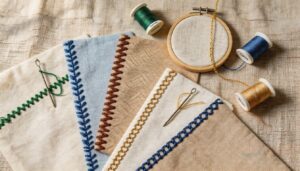
Edge stitches do two jobs at once — they keep your fabric from fraying and make the garment look intentional. The good news is a stitch for every style, whether you want something delicate, bold, or somewhere in between.
For an all-in-one approach, a serger handles the hard part — explore quick dress hemming techniques to see how trimming and finishing happen in a single pass.
Here are eleven worth adding to your rotation.
Blanket Stitch for Hems, Cuffs, and Collars
The blanket stitch is your go-to for fabric edge binding on hems, cuffs, and collars. Nail these three things first:
- Fabric Preparation Steps — press edges clean and flat
- Stitch Tension Tips — keep loops snug, never tight
- Edge Bulk Management — trim seam allowance slightly
Thread color contrast makes it decorative. Hand vs. machine? Both work — hand embroidery edge stitches just feel more personal. For decorative effect, visible thread required ensures the stitch stands out.
Buttonhole Stitch for Durable Decorative Borders
Want something tougher than a blanket stitch? The buttonhole stitch is your answer — it wraps each loop tightly into a dense, reinforced border that holds up through every wash.
| Feature | Detail |
|---|---|
| Stitch density optimization | Tighter loops = stronger edge |
| Thread material impact | Perle cotton adds durability |
| Decorative border stitch variations | Adjust loop size for bold or subtle effects |
| Fabric edge reinforcement | Resists fraying on woven fabrics |
| Durability testing methods | Test on scrap before the real thing |
Scalloped Edge Stitch for Feminine Finishes
If the buttonhole stitch is your workhorse, the scalloped edge is your finishing touch — soft, wavy arcs that whisper elegance along any fabric edge. Stitch it 3–6mm from the edge for balanced rhythm. Think Thread Luster, Color Palette choices, and Scale Adjustments that suit your garment.
- Use Edge Reinforcement with stabilizer on lightweight fabrics
- Try scalloped edge stitching on cuffs, collars, and decorative hems
- Apply Historical Motifs for a romantic, heirloom feel
- Perfect for decorative fabric edge finishing techniques on blouses
- Hand embroidered edges add warmth machine stitching can’t replicate
Feather Stitch for Soft Botanical Details
From soft scallops to something even more alive — feather stitch feels like stitching a garden directly onto fabric. Each arm branches into a small V shape, building a vine that curves and breathes naturally.
| Feather Stitch Tip | Detail |
|---|---|
| Leaf Arm Spacing | Keep arms even for smooth Vine Curvature Techniques |
| Thread Sheen Selection | Perle cotton adds a subtle glow |
| Botanical Motif Scaling | Two strands for delicate Organic Edge Finishing |
| Fabric Considerations | Cotton, linen, and chambray hold crisp shapes |
Chevron Stitch for Bold Geometric Accents
Few stitches command attention like the Chevron Stitch — those repeating V-shapes march across fabric with real confidence. It’s geometric, bold, and surprisingly beginner‑friendly once you find your rhythm.
- Use Color Blocking with high-contrast threads for maximum impact
- Try 3D Raised Effects by whipping a second thread through
- Build Mirrored Symmetry along a center seam
- Adjust Stitch Density for bolder or subtler results
- Keep Thread Tension consistent — uneven pulls distort the zigzag
Double Chevron Stitch for Layered Contrast
Think of the Double Chevron Stitch as your chevron stitch’s bolder sibling. You run two passes — offset by half a stitch width — using contrasting embroidery thread colors for serious Layered Texture Effects.
Color Pairing Strategies matter here: light against dark sells the depth. Apply Offset Alignment Techniques carefully, maintain Thread Tension Control throughout, and use fabric stabilization on lighter weaves to keep those decorative stitching patterns crisp.
Overcast Stitch for Neat Decorative Raw Edges
Raw edges don’t have to look unfinished — the overcast stitch turns them into a design feature. Wrapping thread diagonally around fabric edges, it delivers solid Raw Edge Protection while keeping things flat and clean.
- Pair contrasting Thread Color Pairing for visible edge detailing
- Adjust Edge Tension Control to avoid puckering
- Try Hand Overcast Variants for custom stitch angles
- Use Machine Overcast Settings with a zigzag or overcast foot
- Test your sewing machine edge stitch on scrap fabric first
Whip Stitch for Simple Embellished Edging
The whip stitch is one of those simple beginner-friendly stitching methods that quietly delivers beautiful results.
Wrap thread over the fabric edge in small, even passes — Consistent Loop Length is everything here.
Watch Fabric Nap Consideration on textured materials — tighten slightly to avoid distortion.
Finish with a Back Tack Finish, press gently using Low Heat Pressing, and Hand Wash Care keeps your decorative edge stitches crisp longer.
Overlock Stitch for Stronger Edge Decoration
Want edges that look polished and hold up through real wear? The overlock stitch delivers both.
Your sewing machine manages this beautifully — balancing thread tension, dialing in the right stitch width, and letting differential feed prevents puckering on knits.
- Choose contrasting thread for color contrast that frames your garment edge
- Adjust cutter adjustment for a clean, uniform trim
- Use fabric stabilization on delicate pieces
- Test decorative edge stitches on scrap first
Hem Stitch for Linen and Cotton Garments
Hem stitch is the quiet overachiever of decorative edge stitches — a drawn thread technique that pulls warp or weft threads from the fabric to create a crisp, ladder‑like border. It’s elegant on linen and cotton, where even weaves let threads release cleanly.
| Variation | Best For |
|---|---|
| Spoke Stitch Detail | Geometric hem lines |
| Antique Hem Variation | Cross‑stitch visible accents |
Thread tension tips matter here — keep it relaxed for linen to avoid distortion.
Catch Stitch for Flexible Knit Hems
Unlike hem stitch’s crisp, structured pull, catch stitch flows with your fabric — a true elastic stitch for jersey and knit fabric prep. Stitch tension control matters here — keep it relaxed so the zigzag stays flexible.
A single thread is your best flexible thread choice. For knitted fabric hemming using catch stitch, adjust your hem width to about ½ inch for clean results.
Texture and Detail Stitches
Edge stitches handle the borders — but texture and detail stitches are where clothing embroidery really comes alive. These are the ones that add depth, shape, and personality to everything from a simple hem to a full floral design.
Getting that depth and detail right becomes so much easier when you’re working with an automatic embroidery machine that adjusts thread tension on the fly for different fabrics and weights.
Here are the key stitches worth adding to your toolkit.
Running Stitch for Subtle Lines and Borders
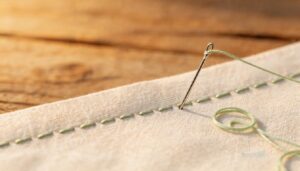
The running stitch is your secret weapon for subtle border stitching — simple, but quietly stunning. Keep Uniform Stitch Lengths and Even Tension Control consistent, and you’ll get that clean, Subtle Border Design that whispers rather than shouts.
It works beautifully on light wovens for fabric edge stability, and whether you’re doing hand vs. machine work, Running Stitch Shading adds dimension without drama.
Backstitch for Crisp Outlines on Clothing
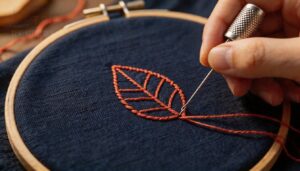
Step up from subtle to sharp — backstitch is your go-to for crisp, clean outline stitches on clothing.
Work each stitch back into the last, keeping Stitch Length short and Thread Tension even for Line Consistency that holds every curve.
- Use a Contrast Color thread to make decorative borders pop
- Apply a light Stabilizer for fabric edge stability on knits
- Control stitch tension for gap-free outlines
- A single floss strand keeps lines fine and precise
Split Stitch for Raised Contour Work
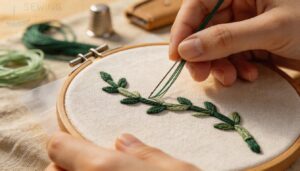
Want that backstitch outline to literally rise off the fabric? Split stitch does exactly that.
Each stitch pierces the previous one — building a stackable, dimensional ridge you can actually feel. Use Height Calibration Methods like adding strands for more lift, or try Split Density Variation to control how tight the contour sits.
| Technique | Effect | Best For |
|---|---|---|
| Multi-Thread Blending | Richer texture | Floral motifs |
| Contour Edge Reinforcement | Crisp boundary | Letter outlines |
| Light Source Shading | Shadow dimension | Botanical fills |
Keep your hoop taut — embroidery tension control and Stabilizer underneath prevent those raised ridges from sinking. That’s your 3D texture stitches for raised embroidery effects, locked in with solid fabric stabilization methods.
Chain Stitch for Decorative Curves and Lettering
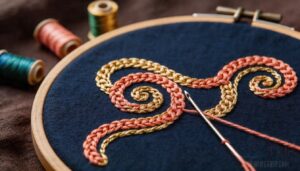
Chain stitch is your go-to for Curved Chain Borders and Lettering Outline work — those interlocking loops follow curves naturally without bunching. It’s one of the most satisfying decorative stitching techniques out there.
For garment embroidery, Stabilizer Application keeps stitches crisp. Try Thread Color Contrast to make decorative borders pop, or build Layered Chain Effects with two or three parallel rows for a rope-like finish.
Stem Stitch for Vines, Florals, and Outlines
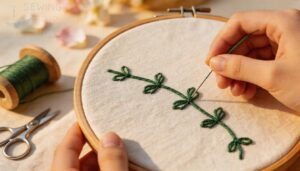
Stem stitch is the secret behind those flowing vines and petal outlines that make a garment feel alive. Stitch Overlap follows the Growth Path of your design — mirroring Vine Curvature naturally.
For Petal Outlining, shorter stitches near turns keep the line smooth. Watch your Thread Tension: too tight, and it puckers.
Creative Design Ideas for Decorative Stitching are among the best sewing tips for organic embroidery.
Satin Stitch for Smooth Filled Shapes
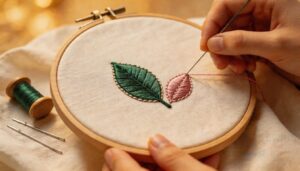
Satin stitch is your go-to for Small Shape Fill — leaves, petals, monograms, letters.
Lay stitches side by side using a smart Stitch Direction Strategy: follow the shape’s longest axis to avoid gaps.
Always add an Edge Split Outline first — it keeps edges crisp, not ragged.
Watch your Shape Size Limits — long stitches sag.
Use Stitch Length Adjustment on curves for clean, polished filled shapes with embroidery stitches.
Long and Short Stitch for Shaded Fills
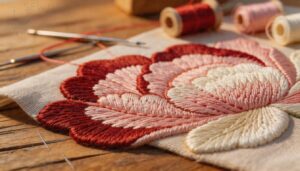
Long and short stitch is the secret behind those gorgeous gradient petals you see on heirloom garments. It’s all about Length Variation Fill — alternating long (~3/8") and short (1/8–1/4") stitches in Staggered Stitch Rows so colors melt together.
Gradient Color Blending with Row Overlap Fill, splitting into previous stitches as you go. For curves, try Curved Stitch Shortening. Perfect for DIY fashion upgrades using filling stitches and decorative embroidery.
French Knot for Dotted Texture and Accents
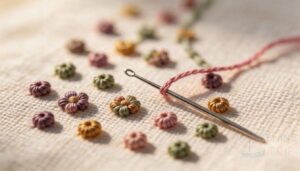
Think of a French knot as a tiny raised dot with serious personality. This hand embroidery technique delivers rich texture — perfect for flower centers, scattered accents, or Color Gradient Dots across a blouse.
- Adjust Knot Size Variations using 1–6 floss strands
- Maintain Thread Tension Control while wrapping the needle
- Practice Spacing Consistency for polished dotted borders
- Layer knots for Layered Knot Effects and dimensional fills
- Use this embroidery embellishment in any embroidery tutorial, confidently
Herringbone Stitch for Stretch-friendly Embellishment
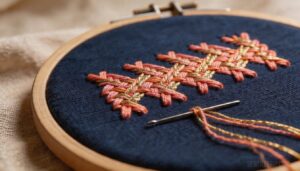
The herringbone stitch is your secret weapon for knit fabrics. Its crisscrossed diagonals handle Diagonal Stress Distribution beautifully — allowing up to 26% stretch without a single popped seam.
The herringbone stitch bends with knit fabrics, handling up to 26% stretch without a single popped seam
Nail your Elastic Tension Control by keeping stitches about 1 cm apart.
Pair a Washaway stabilizer underneath, play with Color Contrast Effects, and enjoy how Stitch Width Adjustment transforms any jersey or sweatshirt into something genuinely striking.
Palestrina Stitch for Knotted Border Lines
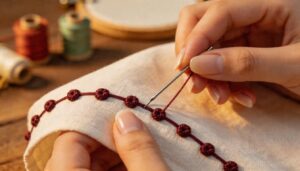
Where the herringbone bends, the Palestrina stitch builds. This raised, bead-like border stitch is perfect for creating knotted border lines with Palestrina stitch along hems and seams on cotton or linen.
Master Knot Spacing Strategies and Thread Tension Control for even results. Try the Double Knot Technique for bold depth, Color Stripe Integration for visual rhythm, or Curved Border Application to follow a neckline beautifully.
Beaded Edge Stitch Variations for Extra Shine
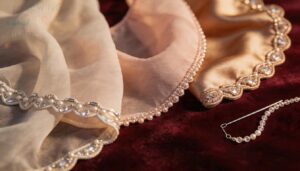
Want your edges to do more than just finish a seam?
Beaded edge stitch variations add real sparkle — think Beaded Picot Edge along a neckline, a Scalloped Bead Edge on cuffs, or a Fortuny Style Hem on soft skirts.
Use a Buttonhole Bead Border or Bugle Bead Borders for structure.
A beading needle keeps everything even.
Loop and Knot Stitches for Dimensional Trims
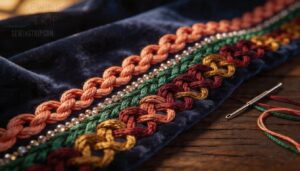
If beads give you shine, knots give you soul.
Loop stitch with beads and knotty edging stitch both build rich, tactile edges — think coral stitch or Palestrina for knotted border stitches that feel sculptural.
Layered loop effects need steady Thread Tension Control and Design Rhythm Planning to stay even.
Use Color Contrast Strategies and smart Stabilizer Removal Techniques to keep the finish clean.
Best Placement for Clothing Embroidery
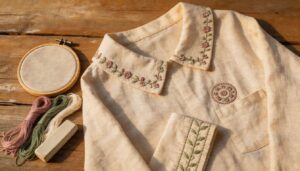
Where you place embroidery on a garment matters just as much as the stitch you choose.
The right spot can make a simple blouse look intentional — even heirloom-worthy.
Here are the best areas to focus your stitching.
Decorative Stitches for Necklines and Collars
Neckline framing is one of those design moves that quietly changes everything. A blanket stitch or buttonhole stitch along a collar accent creates a decorative border stitch variation that draws the eye upward.
For curved stitch alignment, keep your stitch lengths short and even — no rippling. Thread color contrast makes it pop.
Master stitch tension control, and your edge stitching technique does the talking.
Hemline Embroidery for Dresses and Skirts
The hemline is your garment’s final word — make it count. A blanket stitch or buttonhole stitch adds both structure and style, while hem stitch suits linen and cotton beautifully.
Apply Hem Stability Techniques like basting first, then stitch. Thread Color Theory helps — match tones for subtlety or contrast for drama.
Try various decorative edge stitch variations to find your finish.
Cuff Embellishment Ideas for Sleeves
Cuffs are tiny canvases — and they deserve real attention. A blanket stitch or buttonhole stitch gives you a clean decorative border stitch variation right at the edge.
Try Lace Trim Cuffs for softness, Metallic Thread Cuffs for edge, or Rhinestone Cuff Accents for sparkle.
Mixed Media Cuffs layer all three beautifully.
Use fabric stabilizer, roll the fabric edges smooth, and add Piping Edge Details for structure.
Pocket Edge Embroidery for Casual Garments
Pockets are small, but they punch above their weight in casual style. Place a running stitch or overcast edge 1–2mm inside the pocket rim — it reinforces the opening and looks intentional.
Use Color Contrast Strategies with contrasting thread on denim, or tonal shades on linen.
A tearaway stabilizer keeps knit Pocket Shape Variations smooth.
Perfect for DIY summer wardrobe upgrades.
Placket and Button Area Stitch Accents
The button placket is basically a runway — don’t waste it. Run a Buttonhole Stitch along each side using Contrast Thread Accents for instant polish. Follow Stitch Spacing Guidelines to keep your Button Row Rhythm even.
Secure Button Shank Embroidery with washaway stabilizer and an embroidery foot. Placket Topstitch Placement works beautifully with decorative border stitch variations and applications, especially on woven or felt fabrics.
Yoke and Shoulder Decorative Stitching
The yoke is prime real estate on any garment.
Start with Shoulder Topstitching at ⅛ inch from the seam — clean, sharp, professional.
Add Piping Integration along yoke seams for bold contrast, or use Pintuck Alignment across the back yoke for subtle texture.
Yoke Embroidery Placement centered with floral or geometric stitch pattern families looks stunning, and Beaded Yoke Accents catch light beautifully on woven fabrics.
Center-front Vertical Stitch Designs
The center front is your garment’s main stage. Try a vertical gradient — start with dense chain stitch at the neckline, then ease into blanket stitch lower down, adjusting stitch density as you go.
Layer feather stitch alongside for botanical flair. Watch your thread tension throughout; loose stitches lose that crisp color blocking effect.
Layered motifs here make a serious statement.
Appliqué Edge Stitching on Clothing
Appliqué takes layered motifs one step further — you’re not just stitching on fabric, you’re attaching a whole shape to it.
Start with fusible interfacing to heat-set edges flat before any needle touches the cloth. Then pick your appliqué stitch:
- Blanket stitch for handcrafted warmth
- Satin stitch for color‑blocking edges cleanly
- Zigzag for raw‑edge reinforcement on wovens and knits
Watch your thread tension — too tight and it puckers.
Floral Border Layouts for Blouses
Blouses love a floral border — and placement makes all the difference.
| Border Zone | Best Approach |
|---|---|
| Neckline | Symmetrical motifs with Layered Petal Overlays |
| Sleeve cuffs | Narrow Floral Scale Variation with Asymmetrical Border Flow |
| Placket edge | Continuous vine using Mixed Media Embellishment |
Use Gradient Color Transitions across petals to add depth. Edge stitching techniques, like feather and backstitch, keep decorative borders feeling organic, not stiff.
Geometric Stitch Bands for Jackets
Jackets are where geometric embroidery stitches truly shine. Think bold structure — chevron stitch, arrowhead stitch, and lattice panel design running along collar edges or sleeve bands.
- Try Band Width Variation: 6mm for subtle, 14mm for statement.
- Use Metallic Thread Accents for evening jackets.
- Apply Contrast Color Blocking within stitch band alignment for visual punch.
Geometric embroidery stitches — stitch pattern families for edge decoration — transform any garment instantly.
Beaded Stitch Placement for Special-occasion Wear
Special-occasion wear is where bead embroidery truly earns its moment. Think necklines, cuffs, and hemlines — wherever light hits first.
| Placement Zone | Bead Strategy |
|---|---|
| Neckline | Light-Reflective Placement with size 11 seed beads |
| Cuffs | Buttonhole stitch with bugle beads for structure |
| Hemline | Beads and cast-on stitch in scallop rows |
| Bodice | Occasion-Specific Motifs — florals for galas, geometric for cocktail |
| Shoulder seam | Seasonal Motif Alignment using a curated Bead Color Palette |
Keep your Bead Row Tension even — loose rows shift and bunch. Combining beads with stitchwork, spaced 1–2mm apart, creates that smooth, polished shimmer without weighing the fabric down.
Planning Start and End Points Neatly
Planning start and end points neatly keeps your stitching from wandering off-course. Mark guide lines with a heat-erase pen — that’s your Map Projection Alignment for fabric.
Coordinate Consistency means both points sit at equal depth from the edge. Use Start End Documentation: a small pencil note on your stabilizer.
Stitch spacing consistency and understanding stitch tension follow naturally once your path is mapped.
Fabric, Thread, and Stitch Setup
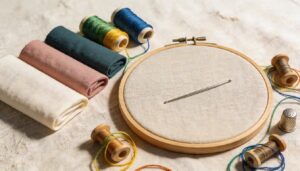
Getting fabric, thread, and setup right makes everything else click into place. The right combination means your stitches look intentional — not like a happy accident.
Here’s what to think about before you pick up that needle.
Choosing Stitches for Woven Fabrics
Woven fabrics — linen, cotton, denim — love structure. That’s why stitch density guidelines matter here: too dense, and you’ll pucker the weave; too sparse, and seams fail under stress.
Fabric tension management starts with the right stabilizer selection — one layer for mid-weight, two for lightweight. Match your thread and needle compatibility to fabric weight, and always do seam strength testing on scraps first.
Choosing Stitches for Knit Fabrics
Knits are a different beast — they move with you, so your stitches need to move too. Stretch Compatibility isn’t optional here; it’s the whole game. Think of Seam Flexibility as your foundation: every stitch choice must bend without breaking.
- Elastic stitch for jersey: A narrow zigzag reduces puckering on lightweight knits.
- Knit fabric hemming: Twin needles create two parallel rows with a built-in elastic join — perfect for clean cuffs.
- Thread and fabric pairing for best results: Polyester thread maintains elasticity without snapping under stress.
Gauge Matching and Tension Optimization keep everything balanced — test on scraps first, always.
Felt and Non-fraying Fabric Options
Felt is the stress-free fabric — no fraying, no fuss. Cut it, stitch it, done. That’s why Felt Edge Reinforcement works so beautifully with hand sewing for felt: blanket and whip stitches sit cleanly on the edge without extra prep.
| Fabric | Fraying Risk | Best Edge Technique |
|---|---|---|
| Felt | None | Blanket/Whip Stitch |
| Fleece | Low | Overcast Stitch |
| Faux Leather | Minimal | Whip Stitch |
Non-fray Stabilizer Use and Durable Interfacings add extra structure when combining these with Colorful Felt Palettes. Laser Cutting Precision keeps decorative border stitch variations crisp and consistent — perfect for preventing fabric fraying on finished garments.
Matching Thread Weight to Fabric Weight
Think of thread weight like shoe size — the wrong fit throws everything off.
A Thread Fabric Pairing guide keeps it simple: fine 60 wt thread suits lightweight silks and chiffons, 40 wt works well with medium cotton and linen beautifully, and 30 wt Heavy Fabric Threading anchors denim or canvas.
Always test Thread Tension Adjustment on a scrap first — that’s your Weight Compatibility Guide in action.
Cotton Floss for Beginner Clothing Embroidery
Cotton floss is your best friend as a beginner — it’s forgiving, affordable, and comes in hundreds of Floss Color Choices. Six strands mean built-in Thread Thickness Tips: use Floss Splitting Techniques to pull out 2–3 strands for lighter clothing embroidery.
Beginner Floss Storage tidy with color organizers. Always choose colorfast floss — Washing Floss Embroidery stays vibrant when the label says washable.
Perle Cotton for Bold Decorative Edges
Perle cotton is a step up from floss — and honestly, once you try it, you won’t go back. Its Sheen Enhancement and Light Reflection Effects make every decorative border pop.
For Edge Durability Tips, the No. 5 weight is your go-to for bold edge stitching on woven fabrics. It endures repeated washing beautifully — Colorfastness Testing confirms those colors hold.
Silk Thread for Delicate Garment Details
Silk floss is where things get genuinely beautiful. That natural Silk Luster catches light in a way no synthetic thread can fake — perfect for decorative stitching on chiffon, organza, or silk blends.
Filament Silk Benefits include zero bulk and smooth drape, while Spun Silk Coverage works better for fuller fills.
Corded Silk Texture adds subtle dimension to decorative borders.
Just remember: Silk Thread Care means cold water, gentle handling, always.
Polyester Thread for Machine Embroidery Durability
Where silk whispers, polyester delivers — built tough for machine embroidery that actually lasts. Its Colorfastness Retention keeps your decorative stitching bright through repeated washing, while Moisture Management prevents swelling or distortion.
Smart Tension Optimization and proper stabilizer use handle Thread Breakage Prevention at speed. Match stitch density to fabric weight, respect Heat Resistance limits, and your thread choices stay sharp wash after wash.
Needle Selection for Hand and Machine Work
Thread choice — so does your needle. For hand work, Crewel Needle Sizing runs 1–12; size 7 accommodates 2–4 strands comfortably.
Ballpoint vs Sharp comes down to fabric: ballpoints protect knits, sharps pierce woven cotton cleanly.
size 75/11 embroidery needles suit most 40-weight threads perfectly.
Match your Needle Eye Size to thread weight — that’s your Thread Compatibility Guide in action.
Stabilizer Choices for Lightweight Garments
Lightweight garments need the right stabilizer — otherwise your stitches pucker or distort.
For stable lightweight cotton fabrics, a tearaway stabilizer removes cleanly without leaving bulk behind.
Stretchy knits need a cutaway stabilizer for lasting support.
Polymesh weight selection matters too: 1.5 oz polymesh prevents show-through on delicates.
Add a water-soluble topping over textured fabrics, and use stabilizer layering techniques for dense designs.
Marking Clean Guide Lines Before Stitching
Before you stitch a single loop, clean guide lines make all the difference. Use a ruler or straight edge with a heat-erase pen for seam allowance marking along hems and cuffs — the marks vanish with a light press.
For curved edge guidance around necklines, move a seam gauge in short dashed intervals. Always test your transfer method on scrap fabric first.
Top 8 Embroidery Tools
The right tools make every stitch cleaner, easier, and way more enjoyable. Before you thread a single needle, it helps to know what’s actually worth keeping in your kit.
Here are the eight tools that do the most heavy lifting.
1. OESD AquaMesh Water Soluble Stabilizer
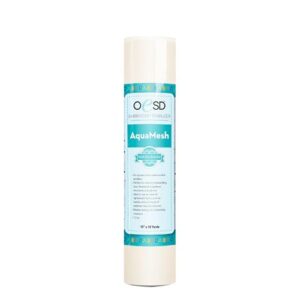
Think of OESD AquaMesh as your invisible assistant — it holds everything steady while you stitch, then simply disappears. This water-soluble stabilizer dissolves completely in warm running water, leaving zero residue behind. That makes it perfect for delicate garments, freestanding lace, and appliqué edges where a stiff backing would ruin the drape.
Use two layers for dense designs. It won’t soften from humidity during your project, so you can take your time without rushing.
Available in 10", 15", and 20" wide rolls.
| Best For | Embroiderers who work on freestanding lace, appliqué, or delicate machine-embroidered pieces like jewelry, bookmarks, and ornaments where clean, residue-free results matter. |
|---|---|
| Price | $36.99 |
| Primary Use | Embroidery stabilizing |
| Material | Water-soluble film |
| Form Factor | Roll |
| Washable/Removable | Yes, warm water |
| Skill Level | Intermediate |
| Additional Features |
|
- Dissolves completely in warm water — no sticky residue, no stiff backing left behind
- Humidity-resistant, so you can stitch at your own pace without worrying about the stabilizer breaking down mid-project
- Comes in three roll widths (10", 15", 20") to fit a range of hoop and project sizes
- Narrower rolls may not cover very large embroidery frames, like 7 × 12 in setups
- Dense stitch designs need two layers, which eats through your roll faster and adds prep time
- Not an option for any project or fabric that can’t handle warm water removal
2. Odif Temporary Fabric Adhesive Spray
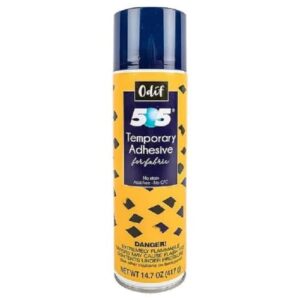
Pins poking through layers mid-project? Odif 505 Temporary Fabric Adhesive Spray fixes that fast.
A light, even spritz holds your fabric to stabilizer — no shifting, no puckering, no needle gunk.
It’s odorless, colorless, and completely acid-free, so your fabric stays clean.
Reposition as many times as you need before you commit to stitching. When you’re done, it washes out fully in a cold gentle cycle.
At $24.43 a can, it’s a small investment that saves big frustration.
| Best For | Quilters, embroiderers, and sewists who want a clean, pin-free way to hold fabric layers in place during machine work. |
|---|---|
| Price | $24.43 |
| Primary Use | Fabric basting |
| Material | Liquid adhesive |
| Form Factor | Spray can |
| Washable/Removable | Yes, washes out |
| Skill Level | Beginner |
| Additional Features |
|
- Holds fabric firmly without shifting, making it great for quilting sandwiches and appliqué work
- Odorless, colorless, and acid-free — won’t damage fabric or leave residue on your needle
- Washes out completely, so your finished project stays looking clean and professional
- Some users have noticed faint adhesive marks on fabric after removing it
- Shipping can run slower than expected, which isn’t ideal when you’re mid-project
- On thick or high-tension work, you may still want a few safety pins as backup
3. Dritz Heat Erase Fabric Markers
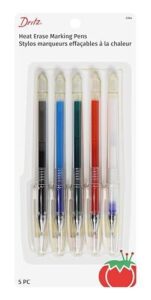
Clean guidelines make clean stitching — and Dritz Heat Erase Fabric Markers keep things tidy from start to finish.
You draw your guidelines before stitching, work right over them, then glide a hot iron across the fabric when you’re done. The marks vanish completely.
The five-pen set ($17.97) includes white, red, green, blue, and black — so you’ll always have a color that shows up, no matter your fabric.
One heads-up: let the ink fully settle before ironing, or marks can set permanently.
| Best For | Sewers, quilters, and tailors who want clean, temporary guidelines that disappear with a quick press of an iron. |
|---|---|
| Price | $17.97 |
| Primary Use | Pattern marking |
| Material | Ink/marker |
| Form Factor | Pen set |
| Washable/Removable | Yes, machine wash |
| Skill Level | Beginner |
| Additional Features |
|
- Five colors in one set, including white for dark fabrics
- Dual-ended design lets you erase mistakes on the spot before ironing
- Marks wash out in the machine too, giving you a backup removal option
- Ink flow can be spotty — some pens arrive nearly empty or dry out fast
- White ink doesn’t always show up well on dark fabrics
- Ironing too soon can make marks permanent instead of erasing them
4. Pellon Shape Flex Fusible Interfacing
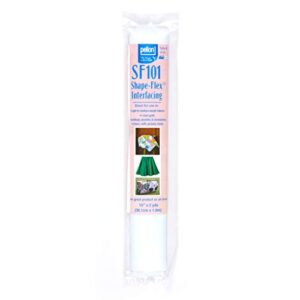
Wobbly edges and puckered embroidery usually come down to one thing — no backing. Pellon Shape Flex (SF101) fixes that fast.
It’s a woven 100% cotton interfacing with heat-activated adhesive on one side. Cut it to size, press it adhesive-side down onto your collar, cuff, or pocket, and you’ve got a stable foundation that won’t shift while you stitch.
It works beautifully under light-to-medium fabrics like chambray, oxford, or cotton blends — and washes clean without losing its hold.
| Best For | Sewers and embroiderers working with light-to-medium fabrics who need reliable structure in collars, cuffs, pockets, and needlework projects. |
|---|---|
| Price | By yard |
| Primary Use | Garment stabilizing |
| Material | 100% cotton woven |
| Form Factor | Sheet/piece |
| Washable/Removable | Yes, gentle cycle |
| Skill Level | Beginner |
| Additional Features |
|
- Easy iron-on application — just cut, place adhesive-side down, and press
- Soft 100% cotton feel that works well with everyday fabrics like chambray and oxford
- Washable and holds its shape after laundering on a gentle cycle
- Won’t give you a stiff, rigid finish — not the right pick for structured hat brims or heavy craft projects
- Can wrinkle or lose adhesion if you use too much heat or press unevenly
- Sold as a single piece, so bigger projects may mean buying multiple units or shopping by the yard
5. Fiskars Gingher Gold Fabric Shears
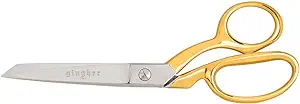
Once your fabric is backed and stable, the next thing that makes or breaks your prep is the cut. That’s where the Fiskars Gingher Gold Dressmaker Shears earn their place on the table.
The precision-ground knife-edge blades slice cleanly through cotton, denim, and batting — all the way to the tip. The bent handle keeps fabric flat, so your cuts stay accurate.
At $48.85, they’re an investment — but one that pays off every single time you pick them up.
| Best For | Sewers and quilters who cut fabric regularly and want a reliable, professional-grade scissor that reduces hand fatigue and delivers clean, precise cuts every time. |
|---|---|
| Price | $48.85 |
| Primary Use | Fabric cutting |
| Material | Steel/chrome |
| Form Factor | Scissors |
| Washable/Removable | No (tool) |
| Skill Level | Advanced |
| Additional Features |
|
- Knife-edge blades cut smoothly through thick materials like denim, leather, and batting — all the way to the tip
- Bent handle keeps fabric flat on the table, so your cuts stay straight and accurate
- Lifetime warranty and a chrome-over-nickel finish that’s built to last
- At $48.85, they’re a tough sell if you only sew occasionally
- Need regular cleaning and proper storage to stay sharp — not low-maintenance scissors
- International buyers may run into extra customs fees and slower shipping
6. ThreadNanny Rainbow Titanium Embroidery Scissors
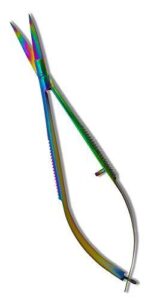
After those big shears handle the cutting, you’ll need something precise for the small stuff. That’s where the Rainbow Titanium Embroidery Scissors come in — and yes, they’re as pretty as they sound.
The curved 4.5-inch blades let you snip thread nubs and appliqué edges right at the base — without accidentally clipping your garment. Titanium-tipped, lightweight, and easy to spot on a crowded table thanks to that iridescent rainbow finish.
At $16.95, they’re a smart little addition to your kit.
| Best For | Embroiderers and sewists who need precise, close-cut trimming — especially those with limited hand strength or arthritis. |
|---|---|
| Price | $16.95 |
| Primary Use | Thread trimming |
| Material | Titanium-tipped steel |
| Form Factor | Scissors |
| Washable/Removable | No (tool) |
| Skill Level | Beginner |
| Additional Features |
|
- Curved blades get right to the base of thread nubs without nicking your fabric
- Lightweight and titanium-tipped, so they feel easy in hand during long sessions
- That rainbow finish isn’t just pretty — it actually helps you find them fast on a busy table
- Blades can dull faster than expected, especially with frequent use
- Thin metal construction means they may not hold up well under heavy, daily use
- Not built for thick fabrics — stick to fine threads and light materials only
7. Schmetz Embroidery Needles Size 75 11
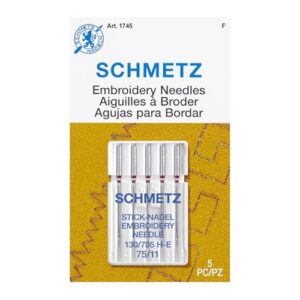
Your needle matters more than most people realize. The Schmetz 75/11 embroidery needle has a widened eye and a broad groove along the shaft — both designed to let rayon and polyester threads glide through without shredding or skipping stitches.
That light ball point is gentle on woven fabrics too, so no snagging mid-stitch.
Each pack comes with five needles, which is perfect for rotating them out regularly. Fresh needle, cleaner stitches — it’s that simple.
| Best For | Home sewists and embroidery enthusiasts who work with delicate specialty threads like rayon or polyester and want cleaner, skip-free decorative stitching. |
|---|---|
| Price | ~$5–10 |
| Primary Use | Machine embroidery |
| Material | Steel needle |
| Form Factor | 5-pack needles |
| Washable/Removable | No (tool) |
| Skill Level | Intermediate |
| Additional Features |
|
- The widened eye and broad groove let specialty threads glide through smoothly, cutting down on shredding and breakage.
- Works with all standard home sewing and embroidery machines, so no compatibility headaches.
- Great for decorative stitching, quilting, and detailed embroidery work where stitch quality really shows.
- Some listings advertise 100 needles but you only get 5 — worth double-checking before you buy.
- Not built for industrial machines, so heavy-duty setups are out.
- No chrome plating, which might be a dealbreaker for sewists who specifically prefer that finish.
8. June Tailor Eze View Press Cloth
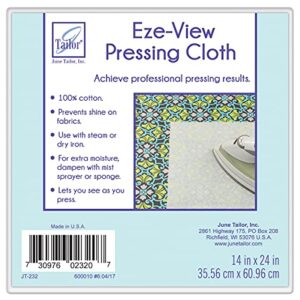
Once your stitching is done, pressing sets everything beautifully — and that’s where the June Tailor Eze View Press Cloth earns its place in your kit.
It’s 14 by 24 inches of 100% cotton, semi-sheer enough that you can see exactly where your iron lands. No no scorch marks, no shine on delicate threads.
Dampen it lightly for stubborn seams or heat-set interfacing. It works with steam or dry heat — simple, reliable, made in the USA.
| Best For | Sewers, quilters, and crafters who want precise, damage-free pressing on delicate or synthetic fabrics. |
|---|---|
| Price | $9.98 |
| Primary Use | Fabric pressing |
| Material | 100% cotton cloth |
| Form Factor | Flat cloth |
| Washable/Removable | Yes, washable |
| Skill Level | Beginner |
| Additional Features |
|
- Semi-sheer cotton lets you see exactly where the iron lands — no guessing, no mishaps
- Works with steam or dry heat, and you can dampen it for stubborn seams or interfacing
- Protects fabrics from scorch, shine, and water marks without getting in the way
- Pinked edges can fray over time, especially with regular washing
- At $9.98 for one piece, it feels pricey compared to cutting your own from bulk cotton
- A bit small for larger pressing jobs — some users wish it covered more ground
Frequently Asked Questions (FAQs)
What are the easiest decorative embroidery stitches for beginners?
Think of each stitch as a small stepping stone — and the easiest ones to start with are blanket stitch, running stitch, and backstitch.
They’re beginner-friendly, and instantly make your work look polished.
How do you combine embroidery stitches for unique designs?
Layering stitches is where the magic happens.
Try pairing satin stitch with a backstitch for crisp, filled shapes — or combine French knots with straight stitches to add playful dotted texture around florals.
What are the most popular decorative embroidery stitches for clothes?
Blanket, backstitch, chain, feather, and chevron stitches are the most beloved go-to choices.
Each one brings its own personality — from crisp outlines to soft botanical borders — making your garments feel genuinely handcrafted.
Can you use machine embroidery stitches for hand embroidery?
Yes — most machine embroidery stitches can be recreated by hand. You’ll get a slightly irregular, organic look, which honestly adds charm.
Match your thread weight, keep tension steady, and practice on scrap fabric first.
How do you choose the right thread color for embroidery?
Start with your fabric. Light backgrounds need darker threads to show up — dark fabrics need lighter ones. When in doubt, test a small swatch first. Contrast is everything.
How do I fix embroidery mistakes without starting over?
Most mistakes don’t need a full do-over. Tiny misalignments can be covered with extra stitching, wrong colors stitched right over, and damaged spots patched or turned into appliqué.
Can I embroider over existing seams or hems?
Absolutely — and it’s easier than you think.
Stitch over seams with flat, simple stitches like running or backstitch. Keep density low to avoid puckering, and always test on a scrap first.
Can embroidery be done on leather or vinyl?
Leather and vinyl can both be embroidered — you just need the right needle, stabilizer, and thread. Leather needles, polyester thread, and tear-away stabilizers keep everything secure without damaging the material.
How do you fix mistakes in finished embroidery?
Even finished embroidery can be saved.
Use small sharp scissors to trim loose threads from the back, then restitch using matching thread and the same stitch direction for a smooth fix.
Which stitches work best for monograms?
Split stitch and stem stitch are your best friends for monogram outlines — clean, controlled, and curve-friendly.
For filled initials, satin stitch over a split-stitch base gives you crisp, polished letters every time.
Conclusion
Like a master key unlocking a treasure chest, decorative embroidery stitches for clothing can transform your wardrobe.
With these stitches, you’ll turn ordinary garments into exceptional pieces.
Experiment with various decorative embroidery stitches for clothing to add a personal touch, and watch your style evolves—it’s a journey that’s both creative and fulfilling, one stitch at a time, revealing your unique voice.