This site is supported by our readers. We may earn a commission, at no cost to you, if you purchase through links.
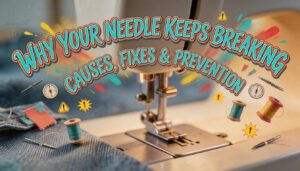
A snapping needle mid-seam isn’t just frustrating—it’s your machine signaling something’s wrong. Most sewers blame the needle itself, but the needle is rarely the culprit.
It’s usually everything around it: the fabric, the thread, the tension, even the way you’re guiding material through the feed.
Needle breaking repeatedly causes a range of problems, from something as simple as a dull tip to a misaligned throat plate you’d never think to check.
Once you know what to look for, the fixes are straightforward.
This guide walks you through every likely cause—and exactly how to stop it from happening again.
Table Of Contents
Key Takeaways
- Matching needle type and size to your fabric is the single most effective way to stop needles from snapping.
- Most needle breaks trace back to machine habits — pulling fabric, sewing too fast, or stitching over pins — not the needle itself.
- Low-quality thread puts stress on your needle just as much as the wrong needle size does, so always check your thread before blaming the machine.
- Regular maintenance — cleaning lint from the bobbin area, seating the needle fully, and replacing it every 8 hours — prevents most breaks before they start.
Wrong Needle Type or Size for Your Fabric
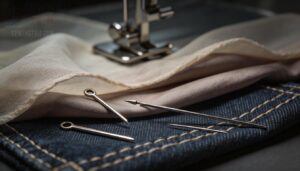
Using the wrong needle is one of the most common reasons needles snap — and it’s an easy fix once you know what to look for. The right needle depends on your fabric type, thickness, and thread weight.
A quick look at beginner sewing machine tips for choosing the right needle can save you a lot of frustration — and broken needles.
Here’s what to check before you sew another stitch.
Using a Universal Needle on Heavy Fabrics Like Denim
Using a universal needle on heavy denim is like wearing sneakers on a hiking trail — it’ll work for a while, then fail you fast. Universal needle geometry simply isn’t built for denim’s tight weave.
Switch to a dedicated denim needle and watch these problems disappear:
- Needle heat buildup drops substantially
- Multi-layer denim seams feed smoothly
- Presser foot pressure stays balanced
- Stitch length tuning becomes easier
- Preventing needle breakage gets easy
Mismatched Needle Size and Thread Weight
Needle gauge selection matters just as much as needle type. Pair thick, low-weight thread with a small needle, and you’ve exceeded its load capacity limits.
The needle eye creates friction, heat builds quickly, and snapping follows.
Thread diameter compatibility isn’t complicated — match needle size to thread weight every time.
For standard cotton, a size 14–16 needle with 40–50 weight thread works reliably.
Choosing The Right Needle for Knits, Leather, and Thick Layers
Each fabric has its own personality.
Knits need a ballpoint knit needle — it slides between fibers instead of piercing them.
Leather calls for a leather wedge needle that cuts cleanly without tearing.
Dense denim? Your denim ballpoint choice manages that tight weave without deflecting.
For fine, tightly woven fabrics, a microtex sharp needle keeps seams precise.
Choosing the right needle for different fabrics stops most breaks before they start.
How Needle Size Numbers Relate to Fabric Weight
Think of it like a like a scale. Higher numbers mean finer needles — size 60/8 suits delicate chiffon.
A worn or mismatched needle is often the real culprit, so check out these common reasons your upper thread keeps breaking before blaming your tension settings.
Lower numbers mean thicker shafts for heavy work.
A simple Numerical Size Chart maps these Fabric Weight Bands clearly: 70/10 for light cottons, 90/14 for denim, 110/18 for upholstery.
Getting your Size-Fabric Ratio right stops needle size mismatch before your first stitch.
Damaged, Dull, or Bent Needle Signs
A damaged needle doesn’t always look broken — sometimes the problem is too small to see at a glance. Even a slight bend or a dull tip can cause havoc before you notice anything’s wrong.
Here’s what to watch for so you can catch it early.
How to Spot a Bent or Dull Needle Before It Breaks
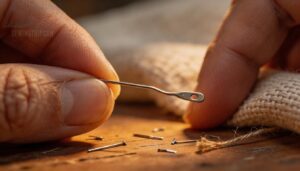
A bent or dull needle quietly ruins your work before it snaps. Regular needle inspection saves you frustration later.
Watch for these identifying signs of needle damage:
- Lateral wobble during stitching signals needle vibration from bending
- Poor stitch consistency or skipped stitches show lost needle sharpness
- Rough fabric snags reveal dullness — try the light reflection test
- Uneven thread tension feel means the needle eye is worn
Microcracks, Nicked Edges, and Worn Tips
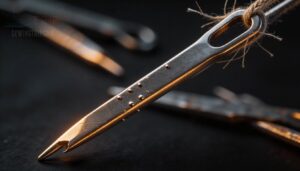
Even a needle that looks fine can be secretly failing. Tip fatigue mechanisms start small — microcracks form at the tip’s edge, then spread with every stitch through edge crack propagation.
Nicked edges from zippers or metal studs create snag points that fray your thread. Surface burr influence adds friction.
Material coating benefits slow this wear, but no needle lasts forever. Inspect closely before each project.
How Often You Should Replace Your Sewing Needle
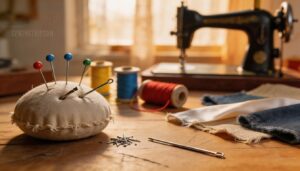
Replace your needle after every 8 hours of sewing — that’s your hourly usage limit. Think of it as regular needle maintenance for your machine’s health.
A project start replacement is a smart habit too.
Switch needles when you change fabric types — that’s your fabric switch cue.
Don’t skip the visual wear check. Needle life is shorter than most sewers expect.
Storing Needles Properly to Prevent Corrosion and Damage
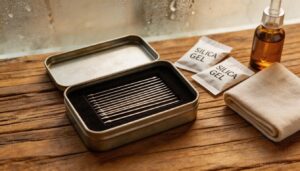
Bad storage quietly ruins good needles. Here’s how to keep yours sharp and rust‑free:
- Control humidity — store needles below 40% relative humidity using Desiccant Packs
- Use Material‑Specific Containers — closed metal or plastic tins beat open trays
- Pre‑Storage Cleaning matters — wipe blades dry with a lint-free cloth
- Follow a Regular Inspection Schedule — check every 3 months for pitting or discoloration
- Lightly oil stainless needles before long-term storage for Humidity Control protection
Preventive maintenance for needles starts in the storage tin.
Threading Mistakes and Tension Problems Causing Breaks
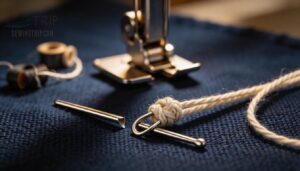
Threading might seem like a small thing, but it causes more needle breaks than most sewers expect. The way your thread travels through the machine — and how much tension it carries — puts real stress on your needle.
Here’s what to check before you sew another stitch.
Incorrect Upper Thread Path and Common Snag Points
upper thread as a car on a highway — one wrong turn causes a pileup. Check your upper thread path for snags before sewing.
Thread Guide Alignment matters: rough or damaged guides snag thread sideways. Confirm your Take-up Lever Position is correct before starting. Inspect for Needle Plate Clearance issues, and Burr-Free Tension Discs to eliminate thread path snags and their correction needs entirely.
Thread Tension Set Too High and Its Impact on The Needle
Too much tension is like overtightening a bolt — something eventually snaps. When thread tension is too tight, it triggers Tip Stress Amplification, forcing your needle to flex repeatedly against fabric resistance.
Overtightening thread tension is like overtightening a bolt — eventually, something snaps
That Fabric Resistance Interaction creates Heat Buildup and Thread Friction Wear along the shaft.
Try lowering tension by one or two units. Adaptive Tension Control keeps stitches smooth and prevents needle breakage.
Old, Brittle, or Low-Quality Thread Increasing Breakage Risk
Thread quality matters more than most people realize. Old, brittle, or poor-quality thread causes Thread Material Degradation — weakening fibers before you even start sewing.
Spool Storage Effects like humidity and sunlight speed up Fiber Weakness, while Coating Failure and Thread Twist Issues create snags inside your machine. Watch for:
- Fraying at the spool end
- Visible kinks or uneven thickness
- Dull, faded color from sun exposure
Always use good-quality polyester or cotton thread.
Matching Thread Weight to The Correct Needle Size
The Thread-Needle Ratio is simple: thick thread needs a bigger needle. A 30-weight thread needs a 90/14 to 100/16. Fine silk? Go with a 60/8 or 70/10.
When thread is too thick for the needle size, it jams the eye and snaps. Use Compatibility Tables from your needle box. Proper needle selection starts with matching weight to gauge — every time.
Sewing Habits That Snap Needles Repeatedly
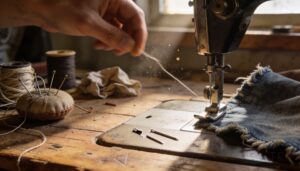
Sometimes the needle isn’t the problem — your habits are. Small things you do without thinking can put serious stress on a needle and snap it cleanly.
Here are the most common sewing habits that cause repeated breakage.
Sewing Too Fast Through Thick or Dense Fabric
Speed is the sneaky culprit most sewers overlook. When you’re powering through heavy denim or excessive fabric thickness, high sewing speed creates varying impact loads that your needle simply can’t absorb. Reduced sewing speed gives you control.
Pair that with walking foot usage and proper presser foot pressure — both improve feed dog synchronization across dense layers. Adjust your stitch length too. Slower and steadier always wins.
Pulling or Pushing Fabric Instead of Letting Feed Dogs Work
Your hands want to help — but that’s the problem. Pulling fabric while sewing disrupts Feed Dog Tension and throws off Stitch Length Consistency. Push Pull Dynamics work against you both ways: pushing stretches the edge, pulling deflects the needle sideways.
Feed dogs move the fabric. Trust them. Never pull or push fabric — just guide it lightly for natural Fabric Slip Control and Edge Stretch Prevention.
Sewing Over Pins, Zippers, and Metal Fasteners
Metal stops needles — sometimes literally. Sewing over pins is one of the most common reasons for needle breakage, and zippers aren’t much friendlier.
Use proper Pin Removal Technique: clear everything within 2 centimeters of your needle path.
Switch to Zipper Foot Usage when handling metal fasteners while sewing, and slow your Reduced Stitch Speed near stops.
Metal Fabric Stabilization and Metal Fastener Preparation keep your needle safe.
Navigating Thick Seams and Multiple Fabric Layers Safely
Thick seams are where needles go to die — if you’re not prepared.
Preflatten thick seams with an iron before you start.
Trim seam allowances to cut bulk, then baste before sewing to keep layers from shifting.
Use an even feed foot and a heavy-duty or denim needle.
Adjust stitch width and thread tension for smooth stitches, and never use thread too thick for the needle size.
Machine Maintenance Issues That Break Needles
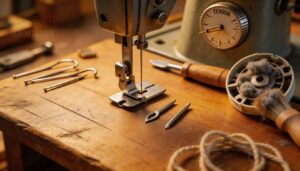
Keeping your sewing machine in good shape matters more than you think. Small maintenance slips can turn into big needle headaches fast.
Here’s what you need to watch for if needles keep snapping.
Needle Not Fully Seated or Clamp Screw Too Loose
Even a tiny gap in full needle insertion causes problems.
Push the needle up until the flat side position sits flush against the clamp — no wiggle, no tilt.
Then tighten the needle screw to the proper clamp screw torque.
Too loose invites micro-shifts; too tight risks clamp screw wear or stripped threads.
Always finish with a quick needle alignment verification before your first stitch.
Needle Striking The Throat Plate, Presser Foot, or Bobbin Case
That sharp clacking sound mid-stitch? That’s your needle hitting metal — and it’s a warning.
Throat Plate Wear, a Presser Foot Pinch, or Bobbin Race Debris can all push your needle off its intended path.
Use Impact Noise Diagnosis to catch it early: listen for tapping, then check Needle Path Clearance at each point.
Clean your bobbin case and inspect your foot for burrs immediately.
Cleaning Lint and Burrs From The Bobbin Area and Tension Discs
Lint is the silent troublemaker behind skipped stitches and snapped needles. A solid Lint-Free Maintenance Routine keeps things running smoothly.
- Remove and clean out your bobbin case every 2–4 hours of sewing
- Use a Microfiber Brush Use technique to sweep corners without scratching
- Wipe tension discs with a lint-free cloth for proper Tension Disc Cleaning and Burr Prevention Techniques
Don’t skip Bobbin Lint Removal — fleece and synthetics shed fast.
When to Seek Professional Servicing for Persistent Needle Breaks
Some problems run deeper than a needle swap. If you’re still getting persistent breaks after changing your needle, rethreading, and cleaning — it’s time to call a pro.
Timing gear issues, a hook interaction fault, or unusual vibration sounds signal internal wear that you can’t fix yourself. Breaks after service, especially, warrant a technician’s eye.
Professional sewing machine repair catches what you can’t see.
Frequently Asked Questions (FAQs)
What causes a sewing machine needle to break?
A snapping needle is your machine crying out.
It breaks due to wrong needle type, poor thread quality, incorrect installation, excessive fabric thickness, or needle bar timing issues — often worsened by machine age factors or environmental humidity effects.
What causes a needle to break?
Needles break for several reasons — wrong needle for the fabric, old brittle or poor quality ones, incorrect needle installation, or excessive fabric thickness pushing past the needle’s limit.
Why do sewing needles snap & break?
A sewing needle snaps when stress exceeds its strength. Wrong needle type, poor tension, fabric pulling, or improper installation all cause breakage.
Match your needle to your fabric, and most breaks simply stop.
What happens if a needle breaks?
When a needle breaks, the snap can send shards flying—risking user injury. You may also face machine jams, fabric tearing, stitch distortion, and unexpected repair expenses.
Sewing safety matters every time you sit down.
What is the most common cause of needle breakage?
The top cause of needle breakage in sewing is using an incorrect needle type for your fabric. Mismatched needles create stress points fast.
Always match your needle to the fabric before you start.
How to prevent needle breakage?
Preventing needle breakage starts with matching your needle to your fabric, maintaining proper Stitch Density Control, and keeping a Needle Change Log.
Small habits — like monitoring Heat Build‑up and ensuring Fabric Feed Consistency — protect every seam.
Can needle breakage damage my sewing machine internally?
Yes, it can. A snapped needle can nick the throat plate, chip the bobbin case, and scratch the hook — causing Stitch Formation Disruption, Bobbin Hook Damage, and long-term Needle Bar Fatigue inside your machine.
One common cause is thread caught in spool notch.
Does room humidity affect needle strength over time?
Humidity does affect needle strength over time. Moisture-Induced Corrosion weakens steel slowly.
Once Nickel Plating Protection wears off, rust starts fast.
Store needles in dry, airtight containers. Storage Environment Control is your simplest defense.
Can sewing speed settings vary by needle brand?
Needle brands do vary. Some publish RPM recommendations and brand speed charts for specific fabrics.
Exceeding those limits increases needle wear and fatigue. Check your brand’s guide before adjusting speed control in sewing.
Do needle breaks differ between mechanical and digital machines?
Both machine types break needles for the same core reasons.
Digital needle positioning and needle stop control add convenience, but mechanical alignment checks matter just as much on any computerized sewing machine as on a mechanical one.
Conclusion
It turns out, a snapping needle isn’t a needle problem, but a system issue.
Needle breaking repeatedly causes more than just frustration—it signals a domino effect of misalignments and mismatches.
By addressing the root causes, you’ll sew smoothly and efficiently.
So, take a closer look around your needle; it’s likely a simple fix.
With these solutions, you’ll prevent future breaks and master your craft, stopping needle breaking repeatedly for good.
- https://hostinger.com/?REFERRALCODE=MGLRHONDA4MI
- https://www.pinterest.com/ageberry/
- https://sewing.com/computerized-vs-mechanical-sewing-machine/
- https://support.brother.com/g/b/faqend.aspx?c=us&lang=en&prod=hf_inovns80eeus&faqid=faqh00101511_001
- https://www.ageberry.com/why-sewing-machine-needle-keeps-breaking-solutions/