This site is supported by our readers. We may earn a commission, at no cost to you, if you purchase through links.
Most sewing machines promise versatility but deliver frustration—skipped stitches on knits, threading rituals that eat twenty minutes, bobbins that run out mid‑seam with no warning.
The Singer Sew Mate 5400 takes a different approach, pairing a rigid metal frame with 60 built-in stitches and enough automation to get fabric under the needle fast. 17.5 pounds, it sits solid on any table without creeping or rattling.
Whether you’re hemming denim or working stretch fabric into something wearable, knowing exactly what this machine does—and what it won’t—saves you from a costly mistake at checkout.
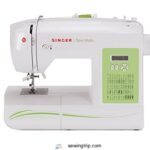
The Singer 5400 has been sitting on my sewing table for a few months now, and honestly, it’s held up better than I expected for the price point. The automatic needle threader alone saves so much frustration — if you’ve ever squinted at a needle for five minutes trying to thread it, you’ll appreciate this immediately. The 60 built-in stitches sound like a lot, but you actually use them. The decorative options are surprisingly versatile for quilting projects, and switching between them is just a button press. The heavy-duty metal frame keeps the machine steady even on faster speeds, which matters more than people realize. That said, it does run louder than some competitors, and the plastic foot controller feels a little cheap compared to the rest of the build. It’s also US/Canada voltage only, so keep that in mind. Four buttonhole styles covers most needs, but advanced sewists might find that limiting.
Best For: Beginners and intermediate sewists who want a reliable, feature-packed machine for clothing, quilting, and everyday craft projects without a steep learning curve.
- Automatic needle threader removes one of the most tedious parts of setup, especially helpful for those new to sewing
- 60 built-in stitches with push-button selection covers everything from basic seams to decorative edging
- Sturdy metal frame reduces vibration and keeps stitches consistent across heavier fabrics like denim or vinyl
- Runs noticeably louder than comparable machines, which can be disruptive in shared spaces
- Plastic foot controller feels less durable and may wear out faster than the rest of the machine
- Limited to 110V outlets, making it unusable in 220–240V regions without a converter
Table Of Contents
Key Takeaways
- The Singer Sew Mate 5400’s heavy-duty metal frame keeps stitches consistent and earns it a 25-year limited warranty that competitors at the same price simply can’t match.
- With 60 built-in stitches — including 8 stretch options — plus automatic needle threading and a one-step buttonhole, it handles most home sewing projects without the usual setup headaches.
- At 17.5 pounds and 750 stitches per minute, it’s sturdy enough to stay put on any table, yet controlled enough for delicate fabrics when you dial in the right needle and tension.
- Common issues like thread bunching, skipped stitches, and bobbin friction are almost always quick fixes — wrong needle, poor threading path, or a lint buildup you can clear in minutes.
Singer Sew Mate 5400 Key Features
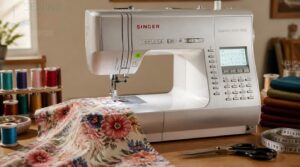
The Singer Sew Mate 5400 brings a solid set of features to the table — ones that actually matter when you’re sitting down to sew.
From automatic needle threading to built-in stitch options, you can see exactly what makes it tick in this Singer 5400 feature breakdown.
Before getting into stitch options and accessories, it helps to understand what the machine is built at a core level. Here’s a closer look at the key specs that shape how it performs day-to‑day.
Heavy-duty Metal Frame
The Singer Sew Mate 5400’s heavy-duty metal frame is what keeps everything steady when you’re pushing through multiple fabric layers. Its torsional stiffness resists flex and vibration, so your stitches stay consistent.
Powder-coated finishes protect against humidity, and the reinforced structure reinforces long-term sewing machine durability — which is exactly why Singer backs it with a 25-year limited warranty.
Dimensions and Weight
The Sew Mate 5400 measures 406.4 × 203.2 × 317.5 mm (16.5 × 8.0 × 12.5 in), giving it a compact tabletop footprint that fits most sewing tables without crowding your workspace.
At 17.5 pounds, it’s sturdy enough to stay put mid-project — though that same weight makes tossing it in a bag between classes less than convenient.
Understanding dimensional weight considerations can help you estimate shipping costs for the Sew Mate 5400.
Built-in LED Lighting
The Sew Mate 5400 manages task visibility well with its built-in LED light positioned directly over the needle area, keeping shadows off your fabric surface. The cool-touch LED illumination won’t heat up near your hands or material.
It also delivers solid color accuracy, so distinguishing similar fabric shades stays easy — and with LED longevity lasting tens of thousands of hours, you won’t be hunting for replacement bulbs anytime soon.
Sewing Speed and Motor Power
The Sew Mate 5400 keeps pace with your projects at a maximum 750 stitches per minute, giving you enough speed for straight seams without sacrificing control on delicate work.
Its motor controls fabric resistance management well, maintaining stitch consistency across light cottons and stretch knits, while built-in thermal protection keeps it running reliably through longer sewing sessions.
25. year Limited Warranty
One of the standout sewing machine features on the Singer Sew Mate 5400 is its 25-year limited warranty, which covers defects in materials and workmanship for the original purchaser. Here’s what that protection includes:
- Parts and labor for covered repairs at authorized service centers
- Non-transferable coverage tied to the original buyer only
- Exclusions for misuse, normal wear, and unauthorized repairs
- A straightforward claim filing process requiring proof of purchase
Stitch Selection and Customization
The Sew Mate 5400 gives you a lot of creative room to work with, and stitch selection is where that really shows. Whether you’re piecing together a simple hem or adding decorative detail to a project, the right stitch makes all the difference. Here’s a closer look at what this machine puts at your fingertips.
60 Built-in Stitch Patterns
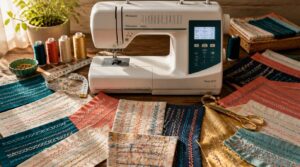
With 60 built-in stitches, the Singer Sew Mate 5400 covers nearly every home sewing need in one machine.
To keep all 60 stitches performing their best, follow a routine that starts with proper sewing machine oil and application techniques for the needle bar, bobbin area, and other moving parts.
| Stitch Category | Count | Best Use |
|---|---|---|
| Essential/Utility | 8 | Seams, hems, repairs |
| Decorative | 40 | Motifs, embellishments, edge detail |
| Stretch/Knit | 8 | Jersey, knit fabrics |
From satin stitch density for filled decorative motifs to reinforced bar tacks and professional edge finishes, the stitch selection variety manages both everyday projects and creative work with ease.
Adjustable Stitch Length and Width
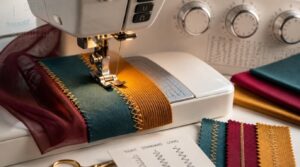
Stitch length and width control give you real command over how your seams look and hold. Stitch length ranges from 0 to 4 mm, with 2.5 mm as a solid everyday starting point. Here’s what each setting does for you:
- Shorter lengths (0–1.5 mm) prevent fabric perforation on lightweight materials
- Standard lengths (2.5–3 mm) work well for medium-weight seams
- Longer lengths (3.5–4 mm) suit basting vs topstitching tasks perfectly
- Wider zigzag widths (up to 6 mm) secure stretchy knit seams without tearing
Adjustable stitch width mainly affects zigzag and decorative stitches. Always test on scrap fabric first, and remember — tension interaction matters. Changing length or width often means tweaking tension too for balanced, clean results.
One-step Buttonhole Options
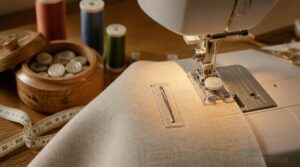
Getting consistent buttonholes by hand can feel like a guessing game — but the Singer Sew Mate 5400’s one-step buttonhole function removes that uncertainty entirely.
Attach the buttonhole foot, place your button in its guide, and the built-in sensor automatically determines the correct length, stitches all four sides, and seals both ends to prevent fraying.
Electronic Push-button Controls
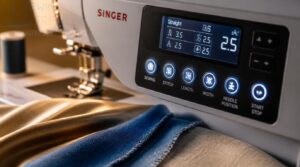
The Singer Sew Mate 5400 swaps old-fashioned rotary dials for electronic push-button controls, letting you select any of its 60 stitch patterns with a single press.
Each button delivers a satisfying tactile click, confirming your input, while the LCD screen instantly displays your chosen stitch length and width — no guesswork, no squinting at tiny markings.
Decorative and Stretch Stitches
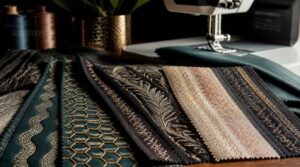
The 5400’s 60 built-in stitches cover far more ground than basic sewing — from zigzag stretch variants that flex with knit fabrics, to serpentine textures, honeycomb patterns, and feather stitch embellishments for decorative borders.
- Zigzag stretch keeps seams elastic on knits
- Serpentine stitches create flowing wave effects
- Honeycomb patterns add subtle texture to jersey
- Feather stitches work beautifully along decorative borders
- Decorative chain stitches finish cuffs and trims with style
Automatic Functions and Ease of Use
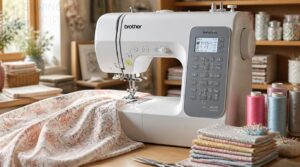
The Singer Sew Mate 5400 takes a lot of the frustration out of sewing by handling the fiddly stuff for you. Whether you’re just starting out or getting back into the craft, its built-in automatic features make the whole experience feel a lot less overwhelming. Here’s a closer look at what those features actually do.
Automatic Needle Threader
Threading the needle used to be the most dreaded part of sewing — squinting, poking, failing. The automatic needle threader on the Sew Mate 5400 changes that completely. A small flexible wire hook passes through the needle eye, grabs your thread, and pulls it through in seconds.
| Feature | Detail | Benefit |
|---|---|---|
| Activation | Lever or button | Quick, hands-free start |
| Hook material | Metal, wear-resistant | Long-term durability |
| Needle position | Highest setting required | Ensures clean thread capture |
Keep the threading path clear of lint for reliable performance.
Quick-set Drop-in Bobbin
Once the needle is threaded, the next step is loading your bobbin. The quick-set drop-in bobbin on the Singer Sew Mate 5400 makes this fast.
Drop it into the compartment, align it with the thread guide, and you’re ready. The clear bobbin cover lets you monitor thread supply without stopping your project.
LCD Screen and Controls
With your bobbin loaded and thread in place, the LCD screen and controls take over to guide your next move.
A clear display shows your stitch length and width in real time. Use the touch-sensing push buttons to browse stitch patterns quickly, with instant visual feedback on every selection — no guesswork, just clean, confident control right at your fingertips.
Automatic Reverse Stitching
Once your stitch is selected on the LCD screen, the automatic reverse function kicks in to lock your seams at both ends. It backstitches with the same length and tension as your main stitch, so you get consistent seam reinforcement every time — no manual reversing needed, and far less fatigue on longer projects.
Free Arm Capability
Sewing sleeves, trouser hems, or cuffs becomes much easier with the built-in free arm. Just slide off the storage compartment, and the narrower arm appears, letting tubular fabric wrap cleanly around it.
A quick-release mechanism makes switching between flat bed and free arm modes fast, so you stay focused on precision edge stitching without wrestling your fabric into place.
Accessories, Storage, and Maintenance
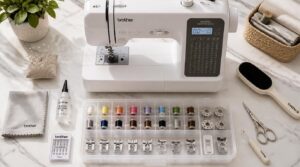
Singer Sew Mate 5400 doesn’t just come ready to sew — it comes ready to support you through every project with the right tools on hand.
Knowing what’s included and how to care for your machine makes a real difference in how long it lasts and how well it performs.
Here’s a look at what you get out of the box and how to keep things running smoothly.
Included Presser Feet and Attachments
The Singer Sew Mate 5400 comes with a solid set of sewing machine accessories included right out of the box. You get an all-purpose foot, zipper foot, and buttonhole foot — each covering the most common tasks you’ll run into as you build your skills.
These feet attach using a snap-on mechanism that clicks securely onto the presser foot bar, making swaps fast and tool-free. All feet share low shank compatibility, so they fit Singer’s standard low shank base without any adapters.
- The zipper foot lets you stitch right up close to zipper teeth cleanly.
- The buttonhole foot produces uniform, consistent buttonholes automatically.
- The walking foot keeps multiple fabric layers feeding evenly, especially useful for denim.
- The applique foot gives you precise control over decorative stitching and fabric placement.
Each foot processes specialized foot scenarios that would otherwise frustrate beginners. For attachment maintenance tips, wipe feet clean after heavy use, check for nicks along the edges, and store each one in a labeled organizer so you don’t mix them up.
Removable Storage Compartment
The removable storage compartment on the Singer Sew Mate 5400 keeps your sewing machine accessories organized and within reach. It attaches snugly to the machine base, mounts on either side, and lifts out sideways with one hand.
| Feature | Detail |
|---|---|
| Construction | Impact-resistant plastic |
| Dividers | Customizable, removable |
| Side-mount | Left or right |
| Interior | Smooth, snag-free surface |
Cleaning and Lubrication Tips
Think of your machine like a car — skip the oil changes, and things start grinding. Unplug the machine and remove the needle first, then use a soft nylon brush or canned air to clear lint from the feed dogs, bobbin case, and shuttle race. Clean monthly, or after every eight hours of sewing.
Once clean, apply one drop of synthetic sewing machine oil to the needle bar, presser foot bar joint, and balance wheel axles — never household oil, which gums up mechanisms. Wipe away any excess immediately to avoid fabric stains.
After you’re done, run a few stitches on scrap fabric to distribute the lubrication evenly. Keep a maintenance log noting the date and tasks completed — it’s a small habit that saves big headaches down the road.
Safety and Assembly Guidelines
Before you sew a single stitch, take a moment to set up safely.
Place the machine on a firm, level surface, plug it into a grounded outlet, and never use extension cords.
Disconnect power before changing needles or attachments.
Keep fingers clear of the needle area, and use only the supplied tools during assembly to avoid damaging the frame.
Routine Maintenance
A well-maintained machine is a reliable machine. Lubricate all moving foot controls with light machine oil every 8 hours of use, and apply white lithium grease to the needle bar gear every 40 hours. Replace your needle every 8 hours of heavy sewing, and clean lint from the feed dogs and needle plate after every project.
- Re-lubricate the bobbin case race after every 20 bobbin changes
- Check drive belt tension monthly and adjust as needed
- Vacuum internal compartments monthly to prevent fiber buildup
- Inspect your power cord and foot pedal for cuts or exposed wiring
- Schedule a quarterly deep clean of the bobbin and feed dog areas
Log every lubrication and cleaning date so nothing slips through the cracks.
Performance, Troubleshooting, and User Insights

Now that you’ve got the machine set up and your accessories sorted, it’s time to see how the Singer Sew Mate 5400 actually performs when fabric meets needle.
Every sewing machine has its sweet spots — and its quirks — and this one is no different.
Here’s what you need to know about its real‑world performance, how to fix common hiccups, and what other sewists are saying about it.
Fabric Compatibility and Stitch Quality
Regarding fabric compatibility, the Singer Sew Mate 5400 processes everyday materials well.
Cotton, linen, and light stretch knits produce clean, consistent stitches when you match your needle size to fabric weight — use a 75/11 for delicate fabrics and a 90/14 for medium weights.
Pair your needle with the right thread, and stitch quality improves noticeably.
Adjusting Tension and Needle Size
Getting fabric compatibility right is only half the battle — tension and needle size do the rest of the work.
Start with your needle. For medium-weight woven fabrics, an 80/12 to 90/14 needle works well. Match your thread weight to it, too, since mismatched pairing causes skipped stitches.
Key adjustments to keep handy:
- Increase top tension gradually when stitches look loose on the fabric surface
- Reduce top tension slightly if the underside puckers or pulls
- Balance bobbin tension alongside top thread for even, clean stitches
Always test on a fabric swatch first before sewing your actual piece.
Common Sewing Issues and Solutions
Even with tension and needle size dialed in, small problems can still pop up. Puckered seams usually mean your top tension is too tight or your stitch length is too short — loosen the tension slightly and lengthen the stitch. Thread breakage often points to a dull needle or an incorrect thread path, so rethread carefully and swap the needle first.
Skipped stitches and uneven stitching are almost always a needle issue — wrong type, wrong size, or a bent tip. Use a ballpoint needle for knits and a sharp for wovens, and re-insert the needle fully to avoid fabric distortion.
User Reviews and Ratings
The Singer Sew Mate 5400 holds an average score of 8.6 out of 10 across 44 reviewers — a steady result that reflects genuine satisfaction rather than hype. Users consistently praise the sturdy metal frame, quiet operation, and smooth fabric handling as the standout reasons for high marks.
The Singer Sew Mate 5400 earns an 8.6 out of 10 for its sturdy frame, quiet motor, and smooth fabric handling
Here are five patterns that show up repeatedly in user feedback:
- Build quality earns trust — reviewers frequently note that the metal frame reduces vibration and keeps stitches consistent over time.
- Automatic features save time — the needle threader and one-step buttonhole receive strong praise for making setup faster and less frustrating.
- Bobbin loading causes friction — it’s the most common complaint, with some users needing extra time to get it seated correctly.
- The 25-year warranty adds confidence — many buyers mention it as a key reason they chose this machine over similarly priced competitors.
- Support accessibility matters — users rate their experience higher when troubleshooting tips and replacement parts are easy to find.
On the downside, a few reviewers mention minor tension problems early on and a short learning curve for beginners. Overall, though, the feedback paints a reliable, capable machine for home sewing.
Language Availability of Manual
The user manual PDF for the Singer Sew Mate 5400 is available in English by default and can be downloaded directly from Singer’s official support site.
Regional variations exist—Spanish, French, and German editions are offered through local portals.
An online HTML help version provides searchable, mobile‑friendly access, and customer support assistance can locate the correct translated edition if you can’t find yours.
Frequently Asked Questions (FAQs)
What size needle should I use?
Match needle size to your fabric weight. Use 70/10–90/14 universal needles for light to medium fabrics, 75/11–90/14 ballpoint for knits, and 100/16 for denim. Always test on a scrap first.
How long does a sewing needle last?
On average, a sewing needle lasts 6 to 10 hours of sewing. Heavier fabrics, faster speeds, and specialty threads shorten that lifespan. Replace it when you notice skipped stitches or thread breakage.
Why does the needle break while sewing?
Needles break from bent needle friction, hitting hidden pins, using the wrong type for your fabric, or running at high speed through thick layers — each adds stress until the needle snaps.
Why is the fabric not feeding properly through the Singer Sew Mate 5400?
Fabric not feeding properly usually comes down to disengaged feed dogs, lint buildup under the plate, bobbin tension issues, or a stitch length set too short — all easy fixes once you know where to look.
How can I adjust the stitch length on the Singer Sew Mate 5400?
Press the stitch length up or down arrows on the control panel to adjust. The display shows values in millimeters. Test on scrap fabric first to confirm your Singer Sew Mate 5400 stitch length settings.
Is the manual of the Singer Sew Mate 5400 available in English?
Yes, the Singer Sew Mate 5400 user manual is available in English. You can download the PDF instruction guide from manual repositories online. It covers stitches, threading, tension, and troubleshooting — everything you need.
What is a singer sew mate 5400?
The Singer Sew Mate 5400 is a beginner sewing machine built for home hobbyists. It offers 60 built-in stitches, a one-step buttonhole function, and straightforward controls — perfect for garments, repairs, and everyday projects.
How many stitches does a singer 5400 have?
The Singer Sew Mate 5400 packs 60 built-in stitches — eight essential, eight stretch, and 40 decorative — plus four one-step buttonhole styles, giving you solid stitch selection for everyday sewing projects.
What is a sew mate 5400?
The Singer Sew Mate 5400 is a home sewing machine built for beginners and intermediate sewers who want reliable everyday performance, offering 60 built-in stitches, automatic features, and a heavy-duty metal frame.
How to fix thread bunching on singer sew mate 5400?
Thread bunching is like a knot you didn’t tie — fix it by rethreading the upper path with the presser foot raised, reinserting the bobbin counterclockwise, and replacing any dull needle.
Conclusion
Picture your workspace: fabric laid flat, thread pulled taut, every seam landing exactly where you intended. That’s what the Singer Sew Mate 5400 makes possible—not through luck, but through a machine built to handle real projects without fighting you at every single turn.
Its metal frame holds steady, its 60 stitches cover the work, and its automatic features quietly remove the friction that turns beginners into quitters.
Pick it up and start finishing things.