This site is supported by our readers. We may earn a commission, at no cost to you, if you purchase through links.
Most home sewists hit the same wall: you finish a garment, wash it once, and the seams start fraying or the knit fabric puckers along every stitch line. A regular sewing machine wasn’t built to solve that problem—it was built to join fabric, not protect it.
A serger trims, stitches, and encases the raw edge in a single pass, running at roughly 1,500 stitches per minute with no bobbin to manage. This efficiency addresses the core issue of fabric durability post-wash.
Knowing when you need a serger machine comes down to what you’re sewing, how often you sew, and what kind of finish your work deserves. If you frequently work with knits, woven fabrics prone to fraying, or prioritize professional-looking results, a serger becomes essential.
Table Of Contents
- Key Takeaways
- What a Serger Machine Does
- You Need a Serger for Clean, Fast Seams
- Best Projects for a Serger
- When a Sewing Machine is Enough
- Serger Vs Sewing Machine Differences
- Signs a Serger is Worth Buying
- Costs, Space, and Maintenance
- Choosing The Right Serger Type
- Frequently Asked Questions (FAQs)
- Conclusion
Key Takeaways
- A serger trims, stitches, and encases raw edges in a single pass at up to 1,500 stitches per minute, making it the only tool that truly solves fraying and puckering on knit and stretch fabrics after washing.
- You need a serger when your projects involve knits, activewear, or repeated garment construction — but a regular sewing machine still handles tasks like zippers, buttonholes, and topstitching, so the two tools work best together.
- The right serger type depends on what you sew: a 4-thread model handles most garment work, a 3-thread excels at delicate edge finishing, and a 5-thread tackles heavy fabrics like denim or upholstery.
- Beyond the $250–$999 purchase price, factor in ongoing thread cone costs, a real learning curve for multi-path threading, and the blade maintenance routine — because skipping any of these quietly kills your results.
What a Serger Machine Does
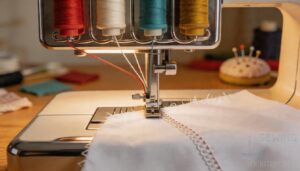
A serger isn’t just a faster sewing machine — it’s a completely different tool built to do things your regular machine simply can’t. Once you understand how it works, everything about your seam finishing changes.
If you’re still figuring out which machine fits your needs, this guide to serger machines for home sewists breaks down exactly what to look for before you buy.
Here’s what a serger actually does under the hood.
Trims, Stitches, and Finishes in One Pass
A serger functions as a three-in-one tool, combining edge trimming, fray prevention, and stitching in a single pass. Its built-in cutting blade trims fabric edges while the overlock machine simultaneously wraps and locks the stitch—a process called Thread Synchrony. This integration ensures trim accuracy, Seam Cohesion, and Blade Fusion, delivering a professional finish inside garments quickly.
For bulky knits, adjust the machine by increasing the stitch width to accommodate thicker fabrics.
Uses 3 to 5 Threads Instead of a Bobbin
Unlike a regular sewing machine, a serger skips the bobbin entirely. Instead, it uses a Looper Mechanism — upper and lower loopers that interlock thread around the fabric edge. Here’s how the thread setup breaks down:
- 3-thread serger – Two loopers plus one needle for light edge finishing
- 4-thread serger – Two loopers plus two needles for stronger seam structure
- 5-thread serger – Adds a safety stitch for heavy-duty construction
- Multi-Thread Tension – Each thread path has its own tension disc
- Thread Cone Capacity – Large cones feed Continuous Thread Flow without interruption
Those Stitch Structure Variations depend entirely on how the loopers and needles combine — and getting your thread tension right on each path makes all the difference.
Creates Overlock Seams for Clean Raw Edges
Those looper threads don’t just hold fabric together — they wrap around the raw edge in a process called Fiber Encapsulation, sealing loose fibers before they fray.
| Overlock Feature | What It Does |
|---|---|
| Trim-to-Stitch Ratio | Cuts and sews in one pass |
| Stitched Edge Consistency | Keeps seam width even |
| Seam Edge Drape | Lies flat without bulk |
| Overlock Aesthetic | Mimics ready-to-wear finishes |
| Fabric Fraying Prevention | Encloses raw fibers completely |
That’s your edge finishing technique working exactly as intended.
Uses Differential Feed to Control Stretching
Differential feed prevents knit fabrics from becoming wavy by using two sets of feed dogs—front and rear—operating at different speeds. This mechanism ensures fabrics either gather, remain flat, or stretch intentionally, depending on the Feed Ratio Calibration.
For Stretch Prevention with materials like jersey and spandex, adjust settings toward 2.0. To create ruffles, employ Gathering Techniques by increasing the ratio significantly.
Fabric-Specific Settings are essential for optimal results, as they tailor the machine’s behavior to the unique needs of each material.
Works Faster Than a Regular Sewing Machine
Speed is where a serger really pulls ahead. Most home models run at 1,200–1,500 stitches per minute — nearly double what a regular sewing machine delivers. This Stitch Rate Advantage compounds fast, as the serger’s design eliminates interruptions.
Continuous Edge Cutting ensures no stopping between steps, creating a Time‑Saver Workflow optimized for Rapid Garment Assembly. The seamless process minimizes delays, allowing for cleaner output and noticeably faster project completion every single time.
You Need a Serger for Clean, Fast Seams
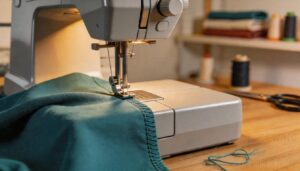
A serger isn’t for every sewing situation, but when the right one comes along, it changes everything about how fast and clean your work looks.
Knowing those situations is what separates sewists who get real use out of their machine from those who let it collect dust.
When a serger genuinely earns its spot on your table, it transforms your workflow.
Sewing Knit, Stretch, or Athletic Fabrics
Knit, stretch, and activewear fabrics are where a serger truly earns its place. Standard machines struggle here—straight stitches snap when seams flex. A serger’s overlock stitch moves with the fabric, providing critical flexibility.
Pairing this capability with proper needle selection, tension tweaking, and walking foot use ensures seams that hold under stress. These techniques collectively enhance durability, transforming fragile joins into resilient structures.
Adding stretch testing on scraps and employing stabilizer techniques further maintains fabric control. This dual approach prevents distortion, ensuring knit projects retain shape and integrity during wear.
Finishing Fraying Fabric Edges Neatly
Fraying edges ruin garments faster than almost anything else. A serger solves this with overlock stitching — it trims the raw edge and wraps thread around it in one pass. That’s your best edge finishing technique for fabrics that shred in the wash.
Need a French seam alternative? Overlock it instead.
Differential feed controls puckering prevention on bias cuts, while proper thread tension tricks keep the finish tight and clean.
Making Clothes More Often Than Crafts
If you’re sewing garments every week — not just the occasional tote bag — a serger stops being a luxury and starts being a necessity. Rapid Pattern Drafting and a solid Fabric Pre-wash Routine mean nothing if your seam finishing slows everything down. Clothing production demands consistency, and that’s exactly what a serger delivers.
Here’s where it earns its place in regular garment work:
- Stitch consistency checks become faster when every seam finishes in one pass
- Garment fit testing moves quicker when you’re not hand-finishing edges between fittings
- Material waste reduction improves because the integrated blade trims only what’s needed
- Batch sewing — like t-shirts or leggings — stays efficient without tool-switching
- Serger applications for activewear and knitwear shine most in repeated, production-style workflows
Wanting Store-bought Looking Seam Finishes
That store-bought look isn’t magic — it’s a serger. Professional garment finishing techniques wrap and conceal every raw edge, giving you a polished interior finish and seam allowance concealment that mimics ready-to-wear clothing.
The invisible seam line, the professional edge look, and the clean seam tuck technique — a serger performs all of it in one pass, something a sewing machine simply can’t replicate.
Sewing in Batches and Saving Time
Batch Cutting fabric, staging pressing, and running Parallel Workflows all become faster when your machine stitches, trims, and finishes in one pass. A serger hits 1,200–1,500 stitches per minute — nearly double a sewing machine’s pace.
Grouped Thread Changes and dedicated Setup Stations keep momentum steady across a full run, eliminating bottlenecks and maintaining efficiency.
This streamlined approach transforms what used to take a full day into a focused, efficient sewing workflow, maximizing productivity without sacrificing quality.
Needing Strong Seams That Flex Without Popping
Speed isn’t the only reason sergers earn their place. Knit fabrics and stretch fabrics demand seams that move — and a straight stitch simply can’t deliver that. Serger stitch types for stretch fabrics use looped thread construction that builds in seam elasticity naturally.
Combined with proper thread tension, stitch density, and elastic yarn, you get seam reinforcement with real stress distribution across every stress point.
Best Projects for a Serger
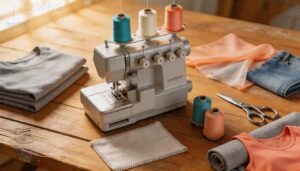
A serger doesn’t do everything, but for the right projects, it’s hard to beat. Knowing where it shines helps you get the most out of it without wasting time switching machines.
Here are the projects where a serger genuinely earns its place on your worktable.
T-shirts, Leggings, and Lounge Sets
T-shirts, leggings, and lounge sets are where a serger earns its keep. These pieces rely on knit fabrics — cotton jersey, bamboo elastane, polyester fleece — that demand serger stitch types for stretch fabrics.
Elastic waistbands, relaxed silhouettes, and color-block styling all need seams that flex. The serger’s ability to handle these elements ensures durability and comfort in garments designed for movement.
Brushed fleece warmth, easy-care washing, and four-way stretch leggings? Your serger manages every bit of it cleanly, maintaining fabric integrity while accommodating rigorous use and care.
Baby Clothes and Everyday Knit Garments
Baby clothes demand every advantage your serger offers. Knit fabrics stretch, seams need to flex, and finishes must stay gentle against sensitive skin. A serger manages all three.
- Ribbed necklines and flat seams reduce irritation points
- Snap closures pair well with overlock stitch edges
- Soft yarns and growth allowances benefit from controlled edge finishing techniques for fabrics
Activewear and Stretchy Casual Wear
Activewear pushes seams harder than almost any other garment category. Leggings, sports bras, and joggers all rely on spandex and polyester blends that stretch repeatedly without breaking down.
Your serger performs knit garment construction naturally, delivering stretchy seams, flatlock finishes, and moisture-wicking seams that hold up through hundreds of wears.
Tagless construction, breathable panels, and compression fit details all come together cleanly with the right activewear stitching.
Woven Garments With Exposed Seam Allowances
Woven garments with exposed seam allowances are where your serger earns serious style points. Seam Width Styling choices—like Lapped Seam Aesthetics or Flat-Felled Alternatives—transform construction details into design features.
Your serger ensures Edge Fray Management through built-in edge finishing techniques, preventing fabric fraying and raw edge issues. This control over fabric edges maintains clean, professional results for various materials.
Combining these capabilities with Topstitch Design for seam allowance control elevates garment finishing. The outcome is a polished, intentional appearance, where every detail reflects meticulous craftsmanship rather than accidental construction.
Rolled Hems on Lightweight Scarves and Ruffles
Rolling a narrow hem on silk or chiffon by hand takes forever — your serger does it in seconds. With proper Needle Compatibility and Hem Width Control set around 1/8 to 1/4 inch, the Silk Edge Finish comes out clean and delicate.
The Scarf Fold Technique and Ruffle Edge Care remain effortless because edge finishing techniques for delicate materials are core serger functions and capabilities.
Simple Production Sewing for Handmade Clothing
Once you start sewing the same garment repeatedly, your workflow must match your ambition. A serger manages the heavy lifting through three production stages:
- Pattern Layout and Batch Cutting for consistent pieces
- Simultaneous stitching and trimming with built-in Quality Control
- Cost Tracking made easier when fewer steps mean less labor time
That efficiency is exactly where a serger earns its place.
When a Sewing Machine is Enough
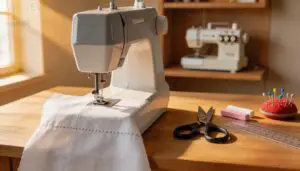
A serger is a powerful tool, but it’s not the right machine for every project on your table. Many sewing tasks are handled better — and more precisely — by a standard sewing machine.
When precision is key, stick with what you already have. Leave the serger in the cabinet for projects demanding finer control.
Basic Mending and Simple Alterations
A serger won’t help you reattach a button or swap out a broken zipper. For basic mending—split seams, button repair, zipper replacement, hem lowering, or patch stitching—a regular sewing machine does the job cleanly.
Grab a seam ripper, match your thread, and you’re done.
| Repair Type | Best Tool | Why |
|---|---|---|
| Split seam | Sewing machine | Straight stitch along original line |
| Button repair | Hand needle | Anchored thread holds better |
| Zipper replacement | Sewing machine | Zipper foot gives control |
| Hem lowering | Sewing machine | Steam + straight stitch |
| Patch stitching | Sewing machine | Precise placement needed |
Quilting and Patchwork Projects
Quilting is one area where your sewing machine truly shines — and a serger stays on the shelf. Key techniques demand precision that standard machines excel at, while sergers are less suited for structured quilting work.
- Block Layout Planning works best with precise straight stitches, not overlock seams
- Batting Types require hand or machine quilting through all three layers, not serged edges
- Fabric Prewashing Tips matter more here — cotton shrinks, so wash before cutting
- Quilting Stitch Patterns and backing fabric choice need controlled, exact stitching to prevent fraying and shifting
Bag Making and Structured Home Decor
Structured Bag Construction relies on interfacing layers, precise corners, and reinforced grips — work that needs straight stitches, not overlock seams.
Piping techniques and decorative edge stitching demand control a serger can’t offer. These specialized tasks prioritize accuracy over seam finishing or fabric edging in home sewing projects.
Sewing Zippers, Buttonholes, and Topstitching
Unlike structured bags, zippers, buttonholes, and topstitching belong entirely to your sewing machine.
- Zipper foot selection lets you stitch right beside the teeth for a clean, flat finish.
- Buttonhole placement and thread tension needs precise, programmed stitching a serger simply can’t form.
- Decorative topstitching demands a straight, visible line — usually 2.8–3.8mm.
A serger performs seam edge reinforcement nearby, but the sewing machine leads here.
Learning Garment Basics on a Tight Budget
When your budget is tight, a basic sewing machine covers everything you need to start. Practice straight seams using thrifted fabrics — old bedsheets work perfectly.
Grab free sewing patterns online and focus on simple garment projects first.
Budget-friendly tools like an overcast foot handle edge finishing cheaply. Master these fundamentals before deciding whether buying a serger makes financial sense for your goals.
Projects With Enclosed or Lined Seams
Some projects simply don’t need a serger. French seam dresses, sheer lingerie, and lined bodice gowns already hide raw edges inside the construction — no overlock required.
Flat-felled jeans and Hong Kong jackets seal their own allowances cleanly.
When every seam is enclosed, your regular machine manages the job beautifully. Save the serger for when those edges are actually exposed.
Serger Vs Sewing Machine Differences
A serger and a sewing machine aren’t rivals — they’re built for completely different jobs. Understanding where they overlap and where they part ways helps you use each one smarter.
A serger and a sewing machine aren’t rivals — they’re built for completely different jobs
Here’s a breakdown of the key differences worth knowing.
Overlock Seam Versus Straight Stitch
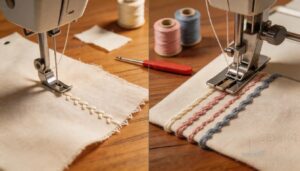
Think of a straight stitch as your foundation — clean, controlled, precise. Overlocking wraps and trims the edge simultaneously, delivering Post‑Wash Stability unmatched by a standard sewing machine alone.
| Feature | Sewing Machine | Overlocker |
|---|---|---|
| Seam Strength | Moderate | High |
| Visible Edge Aesthetics | Requires extra steps | Built-in, professional |
| Stitch Flexibility | High | Moderate |
| Construction Simplicity | Familiar, straightforward | Faster, combined steps |
| Edge Finishing Techniques | Separate process | Done in one pass |
Both tools serve distinct roles — and understanding the differences between sergers and sewing machines ensures smarter utilization of each.
Stretch Performance on Knit Fabrics
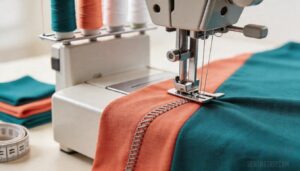
Knit fabrics live and die by their stretch — and a regular sewing machine’s straight stitch simply can’t keep up. When you sew jersey or spandex blends, serger stitch types for stretch fabrics use differential feed and stitch tension to match the fabric’s movement.
Elastane content, loop length, and directional stretch all determine which overlock configuration gives you the best recovery ratio.
| Factor | Sewing Machine | Serger |
|---|---|---|
| Stretchy Seams | Breaks under tension | Flexes with fabric |
| Recovery Ratio | Poor | Strong |
| Knit Suitability | Limited | Excellent |
Edge Finishing Quality and Durability
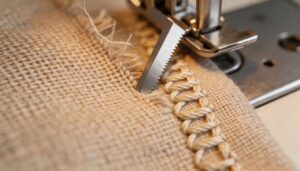
A serger armors the edge of a seam, not just closing it. The overlock stitch wraps raw fibers inside a thread shell, making edge finishing reliable for fray-prone fabrics like linen or loose weaves. Thread Tension Balance ensures this shell remains tight, while Blade Sharpness Impact determines the cleanliness of the cut before stitching.
| Quality Factor | Sewing Machine | Serger |
|---|---|---|
| Preventing fabric fraying and raw edge issues | Minimal | Strong |
| Edge Bulk Reduction | None | Consistent |
| Longevity Under Laundering | Degrades faster | Holds well |
| Seam Wear Testing results | Splits under stress | Flexes and holds |
| Professional finishing techniques with sergers | Not achievable | Factory-grade |
Finishing raw edges and hemming with a serger reduces bulk, allowing seams to lie flatter under layers. This method improves seam durability by fully enclosing the cut edge, eliminating exposure.
Speed and Workflow Differences
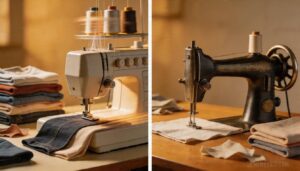
Speed is where a serger pulls ahead fast. At 1,200–1,500 stitches per minute, the Stitch Rate Gap over a regular machine’s 700–950 spm is real and noticeable on long seams.
| Factor | Serger | Sewing Machine |
|---|---|---|
| Stitch Speed | 1,200–1,500 spm | 700–950 spm |
| Threading Time | Complex, multi-path | Simple, bobbin-based |
Workflow Streamlining and Setup Efficiency matter most in Batch Production — fewer steps per seam means more garments finished per hour.
Tasks Only a Sewing Machine Can Do
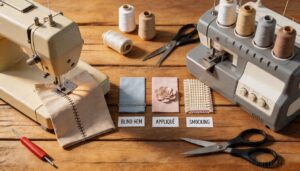
A serger can’t do everything. For a Blind Hem, buttonholes, or Free-Motion Embroidery, you need a basic sewing machine — full stop. The serger’s blade and looper setup simply aren’t built for that kind of precision work.
| Task | Machine Needed |
|---|---|
| Blind Hem | Sewing Machine |
| Buttonholes | Sewing Machine |
| Appliqué Stitching | Sewing Machine |
| Smocking Stitch | Sewing Machine |
| Chain Stitch Details | Sewing Machine |
Decorative stitches, controlled stitch length, stitch width adjustments, and precise needle placement — those live on your sewing machine.
Why Most Sewists Use Both Machines
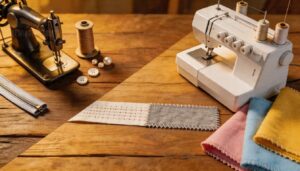
Each machine owns its lane — that’s the whole point of a dual machine workflow. Your sewing machine manages zippers, buttonholes, and topstitching. Your serger handles edge finishing and stretch seams. That tool specialization creates real seam strength synergy.
| Task | Best Machine |
|---|---|
| Buttonholes | Sewing Machine |
| Overlock Edges | Serger |
| Topstitching | Sewing Machine |
| Knit Seams | Serger |
| Zipper Installation | Sewing Machine |
Signs a Serger is Worth Buying
At some point, your sewing projects start telling you what they need — and a serger has a way of making that message loud and clear. The signs are usually practical, not dramatic: recurring problems that a regular machine simply can’t fix.
Here’s what to watch for.
Your Seams Keep Fraying After Washing
If your seams are unraveling after a few washes, that’s not bad luck — that’s laundering stress exposing unfinished edges. Wash agitation causes yarn twist loss and fiber fatigue, turning neat allowances into loose threads. A serger’s edge finishing techniques wrap and trim in one pass, stopping fray before it starts. Watch for these warning signs:
- Fraying grows wider after each wash cycle
- Seam tension loss leaves allowances limp and loose
- Trim blade wear shows as ragged, uneven edge cuts
- Edge trimming gaps let fibers escape under spin-cycle stress
- Finishing raw edges feels like a never-ending separate step
Fabric fraying prevention and seam durability start with overlocking.
Knit Seams Stretch Out or Break
Fraying edges aren’t the only warning sign. If your knit seams keep popping at stress concentration zones — underarms, side seams, necklines — your stitch simply can’t keep up with the fabric’s stretch. A 301 lockstitch has low elongation, so it cracks under pressure.
Using a serger for knit and stretchy fabrics gives you a 504 overlock stitch that moves with the grain.
You Spend Too Long Finishing Edges
Edge finishing fatigue is real. If manual trimming delays and threading bottlenecks are eating your sewing time, that’s a clear sign you need a serger. Speedy edge prep shouldn’t feel like a second job.
A serger performs all three steps at once:
- Trim the raw edge
- Wrap it with an overlock stitch
- Move on immediately
Setup time waste disappears fast.
You Want More Polished Handmade Garments
That edge fatigue fix leads to something bigger — garments that actually look professional. A serger gives you cleaner seams, but polish goes further. Color‑matching threads, grain‑line consistency, and hidden reinforcements all contribute. Use this finish quality checklist:
| Detail | Why It Matters |
|---|---|
| Precision Pressing | Sets seams flat |
| Finishing raw edges and hemming techniques with a serger | Prevents fraying |
| Grain‑line Consistency | Keeps shape true |
| Hidden Reinforcements | Adds durability |
Benefits of using a serger include edge finishing techniques for fabrics that deliver a more professional finish — store-bought quality, handmade by you.
You Sew Clothing Every Week
If your weekly sewing schedule runs like a small production line — cutting, constructing, finishing — a serger pays for itself in time alone. Batch cutting techniques move faster when your seams close just as quickly.
Choosing between a serger and a sewing machine gets easier once you’re sewing multiple garments weekly, because the hours you save compound fast.
You Plan to Sell Sewn Items
Selling handmade clothing means your seams are part of your brand. Buyers inspect every edge, and raw or unfinished seams quietly kill your Profit Margins before you even factor in Shipping Logistics or Customer Service time.
A serger delivers the professional garment finish that justifies your price point. When Branding Basics and Product Photography are doing their job, the construction has to match.
Costs, Space, and Maintenance
A serger is a real investment, and it helps to know what you’re actually signing up for before you buy.
Beyond the purchase price, there are a few practical things that affect whether it fits your life and your workspace. Here’s what to keep in mind.
Entry-level Versus Mid-range Serger Pricing
Price is the first fork in the road. Entry-level sergers like the Brother 1034D run about $250–$500 and handle everyday knit and woven seams just fine. Mid-range models start near $999, where you’re paying for convenience, not just capability.
Budget considerations for purchasing a serger should include:
- Feature premium: air-threading, automatic tension
- Accessory bundles: extra feet, storage
- Warranty length: longer on pricier models
- Resale potential: recognized brands hold value
Total ownership cost considerations for sewing equipment investments matter more than the sticker price alone.
Threading Difficulty and Tension Learning Curve
Threading a serger is its own skill set. You’re managing three to four separate cones, each following a specific path through guides, loopers, and tension discs — skip one guide, and your stitch falls apart. Start with sequential threading steps in the exact order your manual specifies.
Then practice tension balancing on scrap fabric using different thread colors, so looper thread tension problems become easy to spot and fix.
Blade Care, Cleaning, and Oiling
Your serger’s built-in cutting blade—those serger knives that do the trimming work—needs real attention. Before every use, brush out debris using a proper cleaning brush technique, then oil the blade.
Lubrication frequency matters: oil before use, after cleaning, and before storage. For heat management, check the blade every 5–10 minutes.
Dry blades rust fast, so safe blade removal and light oiling before storage keep everything running sharp.
Extra Thread Cones and Accessory Costs
Thread cones are where your real ongoing cost lives. A single 3,000-yard cone costs about $12.99, but a four-cone set often drops to around $15.49 — that’s bulk cone savings in action. Affordable cone holders start at $2.99.
Here’s a quick accessory cost breakdown:
- Thread cones — $12–$16 per set
- Cone holders/stands — $3–$20
- Felt pads and thread nets — under $5
Workspace Needs for Safe Operation
A stable table keeps vibration low at high speeds, while clear lighting over the needle and blade area helps you catch skipped stitches fast.
Cable management prevents snags mid-seam. Good ventilation control clears lint buildup quickly — sergers shed more debris than regular machines.
Safe reach to your power switch matters too, especially in tight space constraints.
When The Investment Pays Off
Once your setup is organized, the real question is whether the machine earns its keep.
Weekly Production ROI adds up fast — fewer steps, cleaner edges, and less time lost.
Batch Sewing Profitability and Small-Batch Viability improve noticeably when trimming and stitching happen in one pass.
Long-Term Savings kick in when cone thread replaces constant bobbin refills.
Choosing The Right Serger Type
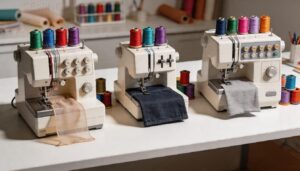
Not all sergers are built the same, and the type you choose shapes what you can actually make. Thread count, fabric weight, and your skill level all point toward a specific machine.
Here’s a breakdown of the main serger types so you can match the right one to your sewing goals.
3. thread Sergers for Edge Finishing
A 3-thread serger is your go-to for edge finishing techniques, offering a clean, flexible finish without bulk. It uses one needle and two loopers, making needle placement critical for stitch width. Dial in the loop tension and blade adjustment for rolled hem work on silk or rayon.
Thread choice affects drape, and this setup excels with lightweight knits and delicate wovens, ensuring a refined result.
4. thread Sergers for Garment Construction
The 4-thread serger excels in real garment construction, combining reinforced overlock seams with simultaneous joining and finishing. Its two needles and two loopers significantly enhance Seam Allowance Control and Garment Fit Consistency, particularly under stress points.
Key functional advantages include:
- Manages Layered Fabric Handling on side seams and underarm areas without bulk
- Aids Bias Edge Stability on curved or diagonal cuts
- Meets Professional Finish Standards for T-shirts, leggings, and casual wear
- Uses differential feed for stretch recovery on knits
- Threading and tension management in sergers is straightforward once you learn the looper order
5. thread Sergers for Heavier Fabrics
If your projects include denim, workwear, or upholstery-weight fabrics, a 5-thread serger is worth the upgrade.
It combines overlock trimming with chain stitch reinforcement for seams that hold under serious stress.
You’ll need careful needle selection, tension adjustments, and proper blade clearance to avoid jamming on thick stacks. Lower presser foot pressure helps heavy layers feed cleanly through the differential feed mechanism.
Combo Serger Coverstitch Machines Explained
A combo serger coverstitch machine combines overlock seaming and professional hemming in a single unit, eliminating the need for a second machine. To transition between functions, users must retract the blade, adjust the needle configuration, and install a conversion plate before initiating coverstitching. Color-coded threading guides streamline this process, reducing complexity during switchovers.
Dual-mode benefits include:
- Finishes seams and hems with built-in accessory compatibility
- Creates stretchy, ready-to-wear hems on knit fabrics
- Saves table space by replacing two machines
- The chain looper forms the underside stitch structure
- Handles diverse projects, from T-shirts to leggings
Beginner-friendly Features to Prioritize
Choosing a beginner-friendly serger comes down to a few non-negotiable features. Color-coded threading paths and a visible differential dial eliminate early frustration, while an LED work light ensures clear visibility of the needle area.
A quick-start guide and adjustable presser foot streamline the process, minimizing fumbling and maximizing sewing time.
The learning curve becomes manageable quickly when the machine is designed to teach you, transforming threading and operation into intuitive tasks.
Which Setup Fits Your Sewing Goals
Your setup depends on what you actually sew. If knits dominate your projects, a 4-thread serger effectively manages thread tension, presser foot choice, and machine footprint without overwhelming your space or budget. The suitability of sergers for knit fabrics is the clearest deciding factor.
Integrating a serger into a home sewing setup alongside your regular machine—managing noise level and power requirements—gives you both precision and speed. This combination optimizes workflow while balancing practical constraints.
Frequently Asked Questions (FAQs)
Can I still sew clothes without a serger?
Yes, absolutely. A regular sewing machine performs garment construction on its own using Zigzag Edge Trim, French Seam, Bound Seam finishing, Twin-needle Hems, and Stretch Stitch Options — no serger required.
Can a serger replace a regular sewing machine entirely?
No, a serger can’t replace a regular sewing machine. Its edge‑only functionality skips straight stitches, buttonholes, and zippers — tasks your sewing machine performs. Both tools serve different jobs.
What fabrics should never be sewn on a serger?
Loose weaves, slick silks, heavy layers, inserted padding, and thread-sensitive fabrics are poor matches for a serger. Delicate fabrics and unstable knits need a regular machine first.
How many thread cones does a serger require?
Most sergers require 3 to 4 thread cones, depending on your chosen stitch. A 4-thread overlock uses all four at once. Cone count changes with the stitch, not just the machine.
Is a serger difficult to learn for beginners?
The learning curve is real, but it’s not steep. Threading four cones in order trips up most beginners, and speed control takes practice — but tension balancing clicks fast once you test on scraps.
Can you serge over pins safely while sewing?
No, don’t serge over pins. The blade will hit the pin, risking blade damage and metal fragment hazards. Remove pins before they reach the knife. Use clips or basting instead.
Conclusion
A carpenter doesn’t grab a chisel when the job calls for a saw—each tool exists because a specific problem demanded it. Knowing when you need a serger machine follows the same logic.
When knits stretch out, seams fray after one wash, or your finishing time outpaces your sewing time, the answer becomes obvious. A serger doesn’t replace your sewing machine. It manages what your sewing machine was never designed to do—and that distinction changes everything.
- https://seamwhisperer.com/serger-vs-sewing-machine/
- https://edisonvacuums.com/serger-vs-sewing-machine-whats-the-difference/
- https://www.made-by-rae.com/blog/2018/05/do-you-need-a-serger
- https://iopscience.iop.org/article/10.1088/2632-2153/ae040b
- https://weallsew.com/overlocker-for-beginners-fast-finishing-with-rolled-hems/