This site is supported by our readers. We may earn a commission, at no cost to you, if you purchase through links.
I still remember my first paid alteration: a bridesmaid dress that needed two inches taken off the hem, done by Friday, for $25. It felt small at the time, but it proved something bigger — someone would pay me, from my own living room, for a skill I already had sitting in my hands.
That’s the real starting point for sewing jobs from home: not a fancy studio or a business degree, just a machine, a bit of know-how, and clients who need work done well. Demand for alterations alone grows 7% every year, and custom pieces can fetch over €100 each.
Grab your seam ripper and a cup of coffee; let’s turn that skill into steady income, one project at a time.
Table Of Contents
Key Takeaways
- Home-based sewing income comes from choosing a profitable niche—alterations (7% annual growth), custom apparel (€100+ per piece), plushies (up to $560/week), or pet accessories—and building a proper workspace with ergonomic seating, proper lighting, and organized zones.
- Getting paid work relies on building a tight portfolio of 5-8 samples and pursuing multiple channels: applying directly to sewing companies, selling on marketplaces like Etsy, and using freelance platforms like Upwork with escrow protection.
- Value-based pricing (tiered packages, progress payments, written scope agreements) outperforms hourly billing, with rates typically ranging from $15-50/hour depending on niche and skill level.
- Long-term success depends on repeat customers built through thank-you notes, loyalty discounts, and fast, honest service, since regulars generate more sustainable income than one-time orders.
Sewing Jobs From Home Tutorial
So you want to sew from home and actually get paid for it? Good news: it’s more doable than you think, and it starts with a few honest steps before the orders roll in. Here’s exactly where to begin.
Before you touch a needle, map out how to learn sewing from scratch at home so your first projects match your actual skill level.
Assess Your Sewing Skills
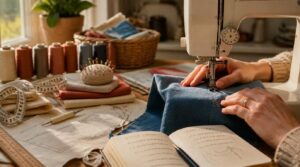
Where do your sewing skills really stand? Before chasing sewing jobs from home, get honest about Understanding Your Skill Set first.
- Machine Control Mastery: threading, bobbins, smooth fabric feeds
- Pattern Reading Accuracy: notches, darts, grainlines
- Edge Finishing Techniques and Seam Allowance Precision
Check your Stitch Quality Benchmarks against real work—crooked seams won’t cut it for freelance sewing clients expecting Tailor or Seamstress-level needlework techniques.
Research highlights a critical textile skill gap analysis for specially‑abled youth.
Choose a Profitable Niche
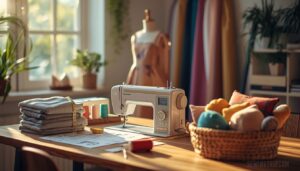
Once you’ve sized up your skills, ask which niche actually pays.
Alterations and repairs offer steady local demand (growing 7% yearly), while custom apparel design commands 100+ euros per piece. Handmade textile products like decor or plushies enjoy seasonal revenue spikes of 15-25%.
Pick based on your strengths and target audience identification—who’s actually buying what you make best?
Set Up Your Workspace
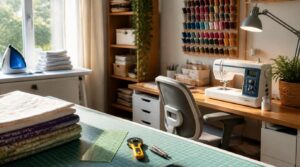
Once you’ve picked your niche, your workspace decides whether you actually stick with it.
Set your chair height so feet sit flat, knees at 90 degrees; add 5000-6500K lighting to catch true fabric color. Zone your desk—cutting, sewing, pressing—and clean lint from your machine weekly.
This is where sewing entrepreneurship gets real.
Plan Weekly Work Hours
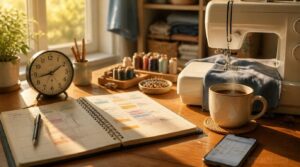
Your workspace is ready, but freedom without structure just becomes chaos with a sewing machine. Real time management for freelancers means blocking 40 hours (or 4 flexible 8-hour days), reserving mornings for complex tasks.
| Time Block | Purpose |
|---|---|
| 2 hrs morning | High-focus sewing |
| 2-4 pm | Client calls |
| Weekends | Optional, capped 8 hrs |
Plan 60-70% capacity—breathing room beats burnout.
Create Sample Projects
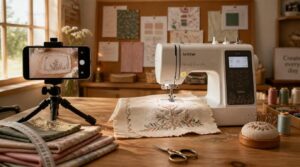
Before you chase paid work, build proof you can deliver. Sketch a quick mood board, sew one polished piece, track material costs, and snap a clean mockup photo.
That sample becomes your portfolio piece—concrete evidence for Etsy buyers or Upwork clients that you handle custom garment construction, not just theory. A $30 diaper prototype or embroidered placemat works fine.
Profitable Home Sewing Job Ideas
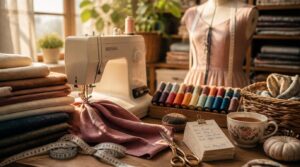
So you’ve got the skills and the workspace ready, but where’s the actual money going to come from? Turns out there are more paths than you’d think, from quick fixes to full-on custom builds. Let’s look at five job types that consistently pay off for home sewists.
Quilt binding jobs are a great place to start, since mastering how to sew on quilt binding turns a simple finishing touch into a paid specialty.
Alterations and Repairs
Alterations and repairs are the bread and butter of any homebased sewing business, and honestly, they’re where most freelance sewing careers start.
- Hem and zipper replacement
- Fabric matching for patches
- Precise measurement logging
- Fitting sessions before final stitching
- Seam reinforcement on worn areas
Master these repair basics with your essential repair tools, and steady alteration jobs will keep your calendar full.
Custom Clothing Orders
Once you’ve got repairs handled, custom clothing orders are where a freelance seamstress really starts earning.
Clients pick fabric, style, and fit, so you’ll guide fabric selection, run fitting sessions, and offer custom design touches like necklines or trims.
Pricing models should reflect labor and detail. Turnaround runs one to four weeks, and quality control before delivery keeps your home-based sewing business trusted.
Handmade Home Decor
Ever notice how throw pillows and table runners sell faster than plain garments? Home decor taps steady demand from Home Wares buyers.
Try woven throws, embroidered runners, or quilted placemats using wool, cotton, or linen.
- Throws: 50×60 inches
- Pillows: 18×18 inches
- Runners: custom lengths
Combine Textile Home Accents with Upcycled Decor Materials—scraps braided into tassels—for sustainable, sellable pieces.
Stuffed Animals and Plushies
There’s real money in stitching cuteness: Craft Works International pays up to $560 weekly for hand-sewn plushies like Dino toys.
Choose polyester fiberfill or organic cotton stuffing, embroider faces (no loose parts, please), and follow ASTM F963 or EN 71 safety standards.
Test seams for durability, then wash gentle-cycle only.
This niche rewards home sewing entrepreneurship handsomely.
Pet Accessories and Diapers
Dogs and cats need cover too, and that’s where pet accessories and diapers turn into a smart side hustle sewing niche.
Master absorbent material selection (SAP cores hold 200-500ml), sizing for mammals (9-25 inch waists), and leakage prevention with dual leg cuffs.
Study pet anatomy design closely—become a genuine Pet Clothing and Accessories Designer through freelance sewing, since reusable fabric care keeps customers loyal.
Top 5 Home Sewing Tools
You don’t need a fancy studio to sew for money, but the right tools make every project faster and cleaner. A cheap machine paired with the wrong pins or scissors will fight you every step of the way, and that costs time you could be billing for.
Here are five tools worth adding to your kit before you take on your first paid job.
Dritz Quilting Pins Yellow Inch Count
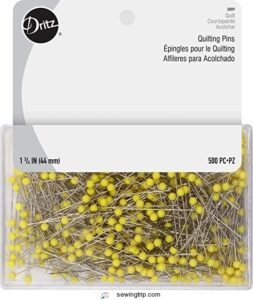
Dritz Quilting Pins, at 1-3/4 inches, glide through multiple fabric layers without bending — perfect for basting plush velvets or thick quilt batts. The yellow heads pop against any fabric color, so you’re not hunting for a lost pin on your cutting mat (and stepping on it later).
A 500-pin box means you won’t run out mid-project, and the reusable storage case keeps things tidy.
Some pins arrive slightly dull, so keep a sharpener handy.
| Best For | quilters and sewists who work with thick fabric layers, batts, or plush materials like velvet and need extra-long pins that hold securely without bending. |
|---|---|
| Category | Pins |
| Material | Steel with plastic head |
| Storage Included | Reusable storage box |
| Best For | Thick fabric layers and batts |
| Ambidextrous Use | Not applicable |
| Ideal User | Quilters and sewists |
| Additional Features |
|
- Extra-long 1-3/4" pins easily secure multiple layers of fabric, batting, or plush materials during basting
- Bright yellow heads make pins easy to spot, cutting down on lost pins and workspace hazards
- Generous 500-pin count housed in a reusable storage box means fewer re-pinning interruptions and better organization
- A few pins may arrive with dull or slightly bent tips that need sharpening or replacing
- Occasional sticky residue on some pins can make them harder to push through fabric smoothly
- The large storage box may feel bulky for those who prefer smaller, more compact pin containers
MumCraft Multipurpose Sewing Clips Assorted Colors Pack of 100
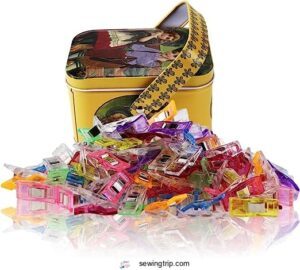
Pins are great, but sometimes you need speed instead of precision, and that’s where MumCraft’s clips earn their spot in your kit. These 2.7cm plastic clips grip multiple fabric layers without piercing anything, so binding quilts or holding seams stays needle-free.
The flat base slides right under your presser foot, and 100 clips in assorted colors—pink, blue, green—come tucked in a tin box. Heavy fabrics may need extra grip, but for everyday piecing, they’re a pinless win.
| Best For | Quilters and sewists who want a fast, needle-free way to hold fabric layers together while piecing, binding, or adjusting seams. |
|---|---|
| Category | Clips |
| Material | Plastic |
| Storage Included | Tin box |
| Best For | Fast pinless fabric holding |
| Ambidextrous Use | Not applicable |
| Ideal User | Quilters and sewists |
| Additional Features |
|
- Transparent design lets you see fabric placement underneath for accurate alignment
- Flat base feeds easily under the presser foot, keeping your workflow smooth
- Reusable and pinless, reducing the risk of needle-stick injuries during fitting
- Small clip size may struggle to grip thick or heavy fabrics securely
- Clips can crack or fracture if too much force is applied
- Compact tin storage may not be enough for bulk or long-term organization
Singer Proseries Sewing Scissors Bundle
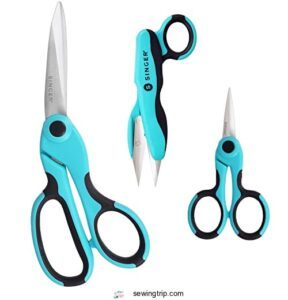
Clips hold your fabric; scissors get you through it, and this three-piece set covers every cut you’ll face. The 8.5" bent shears slice denim and leather layers cleanly, while 4.5" nano-tip scissors handle embroidery detail work.
Thread snips finish the job, trimming stray ends fast. Tempered stainless blades stay sharp, and ambidextrous teal grips won’t punish left-handers. No case included, so store them carefully—exposed blades aren’t forgiving.
| Best For | Sewists and crafters who want one versatile scissor set for everything from cutting heavy fabric layers to fine embroidery and thread trimming. |
|---|---|
| Category | Scissors |
| Material | Tempered stainless steel |
| Storage Included | No case included |
| Best For | Versatile cutting tasks |
| Ambidextrous Use | Yes, teal grips |
| Ideal User | Sewists and crafters |
| Additional Features |
|
- Three specialized tools (shears, detail scissors, thread snips) cover nearly any cutting task
- Tempered stainless steel blades stay sharp and resist rust
- Ergonomic teal grips work comfortably for both left- and right-handed users
- No protective case, so blades are exposed during storage
- 4.5" detail scissors may be too small for larger fabric pieces
- Blades need periodic sharpening to keep their edge
Omnigrid Quilting Ruler Neon Green
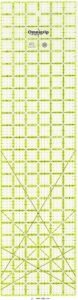
Once your scissors are put away, straight lines become your next challenge—and that’s where this ruler earns its keep. The Omnigrid 6" x 24" acrylic ruler has neon-green sight lines that pop against dark denim or busy prints, so you’re not squinting mid-cut.
Angle markings for 30, 45, and 60 degrees speed up patchwork; the non-slip backing keeps fabric from creeping while you trace. Laser-cut edges resist chipping, so accuracy holds up cut after cut.
| Best For | Quilters and sewists who need precise, easy-to-see measurements when cutting or marking fabric, especially dark or patterned textiles. |
|---|---|
| Category | Ruler |
| Material | Acrylic |
| Storage Included | No case included |
| Best For | Precise measuring and marking |
| Ambidextrous Use | Not applicable |
| Ideal User | Quilters and sewists |
| Additional Features |
|
- Neon-green lines stand out clearly against dark or busy fabric patterns
- Non-slip grip keeps the ruler steady while cutting or stitching
- Built-in numbering and angle markings make layout and measuring more accurate
- Only one ruler is included, so extra units must be bought separately
- Plastic material can warp or deform if exposed to high heat
- Fixed 6" x 24" size limits its use on larger projects
Olfa Rotary Fabric Cutter
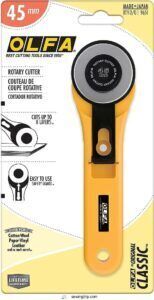
Rulers get you straight lines; this rotary cutter gets you through fabric fast. The 45mm blade slices up to six layers cleanly—huge when you’re batch-cutting quilt squares or matching pieces for multiple orders.
It’s ambidextrous, so lefties aren’t left fumbling, and the safety cover locks shut with a quick thumb release. At 0.07 kg, it won’t tire your grip during long sessions.
Just grab a cutting mat first; that blade means business.
| Best For | Quilters and sewists who cut multiple fabric layers regularly and want a comfortable, ambidextrous tool for long cutting sessions. |
|---|---|
| Category | Rotary Cutter |
| Material | Steel blade with rubber grip |
| Storage Included | Safety blade cover |
| Best For | Multi-layer fabric cutting |
| Ambidextrous Use | Yes, ambidextrous design |
| Ideal User | Quilters and sewists |
| Additional Features |
|
- Cuts up to 6 layers of fabric cleanly, great for quilting and batch-cutting projects
- Ambidextrous design with a quick thumb-release safety cover works for both lefties and righties
- Lightweight at 0.07 kg with a comfortable rubber grip, reducing fatigue during extended use
- May struggle with very thick or dense materials like multiple ribbons or heavy cardboard
- Requires a cutting mat for safe use, since the blade is extremely sharp
- Replacement RB45 blades can be pricier than generic options, and some units have reported defects
Finding Paid Sewing Work
Once your tools are sorted and your samples look sharp, the next question is simple: where does the actual work come from? Turns out there’s more than one road in, and some pay better or faster than others. Here are five real ways to start landing paying sewing gigs.
Apply to Sewing Companies
Ready to knock on some doors? Companies like Kitchen Crafts and Craft Works International want proof, not promises.
- Build a tight portfolio with 5-8 samples
- Tailor your cover letter to their niche
- Track applications in a spreadsheet
- Research pay before you negotiate
- Follow up within 7-14 days
Match samples to their style—wovens, knits, denim. Confidence sells; freelance sewing rewards those who show up prepared.
Sell on Handmade Marketplaces
Why apply to just one company when you could open your own digital storefront? Etsy and Amazon Handmade let you set up shop, price freely, and build a brand around your niche—wedding accessories, plushies, whatever you sew best.
Expect marketplace fee structures like listing costs and commission cuts. Nail your SEO keyword optimization, product photos, and shipping policies, and repeat buyers follow.
Use Freelance Job Platforms
Upwork is where the freelance seamstress crowd really lives, alongside niche sewing job boards.
Build a strong profile and portfolio, bid smart on listings matching your skills, and communicate clearly with clients from day one.
Compare platform fees before committing, and always use escrow payment protection—it keeps your paycheck secure until the work’s approved and delivered.
Price Projects for Profit
Here’s the truth: charging by the hour caps your income, but value-based pricing doesn’t.
Charging by the hour caps your income; value-based pricing sets it free
Try this instead:
- Tiered packages (good/better/best) to anchor higher spending
- Progress payments tied to deliverables
- Written scope agreements to prevent scope creep
Track project margins weekly against your quotes—that’s how your freelance stitching sidehustle becomes a real ecommerce sewing shop.
Build Repeat Customer Orders
Landing one order feels great, but landing that same client five times a year? That’s where real income lives.
Send a custom thank-you after every delivery, include care tips, and mention a first-time loyalty discount for their next hem or costume. Track reorder rates monthly. Fast replies, easy fixes, and honest reviews build the kind of trust that turns strangers into regulars—and regulars into referrals.
Frequently Asked Questions (FAQs)
Can you make a living sewing from home?
Picture a bridal seamstress earning €800 per gown alteration. Yes—freelance stitching businesses thrive by mixing alterations, custom orders, and teaching, turning sewing jobs from home into a genuine, expandable sidehustle sewing career with mid five-figure potential.
What is the easiest thing to sew as a beginner?
Start with simple pillowcase projects, coasters, or easy tote bags; straight seams only, no tricky pattern pieces. Zipper pouch basics and napkin hem practice build confidence fast, too, before you tackle sewing jobs from home as a real sidehustle.
What can I sew to make money?
The world’s your oyster here: try apparel alterations, baby blankets, quilts, or home textiles. Custom embroidery services and seasonal gift bundles sell fast, while upcycled garment trends and niche fabric selection keep your work fresh and profitable.
What should I charge per hour for sewing?
Aim for $15–$50 an hour, factoring in material overhead, machine maintenance, and niche skill premiums. Bridal or leatherwork justifies higher rates; simple hems don’t. Adjust for regional rate variations and seasonal pricing during prom or wedding rushes.
Can you be a self-taught seamstress?
Yes—most self-taught sewists reach straight-stitch confidence within two to four projects. Online tutorial effectiveness plus consistent pattern reading accuracy builds real skill.
Choosing a forgiving niche, like pet accessories, helps new tailors turn practice into paid sewing-from-home work.
How to turn sewing into a side hustle?
Pick one niche market after quick research, set cost-plus pricing (40–60% markup), batch similar tasks weekly, build a small portfolio, then sell through Etsy or Instagram to grow your handmade brand steadily.
How much space do I need for a home sewing workspace?
You’ll want 6 feet by 6 feet minimum, plus room for a separate cutting zone, good lighting, and storage—your sewing machine, ironing board, and supplies all need breathing space for smooth, sustainable remote stitching work.
What are some tips for organizing my home sewing area?
Label bins by fabric type, hang tools on a pegboard within reach, and keep bobbins in a dedicated tray. A quick weekly 15-minute reset keeps your sewing machine and workspace clutter-free and ready for the next project.
What certifications help land professional sewing jobs?
A client once told me she trusted her tailor because of a wall certificate, not a portfolio. That’s the power of professional seamstress credentials: CPS, CGT, or industrial machine certification prove your skill instantly, beating any sales pitch.
How do I price custom sewing projects?
Total up materials plus a waste contingency, add your labor cost, then fold in overhead before applying a 30–50% profit margin. For custom pieces, value based pricing often beats flat rates—clients pay for craftsmanship.
Conclusion
Stitch by stitch, small skills snowball into steady income; that bridesmaid dress taught me more than any textbook could.
Sewing jobs from home reward patience, not flawlessness—your first client won’t be your last if you show up prepared and price fairly.
Some weeks you’ll hem trousers; others, you’ll stuff plushies until midnight. Either way, you’re building something real. So thread your needle, trust your hands, and let your workspace become your workshop for freedom.