This site is supported by our readers. We may earn a commission, at no cost to you, if you purchase through links.
You pull the last stitch through your fabric, snip the thread, and watch your seam unravel in seconds. That sinking feeling happens to every sewist who skips the lock stitch.
A lock stitch isn’t just a finishing technique—it’s the anchor that keeps your hard work from falling apart at the first tug. Whether you’re hand-stitching a hem or running a machine seam, those final securing stitches make the difference between a garment that lasts and one that needs constant repair.
The good news? Locking your stitches takes just a few seconds once you know the right method. Mastering both hand and machine techniques gives you the confidence to tackle any project, knowing your seams won’t betray you.
Table Of Contents
Key Takeaways
- A lock stitch anchors your seams by interlocking two threads inside the fabric, creating a hold strong enough to outlast the material itself and preventing unraveling from the first tug.
- You can lock stitches by hand with backstitching or by machine using reverse stitching or the automatic lock feature, and either method takes just seconds to secure your work permanently.
- Thread tension between 3 and 6, proper needle selection for your fabric weight, and stitch density of at least 6 stitches per centimeter determine whether your lock stitch will hold or fail under stress.
- Lock stitch works reliably on woven and stable knit fabrics but requires specialized techniques like zigzag stitches for high-stretch materials where straight stitching would pop.
What is a Lock Stitch in Sewing?
A lock stitch is one of the most reliable ways to keep your seams from falling apart. It works by interlocking two threads so they hold tight through wear and washing.
Let’s look at what makes this stitch different and why it’s the go-to choice for strong, lasting seams.
Definition and Purpose
A lockstitch is your go-to stitch for building strong, secure seams. It works by weaving two threads—one from the needle and one from the bobbin—right inside your fabric. This locking mechanism creates a stitch formation that won’t unravel easily.
You’ll find it on nearly every sewing machine because it delivers fabric stability and seam security in one simple, reliable move. For best results, consider using industrial lockstitch machines for heavy-duty tasks.
How Lock Stitch Secures Seams
The locking mechanism inside your fabric creates seam integrity that resists pulling and unraveling. When upper and bobbin threads interlock, they form a structure that can hold 275 to 455 Newtons of force—strong enough to outlast the fabric itself.
Lock stitch interlocks two threads inside fabric to create seams strong enough to outlast the material itself
Thread tension and stitch density both matter here. More stitches per inch means more securing stitches holding your seam together, preventing slippage and keeping your work solid through repeated stress.
Understanding seam strength factors is essential for achieving peak seam quality.
Lock Stitch Vs. Other Stitch Types
You’ll find major differences when comparing sewing techniques. Lock stitch gives you seam security through thread interlocking—it won’t unravel if one stitch breaks. Chainstitch and overlock can run back quickly when pulled.
For fabric compatibility and thread efficiency, lock stitch uses less thread than overlock’s three to five strands. That’s why half of all industrial sewing machine techniques rely on this durable stitching method.
Materials Needed to Lock a Sew
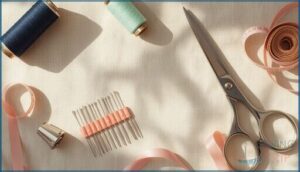
You don’t need much to lock a stitch properly. The right tools make the job easier and help your seams hold up over time.
Here’s what you’ll want to have on hand before you start.
Essential Tools and Supplies
You don’t need much to lock a stitch, but the right sewing tools make all the difference. Start with fabric shears and rotary cutters for clean edges. Keep pressing tools nearby—an iron flattens seams before stitching.
Thread management supplies like bobbins and clips prevent tangles. Add sewing notions like pins, a seam ripper, and marking pens to your kit for secure, professional results.
Choosing The Right Needle and Thread
Match your needle sizes to your fabric types for clean lock stitch results. Size 80/12 works well with 50-weight thread on medium fabrics. Heavyweight materials need size 100/16 needles and thicker thread to prevent needle deflection. Fine fabrics call for size 70/10 needles.
The right pairing improves stitch tension and prevents thread breakage in your sewing materials.
Fabric Preparation Tips
Proper fabric preparation saves you time and prevents frustration during lock stitch sewing. Follow these essential steps before you begin:
- Prewash your fabric to remove sizing and shrink natural fibers like cotton by up to 10%.
- Check grain alignment by straightening cut ends to maintain shape and drape.
- Test colorfastness with a damp cloth to prevent dye bleeding.
- Press with steam to relax fibers and remove storage creases.
How to Lock a Stitch by Hand
Hand stitching gives you full control when you want to lock a seam without a machine.
You’ll create a secure finish by working through a few simple steps with your needle and thread.
Here’s how to start, stitch, and finish with confidence.
Step-by-Step Hand Stitch Instructions
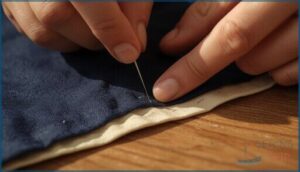
You’ve got your hem folded and pressed—now it’s time to stitch. Thread your needle with about 18 inches of all-purpose thread and anchor the knot inside the hem fold where it won’t show.
Push the needle through the folded hem, then take a tiny bite into the outer garment layer. Move left about half an inch and repeat, keeping stitches even and tension gentle to avoid puckering.
Starting and Ending The Stitch Securely

Every seam is only as strong as its start and finish. Without secure locking techniques, your careful stitching can unravel the first time it’s stressed. Here’s how to anchor your work with confidence:
- Begin with a knot: Tie a small knot at your thread end and hide it inside the hem fold for clean endpoint stability
- Backstitch to lock: Take 2–3 tiny backstitches through the same spot to create seam reinforcement that won’t budge
- End with anchoring: When finishing, make several overlapping stitches in place before trimming your thread close
- Check thread tension: Keep it snug but not tight—proper tension prevents puckering while maintaining stitch security
These lock stitch tutorial steps guarantee your hand sewing instructions deliver secure stitches every time.
Tips for Even and Secure Hand Stitches
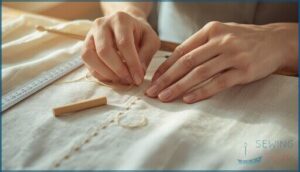
Want stitches that look professional? Start with Thread Tension that stays snug without pulling fabric. Mark your seam line first—that Fabric Preparation step guides Stitch Length Control so every Hand Stitch stays perfectly even.
Use 18–24 inches of thread to avoid tangles while maintaining strong Seam Reinforcement. These Hand Stitch Techniques transform basic Stitching Techniques into secure Lock Stitch work you’ll trust under stress.
How to Lock a Stitch With a Sewing Machine
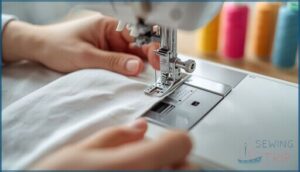
Locking a stitch on your sewing machine keeps your seams from unraveling and gives you professional results. The process is simple once you know how to set up your machine and understand the steps.
Let’s walk through the setup, the actual stitching process, and how to use the automatic lock stitch feature if your machine has one.
Setting Up Your Sewing Machine
Before you start any lockstitch sewing machine operation, you need to set up your equipment correctly. Thread tension, needle selection, and bobbin management all work together for strong seams. Think of machine calibration like tuning an instrument—each adjustment matters.
- Insert your needle with the flat side facing back and tighten the clamp screw
- Wind your bobbin evenly and place it following the directional arrows
- Attach your presser foot by aligning the bar with the groove
- Set your upper tension dial between 3 and 6 for standard weaving
- Choose metric size 80 needles for finer thread or size 100 for heavier work
Step-by-Step Machine Lock Stitch Guide
Your machine is ready—now let’s lock those seams. Set your stitch length between 2.0 and 2.5 mm for most fabrics. Position your fabric under the presser foot and sew two to four forward stitches. Press the reverse button and sew backward over those same stitches.
Continue sewing your seam, then repeat the reverse process about four stitches before the edge. This locking stitch technique prevents unraveling.
Using The Automatic Lock Stitch Feature
If your sewing machine has an automatic lock stitch feature, you can skip manual reversing entirely. Look for a lock or reinforcement icon on your machine’s panel. Press the button to activate it. Your machine will sew a few securing stitches at the start and end automatically.
Some models combine this lock sequence with auto trimming, cutting threads right after securing. Check your manual for stitch length and thread tension adjustments.
Best Practices for Secure and Neat Lock Stitches

A perfect lock stitch isn’t just about following the steps. You need to fine-tune your tension and avoid common pitfalls that can undo all your hard work.
Let’s cover the key practices that’ll keep your seams secure and looking clean.
Adjusting Thread Tension Correctly
Getting your thread balance right makes all the difference in stitch quality and sewing precision. Start by setting your machine’s tension dial near 4 or 5 and test on scrap fabric that matches your project. The lock stitch should form inside the fabric layers, not on the surface. Adjust one number at a time until both threads meet perfectly.
Different fabrics need different settings for true fabric compatibility.
Preventing Seam Unraveling
Even perfect thread tension won’t save a seam if you skip proper seam reinforcement. Increase your stitch density to at least 6 stitches per centimeter for stronger fabric stabilization and better resistance to pull-out.
Add bartack securing stitches at stress points like pocket corners—this simple stitch security technique prevents over 60% of garment failures.
Always finish raw edges with overlocking or binding for complete edge finishing and lasting seam allowance protection.
Common Mistakes and Troubleshooting Tips
Thread nests under your fabric? You probably threaded your machine wrong—that’s the top cause of bird’s nests. Skipped stitches mean you need a fresh needle or the right type for your fabric. Fabric puckering signals tight thread tension or a stitch length that’s too short.
Clean lint from your bobbin case regularly for better machine maintenance and consistent lock stitch formation.
Frequently Asked Questions (FAQs)
Can lock stitch be used on stretch fabrics?
Lock stitch can work on stretch fabrics if you use high-extension thread and adjust stitch density.
But for high-stretch areas, zigzag or stretch stitches perform better since straight lock stitch often pops when fabric stretches.
How to repair a lock stitch thats come undone?
You can save a broken seam by turning the garment inside out and re-stitching two inches past the damaged section.
Match your thread color and adjust stitch density for lasting seam reinforcement.
Is lock stitch suitable for outdoor fabric projects?
Yes, lock stitch works well for outdoor fabric projects when you use UV-resistant polyester thread and apply seam sealant. The interlocking structure resists unraveling, making it ideal for tents, awnings, and covers.
What are the environmental impacts of lock stitching?
Sewing produces fabric waste and consumes energy through machinery. The textile industry drives water pollution and chemical emissions during dyeing.
You can reduce your impact by choosing sustainable manufacturing practices and energy-efficient machines.
How does lock stitch affect fabric breathability?
Breathability becomes blocked when seam density increases. Air permeability drops as stitch geometry creates pore blockage along seam lines.
Fabric breathability diminishes with tighter lock stitch configurations, though surrounding fabric maintains its original permeability.
Can lock stitch be used on knit fabrics?
Lock stitch works on stable knits with low stretch, but high-stretch fabrics need alternatives like zigzag or overlock stitches.
Use a ballpoint needle and lengthen your stitch to prevent puckering and popped seams.
How do you remove a lock stitch safely?
Use a sharp seam ripper to cut every few stitches, then gently pull threads out. Support the fabric to prevent stretching. Work slowly to avoid enlarging needle holes or damaging your material.
What causes lock stitch thread to break frequently?
Your machine keeps breaking thread when the needle is worn, thread tension isn’t balanced, or the threading path has snags.
Old thread and dense fabric also increase friction, causing frequent lockstitch breaks during sewing.
How does fabric weight affect lock stitch strength?
Heavier fabric weight directly increases lock stitch strength. Denser fabrics support stronger thread tension and better stitch formation, improving seam security.
Lighter fabrics need careful locking techniques since they’re more prone to slippage and thread breakage during sewing.
Conclusion
You might think locking a stitch adds too much time to your project. It doesn’t. Those few extra seconds save you hours of repair work later.
Now you know how to lock a sew by hand and machine. Your seams will hold through washing, wearing, and years of use.
Every stitch you anchor is a promise to yourself that your work matters. Lock it down. Walk away confident. Your garments will thank you.
- https://www.merriam-webster.com/dictionary/lockstitch
- https://thesewingloftblog.com/lock-stitch-sewing-term/
- https://blog.treasurie.com/lock-stitch/
- https://saddlehunter.com/community/index.php?threads%2Fback-tacking-lock-stitching-weight-bearing-seams.46144%2F
- https://www.reddit.com/r/myog/comments/x0o9xl/backstitching/