This site is supported by our readers. We may earn a commission, at no cost to you, if you purchase through links.
Your first seam looks perfect—until you pull the thread and watch it unravel like a bad magic trick. That sinking feeling hits when you realize you skipped one vital step that separates a finished project from a pile of loose fabric.
Backstitching on a sewing machine takes about two seconds, but it’s the difference between clothes that last and seams that fail the moment you put them on. Most beginners don’t know when to backstitch, how many stitches to use, or what to do when their machine doesn’t have a reverse button.
Once you master this simple technique, you’ll never wonder why your handmade items fall apart after a few wears.
Table Of Contents
- Key Takeaways
- What is Backstitching on a Sewing Machine?
- Why Backstitching is Essential in Sewing
- When Should You Backstitch?
- Preparing Your Sewing Machine for Backstitching
- Step-by-Step: How to Backstitch on a Sewing Machine
- Using The Reverse Function on Different Machines
- How to Backstitch Without a Reverse Option
- Common Backstitching Problems and Solutions
- Best Practices for Neat and Strong Backstitching
- Backstitch Alternatives for Delicate Fabrics
- Frequently Asked Questions (FAQs)
- Conclusion
Key Takeaways
- Backstitching locks your seams by reversing 3-5 stitches at the start and end, preventing thread from unraveling during wear and washing.
- You’ll find the reverse button or lever near your machine’s hand wheel or presser foot, though placement varies by brand like Singer and Brother.
- Match your backstitch length to fabric weight—1-2mm for silk, 2-3mm for cotton, and 3-4mm for denim—to avoid puckering or weak seams.
- Skip backstitching on delicate fabrics like chiffon and use lock stitches or hand-securing instead to prevent snagging and visible bulk.
What is Backstitching on a Sewing Machine?
Backstitching is one of those basic techniques that separates a seam that holds strong from one that falls apart after a few wears. It’s simply the act of reversing your sewing machine to sew backward over a few stitches, creating a secure anchor at the start and end of your seams.
If you’re just getting started, mastering this basic sewing machine stitch along with a few others will give you the foundation to tackle most beginner projects with confidence.
Let’s break down exactly what backstitching is and why it works so well to reinforce your sewing projects.
Definition and Purpose
Backstitching is your machine’s way of locking threads at the start and finish of a seam. You sew a few stitches forward, then reverse briefly to create a small block of overlapping stitches that anchors the thread chain and stops it from unraveling.
- Seam reinforcement gives your projects durability under stress
- Stitch security prevents loose ends when fabric is pulled
- Thread locking creates a knot-like effect without hand-tying
- Fabric integrity stays intact through washing and wear
How Backstitching Reinforces Seams
Once those threads lock in place, something interesting happens. The overlapping stitches form a chain-like structure that spreads tension evenly across your seam.
Instead of one stitch bearing all the stress, backstitching techniques create a reinforcement grid that anchors the entire line. That seam security means your fabric durability shoots up—especially in high-movement zones like pockets and underarms where thread tension matters most.
Learning more about the importance of strong seams can further improve your understanding of garment construction.
Why Backstitching is Essential in Sewing
Backstitching isn’t just a nice extra step—it’s the lock that holds your entire project together.
Backstitching is the essential lock that holds your sewing project together, not just an optional finishing touch
Without it, your seams can start pulling apart after just a few wears or washes, undoing all your hard work in minutes. Let’s look at the two main reasons you can’t skip this simple technique.
Preventing Seams From Unraveling
Security matters when you’re sewing. A backstitch locks threads in place at seam edges, creating an anchor that stops fabric from pulling loose. Without this reverse stitch, even slight tension can unravel your work.
Proper thread tension and stitch density help too, but the backstitch delivers essential seam reinforcement. Think of it as weaving a safety net into every edge you finish. Poor-quality thread is one of the leading causes of unraveling seam problems.
Increasing Project Durability
When you reinforce each seam with a backstitch, you’re building longevity into your project. High-quality polyester thread or cotton thread paired with proper stitch density creates tensile strength that withstands laundering and wear.
Fabric selection matters too—pre-washed materials won’t stress your backstitched seams after washing. Reinforcing high-stress areas like pocket openings and zipper ends through consistent sewing machine operation transforms ordinary stitch patterns into durable seam reinforcement that lasts.
When Should You Backstitch?
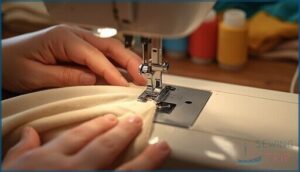
Knowing when to backstitch is just as important as knowing how to do it. Some spots absolutely need that extra security, while others can do without it.
Let’s walk through the key moments where backstitching makes all the difference in your project.
Beginning and End of Seams
You’ll need to secure your work at both anchor points—right when you start and just before you stop. Hit reverse stitches for 2 to 3 stitches at the beginning to lock your threads, then sew forward.
When you reach the end, hit reverse again for 2 to 3 stitches to secure the finish—just make sure your pressure settings are adjusted beforehand since most machines can’t be changed mid-seam.
When you reach the end, backstitch again to prevent unraveling. This backstitch technique gives your seam security and reinforcement, keeping fabric preparation solid through every wash and wear.
Mid-Seam Reinforcement
Along weak spots—like curves or stress points—add a reverse stitch right at the midpoint to lock fibers in place. This seam reinforcement spreads load across your fabric selection, especially on heavy material where bending happens.
Use shorter stitch density for midpoint security, or run a second pass with reinforcement materials if you’re working garments that face serious wear on your sewing machine.
Special Cases and Exceptions
Certain projects demand different backstitch techniques to match fabric behavior. Thick fabrics and heavy materials need adjusted handling, while delicate seams require a gentler touch on your sewing machine.
When to modify your reverse stitch approach:
- Knit backstitch – Use shorter stitch length and looser tension to prevent puckering on stretch stitches
- Delicate seams – Replace automatic backstitch with micro lock stitches or hand-tied knots
- Bulky layers – Slow your speed and consider a walking foot for even feeding
Preparing Your Sewing Machine for Backstitching
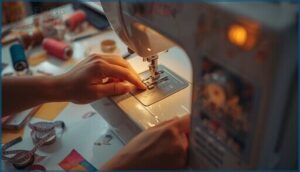
Before you start backstitching, you need to make sure your machine is ready to handle the job. Getting the right setup takes just a few minutes, but it makes all the difference in how your stitches turn out.
Let’s walk through the key settings and adjustments you should check first.
Selecting The Right Needle and Thread
Your needle and thread create the foundation for solid backstitching. Match needle sizes 80 to 90 with all-purpose polyester thread for most cotton and linen fabrics.
For knits, switch to a ballpoint needle in size 70 to 90. Check that your thread runs smoothly through the needle eye without catching—this prevents skipped stitches and maintains proper tension control for clean, secure backstitches.
Checking Machine Settings
Before you backstitch, your sewing machine settings need a quick inspection. Set your stitch length selector to match your project’s seam density, then check that the presser foot pressure suits your fabric thickness.
Verify the needle alignment sits centered in the needle plate slot. Test thread tension on scrap fabric—both bobbin tension and upper tension should produce balanced stitches without looping or puckering.
Adjusting Stitch Length and Tension
Your stitch length and tension control work together to create secure backstitches across different fabrics. Start by setting your stitch length between 2.5 and 3.0 mm for medium-weight materials—this range provides solid fabric compatibility without excess bulk.
Adjust thread tension next, checking that your bobbin tension balances with upper thread. Test your backstitch on scrap fabric, then fine-tune these machine calibration settings based on thread selection and material thickness.
Step-by-Step: How to Backstitch on a Sewing Machine
Once your machine is ready, you’re set to master the backstitching process.
The technique itself breaks down into three simple movements that you’ll repeat at the start and end of every seam. Let’s walk through each step so you can lock those stitches in place with confidence.
Positioning Fabric Under The Presser Foot
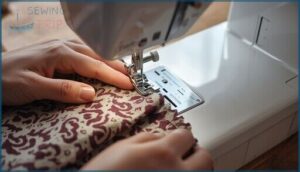
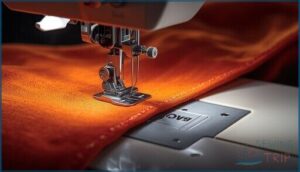
Before you start your backstitch, you need to place your fabric correctly under the presser foot. Raise the foot first, then slide your fabric edge underneath so it aligns with the needle center or edge guide. Lower the presser foot to secure the fabric, keeping it flat and taut to prevent shifting during stitching.
- Align the fabric edge with the presser foot guide for consistent seam accuracy
- Keep your fabric parallel to the feed dogs for even fabric feeding
- Position heavier fabrics closer to the needle plate edge to reduce drag
- Lower the needle slowly to anchor the starting point before you begin
- Use the throat plate markings as your edge guidance for straight seams
Sewing Forward and Engaging Reverse
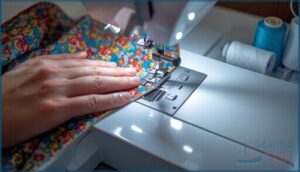
Once your fabric is in place, press the foot pedal gently and sew forward three to five stitches at a comfortable pace.
Then locate your reverse button or lever—usually near the presser foot—and press it down firmly. Your sewing machine will now stitch backward over those initial stitches, creating a secure thread lock that reinforces the seam and prevents unraveling.
Completing The Backstitch and Continuing
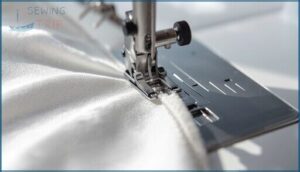
After you finish those two to four reverse stitches, release the reverse button and continue sewing forward along your seam line. The backstitch length should match your forward stitch—usually 2.5 mm—to avoid bulk or puckering.
This locking technique creates stitch security that keeps your seam reinforcement tight. When you reach the seam’s end, repeat the same backstitching process for complete fabric compatibility.
Using The Reverse Function on Different Machines
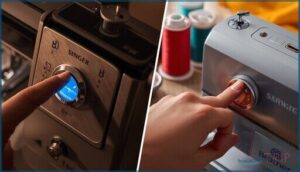
Not every sewing machine puts its reverse function in the same spot. Some machines use a button you press and hold, while others have a lever you push down.
Let’s walk through where to find the reverse control on popular brands like Singer and Brother so you can backstitch with confidence.
Finding The Reverse Button or Lever
Before you can master stitch reinforcement, you need to locate your machine controls. The reverse button or lever is your backstitch command center, and knowing where it lives on your sewing machine saves time and frustration.
- Singer machines: Look near the hand wheel or front panel for easy thumb access
- Brother models: Check the right side of the needle area for a forward-backward selector switch
- Janome and Bernina: Find the reverse function integrated into the stitch length control lever
- Compact machines: Search behind a flip cover near the needle plate
Backstitching on Singer Machines
Most Singer machines give you a lever or button near the hand wheel that activates reverse stitching. Press and hold that control while your needle moves backward—usually just 2 to 3 stitches—to anchor the seam.
Release it, then sew forward normally. This stitch reinforcement works across nearly all fabric types, from cotton to denim, locking threads so they won’t unravel under stress.
Backstitching on Brother Machines
Your Brother sewing machine usually features a dedicated reverse stitch button or lever near the presser foot for quick access. Press and hold it after sewing 3 to 6 forward stitches to create a secure anchor.
Set your backstitch length between 1.5 and 2.0 mm, then check thread tension on scrap fabric first. Release the backstitch button and continue your seam with confidence.
How to Backstitch Without a Reverse Option

Not every sewing machine has a reverse button, and some older or industrial models simply won’t sew backward.
That doesn’t mean you’re stuck with seams that fall apart. You can still lock your stitches using a couple of manual techniques that work just as well.
Manual Lock Stitch Techniques
When your sewing machine doesn’t have a reverse stitch function, you can create a lock stitch manually by shortening the stitch length at seam ends. This technique tightens thread control and prevents unraveling.
Set your machine calibration to the smallest stitch possible, then sew three to five tiny stitches over the same spot. The compact stitching creates backstitch-like security, and proper fabric guidance ensures even stitch tension throughout.
Turning The Fabric for Seam Security
When your machine doesn’t offer reverse, you can turn the fabric mid-seam to reinforce corners and edges. Leave the needle down, lift the presser foot, then pivot your material to align the next section.
This fabric turning creates corner security by forming a reverse seam path that locks stitches in place. Control stitch tension and fabric management carefully to prevent gaps where the turn occurs.
Common Backstitching Problems and Solutions
Even when you’re following the right steps, backstitching doesn’t always cooperate.
Your machine might skip stitches, jam up with thread, or produce loose backstitches that won’t hold.
Let’s troubleshoot the most common problems so you can get back to sewing with confidence.
Loose or Skipped Stitches
If your backstitch suddenly shows gaps or skips, you’re likely dealing with tension issues or needle damage. A dull or bent needle can’t pierce fabric cleanly, causing stitch formation to fail when you reverse.
Thread breakage and fabric slippage also disrupt the sewing machine’s rhythm. Check your tension settings first, then swap in a fresh needle and test on scrap material before continuing.
Thread Jams or Machine Stalling
When your machine grinds to a halt mid-backstitch, lint buildup in the bobbin area is usually the culprit. Thread breakage and fabric friction increase when feed dogs clog with debris, so regular machine maintenance prevents these stalls.
Check your sewing speed control too—rushing creates tension spikes that jam threads. Clean the bobbin case, rethread carefully, and test your backstitch on scrap fabric before continuing your sewing troubleshooting.
Adjusting Tension and Needle Position
Uneven backstitches signal tension or needle alignment trouble. Turn your tension dial up one or two units if you see thread loops on the fabric surface, then check stitch balance on a test swatch.
Thicker materials demand higher tension and centered needle placement for clean stitching. Regular machine calibration and sewing machine maintenance keep your backstitch consistent across every seam.
Best Practices for Neat and Strong Backstitching
You know how to backstitch, but doing it well makes all the difference between a seam that holds and one that falls apart after a few washes.
The trick isn’t just hitting reverse—it’s knowing exactly how many stitches to use, controlling your speed, and matching your technique to the fabric you’re working with. Let’s lock down the core practices that’ll give you backstitches as strong as they’re tidy.
Ideal Number of Backstitches
You’ll want three to five backstitches at the start and end of every seam for most projects. This stitch count locks thread securely without creating bulk.
Heavier fabrics need six to eight reverse stitches to handle fabric thickness, while lightweight materials work best with just three. The backstitch button makes this quick—press it, sew backward briefly, then release and continue forward for perfect seam security.
Controlling Speed for Clean Results
Once you’ve set your backstitch count, gentle pressure on the pedal keeps your reverse stitches clean and even. Slow starts prevent fabric stretch, while a steady pace ensures uniform stitch length throughout the seam.
Speed control makes all the difference:
- Press the pedal gradually to avoid sudden fabric movement
- Use a slower speed when starting and stopping to minimize puckering
- Maintain consistent pace across the entire backstitch
- Release pressure briefly after backstitching to lock stitches cleanly
- Practice on scrap fabric to build muscle memory for pedal techniques
Thread management improves when you control sewing machine speed, preventing skipped stitches and maintaining proper fabric tension during each reverse stitch.
Matching Backstitch Length to Fabric Type
Speed matters, but fabric weight determines how long your backstitch should run. Lightweight fabrics like silk need 1 to 2 mm stitches to avoid puckering, while denim accommodates 3 to 4 mm for better seam reinforcement. Thread tension stays balanced when you match stitch length to fabric texture and stitch density needs.
| Fabric Type | Backstitch Length | Thread Tension |
|---|---|---|
| Lightweight (silk, satin) | 1-2 mm | Lower setting |
| Medium (cotton, linen) | 2-3 mm | Medium setting |
| Heavy (denim, canvas) | 3-4 mm | Higher setting |
| Stretch knits | 1.5-2 mm | Medium-low setting. |
Your sewing machine performs best when backstitch length suits what you’re working with.
Backstitch Alternatives for Delicate Fabrics
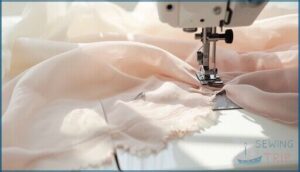
Backstitching isn’t always the right move when you’re working with delicate fabrics like silk, chiffon, or lace. These materials can pucker, show bulky stitch marks, or even get damaged by the reverse motion.
Let’s look at three gentler alternatives that’ll keep your seams secure without risking the integrity of fine fabrics.
Using Lock Stitches
When you’re working with fine fabrics like silk or chiffon, a lock stitch offers a cleaner alternative to backstitch.
Your sewing machine creates this secure stitch formation by interlocking the upper and lower threads inside the fabric itself. Simply reduce your stitch length to 0.5 or lower for three stitches, then return to normal length—this technique maintains proper thread tension without adding bulk or damaging delicate weaves.
Securing Seams by Hand
Fine hand stitching locks seams in place when machine backstitch would damage delicate fibers. You’ll thread a size 9 to 11 needle with cotton or silk thread, then create small backstitches at each seam end—catch just a few threads to prevent unraveling without adding bulk.
A slip stitch or ladder stitch also provides fabric reinforcement while staying nearly invisible on the finished garment.
When to Skip Backstitching
Sometimes you’ll skip backstitching altogether on your sewing machine when fabric selection demands it. Long straight darts on minimally fraying fabric with serged edges don’t need backstitching for seam security.
Loosely woven materials stay flat without the bulk, while knit fabrics using stretch stitches already lock edges. Decorative seams prioritize stitch visibility and texture preservation—automatic backstitch or manual backstitch would only distract from the finish. Edge finishing methods like topstitching provide enough hold.
Frequently Asked Questions (FAQs)
Can backstitching damage certain types of fabric?
Yes, delicate fabrics like silk fabrics, chiffon, and lightweight knits can snag or pucker during backstitching.
Leather may develop visible holes. Proper needle selection and tension adjustment prevent seam distortion and thread breakage on sensitive materials.
How does backstitching affect decorative or topstitching?
When decorative stitching ends without an anchor, threads can loosen like untied shoelaces.
Backstitching locks topstitch lines at both ends, preventing unraveling while maintaining clean edges. Match your backstitch length to the decorative stitch density for professional results.
What thread types work best for backstitching?
You’ll get the best results with polyester thread for fabric compatibility and thread strength.
Cotton blends work well on lighter materials, while metallic threads add texture effects but need careful tension adjustment on your sewing machine.
Does backstitching work differently on curved seams?
Curved seams need shorter stitches to prevent puckering. You’ll want to pause at the highest point, rotate your fabric smoothly, and use slower speed for better reverse stitch control along the curve.
How do you backstitch when sewing knits?
Backstitching knit fabric requires a ballpoint needle and polyester thread, then set your stitch length between 5 and 5 mm.
Activate reverse for three to five stitches, controlling fabric tension to prevent puckering.
Conclusion
Your machine’s reverse button sits right there waiting—the same tool professionals have trusted for decades. When you backstitch on a sewing machine correctly, you’re building seams that won’t quit on you.
Three or four stitches at each end transforms shaky stitching into durable craftsmanship. Lock down those thread tails, adjust your tension when needed, and your projects will hold together through whatever you throw at them. That’s the difference between sewing and actually finishing something that lasts.