This site is supported by our readers. We may earn a commission, at no cost to you, if you purchase through links.
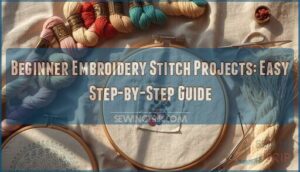
Your first embroidery project doesn’t need perfect stitches, it just needs to start. Most beginners worry they’ll mess up their fabric or waste materials, but here’s the truth: every crooked line and uneven knot teaches you something a tutorial can’t.
The beauty of beginner embroidery stitch projects is that they’re wonderfully forgiving, and those simple stitches you’re about to learn will open up dozens of creative possibilities. Whether you want to personalize a denim jacket, craft handmade gifts, or simply unwind with needle and thread, you’ll discover that embroidery combines the satisfaction of hands-on creativity with surprisingly quick results.
Table Of Contents
Key Takeaways
- You don’t need perfect stitches or expensive supplies to start embroidering—just basic tools like a 4-6 inch hoop, size 8-10 needles, cotton fabric, and a small thread palette will get you stitching confidently.
- Mastering five foundational stitches (running stitch, backstitch, satin stitch, lazy daisy, and French knot) gives you the building blocks to tackle nearly any beginner project from floral hoops to personalized keychains.
- Success comes from maintaining consistent stitch tension, choosing harmonious thread colors, and properly securing your work rather than achieving flawless execution on your first try.
- Starting with simple pattern-based projects builds your skills systematically while creating finished pieces you’ll actually want to display or gift, making those early mistakes part of the learning process rather than reasons to quit.
Essential Tools for Beginner Embroidery Stitch Projects
You don’t need a craft store‘s worth of supplies to start your first embroidery project.
A small starter palette of six to eight versatile shades is plenty, and you can learn which colors work well together through thread color harmony tips.
Just a few basic tools will get you stitching with confidence, and the good news is that none of them will break the bank.
Let’s walk through what you’ll actually use as a beginner, so you can grab what matters and skip what doesn’t.
Choosing The Right Embroidery Hoops
When you’re just getting started with beginner embroidery projects, picking the right embroidery hoop can make all the difference in your hand embroidery techniques. Here’s what you need to know:
- Hoop size: Choose 4 to 6 inches for tight designs, or 8 to 9 inches for larger patterns
- Hoop materials: Wood is traditional and affordable, while plastic stays lightweight
- Tension control: Look for adjustable screws to keep fabric taut without overstressing
- Fabric compatibility: Cotton and linen grip well in standard embroidery frames
Selecting Needles and Thread
Once your hoop is ready, you’ll need the right needle and thread combination to bring your hand embroidery techniques to life. Start with size 8 to 10 embroidery needles, then match your thread types to your fabric choice.
Here’s a quick embroidery tutorial and guide for beginners:
| Thread Types | Needle Sizes | Best For |
|---|---|---|
| 6-strand cotton floss | Size 8-10 embroidery | Lightweight cotton, detailed work |
| Rayon or polyester | Size 8 sharp-point | Color brilliance, smooth finish |
| Metallic specialty | Large-eye sharp | Bold accents, ribbon effects |
Separate your 6-strand floss into 3 strands for outlines or 6 for filling, then thread your needle using a threader if needed. This tension control prevents tangling and keeps your needlework and thread art looking professional from your very first stitch selection.
Best Fabrics for Beginners
Your needle and thread are ready, so now let’s talk fabric selection for your embroidery hoop. Start with plain weave cotton or linen blends—their crisp texture choices grip your thread count beautifully, preventing puckering in your fabric art.
Look for medium-weight materials (14 to 28 count) with even fiber blends, then prewash to remove sizing that makes needlework slip.
Must-Have Accessories (Scissors, Marking Tools)
Once you’ve chosen your fabric, sharp embroidery blades and marking tools become your best friends. Thread cutters with pointed tips trim floss tails without snagging stitches, while fabric markers let you sketch designs before stitching.
Water-soluble pens wash away cleanly, and proper scissor maintenance—keeping blades dry and storing them in protective sheaths—ensures clean cuts every time you practice hand embroidery techniques.
Mastering Basic Embroidery Stitches
Learning a few basic embroidery stitches is like building your embroidery toolkit, and once you’ve got them down, you can tackle almost any beginner project with confidence.
If you’re just starting out, this guide to simple hand embroidery stitches breaks down the essentials you’ll use again and again.
Each stitch has its own personality and purpose, from creating simple lines to adding textured details that make your work pop. Let’s walk through the essential stitches you’ll use again and again, starting with the easiest and working up to slightly fancier techniques.
Running Stitch Step-by-Step
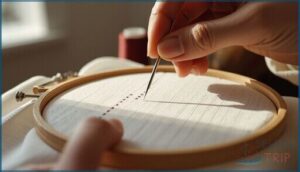
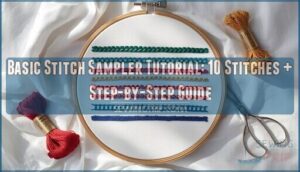
The running stitch is your gateway into hand embroidery stitches—think of it as embroidery for beginners made simple. You’ll weave the needle up and down through fabric, keeping stitch length around 1-2 millimeters and stitch spacing consistent.
The needle angle tilts slightly forward, while thread tension stays light to prevent puckering. Your fabric choice matters; tight-weave cotton works best for practicing these basic stitch patterns.
Backstitch for Outlining Designs
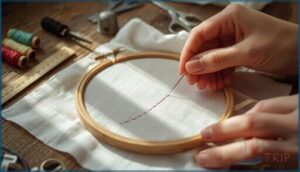
If you want sharp lines in your beginner embroidery projects, backstitch basics will become your best friend. This embroidery stitch creates outlines that look almost machine-made by moving backward with each new stitch, keeping stitch length between 1-3 millimeters.
You’ll master tension control and outlining techniques quickly, then finish edges with a simple knot to prevent unraveling.
Satin Stitch for Filling Shapes
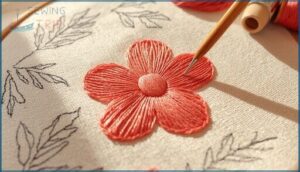
Smooth fills across flower petals or leaf shapes rely on satin stitch, where parallel threads sit close together to create that signature glossy surface. You’ll pack 8 to 16 stitches per inch depending on your fabric, keeping stitch width control between 1 to 4 millimeters for even coverage.
- Start with fabric stabilization to prevent puckering
- Use 6 to 12 weight thread for bright, smooth fills
- Align stitch direction with the fabric grain to avoid distortion
Master satin stitch density, and you’ll transform basic embroidery projects into polished pieces.
Lazy Daisy and French Knot Techniques
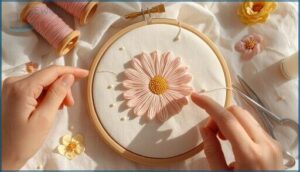
Two stitches bring dimension and charm to beginner embroidery projects: the Lazy Daisy stitch forms flower petals through looped thread secured with a tiny anchor, while the French Knot creates raised dots perfect for flower centers.
| Technique | Key Tips |
|---|---|
| Lazy Daisy Tips | Control petal length by adjusting your loop before securing |
| French Knot Variations | Wrap thread once for small knots, twice for larger texture |
| Petal Formation | Keep base stitches firm to prevent sagging |
| Stitch Tension | Maintain consistent pressure for uniform embroidery texture |
| Practice Method | Create sample swatches matching loop sizes across stitches |
Master these embroidery stitches, and you’ll add professional-looking details to any embroidery tutorials you follow.
Chain and Stem Stitch Basics
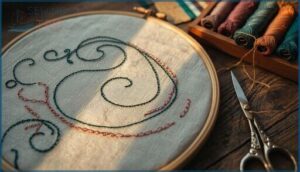
Chain stitch and stem stitch form the backbone of basic stitches for beginner embroidery, creating smooth lines that outline designs or fill curves.
Chain stitch loops thread through each previous loop, while stem stitch uses short diagonal passes that lean sideways.
Thread choices, fabric selection, and hoop sizes all affect stitch anatomy, so practice keeping stitch tension even across your embroidery stitches.
Easy Embroidery Project Ideas for Beginners
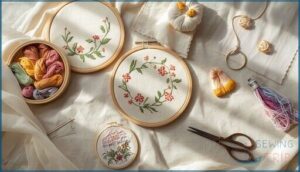
Now that you’ve got the basic stitches down, it’s time to put them to work on real projects.
Starting with simple designs helps you build confidence while creating something you’ll actually want to keep or give away. These five beginner-friendly projects use the stitches you just learned, so you can practice your technique while making something pretty.
Simple Floral Hoop Art
Floral hoop art is like painting with thread—your needle becomes the brush. Start with a 4 to 6 inch embroidery hoop, then choose 2 to 4 coordinating thread colors for your floral pattern design.
Floral hoop art turns your needle into a brush, letting you paint vibrant designs with just a few thread colors
You’ll combine lazy daisy petals with French knot centers on cotton fabric, keeping fabric tension snug but not too tight. These beginner embroidery projects teach you easy embroidery basics while creating display-worthy pieces.
Animal Outline Embroidery
Animal silhouettes bring your favorite creatures to life with just a few simple stitches. You’ll trace clean shapes like cats, dogs, or birds onto smooth cotton fabric, then outline them with backstitch or running stitch for crisp edges.
Here’s what makes animal outlines perfect beginner embroidery projects:
- Single-color designs keep thread choices simple and stress-free
- Bold outer lines require minimal interior stitching detail
- Backstitch creates those clean, recognizable contours you want
- Small additions like French knot eyes add personality without complexity
Personalized Monogram Projects
Monogram letters transform plain towels, tote bags, and napkins into custom gifts that feel truly yours. You’ll choose from script, block, or interlocking letter placement styles, then use basic stitches like satin stitch for filling and backstitch for crisp outlines.
Cotton fabric pairing gives you a stable surface for DIY custom accessories, and simple care keeps your stitched initials looking fresh after every wash.
DIY Embroidered Keychains
Small embroidered keychains make perfect beginner embroidery projects that you can finish in an afternoon. Cut lightweight cotton twill or canvas into 3 inch by 1.5 inch rectangles, then use satin stitch for custom designs like initials or simple hearts.
Backstitch outlines keep edges crisp, while perle cotton threads create a durable finish. Seal edges with clear fabric glue, attach metal keyring hardware, and you’ve got a customized DIY craft.
Decorative Mini Wall Hangings
You can turn your favorite embroidery stitches into charming decorative mini wall hangings that brighten any room.
Use a 3 to 6 inch embroidery hoop as your frame, then try mini sampler designs with simple floral motifs or nature-inspired themes.
Fabric mounting techniques like backing with felt create a polished look, while color palette choices in soft pastels or bold contrasts make your embroidery display options truly stand out.
Step-by-Step Guide to Starting Your First Project
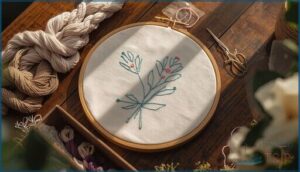
Starting your first embroidery project might feel overwhelming, but breaking it down into clear steps makes the whole process easier.
You’ll want to tackle things in the right order, from getting your design onto fabric to securing your final stitches.
Let’s walk through each stage so you can start stitching with confidence.
Transferring Patterns to Fabric
Getting your embroidery patterns onto fabric doesn’t have to feel like a puzzle. You have several beginner-friendly options, including iron transfers that use heat to move designs, carbon techniques that create crisp outlines through tracing, and stencil methods that guide your fabric marking.
Here are four reliable pattern transfer approaches for your embroidery projects:
- Light source tracing – Sandwich your pattern under the fabric, then outline with a water-soluble pen
- Carbon paper – Layer carbon between pattern and fabric, trace with a stylus for clean lines
- Iron-on transfers – Print on special paper, apply heat to transfer the image directly
- Chalk markers – Mark fabric freehand using removable chalk that washes away after stitching
If you want to learn more, check out this helpful guide on tools for pattern transfer. Always test your chosen method on scrap fabric first to confirm the marks erase cleanly.
Setting Up Your Embroidery Hoop
With your pattern ready on the fabric, you’ll position it over the inner ring of your embroidery hoop. Separate the two rings, place the fabric flat across the smaller one, then press the outer ring down, tightening the screw until the fabric feels drum-tight without puckering—proper fabric tension prevents loose stitches and keeps your beginner embroidery projects looking professional.
| Hoop Selection | Fabric Tension | Embroidery Frames |
|---|---|---|
| 4-6 inch wooden hoops work best when getting started with embroidery | Tighten evenly around the screw to keep fabric taut | Inner ring sits flush with outer ring for straight stitches |
| Plastic hoops maintain consistent grip for beginner embroidery projects | Too loose causes puckers and misaligned lines | Check alignment before you start stitching |
| Smooth sanded edges prevent fabric snagging | Over-tightening distorts fibers and warps shapes | Larger embroidery hoops need two-hand tightening |
| Embroidery kits often include 5-inch starter hoops | Adjust tension during long sessions as fabric relaxes | Thread organization and needle storage keep work tidy |
| Test hoop size on scrap fabric before committing | Gentle pressure smooths fabric without pulling weave | Stabilizer layers support delicate materials under hoops |
Threading The Needle and Starting Stitches
Thread preparation starts with cutting floss at a 45-degree angle, then threading your sharp embroidery needle—size 7 to 9 works perfectly for beginner embroidery projects. You’ll secure the thread with a knot on the back, maintaining neutral stitch tension to avoid fabric stretch or puckering.
Getting started with embroidery means mastering basic stitches like backstitch: bring the needle up, stitch backward to create continuous lines, keeping your hoop adjustment snug throughout.
Finishing and Securing Your Work
Securing your embroidery is like putting the frame on a finished painting—it protects all your hard work. Start fray prevention by tying off with a double backstitch at the thread’s end, then weave the tail under a few stitches on the back for thread security.
Add edge finishing with a simple blanket stitch or whipstitch around borders, and consider fabric stabilizing behind delicate areas to prevent puckering during mounting techniques.
Tips for Success With Beginner Embroidery Projects
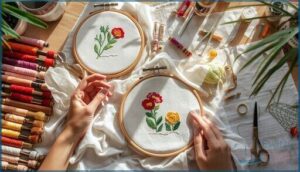
You’ve learned the basics, and now it’s time to turn those stitches into finished projects you’ll actually be proud of.
Success in embroidery comes down to a few practical habits that make everything easier, from picking thread colors to keeping your work looking fresh. Let’s walk through the tips that’ll help you avoid frustration and create pieces that last.
Choosing Color Combinations
Your first embroidery projects deserve colors that sing together, not clash. Start with color harmony by pairing complementary hues—like purple thread on yellow fabric—to make your DIY embroidery pop.
For beginner embroidery projects, palette planning means choosing two to three colorful threads that share warmth or coolness. Test your thread selection on scrap fabric first, checking how contrast theory plays out between your fabric choice and embroidery stitches.
Avoiding Common Mistakes
Most embroidery stitches fall apart when you skip the basics. Loose hoop tension causes fabric distortion and uneven thread management, so tighten until your fabric sits flat.
For beginner embroidery projects, use 6 to 8 strands for satin and basic stitches requiring solid coverage. Error correction starts with securing thread tails properly, preventing unraveling that ruins your stitching techniques and stitch consistency.
Practicing Consistent Stitch Tension
Your hand pressure makes or breaks stitch consistency across beginner embroidery projects. Tension control requires a relaxed grip, keeping thread tension light and even as you work backstitch and other embroidery stitches. Fabric stretch happens when you pull too tight, distorting your stitch patterns, while slack threads create gaps that ruin stitching techniques.
- Watch your stitches lie flat and smooth when you master gentle, consistent hand pressure
- Feel the rhythm develop as your fingers learn perfect thread tension naturally
- See your fabric stay beautifully flat, free from puckers that spoil your hard work
Caring for Finished Embroidery Pieces
Once your stitching relaxes to the right tension, you’ll want to protect that beautiful work. Store your finished embroidery projects flat or rolled between acid-free sheets for fabric storage and thread preservation, keeping them away from direct sunlight to prevent color fading.
Use UV-protective embroidery framing with archival materials, maintain moisture control in display areas, and gently dust this textile art with a soft brush to preserve your fabric craft achievements for years.
Frequently Asked Questions (FAQs)
What are good beginner embroidery stitches?
Most craft experts agree that hand embroidery stitches like running stitch, backstitch, and satin stitch form the foundation of hand embroidery.
These embroidery stitches work across various fabric selection choices and thread types, making them perfect beginner projects.
How long does embroidery thread typically last?
Your embroidery thread usually lasts two to five years depending on fiber type and storage conditions, with polyester showing better color fading resistance than cotton or rayon when you follow proper care methods.
Can you wash embroidered fabric in machines?
You can machine wash embroidered fabric safely using cold water and a gentle cycle.
Turn pieces inside out, use mesh laundry bags for protection, and air dry to preserve your embroidery thread and prevent color fading.
Whats the best lighting for embroidery work?
Seeing is believing, especially with embroidery.
Choose daylight-balanced LED task lighting around 5500K for true thread color, position lamps at a 30-degree angle, and layer ambient light for eye comfort during long stitching sessions.
For more information about perfect embroidery lighting basics, it’s essential to take into account both color temperature and light intensity to reduce eye strain and improve stitch precision.
How do you fix embroidery mistakes easily?
Spot the error early, then gently remove wrong stitches with sharp scissors or a seam ripper.
Adjust tension control, rethread carefully, and use stitch recovery techniques or clever error concealment to transform mistakes into learning moments.
Should beginners use patterns or freehand designs?
Patterns give beginners clear blueprints and reduce guesswork, while freehand basics build creative freedom over time.
Start with simple designs using patterns, then blend stitch exploration and design flexibility as your embroidery projects grow.
Conclusion
Think of each stitch you master now as a building block you’ll use in ways you can’t yet imagine, from turning thrift store finds into treasures to creating gifts that carry real meaning.
Your beginner embroidery stitch projects don’t have to be immaculate to be beautiful, they just need to be finished. Pick up your needle, choose a simple design, and let those first uneven stitches teach you what precision never could.