This site is supported by our readers. We may earn a commission, at no cost to you, if you purchase through links.
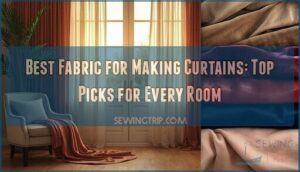
The wrong fabric can make a beautifully designed room look cheap, saggy, or like it’s permanently blocking out the sun light when you wanted soft, filtered light. Curtain fabric does more than dress a window—it controls mood and temperature, privacy, and how the whole room feels at different times of day.
A velvet panel in a bedroom creates something completely different from voile in a sunlit kitchen, even if both hang from the same rod. Choosing the best fabric for making curtains comes down to understanding what each material actually does, not just how it looks on a swatch.
The options range from airy sheers to heavy blackout linings, and each one has a distinct sweet spot.
Table Of Contents
Key Takeaways
- Fabric weight and density shape how your curtains hang, how much light they let in, and how private your space feels—so match those qualities to your room’s real needs, not just the look and feel.
- Blackout and thermal fabrics can cut your window heat loss by up to 25%, making them a smart pick for bedrooms, media rooms, and any space where comfort and energy bills matter.
- Every room has a fabric sweet spot—linen and cotton work beautifully in everyday living spaces, while velvet and brocade bring the weight and richness that formal rooms call for.
- Maintenance is part of the equation: polyester is your low-effort workhorse, cotton and linen need a little more care, and velvet means dry cleaning—so be honest about your lifestyle before you buy.
Key Factors in Choosing Curtain Fabric
Picking the right curtain fabric isn’t just about color or pattern — it starts with understanding what the fabric actually needs to do in your space.
Think about light, privacy, and durability first — this breakdown of curtain fabric types for sewing makes it much easier to match the right material to your room’s needs.
A few core factors will shape every good decision you make, from how much light comes through to how easy it’s to keep clean.
Here’s what to think about before you buy a single yard.
Fabric Weight and Drape
Fabric weight shapes everything about how your curtains look and feel. Weight categories range from airy voiles around 40 GSM to heavy velvets over 300 GSM.
Lighter curtain fabric types flow softly with the breeze, while denser textile material properties create structured, dramatic folds.
Fabric density also determines drape styles — whether your panels cascade in gentle waves or hold sharp, architectural fold techniques. The drapery’s overall appearance and function are directly influenced by the impact of drapery weight.
Light Control and Privacy Needs
Weight tells you how curtains hang — but light control tells you how they live. Sheer fabrics let daylight management stay soft and open, while blackout fabrics shut out nearly everything.
Your window treatments need to match your privacy needs too. Sheer options show silhouettes at night, so bedrooms often need layered light control solutions pairing sheer fabrics with blackout fabrics for real privacy and energy efficiency.
Understanding the impact of different curtain fabric types helps you make better choices for balancing light and privacy.
Room Function and Style
Once you’ve sorted light control, the next question is: what mood do you want the room to carry.
Your fabric selection shapes room ambiance more than most people expect. Here’s how to align style coordination with functional needs:
- Living spaces — cotton or linen for a relaxed, everyday feel
- Formal rooms — velvet or brocade for richness and depth
- Small spaces — lightweight sheers for space optimization
Smart aesthetic choices make interior design feel intentional, not accidental.
Insulation and Energy Efficiency
Style sets the mood, but the right curtain materials can also cut your energy bills.
Windows lose heat fast — sometimes accounting for 25 percent of what you spend on heating.
Blackout curtains with thermal insulation can reduce that loss by up to 25 percent.
A well-fitted thermal curtain improves window insulation and heat retention, boosting your room insulation and overall energy efficiency noticeably.
Maintenance and Durability
Durability matters more than most people realize when choosing curtain fabric. Polyester holds up with minimal curtain upkeep — it resists wrinkles and washes easily.
For the cleanest results when hemming polyester curtains, hand sewing seams that lay flat also helps prevent fraying along the edges.
Cotton and linen need a bit more attention but reward you with fabric longevity when cared for properly. Velvet demands professional cleaning. Think about your lifestyle honestly during material selection, because aesthetic appeal fades fast when curtain maintenance becomes a chore.
Aesthetic appeal fades fast when curtain maintenance becomes a chore
Best Fabrics for Sheer Curtains
Sheer curtains have a way of making any room feel open and soft, and alive with light.
The fabric you choose makes all the difference in how they look and hold up over time. Here are the best options worth considering.
Voile and Chiffon

Both voile and chiffon are go-to sheer fabrics for a reason. Voile texture feels slightly crisp, so voile curtain fabric falls in neat, clean folds — great for wide windows.
Chiffon curtain fabric is softer and more fluid, almost floating when a breeze moves through. When choosing curtain fabrics, consider that chiffon lets in more light, while voile sheer panels give a touch more daytime privacy.
Lace and Net Fabrics
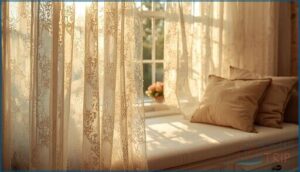
Lace curtain fabric and net curtain fabric each bring their own character to a window. Lace patterns create a soft glow that feels romantic without being heavy. Net materials offer a cleaner look.
Both are sheer fabrics worth knowing:
- Fabric openness controls how much light passes through
- Tighter lace curtain fabric weaves add daytime privacy
- Polyester net curtain fabric resists mildew and washes easily
- Sheer layers of lace pair well with heavier drapes for nighttime coverage
Muslin and Eyelet Cotton
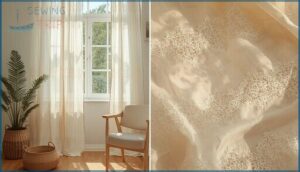
Muslin curtain fabric is one of the most budget-friendly choices in curtain making, with its plain cotton weave keeping things light, breathable, and easy to live with.
Eyelet cotton adds a decorative touch through its embroidered cutwork, letting dappled light dance across your walls. Both natural textures offer soft light control without heaviness — a simple, honest option when choosing curtain fabrics for casual spaces.
Layering Sheer Fabrics for Effect

Two sheer curtain layers do more than one ever could on its own. For soft light diffusion, try hanging sheer voile fabric closest to the glass, then layering a patterned sheer in front.
This sheer layering approach adds curtain depth and visual interest, with the voile fabric filtering glare while the outer layer projects gentle shadows. Real light control, real texture, zero heaviness.
Top Opaque and Blackout Curtain Fabrics

Sometimes you need curtains that do more than look good — they need to block light, trap warmth, and give you real privacy.
The fabric you choose makes all the difference here. Here are the top opaque and blackout options worth knowing about.
Velvet and Heavyweight Brocade
If you want curtains that work hard and look stunning, velvet curtain fabric and heavyweight brocade deliver both. Velvet’s dense pile gives you serious thermal properties, near-blackout darkness, and genuine acoustic benefits — absorbing sound and softening echoes naturally.
Heavyweight brocade brings patterned depth through its intricate weaving, making it one of the most striking decorative fabrics available. Together, these blackout curtains create a luxurious feel that transforms any formal space.
Cotton and Cotton Blends
Not every room calls for velvet drama. Sometimes you just need a reliable workhorse — and cotton curtain fabric delivers exactly that. The right cotton weave, thread count, and fabric density quietly shape how your room feels every single day.
- Percale weaves hang crisp and clean, perfect for custom panels
- Sateen cotton adds a soft sheen without screaming “formal”
- Cotton blends resist wrinkles better, keeping panels looking fresh longer
Choosing curtain fabrics from the cotton family gives you flexibility across nearly every room.
Linen and Linen Blends
If cotton is the reliable friend, linen fabric is the one with quiet confidence. Linen curtain fabric brings natural fibers and a slubbed linen texture that actually gets better with age. It’s breathable, eco friendly, and its thermal performance keeps rooms cooler in summer and cozy in winter.
| Feature | Linen and Linen Blends |
|---|---|
| Breathability | Excellent airflow |
| Durability | Outlasts most cotton options |
Blackout and Thermal Lined Fabrics
Linen earns its praise, but sometimes you need more than quiet confidence — you need a room that’s genuinely dark and quiet. That’s where blackout curtains and thermal fabrics step in.
- Light blocking up to 100 percent with triple-weave blackout materials
- Thermal insulation reducing heat loss by 17–25 percent
- Sound reduction of 5–15 decibels for real noise reduction
- Energy efficiency cutting heating and cooling costs noticeably
Matching Curtain Fabric to Each Room
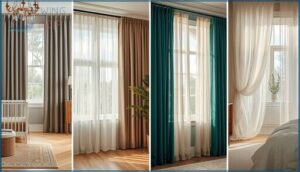
The right fabric choice doesn’t just look good — it works hard for the room it’s in.
Every space has different needs, from blocking light in a nursery to keeping things breezy in the kitchen. Here’s how to match your fabric choice to each room in your home.
Living Room Curtain Fabric Options
Your living room sets the tone for your whole home, so choosing the right curtain fabrics here really matters. Velvet curtain fabric adds warmth and even helps with room acoustics by softening sound. Linen curtain fabric brings relaxed texture, while polyester curtain fabric keeps maintenance simple.
| Fabric | Best For |
|---|---|
| Velvet | Formal, cozy living rooms |
| Linen | Modern, coastal styles |
| Polyester | Everyday, easy-care window treatment |
Bedroom and Nursery Fabrics
Bedrooms and nurseries demand a different kind of thinking. Sleep quality depends heavily on light control, so blackout curtains made from dense polyester or microfiber are worth every penny. These blackout materials block up to 100% of incoming light while providing real thermal insulation.
For nurseries, prioritize fabric safety — look for OEKO-TEX certified nursery textiles that are easy to wash and gentle on sensitive skin.
Kitchen and Bathroom Suggestions
Kitchens and bathrooms play by different rules. Moisture resistance, fire safety, and light control all matter here — sometimes in the same window.
The right curtain fabrics balance practicality with style:
- Polyester café curtains resist humidity and dry fast, reducing mildew risk
- Faux linen blends offer bathroom privacy with a natural look
- Flame-retardant curtain materials stay safer near stoves
- Sheer polyester sheers support kitchen lighting without sacrificing UV protection
Formal Dining and Media Room Fabrics
Formal dining rooms call for velvet curtain fabric — dense, plush, and naturally elegant. Velvet delivers real sound absorption, softening echo much like acoustic panels do.
For media rooms, blackout curtains are non-negotiable, blocking over 90 percent of daylight. Look for flame retardants and UV protection built into the weave. This fabric selection guide keeps luxury textiles performing beautifully for years.
Curtain Fabric Care and Longevity Tips

Choosing the right fabric is only half the battle — keeping it looking good is the other half.
With the right care habits, your curtains can stay fresh and last for years without much fuss.
Here’s what you need to know to protect your investment.
Cleaning and Washing Guidelines
Every curtain fabric has its own washing personality — and ignoring that can cost you. Always check the care label first.
From there, keep these fabric care basics in mind:
- Cotton fabric tolerates machine washing on a gentle cycle with cold water and mild detergent.
- Linen fabric prefers hand washing or dry cleaning to avoid shrinkage.
- Polyester fabric is the low-maintenance winner — it resists wrinkles and dries fast.
Protecting Against Sun Damage
The Sun is the silent enemy of curtain fabrics — fading colors and weakening fibers before you even notice. UV protection matters more than most people think, especially with south-facing windows.
| Protection Method | Why It Works |
|---|---|
| Solution-dyed acrylic | Pigment locked into fiber resists sun fading longest |
| UV window film | Blocks up to 99% of rays before reaching curtain fabrics |
| Layered window treatments | Sheers absorb damage, protecting decorative panels behind |
| Rotating curtain panels | Spreads light control exposure evenly across fabric durability |
Enhancing Durability With Lining
Adding a lining is one of the smartest curtain making techniques you can use. The right lining materials protect your curtain fabrics from daily wear and tear, dramatically improving fabric longevity.
Thermal layers boost curtain insulation, while blackout options give you serious light control and privacy. A polycotton lining absorbs friction so your decorative fabric stays beautiful far longer.
Storing and Handling Curtains Properly
Proper curtain folding and smart storage containers go hand in hand with good fabric care and maintenance. Clean your curtains completely before packing them away—any lingering moisture invites mildew.
Roll delicate curtain fabric around a tube to skip harsh creases, and tuck in cedar blocks for pest protection. Good handling techniques at removal and rehang keep seams and headers intact for years.
Frequently Asked Questions (FAQs)
What fabric makes the best curtains?
The best curtain fabrics depend on your needs.
Linen curtain fabric drapes beautifully for everyday spaces, while blackout drapery options suit bedrooms.
Choosing curtain fabrics means balancing light control, style, and how much upkeep you’re willing to do.
What fabric is best for making curtains?
Like choosing the right tool for a job, your curtain fabric sets the tone for everything.
Cotton, linen, velvet, and polyester each bring different strengths to your window treatments, so matching curtain materials to your room’s needs is key.
Which type of cloth is best for curtains?
Cotton, linen, and polyester are top curtain materials for most homes.
Your textile choices really come down to the room’s needs — light control, privacy, and how much upkeep you’re willing to do.
What fabric has the best drape?
Silk charmeuse wins for drape — its satin fabric weave creates liquid, flowing curtain folding that feels almost alive.
Chiffon curtain fabric and sheer voile follow closely, both falling in soft, smooth folds.
What material is best for living room curtains?
Linen curtain fabric tops the list for living rooms — it filters light beautifully, offers daytime privacy, and suits almost any decorating style.
Cotton fabric and sheer voile are excellent runners-up depending on your light control needs.
What is the best way to measure for curtains?
Start with the curtain rod width, not the window itself. Multiply that by 5 to 3 for fabric fullness.
Then measure length from rod placement down to where you want the curtain to fall.
What are the different types of drapery hardware available?
Drapery hardware ranges from decorative curtain rods and track systems to motorized drapery setups. Bracket types, finial styles, and rings all shape how your curtain fabrics hang, move, and look.
How can I care for curtains and drapes to maintain their appearance?
Like a good coat, curtains last longer when you treat them right.
Dust Removal, Fabric Refresh, Wrinkle Prevention, and Fade Protection are your core pillars of Fabric Care and Maintenance for lasting Curtain maintenance.
Can I use linen sheers in nurseries?
Yes, linen sheers work beautifully in nurseries. They offer natural textures, gentle light control, and breathability for room temperature comfort.
Pair with blackout blinds for naps. Choose OEKO-TEX certified linen curtain fabric for baby safety.
What is the difference between blackout lining and privacy lining?
Blackout lining blocks 95–100% of light; privacy lining filters around 60–70%. Blackout offers stronger insulation benefits and UV protection, while privacy lining keeps things softer and more flexible for casual spaces.
Conclusion
Choosing the best fabric for making curtains isn’t just a decorating decision—it’s how you shape the feeling of every room you live in. The right fabric holds warmth in, filters harsh light softly, and quietly sets the tone before anyone sits down.
Trust what each room actually needs over what looks good on a swatch. Get that match right, and your curtains won’t just hang there. They’ll work.
- https://averradraperyandblinds.com/5-curtain-fabrics-that-actually-block-heat-in-summer/
- https://www.peepultree.world/blog/curtain-fabric-types
- https://deconovo.com/blogs/news/curtain-fabric-guide-understanding-linen-velvet-and-cotton
- https://www.fabricmill.com/blog/post/best-fabrics-for-curtains.html
- https://www.maakhome.co.nz/blogs/news/top-7-best-fabrics-for-curtains-in-2025-your-guide